


CBD and Hemp Glossary: Terms from A to Z

The u Bucha CBD and hemp glossary: 161 terms, from cannabinoids and terpenes to test reports and the law. The facts in the definitions come with their sources.
Status as of November 2026. This glossary collects 161 terms that you will encounter on the label of CBD flower and oil, in laboratory test reports, and in hemp regulations. Each entry has a short definition that can be read without opening another page, and the facts within it have sources listed at the bottom. Most entries also have a link to the full article at u Bucha. The definitions describe what something is, not what to do with it, so they do not replace advice from a doctor or lawyer. The entries are organized into sections, from cannabinoids to hemp food, and at the end, there is an index from A to Z. Terms from hemp cuisine and culture have been collected separately in the hemp gourmet’s glossary.
KEY INFORMATION
• The glossary explains 161 terms; the facts in the definitions have sources listed at the end of the page.
• Terms that are easily confused, such as CBD and CBDA, are compared in a table at the beginning.
• The section on lab testing teaches how to read a test report: total THC, LOQ, and the accredited method.
• The glossary describes what compounds and products are, not how they work: no health advice and no dosing.
Sections: Easily Confused Terms · Cannabinoids · Acids and Transformations · Endocannabinoid System · Terpenes and Flavonoids · Plant and Botany · Flower and Its Forms · Oils, Extracts, and Product Forms · Testing and Quality · Law in Poland and the EU · Vaporization and Accessories · Hemp Food · Index A-Z
From A to Z: 0-9 · A · B · C · D · E · F · G · H · I · J · K · L · M · N · O · P · R · S · T · V · W
Easily Confused Terms
| Term | Confused with | Difference |
|---|---|---|
| CBD | CBDA | CBDA is the acidic form produced by the plant. CBD is formed from it after losing CO2, mainly under heat. |
| Hemp | Fiber hemp | Hemp is the species Cannabis sativa L. Fiber hemp refers to its plants where the total THC and THCA in flowering or fruiting tops do not exceed 0.3% dry weight. The Act does not use the term Indian hemp. |
| Hemp flower | Trim | Flower refers to dried flower clusters. Trim refers to leaf clippings and small parts cut from the flower clusters during trimming. |
| Full spectrum | Broad spectrum | Full spectrum retains the cannabinoids of the extract, including trace THC. Broad spectrum has THC removed. CBD isolate is just CBD without other cannabinoids. |
| Hemp oil | CBD oil | Hemp oil is pressed from seeds and is regular food. CBD oil is an extract of cannabinoids from the herb in a carrier oil; when sold as food, it is a novel food. |
| THC | Total THC | THC is the measured delta-9-THC alone. Total THC is THC + 0.877 × THCA, meaning THC that would be formed from the entire acid. |
| LOD | LOQ | LOD is the lowest concentration that the method distinguishes from a blank sample. LOQ is the lowest that can be measured numerically with acceptable precision; it is higher. |
| Dietary supplement | Novel food | A dietary supplement is food that complements the normal diet, being a concentrated source of nutrients or other substances and sold in measured doses. Novel food is food not consumed in the EU to a significant degree before May 15, 1997. |
| Convection | Conduction | Convection heats the load with a stream of hot air. Conduction heats through contact of the flower with the heated wall of the chamber. |
| Vaporization | Combustion | Vaporization heats the flower without combustion, usually to 160-220 °C, and produces vapor. Combustion is the smoldering of the flower, which produces smoke and ash. |
Cannabinoids
Cannabinoids
Cannabinoids are compounds that bind to cannabinoid receptors CB1 and CB2 or have a structure typical of compounds from hemp. Over 150 phytocannabinoids have been isolated from hemp, but research has mainly focused on four: delta-9-THC, CBD, CBG, and CBC. In addition to phytocannabinoids from plants, there are also endocannabinoids produced by the body and synthetic cannabinoids from the laboratory.
More: phytocannabinoids, endocannabinoids, and synthetic cannabinoids
CBD (cannabidiol)
CBD (cannabidiol) is one of the main phytocannabinoids of hemp; the plant first produces it as the acid CBDA. It has the same molecular formula as delta-9-THC, C21H30O2, but a different structure: it lacks a closed pyran ring. The name cannabidiol does not appear in the Polish list of controlled substances (consolidated text Journal of Laws 2026 item 1419). The absence of a name from the list does not by itself determine the legality of the product.
More: what CBD is and where it comes from
THC (delta-9-tetrahydrocannabinol)
THC (delta-9-tetrahydrocannabinol) is a hemp phytocannabinoid whose content sets the boundary in Poland between fiber hemp and cannabis other than fiber hemp. Hemp counts as fiber hemp when the sum of delta-9-THC and THCA in flowering or fruiting tops does not exceed 0.3% of dry weight (art. 4 point 5 of the Act on Counteracting Drug Addiction). Delta-9-THC itself is a psychotropic substance of group II-P (item 37 of the list).
More: the differences between THC and THCV
CBG (cannabigerol)
CBG (cannabigerol) is a phytocannabinoid formed by the decarboxylation of the acid CBGA, from which the plant also produces THCA, CBDA, and CBCA. It has the formula C21H32O2, i.e. two more hydrogen atoms than CBD and THC. The name cannabigerol does not appear in the Polish list of controlled substances (consolidated text Journal of Laws 2026 item 1419). The absence of a name from the list does not by itself determine the legality of the product.
More: what cannabigerol (CBG) is
CBN (cannabinol)
CBN (cannabinol) is a cannabinoid formed from delta-9-THC when it oxidizes in the air; it is considered a degradation product of THC, not a compound produced by the plant. It was the first phytocannabinoid isolated from hashish in the late 19th century, and its structure was established in 1940. CBN does not appear in the Polish list of controlled substances (consolidated text Journal of Laws 2026 item 1419). The absence of a name from the list does not by itself determine the legality of the product.
More: what cannabinol (CBN) is
CBC (cannabichromene)
CBC (cannabichromene) is a phytocannabinoid formed by the decarboxylation of the acid CBCA, which the plant produces from CBGA. It has the same molecular formula as CBD and delta-9-THC, C21H30O2, but a different molecular structure (chromene arrangement). The name cannabichromene does not appear in the Polish list of controlled substances (consolidated text Journal of Laws 2026 item 1419). The absence of a name from the list does not by itself determine the legality of the product.
More: what cannabichromene (CBC) is
CBDV (cannabidivarin)
CBDV (cannabidivarin) is a phytocannabinoid with a structure similar to CBD, in which the side chain has three carbon atoms (propyl) instead of five (pentyl). Therefore, it has the formula C19H26O2 and a molecular weight of 286.4 g/mol, compared to 314.5 g/mol for CBD. Do not confuse with THCV: it is the same shortened chain, but in the THC molecule.
More: cannabidivarin (CBDV) and the state of research
THCV (tetrahydrocannabivarin)
THCV (tetrahydrocannabivarin) is a phytocannabinoid with a structure similar to delta-9-THC, in which the side chain has three carbon atoms instead of five. It has the formula C19H26O2, the same as CBDV. It does not appear by name in the Polish list of controlled substances (consolidated text Journal of Laws 2026 item 1419), which by itself does not determine the legality of the product. Do not confuse with THCA, the acidic form of THC.
More: comparison of THCV with THC
CBL (cannabicyclol)
CBL (cannabicyclol) is a rare phytocannabinoid with the same formula as CBC, C21H30O2, but with four interconnected rings instead of two. The first synthesis of CBL was performed by irradiating CBC with UV light; hence the unverified hypothesis that it is formed from CBC in the plant under the influence of light.
Delta-8-THC
Delta-8-THC is an isomer of delta-9-THC with the same formula C21H30O2, differing in the position of the double bond in the ring; it is obtained, among other methods, from CBD through chemical cyclization. In Poland, it is a psychotropic substance of group I-P (item 96 of the list, consolidated text Journal of Laws 2026 item 1419). The abbreviation delta-8-THC has been there since July 28, 2026 (Journal of Laws 2026 item 934); previously, the isomer was included under its chemical designation.
More: delta-8 and delta-10 THC in Polish law
Delta-10-THC
Delta-10-THC is an isomer of delta-9-THC, which differs from it in the position of the double bond in the ring. In Poland, it is a psychotropic substance of group I-P (item 96 of the list, consolidated text Journal of Laws 2026 item 1419). It has been listed by name since July 28, 2026 (Journal of Laws 2026 item 934), and was previously included under its chemical designation, for example, in the consolidated text of the list from 2022 (Journal of Laws 2022 item 1665).
More: legal status of delta-10-THC in Poland
HHC (hexahydrocannabinol)
HHC (hexahydrocannabinol) is a semi-synthetic cannabinoid that is produced on an industrial scale from CBD: through cyclization to a mixture of delta-8- and delta-9-THC, and then hydrogenation to the 9R and 9S epimers. In Poland, it has been a psychotropic substance since May 5, 2023 (Journal of Laws 2023 item 744); since July 28, 2026, it has been classified in group II-P, item 83 (Journal of Laws 2026 item 934). This is a change of group, not a removal of control.
More: what HHC products are
THCP (tetrahydrocannabiphorol)
THCP (tetrahydrocannabiphorol) is a phytocannabinoid with a structure similar to THC, with a side chain of seven carbon atoms instead of five, described in hemp in 2019. In Poland, delta-9-THCP has been on the list of new psychoactive substances since May 22, 2025 (item 59, Journal of Laws 2025 item 598), and delta-8-THCP and delta-9-THCP acetate since July 28, 2026 (items 67 and 68, Journal of Laws 2026 item 934).
More: HHC, HHC-O, and THCP in the Polish list
H4CBD (hydrogenated cannabidiol)
H4CBD (hydrogenated cannabidiol) is a semi-synthetic derivative of CBD, in which both double bonds are saturated with hydrogen. It has the formula C21H34O2, four hydrogen atoms more than CBD. It does not appear by name in the Polish list of controlled substances (consolidated text Journal of Laws 2026 item 1419), which does not determine the legality of trading in it. Do not confuse with HHC, which is hydrogenated THC.
More: H4CBD: structure and legal status
11-hydroxy-THC (11-OH-THC)
11-hydroxy-THC (11-OH-THC) is a metabolite of delta-9-THC: in the body, most THC is converted into this compound by the enzymes CYP2C9 and CYP2C19, which attach a hydroxyl group. Then 11-OH-THC oxidizes to THC-COOH acid. Both metabolites are measured in blood in toxicological tests, e.g., in drivers. Formula: C21H30O3.
Synthetic cannabinoids
Synthetic cannabinoids are compounds produced in laboratories with very diverse structures, most of which act as strong agonists of CB1 and CB2 receptors. Many of them fall under the definition of group III-NPS from the Polish list, describing four elements of molecular structure, and named compounds, such as JWH-018, are also among the psychotropic substances of group II-P (consolidated text Journal of Laws 2026 item 1419). Do not confuse with semi-synthetic cannabinoids, such as HHC.
More: guide to synthetic cannabinoids
Return to the list of sections
Acids and Transformations
| Starting Compound | Forms | How |
|---|---|---|
| CBGA | CBG | Decarboxylation: when heated, CBGA loses CO2. In the plant, CBGA is also a precursor to THCA and CBDA. |
| CBDA | CBD | Decarboxylation: CBDA loses CO2 when heated. The reaction proceeds slower than for THCA (Wang et al., 2016). |
| THCA | THC | Decarboxylation under the influence of heat and UV light; slowly also during drying and storage. |
| THC | CBN | Oxidation: THC reacts with oxygen from the air during storage and converts to CBN. This is not decarboxylation. |
Cannabinoid Acids
Cannabinoid acids are the forms of cannabinoids with a carboxyl group (-COOH) in which hemp produces these compounds; their abbreviations end with the letter A, e.g., THCA, CBDA, CBGA. The Polish law includes THCA in the 0.3% threshold for fiber hemp together with delta-9-THC (art. 4 point 5 of the Act on Counteracting Drug Addiction). Under the influence of heat, acids lose CO2 and convert to neutral forms.
More: acid forms of cannabinoids in a table
CBGA (cannabigerolic acid)
CBGA (cannabigerolic acid) is a cannabinoid acid from which cannabis produces THCA, CBDA, and CBCA. It is formed when the enzyme prenyltransferase attaches a geranyl group to olivetolic acid; it has the formula C22H32O4, and after decarboxylation, it converts to CBG.
More: CBGA, CBDA, and THCA vs. neutral forms
CBDA (cannabidiolic acid)
CBDA (cannabidiolic acid) is the acidic form of CBD, produced in hemp from CBGA by the enzyme CBDA synthase. It has the formula C22H30O4 and a mass of 358.5 g/mol; when heated, it loses CO2 and converts to CBD with a mass of 314.5 g/mol.
More: CBDA and CBC in a comparative table
THCA (tetrahydrocannabinolic acid)
THCA (tetrahydrocannabinolic acid) is the acidic form of delta-9-THC, produced in hemp from CBGA by the enzyme THCA synthase; when heated, it loses CO2 and converts to THC. Polish law counts THCA together with delta-9-THC: hemp counts as fiber hemp when the sum of both in flowering or fruiting tops does not exceed 0.3% of dry weight (art. 4 point 5 of the Act on Counteracting Drug Addiction).
More: what THCA is
CBCA (cannabichromenic acid)
CBCA (cannabichromenic acid) is the acidic form of CBC, produced in hemp from CBGA by the enzyme CBCA synthase, in the same way as THCA and CBDA. It has the same formula as THCA and CBDA, C22H30O4, and when heated, it loses CO2 and converts to CBC.
Decarboxylation
Decarboxylation is a reaction in which a cannabinoid acid loses a molecule of carbon dioxide (CO2) and converts to a neutral form, e.g., THCA to THC, and CBDA to CBD; in hemp, it occurs without the involvement of enzymes, under the influence of heat. The molecular weight decreases from 358.5 to 314.5 g/mol, so from 1 mg of THCA, at most 0.877 mg of THC is produced.
More: what decarboxylation of cannabis involves
Oxidation of THC to CBN
Oxidation of THC to CBN is a transformation in which delta-9-THC, under the influence of oxygen from the air, loses four hydrogen atoms, and one of its rings becomes aromatic. The formula changes from C21H30O2 (THC) to C21H26O2 (CBN), which is why CBN is considered a degradation product of THC, not a compound produced by the plant. Do not confuse with decarboxylation, which removes CO2.
More: how THC converts to CBN
Olivetolic acid
Olivetolic acid is a compound that forms the core of cannabinoid molecules; in the glandular hairs of hemp, it is produced jointly by tetraketide synthase and olivetolic acid cyclase (OAC). It has the formula C12H16O4, and after the geranyl group is attached by prenyltransferase, it forms CBGA. Do not confuse with olivetol (C11H16O2), which does not have a carboxyl group.
Return to the list of sections
Endocannabinoid System
Endocannabinoid System (ECS)
The endocannabinoid system (ECS) is a signaling network of the body composed of cannabinoid receptors, endocannabinoids produced by the body, and enzymes that synthesize and break them down. The first element, the CB1 receptor, was cloned in 1990, two years before the first endocannabinoid, anandamide, was described. Therefore, the system is named after the plant: the receptor was recognized thanks to THC before the molecules produced by the body were known.
More: introduction to the endocannabinoid system
Endocannabinoids
Endocannabinoids are lipid molecules produced by the body that bind to cannabinoid receptors. The two best-known are anandamide (AEA), described in 1992, and 2-AG, described in 1995. Both are derivatives of arachidonic acid, but they are produced and broken down by different enzymatic pathways. Do not confuse with phytocannabinoids, such as CBD or THC, which are produced by the plant.
More: comparison of phytocannabinoids, endocannabinoids, and synthetic cannabinoids
Anandamide (AEA)
Anandamide (AEA, N-arachidonoylethanolamine) is an endocannabinoid, an amide of arachidonic acid and ethanolamine with the formula C22H37NO2. It was isolated in 1992 from pig brain as the first known molecule produced by the body that binds to a cannabinoid receptor. It is broken down by the enzyme FAAH, which converts anandamide into arachidonic acid. Do not confuse with 2-AG, the second main endocannabinoid.
2-AG (2-arachidonoylglycerol)
2-AG (2-arachidonoylglycerol) is an endocannabinoid that is an ester of arachidonic acid and glycerol, with the formula C23H38O4. It was independently described in 1995 by two teams: one in the intestine of a dog, the other in the brain. In preparations from mouse brains, about 85% of the activity of enzymes breaking down 2-AG was attributed to MAGL (monoacylglycerol lipase), rather than FAAH, which breaks down anandamide.
More: guide to the endocannabinoid 2-AG
CB1 Receptor
The CB1 receptor is a type 1 cannabinoid receptor: a membrane protein from the family of G protein-coupled receptors, encoded in humans by the CNR1 gene. It was cloned in 1990. In the brains of mammals, including humans, it is most densely located in the basal ganglia, hippocampus, and cerebellum. It binds to THC and endocannabinoids. Do not confuse with the CB2 receptor.
More: where CB1 and CB2 receptors are located
CB2 Receptor
The CB2 receptor is a type 2 cannabinoid receptor, a protein from the family of G protein-coupled receptors, encoded in humans by the CNR2 gene. It was cloned in 1993 and was detected not in the brain, but in macrophages of the marginal zone of the spleen, which is why it was described as a peripheral cannabinoid receptor. Do not confuse with the CB1 receptor, which is most abundant in the brain.
More: where CB1 and CB2 receptors are located
FAAH (fatty acid amide hydrolase)
FAAH (fatty acid amide hydrolase) is a membrane enzyme that breaks down anandamide and other fatty acid amides; it converts anandamide into arachidonic acid. It was cloned in 1996 from rat liver, originally named oleamide hydrolase. In humans, it is encoded by the FAAH gene. Do not confuse with MAGL, the enzyme that mainly breaks down 2-AG.
TRPV1 Receptor
The TRPV1 receptor (transient receptor potential vanilloid 1) is an ion channel in the membrane of sensory neurons, opened by capsaicin from chili peppers and by temperatures harmful to tissues. It was cloned in 1997; in 1999 it was shown on isolated arteries that it is also activated by anandamide. In humans, it is encoded by the TRPV1 gene.
GPR55 Receptor
The GPR55 receptor is a G protein-coupled receptor, cloned in 1999 as an orphan receptor, meaning it has no known ligand. In 2007, it was proposed to recognize it as a new cannabinoid receptor, with lysophosphatidylinositol indicated as its ligand. However, the IUPHAR review in 2010 stated that no receptor other than CB1 and CB2 met the criteria for a cannabinoid receptor at that time.
Return to the list of sections
Terpenes and Flavonoids
Terpenes
Terpenes are hydrocarbons of biological origin, whose carbon skeleton derives from isoprene units (C5H8). IUPAC classifies them according to the number of carbon atoms into monoterpenes (C10), sesquiterpenes (C15), diterpenes (C20), and further classes, while their oxygen-containing derivatives are called terpenoids. Cannabis resin contains hundreds of terpenes and cannabinoids, many of which have not yet been unequivocally identified.
More: what are cannabis terpenes
Monoterpenes
Monoterpenes are terpenes with a skeleton of ten carbon atoms, meaning two isoprene units; most monoterpenes that are hydrocarbons have the formula C10H16. In hemp, they include, among others, myrcene, limonene, alpha- and beta-pinene, and terpinolene. They are more volatile than sesquiterpenes: myrcene boils at around 167 °C, while beta-caryophyllene boils only at around 256 °C.
Sesquiterpenes
Sesquiterpenes are terpenes with a skeleton of fifteen carbon atoms, meaning three isoprene units; most sesquiterpenes that are hydrocarbons have the formula C15H24. Those measured in hemp include, among others, beta-caryophyllene and humulene, while derivatives with a hydroxyl group include bisabolol and nerolidol with the formula C15H26O. They boil higher than monoterpenes, with nerolidol boiling at 275-277 °C.
Myrcene (beta-myrcene)
Myrcene (beta-myrcene) is an acyclic monoterpene with the formula C10H16, a yellowish oily liquid with a pleasant, terpenic aroma. It boils at a temperature of 166-167 °C under atmospheric pressure. In hemp aroma measurements, it is among the terpenes with the highest concentrations, alongside the pinenes, limonene, beta-caryophyllene, terpinolene, and humulene. Do not confuse with ocimene, which has the same formula but a different arrangement of double bonds.
More: myrcene in strains from the pharmacy list
Limonene
Limonene is a cyclic monoterpene with the formula C10H16, a colorless liquid with a citrus scent. It has two mirror forms; the (R) form, d-limonene, is the main aromatic component of citrus peel oil and boils at around 178 °C.
More: limonene in medical marijuana strains
Linalool
Linalool is a monoterpenoid alcohol (terpenoid) with the formula C10H18O, a liquid with a floral scent compared to lavender and bergamot oil. It boils at around 198 °C, higher than myrcene or limonene. In hemp, it is one of the ten terpenes covered by the validated GC-FID measurement method published in 2023. Do not confuse with geraniol, which has the same molecular formula.
More: linalool in cannabis strain profiles
Beta-caryophyllene
Beta-caryophyllene is a bicyclic sesquiterpene with the formula C15H24, an oily liquid with a scent intermediate between cloves and turpentine; it boils at around 256 °C. In 2008, cell studies reported that it binds selectively to the CB2 receptor, but cell studies from 2019 and 2020 showed at most a weak interaction with this receptor. Such results do not show an effect in humans.
More: caryophyllene in strains from Polish pharmacies
Pinene (alpha- and beta-pinene)
Pinene is a bicyclic monoterpene with the formula C10H16, occurring in two isomers: alpha-pinene and beta-pinene, which differ in the position of the double bond. Both have a resinous scent of pine and turpentine. Alpha-pinene boils at around 156 °C, beta-pinene at around 166 °C; in the validated GC-FID method, they are measured separately.
More: pinene in the pharmacy list and studies
Humulene
Humulene (alpha-humulene, formerly known as alpha-caryophyllene) is a monocyclic sesquiterpene with the formula C15H24. It is an isomer of beta-caryophyllene: it has the same molecular formula but one eleven-membered ring instead of two rings. The name comes from hops (Humulus lupulus), in whose essential oil it occurs.
More: humulene in cannabis strain profiles
Terpinolene
Terpinolene is a cyclic monoterpene with the formula C10H16, a liquid with a sweet, pine scent. It is an isomer of limonene: both belong to the p-menthadienes and differ in the position of one double bond. It boils at a temperature of 183-185 °C. It occurs in the essential oils of citrus, mint, and juniper, among others.
More: terpinolene in strains and studies
Ocimene
Ocimene is a group of acyclic monoterpenes with the formula C10H16, which includes alpha-ocimene and beta-ocimene in cis and trans forms. Beta-ocimene boils at around 177 °C and has been detected in hops, among others. Do not confuse with myrcene, which has the same formula but a different arrangement of double bonds.
More: ocimene in cannabis strain profiles
Bisabolol (alpha-bisabolol)
Bisabolol (alpha-bisabolol) is a monocyclic sesquiterpenoid alcohol with the formula C15H26O. Its form (-)-alpha-bisabolol, called levomenol, is isolated from the essential oil of common chamomile. Do not confuse with bisabolene: it is a sesquiterpene without a hydroxyl group, with the formula C15H24.
More: bisabolol in cannabis strain profiles
Eucalyptol (cineole)
Eucalyptol (1,8-cineole) is a monoterpenoid from the group of cyclic ethers with the formula C10H18O, a colorless liquid with a camphor-like scent and a cooling, spicy taste. It boils at around 176 °C. It occurs in the essential oils of many plants, not just eucalyptus. Do not confuse with eucalyptus oil: it is a mixture of many compounds, and eucalyptol is one of them.
Farnesene
Farnesene is a group of acyclic sesquiterpenes with the formula C15H24, with two main isomers: alpha-farnesene and beta-farnesene. Both have the same formula as beta-caryophyllene and humulene, but a chain without rings. Alpha-farnesene has been detected in apple trees, while beta-farnesene has also been found in hops.
More: farnesene in cannabis strain profiles
Nerolidol
Nerolidol is a sesquiterpenoid alcohol with the formula C15H26O, occurring in two geometric isomers, cis and trans. It is a component of many essential oils and flowers with a floral scent; it is used in perfumes, shampoos, and as a food flavoring. It boils at a temperature of 275-277 °C, significantly higher than monoterpenes.
Geraniol
Geraniol is an acyclic monoterpenoid alcohol with the formula C10H18O, a colorless or pale yellow oily liquid with a sweet, rose scent. It occurs in rose oil, citronella oil, and lemongrass oil, among others. It boils at around 230 °C. Do not confuse with nerol, its cis isomer with the same formula.
Terpene Profile
A terpene profile is a compilation of terpenes measured in a sample of flower or extract, with the content of each. It is measured by gas chromatography with a flame ionization detector (GC-FID) or with a mass spectrometer (GC-MS). The validated GC-FID method from 2023 includes 10 hemp terpenes, and its limit of quantification is 1.0 µg/ml for each of them.
Entourage Effect
The entourage effect is the hypothesis that hemp compounds that are weakly active on their own alter the effects of cannabinoids administered together with them. The term was introduced in 1998 for glycerol esters from the body, and since 2001 it has also been applied to hemp terpenes. Cell studies from 2019 and 2020 did not show that typical hemp terpenes altered the signaling of CB1 and CB2 receptors; a review from 2024 assesses the evidence as limited.
Flavonoids
Flavonoids are plant phenolic compounds whose skeleton according to IUPAC derives from 2-phenylchromen-4-one, or flavone; they include, among others, flavones, flavonols, and flavanones. In hemp, over 20 flavonoids have been identified, mainly apigenin, luteolin, kaempferol, and quercetin, as well as their glycosides, and cannaflavins, which occur almost exclusively in this plant.
More: flavonoids in cannabis: a research overview
Cannaflavins
Cannaflavins are flavones with an attached prenyl or geranyl chain, primarily accumulated in hemp. Cannaflavins A and B were described in 1985-1986; cannaflavin A has the formula C26H28O6, cannaflavin B C21H20O6. In 2019, their biosynthesis was described: they arise from luteolin via chrysoeriol.
Volatile Sulfur Compounds (VSC)
Volatile sulfur compounds (VSC) are volatile substances containing sulfur; in hemp, a new family with a prenyl group was described in 2021 as a source of a characteristic odor, compared to the smell of skunk. The main one is 3-methylbut-2-ene-1-thiol. Their concentration increases in the last weeks of flowering, peaks during curing, and drops within a week of storage.
Return to the list of sections
Plant and Botany
Cannabis sativa L. (hemp)
Cannabis sativa L. is the Latin name for the species of hemp from the family Cannabaceae, described by Carl Linnaeus in 1753; the letter L. denotes the author of the name. The Polish Act on Counteracting Drug Addiction defines fiber hemp precisely as plants from the species Cannabis sativa L. The UNODC manual treats cannabis as one species, with indica and ruderalis as its subspecies.
More: how to distinguish between hemp, Indian, and ruderalis cannabis
Fiber Hemp (industrial hemp)
In Polish law, fiber hemp means plants of the species Cannabis sativa L. in which the sum of delta-9-THC and tetrahydrocannabinolic acid (THCA) in flowering or fruiting tops does not exceed 0.3% when calculated on a dry weight basis. This is laid down in art. 4 point 5 of the Act on Counteracting Drug Addiction, and the sum is rounded to one decimal place. Do not confuse with cannabis other than fiber hemp, which is above this threshold.
More: applications of fiber hemp in industry
Indica and Sativa
Indica and sativa are names by which trade divides cannabis according to appearance and declared origin; they derive from Cannabis indica Lam. from 1785, now considered a subspecies of Cannabis sativa. In the analysis of 41,201 samples from the US market, Smith et al. (2022) showed that the labels indica, sativa, and hybrid do not reliably distinguish chemical composition. Do not confuse with chemovar.
More: how sativa and indica differ
Chemovar (chemotype)
A chemovar (chemotype) is a group of hemp plants distinguished by chemical composition, primarily the ratio of cannabinoids and terpenes, rather than by trade name or appearance. Hazekamp and Fischedick (2012) grouped samples into chemovars based on the measurement of 28 compounds. The classic division of chemotypes distinguishes plants with only CBD, only THC, and mixed types.
Variety (cultivar)
A variety (cultivar) is a group of cultivated plants selected so that it differs from others, is uniform, and retains its characteristics in subsequent generations. In the EU, an agricultural variety is registered in a member state after testing for distinctness, uniformity, stability, and economic value, and then it enters the Common Catalogue of Varieties. Do not confuse with chemovar, which describes composition, not origin.
More: overview of cannabis cultivars and their characteristics
Phenotype
A phenotype is a set of observable traits of a plant, such as height, flower structure, or cannabinoid content, resulting from genotype and environmental conditions. The cannabinoid composition is referred to as the chemical phenotype: in the study by de Meijer et al. (2003), F2 offspring segregated into pure CBD, mixed, and pure THC types in a ratio of 1:2:1.
Genotype
A genotype is the set of gene variants that a plant has at specific locations in the genome (locus) and that it inherits from parent plants. According to the model by de Meijer et al. (2003), the ratio of CBD to THC is determined by one locus B with two alleles, BD and BT: the BD/BD arrangement gives the CBD type, BT/BT gives the THC type, and BD/BT gives the mixed type. Do not confuse with phenotype.
Landrace (local variety)
A landrace (local variety) is, according to the definition by Camacho Villa et al. (2005), a dynamic population of a cultivated plant with historical origins, associated with a specific region. The authors list its typical features: genetic diversity, adaptation to local conditions, and connection to traditional agriculture. Do not confuse with a variety registered after testing for uniformity and stability.
Trichomes (glandular hairs)
Trichomes (glandular hairs) are tiny protrusions on the surface of hemp plants, where resin containing cannabinoids and terpenes is produced and stored; they are most abundant on the flowers of female plants. Livingston et al. (2020) described two types on flowers: sessile trichomes and stalked trichomes, with the latter associated with high cannabinoid content.
Inflorescence (bud)
An inflorescence (bud) is a grouping of many small flowers at the top of a hemp stem; flower is the dried inflorescences of female plants, commonly referred to as buds. The Act on Counteracting Drug Addiction measures the limit of 0.3% of the sum of delta-9-THC and THCA precisely in the flowering or fruiting tops of plants (art. 4 point 5). Unpollinated female inflorescences do not have seeds.
Bract (commonly calyx)
A bract is a small leaf covering a single female hemp flower. Spitzer-Rimon et al. (2019) described that it envelops the ovary, while the true perianth fades to a thin membrane. Even before the elongation of the stigmas, numerous glandular trichomes develop on the bract, where cannabinoids and terpenes are produced.
Female and Male Plants
Female and male plants are the two sexes of hemp, which usually grow as separate plants: females form inflorescences with ovaries and most trichomes, while males produce pollen. Hemp has 2n = 20 chromosomes, including a pair of sex chromosomes: XX in female plants and XY in males. Flower consists of the inflorescences of female plants.
Hermaphrodite
A hermaphrodite is a hemp plant that has flowers of both sexes, most often female flowers, in which anthers have developed. Punja and Holmes (2020) observed such inflorescences in 5-10% of the studied plants; pollen from the anthers pollinates female flowers, resulting in seeds forming in the inflorescence. According to the UNODC manual, the sex of hemp can be altered by environmental factors, including day length.
Common Catalogue of Varieties (EU Catalogue)
The Common Catalogue of Varieties is a European Union list of agricultural plant varieties that may be marketed in the EU, established by Council Directive 2002/53/EC; it also includes hemp varieties. A variety enters it after registration in one of the member states, preceded by testing for distinctness, uniformity, stability, and economic value. The catalogue is available in the EU Plant Variety Portal database.
Return to the list of sections
Flower and Its Forms
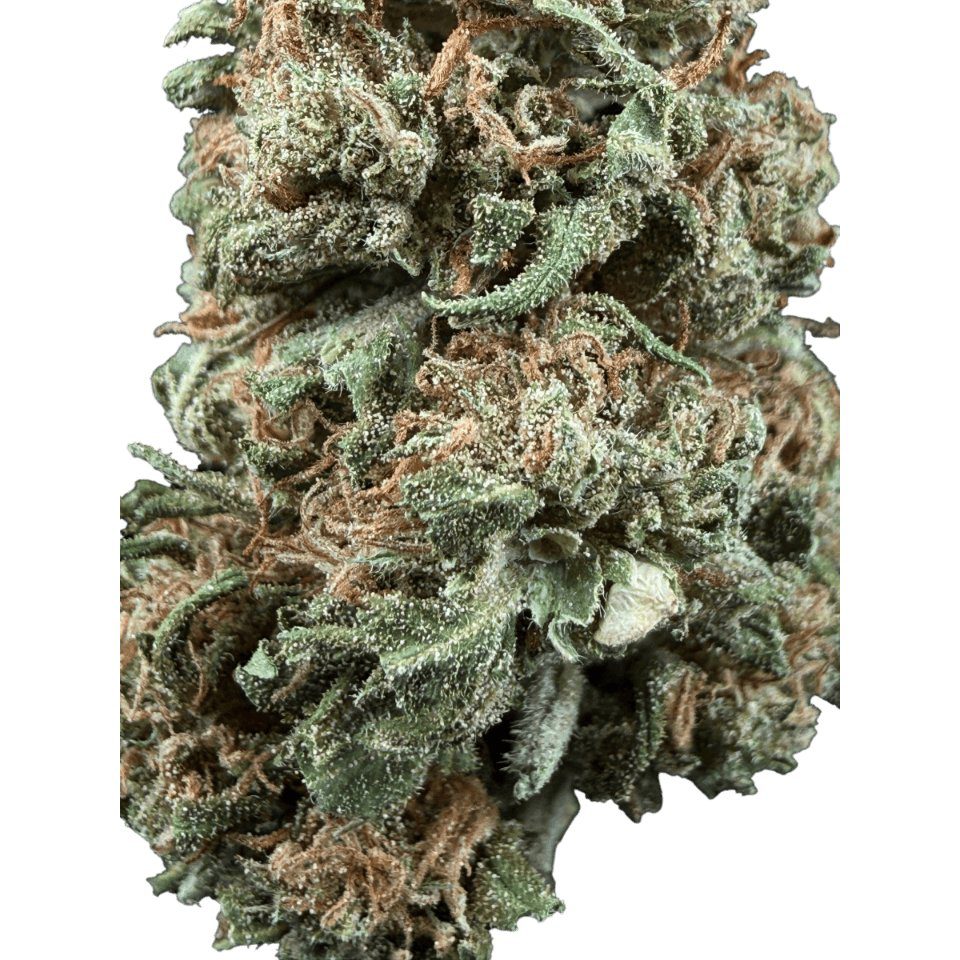
Hemp Flower (CBD flower)
Hemp flower (CBD flower) consists of dried inflorescences of fiber hemp, sold whole or shredded, usually with the CBD or CBG content indicated based on laboratory testing. Flower in which the sum of delta-9-THC and THCA exceeds 0.3% is, under the Act on Counteracting Drug Addiction, herb of cannabis other than fiber hemp (art. 4 point 37), meaning a narcotic drug. Do not confuse with trim.
More: what CBD flower is
CBG Flowers (dried CBG flower)
CBG flowers (dried CBG flower) are dried inflorescences of fiber hemp, in which the dominant cannabinoid is cannabigerol, not cannabidiol. The plant produces it in the form of CBGA, from which THCA, CBDA, and CBCA also arise. A test report from HPLC analysis lists CBGA and CBG separately, while gas chromatography without derivatization only provides their sum. The same limit of 0.3% applies to the sum of delta-9-THC and THCA.
More: CBD and CBG flower strains with lab tests
Trim
Trim consists of small leaves and fragments of inflorescences cut during trimming and sold separately as a shredded form of flower. The Act applies the 0.3% threshold for the sum of delta-9-THC and THCA to every above-ground part of the plant excluding seeds, so it also applies to trim (art. 4 point 37 of the Act on Counteracting Drug Addiction). Do not confuse with kief.
More: forms of CBD and CBG flower on the shelf
Trimming
Trimming is the processing of harvested hemp inflorescences, involving cutting off leaves and stems so that mainly flowers with trichomes remain in the flower; the cut parts are trim. The UNODC manual provides a sample distribution of THC in the plant: 10-12% in female flowers, 1-2% in leaves, and 0.1-0.3% in stems, so trimming alters the composition of the finished flower.
Preroll
A preroll is a factory-rolled cigarette made from hemp flower without tobacco, sold individually or in packs of several pieces. Under the Tobacco Act, it is a herbal product for smoking (art. 2 point 50), so both the unit packet and the outside packaging must carry a warning about the harmfulness of smoking covering 30% of the surface (art. 9e). Do not confuse with a joint, which is hand-rolled.
More: CBD and CBG flower: buds, trim, prerolls
Joint
A joint is a hand-rolled cigarette made from hemp flower in rolling paper. The name itself does not determine the presence of tobacco: in a survey by Hindocha et al. (2016), a roll with tobacco and a roll without tobacco were separate responses. It differs from a blunt by using paper instead of a cigar wrap. Moir et al. (2008) measured that smoke from cannabis cigarettes contains up to 20 times more ammonia than tobacco smoke.
More: differences between a joint, spliff, and blunt
Spliff
A spliff is a cigarette rolled from a mixture of hemp flower and tobacco. In the study by Hindocha et al. (2016), involving 33,687 people, in European countries, 77.2% to 90.9% of respondents indicated smoking with tobacco as the most common way of using cannabis, while in both Americas, it was from 4.4% to 16.0%. Do not confuse with a blunt, where the flower is wrapped in a cigar wrap.
More: how a spliff differs from a joint
Blunt (blant)
Blunt (blant) is cannabis wrapped in a cigar or cigarillo wrapper, from which part or all of the tobacco filling has been removed. Peters et al. (2016) measured nicotine levels in the wrappers of five such products from 1.2 to 6.0 mg per piece, so the wrapper contains nicotine even without tobacco inside. Do not confuse with a spliff, in which tobacco is mixed with the flower.
More: blunt, joint and spliff: differences
Kief (resin powder)
Kief (resin powder) is a loose powder from trichomes separated from hemp inflorescences by sieving. Art. 4 point 38 of the Act on Counteracting Drug Addiction includes resin and other cannabis products containing delta-9-THC or THCA and does not provide a threshold of 0.3%, so separated kief may be considered cannabis resin, which the list of narcotic substances classifies in group I-N. Do not confuse with North African kif, the name UNODC uses for sieved flower.
More: what is kief: definition
Hashish
Hashish is compressed cannabis resin obtained from sieved resin powder or from resin collected by hand from flowers. In Poland, it is a narcotic: cannabis resin is classified in group I-N of the list of narcotic substances, and the Act defines it as resin containing delta-9-THC or THCA, without the 0.3% threshold that applies to plants (art. 4 point 38). Possession carries a penalty of up to 3 years of imprisonment (art. 62 paragraph 1).
Curing
Curing is a stage of processing after drying, in which dried hemp flowers are stored under controlled conditions to equalize moisture throughout the flower. The condition of the flower is assessed, among other things, by water activity (aw), which is a dimensionless indicator; the procedure for measuring it in cannabis flowers is described in the ASTM D8196-22 standard. Do not confuse with drying, which removes most of the water.
Flower Moisture Content
Flower moisture content is the share of water in the mass of the flower, expressed as a percentage. The statutory threshold of 0.3% of the sum of delta-9-THC and THCA is calculated on a dry weight basis (art. 4 point 5), so water in the sample does not lower the result. The UNODC manual states that plant material dried for analysis usually contains 8-13% water. Do not confuse with water activity (aw).
Return to the list of sections
Oils, Extracts, and Product Forms
CBD Oil
CBD oil is a hemp extract with cannabidiol (CBD) dissolved in a carrier oil, most often in MCT oil, olive oil, or hemp seed oil. The European Commission’s catalogue of novel foods recognizes extracts of Cannabis sativa L. with cannabinoids as novel food, which requires authorization before being sold as food under Regulation (EU) 2015/2283. Do not confuse with hemp oil pressed from seeds.
More: how to choose CBD oil: checklist
Concentration of CBD oil (percentage and milligrams)
The concentration of CBD oil is the amount of cannabidiol in the oil, expressed as a percentage or in milligrams for the entire bottle. When the percentage indicates the mass of CBD per volume, at 10% one milliliter contains 100 mg of CBD, and a 10 ml bottle contains 1000 mg. When the percentage is calculated from the mass of the oil, the amount per milliliter depends on the density of the oil. The amount in a drop depends on the dropper.
More: how to calculate the concentration of CBD oil
Full Spectrum
Full spectrum is a hemp extract that retains other cannabinoids and terpenes of the plant, including a small amount of THC, in addition to CBD. In pharmacokinetic studies, it is described as a product with terpenes, minor cannabinoids, and THC. On the test report, THC then has a numerical result or, if there is very little of it, the entry below the limit of quantification (LOQ). Do not confuse with broad spectrum.
More: differences between full spectrum and broad spectrum
Broad Spectrum
Broad spectrum is a hemp extract from which THC has been removed, while retaining CBD, other cannabinoids, and terpenes. On the test report, THC is then recorded as below the limit of quantification (LOQ) or not detected (ND), which does not mean zero, only an amount less than the sensitivity of the method. Do not confuse with isolate, which contains only CBD.
More: full spectrum and broad spectrum compared
CBD Isolate
CBD isolate is crystalline cannabidiol purified from other hemp compounds, meaning without other cannabinoids and terpenes. In the process described in 2025 (supercritical CO2 extraction, purification, crystallization), CBD crystals with a purity above 99% and negligible THC content were obtained. Cannabidiol has the formula C21H30O2 and a molar mass of 314.5 g/mol.
More: distillate and CBD isolate in a table
Hemp Distillate
Hemp distillate is an extract purified by distillation under deep vacuum, for example, short path, which separates cannabinoids from waxes, chlorophyll, and volatile compounds. In the EFSA assessment from 2026, the extract after CO2 extraction, winterization, decarboxylation, chromatographic purification, and high vacuum distillation contained 57-65% CBD and 9-17% other cannabinoids. Do not confuse with isolate: distillate is a mixture, isolate is one compound.
More: how hemp distillate differs from isolate
Hemp Extract
Hemp extract is a concentrate of compounds extracted from hemp flowers and leaves using a solvent, such as supercritical CO2 or ethanol, or pressed hot. The European Commission’s catalogue of novel foods (updated January 14, 2026) recognizes extracts of Cannabis sativa L. with cannabinoids as novel food, even when added to another product, such as hemp seed oil.
More: methods of cannabis extraction compared
CO2 Extraction (supercritical)
CO2 extraction (supercritical) is the extraction of cannabinoids and terpenes from hemp using carbon dioxide in a supercritical state, which acts as a solvent, and after reducing pressure, returns to gas form. CO2 enters this state above 31 °C and 7.38 MPa, or about 74 bar. Ethanol is often added as a co-solvent.
More: CO2 extraction, ethanol, rosin, and BHO
Ethanol Extraction
Ethanol extraction is the extraction of cannabinoids from hemp using ethyl alcohol, which is then evaporated from the solution. Ethanol boils at 78 °C, making it easy to recover, but it also dissolves chlorophyll and waxes along with cannabinoids, which are removed by winterization and filtration. The remaining solvent is checked by the laboratory in residual solvent testing.
More: comparison of ethanol extraction with other methods
Winterization
Winterization is the purification of hemp extract from waxes and fats: the extract is dissolved in ethanol, cooled until the waxes precipitate, and filtered. In the EFSA assessment from 2026, winterization was one of the stages of CBD extract production, after supercritical CO2 extraction and before decarboxylation and high vacuum distillation. After filtration, ethanol is evaporated from the extract.
Rosin
Rosin is a hemp concentrate obtained without a solvent by pressing hemp flowers between heated plates of a press. A review of concentrate chemistry from 2025 describes rosin as a solventless extract obtained by mechanical compression using heat and pressure, unlike BHO produced with butane. Do not confuse with colophony, the pine resin that is also called rosin in English.
More: rosin in the context of other extraction methods
Hemp Paste
Hemp paste is a thick, undiluted hemp extract with a tar-like consistency, often sold in a syringe. Unlike CBD oil, it does not contain a carrier oil, so the concentration of cannabinoids is higher than in oil from the same extract. Paste from unheated material mainly contains cannabinoid acids, such as CBDA, which convert to neutral forms only during decarboxylation.
RSO (Rick Simpson Oil)
RSO (Rick Simpson Oil) is a thick extract from hemp flowers obtained with a solvent, which is then evaporated to concentrate cannabinoids, terpenes, and flavonoids. A study on residual solvents in products from the South African market from 2022 cites RSO and FECO as examples of sticky extracts from which it is difficult to remove the solvent. Do not confuse with CBD oil diluted with a carrier oil.
MCT Oil (carrier oil)
MCT oil is oil from medium-chain triglycerides, which are fats made up of fatty acids with 6-12 carbon atoms. It is industrially obtained by esterification of caprylic acid (C8) and capric acid (C10). In CBD oils, it serves as a carrier oil in which the hemp extract is dissolved. Do not confuse with hemp seed oil, which can also be a carrier.
More: MCT oil and olive oil as CBD carriers
CBD Capsules
CBD capsules are oil with hemp extract or CBD isolate enclosed in a gelatin or plant-based shell, with the amount of CBD stated in milligrams per capsule. The capsule is swallowed, so CBD is absorbed from the digestive tract. The amount of CBD in the package is the number of capsules multiplied by the content of one.
CBD Gummies
CBD gummies are gummies with added hemp extract or CBD isolate, with the amount of CBD stated in milligrams per piece. The gelling mass is made from animal-derived gelatin or pectin, which the EU food additives list marks with the number E 440. As food with an extract containing cannabinoids, they are subject to novel food regulations.
More: CBD gummies and CBD oil compared
CBD Nanoemulsion (water-soluble CBD)
CBD nanoemulsion is a system of very small droplets of oil with CBD dispersed in water and stabilized by an emulsifier, allowing CBD to be mixed with a beverage. Reviews state that the diameter of nanoemulsion droplets is usually up to about 200 nm. The designation of the product as water-soluble is conventional: cannabidiol itself is highly lipophilic, and its calculated XLogP3 coefficient is 6.5.
More: CBD nanoemulsion and oil: absorption comparison
Liposomal CBD
Liposomal CBD is CBD enclosed in liposomes, which are spherical vesicles made of one or several phospholipid bilayers, first described in the mid-1960s. Liposomes range from about 30 nm to several micrometers. Do not confuse with nanoemulsion: there, CBD is in a droplet of oil surrounded by an emulsifier, while in a liposome, it is enclosed by a phospholipid bilayer.
More: questions about liposomal CBD
Sublingual Administration
Sublingual administration is placing a preparation, such as drops of CBD oil, under the tongue, from where part of the substance may be absorbed through the mucous membrane of the oral cavity. A review of 24 pharmacokinetic studies of CBD in humans (Millar et al., 2018) found no measurement of absolute bioavailability for this route. After an aerosol administered to the oral mucosa, the half-life of CBD in these studies was 1.4-10.9 h.
More: sublingual, swallowed, or mixed with food
Bioavailability
Bioavailability is the part of the administered amount of a substance that reaches the bloodstream unchanged; after intravenous administration, it is defined as 100%. For CBD in humans, it was measured after smoking: in the study by Ohlsson et al. from 1986, in five men, it was 31 ± 13%. A review of 24 studies from 2018 found no measurements of absolute bioavailability of CBD for other routes of administration.
More: CBD bioavailability with different routes of administration
CBD Cosmetics
CBD cosmetics are creams, serums, balms, and other skin products with added cannabidiol, which in the EU are subject to Regulation (EC) No 1223/2009 on cosmetic products. In the EU ingredient database CosIng, CBD has two entries: synthetic and derived from hemp extract, hemp tincture, or cannabis resin, both with CAS number 13956-29-1. Do not confuse with the ingredient Cannabis Sativa Seed Oil, which is oil from seeds.
More: hemp cosmetics: cream, serum, and balm
Hemp Shot
A hemp shot is a single serving of a beverage in a small bottle with added hemp extract, usually with CBD. The amount of CBD is stated on the label in milligrams for the entire bottle, not in percentages like in oil. A beverage with an extract containing cannabinoids is a novel food according to the European Commission’s catalogue and requires authorization under Regulation (EU) 2015/2283.
More: how to choose a CBD shot
Return to the list of sections
Testing and Quality
Test Report
A test report is a document issued by a laboratory with the results of testing a specific sample, the name of the method, and data identifying that sample. The standard PN-EN ISO/IEC 17025:2018-02 (point 7.8.2.1) requires, among other things, the designation of the method and sample, the date of receipt of the sample, the date of issue, results with units, identification of the person authorizing the report, and information that the results pertain only to the tested sample. Do not confuse with a COA, which the producer itself may issue.
More: how to read a CBD analysis certificate
COA (Certificate of Analysis)
COA (Certificate of Analysis) is a document with the results of testing one batch of a product, issued by the producer or by a laboratory. GMP guidelines for active substances (ICH Q7, point 11.4) provide for the batch number, a list of tests performed with limits and numerical results, the date, and the signature of a quality department person. Do not confuse with a test report, which is issued by the laboratory itself.
More: how to read a CBD analysis certificate
Batch Number
The batch number is a designation on the packaging that indicates the batch, meaning a set of pieces of a product produced or packaged under practically the same conditions. Directive 2011/91/EU generally requires such designation on food and provides that it is preceded by the letter L, unless it can be clearly distinguished from other markings. The result from the report pertains to your packaging only if its number is on the list of tested batches.
More: CBD and CBG flower: strains and their test results
LOD (Limit of Detection)
LOD (Limit of Detection) is the smallest amount of a substance in a sample that a given method can detect, though not necessarily measure as an exact number. The ICH Q2(R2) guideline from 2023 recognizes a signal-to-noise ratio of 3:1 for its estimation. Do not confuse with LOQ: the limit of quantification is higher, and only from that point is the result given as a number.
LOQ (Limit of Quantification)
LOQ (Limit of Quantification) is the smallest amount of a substance that the method measures with appropriate precision and accuracy. The ICH Q2(R2) guideline from 2023 assumes a signal-to-noise ratio of at least 10:1 for it. A result below LOQ does not mean zero: the substance may be present in an amount that this method cannot measure. So when a result is reported as below LOQ, check what that limit is.
More: CBD and CBG flower: strains and their test results
Total THC
Total THC is the content of delta-9-THC calculated as if all THCA acid converted to THC. When the method measures both forms separately, it is calculated using the formula THC + 0.877 × THCA, where 0.877 is the ratio of the molecular weights of THC and THCA. Polish law sets the 0.3% limit for fiber hemp based on the total content of delta-9-THC and THCA in dry mass, rounded to one decimal place, and does not provide the 0.877 coefficient.
More: CBD and CBG flower: strains and their test results
Total CBD
Total CBD is the content of CBD calculated as if all CBDA acid converted to CBD. It is calculated using the formula CBD + 0.877 × CBDA, because the molecular weight of CBD (314.5) is 0.877 times the molecular weight of CBDA (358.5). Gas chromatography without derivatization usually reports a single value, as the acid converts to CBD in it, often not completely, which may lower the result.
More: CBD and CBG flower: strains and their test results
Gas Chromatography (GC)
Gas chromatography (GC) is a method for separating and determining compounds, in which the mobile phase is gas, and the sample passes through a column in vapor form. Without derivatization, high temperature converts THCA acid to THC, so the result approximates total THC, but the conversion may be incomplete and can lower it. After derivatization, GC measures acids separately. Do not confuse with HPLC.
HPLC (High-Performance Liquid Chromatography)
HPLC (High-Performance Liquid Chromatography) is a method in which the mobile phase is liquid, and the sample is separated on a column without heating to evaporation. This allows cannabinoid acids, such as THCA, CBDA, and CBGA, to remain intact and receive separate results. Total THC is then calculated using the formula THC + 0.877 × THCA. Do not confuse with gas chromatography.
Laboratory Accreditation (PN-EN ISO/IEC 17025)
Laboratory accreditation is a formal confirmation by the national accreditation body that the laboratory is competent to perform specific tests in accordance with the PN-EN ISO/IEC 17025:2018-02 standard. In Poland, the only such body is the Polish Centre for Accreditation, and the accreditation number of the testing laboratory takes the form of the letters AB and a number. Accreditation covers only the tests listed in the scope of accreditation, not the entire activity of the laboratory.
Accredited Method (designation A and NA)
An accredited method is a testing method included in the laboratory’s scope of accreditation; a result obtained by another method is not covered by accreditation. The PCA DA-02 document allows combining both types of results in one report if they can be easily distinguished. In Polish test reports for flower, the abbreviations A (accredited) and NA (non-accredited) appear next to the method. An NA result is not wrong for that reason, but accreditation does not cover it.
More: CBD and CBG flower: strains and their test results
Measurement Uncertainty
Measurement uncertainty is a non-negative parameter describing the spread of values that can be assigned to the measured quantity based on the measurement. The notation 0.35% ± 0.06% means a range from 0.29% to 0.41%. Laboratories often report it as expanded uncertainty with a coverage factor k=2, corresponding to a coverage probability of about 95%, and some only upon customer request.
Heavy Metals
Heavy metals is a colloquial term for metals and metalloids associated with contamination and toxicity; food regulations cover, among others, lead, cadmium, mercury, and arsenic. IUPAC considers this term imprecise. Regulation (EU) 2023/915 establishes maximum levels for dietary supplements: lead 3.0 mg/kg, mercury 0.10 mg/kg, and cadmium 1.0 mg/kg, and for supplements consisting of at least 80% seaweed or bivalve mollusks, cadmium 3.0 mg/kg.
More: where heavy metals come from in CBD products
Pesticides
Pesticides are agents that protect plants from pests, diseases, and weeds; their residues are sought in product testing. Regulation (EC) No 396/2005 establishes maximum residue levels in food, and for a product listed in its Annex I without a specific limit it applies 0.01 mg/kg (Article 18(1)(b)). A result described as not detected is meaningful only if the limit of detection is stated.
More: what the laboratory tests in CBD products
Mycotoxins (aflatoxins)
Mycotoxins are toxic compounds naturally produced by certain fungi that can contaminate plants before and after harvest. EFSA lists aflatoxins, ochratoxin A, and Fusarium toxins among those of greatest concern. Regulation (EU) 2023/915 establishes limits for aflatoxin B1 and the sum of aflatoxins B1, B2, G1, and G2 for food.
More: how to recognize mold and defects in flower
Residual Solvents
Residual solvents are volatile organic compounds used in production, for example during extraction, that have not been completely removed from the finished product. The ICH Q3C(R9) guideline for medicines divides them into three classes: hexane is in class 2 with a limit of 290 ppm, while ethanol is in class 3, for which 5000 ppm (0.5%) is considered acceptable without justification.
Water Activity
Water activity (aw) is the ratio of the vapor pressure of water above the product to the vapor pressure of pure water under the same conditions, a number from 0 to 1 without units. It shows how much water is available for microorganisms, not how much water the product contains. Measurement in cannabis flowers is described by the ASTM D8196 standard. Do not confuse with moisture, which is the percentage of water content.
GACP (Good Agricultural and Collection Practice)
GACP (Good Agricultural and Collection Practice) is a guideline for the cultivation, harvesting, wild collection, and initial processing of plants from which herbal medicines are made. In the European Union, it is issued by the European Medicines Agency (HMPC committee); it has been in effect since August 2006, and revision 1 was adopted on July 9, 2025. Later stages of manufacturing are covered by GMP principles.
GMP (Good Manufacturing Practice)
GMP (Good Manufacturing Practice) refers to the principles of manufacturing and quality control of medicines that ensure the consistent quality of each batch. In the European Union, GMP guidelines are published by the European Commission in volume 4 of the EudraLex collection, and for medicines used in humans, the principles are defined by the Commission Directive (EU) 2017/1572. Do not confuse with GACP, which pertains to the cultivation and harvesting of plants.
Return to the list of sections
Law in Poland and the EU
Act on Counteracting Drug Addiction
The Act on Counteracting Drug Addiction is the act of July 29, 2005, which in Poland defines fiber hemp, herb of cannabis other than fiber hemp, and substitutes, and specifies penalties for possession and trafficking. The consolidated text in force is Journal of Laws 2023 item 1939, last amended by the Act of July 3, 2026 (Journal of Laws 2026 item 1004). Lists of substances, to which HHC was added on May 5, 2023, are in the regulation of the Minister of Health.
Limit 0.3% THC
The limit of 0.3% THC is the threshold that in Polish law separates fiber hemp from cannabis other than fiber hemp. The sum of delta-9-THC and THCA in flowering or fruiting tops of plants is counted, calculated on a dry mass basis, rounded to one decimal place. In Poland, it has been in effect since May 7, 2022; previously, it was 0.20%. The same threshold applies to EU agricultural policy, and its controls measure THC by gas chromatography.
More: where the 0.3% THC limit came from
Herb of Cannabis Other Than Fiber Hemp
Herb of cannabis other than fiber hemp is defined in the Act on Counteracting Drug Addiction as any above-ground part of the cannabis plant, excluding seeds, containing more than 0.3% of the sum of delta-9-THC and THCA (art. 4 point 37). It is on the list of narcotic drugs in group I-N, so possessing it without a permit is a crime under art. 62. Do not confuse with flower from fiber hemp, in which this sum does not exceed 0.3%.
Cannabis Resin
Cannabis resin is defined in the Act on Counteracting Drug Addiction as resin and other cannabis products containing delta-9-THC or delta-9-tetrahydrocannabinolic acid (art. 4 point 38). In the list of narcotic drugs in group I-N, cannabis resin has a separate entry, independent of herb of cannabis other than fiber hemp. Possessing it without a permit carries liability on the same terms as possessing the herb, under art. 62 of the Act.
Medical Marijuana (Pharmaceutical Raw Material)
Medical marijuana is herb of cannabis other than fiber hemp approved as a pharmaceutical raw material, from which a pharmacy prepares a compounded medicine (art. 33a of the Act on Counteracting Drug Addiction). Each such raw material requires permission from the President of the Office for Registration of Medicinal Products, Medical Devices and Biocidal Products, and the regulations have been in effect since November 1, 2017. Do not confuse with CBD flower from fiber hemp, which is not a pharmaceutical raw material.
More: available strains of medical marijuana in pharmacies
Prescription for Medical Marijuana
A prescription for medical marijuana is a prescription for a compounded medicine from herb of cannabis other than fiber hemp, prepared and issued by a pharmacy. Since November 7, 2024, a doctor issues it only after personally examining the patient, except for the primary care physician who continues treatment. One prescription may cover a quantity for a maximum of 90 days of use (§ 7 of the regulation of the Minister of Health on narcotic drugs).
More: how to obtain a prescription for medical marijuana
Dietary Supplement
In Polish law, a dietary supplement is a foodstuff intended to supplement the normal diet, sold in a form that allows for dosing, e.g., in capsules, tablets, or bottles with a dropper (art. 3 sec. 3 point 39 of the Act on Food Safety and Nutrition). A company that introduces or intends to introduce it to the market for the first time notifies the Chief Sanitary Inspector, who may, but does not have to, initiate an explanatory procedure. Do not confuse with a medicine.
More: how a dietary supplement differs from a medicine
Novel Food
In EU law, novel food is food that was not used for human consumption to a significant degree within the Union before May 15, 1997; it requires authorization from the European Commission before sale (Regulation (EU) 2015/2283). The Commission’s catalog lists hemp extracts with non-psychoactive cannabinoids, including CBD, and products containing them. EFSA suspended the assessment of CBD in 2022 and resumed it in 2026, but by November 2026, the Commission had not authorized CBD.
Chief Sanitary Inspectorate (GIS)
The Chief Sanitary Inspectorate (GIS) is the office through which the Chief Sanitary Inspector directs the State Sanitary Inspection as a central government administration body subordinate to the Minister of Health (art. 7 of the Act on State Sanitary Inspection). Notifications about dietary supplements introduced for the first time to the market are sent to GIS. State sanitary inspectors also order the suspension of production or withdrawal from the market of a product suspected of being a substitute.
Substitute
A substitute is defined in the Act on Counteracting Drug Addiction as a product containing a substance acting on the central nervous system, which can be used for the same purposes as a narcotic drug, psychotropic substance, or new psychoactive substance, and whose production and trade are not regulated by separate provisions (art. 4 point 27). Production, import, and trade are prohibited; production or trade is punishable by a financial penalty of 20,000 to 1,000,000 PLN (art. 52a).
Cultivation of Fiber Hemp
The cultivation of fiber hemp is the legal cultivation in Poland of hemp (Cannabis sativa) with a total THC and THCA content of up to 0.3%, allowed only for the purposes specified in art. 45 sec. 3 of the Act on Counteracting Drug Addiction, e.g., textile, food, seed production, or scientific research. A condition is registration in the register maintained by the director of the regional branch of the National Support Center for Agriculture, and sowing seed of the elite or certified category. Cultivation for personal use, i.e., without selling the crop, covers a maximum of 1 hectare per year.
More: legal cultivation of fiber hemp in Poland
Possession of Marijuana
Possession of marijuana in Polish law refers to possession without a permit of herb of cannabis other than fiber hemp, which is a group I-N narcotic drug. It carries a penalty of imprisonment for up to 3 years, for a significant quantity from 1 to 10 years, and in a case of lesser gravity, a fine, restriction of freedom, or imprisonment for up to 1 year (art. 62). Where the quantity is insignificant and for personal use, the proceedings may be discontinued (art. 62a).
More: what are the penalties for possession of marijuana
Driving After THC Use
Driving after THC use is a petty offense or a crime in Poland, depending on the driver’s state. Driving in a state after use is a petty offense under art. 87 § 1 of the Code of Petty Offenses: detention or a fine of at least 2,500 PLN and a mandatory driving ban. Driving under the influence of a narcotic drug is a crime under art. 178a § 1 of the Penal Code, punishable by up to 3 years in prison. Tetrahydrocannabinols are on the list of substances acting similarly to alcohol.
More: CBD and driving a car
CBD in Sports (WADA)
CBD in sports refers to the status of cannabidiol on the World Anti-Doping Agency (WADA) prohibited substances list. CBD has not been prohibited since 2018, but section S8 of the 2026 list still prohibits in competition all other natural and synthetic cannabinoids, including THC. A product with hemp extract may contain THC, so a CBD label alone does not determine the result of a doping test.
More: CBD in sports and WADA regulations
Return to the list of sections
Vaporization and Accessories
Vaporization
Vaporization is the heating of flower or extract to a temperature at which cannabinoids and terpenes turn into vapor, but below the combustion point, so no smoke or ash is produced. In a test of four electric vaporizers, 54.6-82.7% of total THC and 51.4-70.0% of total CBD from the material passed into the vapor (Lanz et al., 2016). Do not confuse with combustion.
More: vaporization temperatures for herbs and hemp
Vaporizer
A vaporizer is a device that heats flower or extract in a heating chamber to a set temperature and produces vapor without combustion. Devices differ in their heating method: convection vaporizers pass hot air through the material, conduction vaporizers heat it by contact with the chamber wall, and hybrid vaporizers combine both methods. The typical operating range is 160-220 °C (Eyal et al., 2023).
More: how a vaporizer works and what types there are
Convection
Convection is the transfer of heat through the movement of gas or liquid; in a vaporizer, the heater warms the air, which then flows through the material. The flower does not touch the heater. In a vaporizer, this is forced convection: air is pushed through the chamber by inhalation or a fan. Do not confuse with conduction, which is heating by contact with a heated wall.
More: convection, conduction, and hybrid vaporizers
Conduction
Conduction is the transfer of heat through direct contact: in a vaporizer, the flower sits in a heated chamber and warms up from its walls. Heat passes through touching particles, without the flow of hot air through the material. Do not confuse with convection, where heat is carried by a stream of air, and the flower does not touch the heater.
More: comparison of heating systems in vaporizers
Vaporization Temperature
The vaporization temperature is the temperature to which the vaporizer heats the chamber; it is usually given as a range of 160-220 °C, most often around 180 °C (Eyal et al., 2023). Boiling data in the literature varies: popular tables give for THC 155-157 °C, the Merck Index 200 °C at a pressure of 0.02 mm Hg, and boiling at normal pressure is much higher. Myrcene boils at 167 °C, linalool at 198 °C.
More: how to choose the vaporization temperature
Heating Chamber
The heating chamber is the part of the vaporizer where the flower or extract is placed and heated. In a conduction device, the material heats up from the walls of the chamber, while in a convection device, it heats up from the hot air flowing through it. The capacity of the chamber determines how much flower fits in one load.
AVB (Already Vaped Bud)
AVB (already vaped bud) is flower that has already passed through a vaporizer. It has not been burned, so it is not ash. Not all material passes into the vapor: in a test of four electric vaporizers, the recovery of total THC in the vapor was 54.6-82.7%, and the rest did not make it into the vapor (Lanz et al., 2016).
Session and On-Demand Vaporizers
Session and on-demand vaporizers refer to two heating modes. In session mode, the chamber maintains the set temperature for a fixed time, even between inhales; in on-demand mode, the device heats only during inhalation or after pressing a button. Some devices have both modes.
Grinder
A grinder is a device for grinding flower by rotating two parts with teeth or pins. A simple grinder only grinds, while a version with a screen has an additional chamber where kief, or trichomes detached from the flower, collects.
More: how to choose a grinder for flower
Rolling Papers
Rolling papers are very thin paper for rolling flower by hand, sold in sheets or rolls. They differ from pre-rolled cones, which are factory-rolled tubes made of paper, with or without a tip. They are produced in several formats and thicknesses.
More: rolling papers, wraps, and pre-rolled cones
Joint Filter (Tip)
A joint filter (tip) is a mouthpiece inserted into one end of the joint: a rolled strip of cardboard or a ready filter, for example, with activated carbon. A cardboard tip does not contain filtering material; it stiffens the end and prevents flower particles from entering the mouth. The carbon filter additionally has a chamber with activated carbon granules.
More: carbon filters: construction and questions
Pipe
A pipe is a small device for smoking flower, with a bowl for the material and a channel through which smoke flows to the mouth. The smoke does not pass through water, which distinguishes a pipe from a bong. Pipes are made from materials such as glass, wood, metal, and ceramics.
More: types of pipes and bowls
Bong
A bong is a water pipe: smoke from heated flower passes through water in a chamber before reaching the mouth. The water chamber distinguishes a bong from a pipe, where smoke flows directly from the bowl.
More: what a bong is and how it is constructed
Moisture Control Packs (Two-Way Humidity Control)
Moisture control packs are bags with a saturated salt solution that maintain a constant relative humidity in a closed container: they release water when it is too dry and absorb it when it is too humid. The humidity level depends on the type of salt; a saturated sodium chloride solution maintains about 75% at 25 °C (Greenspan, 1977).
Return to the list of sections
Hemp Food
Hemp Seeds (Hempseed)
Hemp seeds, or hempseed, are the seeds of hemp (Cannabis sativa L.) eaten whole, hulled, or pressed for oil. In an analysis of 30 samples of hemp products, whole seeds averaged 24.0% protein and 30.4% fat (House et al., 2010). In the European Commission catalog, they are not considered novel food, and the EU limit for them is 3.0 mg/kg of delta-9-THC equivalents.
More: nutritional values of hemp seeds
Shelled Hemp Seeds
Shelled hemp seeds are hemp seeds with the hard shell removed. According to the USDA FoodData Central database, 100 g contains 31.6 g of protein, 48.8 g of fat, and 4.0 g of fiber. Removing the shell raises the protein quality index PDCAAS: 63-66% for shelled seeds compared to 49-53% for whole seeds (House et al., 2010). The first limiting amino acid in both cases is lysine.
More: shelled hemp seeds in the kitchen
Hemp Oil (Hemp Seed Oil)
Hemp oil is an edible oil pressed from hemp seeds. In a study of hemp oils and flours, linoleic acid (omega-6) constituted 50-55%, and alpha-linolenic acid (omega-3) about 12-14% of fatty acids (Arena et al., 2022). The EU limit for hemp seed oil is 7.5 mg/kg of delta-9-THC equivalents. Do not confuse with CBD oil, which is a hemp extract dissolved in a carrier oil.
More: how to use hemp oil in the kitchen
Hemp Protein
Hemp protein is a protein-enriched powder from hemp seeds, made from the press cake, which is the part of the seeds remaining after oil pressing. Cold-pressed cake averaged 40.7% protein and 10.2% fat, and its PDCAAS index was 46-51%, with lysine as the first limiting amino acid (House et al., 2010). The main protein in hemp seeds is edestin.
More: how to use hemp protein in the kitchen
Hemp Flour
Hemp flour is ground, partially defatted hemp seeds left after oil pressing. In the European Commission’s novel food catalog, ground and (partially) defatted hemp seeds have the status of a product that is not novel food. The EU limit for such products is 3.0 mg/kg of delta-9-THC equivalents, the same as for whole seeds.
Hemp Tea
Hemp tea is an infusion made from dried leaves or flower clusters of hemp. The European Commission catalog recognizes that only an infusion from leaves without flowering and fruiting tops is not novel food. From January 1, 2027, leaves for brewing may contain a maximum of 40 mg/kg of delta-9-THC equivalents, and the label must warn against adding fat, e.g., milk, during brewing (Regulation (EU) 2026/1828).
More: how hemp tea differs from CBD oil
Edestin
Edestin is an 11S globulin, the main storage protein of hemp seeds; the second most abundant is 2S albumin (Sun et al., 2021). Edestin gene sequences indicate a high arginine content, about 11-12% (Docimo et al., 2014). Isolated soluble edestin has the status of novel food in the European Commission catalog, although hemp seeds themselves are not.
Gamma-Linolenic Acid (GLA)
Gamma-linolenic acid (GLA) is a polyunsaturated omega-6 fatty acid with 18 carbon atoms and three double bonds: (6Z,9Z,12Z)-octadeca-6,9,12-trienoic acid. In hemp oil, it constituted over 1.7% of fatty acids, and in oils from some varieties, 5-6%. Do not confuse with alpha-linolenic acid (ALA), which has the same molecular formula but belongs to omega-3.
Stearidonic Acid (SDA)
Stearidonic acid (SDA) is a polyunsaturated omega-3 fatty acid with 18 carbon atoms and four double bonds: (6Z,9Z,12Z,15Z)-octadeca-6,9,12,15-tetraenoic acid. Hemp seed oil contains it alongside gamma-linolenic acid, and its amount varies more between samples than the ratio of omega-6 to omega-3 (Petrović et al., 2015). USDA reports 0.62 g of 18:4 acids in 100 g of shelled seeds.
Omega-3 and Omega-6 Fatty Acids
Omega-3 and omega-6 fatty acids are two families of polyunsaturated fatty acids, named for the position of the first double bond counted from the methyl end of the chain: at the 3rd or 6th carbon atom. In 100 g of shelled hemp seeds, USDA reports 27.4 g of linoleic acid (omega-6) and 8.7 g of alpha-linolenic acid (omega-3), which is a ratio of about 3:1.
Hemp Water
Hemp water is a beverage based on water with an added hemp ingredient, e.g., an extract with cannabinoids, flavor, or an infusion from leaves. According to the European Commission catalog, extracts with non-psychoactive cannabinoids, including CBD, and products with their addition are novel food that requires EU permission before sale.
More: what hemp water and CBD shot are
Hemp Beer
Hemp beer is beer to which a raw material from hemp has been added during brewing, e.g., seeds, leaves, flower clusters, or flavor. Hemp and common hop (Humulus lupulus) belong to the same family, Cannabaceae. If the producer adds an extract with CBD or other non-psychoactive cannabinoids, the beverage is subject to novel food regulations and requires EU permission before sale.
Return to the list of sections
Index A-Z
0-9: 2-AG · 11-hydroxy-THC
A: Accredited Method · Act on Counteracting Drug Addiction · Anandamide · AVB
B: Batch Number · Beta-caryophyllene · Bioavailability · Bisabolol · Blunt · Bong · Bract · Broad Spectrum
C: Cannabinoid Acids · Cannabinoids · Cannabis Resin · Cannabis sativa L. · Cannaflavins · CB1 Receptor · CB2 Receptor · CBC · CBCA · CBD · CBD Capsules · CBD Cosmetics · CBD Gummies · CBD in Sports · CBD Isolate · CBD Nanoemulsion · CBD Oil · CBDA · CBDV · CBG · CBG Flowers · CBGA · CBL · CBN · Chemovar · Chief Sanitary Inspectorate · CO2 Extraction · COA · Common Catalogue of Varieties · Concentration of CBD oil · Conduction · Convection · Cultivation of Fiber Hemp · Curing
D: Decarboxylation · Delta-8-THC · Delta-10-THC · Dietary Supplement · Driving After THC Use
E: Edestin · Endocannabinoid System · Endocannabinoids · Entourage Effect · Ethanol Extraction · Eucalyptol
F: FAAH · Farnesene · Female and Male Plants · Fiber Hemp · Flavonoids · Flower Moisture Content · Full Spectrum
G: GACP · Gamma-Linolenic Acid · Gas Chromatography · Genotype · Geraniol · GMP · GPR55 Receptor · Grinder
H: H4CBD · Hashish · Heating Chamber · Heavy Metals · Hemp Beer · Hemp Distillate · Hemp Extract · Hemp Flour · Hemp Flower · Hemp Oil · Hemp Paste · Hemp Protein · Hemp Seeds · Hemp Shot · Hemp Tea · Hemp Water · Herb of Cannabis Other Than Fiber Hemp · Hermaphrodite · HHC · HPLC · Humulene
I: Indica and Sativa · Inflorescence
J: Joint · Joint Filter
K: Kief
L: Laboratory Accreditation · Landrace · Limit 0.3% THC · Limonene · Linalool · Liposomal CBD · LOD · LOQ
M: MCT Oil · Measurement Uncertainty · Medical Marijuana · Moisture Control Packs · Monoterpenes · Mycotoxins · Myrcene
N: Nerolidol · Novel Food
O: Ocimene · Olivetolic acid · Omega-3 and Omega-6 Fatty Acids · Oxidation of THC to CBN
P: Pesticides · Phenotype · Pinene · Pipe · Possession of Marijuana · Preroll · Prescription for Medical Marijuana
R: Residual Solvents · Rolling Papers · Rosin · RSO
S: Sesquiterpenes · Session and On-Demand Vaporizers · Shelled Hemp Seeds · Spliff · Stearidonic Acid · Sublingual Administration · Substitute · Synthetic cannabinoids
T: Terpene Profile · Terpenes · Terpinolene · Test Report · THC · THCA · THCP · THCV · Total CBD · Total THC · Trichomes · Trim · Trimming · TRPV1 Receptor
V: Vaporization · Vaporization Temperature · Vaporizer · Variety · Volatile Sulfur Compounds
W: Water Activity · Winterization
Frequently Asked Questions
Why does the test report show CBDA and CBD separately?
Because the plant primarily produces acids, and neutral CBD is formed from CBDA mainly under the influence of heat. Liquid chromatography (HPLC) does not heat the sample to decarboxylation temperature, so it measures both forms separately. The laboratory then also provides the total CBD: CBD + 0.877 × CBDA. The coefficient 0.877 is the ratio of the molecular weights of CBD (314.5) and CBDA (358.5). Gas chromatography without derivatization converts acids into neutral forms, often incompletely, so it may underestimate the total.
What do the test date and batch number on the report mean?
The date indicates when the sample was tested or the report was issued: the result describes the sample from that day. The composition may then change, as THCA converts to THC faster in heat (Taschwer and Schmid, 2015), and THC oxidizes to CBN (Fairbairn et al., 1976). The batch number links the result to one batch, meaning the product produced under practically the same conditions (Directive 2011/91/EU). The number on the packaging should match the number on the report.
Do hemp seeds contain CBD and THC?
Only trace amounts: seeds are not a raw material for CBD production. Cannabinoids are produced in glandular trichomes (Livingston et al., 2020), and they reach the seeds only in trace amounts from the resin. In the study by Ross et al. (2000), most THC in seeds was on the shell, and the kernels of fiber hemp seeds contained less than 0.5 µg/g of it. The EU allows up to 3.0 mg/kg in seeds and up to 7.5 mg/kg of delta-9-THC equivalents in seed oil, meaning THC + 0.877 × THCA (Regulation 2023/915).
What does the limit of 0.3% THC refer to?
In Polish law, 0.3% is the threshold for the plant: fiber hemp has at most 0.3% of the total delta-9-THC and THCA in dry mass in flowering or fruiting tops. Herb above this threshold is herb of cannabis other than fiber hemp. The same value applies in EU agricultural subsidies (Regulation 2021/2115). The law ties this threshold to the plant and does not provide a separate threshold for finished products, such as oils; for seeds and seed oil, the EU sets limits in mg/kg. The law does not explicitly state how art. 4 point 38 on cannabis resin applies to extracts from fiber hemp.
What does the term chemovar mean and what does it replace?
Chemovar (chemical variety) is a variety described by composition: the ratio of cannabinoids and terpene profile. The term replaces the division into indica and sativa, as analysis of over 41,000 samples (Smith et al., 2022) showed that these names do not reliably distinguish chemical composition. Hazekamp and Fischedick (2012) grouped varieties based on 28 main compounds and proposed a chemical classification instead of names. On a test report, the chemovar shows up as the ratio of THC to CBD and a list of terpenes.
Sources
Sources are grouped by section; a document cited in several sections is listed once, under the first.
Cannabinoids (25)
- Maioli C, Mattoteia D, Amin HIM et al. Cannabinol: History, Syntheses, and Biological Profile of the Greatest “Minor” Cannabinoid. Plants (Basel) 2022;11(21):2896. DOI 10.3390/plants11212896
- Hanuš LO, Meyer SM, Muñoz E, Taglialatela-Scafati O, Appendino G. Phytocannabinoids: a unified critical inventory. Nat Prod Rep 2016;33(12):1357-1392. DOI 10.1039/c6np00074f
- PubChem CID 644019, Cannabidiol; PubChem CID 160570, Cannabidiolic acid
- PubChem CID 16078, Tetrahydrocannabinol; PubChem CID 98523, delta9-Tetrahydrocannabinolic acid
- Tahir MN, Raz FS, Rondeau-Gagné S, Trant JF. The biosynthesis of the cannabinoids. J Cannabis Res 2021;3(1):7. DOI 10.1186/s42238-021-00062-4
- Regulation of the Minister of Health of August 17, 2018, on the list of psychotropic substances, narcotic drugs, and new psychoactive substances (consolidated text Journal of Laws 2026 item 1419)
- Act of July 29, 2005 on Counteracting Drug Addiction (consolidated text Journal of Laws 2023 item 1939, amended by Journal of Laws 2026 item 1004)
- PubChem CID 5315659, Cannabigerol
- PubChem CID 30219, (+-)-Cannabichromene
- PubChem CID 11601669, Cannabidivarin
- PubChem CID 93147, Tetrahydrocannabivarin
- PubChem CID 59444380, Cannabicyclol
- Haghdoost M, DePorre Y, Figi M et al. An Unexpected Activity of a Minor Cannabinoid: Cannabicyclol (CBL) Is a Potent Positive Allosteric Modulator of Serotonin 5-HT1A Receptor. J Nat Prod 2025;88(1):58-66. DOI 10.1021/acs.jnatprod.4c00977
- PubChem CID 638026, Delta-8-Tetrahydrocannabinol
- Ujváry I. Hexahydrocannabinol and closely related semi-synthetic cannabinoids: A comprehensive review. Drug Test Anal 2024;16(2):127-161. DOI 10.1002/dta.3519
- Regulation of the Minister of Health of July 7, 2026, amending the regulation on the list of psychotropic substances, narcotic drugs, and new psychoactive substances (Journal of Laws 2026 item 934)
- Notice of the Minister of Health of June 27, 2022 on the announcement of the consolidated text of the regulation of the Minister of Health on the list of psychotropic substances, narcotic drugs, and new psychoactive substances (Journal of Laws 2022 item 1665)
- Citti C, Linciano P, Russo F et al. A novel phytocannabinoid isolated from Cannabis sativa L. with an in vivo cannabimimetic activity higher than Δ9-tetrahydrocannabinol: Δ9-Tetrahydrocannabiphorol. Sci Rep 2019;9(1):20335. DOI 10.1038/s41598-019-56785-1
- PubChem CID 6453074, 3-Heptyl-delta(1)-tetrahydrocannabinol
- Regulation of the Minister of Health of April 30, 2025, amending the regulation on the list of psychotropic substances, narcotic drugs, and new psychoactive substances (Journal of Laws 2025 item 598)
- PubChem CID 616324, 1,3-Benzenediol, 2-[5-methyl-2-(1-methylethyl)cyclohexyl]-5-pentyl- (tetrahydrocannabidiol)
- Gasse A, Vennemann M, Köhler H, Schürenkamp J. Toxicogenetic analysis of Δ9-THC-metabolizing enzymes. Int J Legal Med 2020;134(6):2095-2103. DOI 10.1007/s00414-020-02380-3
- PubChem CID 644022, 11-Hydroxytetrahydrocannabinol
- Banister SD, Connor M. The Chemistry and Pharmacology of Synthetic Cannabinoid Receptor Agonists as New Psychoactive Substances: Origins. Handb Exp Pharmacol 2018;252:165-190. DOI 10.1007/164_2018_143
- Potts AJ, Cano C, Thomas SHL et al. Synthetic cannabinoid receptor agonists: classification and nomenclature. Clin Toxicol (Phila) 2020;58(2):82-98. DOI 10.1080/15563650.2019.1661425
Acids and Transformations (6)
- PubChem CID 6449999, Cannabigerolic Acid
- PubChem CID 3084339, Cannabichromenic acid
- PubChem CID 2543, Cannabinol
- Gagne SJ, Stout JM, Liu E et al. Identification of olivetolic acid cyclase from Cannabis sativa reveals a unique catalytic route to plant polyketides. Proc Natl Acad Sci U S A 2012;109(31):12811-6. DOI 10.1073/pnas.1200330109
- PubChem CID 2826719, Olivetolic Acid
- PubChem CID 10377, Olivetol
Endocannabinoid System (21)
- Lu HC, Mackie K. An Introduction to the Endogenous Cannabinoid System. Biol Psychiatry 2016;79(7):516-525. DOI 10.1016/j.biopsych.2015.07.028 (PMID 26698193)
- Matsuda LA et al. Structure of a cannabinoid receptor and functional expression of the cloned cDNA. Nature 1990;346:561-564. DOI 10.1038/346561a0 (PMID 2165569)
- Devane WA et al. Isolation and structure of a brain constituent that binds to the cannabinoid receptor. Science 1992;258:1946-1949. DOI 10.1126/science.1470919 (PMID 1470919)
- Mechoulam R et al. Identification of an endogenous 2-monoglyceride, present in canine gut, that binds to cannabinoid receptors. Biochem Pharmacol 1995;50:83-90. DOI 10.1016/0006-2952(95)00109-d (PMID 7605349)
- PubChem CID 5281969, Anandamide
- Cravatt BF et al. Molecular characterization of an enzyme that degrades neuromodulatory fatty-acid amides. Nature 1996;384:83-87. DOI 10.1038/384083a0 (PMID 8900284)
- PubChem CID 5282280, 2-Arachidonylglycerol
- Sugiura T et al. 2-Arachidonoylglycerol: a possible endogenous cannabinoid receptor ligand in brain. Biochem Biophys Res Commun 1995;215:89-97. DOI 10.1006/bbrc.1995.2437 (PMID 7575630)
- Blankman JL, Simon GM, Cravatt BF. A comprehensive profile of brain enzymes that hydrolyze the endocannabinoid 2-arachidonoylglycerol. Chem Biol 2007;14(12):1347-1356. DOI 10.1016/j.chembiol.2007.11.006 (PMID 18096503)
- Herkenham M et al. Cannabinoid receptor localization in brain. Proc Natl Acad Sci USA 1990;87:1932-1936. DOI 10.1073/pnas.87.5.1932 (PMID 2308954)
- NCBI Gene ID 1268, CNR1 cannabinoid receptor 1 (Homo sapiens)
- Munro S, Thomas KL, Abu-Shaar M. Molecular characterization of a peripheral receptor for cannabinoids. Nature 1993;365:61-65. DOI 10.1038/365061a0 (PMID 7689702)
- NCBI Gene ID 1269, CNR2 cannabinoid receptor 2 (Homo sapiens)
- NCBI Gene ID 2166, FAAH fatty acid amide hydrolase (Homo sapiens)
- Caterina MJ et al. The capsaicin receptor: a heat-activated ion channel in the pain pathway. Nature 1997;389:816-824. DOI 10.1038/39807 (PMID 9349813)
- Zygmunt PM et al. Vanilloid receptors on sensory nerves mediate the vasodilator action of anandamide. Nature 1999;400:452-457. DOI 10.1038/22761 (PMID 10440374)
- NCBI Gene ID 7442, TRPV1 transient receptor potential cation channel subfamily V member 1 (Homo sapiens)
- Sawzdargo M et al. Identification and cloning of three novel human G protein-coupled receptor genes GPR52, PsiGPR53 and GPR55. Brain Res Mol Brain Res 1999;64:193-198. DOI 10.1016/s0169-328x(98)00277-0 (PMID 9931487)
- Ryberg E et al. The orphan receptor GPR55 is a novel cannabinoid receptor. Br J Pharmacol 2007;152:1092-1101. DOI 10.1038/sj.bjp.0707460 (PMID 17876302)
- Oka S et al. Identification of GPR55 as a lysophosphatidylinositol receptor. Biochem Biophys Res Commun 2007;362:928-934. DOI 10.1016/j.bbrc.2007.08.078 (PMID 17765871)
- Pertwee RG et al. International Union of Basic and Clinical Pharmacology. LXXIX. Cannabinoid receptors and their ligands: beyond CB1 and CB2. Pharmacol Rev 2010;62:588-631. DOI 10.1124/pr.110.003004 (PMID 21079038)
Terpenes and Flavonoids (41)
- IUPAC. Glossary of class names of organic compounds and reactive intermediates based on structure (IUPAC Recommendations 1995). Pure Appl Chem 1995;67:1307-1375, terms: terpenes, sesquiterpenoids. DOI 10.1351/pac199567081307
- PubChem CID 6557, Isoprene
- Booth JK, Bohlmann J. Terpenes in Cannabis sativa: From plant genome to humans. Plant Sci 2019;284:67-72. DOI 10.1016/j.plantsci.2019.03.022 (PMID 31084880)
- PubChem CID 31253, Myrcene (Boiling Point, via: CRC Handbook of Chemistry and Physics)
- PubChem CID 5281515, (-)-Caryophyllene
- Ibrahim EA et al. Quantitative Determination of Cannabis Terpenes Using Gas Chromatography-Flame Ionization Detector. Cannabis Cannabinoid Res 2023;8(5):899-910. DOI 10.1089/can.2022.0188 (PMID 36322895)
- PubChem CID 5281520, Humulene
- PubChem CID 1549992, Bisabolol
- PubChem CID 5284507, Nerolidol
- PubChem CID 18756, beta-Ocimene
- Oswald IWH et al. Identification of a New Family of Prenylated Volatile Sulfur Compounds in Cannabis Revealed by Comprehensive Two-Dimensional Gas Chromatography. ACS Omega 2021;6:31667-31676. DOI 10.1021/acsomega.1c04196 (PMID 34869990)
- PubChem CID 22311, Limonene
- PubChem CID 440917, D-Limonene
- PubChem CID 6549, Linalool (Boiling Point, via: CRC Handbook of Chemistry and Physics)
- PubChem CID 637566, Geraniol
- Gertsch J et al. Beta-caryophyllene is a dietary cannabinoid. Proc Natl Acad Sci USA 2008;105:9099-9104. DOI 10.1073/pnas.0803601105 (PMID 18574142)
- Finlay DB et al. Terpenoids From Cannabis Do Not Mediate an Entourage Effect by Acting at Cannabinoid Receptors. Front Pharmacol 2020;11:359. DOI 10.3389/fphar.2020.00359 (PMID 32269529)
- PubChem CID 6654, alpha-Pinene
- PubChem CID 14896, beta-Pinene
- PubChem CID 11463, Terpinolene
- PubChem CID 5320249, alpha-Ocimene
- PubChem CID 442343, Levomenol
- PubChem CID 62346, gamma-Bisabolene
- PubChem CID 2758, 1,8-Cineole
- PubChem CID 5281516, alpha-Farnesene
- PubChem CID 5281517, beta-Farnesene
- Bowers WS et al. Aphid alarm pheromone: isolation, identification, synthesis. Science 1972;177:1121-1122. DOI 10.1126/science.177.4054.1121 (PMID 17840606)
- PubChem CID 643820, Nerol
- Hanuš LO, Hod Y. Terpenes/Terpenoids in Cannabis: Are They Important? Med Cannabis Cannabinoids 2020;3(1):25-60. DOI 10.1159/000509733 (PMID 34676339)
- Ben-Shabat S et al. An entourage effect: inactive endogenous fatty acid glycerol esters enhance 2-arachidonoyl-glycerol cannabinoid activity. Eur J Pharmacol 1998;353:23-31. DOI 10.1016/s0014-2999(98)00392-6 (PMID 9721036)
- Russo EB. Taming THC: potential cannabis synergy and phytocannabinoid-terpenoid entourage effects. Br J Pharmacol 2011;163:1344-1364. DOI 10.1111/j.1476-5381.2011.01238.x (PMID 21749363)
- Santiago M et al. Absence of Entourage: Terpenoids Commonly Found in Cannabis sativa Do Not Modulate the Functional Activity of Δ9-THC at Human CB1 and CB2 Receptors. Cannabis Cannabinoid Res 2019;4:165-176. DOI 10.1089/can.2019.0016 (PMID 31559333)
- Simei JLQ et al. Does the “Entourage Effect” in Cannabinoids Exist? A Narrative Scoping Review. Cannabis Cannabinoid Res 2024;9(5):1202-1216. DOI 10.1089/can.2023.0052 (PMID 37535820)
- McPartland JM, Russo EB. Cannabis and cannabis extracts: greater than the sum of their parts? J Cannabis Ther 2001;1(3-4):103-132. DOI 10.1300/J175v01n03_08
- Bautista JL, Yu S, Tian L. Flavonoids in Cannabis sativa: Biosynthesis, Bioactivities, and Biotechnology. ACS Omega 2021;6(8):5119-5123. DOI 10.1021/acsomega.1c00318 (PMID 33681553)
- Barrett ML, Gordon D, Evans FJ. Isolation from Cannabis sativa L. of cannflavin: a novel inhibitor of prostaglandin production. Biochem Pharmacol 1985;34:2019-2024 (PMID 3859295)
- Barrett ML, Scutt AM, Evans FJ. Cannflavin A and B, prenylated flavones from Cannabis sativa L. Experientia 1986;42:452-453. DOI 10.1007/BF02118655 (PMID 3754224)
- PubChem CID 10071695, Cannflavin A
- PubChem CID 403815, Cannflavin B
- Rea KA et al. Biosynthesis of cannflavins A and B from Cannabis sativa L. Phytochemistry 2019;164:162-171. DOI 10.1016/j.phytochem.2019.05.009 (PMID 31151063)
- PubChem CID 146586, 3-Methyl-2-butene-1-thiol
Plant and Botany (15)
- GBIF Backbone Taxonomy: Cannabis sativa L., Sp. Pl.: 1027 (1753), family Cannabaceae
- UNODC, Recommended methods for the identification and analysis of cannabis and cannabis products, ST/NAR/40/Rev.1, Vienna 2009
- GBIF Backbone Taxonomy: Cannabis indica Lam., Encycl. 1: 695 (1785), synonym Cannabis sativa subsp. indica (Lam.) E.Small & Cronquist
- Smith CJ, Vergara D, Keegan B, Jikomes N. The phytochemical diversity of commercial Cannabis in the United States. PLoS One. 2022;17(5):e0267498. doi:10.1371/journal.pone.0267498
- Hazekamp A, Fischedick JT. Cannabis - from cultivar to chemovar. Drug Test Anal. 2012;4(7-8):660-667. doi:10.1002/dta.407
- de Meijer EPM, Bagatta M, Carboni A, Crucitti P, Moliterni VMC, Ranalli P, Mandolino G. The inheritance of chemical phenotype in Cannabis sativa L. Genetics. 2003;163(1):335-346. doi:10.1093/genetics/163.1.335
- Council Directive 2002/53/EC of June 13, 2002, on the common catalog of varieties of agricultural plant species
- European Commission, DG SANTE: Plant variety catalogues, databases and information systems
- NHGRI, Talking Glossary of Genomic and Genetic Terms: Phenotype
- NHGRI, Talking Glossary of Genomic and Genetic Terms: Genotype
- Camacho Villa TC, Maxted N, Scholten M, Ford-Lloyd B. Defining and identifying crop landraces. Plant Genetic Resources. 2005;3(3):373-384. doi:10.1079/PGR200591
- Livingston SJ, Quilichini TD, Booth JK et al. Cannabis glandular trichomes alter morphology and metabolite content during flower maturation. Plant J. 2020;101(1):37-56. PMID 31469934
- Spitzer-Rimon B, Duchin S, Bernstein N, Kamenetsky R. Architecture and florogenesis in female Cannabis sativa plants. Front Plant Sci. 2019;10:350. doi:10.3389/fpls.2019.00350
- Divashuk MG, Alexandrov OS, Razumova OV, Kirov IV, Karlov GI. Molecular cytogenetic characterization of the dioecious Cannabis sativa with an XY chromosome sex determination system. PLoS One. 2014;9(1):e85118. doi:10.1371/journal.pone.0085118
- Punja ZK, Holmes JE. Hermaphroditism in marijuana (Cannabis sativa L.) inflorescences: impact on floral morphology, seed formation, progeny sex ratios, and genetic variation. Front Plant Sci. 2020;11:718. doi:10.3389/fpls.2020.00718
Flower and Its Forms (5)
- Act of November 9, 1995 on health protection against the consequences of tobacco use and tobacco products (consolidated text Journal of Laws 2026 item 1214)
- Moir D, Rickert WS, Levasseur G et al. A comparison of mainstream and sidestream marijuana and tobacco cigarette smoke produced under two machine smoking conditions. Chem Res Toxicol. 2008;21(2):494-502. PMID 18062674
- Hindocha C, Freeman TP, Ferris JA, Lynskey MT, Winstock AR. No smoke without tobacco: a global overview of cannabis and tobacco routes of administration and their association with intention to quit. Front Psychiatry. 2016;7:104. doi:10.3389/fpsyt.2016.00104
- Peters EN, Schauer GL, Rosenberry ZR, Pickworth WB. Does marijuana “blunt” smoking contribute to nicotine exposure?: Preliminary product testing of nicotine content in wrappers of cigars commonly used for blunt smoking. Drug Alcohol Depend. 2016;168:119-122. doi:10.1016/j.drugalcdep.2016.09.007
- ASTM D8196-22, Standard Practice for Determination of Water Activity (aw) in Cannabis Flower
Oils, Extracts, and Product Forms (20)
- European Commission, EU Novel Food status Catalogue, entry “Cannabinoids” (updated 14.01.2026)
- Regulation (EU) 2015/2283 of the European Parliament and of the Council of November 25, 2015 on novel foods
- Berthold EC et al., Comparative Pharmacokinetics of Commercially Available Cannabidiol Isolate, Broad-Spectrum, and Full-Spectrum Products, Eur J Drug Metab Pharmacokinet 2023;48(4):427-435, doi:10.1007/s13318-023-00839-3
- Calmanti R, Selva M, Perosa A., From Hemp to CBD Crystals: A Scaled-Up Procedure for the Selective Extraction, Isolation, and Purification of Cannabidiol, ACS Agric Sci Technol 2025;5(3):346-354, doi:10.1021/acsagscitech.4c00462
- Costa MDC et al., Process Development for GMP-Grade Full Extract Cannabis Oil: Towards Standardized Medicinal Use, Pharmaceutics 2025;17(7):848, doi:10.3390/pharmaceutics17070848
- EFSA NDA Panel, Safety of Cannabis sativa L. extract as a novel food pursuant to Regulation (EU) 2015/2283, EFSA Journal 2026;24(9):e10319, doi:10.2903/j.efsa.2026.10319
- Suárez-Jacobo Á et al., Cannabis Extraction Technologies: Impact of Research and Value Addition in Latin America, Molecules 2023;28(7):2895, doi:10.3390/molecules28072895
- PubChem CID 280, Carbon Dioxide (critical temperature 304.13 K, critical pressure 7.375 MPa)
- PubChem CID 702, Ethanol
- Viviers HJ, Petzer A, Gordon R., An assessment of solvent residue contaminants related to cannabis-based products in the South African market, J Cannabis Res 2022;4(1):19, doi:10.1186/s42238-022-00130-3
- Munger KR, Anreise KM, Strongin RM., Cannabis concentrate vaping chemistry, Front Toxicol 2025;7:1568207, doi:10.3389/ftox.2025.1568207
- Heidt C et al., Medium-Chain Triglycerides: Scientific and Regulatory Perspectives from Germany and Japan with a US Context: A Concise Review, Nutrients 2026;18(7):1027, doi:10.3390/nu18071027
- Regulation (EC) No 1333/2008 of the European Parliament and of the Council of December 16, 2008 on food additives
- Dinshaw IJ, Ahmad N, Salim N, Leo BF., Nanoemulsions: A Review on the Conceptualization of Treatment for Psoriasis Using a Green Surfactant with Low-Energy Emulsification Method, Pharmaceutics 2021;13(7):1024, doi:10.3390/pharmaceutics13071024
- Ashaolu TJ., Nanoemulsions for health, food, and cosmetics: a review, Environ Chem Lett 2021, PMC7956871
- Akbarzadeh A et al., Liposome: classification, preparation, and applications, Nanoscale Res Lett 2013;8(1):102, doi:10.1186/1556-276X-8-102
- Millar SA, Stone NL, Yates AS, O’Sullivan SE., A Systematic Review on the Pharmacokinetics of Cannabidiol in Humans, Front Pharmacol 2018;9:1365, doi:10.3389/fphar.2018.01365
- Ohlsson A et al., Single-dose kinetics of deuterium-labelled cannabidiol in man after smoking and intravenous administration, Biomed Environ Mass Spectrom 1986;13(2):77-83, doi:10.1002/bms.1200130206
- European Commission, CosIng database, entries CANNABIDIOL - SYNTHETICALLY PRODUCED, CANNABIDIOL - DERIVED FROM EXTRACT OR TINCTURE OR RESIN OF CANNABIS and CANNABIS SATIVA SEED OIL
- Regulation (EC) No 1223/2009 of the European Parliament and of the Council of November 30, 2009 on cosmetic products
Testing and Quality (24)
- PN-EN ISO/IEC 17025:2018-02 (ISO/IEC 17025:2017), General requirements for the competence of testing and calibration laboratories
- NIST, ISO/IEC 17025:2017 crosswalk, 7.8 Reporting of results (2018)
- ICH Q7, Good Manufacturing Practice Guide for Active Pharmaceutical Ingredients (2000)
- Directive 2011/91/EU of the European Parliament and of the Council of December 13, 2011 on indications or marks identifying the lot to which a foodstuff belongs (OJ L 334, 16.12.2011)
- ICH Q2(R2), Validation of Analytical Procedures, adopted November 1, 2023
- 7 CFR 990.1, definitions of “Acceptable hemp THC level” and “Measurement of Uncertainty” (USDA)
- Mayong A., Sreewongchai T., Limsuwan S., Tansakul N., Hierarchical Chemotaxonomic Differentiation in Cannabis Chemovars Using Quantitative HPLC Cannabinoid Profiling and Multivariate Chemometrics, Plants (Basel) 2026, 15(7):1077, doi 10.3390/plants15071077
- Test Report No. S/CL/510r/26, Cannalabs by EkotechLAB, Straszyn, 29.10.2026
- Franzin M, Di Lenardo R, Ruoso R, Addobbati R., Incomplete Decarboxylation of Acidic Cannabinoids in GC-MS Leads to Underestimation of the Total Cannabinoid Content in Cannabis Oils Without Derivatization, Pharmaceutics 2025;17(3):334, doi:10.3390/pharmaceutics17030334
- Ettre L.S., Nomenclature for chromatography (IUPAC Recommendations 1993), Pure and Applied Chemistry 1993, 65(4):819-872, doi 10.1351/pac199365040819
- Act of April 13, 2016 on conformity assessment systems and market supervision (consolidated text Journal of Laws 2025 item 568)
- Regulation (EC) No 765/2008 of the European Parliament and of the Council of July 9, 2008.
- Polish Centre for Accreditation, DA-02 Principles of using PCA accreditation symbols, edition 15 of 26.05.2025
- Polish Centre for Accreditation, list of testing laboratories accredited in relation to PN-EN ISO/IEC 17025:2018-02
- JCGM 200:2012, International Vocabulary of Metrology (VIM3), entry 2.26 measurement uncertainty
- Duffus J.H., “Heavy metals” a meaningless term? (IUPAC Technical Report), Pure and Applied Chemistry 2002, 74(5):793-807, doi 10.1351/pac200274050793
- Commission Regulation (EU) 2023/915 of 25 April 2023 setting maximum levels for certain contaminants in food
- Regulation (EC) No 396/2005 of the European Parliament and of the Council of February 23, 2005 on maximum residue levels of pesticides in or on food and feed
- EFSA, Mycotoxins (thematic page, review January 6, 2026)
- ICH Q3C(R9), Impurities: Guideline for Residual Solvents, EMA/CHMP/ICH/82260/2006, effective from April 29, 2024
- FDA, Inspection Technical Guide No. 39, Water Activity (aw) in Foods (1984)
- EMA, Guideline on Good Agricultural and Collection Practice (GACP) for starting materials of herbal origin, EMA/HMPC/246816/2005 Rev. 1, adopted by HMPC July 9, 2025
- European Commission, EudraLex Volume 4, Good Manufacturing Practice (GMP) guidelines
- Commission Directive (EU) 2017/1572 of September 15, 2017 supplementing Directive 2001/83/EC as regards the principles and guidelines of good manufacturing practice for medicinal products for human use
Law in Poland and the EU (16)
- Act of July 3, 2026 amending the Act on Counteracting Drug Addiction and certain other acts (Journal of Laws 2026 item 1004)
- Act of March 24, 2022 amending the Act on Counteracting Drug Addiction (Journal of Laws 2022 item 763)
- Regulation (EU) 2021/2115 of the European Parliament and of the Council of December 2, 2021 establishing rules on support for CAP Strategic Plans
- Commission Delegated Regulation (EU) 2022/126 of December 7, 2021.
- Act of July 7, 2017 amending the Act on Counteracting Drug Addiction and the Act on Reimbursement of Medicines, Foodstuffs for Particular Nutritional Uses and Medical Devices (Journal of Laws 2017 item 1458)
- Regulation of the Minister of Health of September 11, 2006 on narcotic drugs, psychotropic substances, category 1 precursors, and preparations containing these substances (consolidated text Journal of Laws 2025 item 1678)
- Regulation of the Minister of Health of October 29, 2024 amending the regulation on narcotic drugs, psychotropic substances, category 1 precursors, and preparations containing these substances (Journal of Laws 2024 item 1600)
- Act of August 25, 2006 on food safety and nutrition (consolidated text Journal of Laws 2026 item 1399)
- EFSA, Cannabidiol novel food evaluations on hold pending new data (7.06.2022)
- EFSA NDA Panel, Update of the statement on safety of cannabidiol as a novel food, EFSA Journal 2026, doi:10.2903/j.efsa.2026.9862
- Act of March 14, 1985 on the State Sanitary Inspection (consolidated text Journal of Laws 2024 item 416, as amended)
- Act of May 20, 1971, Code of Petty Offenses (consolidated text Journal of Laws 2026 item 1372)
- Act of June 6, 1997, Penal Code (consolidated text Journal of Laws 2026 item 1342)
- Regulation of the Minister of Health of July 16, 2014 on the list of substances acting similarly to alcohol and the conditions and methods of conducting tests for their presence in the body (Journal of Laws 2014 item 948)
- WADA, Prohibited List 2026
- USADA, 2018 Prohibited List: Summary of Major Changes
Vaporization and Accessories (10)
- Hazekamp A, Ruhaak R, Zuurman L, van Gerven J, Verpoorte R. Evaluation of a vaporizing device (Volcano) for the pulmonary administration of tetrahydrocannabinol. J Pharm Sci. 2006;95(6):1308-17. PMID 16637053
- Lanz C, Mattsson J, Soydaner U, Brenneisen R. Medicinal Cannabis: In Vitro Validation of Vaporizers for the Smoke-Free Inhalation of Cannabis. PLoS One. 2016;11(1):e0147286. PMID 26784441
- Eyal AM, Berneman Zeitouni D, Tal D, Schlesinger D, Davidson EM, Raz N. Vapor Pressure, Vaping, and Corrections to Misconceptions Related to Medical Cannabis’ Active Pharmaceutical Ingredients’ Physical Properties and Compositions. Cannabis Cannabinoid Res. 2023;8(3):414-425. PMID 35442765
- PWN Polish Language Dictionary, entry “convection”
- Integrated Educational Platform (Ministry of Education), “Energy Transfer in the Phenomenon of Convection”
- Integrated Educational Platform (Ministry of Education), “Heat Transfer in the Phenomenon of Conduction”
- PWN Polish Language Dictionary, entry “grinder”
- PWN Polish Language Dictionary, entries “rolling paper” and “cone”
- PWN Polish Language Dictionary, entry “pipe”
- Greenspan L. Humidity Fixed Points of Binary Saturated Aqueous Solutions. J Res Natl Bur Stand A Phys Chem. 1977;81A(1):89-96
Hemp Food (14)
- House JD, Neufeld J, Leson G. Evaluating the quality of protein from hemp seed (Cannabis sativa L.) products through the use of the protein digestibility-corrected amino acid score method. J Agric Food Chem. 2010;58(22):11801-7. doi:10.1021/jf102636b
- European Commission, EU Novel Food status Catalogue, entry “Cannabis sativa L.” (updated 21.08.2026)
- USDA FoodData Central, Seeds, hemp seed, hulled (SR Legacy, FDC ID 170148)
- Arena P, Rigano F, Guarnaccia P, Dugo P, Mondello L, Trovato E. Elucidation of the Lipid Composition of Hemp (Cannabis sativa L.) Products by Means of Gas Chromatography and Ultra-High Performance Liquid Chromatography Coupled to Mass Spectrometry Detection. Molecules. 2022;27(10):3358. doi:10.3390/molecules27103358
- Sun X, Sun Y, Li Y, Wu Q, Wang L. Identification and Characterization of the Seed Storage Proteins and Related Genes of Cannabis sativa L. Front Nutr. 2021;8:678421. doi:10.3389/fnut.2021.678421
- Commission Regulation (EU) 2026/1828 of July 28, 2026 amending Regulation (EU) 2023/915 as regards maximum levels of delta-9-tetrahydrocannabinol (Δ9-THC) in hemp leaves for water infusion and in herbal teas from hemp leaves (OJ L 2026/1828, 29.7.2026)
- Docimo T, Caruso I, Ponzoni E, Mattana M, Galasso I. Molecular characterization of edestin gene family in Cannabis sativa L. Plant Physiol Biochem. 2014;84:142-148. doi:10.1016/j.plaphy.2014.09.011
- PubChem CID 5280933, gamma-Linolenic acid
- PubChem CID 5280934, Linolenic acid (alpha-linolenic acid)
- Da Porto C, Decorti D, Natolino A. Potential oil yield, fatty acid composition, and oxidation stability of the hempseed oil from four Cannabis sativa L. cultivars. J Diet Suppl. 2015;12(1):1-10. doi:10.3109/19390211.2014.887601
- PubChem CID 5312508, Stearidonic acid
- Petrović M, Debeljak Ž, Kezić N, Džidara P. Relationship between cannabinoids content and composition of fatty acids in hempseed oils. Food Chem. 2015;170:218-25. doi:10.1016/j.foodchem.2014.08.039
- PubChem CID 5280450, Linoleic acid
- NCBI Taxonomy, Cannabis sativa (taxid 3483) and Humulus lupulus (taxid 3486), family Cannabaceae
Tables and Questions (9)
- Dussy FE et al. Forensic Sci Int. 2005;149(1):3-10. PMID 15734104
- Directive 2002/46/EC of the European Parliament and of the Council of June 10, 2002 on the approximation of the laws of the Member States relating to food supplements
- Fairbairn JW, Liebmann JA, Rowan MG. The stability of cannabis and its preparations on storage. J Pharm Pharmacol. 1976;28(1):1-7. PMID 6643
- Gülck T, Møller BL. Phytocannabinoids: Origins and Biosynthesis. Trends Plant Sci. 2020;25(10):985-1004. PMID 32646718
- Magnusson B, Örnemark U (eds.). Eurachem Guide: The Fitness for Purpose of Analytical Methods, 2nd ed. 2014
- Ross SA, Mehmedic Z, Murphy TP, Elsohly MA. J Anal Toxicol. 2000;24(8):715-7. PMID 11110027
- Ruokavirasto (Finnish Food Authority), Hemp as food, citing the European Commission’s novel food catalog
- Taschwer M, Schmid MG. Forensic Sci Int. 2015;254:167-71. PMID 26247127
- Wang M et al. Cannabis Cannabinoid Res. 2016;1(1):262-271. PMID 28861498
This article is for informational and educational purposes only and does not constitute medical advice. Before starting to use cannabis or CBD for therapeutic purposes, consult with a physician, especially if you are taking other medications, are pregnant, or breastfeeding.
This article is for informational and educational purposes only and does not constitute legal advice. The legal status described in the article is valid as of the date of publication: regulations regarding cannabis may change. Consult with a lawyer or current legal acts before making decisions.
Author: Michał Waluk · Published: 2026-11-03 · Updated: 2026-11-03