
CBD Flower: What It Is, Composition, THC Threshold, and Usage
CBD flower is inflorescences of fibrous hemp. Composition, Polish 0.3% threshold calculated as sum of THC and THCA, vaporization, storage, and choosing a package.
CBD flower is dried female inflorescences of industrial hemp, i.e., Cannabis sativa L. The flowers of this plant accumulate cannabinoids in glandular hairs called trichomes, and fibrous varieties have been bred so that cannabidiol acid dominates rather than tetrahydrocannabinol acid (Frontiers in Plant Science, Andre 2016). This guide explains what flower is made from, what it really contains, where Polish law draws the line between fibrous hemp and other cannabis herbs, and what research says about flower use. We stick to what can be verified in publications and legal texts. Where a popular figure lacks source support, we state that plainly instead of repeating it.
KEY INFORMATION
- CBD flower is dried female inflorescences of Cannabis sativa L. from fibrous varieties dominated by cannabidiol acid (Andre 2016).
- The Polish 0.3% threshold applies to the plant, not the final product, and is the sum of delta-9-THC and THCA, rounded to one decimal place (art. 4 point 5 of the Act on Counteracting Drug Addiction).
- Acidic cannabinoid forms convert to neutral forms under heat, so raw flower and flower after vaporization have two different profiles (Andre 2016).
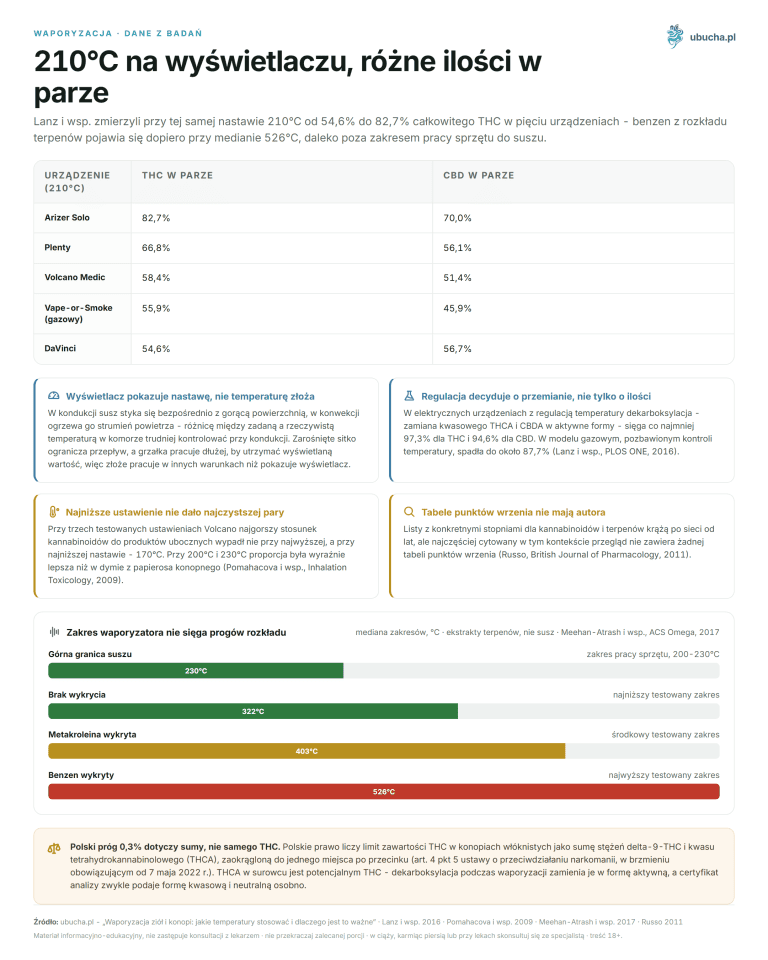
- In validation of five vaporizers at 210 degrees Celsius, cannabinoid recovery in vapor ranged from 45.9% to 82.7% depending on the device, and decarboxylation efficiency in electric devices exceeded 94% (Lanz 2016).
- The only administration route with solidly measured absolute bioavailability of CBD in humans is inhalation, about 31%; no such measurements exist for oral or sublingual routes (Millar 2018).
What exactly is CBD flower?
CBD flower is dried female inflorescences of industrial hemp from fibrous varieties where the dominant cannabinoid is cannabidiol acid (CBDA), not tetrahydrocannabinol acid (THCA). This division is not marketing: THCA predominates in narcotic-type cannabis, CBDA in fibrous cannabis (Frontiers in Plant Science, Andre 2016).
Botanically, it is one species. The old division into Sativa and Indica described more the plant’s shape and geographic origin than separate taxa. What distinguishes CBD flower from marijuana is the result of decades of selection: one breeding line focused on fiber and cannabidiol, the other on tetrahydrocannabinol.
Cannabinoids are produced and accumulate in the secretory cavity of glandular trichomes, mainly found in female flowers and in smaller amounts in other aerial parts of the plant. Terpenes are also produced there, which is why under standardized cultivation conditions a positive correlation between terpene and cannabinoid levels was observed. This correlation did not hold in a broader sample from various sources (Andre 2016).
A practical takeaway for the reader: two packages with the same declared percentage may neither smell nor act the same. Active compound content depends on plant part, age, variety, cultivation conditions, harvest time, and storage method. These are six variables, of which the label usually provides only one.
How is CBD flower produced from cultivation to package?
The path from plant to package has five stages: cultivation, harvest, drying, curing, and packaging. At each stage, what ultimately goes into the jar changes, because cannabinoid concentration depends among other things on harvest time and storage conditions (Andre 2016). That is why two batches of the same variety can differ significantly.
In cultivation, the grower controls lighting, humidity, and plant nutrition. In field cultivation, these parameters are set by the season; in protected cultivation, they are partially controlled; and in indoor cultivation, fully controlled. None of these methods is inherently better: they differ in repeatability and cost, not in quality inherent to the method.
The grower assesses harvest time by examining trichomes under a magnifier. Harvest time is one of the factors affecting cannabinoid concentration in plant material, alongside plant age and variety (Andre 2016). After cutting, inflorescences dry in a dark, ventilated room until the central branch becomes brittle but the flowers remain flexible.
Curing is maturation in closed jars for several weeks with controlled humidity. The jar is opened regularly to exchange air. After this stage comes trimming, i.e., cutting off protective leaves, and finally packaging. Light-protective packaging is practically important because storage conditions are among factors affecting cannabinoid content (Andre 2016).
What is in the flower besides cannabidiol?
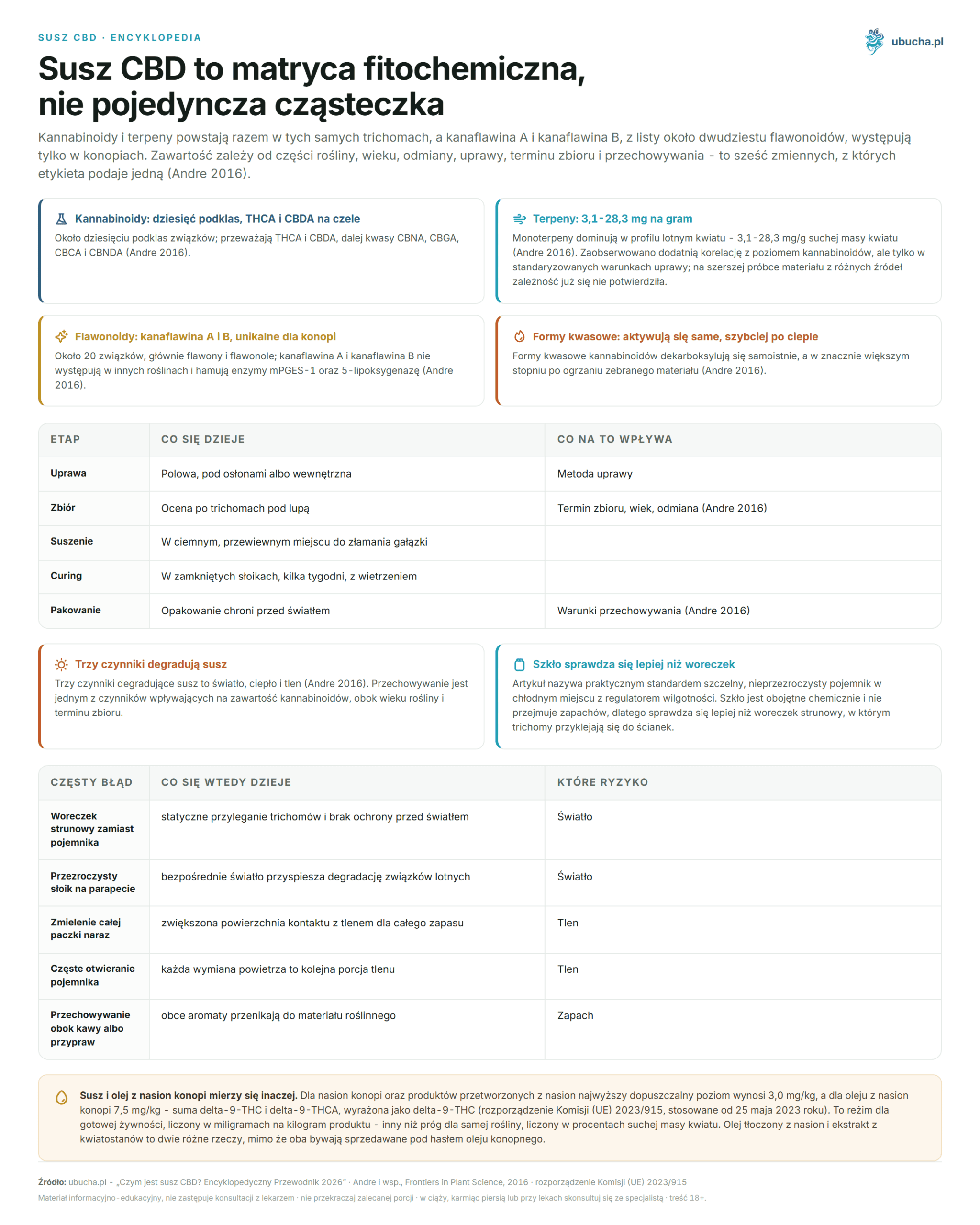
Flower is a phytochemical matrix, not a single molecule. Besides cannabinoids, it contains terpenes and phenolic compounds. About twenty flavonoids have been identified in cannabis, mainly from flavone and flavonol subclasses, including cannaflavin A and cannaflavin B, methylated isoprenoid flavones unique to cannabis (Frontiers in Plant Science, Andre 2016).
Cannabinoids are usually divided into ten subclasses. The most abundant are THCA and CBDA, followed by cannabinolic acid. Next are cannabigerolic acid, cannabichromenic acid, and cannabinodiolic acid. Cannabichromenic acid predominates in young plants and its share decreases with maturation. Monoterpenes dominate the flower’s volatile aroma profile, ranging from 3.1 to 28.3 mg per gram of dry flower mass (Andre 2016).
| Compound Group | What is known from the source |
|---|---|
| Cannabinoids | About ten subclasses; THCA and CBDA predominate, then CBNA, CBGA, CBCA, and CBNDA acids (Andre 2016) |
| Terpenes | Monoterpenes dominate volatile profile, 3.1-28.3 mg/g dry flower mass (Andre 2016) |
| Flavonoids | About 20 compounds; cannaflavins A and B are unique to cannabis and inhibit mPGES-1 and 5-lipoxygenase (Andre 2016) |
| Acid forms | Decarboxylate spontaneously and much more upon heating harvested material (Andre 2016) |
The oft-repeated internet claim that cannaflavin A is “thirty times stronger than aspirin” is not supported by this source. The paper describes the mechanism, i.e., inhibition of microsomal prostaglandin E2 synthase and 5-lipoxygenase, without comparing potency to a painkiller. We removed the multiplier sentence instead of searching for a citation.
What is the entourage effect and has it been proven?
The entourage effect refers to the hypothesis that compounds accompanying cannabinoids modify their action. The paper most cited today about flower formulates this synergy conditionally: its author writes that phytocannabinoid-terpenoid synergy, if proven, increases the chance of new therapeutic products and proposes methods to study it in future experiments (British Journal of Pharmacology, Russo 2011).
This distinction matters because in Polish internet the same paper is cited as proof of synergy, often under the formula “Russo and Mechoulam.” There is only one author. Raphael Mechoulam appears in the paper as a researcher who isolated and synthesized tetrahydrocannabinol in 1964, not as a co-author of the review.
What does this review actually state? That cannabidiol’s contribution to cannabis pharmacology and analgesic action has been scientifically demonstrated; that terpenoids inhaled from ambient air affect animal and even human behavior at serum concentrations of single nanograms per milliliter; and that there are grounds to consider non-cannabinoid plant components as potential counterbalances to THC’s intoxicating effects. These are three different levels of certainty, not one.
The mechanism has a biological basis. Terpenes and cannabinoids are produced in the same glandular trichomes, i.e., epidermal outgrowths covering leaves, bracts, and stems, described in literature as phytochemical factories (Andre 2016). The same review cites earlier works indicating flavonoids may affect THC pharmacokinetics by inhibiting liver cytochrome P450 enzymes. The suggestion to create extracts combining cannabidiol with terpenes remains a research proposal, not a recommendation.
How does CBD flower differ from marijuana?
The difference boils down to the ratio of two cannabinoids and the legal status of the plant’s definition. Analysis of 38,681 samples of seized plant material in the United States showed an increase in average THC content from about 4% in 1995 to about 12% in 2014, with a decrease in CBD content from about 0.28% in 2001 to below 0.15% in 2014 (Biological Psychiatry, ElSohly 2016).
The THC to CBD ratio changed in this period from fourteenfold to about eightyfold. This is exactly the opposite direction of selection in fibrous hemp. CBD flower and marijuana look similar because they are the same plant, but their chemical profiles diverge rather than converge.
Pharmacologically, the difference is equally clear. Tetrahydrocannabinol is a partial agonist of CB1 and CB2 receptors, binding more strongly to CB1, which is responsible for psychoactive effects. Cannabidiol behaves differently: in cells and tissues expressing CB1 and CB2 receptors, it shows unexpectedly high efficacy as an antagonist of their agonists (British Journal of Pharmacology, Pertwee 2008).
It is worth remembering that fibrous hemp flower contains trace amounts of THC, enough to affect drug test results. We return to this in the research section because this is the only area where “trace” does not mean “insignificant.”
How does flower differ from hemp seeds and hemp seed oil?
These are two different raw materials from the same plant, and confusing them leads to erroneous conclusions about cannabinoid content. Phytocannabinoid levels in hemp seeds, and thus in hemp seed oil, should be very low because the seed core contains only trace amounts of THC and CBD. Higher THC concentrations are found on the outer surface of the seed coat, probably due to contamination with leaves and flowers during harvest (Frontiers in Plant Science, Andre 2016).
This explains separate food regulations expressed not in percentages but in milligrams per kilogram. For hemp seeds and processed seed products, the maximum allowed level is 3.0 mg/kg, and for hemp seed oil 7.5 mg/kg. The level refers to the sum of delta-9-THC and delta-9-THCA, expressed as delta-9-THC. The basis is Annex I of Commission Regulation (EU) 2023/915, effective from May 25, 2023.
The practical consequence is that food products from hemp seeds and flower inflorescences are subject to two separate numerical regimes. The first measures contamination of finished food in mg/kg, the second defines the plant itself in percent dry mass of flower or fruiting tops. Transferring one value to the other context yields a nonsensical result.
For the reader, this means one more thing: hemp seed oil packaging does not describe a cannabidiol-acting product, even if the trade name suggests otherwise. Oil pressed from seeds and extract from inflorescences are two different things, although both are sometimes sold under the name hemp oil.
How much flower fits in the chamber and how many sessions come from a gram?
A portable vaporizer chamber usually holds 0.1 to 0.15 g of ground flower, so one gram yields about six to ten sessions. With a larger fill of about 0.2 g, one gram lasts for five sessions. This conversion turns the price per gram into the cost per single use.
Two factors shift this calculation. The degree of grinding: ground material packs tighter, so more fits in the same chamber. And the number of draws per load, because flower releases cannabinoids gradually and after several draws the vapor becomes noticeably weaker.
For clarity: the above concerns vaporization, the method described first in this text. For joints, the calculation differs because a classic portion contains 0.3 to 0.5 g, so one gram yields two or three.
What THC threshold applies in Poland and how is it calculated?
Fibrous hemp are plants of the species Cannabis sativa L. in which the sum of delta-9-THC and tetrahydrocannabinol acid in flower or fruiting tops, from which resin has not been removed, does not exceed 0.3% on a dry mass basis. The sum is rounded to one decimal place. The basis is art. 4 point 5 of the Act of July 29, 2005 on Counteracting Drug Addiction (consolidated text Journal of Laws 2023 item 1939), as amended by the Act of March 24, 2022 (Journal of Laws 2022 item 763), effective from May 7, 2022.
Three things in this sentence are regularly misrepresented. First, the threshold applies to the plant, not the final product on the shelf. Second, it is calculated as the sum of delta-9-THC and THCA, not just delta-9-THC, which changes the lab test result. Third, the basis is no longer the original 2005 act announcement but its consolidated text in the cited wording. More about tetrahydrocannabinol acid itself is in the post on THCA and its difference from THC.
The national threshold corresponds to the EU threshold but does not derive from it. These are two separate regulations with the same numerical value. On the EU side, from January 1, 2023, hemp varieties eligible for support under the Common Agricultural Policy may contain up to 0.3% THC, based on Regulation (EU) 2021/2115; previously, the EU threshold was 0.2% under Regulation 1307/2013, repealed on the same day.
A separate matter is cannabidiol’s status itself. The consolidated list of psychotropic substances, narcotics, and new psychoactive substances (Journal of Laws 2024 item 1139) does not include the words “cannabidiol,” “cannabigerol,” or “cannabinol.” The amendment to the Act on Counteracting Drug Addiction effective August 27, 2026, does not change the THC threshold, substance classification, or retail sale rules. Cultivation conditions are described in a separate text on legal cultivation of fibrous hemp in Poland.
What CBD flower varieties will you find in Poland?
| Trade Line | Package Weight | Catalog Check Date |
|---|---|---|
| Northwest | from 1 to 10 g | August 10, 2026 |
| Midwest | from 1 to 10 g | August 10, 2026 |
| Autopower | from 1 to 10 g | August 10, 2026 |
| Santhica | from 1 to 10 g | August 10, 2026 |
| Pineapple Express | from 1 to 10 g | August 10, 2026 |
The table indicates availability, not cannabinoid content, and deliberately does not include a price column: the assortment changes faster than the article.
On the Polish market, flower is sold under trade line names, not substance names. In the u Bucha store catalog in the flower category, lines such as Northwest, Midwest, Autopower, Santhica, and Pineapple Express are currently available in packages from one to ten grams (as of August 10, 2026). This is verifiable availability information, not cannabinoid content.
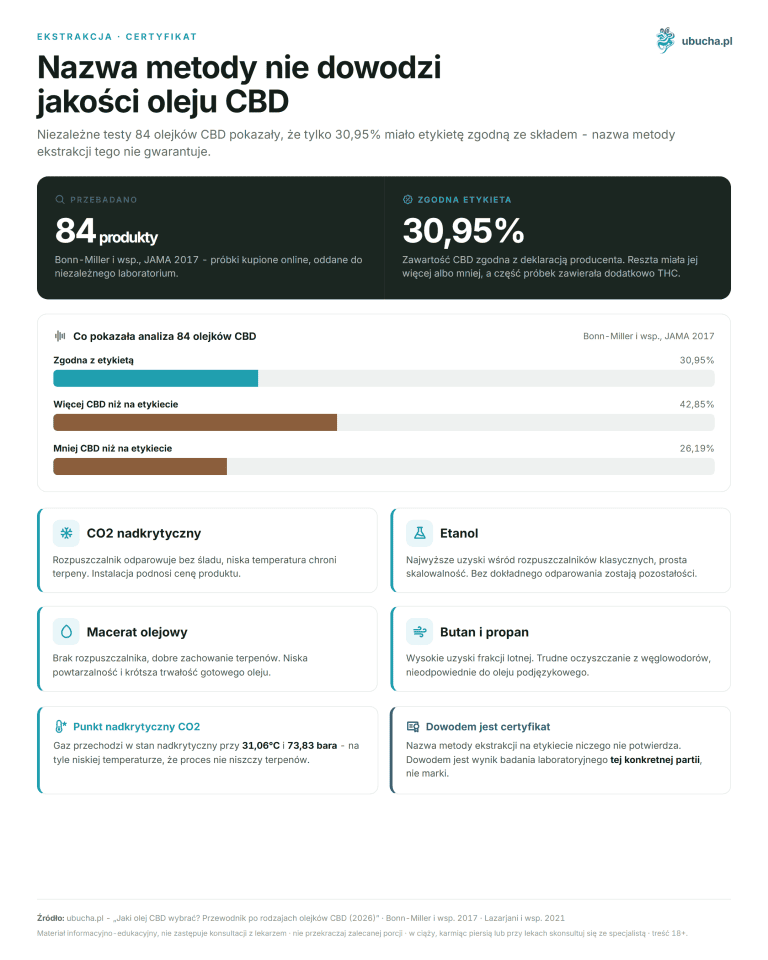
Declared percentages on labels should be treated as a starting point for checking the certificate, not as a guarantee. The reason is measured on European material: in an analysis of fourteen commercial CBD oils available in EU countries, nine samples had concentrations significantly deviating from declared, and five were within reasonable limits (Molecules, Pavlovic 2018). The study concerned oils but speaks about the same market and regulatory gap.
Variety names also say something about the aroma profile because terpenes are produced in the same trichomes as cannabinoids. However, they say nothing certain about potency because the correlation between terpene and cannabinoid levels was confirmed only under standardized cultivation conditions and not in material from various sources (Andre 2016).
Prices in the flower category at u Bucha store currently range from 25 to 140 PLN, with 34 items differing in weight and line (as of August 10, 2026). We provide the range for the entire category, not the price of a single package, because the catalog changes faster than the article.
How is CBD flower used?
The best-documented method is vaporization, i.e., heating flower without combustion. In an in vitro validation of five commercial vaporizers at 210 degrees Celsius, recovery of total CBD in vapor ranged from 51.4% to 70.0% for electric devices, and total THC recovery from 54.6% to 82.7%. Decarboxylation efficiency exceeded 97.3% for THC and 94.6% for CBD (PLoS One, Lanz 2016).
These numbers describe how much substance the device releases into vapor, not how much the body absorbs. This distinction matters because in cannabis texts the two concepts are often mixed. In the same study, a gas-powered device gave lower recovery and combustion of plant material was observed, exactly what vaporization aims to avoid.
Heating also converts acidic cannabinoid forms to neutral forms. This process occurs spontaneously in the plant but much more upon heating harvested material (Andre 2016). Fresh, unheated flower thus contains mainly CBDA, not CBD, which is why an infusion from raw flower has a different composition than vapor from a vaporizer.
Alternatives remain infusions and homemade fat extracts, but nothing certain can be said today about their absorption, as discussed in the next section. Vaporization equipment in the u Bucha category costs from 374 to 499 PLN with five available items (as of August 10, 2026). Temperature selection is elaborated in the text on herb and cannabis vaporization temperatures.
Does flower act differently than CBD oil?
There is no full numerical answer today, and it is worth saying this plainly. A systematic review of cannabidiol pharmacokinetics in humans covered 24 studies and showed that absolute bioavailability was solidly measured only for inhalation, where it was 31%. No study attempted such measurement for oral or sublingual routes, although intravenous formulations were available (Frontiers in Pharmacology, Millar 2018).
Four-column tables comparing oral, sublingual, and inhalation bioavailability circulating in Polish internet thus lack data support. The same review provides verified facts: half-life from 1.4 to 10.9 hours after oral mucosa spray, about 31 hours after smoking, and 2 to 5 days after chronic oral administration. Maximum concentration is reached faster after inhalation than oral administration.
Practical consequences are twofold. First, food intake changes absorption: area under the curve and maximum concentration increase after eating and in fat formulations. Second, comparing milligrams between inhalation and oral routes is inherently unreliable since one lacks a reference point.
The editorial principle applied here is simple: we describe what was measured and on whom, instead of converting doses between product forms. Choosing between flower and oil is thus a choice of convenience and action rhythm, not a choice of a “stronger” form.
How to choose good flower and why is a certificate of analysis important?
A certificate of analysis is the only document that turns a label declaration into data. The need for such a document arises from measurement, not caution: nine of fourteen commercial CBD oils on the European market had content significantly deviating from declared, and the authors directly pointed to lack of uniform regulation as the cause (Molecules, Pavlovic 2018).
The document worth reading provides cannabinoid profile, terpene profile, contamination test results, and laboratory data with analysis date and batch number. Without a batch number, the certificate describes different goods than those in the package, even if everything else matches.
| Certificate Section | What to look for |
|---|---|
| Cannabinoid Profile | Values for CBD and THC and information whether acid forms are reported separately |
| Terpene Profile | List of identified terpenes with units; absence does not disqualify batch |
| Contaminants | Pesticides, heavy metals, mycotoxins, and microbiology with thresholds |
| Laboratory Data | Name, accreditation, analysis date, and batch number matching packaging |
Besides the document, the physical state of the goods matters. Too dry flower crumbles and loses volatile terpenes; too moist favors mold. Harvest or curing date tells more than packaging date because cannabinoid content also depends on storage conditions and time (Andre 2016).
It is also worth knowing what the certificate does not resolve. It does not say how the product will act because no chemical analysis measures that. It does not predict how the batch will change after several months in a non-airtight package. Finally, it does not replace information on whether the seller tests every batch or publishes one document for the entire line. Asking for the batch number on the certificate is thus a question about the control system, not a single paper.
How to store flower to preserve its properties?
Three factors degrade flower: light, heat, and oxygen. Storage conditions are directly listed among variables affecting cannabinoid concentration in plant material, alongside plant age and harvest time (Frontiers in Plant Science, Andre 2016). Storage is thus not an add-on to quality but part of it.
A practical standard is a sealed, opaque container, a cool place without temperature fluctuations, and a humidity regulator inside. Glass is chemically inert and does not absorb odors, so it works better than a zip bag where trichomes stick to the walls.
A refrigerator can be a bad idea due to condensation forming with each opening. Long-term freezing is possible but trichomes become brittle and more easily fall off the flower when transferring.
- Zip bag instead of container: static adhesion of trichomes and no light protection.
- Transparent jar on a windowsill: direct light accelerates volatile compound degradation.
- Grinding the whole package at once: increased oxygen contact surface for the entire supply.
- Frequent container opening: each air exchange brings more oxygen.
- Storing next to coffee or spices: foreign aromas penetrate plant material.
Storage accessories in the u Bucha category cost from 4.50 to 189 PLN with eight items, from humidity regulators to containers with hygrometers (as of August 10, 2026). We provide the category range because a single price will become outdated faster than this text.
What does science say about flower’s effects and risks?
The best-documented research direction for cannabidiol is anxiety disorders, but the evidence scope is narrower than marketing suggests. A review covering preclinical and experimental work as well as clinical and epidemiological studies states that preclinical data strongly support anxiolytic action, while human evidence is limited to single administration and clinical population studies are few (Neurotherapeutics, Blessing 2015).
On the safety side, a review of clinical and animal data indicates the most common adverse effects are fatigue, diarrhea, and changes in appetite and body weight. The same review notes that cannabidiol’s impact on liver enzymes and drug transporters requires further clinical study because cannabidiol is sometimes used as add-on therapy (Cannabis and Cannabinoid Research, Iffland 2017).
The latest European position is more cautious than what circulates online. The EFSA panel derived a provisional safe dose of 0.0275 mg per kilogram body weight per day, about 2 mg per day for a 70 kg person, with an uncertainty factor of 400. This is a safety ceiling, not a recommendation, and applies only to supplements with cannabidiol purity of at least 98%, without nanoparticles. Safety of cannabidiol cannot be established for people under 25 years old, pregnant and breastfeeding women, and those taking medications simultaneously (EFSA Journal, 2026).
A separate risk is drug test results. After pure cannabidiol administration, only 1 of 218 urine samples tested positive in screening at a 20 ng/ml threshold and none exceeded the confirmation threshold of 15 ng/ml. After inhalation of vaporized hemp with CBD dominance containing 3.7 mg delta-9-THC, nine samples tested positive in screening and four confirmed above the threshold (Journal of Analytical Toxicology, Spindle 2020).
Which myths about CBD flower lack source support?
Several claims have grown around flower, repeated so often they sound like basic knowledge. The table below compares them with what can be read from verified publications. Some were previously in this article without verifiable sources and have been removed.
| Repeated Claim | What the Sources Show |
|---|---|
| CBD flower intoxicates like marijuana | Psychoactive effects are attributed to CB1 receptor activation by THC; cannabidiol acts as an antagonist of CB1 and CB2 agonists (Pertwee 2008) |
| The higher the CBD percentage, the better the flower | Active compound content depends on variety, plant age, cultivation conditions, harvest time, and storage; percentage alone does not describe the batch (Andre 2016) |
| Smoking acts the same as vaporization | Electric vaporizers release cannabinoids without burning material; gas device in the same study showed combustion (Lanz 2016) |
| CBD flower is illegal in Poland | Fibrous hemp definition with 0.3% threshold is in art. 4 point 5 of the Act (Journal of Laws 2023 item 1939), and cannabidiol is not on the list (Journal of Laws 2024 item 1139) |
| CBD flower will not affect drug tests | After vaporizing hemp with CBD dominance and 3.7 mg THC, some urine samples exceeded confirmation threshold (Spindle 2020) |
| CBD is safe for everyone | Safety cannot be established for people under 25, pregnant and breastfeeding women, and those taking medications (EFSA 2026) |
The principle organizing this list is simple: a numerical claim without a cited study does not become true by repetition. Sentences removed from this text cited market value, store customer percentages, and potency multipliers unsupported by any available publication.
What to remember about CBD flower?
CBD flower is dried female inflorescences of industrial hemp from fibrous varieties dominated by cannabidiol acid. It is produced through cultivation, harvest at trichome maturity, drying, curing, and packaging, each stage changing active compound content. The label provides one parameter, the certificate of analysis provides several, and it is decisive.
Law sets the limit at the plant level, not the product: fibrous hemp are plants where the sum of delta-9-THC and THCA does not exceed 0.3% dry mass in flower or fruiting tops. Cannabidiol is not on the controlled substances list, and the August 27, 2026 amendment changes nothing in this regard.
Regarding use, the strongest data concern vaporization and come from device validation, not absorption measurements. Absolute bioavailability of cannabidiol in humans has only been measured for inhalation. Milligram comparisons between flower and oil thus rely on data that do not exist.
For the same reason, it is worth reading statements about the entourage effect cautiously. The review cited by the market describes phytocannabinoid-terpenoid synergy as a hypothesis requiring proof and proposes methods for study, not an established mechanism. The same paper states that cannabidiol’s contribution to cannabis pharmacology has been demonstrated. Separating these two certainty levels distinguishes source-based description from advertising slogans.
Finally, caution is not a formality. Cannabidiol safety cannot be established for people under 25, pregnant and breastfeeding women, and those taking medications. People subject to sobriety checks should consider that products with cannabidiol dominance but containing trace THC have caused positive urine test results.
Frequently Asked Questions
What is CBD flower and what is it made from?
It is dried female inflorescences of industrial hemp from fibrous varieties. Cannabinoids and terpenes are produced in the secretory cavity of glandular trichomes, mainly found in female flowers. In fibrous hemp, cannabidiol acid dominates, while in narcotic-type hemp, tetrahydrocannabinol acid dominates (Andre 2016).
How is the 0.3% THC threshold calculated in Poland?
As the sum of delta-9-THC and tetrahydrocannabinol acid in flower or fruiting tops from which resin has not been removed, calculated on dry mass and rounded to one decimal place. The threshold applies to the plant, not the final product (art. 4 point 5, Journal of Laws 2023 item 1939).
Is cannabidiol a controlled substance in Poland?
No. The consolidated text of the list of psychotropic substances, narcotics, and new psychoactive substances (Journal of Laws 2024 item 1139) does not include the word “cannabidiol.” It also does not include “cannabigerol” or “cannabinol.” The list covers other groups of compounds.
How many cannabinoids does a vaporizer release?
In an in vitro validation at 210 degrees Celsius, recovery of total CBD in vapor ranged from 51.4% to 70.0% for electric vaporizers, and total THC recovery ranged from 54.6% to 82.7%. Decarboxylation efficiency exceeded 94.6% for CBD (Lanz 2016). This is vapor recovery, not absorption.
Does flower act stronger than CBD oil?
This cannot be resolved numerically. Absolute bioavailability of cannabidiol in humans has only been measured for inhalation and was 31%; no study has measured it for oral or sublingual routes (Millar 2018). Percentage comparisons between forms lack data support.
Can CBD flower cause a positive drug test?
It can if it contains trace THC. After pure cannabidiol, only 1 of 218 urine samples tested positive in screening and none confirmed. After vaporizing hemp with CBD dominance and 3.7 mg THC, nine samples were positive in screening, four confirmed (Spindle 2020).
Who should not use cannabidiol products?
The EFSA panel stated that cannabidiol safety cannot be established for people under 25 years old, pregnant and breastfeeding women, and those taking medications simultaneously. The provisional safe dose, about 2 mg per day for 70 kg, is a ceiling, not a recommendation (EFSA 2026).
How to store flower to preserve quality?
In a sealed, opaque container, in a cool place without temperature fluctuations, with a humidity regulator inside. Storage conditions are directly listed among factors affecting cannabinoid content in plant material, alongside variety, plant age, and harvest time (Andre 2016).
This article is for informational and educational purposes and does not constitute medical advice. Before starting cannabis or CBD for therapeutic purposes, consult a doctor, especially if you take other medications, are pregnant, or breastfeeding.
Current flower offers with certificates of analysis can be found in the hemp flower category at u Bucha store.
Author: Michał Waluk · Published: 2026-05-04 · Updated: 2026-08-24