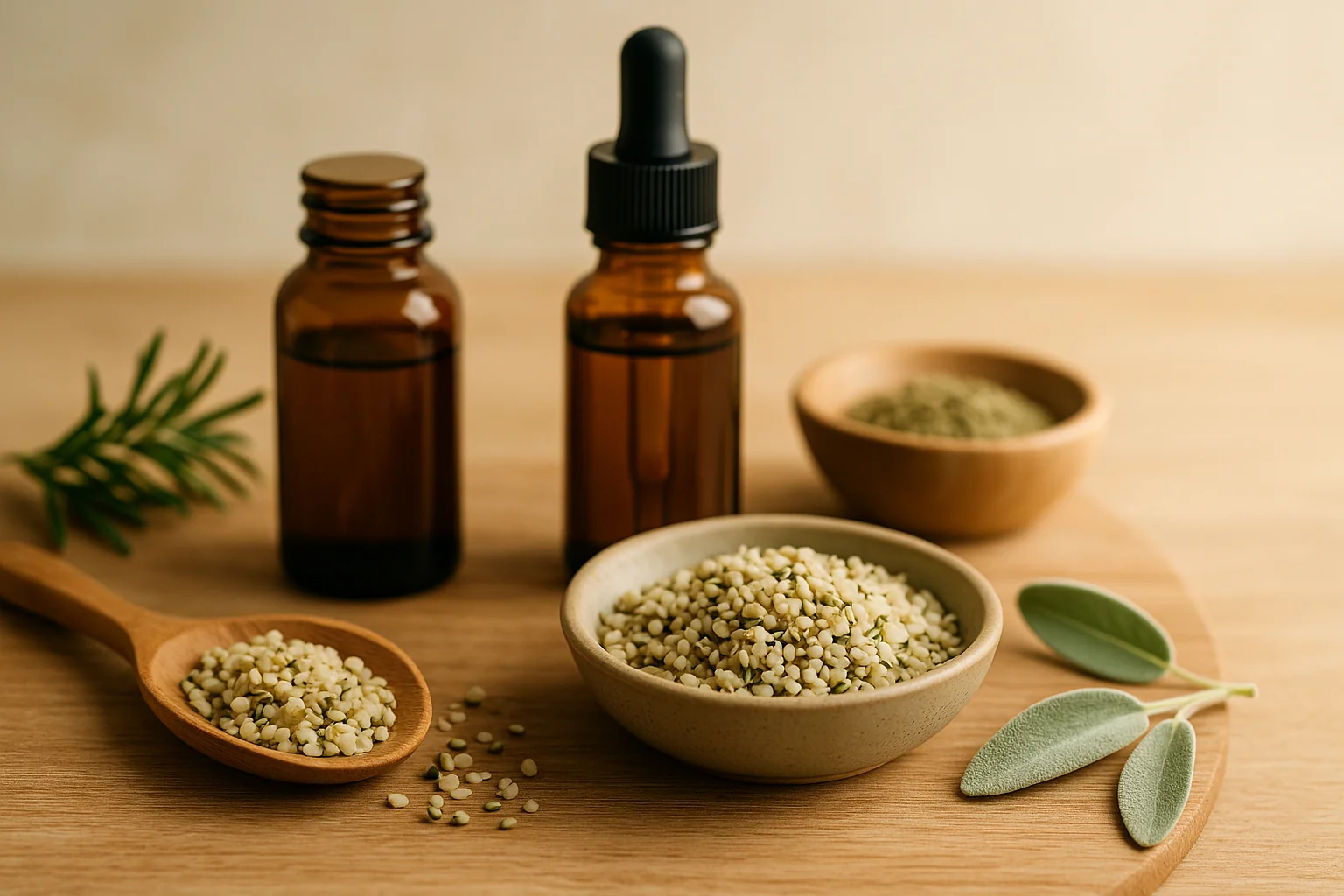

Hulled hemp seeds, 15 ways to use them in the kitchen
Hulled hemp seeds in the kitchen: composition per 100 g, 15 proven uses, how much to eat, how to store, and how they differ from chia and flaxseeds.
Hulled hemp seeds are one of the few plant products that go straight to the plate without any processing. They do not need to be soaked, ground, or cooked, as the soft interior is edible, and the hard shell has been removed in the facility. One hundred grams carry about 32 g of protein and 553 kcal, and in a comparative table published in a review, only soy has more protein than them (Tănase Apetroaei et al., Molecules 2024). They have a mild enough flavor that they do not overpower what is already in the bowl. Below you will find the composition confirmed in the literature, the limits of this nutritional value, fifteen specific uses in the kitchen, and guidelines for portioning and storage.
KEY INFORMATION
• 100 g of hulled seeds contains about 32 g of protein and 553 kcal (Tănase Apetroaei et al., Molecules 2024).
• The digestibility of protein is in the range of 84-86%, limited by low tryptophan and lysine content.
• Phytates hinder the absorption of iron and zinc from the same seeds.
• Hulling removes most of the fiber from the seeds.
What are hulled hemp seeds and what distinguishes them nutritionally?
Hulled hemp seeds, also sold as hemp hearts, are seeds of Cannabis sativa L. without the hard shell. In 100 g, there are about 32 g of protein, 49 g of fat, and 9 g of carbohydrates with an energy value of 553 kcal, as confirmed by the composition table in the journal Molecules.
The protein in the seeds is 60-80% edestin, a storage globulin from the 11S fraction, and the rest is 2S albumin. The same review states the digestibility of protein is 84-86% for whole seeds and 83-92% for hemp flour, with an important caveat: the limiting amino acids are tryptophan and lysine, which is why digestibility is lower than that of soy. The complete set of essential amino acids is present, but the word “complete” does not mean “as good as soy” here.
The second limit concerns minerals. Hulled seeds contain about 4 g of phytates per 100 g, and the molar ratios of phytates to iron and phytates to zinc exceed 20 and 15, respectively. The authors of the review state directly that such a level of phytates reduces the absorption of both elements. The numbers from the chart describe the content, not the amount that will actually enter the bloodstream. More about the nutritional profile can be found in the post about the properties of hemp seeds.
How to add hemp seeds to breakfasts and snacks?
For cold dishes, seeds are added at the end, without any processing. For baking and granola, they are included with the other ingredients and lightly toasted, which enhances the nutty note. The first seven uses include breakfasts and snacks, where seeds replace less nutritious toppings.
- Oatmeal. Two tablespoons of seeds to the finished oatmeal just before serving. The nutty flavor pairs well with cinnamon and fruits, and raw seeds do not lose fats in the pot.
- Natural or Greek yogurt. 200 g of yogurt, a handful of seeds, a tablespoon of honey, and fresh berries. The seeds add crunch and protein without overpowering the acidity of the yogurt.
- Green smoothie. Spinach, banana, plant-based drink, and two tablespoons of seeds. After blending, the seeds disperse in the smoothie and thicken it without a noticeable texture.
- Baked granola. 100 g of seeds on a tray of oats with nuts and honey, baking at 170 degrees for 20 minutes. A short time in the oven is enough for the seeds to brown.
- Salad. A tablespoon of seeds per serving instead of croutons or nuts. Arugula, spinach, and young leaves accept them without changing the character of the dish.
- Pesto. Hemp seeds instead of pine nuts in a one-to-one ratio. Basil, cheese, garlic, and oil remain unchanged, significantly reducing the cost per serving.
- Spread. 100 g of seeds, two tablespoons of oil, lemon juice, garlic, and salt, all blended until smooth. It results in a cream similar to tahini, useful where nuts are excluded due to allergies.
What to do with hemp seeds in main dishes and baked goods?
In hot dishes, seeds serve two roles: binding the mass and replacing breadcrumbs or flour. The eight applications below include soups and patties, pasta with grains, and baked goods. In each, seeds are used in small amounts, so they do not change the flavor of the dish but increase the content of protein and unsaturated fats.
- Cream soup. A tablespoon of seeds on a plate of pumpkin, broccoli, or tomato soup just before serving. The contrast in texture replaces croutons.
- Vegetable patties. 50 g of seeds in a mass of lentils, beans, or chickpeas. The seeds bind water and improve the consistency of the mass during shaping.
- Pancakes. Two tablespoons of seeds for every 200 g of flour in the batter. The seeds fry together with the batter and lightly brown.
- Date bars. Blend dates with hemp seeds. Add cocoa and cashews, shape into bars, chill. The seeds increase the protein content in the bar, which is mainly fruit sugar otherwise.
- Pasta. A tablespoon of seeds per serving, alongside grated cheese or instead of it. The neutral flavor does not clash with either tomato sauce or pesto.
- Rice and grains. A tablespoon of seeds to cooked rice or grain before serving. It works best with millet, as both have a mild, slightly nutty flavor.
- Homemade hemp milk. Three tablespoons of seeds, 500 ml of water, and a pinch of salt, blended and strained if necessary. This is described step by step in the recipe for homemade hemp milk.
- Topping for baked vegetables. Sweet potatoes, carrots, or cauliflower, plus a tablespoon of seeds with oil and herbs. The seeds bake on top and create a crunchy gluten-free layer.
We noticed in culinary tests that the same seeds behave differently depending on the temperature. When cold, in yogurt or salad, they are soft and almost imperceptible. After heating, in granola or on pancakes, they become crunchy and smell more distinctly of nuts. It is worth planning this in advance: for creamy dishes, sprinkle raw seeds, and for dishes where you seek a contrast in texture, lightly toasted.
How many hemp seeds should you eat daily and how to store them?
There is no official recommendation for the portion of hemp seeds. A practical reference point is arithmetic based on the composition: two tablespoons is about 20 g, which provides approximately 6.4 g of protein, 9.8 g of fat, 110 kcal, and 140 mg of magnesium. This is an amount that can easily fit into any meal, and it is usually where daily use begins.
The limitation is not safety, but calorie content. Five tablespoons a day is already about 275 kcal solely from the topping, which is an amount that needs to be subtracted elsewhere. The second limitation arises from the phytates described above: the seeds alone will not cover the need for iron and zinc, even if you count them from the composition table.
To incorporate them well into the week, assign a different place to each day. Monday oatmeal, Tuesday smoothie, Wednesday salad, Thursday spread, Friday grain, weekend granola and pancakes. Seven different uses build a habit faster than repeating one dish, while also spreading the seeds throughout the menu. More ready ideas for seven days can be found in the compilation of 30 hemp recipes for the whole week.
Storage is simple but not trivial, as almost half of the mass of the seeds is fat, mostly polyunsaturated, which is prone to oxidation. Keep the closed package in a dry, dark place at room temperature. After opening, transfer the seeds to an airtight container and use them within a few weeks, or keep them in the fridge or freezer. Rancid seeds can be recognized by a sharp, paint-like smell, and there is nothing to save then.
How do hemp seeds differ from chia and flaxseeds?
The biggest difference concerns protein. Hulled hemp seeds contain about 32 g per 100 g and in the comparative table of the review from Molecules, they are surpassed only by soy, which has 36 g. Sunflower seeds have 21 g, pumpkin seeds 23 g, quinoa 14 g, and oats 13 g. This is a real advantage of hemp, not a marketing gimmick.
The second difference works against hemp and arises from the hulling itself. Removing the hull strips away most of the fiber, as the majority of it was in the shell. Chia and flax are sold whole, so the fiber remains in them. If you are looking for seeds for fiber, hulled hemp is the weakest choice of the three.
The third difference is culinary. Chia forms a gel when in contact with water, changing the structure of the dish, which is the basis for an entire category of puddings. Flax has a hard shell, so it is usually ground before use, and its flavor is more pronounced and floury. Hemp seeds do not gel and do not require grinding, which allows them to be used everywhere without changing the recipe.
The proportions of fatty acids are also different. The review from Molecules states that hemp seeds contain over 70% polyunsaturated fatty acids and a ratio of omega-6 to omega-3 close to 3:1, describing it as beneficial according to EFSA recommendations. The practical conclusion is straightforward: these three seeds do not replace each other, and it is simplest to use them interchangeably in different meals. A broader context is provided in the complete guide to hemp in the kitchen.
Frequently Asked Questions
How many hemp seeds should you eat daily?
There is no official portion. A practical starting point is two tablespoons, or about 20 g, which provides approximately 6.4 g of protein, 110 kcal, and 140 mg of magnesium according to the composition provided by Tănase Apetroaei et al. in Molecules 2024. Larger amounts are safe, but they quickly increase in calories.
Do hemp seeds contain THC?
Trace amounts may come from contamination of the hull during harvesting. The EU’s maximum allowable level for hemp seeds is 3.0 mg/kg, and for seed oil, it is 7.5 mg/kg, counting the sum of delta-9-THC and delta-9-THCA (Regulation (EU) 2023/915, Annex I point 2.6).
What do hulled hemp seeds taste like?
Mild and nutty, close to pine nuts, with a slight grassy note. They are distinctly less characteristic than flaxseeds and do not alter the flavor of the dish they are added to. This makes them suitable for oatmeal and yogurt, as well as salads or sauces.
Do you need to grind hemp seeds?
No. Hulled seeds are ready to eat because the hardest part has already been removed. Grinding only makes sense if you want to make a paste or hemp milk. Flaxseeds require grinding, but hemp does not.
Can you heat hemp seeds?
Yes, but not without consequences. The mineral components remain unaffected by temperature, hemp proteins denature in the range of 89-96 degrees, and polyunsaturated fatty acids are most susceptible to oxidation. In granola and pancakes, brief heating is fine, but where you want to preserve fats, sprinkle raw seeds on the finished dish.
How do hemp seeds differ from chia and flaxseeds?
Hemp wins in protein content and culinary versatility because they do not gel and do not require grinding. Chia and flax win in fiber, which hulled hemp seeds are almost entirely stripped of. All three are best included in a single diet, in different meals.
The hemp seeds themselves are not currently available at the Bucha store. In the food category, there are hemp teas and herbal blends, as of August 15, 2026.
This article is for informational and educational purposes and does not replace consultation with a doctor. If you are pregnant, breastfeeding, taking medications, or have chronic conditions, consult the use of supplements or herbs with a specialist.
Author: Michał Waluk · Published: 2026-06-22 · Updated: 2026-08-15