
Vaporizer - what it is and how it differs from an e-cigarette
A vaporizer heats dry herb without combustion, while liquid devices are e-cigarettes. How it works, heater types, temperatures, and what is legal to vaporize in Poland.
A vaporizer is a device that heats material enough for active substances to evaporate but not enough to ignite it. However, under this one name, there are two different devices: a vaporizer for plant dry herb and a vaporizer for ready-made liquid, i.e., simply an e-cigarette. This text is about the first one. The difference is measurable. In an analysis of vapor from the Volcano device, the ratio of cannabinoids to by-products at 200 and 230 degrees Celsius was significantly higher than in smoke from a hemp cigarette (Pomahacova et al., Inhalation Toxicology, 2009). This guide explains the vaporization mechanism, differences between heater types, how to select temperature, and what is legally allowed to vaporize in Poland. It also shows where popular guides repeat a number not present in cited studies and where the study says the opposite of common advice about low temperatures.
KEY INFORMATION
• With Volcano vapor, the ratio of cannabinoids to by-products at 200 and 230 degrees was significantly higher than in hemp cigarette smoke, with the worst result at 170 degrees (Pomahacova et al., Inhalation Toxicology, 2009).
• In 18 people, vaporization produced plasma THC concentrations comparable to smoking, with reduced carbon monoxide in exhaled air (Abrams et al., Clinical Pharmacology and Therapeutics, 2007).
• Cannabinoid recovery from vapor varied among five tested devices from about 46% to 83% (Lanz et al., PLoS ONE, 2016).
• The Polish threshold concerns the sum of delta-9-THC and THCA up to 0.3% dry mass, not delta-9-THC alone (Art. 4 point 5 of the Act on Counteracting Drug Addiction).
• Cannabidiol inhibits CYP2C19, CYP2C9, CYP3A, and CYP1A2 enzymes, so combining it with medications requires consulting a doctor (Bansal et al., Clinical Pharmacology and Therapeutics, 2023).
What is a vaporizer and how does it work?
A vaporizer is a heating device that brings plant dry herb to a temperature at which active substances turn into vapor, but the material does not ignite. Instead of smoke, an aerosol with cannabinoids and essential oils is produced. The boundary is the combustion threshold: below it, only thermal extraction works; above it, decomposition reactions begin.
This mechanism really works, as shown by laboratory validation of five commercial devices. Researchers measured by gas chromatography how much total THC and total CBD reach the vapor and separately checked how effectively heat converts inactive cannabinoid acids into active forms. Decarboxylation was at least 97.3% for THC and at least 94.6% for CBD in electric devices (Lanz et al., PLoS ONE, 2016). Controlled temperature thus does two things at once: activates compounds and transfers them to vapor.
A dry herb vaporizer is not the same as an e-cigarette. An e-cigarette vaporizes a ready-made liquid based on propylene glycol and glycerin, while a vaporizer works with solid plant material. Chamber design, airflow, and temperature range differ, as do the regulations governing both devices in Poland.
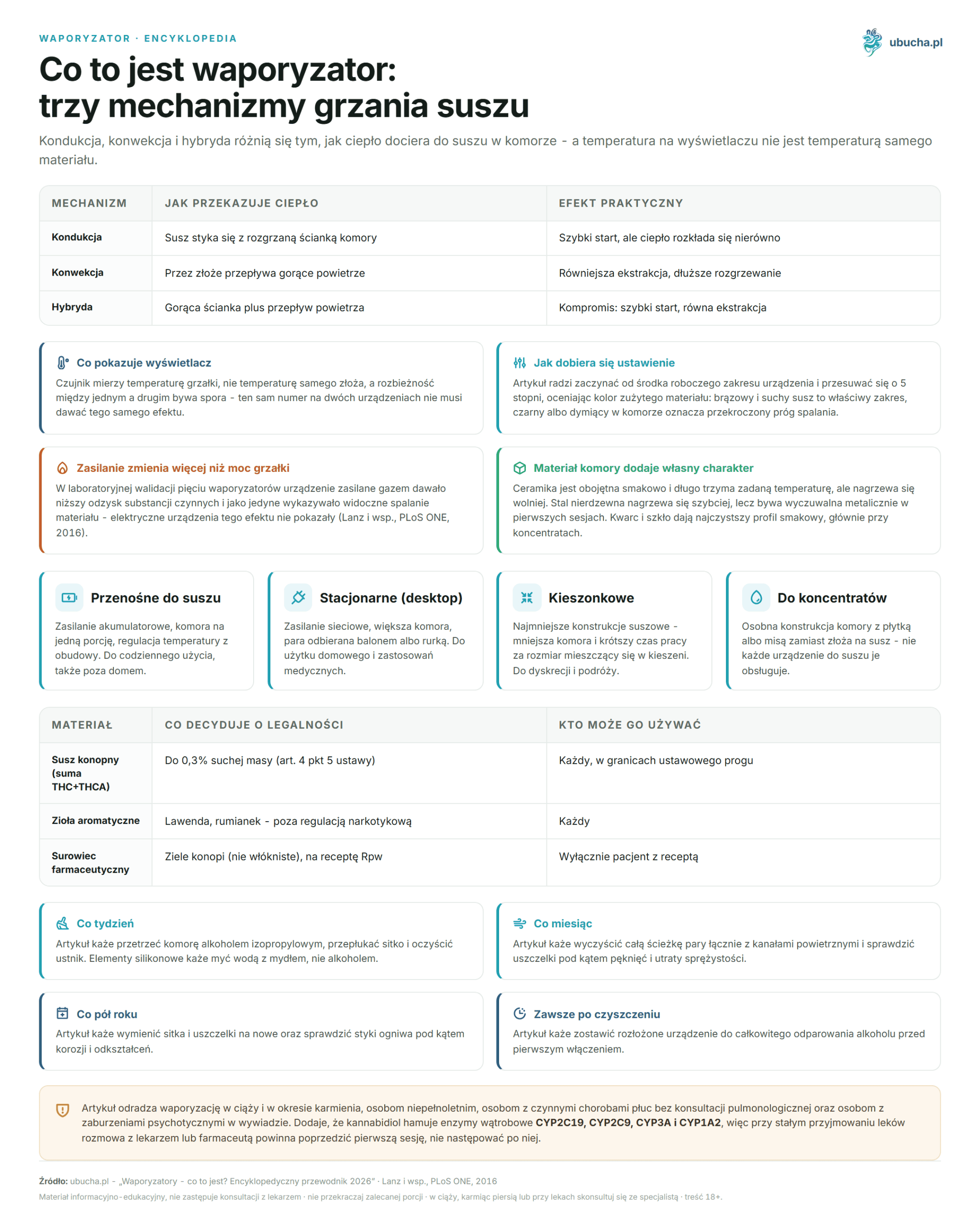
Heat can reach the herb in three ways, and the choice affects taste, heating time, and extraction uniformity.
| Mechanism | How it transfers heat | Practical implications |
|---|---|---|
| Conduction | Herb contacts the heated chamber wall directly | Simplest design and shortest start time, but uneven temperature distribution; material near the wall heats more than in the center |
| Convection | Hot air flows through the material bed; walls stay cooler | More even extraction and better aroma preservation, at the cost of longer heating and higher energy consumption |
| Hybrid | Heated chamber plus hot air flow | Compromise dominating portable devices today: quick start with fairly even active substance release |
| Vaporizing ready-made liquid | Heater vaporizes a mixture of glycol, glycerin, and flavorings from a cartridge, not plant material | A different equipment category, sold as e-cigarettes; risk assessment is based on liquid composition, not herb temperature |
How does vaporization differ from smoking dry herb?
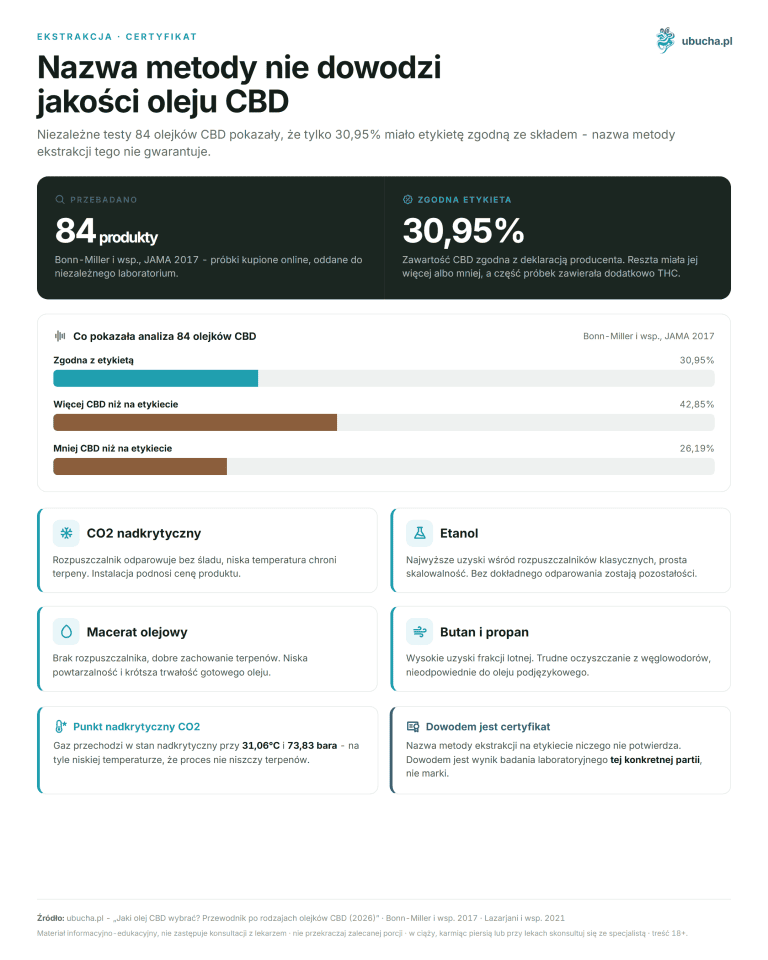
It differs in the composition of what reaches the lungs. A team from Leiden compared vapor from the Volcano device with smoke from a hemp cigarette using high-performance liquid chromatography. The ratio of cannabinoids to by-products in vapor at 200 and 230 degrees was significantly higher than in smoke (Pomahacova et al., Inhalation Toxicology, 2009). Vapor contains more of what the user seeks and less of everything else.
The second evidence pillar is a clinical study. Eighteen healthy people on a ward underwent a six-day protocol, each day randomly assigned one of three herb strengths (1.7%, 3.4%, or 6.8% THC) and one of two administration routes: cigarette or vapor from the Volcano device. Peak plasma delta-9-THC concentrations and area under the curve over six hours were comparable for both routes, and carbon monoxide levels in exhaled air were reduced after vaporization. No adverse events were reported (Abrams et al., Clinical Pharmacology and Therapeutics, 2007).
This is the full evidence content and it is worth knowing exactly because guides inflate it to numbers not present in these works. The widely circulated “reduction of tar substances by 83-90%” does not come from any of the above publications. Authors indicate direction and significance of difference, not percentage of tar removed, and this is how the advantage should be described.
Vaporization is not a zero-risk process. In the same validation of five devices, one gas-powered model gave lower active substance recovery, and researchers observed combustion of material in it (Lanz et al., PLoS ONE, 2016). Device design and temperature control determine whether you really vaporize or just slowly burn.
How much active substance really reaches the vapor?
From 46% to 83% of total content in the raw material, depending on the device. This results from laboratory validation of five commercial vaporizers, where total THC and CBD recovery in vapor was measured by gas chromatography coupled with mass spectrometry, and residue in the chamber analyzed by liquid chromatography (Lanz et al., PLoS ONE, 2016).
| Device | THC recovery in vapor | CBD recovery in vapor |
|---|---|---|
| Arizer Solo | 82.7% | 70.0% |
| Plenty | 66.8% | 56.1% |
| Volcano Medic | 58.4% | 51.4% |
| Vape-or-Smoke (gas-powered) | 55.9% | 45.9% |
| DaVinci | 54.6% | 56.7% |
The spread between the best and worst result is almost twofold. This is the most important number in this table, more important than model order, as it shows that the question of material savings has no single answer for the entire equipment category. The gas-powered device performed worst and was the only one showing visible combustion.
The second measured parameter was decarboxylation efficiency, i.e., conversion of inactive cannabinoid acids into active forms by heat. In electric devices, it was at least 97.3% for THC and at least 94.6% for CBD; in the gas device, it dropped to at least 87.7%. Stable temperature thus proves more important for the result than heating power alone.
One caveat is important. The measurement was done under laboratory conditions, on standardized material, and with a set vapor collection scheme. A real session with your own grinder, material moisture, and inhalation pace usually performs worse. Treat these values as the upper limit of device capability, not a promise.
How does a dry herb vaporizer differ from a liquid vaporizer?
By material and what evaporates from it. A dry herb vaporizer heats shredded plant and releases what is in it. A liquid vaporizer, sold as an e-cigarette or rechargeable device, vaporizes a ready mixture of glycol, glycerin, and flavorings from a replaceable cartridge. These are two separate equipment categories despite the shared name.
This explains words that lead searchers to this page but concern the other category. Shortfill is a base bottle not filled to the top so the user can add concentrated flavor or nicotine. Multiflavor describes a device with several cartridges at once or a switch between them. Rechargeable means the device has a battery and refillable cartridge, unlike disposables.
The distinction matters practically for risk assessment. For dry herb, risk comes from temperature and what is in the plant material. For liquid, risk comes from the mixture composition and its decomposition products, a completely different set of questions. How to choose liquid and whether it is safe is discussed in the text about CBD liquids for e-cigarettes.
Which models are on the shelf today and how they differ are summarized in the dry herb vaporizer ranking.
What types of vaporizers are there in 2026?
The market divides by two independent criteria: material type and power source. Material determines chamber design, as plant dry herb and dense concentrate require completely different beds. Power source determines mobility: battery devices you take with you, stationary ones stay on the counter.
The following table organizes categories found in Polish distribution. Model names are given only as examples, not as a ranking.
| Category | Characteristics | For whom |
|---|---|---|
| Portable dry herb | Battery powered, single-dose chamber, temperature control on the body. Some models have replaceable batteries, extending device life beyond battery lifespan | Daily use, including outside home |
| Stationary (desktop) | Mains powered, larger chamber, vapor collected by balloon or tube. This device class was used in Abrams, Pomahacova, and Lanz studies | Home use and medical applications |
| Pocket-sized | Smallest dry herb designs. Smaller chamber and shorter working time in exchange for pocket size | Discretion and frequent travel |
| For concentrates | Separate chamber design with plate or bowl instead of dry herb bed. Not every dry herb vaporizer supports this material | Users with several months of dry herb experience |
Choosing between categories is a question of usage style, not quality. Stationary devices win by chamber volume and temperature stability; portable devices win by availability anytime. For most people, the first device is portable, allowing to learn preferences without a large initial expense.
What types of heaters and chambers are in vaporizers?
Chamber material determines how fast the device reaches temperature and whether it adds anything to vapor taste. Three solutions compete in practice: ceramic, stainless steel, and quartz, with portable devices increasingly combining a steel body with a ceramic contact surface.
| Material | Strengths | Limitations |
|---|---|---|
| Ceramic | Flavor neutral, slow heat release, holds set temperature well, corrosion resistant | Longer heating and more fragile if dropped |
| Stainless steel | Fast heating, mechanical resistance, lower device cost | Metallic taste may be noticeable in first sessions of a new device |
| Quartz and glass | Purest flavor profile, chemically inert material | Fragile and narrow use: mainly concentrates and vapor paths, less often dry herb chamber |
Practical conclusion: for hemp and herbal dry herb, choose ceramic or steel with ceramic coating; for concentrates, quartz. Plain steel makes sense as an entry if you want short heating and lower price, and the metallic note fades after a few fills.
Chamber material is one of three specs to watch. The other two are heat transfer mechanism and temperature control range. Marketing claims about heater power or battery capacity say much less about the device than these three combined.
Also check what the vapor path between chamber and mouthpiece is made of. Cheaper designs often use plastic, which heats during longer sessions and can add a flavor note not present in the raw material. Glass and steel are neutral and easier to clean, as residue does not penetrate the surface.
What do studies say about vaporization’s effect on the respiratory tract?
Two studies involving the same researcher show the same direction but very different strength of evidence. The first is a large online survey: vaporizer use predicted fewer respiratory symptoms even after adjusting for age, sex, cigarette smoking, and cannabis amount used. The effect was greater the more material the user consumed (Earleywine and Barnwell, Harm Reduction Journal, 2007).
The second is an objective measurement study. Twenty heavy cannabis users reporting at least two respiratory symptoms underwent one month of vaporization with before and after measurements. In twelve participants who did not fall ill during the study, symptoms and vital lung capacity improved significantly. Forced expiratory volume in one second improved but not significantly (Van Dam and Earleywine, International Journal on Drug Policy, 2010).
The authors call their data preliminary and justify conducting a randomized clinical trial. We found no results of such a trial in Europe PMC. Twelve people in the final analysis, no control group, and self-assessment of symptoms are three reasons to read the result as a suggestion, not a conclusion.
We noticed that the same result is sometimes cited as a “randomized crossover study with 26 participants,” which does not match either the number or the experiment design. If you see such a description, it signals the author did not open the linked paper.
The principle of operation and type division are explained more broadly in the guide on how a vaporizer works.
What temperature to set on a vaporizer?
Start from the middle of your device’s working range and move in 5-degree steps, observing taste and color of used material. This is the only method giving an answer tailored to a specific chamber, as the sensor measures heater temperature, not the bed temperature, and the difference can be significant.
Popular advice says lower temperature always means cleaner vapor. The only study measuring this directly says the opposite. At 170 degrees, the cannabinoid to by-product ratio was worst among tested settings; best results were at 200 and 230 degrees (Pomahacova et al., Inhalation Toxicology, 2009). Low temperature gives a gentler aroma but does not automatically make vapor cleaner.
Practical conclusion: choose low settings for taste, medium and high for extraction efficiency. Used herb should be brown and dry after a session. If black or smoking in the chamber, you exceeded combustion threshold and must lower temperature regardless of display reading.
Herbal dry herbs usually require milder settings than hemp flower, as their essential oils are more volatile and lose aroma faster. Detailed ranges for various plants are in a separate text on herb and hemp vaporization temperatures. There you also find why the same plant behaves differently in convection and conduction chambers.
What can be legally vaporized in Poland?
Legally, three groups of materials can be vaporized: hemp herb within the legal threshold, aromatic herbs outside narcotic regulations, and pharmaceutical raw material issued on Rpw prescription. The composition of material, not device design, decides. The vaporizer itself is ordinary equipment and possession is unrestricted.
The threshold for fiber hemp is 0.3% calculated on dry mass, but counted as the sum of delta-9-THC and tetrahydrocannabinolic acid (THCA), rounded to one decimal place. This distinction changes lab test results, as fresh plant material mostly contains the acid form. The basis is Art. 4 point 5 of the Act of July 29, 2005 on Counteracting Drug Addiction (consolidated text Dz.U. 2023 item 1939), as amended by the Act of March 24, 2022 (Dz.U. 2022 item 763), effective May 7, 2022. The national threshold corresponds to the EU threshold but does not derive from it: these are two separate regulations with the same numeric value.
The 0.2% value still circulating in product descriptions and forums is historical. It applied until May 6, 2022, and was replaced by 0.3% from May 7, 2022. On the EU side, hemp varieties eligible for support under the Common Agricultural Policy may contain up to 0.3% THC from January 1, 2023, based on Regulation (EU) 2021/2115. The previous EU threshold was 0.2%, from Regulation 1307/2013, repealed on the same date.
Pharmaceutical raw material in the form of cannabis other than fiber hemp has been available on prescription since the Act of July 7, 2017 (Dz.U. 2017 item 1458), effective November 1, 2017. The prescription authorizes only the patient it was issued to and does not allow transferring the raw material to others.
Aromatic herbs like lavender or chamomile are not subject to narcotic regulations at all. Certified hemp herb is found in the dry herb category, and concentrates and their administration are discussed separately in the post about dabbing and its differences from vaporization.
What are the advantages and disadvantages of vaporization?
The balance is favorable but not one-sided. On the plus side is a better ratio of active substances to by-products and reduced carbon monoxide levels; on the minus side are initial cost and the need for regular cleaning. The table below shows both columns without rounding in favor of the device.
| Advantages | Disadvantages |
|---|---|
| Higher ratio of cannabinoids to by-products than in smoke, confirmed by chromatographic measurement (Pomahacova et al., 2009) | Initial expense much higher than cost of rolling papers and filters |
| Comparable plasma THC concentrations with reduced carbon monoxide in exhaled air (Abrams et al., 2007) | Heating time, which smoking a cigarette lacks |
| Fewer respiratory symptoms in survey data and preliminary spirometry study | Need for weekly cleaning, without which vapor quality declines |
| Temperature control allows conscious choice between aroma and efficiency | Milder sensation than smoking, which some perceive initially as weaker effect |
A separate note on material savings. Cannabinoid recovery in vapor ranged among tested devices from about 46% to 83% of total content in raw material (Lanz et al., PLoS ONE, 2016). The spread is so large that calculations like “device pays off in two months” make no sense without specifying model and usage.
How to choose a vaporizer for yourself?
Three questions suffice: how often will you use it, where, and how much you want to spend. Answers define device category much better than a feature list in a store description. The table below organizes typical scenarios.
| Usage profile | What to look for | What you don’t need |
|---|---|---|
| First device | Simple control, preset temperature modes, replaceable battery, clear display | Mobile app and concentrate cartridges that distract from learning basics |
| Daily use outside home | 1-degree regulation, ceramic or coated steel chamber, spare battery | Largest chamber: dose per session remains the same anyway |
| Home and medical use | Stationary device, stable temperature, spare parts and service availability | Mobility, which comes at the cost of chamber volume |
| Aromatic herbs | Low lower regulation limit and chamber easy to clean completely before changing material | High temperatures, which you won’t use with herbs anyway |
Regarding budget: in the vaporizers category at u Bucha store, prices range from 374 to 499 PLN as of August 10, 2026. The catalog rotates faster than the text, so treat this as an order of magnitude for portable devices, not a price list. Stationary equipment is a separate price segment outside this category.
One thing does not depend on budget and is worth deciding before purchase: availability of screens, seals, and batteries for a specific model in Polish distribution. A device without consumable parts available ends its life at the first broken seal, regardless of cost or specs. Ask the seller this question before the transaction, not after.
How to use a vaporizer step by step?
The procedure has six steps and is almost identical for portable and stationary devices. Differences boil down to vapor collection: balloon or tube in stationary models, mouthpiece in portable. The rest is the same.
- Grind herb to a fraction resembling herbal tea, not powder. Too coarse material has low evaporation surface; too fine clogs the screen and airway. Grinders with sifting screens help.
- Fill the chamber loosely to the level indicated by the manufacturer; do not pack the material. Hot air must flow through.
- Close the chamber and check that the screen and seals are in place. Leaks cause weak, sparse vapor at correct temperature.
- Set temperature and wait for readiness signal. Heating takes several dozen seconds in portable models, a few minutes in stationary.
- Inhale slowly and calmly, several seconds per breath, with pauses between draws. Vapor does not require forceful inhalation; rapid airflow cools the chamber and spoils extraction.
- After the session, empty used material while the chamber is still warm and wipe it. Residue hardened when cold is much harder to remove.
Used herb, called ABV in jargon, is not completely devoid of active substances. Some collect it for further use. However, there is no way to estimate its content without lab testing, so treat it as material of unknown potency and do not plan doses based on it.
How to care for a vaporizer to last years?
Maintenance is cheap insurance: a dozen minutes weekly keeps airflow and vapor taste at first-day level. Cannabinoid and oil residue condenses in the vapor path and gradually narrows it, so deterioration is slow and easy to miss.
| Frequency | Tasks |
|---|---|
| Weekly | Wipe chamber with isopropyl alcohol, rinse screen, clean mouthpiece. Wash silicone parts with soap and water, not alcohol |
| Monthly | Full vapor path including air channels, check seals for cracks and loss of elasticity |
| Every six months | Replace screens and seals, check battery contacts for corrosion and deformation |
| Always after cleaning | Leave disassembled device to fully evaporate alcohol before first use |
A separate topic is the raw material. Store herb in an airtight glass jar, in a dark and cool place, with humidity control. Too dry material crumbles to powder and clogs the screen; too moist promotes mold and evaporates unevenly. Containers and pouches for this purpose are in the storage category.
Use high-concentration isopropyl alcohol for cleaning, never water unless the manufacturer explicitly allows it for a specific part. Water in the airway dries slowly and can reach electronics; moisture residue in the chamber changes heat conduction in the next session. Silicone is an exception: alcohol hardens it over time, so wash silicone mouthpieces and seals with warm soapy water.
Batteries have their own schedule. Replaceable batteries lose capacity with charge cycles; a battery with a deformed case or corrosion on contacts should be replaced, not reused. For built-in batteries, avoid full discharge and do not leave the device plugged in overnight.
Is vaporization safe for health?
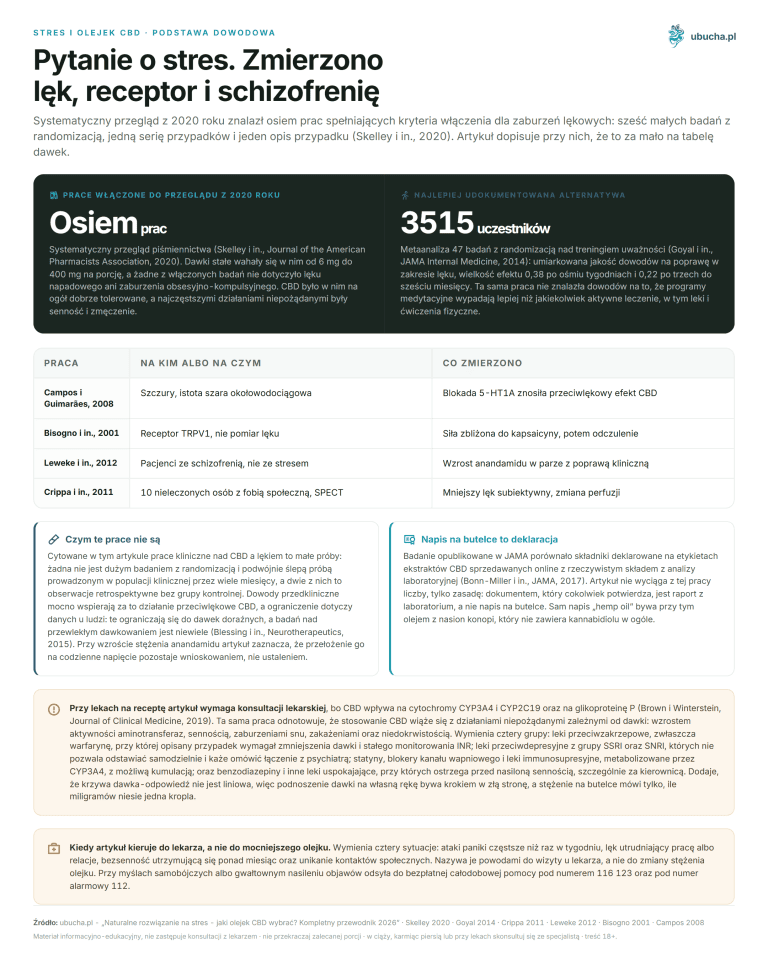
It is less burdensome than smoking but not harmless, and the greatest risk is not in the device itself. It lies in combining cannabinoids with medications. Cannabidiol inhibits liver enzymes responsible for metabolizing many drugs, confirmed in a study with healthy volunteers.
Participants took in a crossover design a cookie with CBD-dominant extract (640 mg CBD and 20 mg delta-9-THC), a cookie with THC-dominant extract, or placebo, followed by a set of probe drugs for specific enzymes. The CBD preparation increased the area under the curve of omeprazole by 207%, losartan by 77%, midazolam by 56%, and caffeine by 39%, without affecting CYP2D6. Delta-9-THC alone did not inhibit any tested enzymes (Bansal et al., Clinical Pharmacology and Therapeutics, 2023). Interactions are mainly due to CBD, not THC.
Vaporization is not recommended during pregnancy and breastfeeding, for minors, for people with active lung diseases without pulmonologist consultation, or for those with psychotic disorders in history. If you take medications regularly, consult a doctor or pharmacist before the first session, not after.
A separate matter is driving. Driving under the influence of an intoxicant is a crime under Art. 178a § 1 of the Penal Code, punishable by up to 3 years imprisonment; driving after use is an offense under Art. 87 § 1 of the Misdemeanor Code, punishable by a fine not less than 2500 PLN. There is no time conversion after which driving is safe, as it depends on dose, frequency, and individual metabolism. If you vaporized material containing THC, do not drive.
What have vaporization studies not yet resolved?
They have not resolved the scale of benefits or long-term effects. The direction is consistent in all cited works, but each has limitations that must be known before making stronger claims. Below are four gaps none of these publications closes.
First, there is no randomized clinical trial on vaporization’s effect on lung function. Authors of the 2010 spirometry study explicitly wrote their data are preliminary and justify such a trial (Van Dam and Earleywine, International Journal on Drug Policy, 2010). More than a decade has passed, and we found no results in Europe PMC.
Second, respiratory symptom data rely on self-assessment. The online survey does not control who participates, and a person who bought a vaporizer for health reasons has motivation to rate symptoms more mildly. This limitation does not invalidate the result but forbids treating it as measurement.
Third, vapor composition analyses were done under lab conditions, on selected models, and with set vapor collection schemes. They say nothing about how many decomposition products a real user inhales at their own session pace. Fourth, all these studies used material containing THC. For high-CBD, trace-THC dry herb dominating Polish sales today, analogous measurements simply do not exist.
The conclusion for the reader is more cautious than guides suggest: vaporization performs better than smoking in every measurement so far, but no one has measured how much better over years. Less burdensome does not mean harmless.
What mistakes do beginners make?
We noticed five mistakes frequently asked about by new users. Each has a simple cause and even simpler solution; four of five stem from transferring smoking habits to a device that works differently.
| Mistake | Effect | How to fix |
|---|---|---|
| Maximum temperature from first session | Bitter taste, black material in chamber, combustion threshold exceeded | Start from middle of range and raise by 5 degrees, assessing used herb color |
| Packing material in chamber | Blocked airflow, scorched top layer and raw center | Fill loosely; chamber should have space for airflow, not reserve |
| Too fine grinding | Dust passes through screen, clogs channel, spoils taste | Fraction like herbal tea; grinder with sifting screen solves this |
| Delaying cleaning | Gradual vapor quality decline, easily mistaken for device wear | A dozen minutes weekly per maintenance schedule section |
| Forceful inhalation | Cooled chamber, uneven extraction, throat irritation | Slow breath for several seconds, pause, next breath |
The sixth mistake is not in the table as it is not technique-related: buying raw material from unknown sources. A vaporizer evaporates everything in the material, including pesticide residues. More practical tips for beginners are in the post with tips for vaporizer beginners, and common claims about the method are debunked in the text on myths about dry herb vaporization.
Summary: is it worth buying a vaporizer in 2026?
If you use dry herb regularly, yes. The evidence base is smaller than guides suggest but consistent in direction: vapor from a temperature-controlled device has a more favorable ratio of active substances to by-products than smoke, delivers comparable blood THC levels, and lowers carbon monoxide in exhaled air.
If you use dry herb sporadically, the economic calculation looks worse as the initial expense spreads over few sessions. The health argument remains the same regardless of frequency, and a portable device with replaceable battery can be maintained longer as the most worn part can be replaced by the user.
When buying, watch three things: heating mechanism, chamber material, and temperature control range and accuracy. The rest of the specs are extras. Also check spare parts availability, as screens and seals are consumables and usually determine how long the device stays in use, not electronics.
What you do not buy with the device is certainty about the scale of health benefits. Evidence speaks about direction, not effect size over years, and differences between models in active substance recovery are so large that device choice changes results more than many guide tips. If someone promises you a specific percent less toxins, ask for the publication they took it from.
The last note concerns sensation expectations. People switching from smoking often describe first sessions as weaker and return to higher temperature settings to compensate. Usually, the problem lies elsewhere: too fast inhalation, packed chamber, or too finely ground material. Before raising temperature, check these three things in order.
Frequently Asked Questions
What is a vaporizer and how does it work?
A vaporizer heats plant dry herb to a temperature at which active substances turn into vapor, but the material does not ignite. Heat simultaneously converts inactive cannabinoid acids into active forms: decarboxylation in electric devices was at least 97.3% for THC (Lanz et al., PLoS ONE, 2016).
Is vaporization less harmful than smoking dry herb?
Chromatographic measurements show a more favorable ratio of cannabinoids to by-products in vapor than in smoke at 200 and 230 degrees (Pomahacova et al., Inhalation Toxicology, 2009). In a clinical study, vaporization lowered carbon monoxide levels in exhaled air with comparable THC plasma concentrations (Abrams et al., 2007).
What temperature should be set on a vaporizer?
Start from the middle of the device’s working range and adjust by 5 degrees, assessing taste and color of used material. Contrary to popular advice, the lowest settings do not produce the cleanest vapor: measurements showed the worst cannabinoid to by-product ratio at 170 degrees (Pomahacova et al., 2009).
How much does a dry herb vaporizer cost?
In the vaporizer category at u Bucha store, prices for portable devices range from 374 to 499 PLN as of August 10, 2026. Stationary equipment is a separate, significantly higher price segment. The catalog changes faster than the article, so check the current offer before purchase.
What is the difference between conduction, convection, and hybrid?
In conduction, the herb contacts the heated chamber wall, providing a quick start but uneven heat distribution. In convection, hot air flows through the material bed, evening extraction at the cost of longer heating. Hybrid combines both mechanisms and dominates portable devices today.
What can be legally vaporized in Poland?
Hemp herb within the 0.3% threshold, aromatic herbs outside narcotic regulations, and pharmaceutical raw material issued on Rpw prescription. The threshold counts as the sum of delta-9-THC and THCA calculated on dry mass, according to Art. 4 point 5 of the Act on Counteracting Drug Addiction.
Does vaporization affect the respiratory tract?
In a large survey, vaporizer use predicted fewer respiratory symptoms after adjusting for age, sex, and cigarette smoking (Earleywine and Barnwell, Harm Reduction Journal, 2007). In a preliminary spirometry study, symptoms and vital lung capacity improved after one month of vaporization, but the result comes from twelve people.
Can vaporization interact with medications?
Yes, mainly due to cannabidiol. In a study with healthy volunteers, a CBD-dominant extract increased the area under the curve of omeprazole by 207%, losartan by 77%, and midazolam by 56%, while delta-9-THC alone did not inhibit the tested enzymes (Bansal et al., 2023).
Devices described in this guide are found in the vaporizers category, and certified material for them in the dry herb category.
This article is informational and educational and does not constitute medical advice. Before starting cannabis or CBD for therapeutic purposes, consult a doctor, especially if you take other medications, are pregnant, or breastfeeding.
Author: Michał Waluk · Published: 2026-05-04 · Updated: 2026-08-24