
THCA: what it is, how it works, and whether it is legal
Learn about THCA: how it differs from THC, how it is produced in the cannabis plant, what potential effects it has, and whether its possession is legal in Poland.
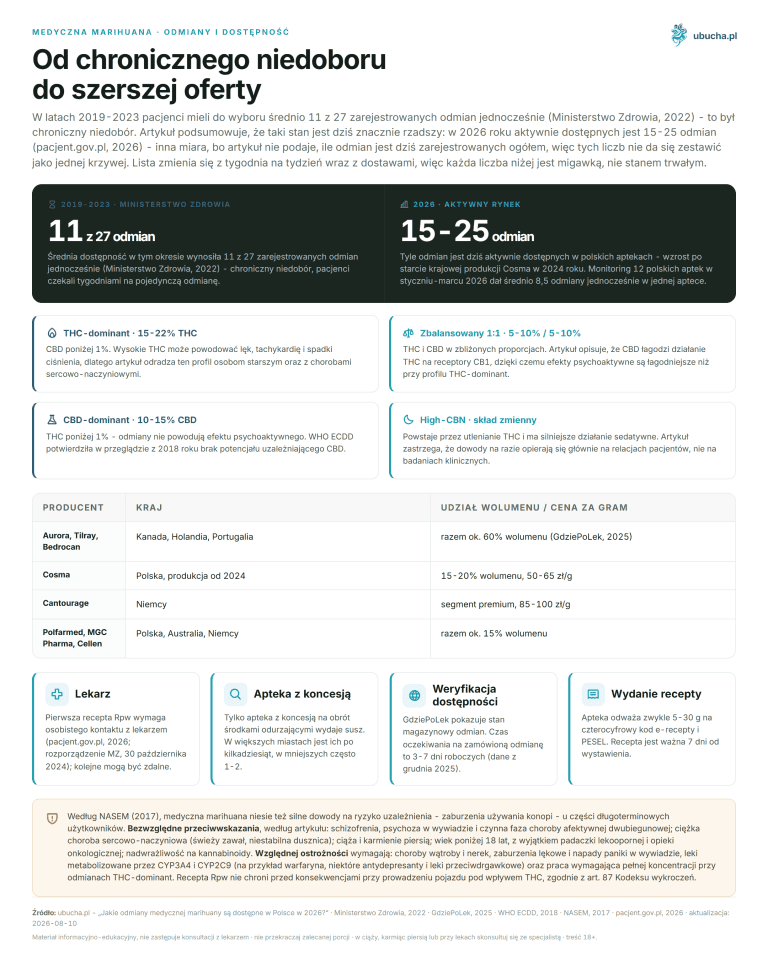
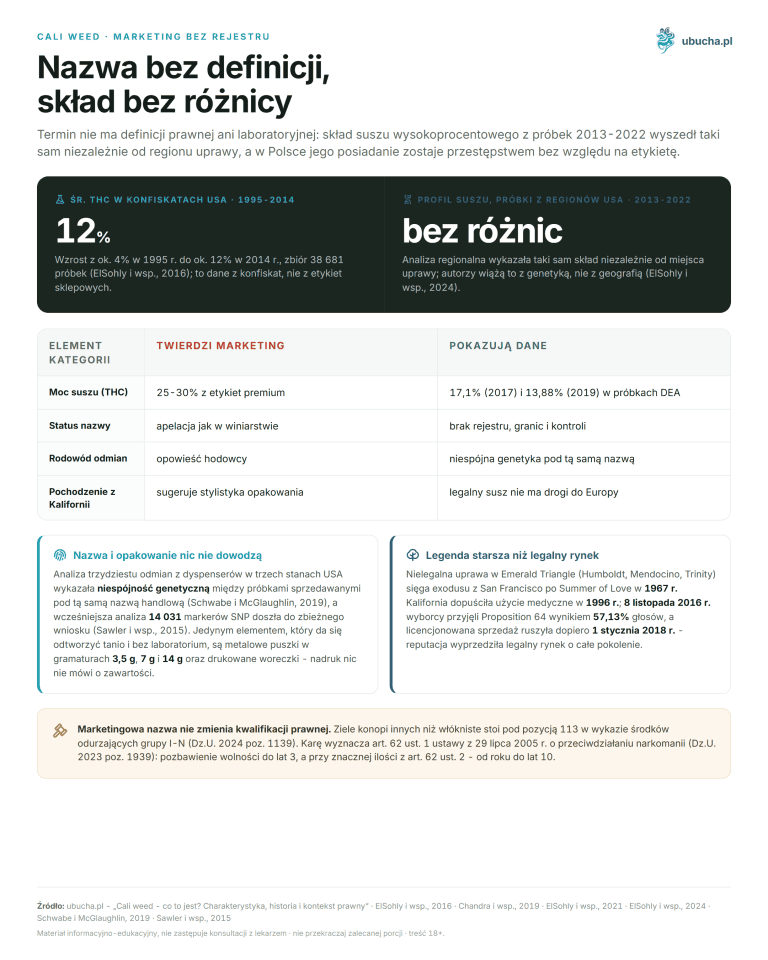
In Poland, THCA counts towards the 0.3% threshold together with delta-9-THC, so THCA flower, THCA buds, and THCA hash are illegal here, regardless of the fact that the molecule itself does not intoxicate. A few years ago, the abbreviation THCA was mainly known to analytical chemists and authors of COA quality certificates for cannabis. Today, it is one of the most controversial topics in the cannabis industry: the market for hemp-derived cannabinoid products in the USA, which includes THCA, delta-8, and HHC, was valued at around 28 billion dollars annually in the fall of 2025 (CNBC, November 2025). What caused this explosion? Why does a molecule that differs from THC by just one carboxyl group under the microscope provoke such heated legal, scientific, and consumer debates? In this guide, we break down THCA into its components: we show what it can really do in a test tube, how it is produced in the plant, and what to expect from it in Polish legal realities, where the status of THCA differs from that in the USA.
KEY INFORMATION
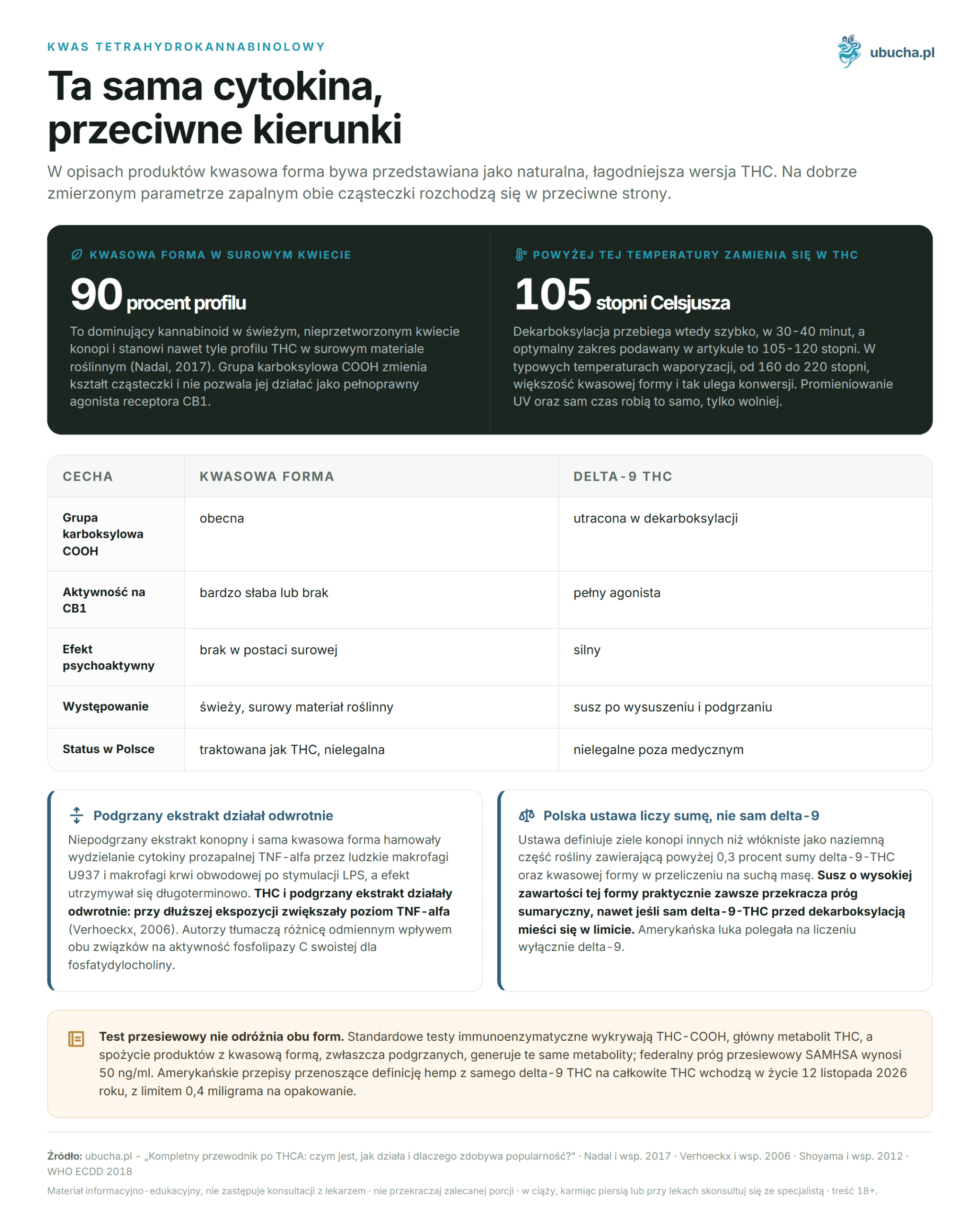
• THCA is a non-psychoactive precursor to THC, dominant in fresh cannabis, and can account for up to 90 percent of the THC profile in raw material (Nadal et al., 2017).
• Heating above 105 degrees Celsius (decarboxylation) converts THCA into psychoactive THC.
• In Poland, THCA is treated like THC and remains illegal under the Act on Counteracting Drug Addiction.
• The THCA market in the USA grew due to a loophole in the 2018 Farm Bill, but new federal regulations will close it as of November 12, 2026.
What is THCA and why does it not intoxicate like THC?
THCA, or tetrahydrocannabinolic acid, is the dominant cannabinoid in fresh, unprocessed cannabis flower and constitutes up to 90 percent of the THC profile in raw plant material. The key difference lies in the carboxyl group COOH, which alters the shape of the molecule and prevents it from acting as a full agonist of the CB1 receptor, which is why the raw plant does not intoxicate.
If you were to eat a handful of fresh, never-dried cannabis leaves, you would not feel anything resembling a classic “high”. The THCA molecule is essentially THC with an additional COOH group attached to the aromatic ring: this seemingly minor modification changes the size, polarity, and interaction with cell membranes, which is why it is sometimes referred to as the “sleeping” form of THC. We discuss the differences between acidic and active forms of cannabinoids in a separate guide on acidic forms of cannabinoids.
The team of Nadal (2017, British Journal of Pharmacology) demonstrated that THCA activates the PPAR-gamma receptor independently of CB1 and has neuroprotective effects in a mouse model of Huntington’s disease: it improves motor functions and limits degeneration of striatal neurons. This is one of the first pieces of evidence that THCA may act on the nervous system without intoxicating the user.
How does THCA differ from THC chemically and legally?
The difference between THCA and THC comes down to one COOH group, but its consequences are enormous, both biologically and regulatory. Both molecules share a molecular skeleton, but THCA adds two atoms to the formula: THC is C21H30O2, while THCA is C22H30O4. This change determines the psychoactive activity and legal classification in many jurisdictions.
From a consumer’s perspective, the three most important areas are: the intoxicating effect, legal availability, and method of consumption. The table below summarizes them concisely, without academic jargon.
| Feature | THCA | Delta-9 THC |
|---|---|---|
| Sum formula | C22H30O4 | C21H30O2 |
| Carboxyl group COOH | Present | Absent (lost in decarboxylation) |
| Activity on CB1 | Very weak or absent | Full agonist |
| Psychoactive effect | None in raw form | Strong |
| Occurrence | Fresh flower, raw plant material | Dried flower, heated |
| Status in the USA (federally) | Gray area, dependent on delta-9 THC limit | Controlled substance Schedule I |
| Status in Poland | Treated like THC, illegal | Illegal (except for medical use) |
| Commercial form | THCA flowers, THCA hash, diamonds, raw flower | Dried flower, hashish, extracts after decarboxylation |
Interestingly, both molecules affect the same inflammatory process but in opposite directions. The study by Verhoeckx et al. (2006, International Immunopharmacology) showed that unheated cannabis extract and THCA itself inhibit the secretion of the pro-inflammatory cytokine TNF-alpha by human U937 macrophages and peripheral blood macrophages after LPS stimulation, and this effect persists long-term. THC and heated extract act conversely: with prolonged exposure, they increase TNF-alpha levels. The authors explain this difference by the different effects of both compounds on phospholipase C activity specific to phosphatidylcholine, not by an identical receptor mechanism.
Most consumers think of THC and THCA as “the same, just one gets you high”. In reality, they are two different molecules with distinct receptor profiles, and their health effects do not perfectly overlap. Treating THCA as “a natural, milder version of THC” is an oversimplification that confuses conclusions from research.
How is THCA produced in the cannabis plant?
THCA does not appear in the cannabis cell from nowhere: it is a product of the biosynthetic pathway that starts from cannabigerolic acid (CBGA), sometimes called “the mother of all cannabinoids”. More about CBG, the active form of this precursor, can be found in our guide to cannabigerol. The enzyme THCA synthase catalyzes the oxidative cyclization of CBGA to THCA using oxygen as an electron acceptor; the structure and mechanism of action of this enzyme were described by Shoyama et al. (2012) after crystallizing the protein and conducting X-ray analysis.
This process mainly occurs in glandular hairs (trichomes) on the surface of the flowers, in the apoplastic space of the secretory cell. After harvesting cannabis, THCA slowly converts to THC under the influence of three factors:
- High temperature: above 105 degrees Celsius, decarboxylation occurs quickly, within 30-40 minutes.
- UV radiation and visible light: gradually break down the carboxyl bond, which is why flower stored in sunlight quickly loses THCA to THC and CBN.
- Time and humidity: even at room temperature, partial conversion occurs over several months.
Therefore, the way the flower is stored matters not only for aroma but also for the cannabinoid profile itself: a sealed, dark, and cool container slows the transition of THCA to THC, while flower kept loosely on a windowsill accelerates this process by weeks earlier than the grower anticipated.
What are the potential health benefits of THCA according to research?
Most evidence for THCA’s effects comes from in vitro studies and animal models, and the number of controlled clinical studies in humans remains close to zero. According to the WHO ECDD report (2018) on cannabinoids, non-psychoactive forms require further verification in large randomized studies before they can be included in clinical recommendations. The table below summarizes five areas that researchers are most interested in.
| Area | Research model | Main outcome | Source |
|---|---|---|---|
| Anti-inflammatory action | Human U937 macrophages and peripheral blood macrophages (in vitro) | THCA inhibits TNF-alpha secretion; the effect persists long-term, unlike THC | Verhoeckx et al., 2006 |
| Neuroprotection | Mouse model of Huntington’s disease | THCA improves motor functions and limits degeneration of striatal neurons via the PPAR-gamma pathway | Nadal et al., 2017 |
| Anti-nausea action | Rats (nausea) and Suncus murinus shrews (vomiting) | Doses of 0.05-0.5 mg/kg reduce nausea and vomiting, an order of magnitude lower than THC doses | Rock et al., 2013 |
| Oncological potential | Cell lines and animal models (cannabinoids in general) | Preliminary inhibition of cancer cell growth by modulating signaling pathways; no randomized studies in humans | Guzman, 2003 |
| Appetite stimulation | Clinical observations, pilot studies | Possible influence on ghrelin pathways; the least studied area | no large controlled studies |
It should be emphasized that oncological data come from studies on cell lines in vitro, not from clinical trials: the path from test tube to drug is long, costly, and often ends in failure. Similarly, appetite stimulation is mainly based on observations rather than rigorous randomized studies.
How is THCA consumed and which forms retain the acidic structure?
Separately, the question of THCA hash and hashish returns. This is compressed resin or the trichomes themselves separated from THCA-rich flowers, sold under the name THCA hash, and governed by exactly the same two rules as the flowers. First, as long as the material remains raw, it predominantly contains the acidic form, which does not intoxicate. Second, heating during smoking or vaporization decarboxylates it to THC, so the final product acts like regular hashish.
For the Polish reader, however, another aspect is decisive. The 0.3% threshold is counted here as the sum of delta-9-THC and THCA in dry mass, so THCA hash exceeds it by definition and is subject to the same regulations as hashish. The trade name does not change anything here.
Consumption of THCA requires avoiding high temperatures, as any heating above 105 degrees Celsius converts it to THC. The pioneer of the raw cannabis juice topic is Dr. William Courtney, who has been describing patients consuming fresh cannabis leaf juice as part of a high-dose diet since 2010, without psychoactive effects. He initiated the trend of “raw cannabis juicing” in the medical marijuana community.
Five forms of consumption dominate the market: raw leaf juice (fresh, never-dried leaves blended with water or fruit juice, the most popular method in the USA and Canada), smoothies with added raw cannabis material (leaves blended with fruits and plant yogurt), THCA diamonds (crystalline extracts of 90-99 percent pure THCA that convert to THC when heated), raw cold cannabis tea (soaking flower in cold water, without thermal activation, unlike hot tea), and supplements in capsules (lipid formulas with MCT oil, protected from heat and light).
We have noticed in conversations with customers a common myth that “raw juice” works as quickly as inhalation. In reality, the effects attributed to THCA consumed orally, where they are even described, appear gradually, sometimes after weeks of regular use, and the evidence remains mainly anecdotal and unverified in large clinical studies.
Why did THCA gain popularity in the USA between 2024-2026?
The explosion of THCA products in the USA is a result of a legal loophole in the 2018 Farm Bill, which allows hemp-derived products containing less than 0.3 percent delta-9 THC in dry mass to be federally legal, regardless of THCA content. Industry estimates cited by CNBC in November 2025 valued the entire market for hemp-derived cannabinoids, including THCA, delta-8, and HHC, at around 28 billion dollars annually.
The logic of producers is simple: if raw flower contains 25 percent THCA but only 0.2 percent delta-9 THC, it fits within the federal definition of “hemp”. Upon heating (smoking, vaporization), THCA converts to THC, and the consumer receives a fully psychoactive product. In practice, “hemp” is legally sold that behaves like classic marijuana after use.
Five categories of products dominate the market: THCA flower (raw flower with high THCA content, sold as “smokable hemp”), THCA vape carts (cartridges for vaporizers with THCA concentrates), THCA gummies and edibles (gummies and cookies in which THCA is partially decarboxylated during production), THCA pre-rolls (ready-made joints with high THCA flower), and THCA diamonds and concentrates (crystalline extracts above 90 percent, for dabbing).
What controversies and regulations have emerged around THCA in 2024-2026?
The THCA boom has triggered a response from regulators at both the state and federal levels, resulting in fragmented laws and uncertainty in the market. American regulatory agencies are increasingly using the term “total THC” (the sum of delta-9 THC and potential THC from THCA decarboxylation) as the basis for assessing product legality, rather than counting only delta-9 THC itself.
Several states in the USA have restricted or banned the sale of THCA flower, including Hawaii and Tennessee, which adopted a total THC standard that includes THCA, and Texas, which banned the retail sale of THCA flower in 2026. Other states, including Florida and Oregon, are indirectly limiting THCA through total THC limits or bans on smokable products.
At the federal level, Congress passed legislation in November 2025 that shifts the definition of hemp from delta-9 THC alone to total THC, with a limit of 0.4 milligrams per package (CNBC, November 2025). This regulation comes into effect on November 12, 2026, and according to industry estimates, it will eliminate most of the current THCA market in its present form. The life cycle of legal loopholes in the cannabis industry is surprisingly predictable: first, producers find ambiguity in regulations (2018 Farm Bill), then quickly scale their offerings (delta-8, HHC, THCA, 2020-2024), and regulators respond with a multi-year delay.
What is the legal status of THCA in Poland and the European Union?
In Poland, THCA is treated by law enforcement as equivalent to THC. The Act on Counteracting Drug Addiction defines “cannabis other than hemp” as any above-ground part of the cannabis plant, excluding seeds, containing more than 0.3 percent of the sum of delta-9-THC and THCA calculated on a dry mass basis (art. 4 point 37 of the Act of July 29, 2005, consolidated text Journal of Laws 2023, item 1939, as amended by the Act of March 24, 2022, Journal of Laws 2022, item 763). THCA-rich flower almost always exceeds this total threshold, even if delta-9-THC itself is within the limit before decarboxylation, thus falling into the category of illegal cannabis. Separately, purified or concentrated THCA (for example, “diamonds”) falls within the broad definition of “tetrahydrocannabinols, all isomers and their stereochemical derivatives” from the list of psychotropic substances (Regulation of the Minister of Health of August 17, 2018, item 96 of Annex 1, consolidated text Journal of Laws 2024, item 1139).
Legal products from hemp remain those in which the sum of delta-9-THC and THCA does not exceed 0.3 percent: CBD, CBG, CBN, and CBC as non-psychoactive cannabinoids (subject to food law) and CBD flower provided it is properly labeled. THCA flower imported from the USA remains illegal, and transport across the Polish border is treated as drug smuggling.
The situation in the European Union is varied. Germany, after partial legalization of marijuana in 2024, allowed THCA in a recreational context with possession limits, but commercial sale of THCA flower outside dispensaries remains banned. Italy, Spain, and France maintain a restrictive approach, treating THCA like THC.
The same mechanism, namely a trade name suggesting a loophole in regulations, drives the turnover of semi-synthetic derivatives. We break down their status in the text about the legality of HHC, HHC-O, and THCP.
What are the most common myths about THCA that should be dispelled?
With the rapid rise in popularity of THCA on social media, many myths have arisen that can lead to poor consumer choices and, in extreme cases, legal problems. According to an FDA statement, only one cannabinoid product, Epidiolex with CBD, has full approval for treatment; the rest are supplements without clinical verification.
| Myth | What the evidence says |
|---|---|
| THCA is legal everywhere | FALSE. The legality of THCA varies even within the USA, and in most European countries, including Poland, THCA is treated like THC. |
| THCA is non-psychoactive, so it is safe for everyone | PARTIALLY TRUE. In its raw form, THCA does not produce a psychoactive effect, but any heating, vaporization, smoking, or cooking above 105 degrees converts it into full THC. |
| THCA is just a natural version of THC | FALSE. THCA and THC have different receptor profiles and different pharmacological effects. Extrapolating research from one compound to another is a methodological error. |
| A drug test after THCA will be negative | FALSE. Standard immunoassay tests detect THC-COOH. Consumption of THCA products, especially heated ones, generates the same metabolites. |
| THCA cures cancer | FALSE. There is promising in vitro research on inhibiting cancer cell growth, but there is no randomized study in humans confirming oncological efficacy. |
What clinical studies are still lacking on THCA?
Despite promising preclinical results, the body of clinical research on THCA in humans remains very modest: the ClinicalTrials.gov registry shows only a few active studies on THCA, mostly in early phases and with small participant groups.
Several areas still require investigation:
- Pharmacokinetics: there is a lack of a complete picture of how the body absorbs THCA after oral or sublingual administration and how its metabolism and excretion proceed later.
- Clinical efficacy: there is a lack of large randomized studies confirming effects observed in animals and in vitro.
- Long-term safety profile: we do not know the effects of daily THCA use over many years.
- Drug interactions: the effect of THCA on cytochrome P450 and the metabolism of conventional drugs.
- Dosing standardization: there is a lack of consensus on effective and safe therapeutic doses.
In the available literature on THCA, in vitro and animal model studies clearly outweigh clinical trials in humans, highlighting the significant gap between market marketing and medical evidence. More large randomized studies are needed to formulate therapeutic recommendations (WHO ECDD report, 2018). Until then, any claim of THCA’s efficacy in a specific disease remains a research hypothesis, not a clinical recommendation, which is worth remembering when reading enthusiastic product descriptions in online stores.
What cannabis products are legally available in Poland instead of THCA?
Since THCA is illegal in Poland, a conscious consumer can turn to legal alternatives based on CBD and CBG, which offer some therapeutic properties without legal risk. According to the WHO ECDD report (2018), CBD has a favorable safety profile in humans and does not show potential for abuse, and the WHO Expert Committee recommended that it not be included in international control.
In the store at Bucha, you will find, among other things, hemp oils with CBD and CBG as well as hemp flower with a legal level of THC, both categories with products compliant with the Polish threshold of 0.3 percent calculated as the sum of delta-9-THC and THCA. The difference compared to THCA flower is fundamental: these products do not convert into a psychoactive substance when heated, so you can legally buy, transport, and use them without the risk of criminal liability. For those looking for a specific ritual instead of experimenting with unverified imports, this is a more practical starting point than a product in the legal gray area. More about the regulation of the CBD market in Poland can be found in the article on regulating CBD products.
Summary and what’s next for THCA?
THCA is a fascinating molecule standing at the intersection of biochemistry, law, and cannabis marketing: it has real research potential but is still poorly documented in clinical studies in humans. Its mechanism of action, lack of psychoactivity in raw form, and temperature sensitivity are well described today, but translating these observations into proven therapies will require years of researchers’ work.
In the USA, the THCA market is entering a phase of regulatory closure: regulations shifting the definition of hemp to total THC will come into effect on November 12, 2026, and industry analysts expect that this will eliminate most of today’s offerings. In Poland, the legal status remains unchanged: THCA is treated like THC and illegal, regardless of what happens across the ocean. A conscious consumer today has a choice: wait for more comprehensive clinical evidence and clear regulations, or turn to legal alternatives based on CBD and CBG, available in certified stores. Both paths are justified, but only one of them does not carry legal risk in Poland today.
Frequently Asked Questions
Is THCA legal in Poland?
No. THCA is treated by law enforcement as equivalent to THC. THCA-rich flower almost always exceeds the threshold of 0.3 percent calculated as the sum of delta-9-THC and THCA, thus falling into the category of illegal cannabis (art. 4 point 37 of the Act on Counteracting Drug Addiction).
Can THCA cause a psychoactive effect?
In its raw, unheated form, THCA does not produce a psychoactive effect because it does not act as a full agonist of the CB1 receptor. However, any heating above 105 degrees Celsius decarboxylates THCA to THC, which is fully psychoactive. A joint with THCA flower acts like classic marijuana.
Will THCA give a positive drug test result?
Yes, with a high probability. Standard immunoassay tests detect THC-COOH, the main metabolite of THC. Consumption of THCA products, especially in heated form, generates the same metabolites, and the federal screening threshold set by SAMHSA is 50 ng/ml.
Does THCA have confirmed anti-inflammatory effects?
The study by Verhoeckx et al. (2006) showed that THCA inhibits the secretion of TNF-alpha by human macrophages, unlike THC, which raises this level with prolonged exposure. This result comes from a cell model, not from clinical studies in humans, so it does not directly translate into therapeutic recommendations.
Does vaporizing THCA avoid decarboxylation?
Only partially and at very low temperatures, below 100 degrees Celsius, which practically eliminates aerosol release. At typical vaporization temperatures (160-220 degrees), most THCA undergoes decarboxylation to THC. Real inhalation of THCA without conversion is difficult to achieve.
Can I order THCA flower from the USA to Poland?
We do not recommend this. Transporting products containing THCA across the Polish border is treated as smuggling of a narcotic substance, and the legal consequences can be severe. Polish customs authorities monitor shipments from the USA, and a product legal in some states of the USA remains illegal in Poland.
What is the optimal temperature for decarboxylating THCA?
The optimal range is 105-120 degrees Celsius for 30-40 minutes. Higher temperatures accelerate decarboxylation but risk losing terpenes and degrading THC to CBN.
Does raw cannabis juice really have therapeutic effects?
The evidence is mainly anecdotal and comes from clinical observations, not from large randomized studies. Advocates report improvements in autoimmune conditions and chronic pain, but consuming raw cannabis leaf juice remains an unverified practice under rigorous evidence-based medicine standards.
This article is for informational and educational purposes only and does not constitute legal advice. The legal status described in the article is valid as of the date of publication: cannabis regulations may change. Consult a lawyer or current legal acts before making decisions.
Author: Michał Waluk · Published: 2026-05-11 · Updated: 2026-08-24