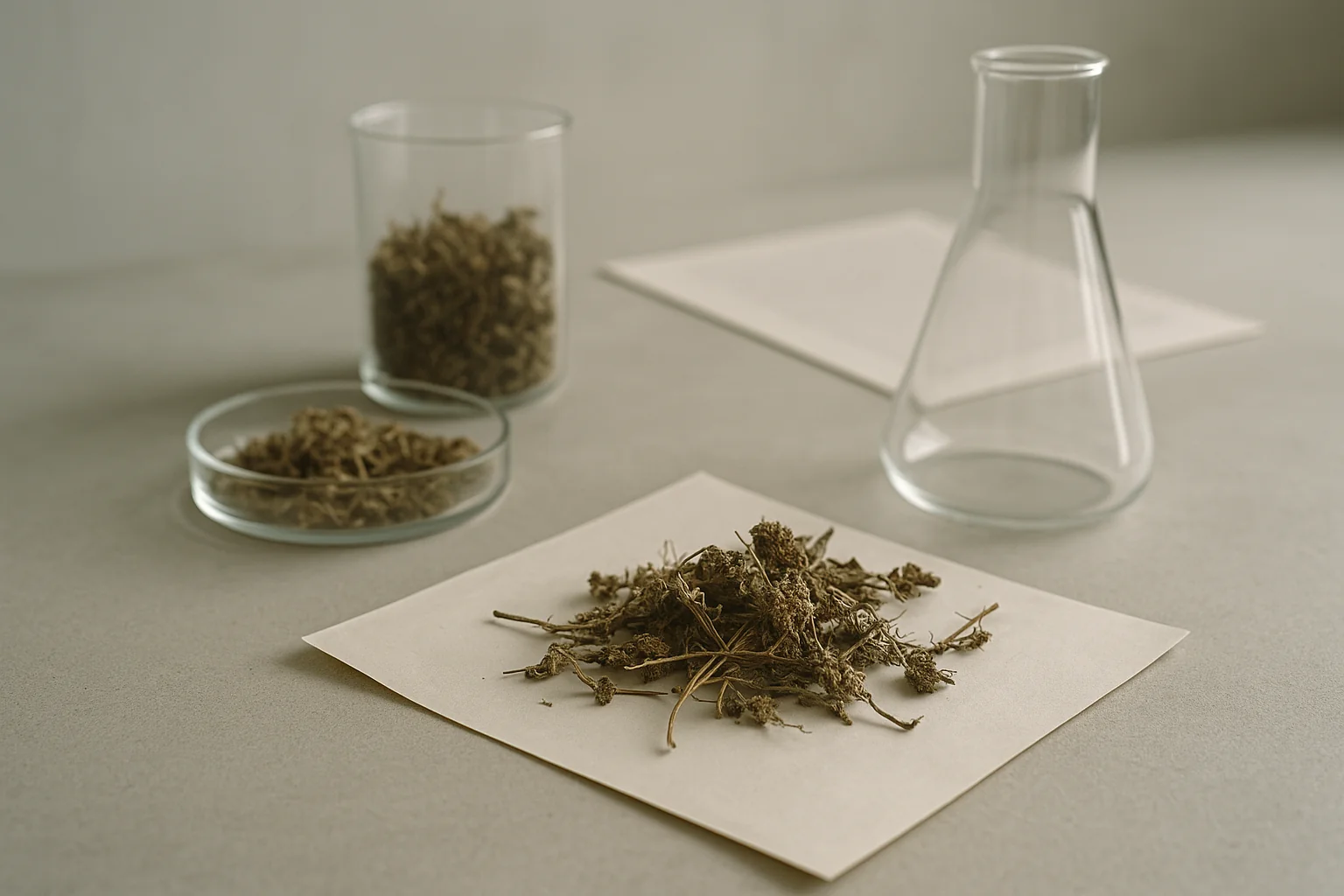

Terpinolene: seven strains from the list, two studies, none on humans
Terpinolene is the leading terpene in seven out of eighty-five strains available in Polish pharmacies, and it is present in eighteen. The evidence base for this cluster carries two works: one on mice and one in a test tube.
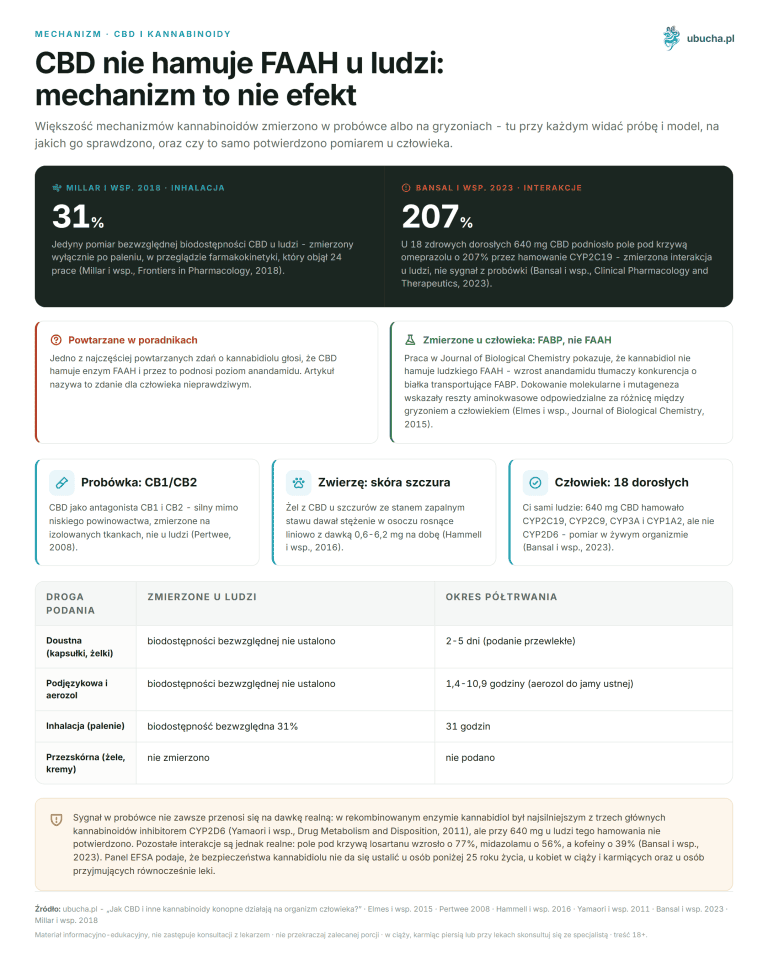
| Terpene card | terpinolene |
|---|---|
| Strains with this leading terpene | 7 out of 85 |
| Present in profiles | 18 out of 85 |
| Works in the evidence base | 2 |
| Research model | rodent, test tube |
| Boiling point | 184.0 °C |
| Measurement condition | atmospheric pressure (760 mmHg) |
- In the pharmacy list. Leads in 7 out of 85 strains and is the leading terpene for them according to pharmacy data.
- Evidence. 2 works from 2012 to 2013, all on animals or in cell culture, none on patients using the herb.
- Temperature. 184.0 °C, with the measurement condition determining whether the number means anything.
- What we do not provide. Percentage share in the profile, as the denominator in sources varies and the numbers are not comparable between strains.
What is terpinolene and where is it found outside of cannabis?
Terpinolene is a monoterpene with the formula C10H16 and a molecular weight of 136.23 g/mol, described in the PubChem database under CID number 11463. Outside of cannabis, chemical databases note it in citrus oils, tea tree oil, common pine, and English herb, with parsnip oil considered a rich source.
The systematic name is 1-methyl-4-(propan-2-ylidene)cyclohexene, and chemically the compound belongs to p-mentadienes with double bonds at positions 1 and 4(8). The ChEBI card attached to the PubChem record assigns it the role of a component of volatile oils, a calming agent, an insect repellent, and a plant metabolite. This list describes the chemical roles assigned to the substance in the database and is not a summary of actions confirmed in patients.
The list of sources in the same record breaks down the occurrence into specific plants. The Hazardous Substances Data Bank lists citrus oils from navel oranges, bergamot, mandarins, and tangerines, common pine oil, Melaleuca tea tree oils, as well as turpentines from pine resin. The Toxin and Toxin Target Database adds species from the genera Citrus, Mentha, Juniperus, and Myristica, indicating parsnip oil as a rich source. The LOTUS database notes the compound in Chinese tea. The expert committee on food additives describes the pure substance as a colorless or pale straw-colored oily liquid with a sweet, pine scent.
How long does it take for terpinolene to reach the body and how long does it stay?
Unknown. No one has published measurements of blood concentration after vaporizing the herb for terpinolene itself, so the time to reach and the time to decay remain unmeasured for this compound. However, it is known how the route of administration behaves as such, and this is described below along with the only number that can be provided from the source.
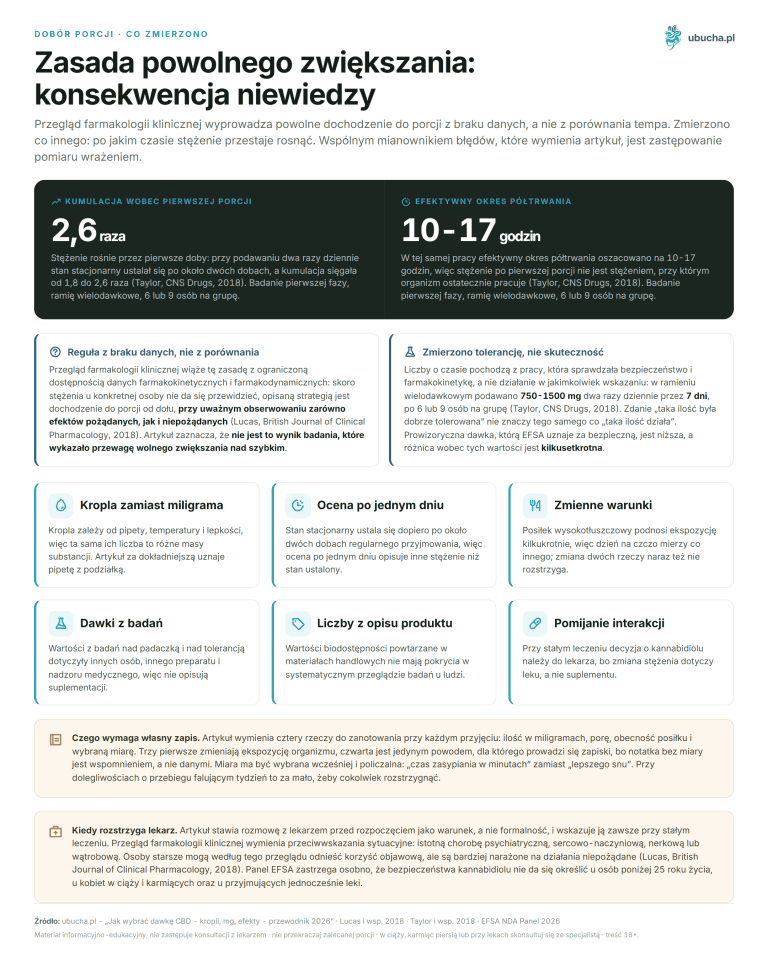
The route of administration determines the course more than the strain itself. After vaporization, the substance passes from the lungs to the blood almost immediately, so the first sensations appear after a few minutes, intensity increases for another ten to thirty minutes, and the whole effect fades within two to four hours. After ingestion, the raw material first passes through the intestine and liver, so the first sensations are waited for from half an hour to two, and the episode lasts six, sometimes eight hours. Hence the most common mistake with oral administration: anyone who thinks nothing is happening after thirty minutes and takes another dose will receive both doses at once. The above ranges describe the route of administration, not this strain; pharmacokinetic studies for a single cultivar have not been published.
This single number describes the boiling point of the pure compound. The PubChem record gathers three entries for CID number 11463. The Hazardous Substances Data Bank notes 187 degrees Celsius, the expert committee on food additives provides 183-185 degrees under 760 mm Hg pressure, and the Human Metabolome Database repeats the same range. All three were measured under conditions close to atmospheric pressure, so they can be compared with each other. Not every terpene has such a set: for humulene, the same set has only the measurement of 99-100 degrees under 3 mm Hg pressure, and values from reduced pressure should not be placed alongside atmospheric measurements.
The boiling point of the pure substance is neither the setting of the device nor a measure of how much of the compound remains in the vapors after heating the herb. For the second question, our data do not answer at all: none of the collections on which this cluster stands measures the loss of terpenes when heating the raw material. The way temperature tables are read as a user manual breaks down a separate text on the evaporation of terpenes.
What have studies shown about the effects of terpinolene?
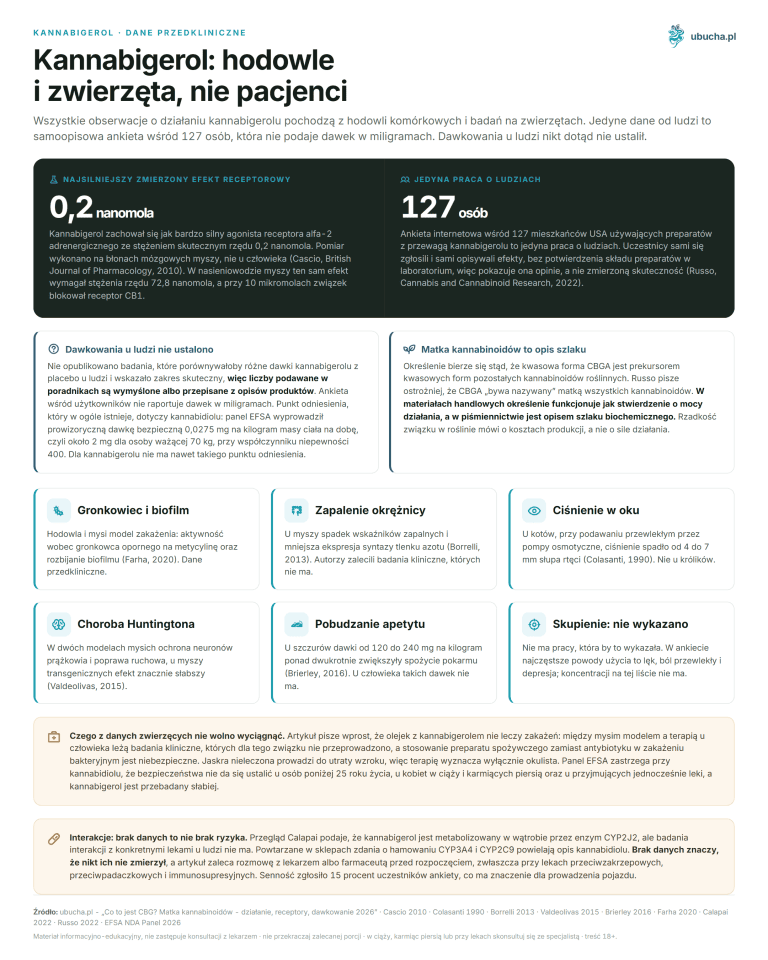
Two works, both outside of humans. Ito and Ito described in 2013 the calming effect after inhalation in mice, and Okumura’s team in 2012 the effect on a human leukemia cell line in culture. The evidence base for this cluster has no studies involving humans for this compound.
The first of them concerns an animal.
| Work | Model and route of administration | What was shown |
|---|---|---|
| Okumura N et al., 2012 Oncology Letters PMID:22740904 |
test tube (human K562 cell line) | Terpinolene reduced the level of AKT1 protein and inhibited the proliferation of human leukemia K562 cells in culture; the study did not concern pain, sleep, or anxiety. |
| Ito K et al., 2013 Journal of Natural Medicines PMID:23339024 |
rodent (mouse, inhalation) | Inhaled terpinolene exhibited a sedative effect in mice; the effect persisted even in mice with impaired olfaction, indicating that the action occurred after the compound was absorbed into the body through the nose, not solely through the perception of smell. |
The second entry does not concern any organism.
The entire evidence base for this cluster looks similar. It contains 22 works spread over eleven terpenes, and none included humans; two do not even concern mammals, as they describe a plant with aphids or a review of insect literature. With such material, a statement about what the strain does to a patient has no basis.
What has not been shown about terpinolene?
No effects of terpinolene on pain, anxiety, or sleep in humans or in any animal pain model have been demonstrated; available data only cover the calming effect after inhalation in mice and the effect on a leukemia cell line in a test tube. This statement weighs more here than all the others combined and has no fine print disclaimers beneath it.
Let’s break it down. Pain: no animal pain model has received this compound, so there is not even a starting point to ask about humans. Sleep: the work on mice speaks of a calming effect, and calming a rodent in a behavioral test is not the same as a human sleeping and is not measured with the same tools. Anxiety: none of the two works posed such a question, and the second explicitly excludes it.
It has also not been shown what no one is loudly asking. There are no measurements of how much of the compound enters the blood of a person vaporizing the herb. There are no measurements of how much remains in the vapors at all. There is no study comparing two strains differing in leading terpene with similar raw material potency. Finally, there is no work that would link the indication of this compound in the pharmacy list with any outcome in a patient, as the list describes the product, not the effect.
Separately stands the direction in which the commercial description and the evidence material diverge. The ChEBI card assigns the compound the role of a calming agent, while commercial descriptions usually associate it with stimulation and daytime use. The evidence base does not resolve this contradiction in either direction, as a measurement in humans would be needed for resolution, and none has been performed. Competitors place a general bibliography at this point and do not provide a single boundary of the cited result.
What adverse effects have been reported after terpinolene?
None, if asking about the herb. Reporting an adverse effect concerns a medicinal product with a batch number, not a single component of the oil, so there is no separate statistic for this compound inhaled from the herb. However, there is a chemical classification of the pure substance, and it speaks of something else.
Adverse effect reports are collected for a medicinal product with a batch number, not for the strain name, so the following concerns cannabis herb as a group of raw materials. The most frequently reported effects are dry mouth, red eyes, and increased heart rate. Less commonly described are dizziness upon rapid standing, daytime drowsiness, and temporary worsening of short-term memory, as well as anxiety increasing with dosage. A separate matter is medications taken concurrently, especially sedatives and those affecting coagulation: their assessment requires knowledge of the entire list of preparations, not just the description of the plant. We do not provide the frequency of these symptoms numerically, as public compilations for cannabis herb in Poland do not separate them by individual products.
The classification of the pure substance comes from the register of the European Chemicals Agency, where the p-mentha-1,4(8)-diene card collects 2251 reports from 44 entities. Just under three-fifths of these reports attribute an irritating effect on the skin to the substance, and over three-quarters the ability to cause an allergic skin reaction. Haz-Map summarizes the matter differently: as a flavoring agent, the substance is considered safe according to the expert committee on food additives, it did not pass the maximization test as an allergen, but a positive patch test was described in a woman using a cleaning agent, and the European consumer safety committee included it among recognized contact allergens in 2011. The safety data sheet adds that inhaling the substance or contact with it can irritate the skin and eyes, and vapors can cause dizziness in enclosed spaces.
All these descriptions concern the pure compound in industrial quantities and contact with the skin, not trace amounts in vapors from the herb. Transferring them directly to vaporization would be as much of an abuse as transferring results from mice to humans.
Which strains from Polish pharmacies have terpinolene as the leading terpene?
Seven out of eighty-five. The pharmacy list indicates this compound as leading for the strains Lilac Diesel, Ghost Train Haze, Delahaze, Frozen Lemon Mints, Lemon Skunk, Original Gangster Deluxe, and Red No 2 (Jack Haze). They correspond to thirteen of the one hundred forty-one entries that the list counts today.
| Strain | Producers | Pedigree |
|---|---|---|
| Delahaze | Aurora | established |
| Frozen Lemon Mints | Four 20 Pharma | unknown |
| Ghost Train Haze | Aurora, S-LAB | established |
| Lemon Skunk | Canopy Growth | unknown |
| Lilac Diesel | S-LAB, Synoptis Pharma, Tilray | established |
| Original Gangster Deluxe | Canopy Growth | established |
| Red No 2 (Jack Haze) | Canopy Growth | established |
The distribution is very uneven. Six out of thirteen entries belong to one strain, Lilac Diesel, supplied by three producers. Ghost Train Haze has two entries from two producers, and the remaining five have one entry from one producer each. Three of this five, namely Lemon Skunk, Original Gangster Deluxe, and Red No 2 (Jack Haze), come from the same entity.
In comparison: the pharmacy list assigns caryophyllene to thirty strains, myrcene to twenty, limonene to sixteen, and nerolidol and pinene to six each. Terpinolene occupies fourth place in this ranking with seven strains, so it is clearly rarer than the top three, but not uncommon.
The leading terpene in the list is a feature of the description of the entry, not a result of a measurement made for the patient. It comes from the ordering provided by the source and changes with supplies, as the permit for the raw material expires after five years, and entries disappear from pharmacies and return. The current state is led by the hub of this cluster.
In how many strains does terpinolene occur at all, and not just as a leader?
In eighteen. Profile databases list this compound in the composition of eighteen strains from this cluster, which is more than twice the number of seven entries to which the pharmacy list assigned it as leading. These two lists measure different things. The first speaks of the label, the second of the composition.
Eleven strains have this compound in their composition, although the pharmacy list names a different leading terpene: Balasa (Gorilla Girl), Frosted Lemon Angel, Hindu Kush, Inzane in the Membrane, Island Sweet Skunk, Jean Guy, Mac Monkey (Blue Monkey), Northern Berry, Purple Octane, Sweet Berry Kush, and Ultra Jack.
Documenting this eighteen is weak. Twelve entries describe only one source, budcare.pl, so its record cannot be compared. The remaining six describe both sources, and in each of these six, the compositions differ. For the Balasa (Gorilla Girl) and Northern Berry strains, terpinolene is mentioned only by budcare.pl, while medweed.pl does not list it at all, so the very presence of the compound can be disputed.
The weighted order at medweed.pl gives an even different picture. For Lilac Diesel, terpinolene stands first among five listed components, for Island Sweet Skunk third among five, and for the Frozen Lemon Mints and Original Gangster Deluxe strains, the source lists only one component, which is this compound. It mentions it at all in four of sixty-five described entries.
Why do we not provide how much terpinolene is in a strain?
Because the denominator is unknown. The profile source provides shares of individual components in percentages, but the sum of these shares for a single entry almost never adds up to one hundred, so the number next to the component name would look like a measurement of the whole, which it is not. We calculated this separately for this compound.
The calculation is simple and gives a clear result. In the budcare.pl collection, this compound is mentioned in 31 out of 146 recorded entries. The sum of declared shares on them ranges between 50 and 100, takes on eighteen different values, and its median is 77. In 29 out of 31 entries, the sum does not reach one hundred, and none exceeds it.
The result means exactly this: the source record describes part of the profile, not its entirety. At the median position, nearly one-fourth of the composition has no assigned name at all. Providing a number next to the component name would require knowledge of what this number is counted against, and neither the reader nor we have such knowledge.
The second source does not help, as it does not provide shares at all: medweed.pl records only the weighted order of components. Comparing both sources thus gives either an order or a fraction of an order, never a complete composition. We therefore provide the composition as a composition, without numbers next to the names, and this is a limitation of the data, not editorial caution.
Frequently asked questions
Does terpinolene have a sedative effect?
Unknown. The only work on an animal describes a calming effect in mice after inhalation, and calming a rodent in a behavioral test is not the same as a human sleeping. Studies involving humans for this compound have not been published.
Is it terpinolene that makes the strain described as daytime?
Nothing confirms this. Commercial descriptions associate this compound with stimulation, while the ChEBI card in the PubChem record assigns it the role of a calming agent. The evidence material does not resolve this contradiction, as measurements in humans are lacking.
At what temperature does terpinolene boil?
Records collected in the PubChem database state 187 degrees Celsius and a range of 183-185 degrees under 760 mm Hg pressure. This is the boiling point of the pure compound, not the setting of the vaporizer or a measure of how much substance remains in the vapors.
How many strains from Polish pharmacies have terpinolene as the leading terpene?
Seven out of eighty-five, which means thirteen out of one hundred forty-one entries in the list. It is present in eighteen strains, as presence in the profile and indication on the label are two different things.
Why do you not provide how much terpinolene is in a strain?
Because the sums of shares provided by the source do not add up to the whole. In 31 entries at budcare.pl with this compound, the median sum is 77, the lowest value is 50, and none exceeds one hundred, so the denominator remains unknown.
Can terpinolene cause allergies?
The register of the European Chemicals Agency classifies the pure substance as irritating to the skin and capable of causing an allergic reaction. However, this description concerns the pure compound in contact with the skin, not trace amounts in vapors from the herb.
Cannabis herb is a pharmaceutical raw material dispensed by prescription in the Rpw category. The material is for informational purposes and does not replace the advice of a doctor or pharmacist. The strains described above are dispensed by the pharmacy on prescription and should not be confused with cannabis herb sold as a food product. The editorial text was prepared by the editorial team of ubucha.pl.