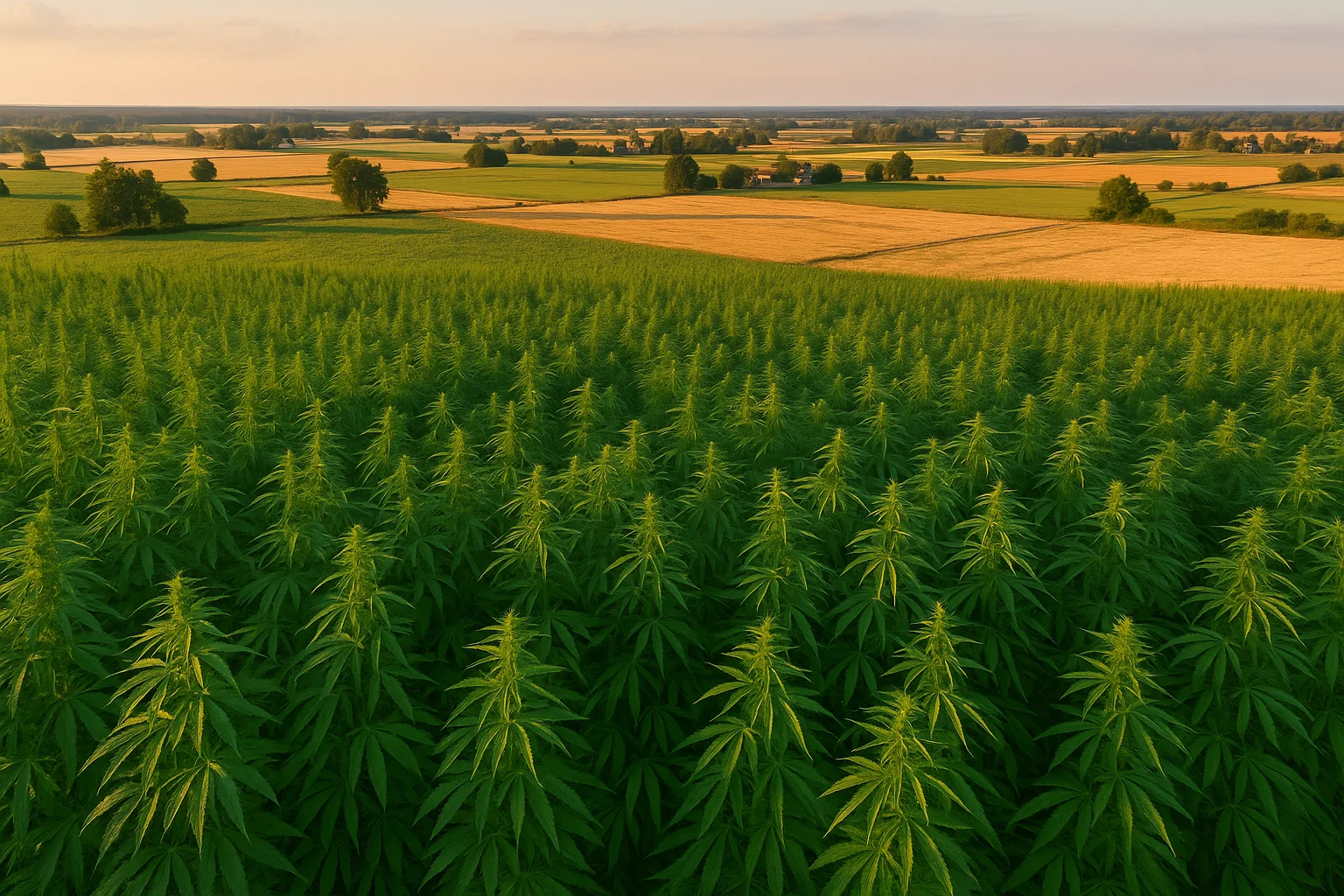

Can you legally grow hemp in Poland 2026 (FAQ)
KOWR register instead of a permit, 1 ha for personal needs, control of 10 percent of producers and a fine from art. 65. Regulations read in the consolidated text of the Act.
Growing fiber hemp in Poland is legal and since 2022 it no longer requires any permits. It requires registration in the register maintained by the National Support Center for Agriculture, which is a completely different procedure than the administrative decision that older guides still mention. The authority, procedure, deadlines, and penalties have changed: cultivation in violation of the regulations is, in the case of fiber hemp, an offense punishable by a fine, not a crime. Below you will find the wording of the regulations read in the consolidated text of the Act on Counteracting Drug Addiction along with the article numbers under which you can check them yourself. You will also find the area allowed for personal needs, the scope of control, and what changes the amendment coming into force on August 27, 2026, introduces.
KEY INFORMATION
• The condition for cultivation is registration in the hemp register, and the competent authority is the director of the regional branch of KOWR (art. 47a sec. 2 and art. 47b sec. 1, Journal of Laws 2023 item 1939).
• Registration is done within 14 days from the submission of an application that meets formal requirements.
• The area for personal cultivation is no more than 1 ha per year.
• Growing fiber hemp in violation of the provisions of the Act is an offense punishable by a fine (art. 65 point 1), not a crime under art. 63.
• Fiber hemp are plants in which the sum of delta-9-THC and THCA does not exceed 0.3% of dry mass.
Is growing fiber hemp legal in Poland?
Yes, within the limits of a closed catalog of purposes. Art. 45 sec. 3 lists them in five points, and cultivation conducted outside this catalog is considered prohibited by sec. 4. The catalog is broad, as it includes both industrial and typical agricultural applications:
- textile, chemical, pulp and paper, cosmetic, pharmaceutical, energy needs;
- seed production, scientific research purposes;
- breeding of fiber hemp varieties, land reclamation, land remediation;
- food, veterinary, feed, beekeeping, fertilizing, insulating purposes;
- production of composite materials, building materials, natural plant protection products.
The species boundary is defined by art. 4 point 5. Fiber hemp are plants of the species Cannabis sativa L., in which the sum of the content of delta-9-THC and tetrahydrocannabinolic acid in flowering or fruiting tops, from which resin has not been removed, does not exceed 0.3% in relation to dry mass, with the sum being rounded to one decimal place. This wording was given by the Act of March 24, 2022, Journal of Laws 2022 item 763, in force since May 7, 2022; previously, the threshold was 0.20%.
Growing hemp for purposes other than those mentioned in art. 45 sec. 3 is prohibited. The only exception is art. 49a: the cultivation of hemp other than fiber hemp for the purpose of producing pharmaceutical raw material may only be conducted by a research institute supervised by the minister responsible for agriculture, after obtaining a permit from the Chief Pharmaceutical Inspector. A private company cannot obtain such a permit. We wrote about how these two categories of plants differ botanically and chemically in our post about varieties and properties of hemp.
Who maintains the register and what needs to be submitted to be included in it?
The hemp register is maintained by the National Support Center for Agriculture, and the registration is done by the director of the regional branch appropriate due to the place of residence or the seat of the applicant (art. 47b sec. 1). The application is submitted on a form available on the KOWR website, before the planned sowing (art. 47b sec. 2 and 3).
The application contains the applicant’s data along with NIP, REGON, and PESEL number of the individual, information about the variety, planned area of cultivation with the numbers of land plots, and storage location, as well as indicating the purpose of cultivation (art. 47b sec. 4). A copy of the invoice for the purchase of elite or qualified seed material in accordance with the seed regulations and a copy of the label from the packaging are attached (sec. 5). The producer also submits a declaration that they have not been convicted of a crime under art. 63 or art. 64 or for an offense under art. 65 point 1.
The data of the purchasing entity is provided only when the cultivation is not conducted for personal needs and the yield will not be processed independently (art. 47b sec. 4 point 4). This reverses the common opinion that a contract with a buyer is a prerequisite for every application. Registration is done within 14 days from the submission of an application that meets formal requirements (art. 47c sec. 1), and confirmation is a certificate. The termination or suspension of activity is reported in writing within 30 days (art. 47g sec. 1).
Can you grow fiber hemp for personal needs?
Yes, and the law states this explicitly. Art. 45 sec. 5 allows cultivation for personal needs when it serves the purposes from sec. 3 point 4, i.e., food, veterinary, feed, beekeeping, fertilizing, insulating, or purposes from point 5, i.e., production of composite materials, building materials, natural plant protection products. The same possibility applies to textile, energy needs, and land reclamation along with their remediation.
The area of such cultivation may not exceed 1 ha per year (art. 45 sec. 6), and the yield may be processed independently for the purposes specified in art. 45 sec. 3 (sec. 7). Registration in the register is, however, required just like for commercial cultivation, as art. 47a sec. 2 does not provide an exception for scale or purpose.
We have noticed that this fragment of the law is most often omitted in guides, and without it, there is an impression that legal cultivation exists only in a contractual model with a processing plant. It does not exist solely in this model: a farmer growing hemp for their own feed, insulating material, or building material falls within the law, as long as they stay within the hectare and submit an application before sowing. The significance of this path for farms has been described in more detail in our post about hemp in organic farming.
What do the controls of hemp cultivation look like?
The control is carried out by the appropriate director of the regional branch of KOWR, and its subject is the compliance of the data contained in the register with the actual state (art. 47f sec. 1). The law sets a minimum scope: control activities are carried out for at least 10% of fiber hemp producers in a given harvest year and for 10% of entities conducting purchases.
If the control reveals a discrepancy, the director changes the entry ex officio and informs the producer about it. If, however, the producer obstructs or hinders the control or there is suspicion that the cultivated plants may be other than fiber hemp, the director immediately notifies the Police (art. 47f sec. 4).
A separate penalty is linked by the law to the area stated in the application. Providing a planned area differing by more than 5% from the actual area determined as a result of the control is an offense punishable by a fine (art. 65 point 2). This is one of the few numerical thresholds explicitly stated in this law, so it is worth keeping an eye on when planning sowing.
KOWR control does not replace the testing of active substance content. If the test result shows that the sum of delta-9-THC and THCA exceeds 0.3% of dry mass, the plant ceases to meet the definition from art. 4 point 5 and the matter goes beyond the registration procedure. Therefore, the choice of variety and documented purchase of qualified seed material are significant not only formally.
What are the consequences of growing hemp without registration?
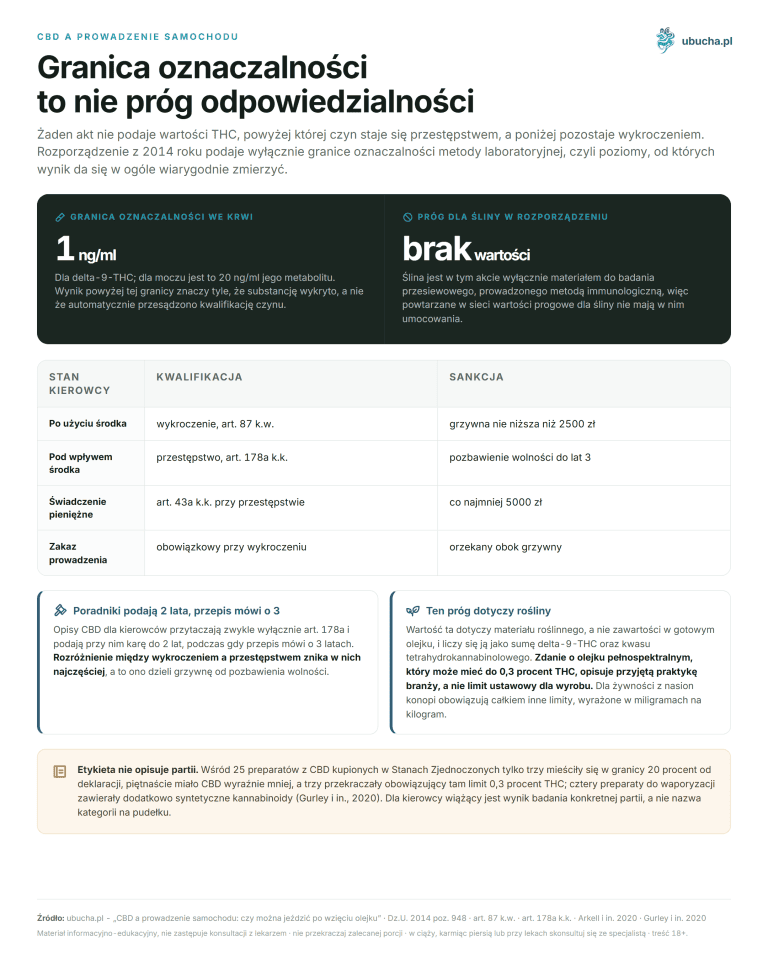
A fine, as it is an offense, not a crime. Art. 65 point 1 states that anyone who grows or purchases low-morphine poppy or fiber hemp in violation of the provisions of the Act is subject to a fine. The provision speaks generally about cultivation in violation of the provisions of the Act, so it includes both the lack of registration and cultivation outside the purposes of art. 45 sec. 3.
Art. 63 sec. 1, often cited in this context, does not apply to fiber hemp. Its wording states that it concerns the cultivation of hemp “except for fiber hemp” and provides for a penalty of imprisonment for up to 3 years, but refers to hemp other than fiber hemp, i.e., to plants exceeding the threshold of 0.3%. The difference is significant for a farmer who forgot to submit an application: they are liable for an offense, not for a drug crime.
However, the qualification may change along with the test result. If the content of the sum of delta-9-THC and THCA exceeds 0.3%, the cultivation ceases to be fiber hemp cultivation in the sense of art. 4 point 5, and the material becomes cannabis other than fiber hemp in the sense of art. 4 point 37. Then, criminal provisions regarding narcotic drugs come into play, as we described in our post about the consequences of possessing marijuana in Poland.
What changes does the amendment coming into force on August 27, 2026, introduce?
The Act of July 3, 2026, Journal of Laws 2026 item 1004, does not change either the threshold of 0.3%, the purposes of cultivation, or the rules for trading in hemp products. However, it changes several procedural details important for producers registered in the register.
The deadline for reporting changes in the register is extended from 14 to 30 days (art. 47c sec. 3). To art. 45, paragraphs 8 and 9 are added, which define processing independently and cultivation for personal needs; the latter means cultivation for obtaining products used in one’s own farm, without the possibility of further resale. In art. 47f, it is stipulated that controls of the same producers do not have to be carried out every year.
Responsibility for hindering control on the part of the purchaser also changes: the new art. 52b sec. 2 provides for a monetary penalty of 10,000 PLN for an entity that prevents the director of the branch from conducting the control. The amendment also clarifies the offense from art. 65 and adds an exclusion of liability when the stated area turned out to be larger than the actual area due to adverse weather phenomena that caused crop losses.
Frequently Asked Questions
Does growing hemp require a permit?
No. Since 2022, the condition for conducting cultivation is registration in the hemp register, not an administrative decision. The registration is done by the director of the regional branch of the National Support Center for Agriculture, appropriate due to the place of residence or the seat of the applicant (art. 47a sec. 2 and art. 47b sec. 1 of the Act on Counteracting Drug Addiction).
How long does it take to register in the hemp register?
The registration is done within 14 days from the date of submission to the appropriate director of the branch of an application that meets formal requirements (art. 47c sec. 1). The application is submitted before the planned sowing, and the confirmation of registration is a certificate issued to the producer by the director of the branch.
Do you need a contract with a buyer to grow hemp?
Not always. The data of the purchasing entity is provided in the application only when the cultivation is not conducted for personal needs and the yield will not be processed independently (art. 47b sec. 4 point 4). For personal needs, this requirement does not arise.
What is the allowable area for personal cultivation?
No more than 1 ha per year (art. 45 sec. 6). The yield from such cultivation may be processed independently for purposes specified in art. 45 sec. 3, and from August 27, 2026, the law adds that cultivation for personal needs is conducted without the possibility of further resale of products.
What are the consequences of growing hemp without registration?
A fine. Art. 65 point 1 of the Act on Counteracting Drug Addiction classifies the cultivation or purchase of hemp in violation of the provisions of the Act as an offense. Art. 63 sec. 1, which provides for a penalty of imprisonment for up to 3 years, applies to hemp other than fiber hemp and does not cover fiber hemp.
Who controls hemp cultivation?
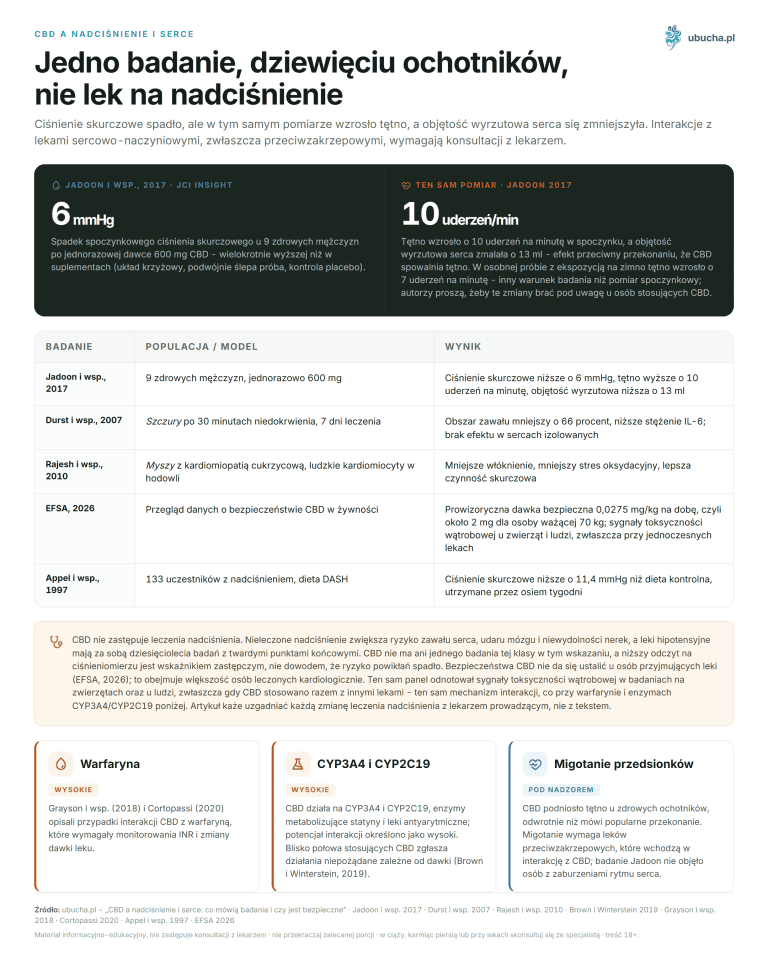
The appropriate director of the regional branch of KOWR, in terms of compliance of the data contained in the register with the actual state (art. 47f sec. 1). Control activities are carried out at least for 10% of fiber hemp producers in a given harvest year. If there is suspicion that the plants are not fiber hemp, the director notifies the Police.
Does growing hemp count towards EU subsidies?
Areas used for hemp production qualify as eligible hectares only if the varieties used contain a maximum of 0.3% tetrahydrocannabinol. This is stated in art. 4 sec. 4 of Regulation (EU) 2021/2115, applicable from January 1, 2023. The previous Regulation 1307/2013 set the threshold at 0.2% and has been repealed.
Hemp products that fall within the statutory threshold can be found in the category hemp flower, and we wrote about the raw material in our post about what CBD flower is.
This article is for informational and educational purposes and does not constitute legal advice. The legal status described in the article is valid as of the date of publication: regulations regarding hemp may change. Before making a decision, consult a lawyer or current legal acts.
Author: Michał Waluk · Published: 2026-07-06 · Updated: 2026-08-11