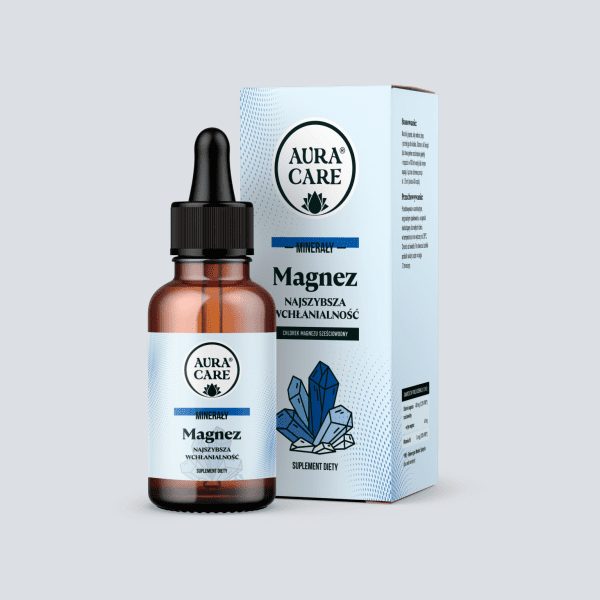
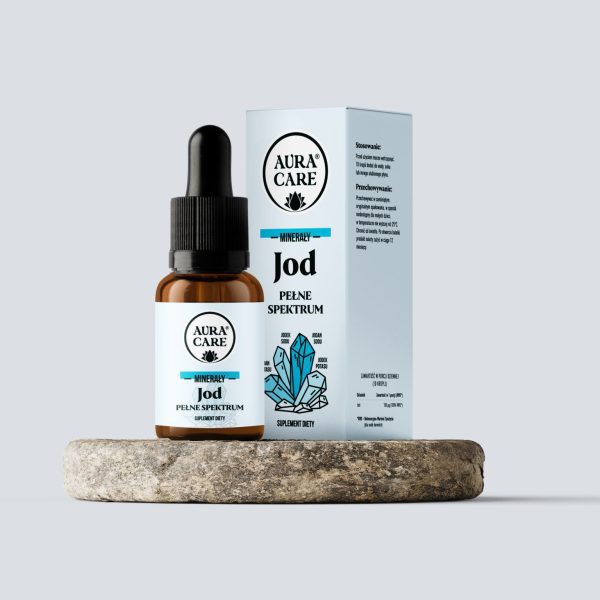
Minerals are inorganic nutrients without which your body cannot function properly. This category focuses on mineral supplements based on magnesium, zinc, iron, selenium, and iodine — elements whose deficiencies affect a significant part of the population. Here you will find products in liquid forms with high bioavailability, capsules with organic forms of salts, and convenient sachets for dissolving. On this page, you will learn how to choose the right mineral supplement, how to dose it safely, and what to pay attention to in order for supplementation to really bring results.
How to choose mineral supplements?
A good mineral supplement is not just a label with a high content of the element — the chemical form, bioavailability, and auxiliary composition matter. It is estimated that nearly 75% of Poles do not consume enough magnesium with their diet [1], and iron deficiencies affect about 20–30% of women of childbearing age according to WHO data [2]. Before reaching for a supplement, it is worth understanding what to actually look for.
Chemical form of the mineral
This is the most important parameter when choosing a mineral supplement. Magnesium oxide is cheap, but its bioavailability is below 4% according to comparative studies [3]. Citrate is absorbed at about 16–30%, and innovative chelates (like ATA Mg®) achieve even better results — the manufacturer claims 20–50% higher absorption than traditional salts [4]. For zinc, look for bisglycinate or gluconate. For iron — the divalent form (Fe²⁺) with vitamin C.
Active dose per serving
Check how much elemental mineral one serving provides, not how much the salt weighs. 500 mg of magnesium citrate is about 75 mg of elemental magnesium. For zinc, a serving of 15 ml of Cynkdrop covers 100% of the daily requirement (10 mg) [5]. For iron — 15 ml of Ferradrop provides 100% RDA with good absorption [6].
Purity of the composition (clean label)
Products in this category of mineral supplements are vegan, sugar-free, and free from artificial fillers. This is important for long-term supplementation — unnecessary carriers can cause irritation of the gastrointestinal tract. Liquid forms like Cynkdrop or Ferradrop contain a minimal number of ingredients, which is appreciated by people with food intolerances.
Format — capsules, liquid, drops, sachets
500 ml liquids are economical and easy to dilute — good for the whole family. Capsules in packages of 60–120 pieces are more convenient for travel. MagFuse sachets can be taken to the gym without the risk of spilling. Jodadrop 30 ml allows for precise microdosing.
Synergistic accompanying ingredients
Vitamin B6 (especially the active form P-5-P) increases magnesium absorption and supports the nervous system [7]. Folic acid and vitamins B6+B12 in Ferradrop support red blood cell production [8]. Vitamin C in the same product enhances iron absorption by up to three times [9].
Who are mineral supplements for — and who are they not for
Mineral supplements are suitable for physically active individuals, women of childbearing age, vegans (plant-based diets are low in heme iron and zinc), people working under stress, and those over 50 years of age — when the absorption of many minerals decreases. They cannot replace a balanced diet and are not recommended without medical consultation for children under 12 years of age, pregnant women (dosing requires individual determination), or people with kidney diseases or hemochromatosis.
Most popular products in the minerals category
The category of mineral supplements includes 10 products divided by the dominant element. All products come from the Polish brand Aura Herbals and are produced without unnecessary additives.
Magnesium — the largest selection of supplements
Four products focus on magnesium. Magnesium complex ATA Mg® (120 capsules, 59.90 zł) is the flagship solution with a patented form that ensures 20–50% better absorption than traditional magnesium salts [4]. One serving of 4 capsules provides 257.7 mg, covering 68.7% of the daily requirement. Magnesium + Vitamin B6 (P-5-P) (60 capsules, 29.90 zł) combines 118 mg of magnesium with the active form of B6 — P-5-P — providing 300% RDA for vitamin B6 [7] in one serving. This is a proposal for people under stress and with sleep problems. Pure Lab Magnesium 365 mg (120 capsules, 34.90 zł) offers a solid basic dose at an affordable price — a good option for daily supplementation over several months. MagFuse: magnesium + zinc (30 sachets, 29.90 zł) combines 375 mg of magnesium citrate with 5 mg of zinc in a convenient sachet to dissolve in water — an ideal form for training or travel.
Zinc and iron in liquid forms
Cynkdrop (500 ml, 21.90 zł) is a liquid mineral supplement covering 100% of the daily zinc requirement at a dose of 15 ml [5], supplemented with vitamins B6 and B12 that reduce fatigue. Ferradrop (500 ml, 24.90 zł) is an analogous solution for iron — 100% RDA in 15 ml [6], with folic acid, vitamins B6, B12, and C. The liquid form shortens absorption time compared to tablets and is particularly appreciated by those who have difficulty swallowing capsules.
Iodine — two formats of the same mineral supplement
Jodadrop liquid 250 ml (38.90 zł) contains 150 µg of iodine in a 5 ml serving (100% RDA [10]), based on 4 forms of iodides and iodates. Jodadrop concentrate drops 30 ml (54.90 zł) is a concentrated version with a precise applicator — a better option when you need microscopic dosing or are traveling with little luggage.
Selenium and collagen with minerals
Selenium 200 µg (60 capsules, 19.90 zł) is one of the cheapest mineral supplements in the category — a full 2-month supplementation for less than 20 zł. Fish Collagen NatiCol 800 mg (60 capsules, 39.90 zł) combines hydrolyzed marine collagen with selenium, zinc, biotin, and hyaluronic acid — a multi-ingredient product for those looking for support for skin, hair, and nails in one capsule.
Dosing minerals — how to use supplements safely?
Supplementation with mineral supplements can bring real benefits, but it requires following a few rules. Overdosing is less likely than deficiency, but it is possible — especially with selenium and iron. Below are five steps for safe and effective dosing.
Step one — get tested before supplementation
A blood morphology with a smear, ferritin level (not just hemoglobin), serum magnesium, and TSH (thyroid, iodine) provide a concrete picture of the situation. Supplementation without diagnosis is shooting in the dark. The cost of basic tests in Poland is about 50–80 zł, and the results will allow you to choose the right mineral supplement without overpaying [11].
Step two — choose a form with high bioavailability
For magnesium, choose citrate (as in MagFuse) or chelate (ATA Mg® in Magnesium Complex). For iron — the divalent form with vitamin C (as in Ferradrop). For zinc — gluconate or bisglycinate. Selenium in the form of sodium selenate is safe and well-studied clinically [12].
Step three — establish the dose and timing of intake
Magnesium is best taken in the evening — it helps relax muscles and may improve sleep quality. Iron is best absorbed on an empty stomach or with orange juice (vitamin C). Zinc should be taken with a light meal to avoid nausea. Iodine can be taken at any time of the day, diluted in water. It is also worth familiarizing yourself with our guide on nootropics and supplements for biohackers, which discusses the broader context of daily supplementation.
Step four — avoid interactions between mineral supplements
Iron, zinc, magnesium, and calcium compete for the same intestinal transporters. Do not take them simultaneously in high doses. Wait at least 2 hours between supplements. Coffee and tea contain tannins that reduce the absorption of iron and zinc by 40–60% [13].
After this time, the levels of ferritin, magnesium, or selenium in the blood should be measurably higher. If deficiency symptoms (fatigue, muscle cramps, hair loss) persist despite supplementation — return to your doctor. There may be an absorption problem or another cause of symptoms unrelated to mineral deficiency.
What do studies say about mineral supplements?
Mineral supplements are among the best-studied categories of dietary supplements. Below are some facts based on scientific data that are worth knowing before choosing a product.
Magnesium participates in over 300 enzymatic reactions in the human body [14]. A meta-analysis from 2017 published in “Nutrients” showed that magnesium supplementation significantly reduced subjective feelings of anxiety in individuals with subclinical deficiencies [15]. Regular zinc supplementation has been linked to a shorter duration of colds — in a Cochrane meta-analysis, the duration of illness was shortened by an average of about 2 days with doses above 75 mg of zinc acetate daily [16]. Iron deficiency causing anemia affects about 1.2 billion people worldwide according to WHO [17], with this deficiency being particularly common among women and children. Selenium plays a critical role in the activity of selenoproteins, including glutathione peroxidase — one of the main antioxidant enzymes [18]. Iodine deficiency remains a leading cause of preventable thyroid dysfunction worldwide — WHO estimates that this deficiency affects about 2 billion people [19]. If you are interested in the broader topic of cognitive health and the role of mineral supplements in brain functions, check out the article on natural supplements supporting concentration.
Safety and contraindications of mineral supplements
Mineral supplements are safe when taken at reasonable doses, but they have clearly defined upper intake limits (Tolerable Upper Intake Level, UL) established by EFSA [20].
Magnesium in supplement form can cause osmotic diarrhea at doses above 350–400 mg of elemental magnesium — especially in the form of oxide. Excess iron is toxic; supplementation above 45 mg daily should be conducted under medical supervision. Selenium has a narrow safety margin: UL is 300 µg daily according to EFSA [20], and a dose of 200 µg in Selenium 200 µg is commonly used and safe. Zinc at chronic doses above 40 mg daily disrupts copper metabolism [21]. Iodine — excess can paradoxically inhibit thyroid function (Wolff-Chaikoff effect) [22].
People with kidney, liver diseases, or hemochromatosis should consult any supplementation with a doctor. Interactions with medications (e.g., levothyroxine + calcium/iron, tetracycline antibiotics + magnesium) can reduce treatment effectiveness. Also, read our article on vitamin B12 and its role in combating fatigue — deficiencies of B12 and minerals often coexist and exacerbate each other.
Why choose mineral supplements from Aura Herbals?
All products in this category of mineral supplements come from the Polish brand Aura Herbals. This means domestic production under GMP supervision, laboratory testing of each batch, a composition without unnecessary additives, and vegan certification. Products are available in transparent packaging with clearly stated doses of elemental minerals — without manipulating serving sizes typical of cheaper supplements.
The liquid form (Cynkdrop, Ferradrop, Jodadrop) allows for precise dosing and quick absorption. Plant-based Vcaps® capsules in Magnesium Complex and Magnesium + B6 are free from gelatin. MagFuse in sachets is the only such form on the Polish mineral supplement market that combines magnesium with zinc in a dose tailored to an active lifestyle. An additional advantage is the policy of free delivery for orders over 199 zł, which becomes a real saving when purchasing several mineral supplements at once.
Frequently asked questions
Which magnesium is best absorbed?
The highest bioavailability is found in chelates (glycinate, taurate) and magnesium citrate. Magnesium oxide is poorly absorbed — studies indicate bioavailability below 4% [3]. Citrate achieves about 16–30%, and chelated forms even higher. Magnesium complex ATA Mg® uses an innovative chelate claimed to be 20–50% more effective than traditional salts [4].
How much magnesium does an adult need daily?
EFSA norms are 350–400 mg daily for adult men and 300–350 mg for women [23]. The demand increases with intense physical effort, chronic stress, and a diet rich in simple sugars, which accelerate magnesium excretion by the kidneys.
Can magnesium be combined with zinc?
Yes, however, high doses of zinc above 40 mg can inhibit copper absorption and affect magnesium metabolism [21]. Standard supplemental doses — magnesium 200–400 mg + zinc 10–15 mg — are safe. MagFuse combines 375 mg of magnesium and 5 mg of zinc in one serving without the risk of mutual interactions.
Who is at risk of iron deficiency?
Most often women of childbearing age (menstruation causes a loss of about 0.5–1 mg of Fe daily), vegetarians and vegans, pregnant women, and endurance athletes. Iron deficiency is the most common mineral deficiency in the world according to WHO [17]. Ferritin below 30 µg/l signals depletion of stores even with normal hemoglobin.
Can selenium be overdosed?
Yes. The tolerable upper intake level (UL) for selenium is 300 µg daily for adults according to EFSA [20]. A dose of 200 µg in Selenium 200 µg is safe and commonly used. Long-term exceeding of UL risks selenosis — brittleness of nails, hair loss, and neurological disorders.
What is the difference between Jodadrop drops 30 ml and Jodadrop liquid 250 ml?
The 30 ml drops (54.90 zł) are a concentrated format with a precise drop applicator. The 250 ml liquid (38.90 zł) is an economical format — a 5 ml serving covers 150 µg of iodine, or 100% RDA [10]. Both forms contain 4 types of iodides and iodates with high bioavailability.
When is the best time to take mineral supplements?
Magnesium in the evening supports muscle relaxation and sleep quality. Iron is best absorbed in the morning on an empty stomach with vitamin C. Zinc should be taken with a light meal to limit the risk of nausea. Avoid coffee and tea within ±1 hour of taking iron or zinc [13] — tannins reduce the absorption of these elements by 40–60%.
Who are the mineral supplements from the u Bucha category for?
For physically active individuals, vegans, women of childbearing age, those working under stress, and those over 50 years of age. The products are vegan and have a clean label, which is appreciated by people on restrictive diets. They are not recommended as a substitute for medications or without medical consultation for children under 12 years of age — more on safe supplementation in our guide.
This page is for informational and educational purposes and does not replace consultation with a doctor. If you are pregnant, breastfeeding, taking medications, or have chronic conditions, consult the use of supplements or herbs with a specialist.