Omega-3, omega-6, and omega-9 fatty acids are essential nutrients, and the fractions EPA and DHA are crucial for the proper functioning of the heart, brain, and vision [EFSA 2011]. The body cannot produce these acids in sufficient quantities on its own, which is why regular supplementation helps to fill the gaps in a typical Western diet. On this page, you will find an overview of the types of fatty acids, a detailed guide to choosing a supplement, and answers to the most common questions.
How to Choose a Supplement with Omega Fatty Acids?
Clinical studies indicate that the optimal daily level of EPA+DHA for an adult is between 250 and 500 mg according to EFSA recommendations [EFSA 2012]. Meanwhile, the average Polish diet provides only half of this amount, making well-chosen supplementation sensible for most adults. How to navigate the overwhelming offer?
The first issue: the concentration of EPA and DHA. On the label, look for not just general “omega-3,” but specific values of EPA (eicosapentaenoic acid) and DHA (docosahexaenoic acid). A product containing 1200 mg of fish oil may provide only 360 mg or as much as 1000 mg of active acids — it depends on the quality of the raw material [PubMed]. The number on the front of the package is a misleading shortcut.
The second issue: chemical form. Omega-3 fatty acids can be in the form of natural triglycerides (TG), ethyl esters (EE), or phospholipids (FFA). The triglyceride form — like in krill oil — is absorbed about one-third better than the ethyl ester forms according to a 2017 meta-analysis [PubMed 2017]. Phospholipids from krill have an additional advantage: the acids are embedded in a structure closer to the phospholipids of cell membranes, which translates to more effective absorption without the need to eat a fatty meal.
The third issue: purity and certifications. Fish accumulate heavy metals and dioxins. Look for products with an IFOS (International Fish Oil Standards) certification or a declaration of testing from an independent laboratory. The manufacturer Aura Herbals, whose products you can find at Bucha, uses OmegaVie® oil with independent analytical reports confirming the purity of each production batch.
The fourth issue: the ratio of EPA to DHA. Higher EPA supports cardiovascular functions and modulation of inflammation; higher DHA is a priority for the brain and vision, especially in infants and pregnant women. Products with an EPA:DHA ratio of about two to one are a versatile choice for adults of all ages [EFSA 2011].
The fifth issue: the form of administration. Softgel capsules mask the taste of fish and are convenient for travel. Liquid omega-3s may be more convenient for children or people who have difficulty swallowing capsules — just add a few milliliters to a salad or smoothie. Drops with a dropper are optimal for infants and small children [PubMed 2012].
Common mistakes made by buyers: First, focusing solely on the price of the package instead of the price per 1 g of EPA+DHA — a cheaper product with low concentration can be more expensive when calculated per active ingredient. Second, buying “omega-3+6+9” as a premium product — the ratio of omega-6 to omega-3 in a typical Western diet is already 15:1 instead of the recommended 4:1 [PubMed], so additional omega-6 is rarely needed.
Who should take omega-3: People concerned about heart health, those with a diet low in fatty sea fish (less than two servings per week), pregnant and breastfeeding women, seniors, athletes, and children after consulting a pediatrician. Who is NOT a priority: People who regularly eat salmon, mackerel, or sardines several times a week may not need additional supplementation — it’s worth checking with a doctor [PubMed].
Most Popular Omega Fatty Acid Products
u Bucha, we have gathered products for both those looking for classic capsules and those preferring liquid, pediatric, or vitamin-enriched formulas. Below you will find a discussion of each product in the category [EFSA].
Krill oil as a separate league. OMegaKrill, krill oil 1180 mg, capsules 60 pcs. is a premium proposal with SUPERBABoost® oil in Licaps® capsules, free from fishy aftertaste. Each serving provides EPA and DHA in the form of phospholipids, and in addition to omega-3 acids, it contains choline and astaxanthin — a strong antioxidant that stabilizes the oil. It is particularly suitable for those sensitive to fish odors and who value convenience of use.
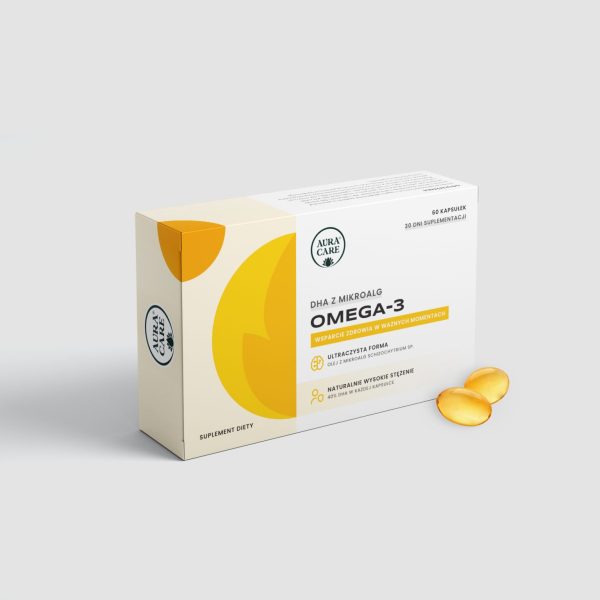
Classic softgel capsules for adults. Omega-3 1200 mg, softgel capsules 120 pcs. is based on the branded OmegaVie® oil with a purity certificate. A serving of two capsules provides 612 mg of EPA and 412 mg of DHA — a solid therapeutic dose close to EFSA recommendations for cardiovascular prevention [EFSA]. The packaging for sixty days of treatment makes it an economical long-term choice.
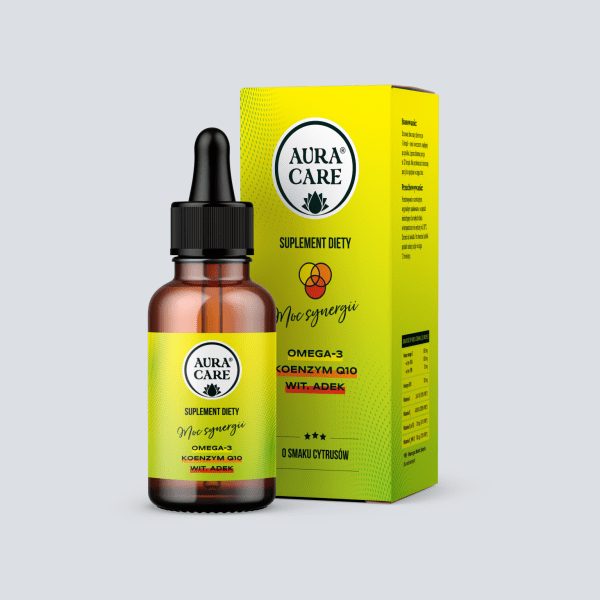
Liquid omega-3 — three variants to choose from. For those who prefer a spoon or a few drops, two liquids and drops are available. Omega-3 370 DHA / 700 EPA, liquid 200 ml is the basic option — 700 mg of EPA and 370 mg of DHA in each serving of liquid from natural fish oil [PubMed]. A richer variant, Omega-3 370 DHA + D3 2000 IU + K2, liquid 200 ml, adds vitamin D3 and vitamin K2 MenaQ7® — a particularly valuable combination in autumn and winter when D3 deficiency affects an estimated ninety percent of Poles [PubMed]. Meanwhile, Vitamin D3 2000 IU + K2 + Omega-3, drops 30 ml is a condensed version with a dropper — fifteen drops a day covers needs without the need to measure with a spoon.
Capsules with vitamin D3 for adults. Omega+ Vitamin D3 2000 IU, softgel capsules 60 pcs. is an economical starter combining omega-3 with D3 in one capsule — a practical choice for those who are just starting supplementation and want to cover two deficiencies at once without buying two separate products.
Pediatric products — a series for children. For infants and toddlers up to one year old: Omega+ Vitamin D3 400 IU for children, twist-off capsules 60 pcs. Twist-off capsules can be squeezed directly into the mouth or into a meal — a simple and safe form for infants [PubMed]. For children from the first year of life — Omega+ Vitamin D3 800 IU for children, twist-off capsules 60 pcs. with a double dose of D3 tailored to the needs of the older age group.
Dosage and Use of Omega Supplements
Both EFSA and the Polish Cardiac Society recommend a minimum of 250 mg of EPA+DHA daily for a healthy adult [EFSA 2012]. For therapeutic purposes (high triglycerides, inflammation), 2 to 4 g of EPA+DHA per day is used — always after consulting a doctor [PubMed]. The dosing procedure is simple, but a few details really make a difference.
- Step one — read the label. Check how many mg of EPA and DHA one serving provides (not just the amount of oil). Sum up EPA and DHA, and compare the result with the recommended daily value — a minimum of 250 mg [EFSA]. Aura Herbals products state the content of EPA and DHA directly on the packaging.
- Step two — choose the time of day. Omega-3 fatty acids are better absorbed in the presence of dietary fat. Take the supplement during a meal containing fats — lunch or dinner are optimal. Taking it on an empty stomach reduces bioavailability by several percent according to a 2017 study [PubMed 2017].
- Step three — start with a lower dose. If you are just starting supplementation, use half the recommended portion for the first seven days to avoid potential stomach discomfort. This is especially important with liquid products with high EPA concentration [PubMed].
- Step four — maintain regularity. Omega-3s work cumulatively. A 2023 study showed that the concentration of EPA+DHA in erythrocytes stabilizes after about eight to twelve weeks of regular use [PubMed 2023]. Set a reminder on your phone and do not skip days.
- Step five — store properly. After opening, store fish oil in the refrigerator. Polyunsaturated fats oxidize when in contact with air and light. Oxidized oil loses value and can generate harmful lipid peroxides — use within two to three months of opening [PubMed].
What Do Studies Say About Omega Fatty Acids?
The scientific evidence for the health benefits of omega-3s is among the best documented in all of nutraceuticals. A review of over 300 clinical studies published in “Nutrients” indicates that regular intake of EPA+DHA reduces triglycerides by an average of 15–20% [PubMed 2018]. This effect is repeated in dozens of independent clinical trials with various groups of subjects.
The impact on the heart is the best-documented area. EFSA has approved health claims: EPA and DHA contribute to the normal functioning of the heart with a daily intake of 250 mg, and DHA supports the maintenance of normal brain function and normal vision [EFSA 2011]. These are among the few health claims that have survived rigorous European review.
Do omega-3s affect mood? A meta-analysis of 26 studies from “Translational Psychiatry” found that EPA supplementation (at least 60% of the fraction) had a statistically significant effect in mild and moderate depression [PubMed 2016]. The effects were modest compared to medications but worth considering as a complement to conventional therapy.
For pregnant women, DHA is particularly important. Studies show that maternal intake of DHA is associated with better indicators of neurological development in infants [PubMed 2012]. WHO recommends 200 to 300 mg of DHA daily during pregnancy and lactation — it’s worth paying attention to this when choosing a supplement.
It is worth looking at supplementation holistically — just like vitamin B12, whose deficiencies lead to fatigue, omega-3 deficiencies have specific health consequences that go beyond general malaise. And if you are looking for broader support for the nervous system, also read the guide on ashwagandha — adaptogens and omega-3s can work synergistically in reducing oxidative stress.
Safety and Contraindications of Omega Fatty Acids
Omega-3 supplements have a good safety profile at doses up to 3 g of EPA+DHA daily. The European Food Safety Authority (EFSA) has deemed doses up to 5 g/day safe for adults [EFSA 2012]. This provides a significant margin of safety with typical preventive supplementation.
Possible side effects: The most common is a fishy aftertaste when burping — this problem is solved by Licaps® capsules or storing in the freezer. At doses above 3 g of EPA+DHA daily, prolonged bleeding time is possible, so individuals taking anticoagulant medications (warfarin, heparin, clopidogrel) should consult a doctor before starting supplementation [PubMed].
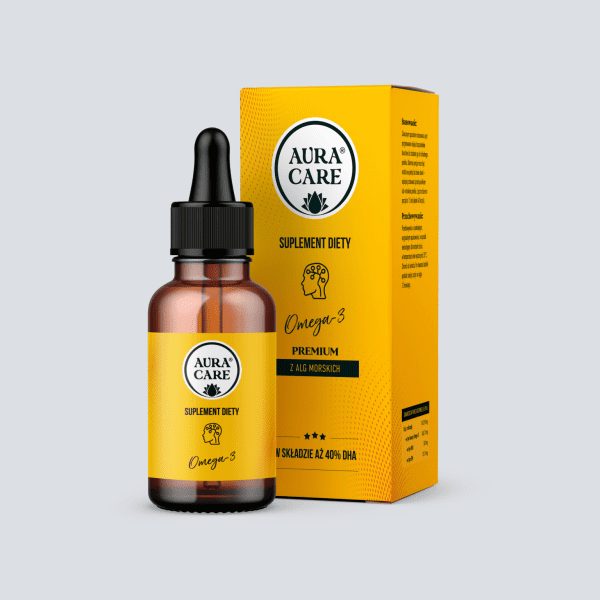
Fish and seafood allergy: Fish oil is generally well tolerated by people with fish allergies, as the fish protein — the actual allergen — is removed during the refining process. However, individuals with severe IgE-dependent allergies should consult an allergist. An alternative is algal oil (contains DHA) — safe for vegans and those with seafood allergies [PubMed].
Children and pediatric dosing: Pediatric twist-off products with lower doses of vitamin D3 are tailored to the appropriate age groups of infants and children [PubMed]. Do not give children adult products without pediatric advice — the doses of EPA and DHA are different for infants than for toddlers.
Frequently Asked Questions
What are omega fatty acids different from other types of fats?
Omega-3 (EPA, DHA, ALA) and omega-6 (LA, ARA) are essential polyunsaturated fatty acids — the body cannot synthesize them and they must be supplied through diet or supplementation. Omega-9 (oleic acid) is monounsaturated and can be produced endogenously. The key is the consumption ratio: the Western diet provides omega-6 and omega-3 in a ratio of about 15:1, while the optimal ratio is 4:1 or lower [PubMed].
How many mg of EPA and DHA should I take daily?
EFSA recommends a minimum of 250 mg of EPA+DHA daily for overall heart health in adults [EFSA 2012]. Pregnant women need an additional 200 mg of DHA daily. Therapeutic doses reach 2 to 4 g of EPA+DHA daily, but these should only be used under medical supervision — such values require individual clinical assessment.
When is the best time to take omega fatty acids — in the morning or evening?
The time of day is less important than taking it with a fatty meal. A 2017 study showed better bioavailability of EPA and DHA when taken with a high-fat meal compared to taking it on an empty stomach [PubMed 2017]. Take it with lunch or dinner containing fats — whenever is more convenient for you.
Krill oil or fish oil — which is better?
Krill oil provides omega-3 in the form of phospholipids, which translates to better bioavailability without the need to eat a fatty meal. It also contains natural astaxanthin as an antioxidant. Fish oil is cheaper and provides higher doses of EPA and DHA per capsule. In terms of price to active acid dose ratio — fish oil wins, while in terms of bioavailability and convenience — krill oil [PubMed].
Can omega fatty acids be combined with vitamins D and K2?
Yes — this combination makes physiological sense. Vitamin D3 is a fat-soluble vitamin, so its absorption increases in the presence of fats, including omega-3 fatty acids. Vitamin K2 directs calcium to the bones instead of the vessels, which is important with long-term D3 supplementation [PubMed]. Liquid products at Bucha combining D3 2000 IU + K2 + omega-3 are ready, proven combinations of these ingredients.
Do omega fatty acids help with triglycerides and cholesterol?
Omega-3 fatty acids (EPA+DHA) significantly lower triglyceride levels — on average by several to twenty percent with therapeutic doses used under medical supervision [PubMed]. The effect on LDL cholesterol is neutral or minimal. Omega-3s do not replace lipid-lowering medications (statins), but they can be a valuable complement to therapy after consulting with a cardiologist.
How long do you need to take omega fatty acids to feel the effects?
The concentration of EPA+DHA in erythrocytes (the so-called omega-3 index) stabilizes after eight to twelve weeks of regular use [PubMed 2023]. Subjective improvement in mood or concentration may be felt earlier, while cardiovascular effects reveal themselves in blood tests after about three months. Omega-3 is long-term supplementation, not a quick fix.
This page is for informational and educational purposes and does not replace consultation with a doctor. If you are pregnant, breastfeeding, taking medications, or have chronic conditions, consult a specialist before using supplements or herbs.