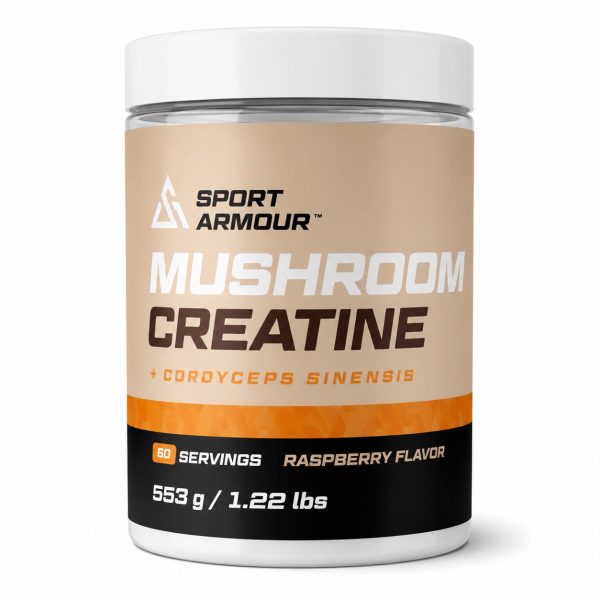
Creatine monohydrate is one of the best-researched sports supplements on the market. It increases performance during intense, short-term efforts — sprints, weightlifting sets, plyometric exercises. A meta-analysis published in Journal of Strength and Conditioning Research (PubMed, 2003) confirmed that creatine monohydrate supplementation increases maximum strength and muscular endurance by an average of 5–15% compared to placebo. On this page, you will find: a buying guide, dosing protocols, a review of studies, and products available at Bucha.
How to choose creatine monohydrate?
Creatine monohydrate is a form with documented effectiveness and the best price-to-effect ratio. The position of the International Society of Sports Nutrition (ISSN Position Stand, 2017) recognizes monohydrate as the benchmark when comparing all other forms of creatine. Before reaching for a specific product, check four key parameters.
Form of creatine. Creatine monohydrate has been tested in hundreds of clinical studies. Other variants — malate (tri-creatine malate), HCl, Kre-Alkalyn — cost more, but in direct comparisons do not show an advantage over monohydrate (PubMed, 2011). Don’t overpay for exotic forms without additional evidence of effectiveness.
Dose per serving. The standard maintenance dose is 3–5 g daily (ISSN, 2017). Products with a dose of 3 g are suitable for lighter physiques or those just starting supplementation, while 5 g is the proper dose for individuals with higher muscle mass or those training intensively. Check if the gram weight per sachet matches your training goals.
Auxiliary ingredient — glycine. Both products available at Bucha combine creatine monohydrate with glycine. Glycine is an amino acid involved in the synthesis of endogenous creatine and the regeneration of connective tissue (ISSN, 2017). The presence of 3 g of glycine per serving adds value compared to products based solely on creatine — especially if your diet is low in animal proteins.
Clean label. Premium products do not contain unnecessary fillers, colorants, or sugar. The manufacturer Aura Herbals declares a clean label composition — this is important for long-term supplementation lasting for months. A short list of ingredients also makes it easier to assess whether the product conflicts with other supplements in your stack.
Common mistakes made by buyers. The first mistake: choosing a form of creatine based on marketing promises instead of scientific research — this leads to overpaying without real benefits. The second mistake: not adhering to regularity — creatine monohydrate works through accumulation in the muscles, so a one-time intake changes nothing. The third mistake: interrupting supplementation halfway through the cycle before the effects become visible.
Who is creatine for? For individuals engaged in strength training, sprinters, team sport athletes, and athletes supplementing interval training with strength work. Creatine monohydrate supplementation is safe for healthy adults at standard doses up to 5 g/day (ISSN, 2017). Who is it NOT for? For individuals with kidney or liver diseases — medical consultation is mandatory in such cases. Pregnant and breastfeeding women should avoid creatine supplementation without specialist recommendations.
Products available in the creatine category
u Bucha, you will find two variants of creatine monohydrate from Aura Herbals — a Polish manufacturer focusing on transparent compositions and laboratory testing. Both products combine creatine monohydrate with glycine in sachet format, making dosing and transport to training, work, or travel easier.
Creatine 3 g, monohydrate + glycine, sachets 30 pcs. (29.90 PLN) — a choice for those starting supplementation or preferring lower doses. Each sachet contains 3 g of creatine monohydrate and 3 g of glycine in one serving. The packaging is sufficient for 30 days of supplementation, keeping the cost of one dose below 1 PLN. Clean composition without sugar, colorants, and unnecessary fillers. Product manufactured in Poland and laboratory tested by Aura Herbals.
Creatine 5 g, monohydrate + glycine, sachets 30 pcs. (34.90 PLN) — a variant for individuals with higher muscle mass or those training more intensively, where the standard dose of 5 g per serving is recommended by ISSN guidelines (2017). The same scheme: 30 sachets, 3 g of glycine per serving, clean label, production in Poland. The price difference compared to the 3 g version is only 5 PLN per month — making this variant economically attractive for those needing a higher dose of creatine monohydrate.
Both products are available with free shipping for orders above a certain threshold and are produced by a certified Polish manufacturer. Sachets allow you to skip measuring with a scoop of loose powder — a convenience appreciated by those on a daily training plan.
Dosing creatine monohydrate — step-by-step protocols
There are two proven protocols for creatine monohydrate supplementation. The protocol with a loading phase allows for faster saturation of muscles with phosphocreatine, while the protocol without a loading phase achieves the same effect after about four weeks of regular supplementation (ISSN, 2017). The choice between them depends on the priority: speed of effect versus gastrointestinal comfort.
Loading phase (optional, 5–7 days). For the first 5–7 days, take up to 20 g of creatine monohydrate daily, divided into 4 equal doses of 5 g (ISSN, 2017). The loading phase saturates muscles faster but may cause water retention and gastrointestinal discomfort in some individuals — if your body reacts this way, skip this stage.
Maintenance dose (daily). One sachet daily — 3 g or 5 g depending on the chosen product — throughout the supplementation period. You do not need to cycle creatine monohydrate; regular use for many months is both safe and effective (ISSN, 2017).
Timing — when to take? Studies comparing the intake of creatine monohydrate before and after training show no significant difference in effects (PubMed, 2013). The most important thing is the regularity of daily intake, not timing. If you have a sensitive stomach, take the sachet with a meal.
Hydration. This supplement increases water retention in muscle cells — an effect confirmed in studies on body composition (PubMed, 2003). Therefore, during supplementation, drink at least 2–3 liters of water daily, especially on training days. Proper hydration supports the effectiveness of the supplement and reduces the risk of muscle cramps.
What do studies say about creatine monohydrate?
Creatine monohydrate is one of the most widely studied sports supplements in the history of sports nutrition. A systematic review covering over 500 clinical studies (ISSN Position Stand, 2017) confirms its safety and effectiveness. Studies document three main areas of benefits: strength and muscle mass, anaerobic and aerobic performance, and cognitive functions.
Strength and muscle mass. Creatine monohydrate supplementation increases maximum strength (1RM) by about 5–10% compared to placebo in studies lasting 4–12 weeks (PubMed meta-analysis, 2003). The increase in fat-free mass (FFM) in these same studies averaged about 1.37 kg. This result is due to both greater training volume (more sets, shorter rest time) and increased hydration of muscle cells.
Anaerobic performance. Creatine monohydrate shortens recovery time between sets and intervals, leading to greater training volume (ISSN, 2017). The effect is strongest in interval sports: sprinting, CrossFit, combat sports, track cycling.
Cognitive functions. Studies on vegetarians and seniors — groups with naturally lower creatine reserves in muscles and the brain — indicate an improvement in working memory and information processing speed after creatine monohydrate supplementation (PubMed, 2009). Mechanism: phosphocreatine in the brain energetically powers neurons during intense mental effort — just like in skeletal muscles.
More about supplements supporting the brain and biohacking can be read in the article Biohacking and supplements — nootropics, adaptogens, CBD, collagen, NMN on the Bucha blog, where we discuss a wide range of supplementation supporting performance and recovery.
Safety of creatine and contraindications
This supplement is safe for healthy adults at doses up to 5 g/day. Long-term use for many years does not cause kidney or liver damage in individuals without prior conditions of these organs — this is confirmed by the ISSN consensus based on over 500 clinical studies (ISSN, 2017). Creatine is not a banned substance in competitive sports (WADA, list 2024). It is legally used by Olympic athletes, MMA fighters, and football players worldwide.
Possible side effects. Temporary water retention at the beginning of supplementation — a result of hydration of muscle cells, not fat accumulation. Gastrointestinal discomfort when taking large doses on an empty stomach — this can be prevented by taking creatine with a meal or reducing the single dose.
Who should exercise caution? Individuals with kidney, liver diseases, or hereditary creatine metabolism disorders should consult a doctor before supplementation. Pregnant and breastfeeding women should avoid supplementation without specialist recommendations. Individuals taking nephrotoxic medications (e.g., some antibiotics, antifungal drugs) should inform their doctor about planned creatine monohydrate supplementation.
If you are considering safe supplementation in Poland and want to know what to pay attention to when choosing supplements, read the article Natural CBD supplements in Poland — what to watch out for before purchasing, where we discuss key principles for assessing the quality of supplements on the market.
How to use creatine monohydrate? Full protocol
Below you will find a proven six-step protocol for creatine monohydrate supplementation based on ISSN guidelines (2017). You can apply it immediately after receiving the product — without unnecessary complications.
- Step one — plan your dose. Choose the 3 g or 5 g variant depending on your body weight and training intensity. The standard maintenance dose according to ISSN is 3–5 g daily (ISSN, 2017). For recreational exercisers, 3 g is sufficient; those training intensively should consider 5 g.
- Step two — decide on the loading phase. If you want to see results faster (after about 7 days), for the first 5–7 days take 4 doses of 5 g of creatine monohydrate daily (ISSN, 2017). If you prefer a simpler scheme without large doses — skip the loading phase.
- Step three — start with the maintenance dose. Take one sachet daily throughout the supplementation period. Regularity is more important than timing of intake — this is confirmed by the ISSN position (2017).
- Step four — dissolve in a drink and drink. Pour the contents of the sachet into a glass of water or fruit juice, mix well, and drink immediately. Creatine monohydrate is practically tasteless. Consuming it with carbohydrates may improve its absorption (ISSN, 2017).
- Step five — maintain regularity for at least 4 weeks. Strength and endurance effects become noticeable after at least 4 weeks of daily creatine monohydrate supplementation (ISSN, 2017). Do not skip days — accumulation in the muscles is key.
- Step six — monitor hydration. During creatine monohydrate supplementation, drink at least a few liters of water daily (experts recommend even up to 3 l with an active lifestyle (ISSN, 2017)). Proper hydration supports the effectiveness of the supplement and prevents potential cramps.
Creatine monohydrate and other supplements — how to combine?
Creatine monohydrate combines well with most popular sports supplements. The most commonly used combinations are:
Creatine monohydrate + protein (protein supplements). A classic and safe stack — creatine fuels short efforts, protein provides amino acids for muscle synthesis after training. There are no contraindications to simultaneous use (ISSN, 2017).
Monohydrate + carbohydrates. Consuming creatine together with carbohydrates or protein may slightly improve its retention in muscles — insulin enhances the transport of creatine into muscle cells (ISSN, 2017). Therefore, taking it with fruit juice or a full meal is a good practice.
Monohydrate + caffeine. Studies from the 90s suggested a potential antagonism between caffeine and creatine monohydrate, but newer data indicate that moderate caffeine intake (up to 3–6 mg/kg body weight/day) does not weaken the effects of creatine (ISSN, 2017). This combination is widely used by athletes without negative consequences.
The topic of naturally supporting concentration and well-being is also developed in the article ADHD naturally — supplements and herbs supporting concentration on the Bucha blog.
Frequently Asked Questions
Is creatine monohydrate safe for the kidneys?
Yes — creatine monohydrate does not damage the kidneys in healthy adults using standard doses. A review of over 500 clinical studies (ISSN Position Stand, 2017) found no harmful effects on the kidneys or liver. If you have a diagnosed kidney disease, consult supplementation with a doctor before starting.
How long does it take for creatine to start working?
Without a loading phase, the first strength effects are felt after about 3–4 weeks of daily creatine monohydrate supplementation at a dose of 3–5 g (ISSN, 2017). The loading phase (20 g/day for 5–7 days) saturates the muscles faster, shortening this time to about one week.
Is creatine only for bodybuilders?
No. Creatine monohydrate improves performance in any discipline based on short, intense efforts: sprinting, soccer, basketball, combat sports, CrossFit. Studies also document cognitive benefits — improvement in working memory in vegetarians and seniors (PubMed, 2009). Creatine is not just a supplement for bodybuilders.
Do I have to do a loading phase?
No — the loading phase is optional. The final effect is identical regardless of whether you use a loading phase or start directly with the maintenance dose (ISSN, 2017). The difference is only the time to full muscle saturation: with loading about 7 days, without loading about 4 weeks.
Does creatine cause weight gain?
Creatine monohydrate may cause a weight gain of about 1–2 kg at the beginning of supplementation, but this is a result of water retention within muscle cells — not fat gain (PubMed, 2003). Creatine does not sabotage fat tissue reduction — during a caloric deficit, it helps maintain lean body mass.
When is the best time to take creatine — before or after training?
Studies comparing the intake of creatine monohydrate before and after training show no statistically significant difference in strength effects and body composition (PubMed, 2013). Take it when it suits you — regularity is more important than timing.
Is creatine allowed in competitive sports?
Yes. Creatine monohydrate is not a banned substance by WADA (WADA Prohibited Substances List, 2024) or any major national sports federation. It is legally used by Olympians, MMA fighters, and football players worldwide. Products available at Bucha do not contain banned substances.
What are the differences between the two variants of creatine available at Bucha?
Both products from Aura Herbals have the same quality composition: creatine monohydrate and glycine in a clean label sachet (3 g variant, 29.90 PLN and 5 g variant, 34.90 PLN). They differ only in the dose of creatine per serving. The choice depends on your muscle mass and preferred dosing protocol.
This page is for informational and educational purposes and does not replace consultation with a doctor. If you are pregnant, breastfeeding, taking medications, or have chronic conditions, consult the use of supplements or herbs with a specialist.