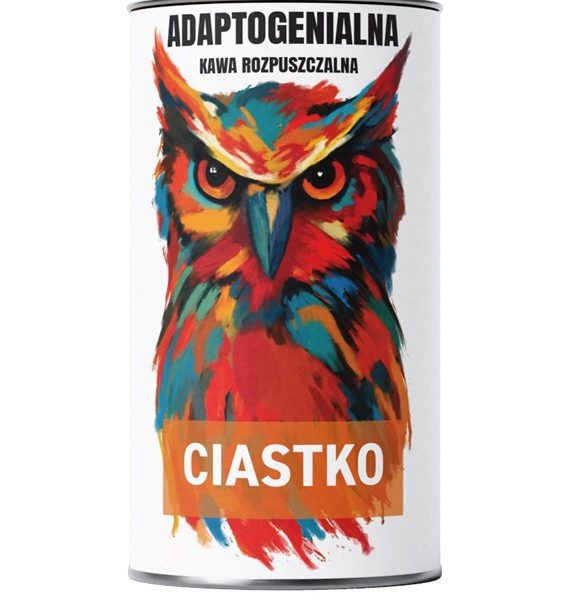
Coffee with mushrooms is a category of functional adaptogenic coffees, where classic arabica is combined with extracts from medicinal mushrooms — such as Lion’s Mane, Chaga, or Cordyceps. Here you will find products designed to provide a daily boost of energy without nervous stimulation, while also supporting concentration, immunity, and adaptation to stress. On this page, we will discuss how mushroom coffee differs from regular coffee, how to choose the right product, how to brew it properly, and what science says about the individual ingredients.
How to choose coffee with mushrooms?
The adaptogenic coffee market has developed dynamically: research published in Frontiers in Immunology (2019) confirms that beta-glucans from medicinal mushrooms support immune system functions. At the same time, over 60 clinical studies on Lion’s Mane indicate its impact on supporting cognitive functions. Before you buy, check these 5 parameters.
Type and dosage of mushroom extract
The most important factor is the amount of active extract in one serving. Check if the label states the concentration in milligrams per serving — not “per package”. Products at Bucha contain from 130 mg of Rhodiola (Mushroom Coffee SOLVE LABS) to 500 mg of extract from one mushroom per serving — this transparent approach allows for a real comparison. Avoid products that only state the percentage of the blend without indicating the dosage of the extract, as such numbers say nothing about the actual potency.
Species of mushroom and action profile
Different medicinal mushrooms have different action profiles. Lion’s Mane is primarily associated with concentration and neurotrophic support — it stimulates the production of NGF (nerve growth factor), as confirmed by clinical studies by Mori et al. (2009). Chaga is a strong antioxidant traditionally used to support immunity. Cordyceps is chosen by athletes due to its impact on aerobic performance — a study in the Journal of Dietary Supplements (2016) showed an 11% increase in VO2max after 3 weeks. If you are looking for mental support, go for Lion’s Mane. If you care about adaptation to effort — check products with Cordyceps.
Coffee base — instant or ground
Adaptogenic coffees come in two forms: instant (e.g. Boska Kawa z Grzybami Divine Goods — just pour hot water) and ground, prepared like classic coffee (Mushroom Coffee SOLVE LABS — specialty arabica from Brazil). The instant form is convenient for travel and the office; ground provides a fuller aroma and can be brewed in an espresso machine or as pour-over. Why is this important? Because aroma affects the overall experience of the “coffee ritual,” which is an essential part of morning well-being.
Additional ingredients — synergy of adaptogens
Many mushroom coffees combine mushroom extracts with other adaptogens and nutraceuticals. Boska Kawa Divine Goods contains MCT oil (supports ketone metabolism and focus), Rhodiola rosea (200 mg), and L-theanine — an amino acid known for alleviating nervous stimulation after caffeine. Mushroom Coffee SOLVE LABS offers a variant with Rhodiola or with Ashwagandha — the latter is associated with reducing cortisol according to a meta-analysis published in Medicine (2019), which showed a reduction in cortisol by about 27.9% after 60 days.
Certificates and purity of composition
Medicinal mushrooms are bioaccumulators — they absorb heavy metals from the soil. Therefore, information about purity tests or certifications (e.g. NSF, organic) is essential. Check if the manufacturer provides the countries or regions of cultivation and whether they declare tests for heavy metals. This is particularly important with regular, daily use — cumulative exposure to contaminants has clinical significance.
Who is mushroom coffee for?
Adaptogenic coffee works for people who want to limit the negative effects of caffeine (tremors, anxiety, irritability) while maintaining energy. It will be appreciated by intellectual workers looking for concentration support and physically active individuals — especially versions with Cordyceps. It is not suitable for people with mushroom allergies, pregnant and breastfeeding women (lack of sufficient clinical studies), and children.
Most popular products in the category
In the assortment at Bucha, you will find 3 carefully selected functional coffees from trusted brands — each with a clearly defined composition and dosage of extracts, so you can consciously compare products before purchase.
Boska Kawa z Grzybami 240 g — Divine Goods (139 zł) is a comprehensive instant coffee designed for productivity and immunity at the same time. One serving provides as much as 2200 mg of instant coffee, 700 mg of cocoa extract, and 500 mg each of Lion’s Mane, Cordyceps, and Chaga extracts — a triad of medicinal mushrooms in one cup. Additionally, it contains MCT oil, Rhodiola, and L-theanine. A 240 g package lasts for many weeks of regular use. A good choice for those looking for a product that combines multiple functions and do not want to take several supplements separately. More about the action of the ingredients can be found in the article Lion’s Mane — Hericium erinaceus.
SOLVE LABS offers two variants of ground arabica coffee from Brazil of specialty quality — each 330 g (69 zł, 30 servings). Both products are based on the same high-quality coffee, differing only in the profile of adaptogens added to the coffee base.
Mushroom Coffee Lion’s Mane + Rhodiola — SOLVE LABS combines 500 mg of Lion’s Mane extract with 130 mg of adaptogenic Rhodiola. Rhodiola rosea is recommended for burnout and chronic stress — the mechanism of action via protection of serotonin receptors is described in a review study in Phytomedicine (2012). This variant is recommended for intellectual workers who experience chronic mental fatigue during the day or have difficulty maintaining focus for many hours.
Mushroom Coffee Chaga + Ashwagandha — SOLVE LABS focuses on nervous comfort and immunity. 500 mg of Chaga (a strong antioxidant containing polysaccharides and betulinic acid) is supported by 500 mg of Ashwagandha. According to a meta-analysis (Medicine, 2019), Ashwagandha reduces cortisol levels by about 27.9% over 60 days at a dose of 300–600 mg. Choose this variant if you care about stress management and strengthening natural immunity. Also read what Chaga is and how it works.
How to brew coffee with mushrooms?
Adaptogenic coffee does not require specialized equipment. However, it is crucial to follow the water temperature and the order of adding ingredients — mushrooms and adaptogens are sensitive to too high temperatures, as confirmed by studies on the thermal stability of beta-glucans (2019). Below you will find 5 steps common to both formats.
- Step one — measure the water. Heat 200–250 ml of water to a temperature of 85–90 °C (not boiling — high temperature degrades some active compounds, including hericenones in Lion’s Mane). A kitchen thermometer will help with precision; alternatively, wait 2–3 minutes after boiling.
- Step two — prepare the serving. Pour the recommended amount of powder or ground coffee into a cup or blender — usually 1 tablespoon (8–10 g) according to the label. For Boska Kawa Divine Goods, just one scoop poured directly with water is enough; it does not require brewing.
- Step three — pour and mix. Pour the instant coffee with water and stir for 30 seconds until completely dissolved. Ground coffee SOLVE LABS can be brewed in a pressure machine, pour-over method, or French press — each method retains the full flavor profile of specialty arabica.
- Step four — add fat (optional). If your coffee does not already contain MCT oil (like Boska Kawa Divine Goods), you can add 1 teaspoon of ghee or coconut oil. MCT fatty acids help absorb liposoluble adaptogens and prolong energy saturation.
- Step five — time to drink. Drink the freshly brewed coffee preferably within 15 minutes to avoid losing the volatile aromas of arabica. Avoid drinking on an empty stomach if you are sensitive to caffeine — a meal before coffee improves tolerance and absorption of adaptogens. Also check the guide adaptogens for beginners if you want to better understand the mechanism of action of the composition.
What does research say about coffee with mushrooms?
The science of medicinal mushrooms is one of the fastest-growing areas of nutraceuticals. However, it is important to distinguish studies on isolated extracts from studies conducted on finished coffee products — the latter are still rare. Below is a brief overview of key findings regarding individual ingredients.
Lion’s Mane (Hericium erinaceus) is one of the best-researched mushrooms in terms of neurotrophicity. A randomized study from 2009 (Mori et al., Phytotherapy Research) showed a statistically significant improvement in cognitive functions in middle-aged individuals after 16 weeks of supplementation with a dose of 3 g/day — the MMSE score increased on average by 3.8 points in the study group vs 0.5 points in the placebo group. The mechanism is related to the stimulation of NGF synthesis and promoting the myelination of neurons.
Chaga (Inonotus obliquus) is primarily studied for its antioxidant and immunomodulatory potential. Its ability to scavenge free radicals (ORAC) is among the highest of natural sources — according to research from the International Journal of Medicinal Mushrooms (2012), Chaga extract exhibits activity over 25 times higher than acai berries in the standard DPPH test.
Cordyceps (Cordyceps militaris) and adaptation to physical effort — studies on humans are promising. A 2016 study (Journal of Dietary Supplements) conducted on 28 healthy individuals showed an 11% increase in VO2max after 3 weeks of using 4 g of extract daily. However, it should be noted that the amounts of Cordyceps in adaptogenic coffees are usually lower than clinical doses — the effect may be smaller but cumulative in combination with caffeine and other adaptogens.
Safety and contraindications
Medicinal mushrooms have a good safety profile for healthy adults using recommended doses. Nevertheless, there are situations that require caution.
An allergy to mushrooms is an absolute contraindication — if you react to edible mushrooms, do not use extracts from medicinal mushrooms. People with autoimmune diseases should consult a doctor, as immune modulators (e.g. beta-glucans from Chaga) may enhance immune system activity. When using anticoagulant medications (warfarin, heparin), exercise caution — Chaga extract contains oxalic acid and may interact, as described in phytochemical research reports (2012).
Coffee with mushrooms contains caffeine (in the case of products based on arabica), so it is not suitable in the evening for those sensitive to caffeine or for children. Start with 1 serving per day and observe your reaction for the first 1–2 weeks. Adaptogens work cumulatively — the full effect is usually noticeable after 4–6 weeks of regular use, not after a few days. Read more about safe use of adaptogens if you plan a longer supplementation cycle.
Frequently Asked Questions
Does mushroom coffee contain caffeine?
Yes — adaptogenic coffees at Bucha are based on real arabica or instant coffee and contain caffeine. One serving of Boska Kawa Divine Goods contains 2200 mg of instant coffee, which corresponds to about 80–120 mg of caffeine — similar to espresso. The L-theanine in the composition alleviates nervous stimulation. If you are looking for a caffeine-free option, mushroom coffee is not the right choice — consider capsules or tinctures with just mushrooms.
What does mushroom coffee taste like?
The taste depends on the coffee base used. SOLVE LABS products use specialty arabica from Brazil, which has a nutty-chocolate profile — the medicinal mushrooms add a slightly earthy, umami tone, but do not dominate the coffee. Boska Kawa Divine Goods contains 700 mg of cocoa extract, which gives a distinct, pleasant chocolate flavor. Overall: it is closer to “real coffee” than an herbal brew.
How long will it take to feel the effects of mushroom coffee?
Caffeine acts within 20–45 minutes of consumption. Adaptogens and mushroom extracts work cumulatively: the first cognitive effects from Lion’s Mane are observed after about 4 weeks of daily use — this is confirmed by the study by Mori et al. (2009) conducted on 30 participants. Studies have not been conducted for coffee as a method of administration — results pertain to isolated extract in capsules.
Can I drink mushroom coffee every day?
Yes, in the absence of contraindications. The standard recommendation is 1 serving per day, in the morning or before noon. Adaptogens are designed for regular use — the full effect requires consistency for at least 4–6 weeks. Some users take weekly breaks every 2–3 months as a “cycling” protocol, although there is a lack of strong clinical data mandating breaks for healthy individuals.
What is the difference between instant and ground coffee in the context of mushrooms?
The coffee format itself does not affect the content or effectiveness of mushroom extracts — active compounds (beta-glucans, hericenones) are stable at brewing temperatures of 85–90 °C regardless of the coffee form, as confirmed by studies on the stability of mushroom polysaccharides (2019). The difference lies in the flavor profile, convenience, and quality of arabica: SOLVE LABS ground coffee of specialty quality provides greater flavor complexity.
Is mushroom coffee safe for pregnant women?
There is a lack of sufficient clinical studies on pregnant and breastfeeding women. Due to caffeine and adaptogens (Ashwagandha, Rhodiola, mushroom extracts), we recommend avoiding this product during this period — NIH recommendations indicate limiting caffeine to 200 mg/day during pregnancy. Always consult with your healthcare provider or midwife before introducing any supplements.
What is Lion’s Mane and why is it popular?
Lion’s Mane (Hericium erinaceus) is a medicinal mushroom valued for hericenones and erinacines — compounds that stimulate the production of NGF (nerve growth factor). A 2009 study showed an average improvement of 3.8 points in MMSE scores after 16 weeks in individuals aged 50–80. Learn more about this ingredient in our article on Lion’s Mane.
This page is for informational and educational purposes and does not replace consultation with a doctor. If you are pregnant, breastfeeding, taking medications, or have chronic conditions, consult the use of supplements or herbs with a specialist.