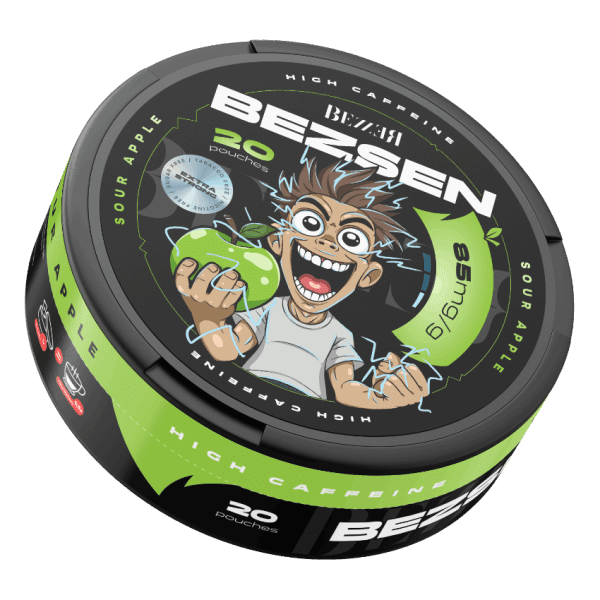
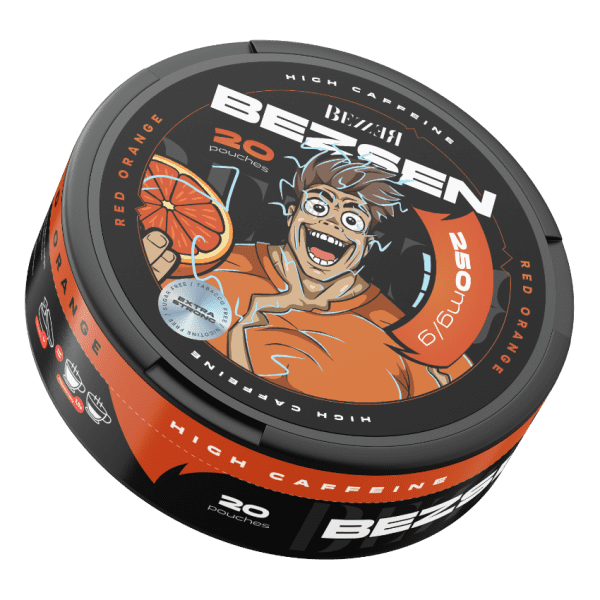
Bezzer sachets are a Polish brand of caffeine sachets BEZSEN — discreet, smoke-free, and nicotine-free portions of caffeine that dissolve in the mouth and provide energy without drinking, without calories, and without the need to reach for coffee or energy drinks. In this guide, you will find a complete overview of the flavor line, strength variants (85 / 170 / 250 mg/g), tips for safe use, and answers to the questions most frequently asked by our customers. The entire offer of bezzer and the BEZSEN series in the u Bucha store is shipped from the warehouse in Warsaw — free shipping from 49 PLN.
What distinguishes the BEZZER brand?
The philosophy of the BEZZER brand is based on three pillars: precise caffeine dosing, discretion, and long, even release of active ingredients. Instead of gulping down an energy drink, you get a soft sachet weighing 0.6 g, which you place between your cheek and gum — it gradually releases caffeine through the mucous membrane of the mouth over 15 to 30 minutes. According to the scientific opinion of EFSA (2015) on the safety of caffeine for healthy adults, single doses of up to 200 mg of caffeine and daily intake of up to 400 mg are considered safe — BEZZER sachets fall within this range and allow for precise energy dosing.
A characteristic feature of the bezzer sachets line is the lack of nicotine — this is a fundamental difference compared to classic “nicotine pouches” that dominate Scandinavian countries. BEZZER targets users looking for “pure caffeine” without nicotine addiction, chewing gum flavors, and without the calories that energy drinks or coffee with milk bring. According to a Mayo Clinic report on caffeine, classic filtered coffee contains about 95 mg of caffeine in 240 ml — a single BEZZER sachet in the 170 mg/g variant (at a weight of 0.6 g) provides about 102 mg, which is a comparable dose, but without liquid and calories.
What sets bezzer reviews apart from the competition is the wide flavor library — from classic cola, through tropical fruits, to unusual profiles like eucalyptus and lemongrass. Each flavor is available in three strength variants: light (85 mg/g), medium (170 mg/g), and strong (250 mg/g) — allowing you to match the intensity to your day’s style, time of day, and sensitivity to caffeine.
BEZZER product lines
The BEZZER assortment is based on one product line BEZSEN available in three caffeine strengths and many flavor variants. Below is an overview of the most important flavor lines along with example products in our store.
Tropical Fruits line — Tropical Fruits, Mango, Red Orange
A sweet, fruity profile for those who enjoy comparisons to bubble gum and energy drinks. In the offer, you will find BEZSEN Tropical Fruits 85 mg/g with a mix of pineapple, dragon fruit, and passion fruit, a stronger variant 170 mg/g, and the strongest 250 mg/g. The mango line includes Mango 85 mg/g, 170 mg/g, and 250 mg/g for those who prefer a full, ripe fruit profile. Red orange with a hint of bitterness is Red Orange 85 mg/g, 170 mg/g, and 250 mg/g — a combination of sweetness and light bitterness similar to Italian aperitivo drinks (non-alcoholic).
Sour Sweet line — Sour Apple, Bubble Gum
A more intense, “candy” profile. Sour Apple 85 mg/g, 170 mg/g, and 250 mg/g offer a distinct sour-sweet green apple flavor, while Bubble Gum 170 mg/g evokes nostalgic memories of bubble gum from childhood. This line is popular among those who want to clearly taste the flavor even in the background of a long session at the office or university.
Classic line — Cola, Caffe Latte
The most recognizable flavors for users looking for the comfort of familiar aromas. BEZSEN Cola 85 mg/g and Cola 250 mg/g deliver a light, fizzy profile of classic cola — without sugar and without calories. For those missing coffee, we recommend Caffe Latte 250 mg/g — a creamy coffee with milk profile in a strong variant, perfect for a morning start without the need for brewing.
Herbal and refreshing line — Eucalyptus, Lemongrass
For users who prefer more “adult” aromatic profiles. Eucalyptus 85 mg/g and 250 mg/g provide a menthol-green refreshment similar to strong throat lozenges, while Lemongrass 170 mg/g and 250 mg/g offer the citrus aroma of lemongrass known from Thai cuisine. This line is often chosen after workouts or at the end of the day when sweet flavors can be “too strong.”
Most popular BEZZER products
The most frequently chosen bezzer sachets in the u Bucha store show what our customers are really looking for — it’s a good starting point if you are just getting to know the brand and don’t know which strength to choose.
BEZSEN Tropical Fruits 170 mg/g — medium strength in a sweet-fruity profile of pineapple, dragon fruit, and passion fruit. The most frequently chosen variant for those starting their adventure with caffeine sachets — it provides a clear “boost” of energy around 100 mg of caffeine per sachet, without the intensity of the 250 mg/g variant.
BEZSEN Cola 250 mg/g — strong variant of classic cola. Ideal for those comparing BEZZER to an energy drink and wanting to maintain a familiar flavor profile. A single sachet covers the typical daily need for a “large coffee” — according to EFSA’s opinion, consumption of up to 200 mg of caffeine in a single dose for healthy adults is considered safe.
BEZSEN Sour Apple 250 mg/g — strong variant with a distinct sour-sweet green apple flavor. A bestseller among athletes and those taking a sachet before strength training — the intense flavor lasts throughout the entire session of 30–45 minutes.
BEZSEN Eucalyptus 250 mg/g — refreshing menthol-green profile in a strong variant. A choice for those who want to avoid sweetness in the flavor of the sachet — often used on long car trips or during night shifts.
BEZSEN Caffe Latte 250 mg/g — creamy coffee with milk flavor in a strong dose of caffeine. An alternative to morning coffee when there is no time for brewing at work. The gradual release of flavor over 30 minutes resembles slowly sipping cappuccino in a café.
Who are BEZZER products for?
The assortment of bezzer sachets targets clearly defined groups of consumers — let’s analyze who can benefit the most from the various strength and flavor variants.
Office workers and those under deadline pressure: medium variants 170 mg/g (e.g. Tropical Fruits or Lemongrass) provide a dose comparable to a large coffee, but without liquid — it’s convenient in open spaces, on Zoom, and during meetings when you don’t want to step out for a drink. An introduction to the topic of energy and supplementation for mental work can be found in our article biohacking and supplements — a practical guide from basics.
Amateur athletes and gym-goers: strong variants 250 mg/g provide a clear boost before strength or interval training. Caffeine is one of the best-researched ergogenic sports supplements — it acts faster when taken orally in a rapidly absorbed form, and the gradual release from the sachet maintains a stable level of energy throughout the session.
Professional drivers and night shift workers: Eucalyptus 250 mg/g and other strong variants are chosen for trips longer than 4 hours — the sachet can be discreetly taken without stopping at a station, and the menthol-citrus flavors additionally enhance the subjective feeling of alertness.
Students and those preparing for exams: light variants 85 mg/g (e.g. Cola or Mango) provide gentle doses for navigating long hours of study without sudden stimulation that can disrupt sleep.
People reducing coffee and energy drinks: BEZZER contains no nicotine, sugar, acids (like in carbonated drinks), or milk — this is important for people with reflux, lactose intolerance, or simply wanting to reduce daily calories. A single 0.6 g sachet practically adds no calories to the daily balance.
How to use BEZZER sachets?
A practical step-by-step guide — BEZSEN sachets are easy to use, but a few conscious decisions can help achieve optimal effect and avoid discomfort.
- Choose a strength suited to your tolerance. Beginners — 85 mg/g variant. Intermediate users (typical drinkers of 2–3 coffees a day) — 170 mg/g. Experienced users and athletes — 250 mg/g. According to EFSA’s opinion from 2015, a safe single dose for adults is up to 200 mg of caffeine, and daily up to 400 mg.
- Place the sachet between your cheek and gum. Most often at the top, on the dominant side (right or left). You can change the position during the session to avoid irritating one point of the gum.
- Leave it for 15–30 minutes. During this time, caffeine and flavor aromas are gradually released through the mucous membrane — a broader description can be found in buccal administration. Do not swallow the sachet and do not chew it intensely — this worsens the release profile and can cause irritation.
- Dispose of after the session. The sachet is single-use. Most BEZSEN containers have a built-in “window” for used sachets in the lid, but typically you throw it in the trash.
- Drink water. The sachet does not replace fluids — during and after the session, it is worth drinking water, especially during physical exertion. Caffeine has a mild diuretic effect described, among others, in the review by Maughan and Griffin (2003).
- Avoid sachets in the evening. The half-life of caffeine in adults is 4–6 hours (see caffeine pharmacokinetics) — a sachet taken at 18:00 may hinder falling asleep. Strong variants 250 mg/g are better reserved for the morning or early afternoon.
- Combine with a meal if sensitive to caffeine. A sachet “on an empty stomach” may cause slight discomfort in sensitive individuals — in such cases, take it after breakfast or lunch. Absorption from the mucous membrane works independently of meals.
Safety and contraindications
Bezzer sachets are produced in accordance with Polish and EU requirements for food products containing caffeine. Nevertheless, there are groups that should exercise caution or refrain from using sachets:
- Pregnant and breastfeeding women — according to EFSA’s opinion from 2015, daily caffeine intake should be limited to 200 mg. A single sachet 250 mg/g practically exhausts this limit — it is safer to consult consumption with the attending physician and usually better to refrain from sachets.
- Children and teenagers under 18 — BEZZER is not intended for minors. EFSA recommends a limit of 3 mg/kg of body weight per day for children, which for a 12-year-old means no more than about 100–150 mg.
- People with heart arrhythmia, hypertension, peptic ulcer disease — increased caffeine doses may intensify heart palpitations, raise blood pressure, and exacerbate reflux. Consultation with a doctor is required before regular use.
- Patients taking chronic medications — caffeine interacts with some medications (e.g. ciprofloxacin, theophylline, and central nervous system stimulants). Always check the medication leaflet.
- People with oral problems — with active gum inflammation, ulcers, or after dental procedures, postpone using sachets until full healing.
Sachets do not replace a balanced diet, hydration, and sleep. If you feel that you need “stronger coffee” day by day, pay attention to your entire routine — perhaps the problem is a lack of sleep, not a lack of caffeine. More about natural alternatives for sleep and recovery can be found in our guide biohacking and supplements — nootropics, adaptogens, collagen, NMN (2026), and about the safety of phytocannabinoids we write in the article are phytocannabinoids safe — facts and myths.
Frequently asked questions
Do bezzer sachets contain nicotine?
No. BEZSEN sachets from the BEZZER brand contain only caffeine as the active ingredient and flavor aromas — without nicotine and without tobacco. This is an important difference compared to Scandinavian “nicotine pouches,” which they can be visually confused with. They do not cause nicotine addiction.
How much caffeine is in one BEZSEN sachet?
It depends on the strength variant and the weight of the sachet (standard 0.6 g). The 85 mg/g variant contains about 51 mg of caffeine in one sachet, 170 mg/g contains about 102 mg, and 250 mg/g — about 150 mg. According to EFSA’s opinion, a safe single dose for adults is up to 200 mg, and daily up to 400 mg.
How long should I keep the BEZSEN sachet in my mouth?
Typically 15–30 minutes, most often between the cheek and the upper gum. During this time, caffeine and flavor aromas are gradually released through the mucous membrane of the mouth. After 30 minutes, most of the active ingredients have already been released — you can dispose of the sachet.
Can I swallow the sachet?
Do not swallow. The sachet is not intended for consumption — it is a single-use carrier of caffeine and aromas. After the session, throw it in the trash. Most BEZSEN packages have a built-in compartment for used sachets in the lid of the can.
Do BEZZER contain sugar and calories?
BEZSEN sachets have virtually no calories — the weight of the sachet is 0.6 g, and the main ingredients are caffeine, flavor aromas (flavors like Tropical Fruits, Bubble Gum, Cola) and a cellulose carrier. This is a choice for those reducing sugar and calories from energy drinks.
Can I use BEZZER sachets during pregnancy?
Not recommended. EFSA recommends that pregnant women limit caffeine to 200 mg per day — a single sachet 250 mg/g practically exhausts this limit. It is safer to completely refrain from use or consult with the attending gynecologist.
Do BEZZER sachets affect sleep?
Yes, if taken in the evening. The half-life of caffeine in healthy adults is 4–6 hours — a 170 mg/g sachet taken at 18:00 may hinder falling asleep. It is recommended to use it by noon or early afternoon. The name of the series “BEZSEN” refers precisely to the stimulating effect — the sachet is designed so that you do not feel drowsy.
How long does one BEZSEN sachet last?
The stimulating effect is usually felt 5–10 minutes after placing the sachet in the mouth (caffeine is absorbed through the mucous membrane of the mouth faster than from a swallowed capsule). The full effect lasts 2–4 hours depending on the strength of the variant and individual caffeine tolerance.
This article is for informational and educational purposes and does not replace consultation with a doctor. The product is not intended for individuals under 18, pregnant and breastfeeding women, individuals with heart diseases, or caffeine sensitivity. Use according to the manufacturer’s recommendations on the packaging.