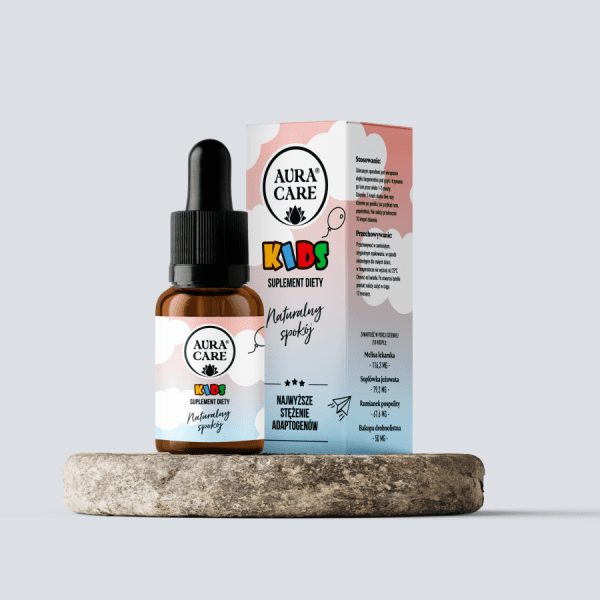
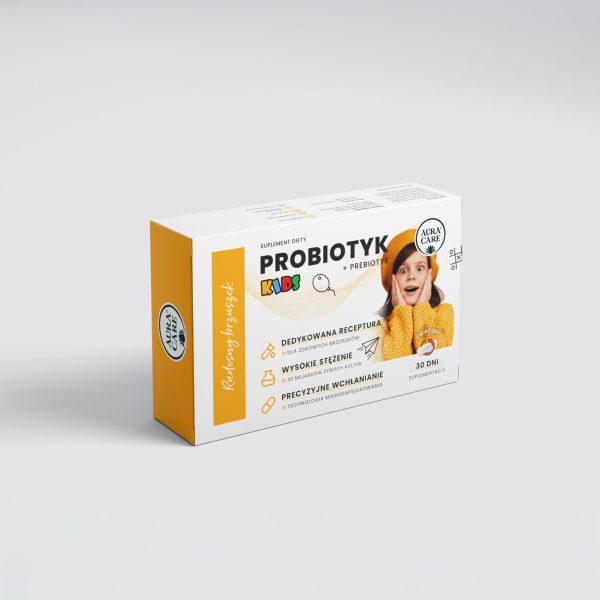
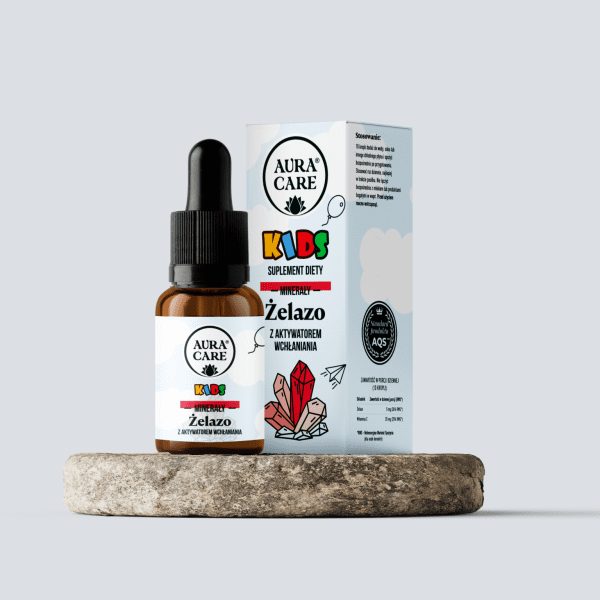
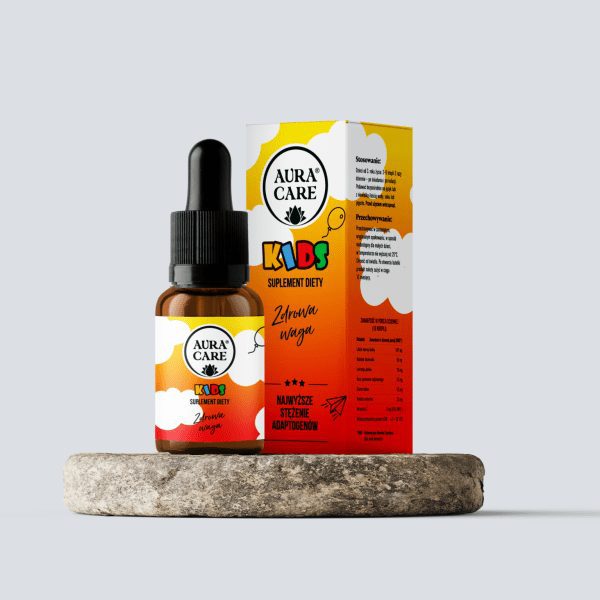
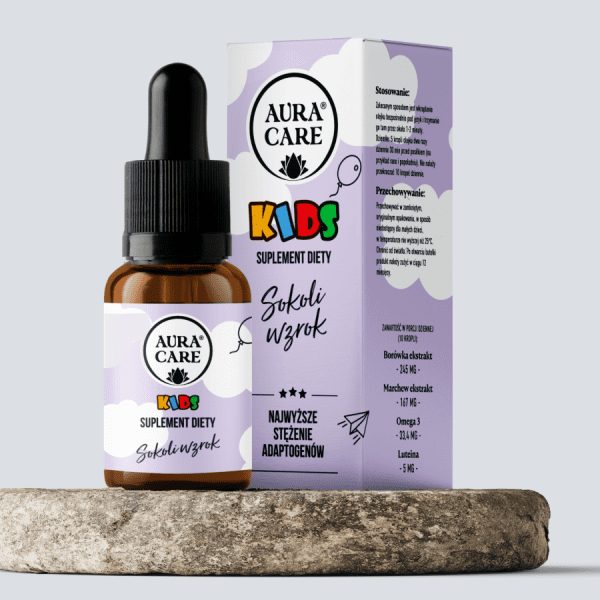
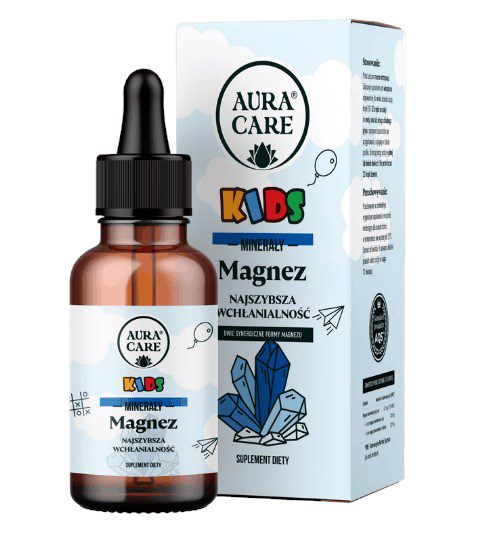
Supplements for children differ from adult versions not only in dosage. The form, sugar and dye content, and warnings on the packaging are also different. In this category, we have gathered products specially prepared for children: drops, sachets, gummies, and twist-off capsules, along with a guide on what to look for before purchasing.
How to Choose a Supplement for a Child?
The choice starts with age, not taste. The manufacturer provides the age range and daily serving on the packaging, and this is the first piece of information worth checking. Below are five things that distinguish a well-chosen product from a random one.
1. Age range on the packaging. Products are usually divided into those for the first months of life, those for three years and older, and those for school-aged children. The boundary is not a formality: it concerns both the size of the serving and the form of administration. A gummy should not be given to a one-year-old, and drops do not need to be measured for a teenager.
2. Form of administration. Drops with a pipette allow for measuring a small portion and adding it to a meal. Twist-off capsules are opened and the contents are squeezed onto a spoon. Sachets with powder are dissolved in water. Gummies and syrups are convenient for older children who do not want to swallow capsules.
3. Sugar, dyes, and sweeteners. It is worth comparing the composition of several products of the same type. Some gummies are sweetened with fruit juice or sweeteners, while others contain sugar. Dyes can be natural, for example from carrots or spirulina, but not always. This is information from the label, not from the marketing description.
4. Short ingredient list. The fewer auxiliary ingredients, the easier it is to check what the child is getting. A good reference point is a list that can be read in full without reaching for a dictionary.
5. Conversation with a pediatrician. For a child, any dietary supplement should be discussed with the attending physician, especially if the little one is taking medications or has diagnosed deficiencies. A supplement does not replace a diet or medical advice.
What You Will Find in the Children’s Supplements Category
The core of the offer consists of drop products with a pipette, intended to be added to meals or given directly. Next to them are twist-off capsules, sachets for dissolution, and gummies for children who can already decide what they want to take.
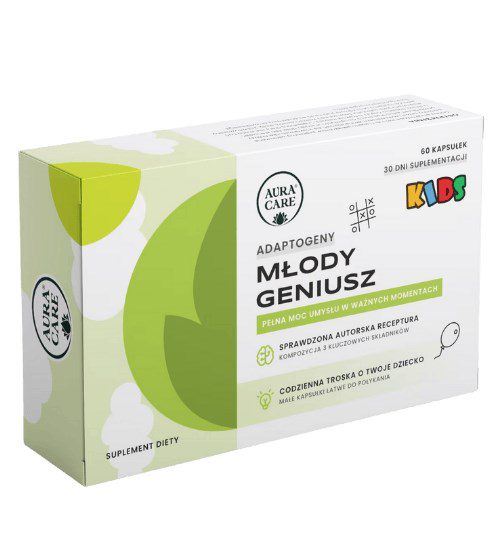
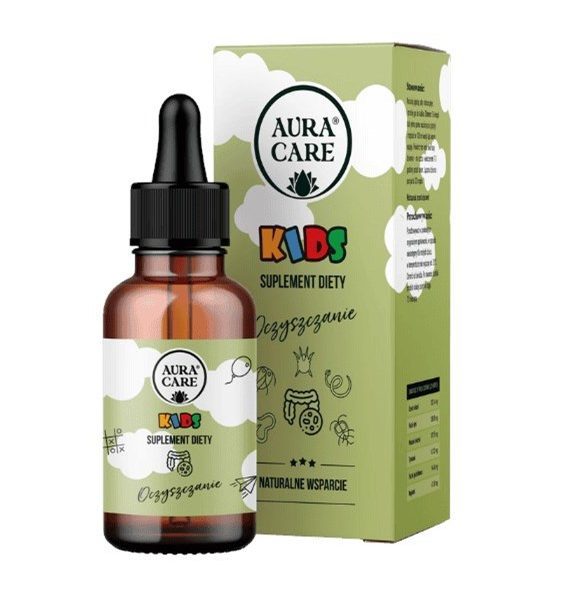
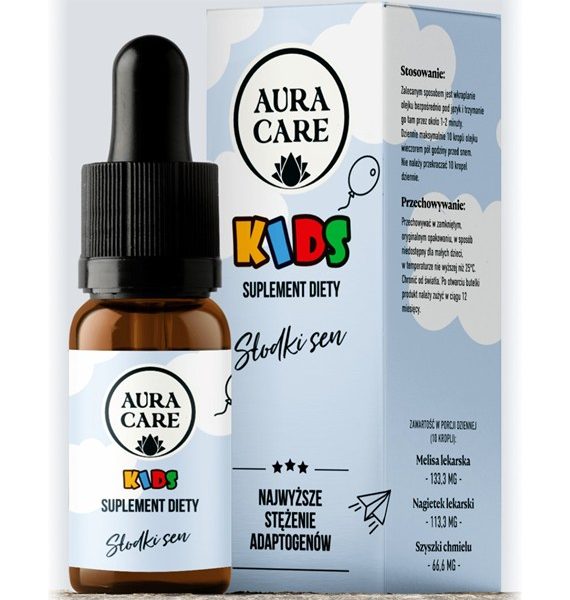
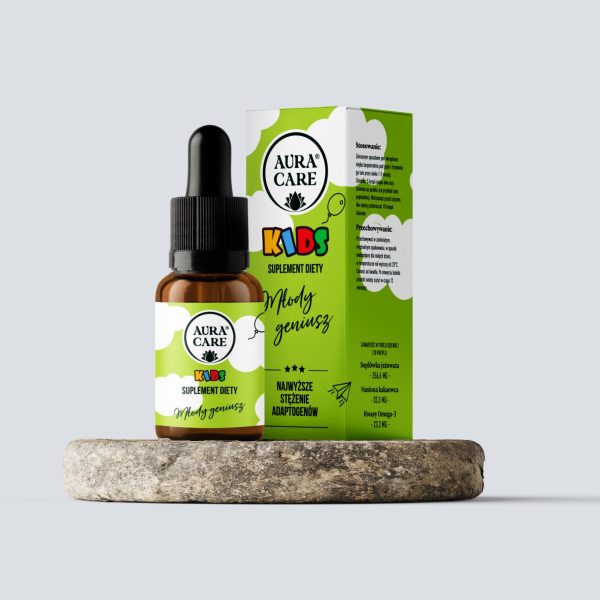
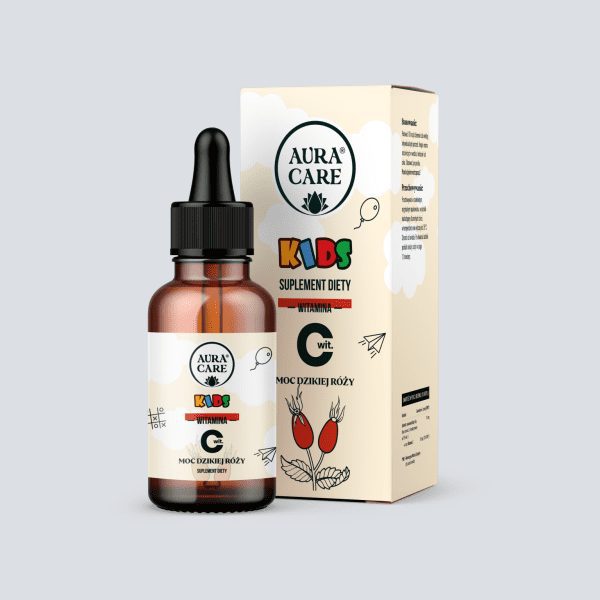
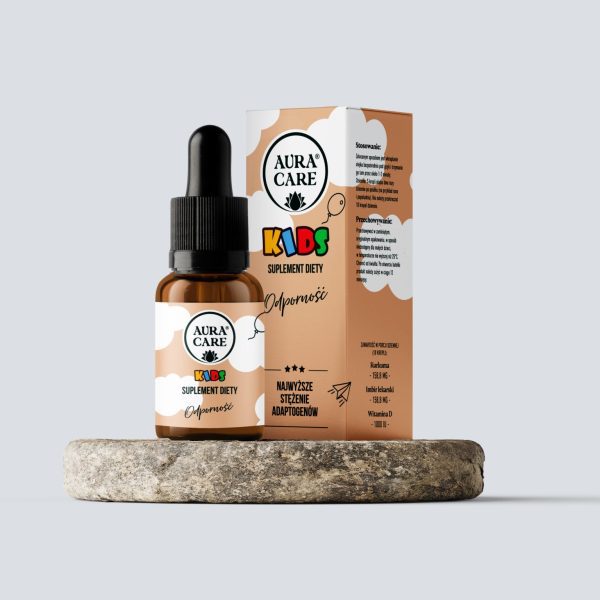
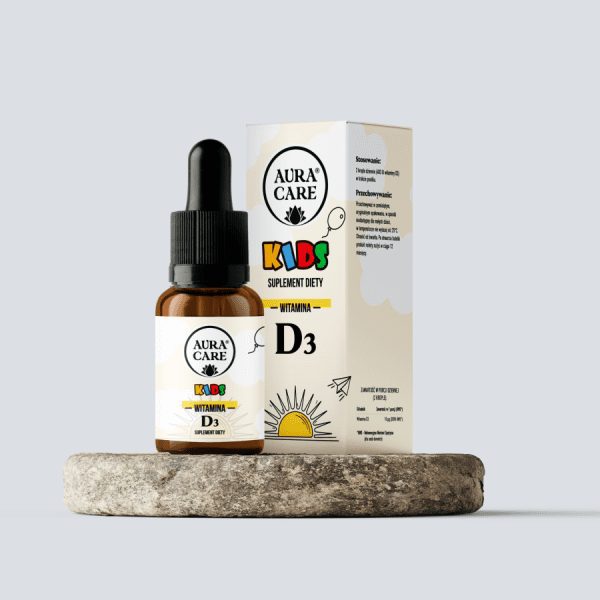
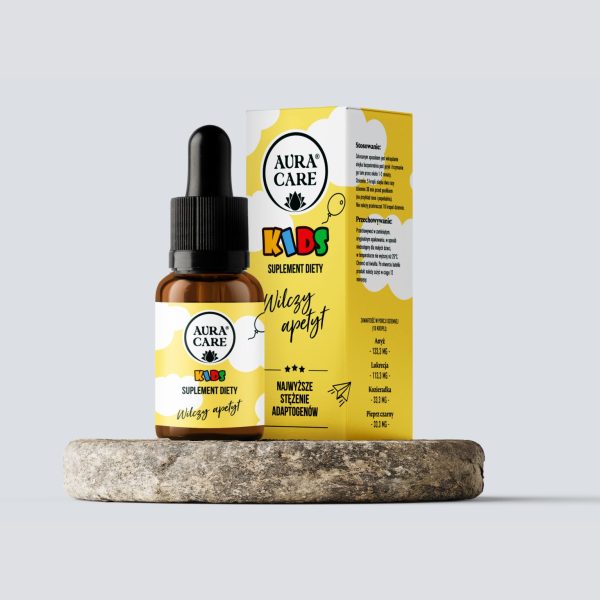
Thematically, the offer overlaps with what you will find in the adult categories: vitamins, probiotics, omega acids, and herbal complexes. The difference lies in the serving size, form, and choice of additives. Several lines, such as Aura Care KIDS, run parallel versions for adults and children under the same name, so when purchasing, it is worth checking the note on the packaging.
Drops, Gummies, or Sachets? Practical Differences
Drops work well for small children because the portion is measured down to the drop and can be hidden in food. A disadvantage can be the taste if the product is oil-based.
Gummies win in acceptability. A child treats them like candy, which can be both an advantage and a risk at the same time, so the packaging should be kept out of reach of the little one. Sachets and powders offer the greatest freedom, as they can be dissolved in a favorite drink, but require a scale or measuring device provided by the manufacturer.
Twist-off capsules are an intermediate solution: the contents are squeezed onto a spoon, so the child does not have to swallow the capsule, and the portion is factory-measured.
How to Read a Children’s Supplement Label
On the label, look for three numbers: the content of the ingredient in one serving, the number of servings in the package, and the percentage of the reference intake value. The last value is calculated for an adult, so for children’s products, the manufacturer provides it separately or indicates that it has not been established for this age group.
The second thing is the list of allergens. Fish, dairy, and those with added honey have separate warnings. The third is the storage method, as some drops need to be kept in the refrigerator after opening and have a shortened shelf life.
Safety and Contraindications
Before giving a supplement to a child, consult with a pediatrician. A dietary supplement does not replace a varied diet or the treatment prescribed by a doctor. Do not exceed the portion recommended by the manufacturer, and when taking medications simultaneously, ask about possible interactions.
Store products in a place inaccessible to children, especially gummies and syrups with a fruit flavor. If a skin reaction, diarrhea, or other concerning symptom occurs after administration, discontinue the product and contact a doctor.
Frequently Asked Questions
From what age can supplements be given to children?
This depends on the packaging of the specific product, as the boundaries can vary even within one brand. Some drops are intended for the first months of life, gummies are usually from three years, and capsule products from school age. For children under three years old, the decision to add any dietary supplement is best made together with a pediatrician.
Can a child take an adult supplement in a smaller dose?
Dividing adult portions is not a good idea. Children’s products differ not only in the amount of the ingredient but also in its chemical form, the choice of auxiliary substances, and the absence of some additives that are not used for small children. It is safer to reach for a product labeled as intended for a specific age group.
Do children’s gummies contain sugar?
It depends on the product. An increasing number of gummies are sweetened with fruit juice, maltitol, or another sweetener and are labeled as sugar-free. Others contain sugar or glucose syrup. This is information from the nutritional value table, not from the front of the packaging, so it is worth checking before purchasing.
How to store children’s drops after opening?
The manufacturer provides this on the label, and it is worth adhering to it, as recommendations vary. Oil-based products usually just need to be kept at room temperature, away from light. Some water-based drops and probiotics require refrigeration after opening and should be used within a shortened period, for example, within thirty days.
Can children’s supplements be combined?
Taking several products at once poses the risk of repeating the same ingredient in two products. With fat-soluble vitamins, this matters because the body does not excrete them as easily as water-soluble vitamins. Sum the contents from the labels, and for longer use, consult the set with a pediatrician.