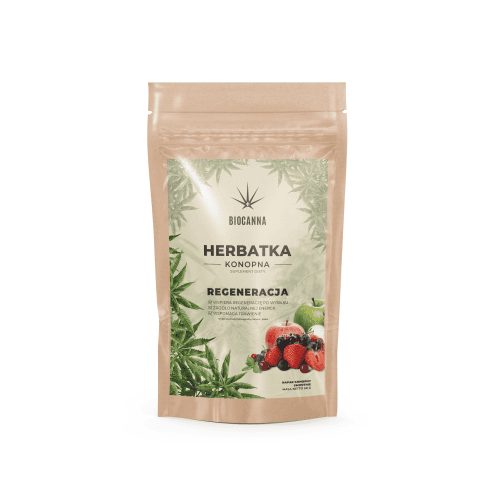
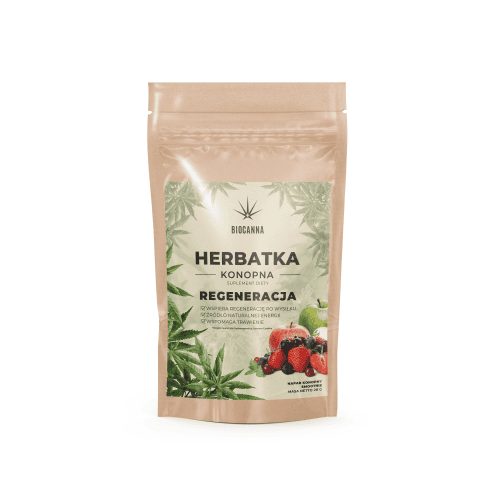
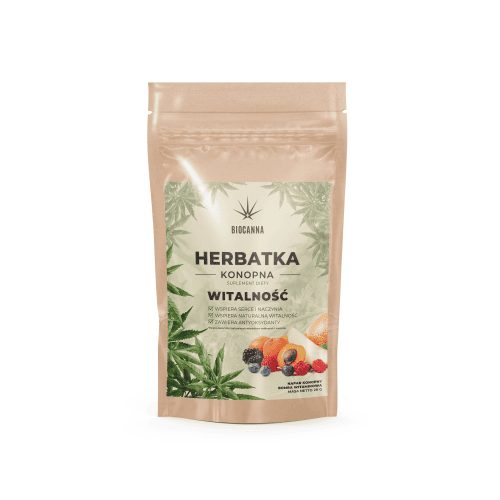
Hemp teas are loose infusions based on the leaves or flowers of hemp. In this category, you will find two types: blends with fruits and herbs and pure hemp herb without additives. Alongside them, you will also find yerba mate, matcha, and classic herbal blends. Below, we explain the differences between the variants, how to brew them, and what to read on the label.
Fruit and Herb Blends
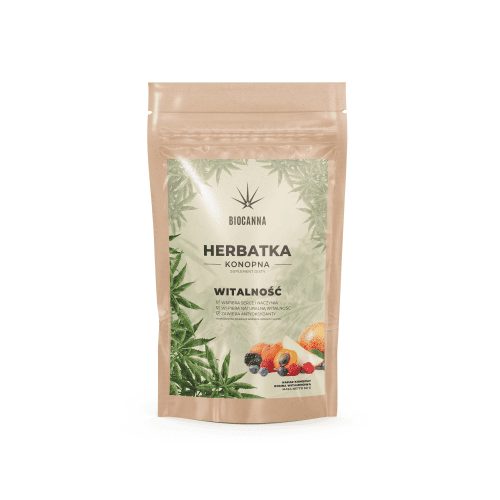
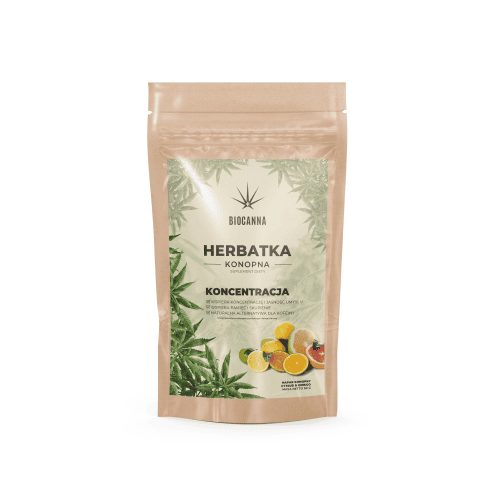
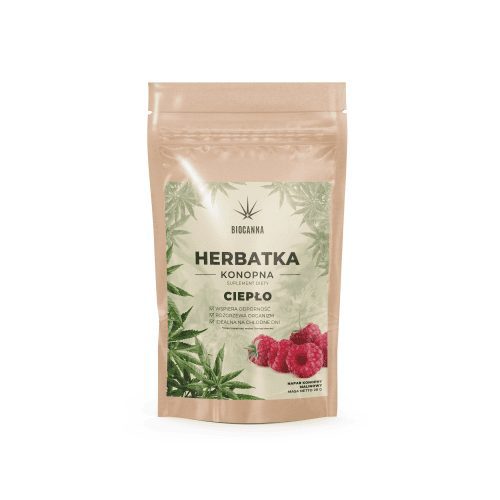
The widest series is the BioCanna blends. Each has the same base of hemp leaves, differing only in the additives that lead the flavor:
- Raspberry: raspberry and hibiscus, fruity sweetness and red color of the infusion
- Citrus & Ginkgo: ginkgo biloba, orange peel, and hibiscus, citrus profile and distinctly sour
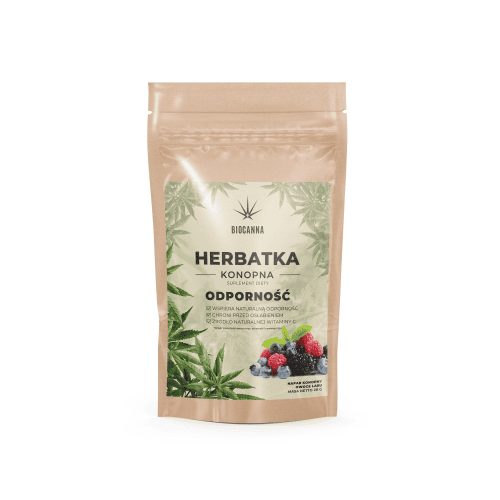
- Forest Fruits: rose hip, black currant, cranberry, blueberries, elderberry, and rowan, dark and tart infusion
- Smoothie: apple, banana, strawberry, chamomile, and ashwagandha, flavor closer to a fruit cocktail than tea
- With Hawthorn and Rose Hip: twelve ingredients, from hawthorn and rose hip to beet and sloe, tart and sour profile
None of the blends in this series contain caffeine, so you can choose any time to drink them. Each can be purchased in two sizes: 20 g for tasting and 50 g for stock.
Pure Hemp Herb
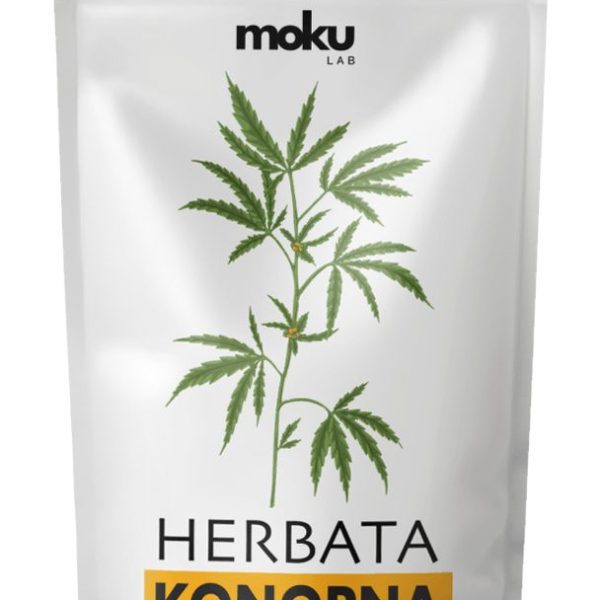
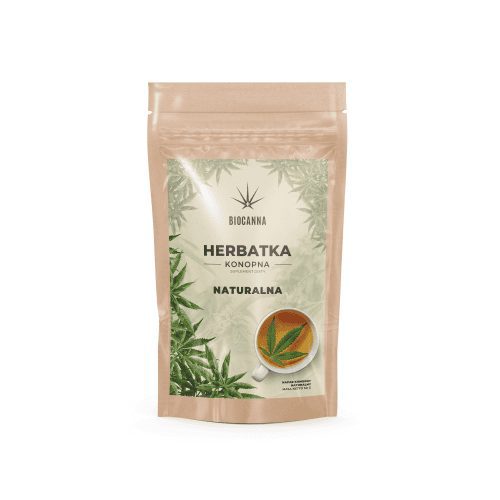
If you prefer the taste of the plant itself, choose the herb without additives. The Natural BioCanna variant consists of flowers and leaves of hemp, while the mokuLAB tea is made from pure leaves. Both are without flavors and sugar, and the infusion is grassy, herbal, and dry.
This is a good starting point if you want to first get to know the base before choosing a flavored blend. From a 50 g package, mokuLAB’s producer counts about fifty cups with one teaspoon per cup.
How to Brew Hemp Tea
The brewing parameters are provided by the producer and are different from those for black tea:
- one teaspoon, about 2 g of herb per cup
- water at a temperature of 80-85°C, which means letting it sit for a moment after boiling
- from 4 to 6 minutes covered, then strain
Boiling water is not needed, and with blends containing hibiscus, it brings out sharp acidity. The teas are loose, without bags, so a strainer, sieve, or pot with a filter will be useful. With pure mokuLAB herb, the producer advises drinking the infusion with a meal containing fat or with added milk. More tips can be found in the text how to brew hemp tea.
What to Check on the Label
The label of hemp tea is short, but it is worth reading it in full:
- ingredients: raw materials are listed in descending order by weight, so the order indicates the proportions of the blend
- net weight: 20 g is enough for a trial, 50 g for several weeks of drinking
- information about caffeine
- product status: some blends are classified by the producer as dietary supplements
- allergens and vegan and gluten-free status
After opening, keep the herb in a tightly closed package, in a dry and dark place, as it quickly absorbs moisture and foreign odors. Other food products can be found in the Food category.
Who Are Hemp Teas For
The producers target the blends and herb for adults. It is a proposal for those who drink herbal infusions and are looking for something caffeine-free, with a fruity or distinctly plant flavor. Do not consume yerba mate and matcha from this category with other caffeine-containing products. Pregnant and breastfeeding women, as well as individuals taking medications regularly, should discuss drinking herbal infusions with their doctor.
We explain how hemp infusion differs from oil in the text hemp tea and how it differs from oil.
Frequently Asked Questions
Does hemp tea contain caffeine?
The BioCanna blends and mokuLAB herb do not contain it. Their compositions do not include proper tea, yerba mate, or guarana, and the producer explicitly states for some blends that it is a caffeine-free infusion. The base is the leaf or flower of hemp, and the fruit and herbal additives do not carry caffeine.
How much herb should I use per cup?
The producer recommends one teaspoon, about 2 g per cup. The herb is loose, so you can decrease or increase the portion if you prefer a weaker or stronger infusion. Pour water at a temperature of 80-85°C over that portion and brew for 4 to 6 minutes covered, then strain.
What is the difference between the 20 g and 50 g packaging?
Only the weight. The composition, portion, and brewing instructions are the same. The smaller package makes sense when you are just trying the flavor, while the larger one is for regular consumption of a given blend. The weight of 20 g is enough for a trial, and 50 g for several weeks of drinking, as from a 50 g package, mokuLAB’s producer counts about fifty cups.
Why should I not pour boiling water over the tea?
The producer recommends water at a temperature of 80-85°C. Hibiscus poured with boiling water becomes sharply sour, and orange peel gives bitterness instead of aroma. It is enough to let the boiled water sit for a moment before pouring. After pouring, brew the infusion for 4 to 6 minutes covered, then strain the herb.
Is a strainer needed for brewing?
Yes, because the hemp teas in this category are loose and do not have bags. A strainer, sieve, or pot with a filter will work, and after brewing, you simply strain the herb. The infusion sits covered for 4 to 6 minutes, so a strainer or sieve clearly makes things easier.