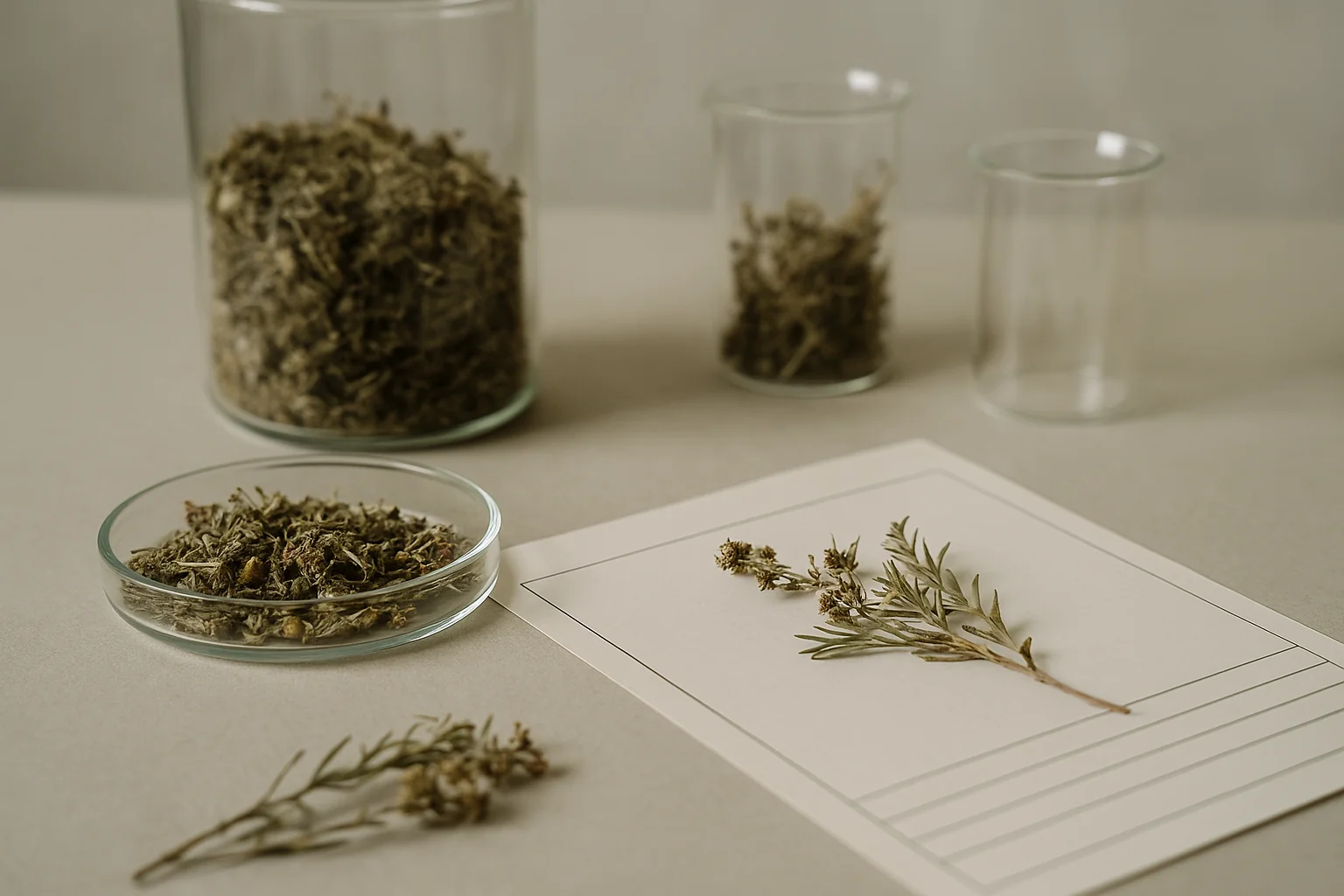

Lilac Diesel (S-LAB, Synoptis Pharma, Tilray): four varieties in the pedigree and terpinolene
Lilac Diesel reaches Polish pharmacies in six registered entries from three producers, and two Polish services describe its terpene composition differently. We gather the pedigree, pharmacy records, and what has not been shown about the effects of this variety.
| Variety card | Lilac Diesel |
|---|---|
| Producers | S-LAB, Synoptis Pharma, Tilray (6 pharmacy entries) |
| Medical brand | the same as the producer |
| Alternative names | none |
| Category according to sources | hybrid / hybrid-sativa / sativa (sources inconsistent) |
| Leading terpene | terpinolene |
| Other terpenes | bisabolol humulene caryophyllene limonene linalool myrcene pinene |
| Pedigree | established Silver Lemon Haze × Forbidden Fruit × Nyc Cherry Pie × Citral Glue |
| Source consistency | divergent (2 sources) |
- Who supplies. 3 producers (S-LAB, Synoptis Pharma, Tilray) in 6 entries, which may differ in declaration and origin of the raw material.
- Profile. It leads with terpinolene, alongside bisabolol, humulene, caryophyllene, limonene, linalool, myrcene, pinene. We do not provide percentage shares, as sources count them against different totals.
- Origin. The pedigree is established, with parents being Silver Lemon Haze and Forbidden Fruit and Nyc Cherry Pie and Citral Glue.
- What is missing. Two sources describe the profile differently, so the rest of the set is disputed, not established.
Where does Lilac Diesel come from and what is known about its pedigree?
Lilac Diesel originates from the American breeding of Ethos Genetics, and the publicly available pedigree description lists four parental names: silver lemon haze, forbidden fruit, nyc cherry pie, and citral glue. The pedigree is therefore documented, although it is not in the form of a simple cross of two varieties, which is what retail descriptions tend to suggest.
A record with four names reads differently than a cross of two lines. The breeder combined several varieties, and the order of crossings was not provided, so from the pedigree alone, it is impossible to determine which of them the variety took its leading terpene from. This pedigree comes from the breeder and from the variety database that cites it, not from genetic testing, and it should be read as such.
Polish descriptions do not speak with one voice about how to classify this variety. One database describes all pharmacy entries as hybrids with a sativa predominance, while another calls the S-LAB entry a sativa and the Synoptis Pharma entry simply a hybrid. Such a label thus indicates how a given service described the variety, not a measured characteristic of the dried product that ends up on the pharmacy shelf.
In the cluster from which this entry originates, the established pedigree has 60 out of 85 varieties. Lilac Diesel belongs to this better-described part of the collection. However, this does not mean that from the list of ancestors, one can derive a prediction about how the dried product will affect a specific patient.
Which producers supply this variety to Polish pharmacies?
Three producers: S-LAB, Synoptis Pharma, and Tilray. Each of them has two entries of this variety in Polish circulation, totaling six records. The entries of one producer differ in the declared potency of the raw material, and databases describing the market note different availability for them, changing from month to month.
| Producer | Entries | How the records differ |
|---|---|---|
| S-LAB | two | The market database notes the weaker entry as unavailable, the stronger as available. The second service describes only the stronger one and calls it a sativa. |
| Synoptis Pharma | two | The only producer for which the second service provides the weight order of terpenes, and does so for the weaker entry. |
| Tilray | two | The only producer for which the market database lists bisabolol and humulene in the profile composition, although the share table is identical for all six records. |
The declarations from these six entries comprise a THC range of 16.2-24.2%. We provide a range, not a number from the entry name, because the producer is entitled to a ten percent deviation from the declared value. The number on the packaging is a registered declaration subject to tolerance, not a measurement result of that one bag of dried product.
For all six entries, the market database publishes an identical share table in the profile, although the list of names provided with the Tilray entry is longer than the others. It is difficult to consider such a set as the result of six separate analyses; it rather looks like one description of the variety duplicated for each entry. The difference between the dried products of two producers remains invisible in this data.
The set of available records is not static. The permit for the raw material’s admission expires after a certain time, a batch may be held back by the producer, and the pharmacy only orders what its wholesaler has in that week. The list of items actually available for purchase may therefore be shorter than the list of registered items, and a reading from two months ago may become outdated.
We keep the current assortment and pharmacy rates in one place, in the summary of available medical marijuana varieties, and only there. Separate entries describe individual producers: S-LAB, Synoptis Pharma, and Tilray.
What does this variety smell like and where did its name come from?
- bisabolol bisabolol
- humulen humulen
- caryophyllene caryophyllene
- limonene limonene
- linalool linalool
- myrcene myrcene
- pinene pinene
- terpinolene terpinolene (leading in the pharmacy list)
The name combines two poles of scent: lilac flower and fuel. Commercial descriptions mention citrus, floral, lavender notes, and a characteristic diesel accent for this variety. All these descriptions come from variety catalogs and sales descriptions, not from sensory analysis conducted on Polish batches of dried product.
The aroma is the least documented part of the description of each variety. No one publishes a scent evaluation protocol or sensory panel for the Polish market, and adjectives travel between services without a source provided. Two bags of the same registered entry, dried and stored differently, can smell distinctly different, and volatile components diminish from the dried product over time.
The same list of adjectives appears in the database for all six Polish entries, regardless of producer and declared potency. The scent description thus travels with the name of the variety, not with a specific batch. This is a good reason to read it as a starting point, not as a promise of what the patient will sense upon opening the package.
The set of adjectives fits a variety led by terpinolene, which in other plants is responsible for both resinous and fruity notes. However, this would be a backward inference: the scent was assigned first, and the composition was described later. The terpene composition does not translate into olfactory impression one-to-one, as the detection threshold for each compound is different, and some notes only arise from the combination of several of them.
How long does it take for the dried product to take effect and how long does the effect last?
Inhaled effects become noticeable within a few minutes of the first puff, with peak blood concentration occurring around the 10th minute, and the overall experience usually lasts 2-4 hours. Orally, the onset occurs only between 30 and 90 minutes, with a peak between 2 and 3 hours, and the effects can last up to 8 hours.
These values describe THC administered inhaled or orally as a substance, not Lilac Diesel as a variety. They come from collective pharmacokinetic studies of cannabinoids, the same ones on which the characteristics of medicinal products in this group are based. No separate pharmacokinetic study has been published for any of the six Polish entries of this variety, and the evidence base for this project does not contain such work.
The difference between the two routes of administration is not just a matter of timing. When administered orally, the substance first passes through the liver and forms a hydroxyl derivative with its own, stronger action profile, which is practically absent when inhaling vapor. Therefore, orally, the effect builds up more slowly, lasts longer, and is often described as different in character, not just delayed in time.
The variability among individuals is also wide. The outcome is influenced by body mass, previous exposure to cannabinoids, depth of inhalation during vaporization, and the operating temperature of the device. The ranges provided above thus describe a typical course in studied populations, not a promise for an individual, and the method of administration is determined by the treating physician.
What has been shown, and what has not been shown about the effects of this variety?
Very little has been shown, and this does not concern the variety itself. The evidence base for this project has two entries for terpinolene: one in mice and one in a human cell line. The rest of what circulates about Lilac Diesel is sales description or patient report, not research results.
| Study | Model and route of administration | What was shown |
|---|---|---|
| Okumura N et al., 2012 Oncology Letters PMID:22740904 |
in vitro (human cell line K562) | Terpinolene reduced the level of AKT1 protein and inhibited the proliferation of human leukemia cells of the K562 line in culture; the study did not concern pain, sleep, or anxiety. |
| Ito K et al., 2013 Journal of Natural Medicines PMID:23339024 |
rodent (mouse, inhalation) | Inhaled terpinolene exhibited sedative effects in mice; the effect was also maintained in mice with impaired olfaction, indicating that the action occurred after the compound was absorbed into the body through the nose, not solely through scent perception. |
No effects of terpinolene on pain, anxiety, or sleep have been shown in humans or in any animal pain model; available data only includes sedative effects after inhalation in mice and effects on leukemia cell line in vitro.
Regarding the profile composition, two Polish services differ from each other. The first lists bisabolol, humulene, and limonene for this variety, which the second does not provide. The second lists myrcene, which is absent in the first. Common to both are four entries: caryophyllene, linalool, pinene, and terpinolene, and both place terpinolene at the forefront.
We provide the composition without numbers, and this is a decision, not an oversight. When summing the shares that Polish databases assign to entries described the same way, the result stops at 46 percent once, 73 percent another time, and 83 percent another time. Each source divides by something different, and none specifies what exactly. A value taken from such a table looks like a measurement result, although it is a fraction with an unknown denominator, and therefore it does not stand in this text.
What adverse effects have been reported for this variety?
None specifically for it. There is no public compilation of adverse events conducted for Lilac Diesel, so the frequencies that a patient seeks cannot be provided honestly. What is known pertains to hemp as a raw material and THC as a substance, not this registered entry.
Studies concerning the raw material most often mention dry mouth, dizziness, drowsiness, increased heart rate, and anxiety after a higher dose. For varieties with stronger declarations, reports more frequently describe anxiety reactions, with this relationship resulting from the dose of the cannabinoid taken, not from the commercial name of the variety.
Frequencies cannot be calculated for this variety for a simple reason: the adverse event reporting system registers the pharmaceutical form and producer, not the cultivar. A report enters the database as hemp from a given producer, so even a complete set of reports would not allow distinguishing the six Polish entries of this variety from the rest of the assortment.
Patient reports from forums and store descriptions do not replace this number. They describe the experiences of individuals who happened to describe them, without a denominator, without information about the dose, and without confirmation that they reached for the same registered entry. The method of treatment and the response to it are assessed by the physician who issued the prescription.
At what temperature does terpinolene evaporate from the dried product?
The public database PubChem lists the boiling point of terpinolene at 183-185 degrees at 760 mm Hg pressure and another entry at 187 degrees, without specified pressure. This is the boiling point of the pure compound in the laboratory, not the threshold at which the terpene begins to evaporate from the ground dried product.
Evaporation occurs well below the boiling point, and its rate increases exponentially with temperature. Boiling is the moment when the vapor pressure equals the surrounding pressure, meaning a point on the scale, not a switch. Popular targeting of a specific compound’s temperature is based on this misunderstanding, which we elaborate on in a separate entry about terpene evaporation.
The second trap lies in the device itself. The number on the display describes the heating element or the air flowing through, not the material in the chamber: the dried product is cooled by the airflow during inhalation and heats unevenly. The difference between the setting and the temperature of the dried product exists and has not been publicly measured, as we discuss in the context of vaporizer settings here.
From all this, no recommended range arises, and we do not provide one here. It is also unknown how much terpinolene reaches the lungs and bloodstream of a person when vaporizing dried product, as no such measurement has been published. The method of administration of the prescription raw material is determined by the treating physician.
Which varieties from Polish pharmacies are related to it?
- Comparisons with this variety. Four comparisons from this cluster place it alongside other entries from the list: Frosted Cherry Cookies, Galaxy Walker OG, Island Sweet Skunk, Purps. The comparison analyzes composition and availability, not determining which variety is for whom.
None. Among the 85 cultivars described in this cluster, none has in its pedigree either silver lemon haze, forbidden fruit, nyc cherry pie, or citral glue. Each of these four names appears in the entire collection exactly once, and it is precisely with Lilac Diesel.
An empty sibling list with a known pedigree is a correct result here, not a data gap. It would be tempting to add relatives based on a common name component, as the term haze carries eighteen pedigree records in this collection. The thing is, with Red No 2, the parent is the general haze family, not the same line silver lemon haze, and a broad style family does not create siblings. A relative added by intuition would build a false connection throughout the network of entries.
However, the proximity of this variety is visible by profile, not by ancestors. Terpinolene leads in 7 out of 85 cultivars in this collection, and alongside Lilac Diesel are Delahaze, Ghost Train Haze, Frozen Lemon Mints, Lemon Skunk, Original Gangster Deluxe, and Red No 2.
This kinship is based on composition, not origin, and should be treated as such in comparisons. What is known about the compound from studies is collected in a separate entry about terpinolene, and we maintain a complete list of varieties available in Polish pharmacies in the summary.
Frequently asked questions about the Lilac Diesel variety
Is Lilac Diesel a sativa or a hybrid?
It depends on who describes it. One Polish database classifies all six pharmacy entries as hybrids with a sativa predominance, while another calls the S-LAB entry a sativa and the Synoptis Pharma entry a hybrid. The label comes from the service description, not from studying the plant.
How many entries of this variety are registered in Poland?
Six: two each from S-LAB, Synoptis Pharma, and Tilray. The entries of one producer differ in the declared potency of the raw material. The number of them currently available in pharmacies changes over time, and we track this exclusively in the summary of available varieties.
Does terpinolene have a sedative effect?
In mice, yes; in humans, it has not been studied. The work by Ito and Ito from 2013 described sedative effects after inhalation in mice, including in animals with impaired olfaction. Transferring such a result to humans would be an overinterpretation, as there is no human study.
Does Lilac Diesel have related varieties in Polish pharmacies?
No. None of the 85 cultivars described in this cluster shares a documented parent with it, and each of the four names in its pedigree appears in the entire collection exactly once. A common name component is not evidence of kinship.
How long does it take for the dried product to take effect when inhaled, and how long when taken orally?
Inhaled within a few minutes, orally after 30-90 minutes. These values describe THC administered by that route, not this variety: no pharmacokinetic study for Lilac Diesel has been published. The method of administration is determined by the treating physician.
Why do you not provide percentage shares of the profile components?
Because we do not know the denominator. The sums of shares published by Polish databases for the same entries yield 46 percent once, 73 percent another time, and 83 percent another time, so each source counts differently, and comparing such numbers between services makes no sense.
The editorial text was prepared by the team at ubucha.pl. Hemp is a pharmaceutical raw material dispensed by prescription in the Rpw category. The material is informational and does not replace medical consultation.