
What is CBG? The Mother of Cannabinoids - Effects, Receptors, Dosage 2026
What is CBG: what studies have really shown about cannabigerol, how it acts on receptors, what is unknown about dosing, and what its legal status is in Poland.
CBG, or cannabigerol, is a non-psychoactive plant cannabinoid, referred to as the “mother of cannabinoids” because its acidic form CBGA is the biosynthetic precursor of cannabidiol and tetrahydrocannabinol. In Polish store descriptions, CBG is sometimes presented as a cannabinoid of focus and as a stronger relative of CBD, and neither of these statements is supported by the literature. This text shows what is actually known about cannabigerol: how it behaves towards receptors in in vitro studies, what research has shown regarding resistant bacteria and inflammatory bowel disease, why the dosage of CBG in humans has not yet been established, and what Polish and EU law says about the legality of products containing this compound in 2026.
KEY INFORMATION
- What it is: a non-intoxicating plant cannabinoid, derived from CBGA, the precursor of other cannabinoids.
- Receptor profile: very strong agonism of the alpha-2 adrenergic receptor and antagonism of 5-HT1A in a study on mouse brain membranes (Cascio et al., 2010).
- Strongest data: activity against methicillin-resistant Staphylococcus and biofilm disruption (Farha et al., 2020) and alleviation of colitis in mice (Borrelli et al., 2013).
- Dosage: not established in humans; there is no study comparing doses of cannabigerol with placebo.
- Safety: in individuals under 25 years of age, pregnant, breastfeeding, and taking medications, it cannot be established even for better-studied CBD.
What is CBG and where does it come from in the cannabis plant?
Cannabigerol is one of the compounds produced by hemp, devoid of psychotomimetic effects. In the plant, it primarily occurs in its acidic form, as CBGA, and only heating removes the carboxyl group, yielding neutral CBG. This pathway is described in a review by Calapai et al. in Evidence-Based Complementary and Alternative Medicine (2022), dedicated to the pharmacokinetics and pharmacodynamics of this cannabinoid.
The rarity of cannabigerol in finished raw material directly results from its role. CBGA is the substrate from which plant enzymes build the acidic forms of other cannabinoids, so the longer the plant matures, the less of the original compound remains. In strains cultivated for cannabidiol or tetrahydrocannabinol, the pool of CBGA is almost entirely consumed.
The solution has proven to be cultivation. Russo pointed out in a 2011 review in the British Journal of Pharmacology that conventional selection has allowed for the development of hemp chemotypes with high content of individual components, and this path has yielded strains with dominant cannabigerol. Without them, the extraction of CBG on a commercial scale would be unprofitable, as a classical raw material would need to be processed in much larger quantities.
It is worth immediately separating two things that blend in product descriptions. The rarity of the compound in the plant speaks to production costs, not to potency. The fact that there is little cannabigerol does not imply that it works stronger than cannabidiol, nor that it acts differently than studies show. Its pharmacology is determined by receptor studies, not by cultivation economics.
Why is CBG called the mother of cannabinoids?
The term comes from the position of CBGA in biosynthesis. It is from this compound, with the help of three different enzymes, that the acidic forms of tetrahydrocannabinol, cannabidiol, and cannabichromene are produced, and only their decarboxylation yields the compounds we know from labels. Without CBGA, none of the other plant cannabinoids are produced, and that is the essence of this metaphor.
Russo himself uses a more cautious formulation in a publication from 2022: he writes that CBGA “is sometimes referred to as” the mother of all cannabinoids. The difference is significant because in commercial materials, the term functions as a statement about potency, while in the literature, it is a description of a biochemical pathway. One does not imply the other.
The practical consequences primarily concern the producer. Raw material rich in cannabigerol requires either early harvesting or genetics in which the enzymes converting CBGA are inactive. Both paths increase costs, which is reflected in the price of the oil.
For the reader, something else is more important. The position in the biosynthetic pathway says nothing about how the compound will behave in the human body, as there are no plant synthetic enzymes there. Cannabigerol must therefore be evaluated separately, based on its own receptor profile, and this is what the next section is dedicated to.
How does CBG act on CB1, CB2, and alpha-2 receptors?
The most frequently cited receptor study is the research by Cascio et al. in the British Journal of Pharmacology (2010). The authors directly asked whether cannabigerol activates or blocks any G protein-coupled receptor, and used binding tests on mouse brain membranes and mouse vas deferens. The result turned out to be different from what product descriptions repeat.
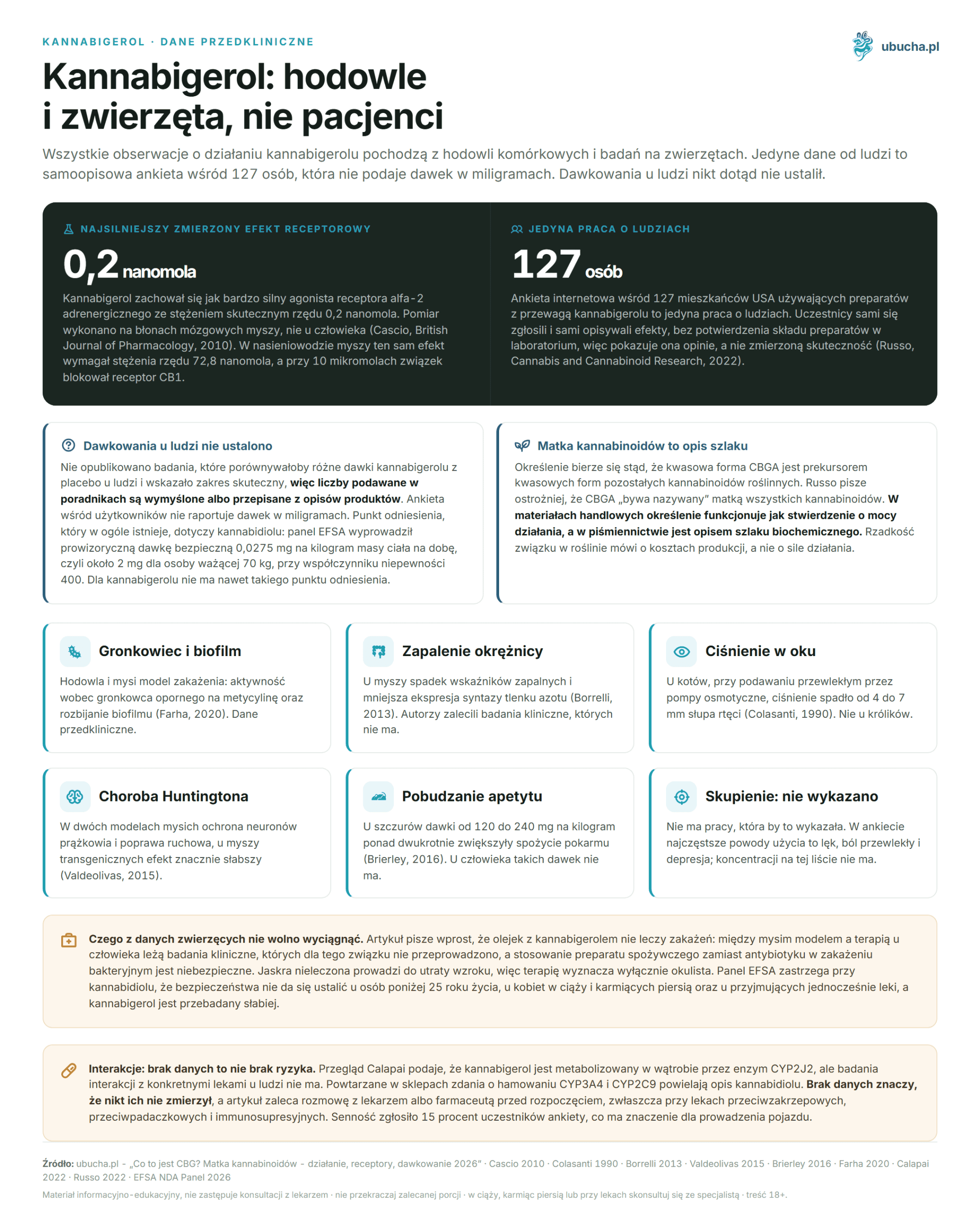
In this study, cannabigerol behaved as a very strong agonist of the alpha-2 adrenergic receptor, with an effective concentration of about 0.2 nanomoles, and as a moderately strong antagonist of the serotonin receptor 5-HT1A. At a concentration of 10 micromoles, it acted as a competitive antagonist of the CB1 receptor. It also showed significant affinity for mouse CB1 and human CB2, but the mere presence of affinity does not determine whether the compound stimulates or blocks the receptor.
The second model yielded a convergent, albeit weaker result. Cannabigerol inhibited electrically induced contractions of isolated mouse vas deferens in a manner that appeared to be receptor alpha-2 dependent, with an effective concentration of about 72.8 nanomoles. The authors themselves noted this discrepancy and raised the question of why signs of receptor stimulation were more pronounced in the binding test than in the tissue, and whether the compound does not inhibit the reuptake of norepinephrine. The work thus ends with research questions rather than a closed description of action.
| Molecular target | What was shown | Source |
|---|---|---|
| alpha-2 adrenergic | strong activation, effective concentration 0.2 nanomoles | Cascio 2010 |
| 5-HT1A | blocking the action of the agonist of this receptor | Cascio 2010 |
| CB1 | affinity and competitive antagonism at 10 micromoles | Cascio 2010 |
| CB1 and CB2 | described as a partial agonist of both receptors | Calapai 2022 |
| TRP channels, COX-1 and COX-2 | mentioned as potential targets of cannabigerol | Calapai 2022 |
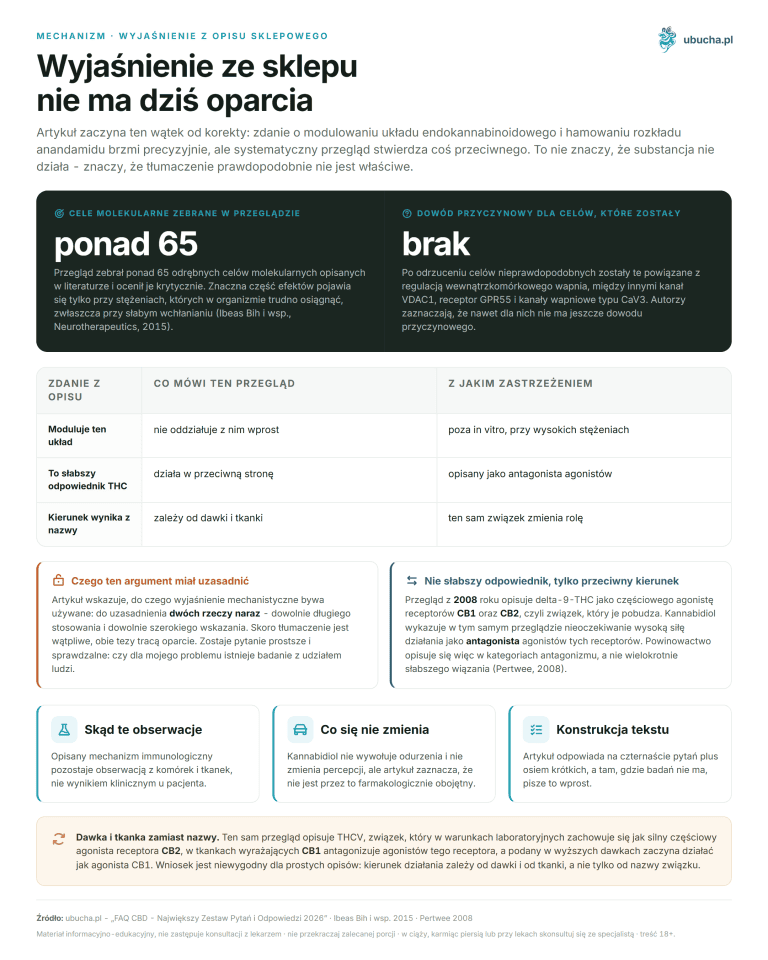
The last two rows of the table do not agree with the first two, and this is not a mistake. The Calapai review describes cannabigerol as a partial agonist of CB1 and CB2 and a regulator of endocannabinoid signaling, while the experimental work by Cascio showed blocking of CB1. The picture depends on the model, concentration, and measured endpoint, and this discrepancy is one of the reasons why definitive statements about the action of cannabigerol in humans are premature. The receptor context has been described more broadly in our guide to CB1 and CB2 receptors.
What did the CBG study show against resistant bacteria?
This is currently the strongest set of data on cannabigerol, although entirely preclinical. The work by Farha et al. in ACS Infectious Diseases (2020) demonstrated that cannabinoids act antibacterial against methicillin-resistant Staphylococcus, inhibit biofilm formation, and destroy already formed biofilm and cells in the stationary phase, which are resistant to antibiotics.
The mechanism was established for cannabigerol itself and turned out to be atypical. The compound targets the cytoplasmic membrane of gram-positive bacteria, meaning it affects the structure rather than a single enzyme. The authors also demonstrated the effectiveness of cannabigerol in a mouse model of systemic infection caused by methicillin-resistant Staphylococcus, which distinguishes this work from typical reports from the culture plate alone.
An interesting aspect is the gram-negative bacteria. Cannabinoids do not manage their outer membrane, but when it becomes permeable, cannabigerol acts on the inner membrane. Hence the second observation: in combination with polymyxin B, cannabinoids acted on multidrug-resistant gram-negative pathogens.
The result regarding biofilm has separate practical significance. A biofilm is a layer that bacteria build on surfaces such as implants, catheters, or wound surfaces, which hinders drugs from reaching cells hidden within it. A substance that can break this layer is of interest to microbiology even if it does not kill bacteria quickly, as it may facilitate the action of a drug administered alongside.
What should not be inferred from this? That cannabigerol oil treats infections. Between the mouse model and therapy in humans lie clinical studies, which have not been conducted for this compound, and using a food supplement instead of an antibiotic in a bacterial infection is dangerous.
What is known about CBG in inflammatory bowel disease?
The second well-documented pathway is colitis in mice. In the study by Borrelli et al. in Biochemical Pharmacology (2013), inflammation was induced by the intestinal administration of dinitrobenzenesulfonic acid, and its severity was then assessed by several independent methods: the ratio of intestinal mass to its length, myeloperoxidase activity, and histological and immunohistochemical imaging.
Cannabigerol reduced all these indicators, decreased the expression of inducible nitric oxide synthase, increased superoxide dismutase activity, and normalized changes in the levels of interleukin 1beta, interleukin 10, and interferon gamma induced by the inflammatory factor. In macrophage cultures, it limited the production of nitric oxide, and in intestinal epithelial cells, the formation of reactive oxygen species.
The role of receptors turned out to be ambiguous. The CB1 receptor antagonist did not change the effect of cannabigerol on nitric oxide production, while the CB2 antagonist even enhanced it. The authors concluded cautiously: the compound deserves clinical studies in patients with inflammatory bowel disease.
Since then, no such studies have been published. Statements about cannabigerol as a remedy for irritable bowel syndrome or Crohn’s disease have no support in human data, and the difference between a mouse and a patient can be enormous in gastroenterology.
Does CBG lower intraocular pressure?
This topic is the oldest and most frequently misrepresented. The work by Colasanti in the Journal of Ocular Pharmacology (1990) compared the effects of tetrahydrocannabinol and cannabigerol on the eye, and the species studied were cats, not rabbits. After a single local administration, both compounds produced only a moderate decrease in intraocular pressure.
Only chronic administration, unilaterally on the cornea, via osmotic pumps with a cannula, resulted in a clear decrease: from 4 to 7 mm of mercury. Neither of the two compounds changed the rate of aqueous humor production, while both increased the ease of its outflow two- to threefold. It is this outflow, not production, that accounts for the decrease in pressure in this model.
The work also noted a difference in favor of cannabigerol outside the eye. In rats, after systemic administration, tetrahydrocannabinol caused polyspike discharges in the electroencephalogram, first in wakefulness, then in the sleep phase with rapid eye movements. Cannabigerol did not produce such an effect.
The author did not resolve the mechanism, so the statement repeated on the internet that cannabigerol lowers eye pressure “like brimonidine,” through the alpha-2 receptor, is a hypothesis added later, after the Cascio work from 2010. There are no randomized trials in humans, and untreated glaucoma leads to vision loss, so no product with cannabigerol should be used instead of therapy prescribed by an ophthalmologist.
What does CBG do in neurodegeneration models and with appetite?
In Huntington’s disease, cannabigerol was studied in two mouse models, as described in the work by Valdeolivas et al. in Neurotherapeutics (2015). In mice poisoned with 3-nitropropionic acid, the compound protected striatal neurons, improved motor deficits, inhibited microglial response, and increased reduced antioxidant defense indicators.
In the second model, in transgenic R6/2 mice, the effect was much weaker, although significant: improvement was noted in the rotarod test, and gene expression analysis showed partial normalization of several pathways altered in this disease. A slight reduction in the aggregation of mutated huntingtin in the striatum was also noted. The authors speak of opening new research directions, not of a ready therapy.
A separate thread is appetite. In the work by Brierley et al. in Psychopharmacology (2016), rats first underwent neuro-motor tolerance tests after cannabigerol at doses from 30 to 120 mg per kilogram of body weight, with no adverse effects in any parameters. Subsequently, previously fed animals were given doses from 30 to 240 mg per kilogram, and food intake was measured over two hours.
Doses from 120 to 240 mg per kilogram more than doubled total food intake and the number of meals, and the highest dose shortened the time to start eating. The size or duration of individual meals did not change. Doses of this magnitude in humans have no equivalent in any consumer product, so the observation describes research potential in cancer cachexia, not the action of the oil.
Other research directions are summarized in the aforementioned Calapai review, which lists the following preclinical observations for cannabigerol:
- lowering intraocular pressure,
- antioxidant and anti-inflammatory effects,
- anti-cancer effects,
- anxiolytic and neuroprotective effects,
- dermatological effects,
- appetite stimulation.
The authors add a caveat to this list that is worth remembering when reading any advertisement. All mentioned observations come from cell cultures and animal studies, so they justify further work, not the use of cannabigerol instead of treatment. The review concludes with the statement that the topic deserves further exploration, not that the matter is resolved.
How does CBG differ from CBD in practice?
First, it is necessary to debunk the statement that is most often repeated in Polish internet. Cannabigerol is not a “cannabinoid of focus” and there is no work that has demonstrated this. It is referenced in the Russo et al. survey from Cannabis and Cannabinoid Research (2022), but it says something different.
The researchers gathered 127 residents of the USA aged at least 21 who had used products with a predominance of cannabigerol, meaning containing more than half of this compound, in the last six months. The most frequently indicated reasons for use were anxiety (51.2 percent), chronic pain (40.9 percent), depression (33.1 percent), and insomnia and sleep disorders (30.7 percent). Concentration is not on this list at all, and among adverse effects, 15 percent of respondents reported drowsiness.
The survey also shows how highly participants rated effectiveness: 73.9 percent reported an advantage over conventional drugs for chronic pain, 80 percent for depression, 73 percent for insomnia, and 78.3 percent for anxiety. These are self-reported data from individuals who volunteered for the study, so they reflect user opinions, not measured effectiveness. The authors themselves state that the study documents the fact of cannabigerol use by people and justifies the need for randomized trials.
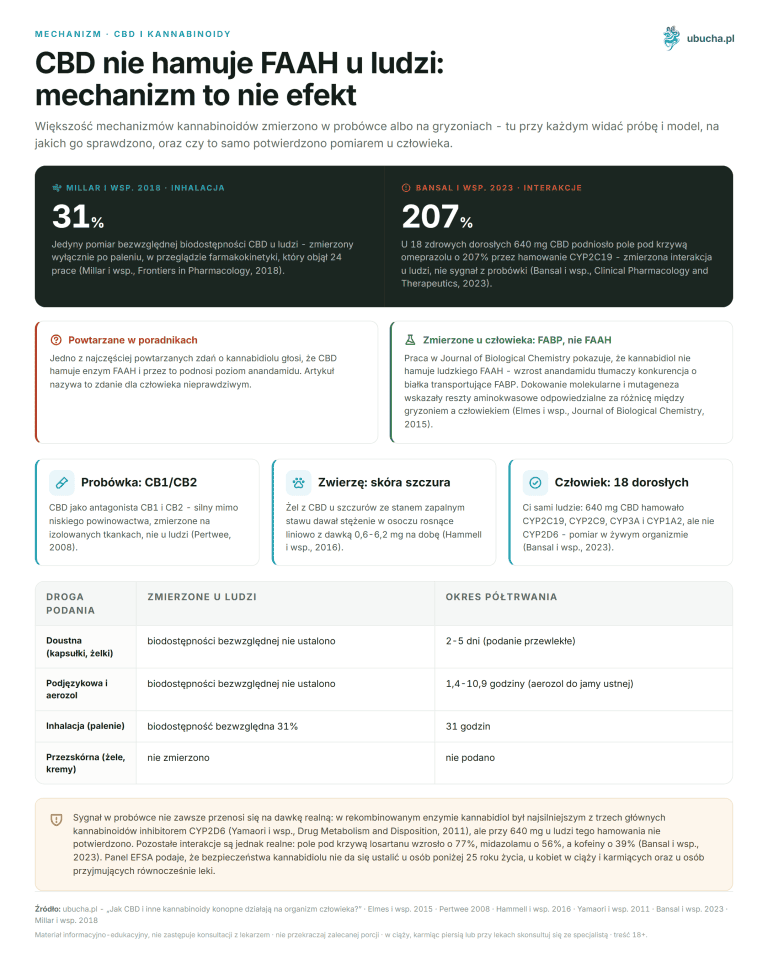
The pharmacological difference between the two compounds is, however, real. Cannabidiol acts primarily indirectly, through the 5-HT1A receptor and enzymes metabolizing endocannabinoids, which we describe in the text about how CBD works. Cannabigerol, on the other hand, exhibits the strongest action on the alpha-2 adrenergic receptor and blocks 5-HT1A, which is the same target that cannabidiol stimulates. What this means for human well-being remains unresolved.
Is there an established dosage for CBG?
There is none. No study has been published comparing different doses of cannabigerol with placebo in humans and indicating an effective range, so the numbers given in guides are either invented or copied from product descriptions. The Russo survey from 2022, the only work on users of this compound, does not report doses in milligrams.
A helpful point of reference is the regulatory assessment of a neighboring substance. The panel of the European Food Safety Authority in the update on cannabidiol as a novel food (2026) derived a provisional safe dose of 0.0275 mg per kilogram of body weight per day, which is about 2 mg for a person weighing 70 kg, with a 400-fold uncertainty factor. This applies only to supplements with a purity of cannabidiol of at least 98 percent, without nanoparticles.
It is worth knowing where such a low number comes from, as it surprises anyone who has seen labels in stores. The reference point was derived from modeling studies that met good laboratory practice principles, in which the most sensitive endpoints turned out to be liver mass and histopathological changes in that organ. A 400-fold uncertainty factor was then applied to the result because the panel considered the available data to be flawed. The number thus speaks as much about the regulator’s caution as it does about the substance itself.
The panel added a statement that should also be read regarding cannabigerol: the safety of cannabidiol cannot be established in individuals under 25 years of age, in pregnant and breastfeeding women, and in individuals taking medications simultaneously. Cannabigerol has been studied much less, so there is not even such a reference point for these groups.
If you still want to understand how much substance is in a drop, only arithmetic from the label is needed. A 10 ml bottle of oil with a concentration of 5 percent contains 500 mg of cannabigerol, and a drop is about 0.05 ml.
| Oil concentration | Content in 10 ml bottle | Approximate content in a drop |
|---|---|---|
| 5 percent | 500 mg | 2.5 mg |
| 10 percent | 1000 mg | 5 mg |
| 15 percent | 1500 mg | 7.5 mg |
This is a conversion, not a recommendation. The volume of a drop depends on the shape of the dropper and the density of the oil, so treat the table as an order of magnitude, and consult a doctor about the decision to use cannabigerol, especially with any chronic therapy.
What side effects do CBG users report?
The answer is based on one source, as there is no other. In the aforementioned survey of 127 individuals, 44 percent of participants reported no adverse effects. Among the rest, the most common were dry mouth (16.5 percent), drowsiness (15 percent), increased appetite (11.8 percent), and dry eyes (8.7 percent).
Separately, withdrawal symptoms were asked about. 84.3 percent of respondents did not report any, and the most frequently indicated symptom was difficulty sleeping, reported by two individuals. The scale of this number well illustrates the limits of inference: with two responses, we are talking about individual cases, not a phenomenon.
Methodology also requires caution regarding the remaining percentages. Participants were recruited online, they volunteered for the study, and they described their experiences without laboratory confirmation of the composition of the products used. Such a sample usually overestimates benefits and underestimates harms, as discouraged individuals are less likely to fill out surveys.
The practical conclusion is moderate. There is no indication that cannabigerol is dangerous in typical amounts, but the claim that it is safe would require studies that do not exist. Drowsiness reported by 15 percent of individuals is important for anyone planning to drive.
Does CBG interact with medications?
It is known how cannabigerol is eliminated from the body. The Calapai review from 2022 states that the compound is metabolized in the liver by the CYP2J2 enzyme, resulting in hydroxylated and doubly oxidized products. This is a different isoenzyme than those most commonly described for interactions with cannabidiol.
However, there is no study of cannabigerol interactions with specific medications in humans. The statements circulating in online stores that cannabigerol inhibits CYP3A4 and CYP2C9 replicate the description of cannabidiol and are sometimes supported by citations leading to works on completely different topics. The lack of data does not mean that there are no interactions: it means that no one has measured them.
Caution is therefore justified, especially with more serious therapy. This especially applies to anticoagulants, antiepileptics, and immunosuppressants after organ transplantation, where even a small change in drug concentration in the blood can be dangerous. The EFSA panel noted the potential hepatotoxicity of cannabidiol precisely in combination with other medications.
The practical principle is simple and does not require any numbers. If you are taking anything by prescription, a conversation with your treating physician or pharmacist should precede the first dose of cannabigerol, and no medication should be discontinued on your own to make room for the supplement.
What is the legal status of CBG in Poland and the European Union?
Cannabigerol itself is not listed in Polish controlled substance lists or in EU lists, so the legality of the product is determined by something else: the content of tetrahydrocannabinol in the raw material. According to Article 4 point 5 of the Act of July 29, 2005 on counteracting drug addiction (consolidated text Journal of Laws 2023 item 1939), as amended by the Act of March 24, 2022 (Journal of Laws 2022 item 763), industrial hemp is defined as plants in which the sum of delta-9-THC and tetrahydrocannabinolic acid does not exceed 0.3 percent of dry mass in flowering or fruiting tops from which resin has not been removed.
Two details of this definition change the outcome of laboratory testing and disappear in product descriptions. The threshold is calculated as the sum of delta-9-THC and THCA, not as delta-9-THC alone, and the obtained value is rounded to one decimal place. Material above this threshold is cannabis other than industrial hemp, meaning a controlled substance.
EU law is a separate layer. Regulation (EU) 2021/2115, applicable from January 1, 2023, allows for the support of cannabis varieties with a THC content of up to 0.3 percent; the previous threshold of 0.2 percent came from the repealed Regulation 1307/2013. The national threshold corresponds to the EU threshold, but it does not derive from it, as these are two independent regulations of the same value.
The food issue stands separately. Cannabinoid extracts are treated in the EU as novel food, and the EFSA position from 2026 is a safety assessment with reservations, not a permission for marketing. The amendment to the drug prevention law from August 27, 2026, did not change the THC threshold, the classification of the substance, or the rules of retail sale.
Why do CBG oils cost more than CBD oils?
The reason is raw material-based and results from the biochemistry described at the beginning of the text. Cannabigerol must be obtained before plant enzymes convert CBGA into other cannabinoids, so either it is harvested early and processed in smaller quantities, or specially cultivated strains with dominant cannabigerol are used. Both paths cost more than growing a strain rich in cannabidiol.
This difference is visible in the price list. In the oil category in the store at Bucha, prices currently range from 65 to 240 PLN per package, and the most expensive item in this category is the product with cannabigerol (catalog status as of August 10, 2026). The catalog changes faster than the article, so before purchasing, check the current category page instead of relying on this number.
However, a higher price is not an argument for effectiveness and should not be read as such. Cannabidiol has today incomparably more studies in humans, while cannabigerol remains at the stage of preclinical work and one survey. You are paying for the difficulty of production, not for better-documented action.
When choosing a product, the certificate of analysis for a specific batch, with cannabinoid content and testing for heavy metals, pesticide residues, and solvents, matters. Without such a document, the percentage declaration on the label is unverifiable, and discrepancies between the declaration and actual content have been reported in this industry for years.
Frequently Asked Questions
What is CBG and how does it differ from CBD?
Cannabigerol is a non-psychoactive plant cannabinoid, whose acidic form CBGA is a precursor to other cannabinoids. In a receptor study from 2010, it behaved as a very strong agonist of the alpha-2 adrenergic receptor and an antagonist of 5-HT1A, which is the receptor that cannabidiol stimulates.
Does CBG have psychoactive effects?
There is no data indicating intoxicating effects. In the Cascio study from 2010, cannabigerol at higher concentrations blocked the CB1 receptor, through which tetrahydrocannabinol produces psychoactive effects. However, this does not mean it is neutral for well-being: some users report drowsiness.
What is the dosage of CBG?
It has not been established. No study has been published comparing doses of cannabigerol with placebo in humans, and the only survey among users does not provide doses in milligrams. The numbers from product descriptions do not come from any scientific work, so the decision to use it should be discussed with a doctor.
Does CBG help with glaucoma?
There is no evidence for this in humans. Colasanti’s work from 1990 showed a decrease in intraocular pressure of 4 to 7 mm of mercury in cats, with chronic administration via osmotic pumps. Untreated glaucoma leads to vision loss, so therapy is determined solely by an ophthalmologist.
Does CBG have antibacterial effects?
In laboratory conditions, yes. A 2020 study showed activity against methicillin-resistant Staphylococcus, biofilm disruption, and effectiveness in a mouse model of systemic infection. These are preclinical data, so cannabigerol does not replace antibiotics in treating infections in humans.
What did CBG studies show in inflammatory bowel disease?
A 2013 study showed a decrease in inflammatory markers in mice with colitis, reduced expression of inducible nitric oxide synthase, and normalization of interleukin levels. The authors recommended clinical studies in patients, but such studies have not yet been published.
Is CBG legal in Poland?
Cannabigerol is not listed in controlled substance lists. The legality of the product is determined by the THC content in the raw material: the sum of delta-9-THC and THCA must not exceed 0.3 percent of dry mass according to the 2022 amendment to the drug prevention law. Cannabinoid extracts remain novel food.
Does CBG improve concentration?
There is no work that has demonstrated this. In a survey of 127 users of products with a predominance of cannabigerol, the most common reasons for use were anxiety, chronic pain, depression, and insomnia, and concentration does not appear on this list. Drowsiness was reported by 15 percent of respondents.
You can find the current assortment in the oils category, and stock levels change continuously. If you are interested in other rare cannabinoids, we have separately described cannabichromene.
This article is for informational and educational purposes and does not constitute medical advice. Before starting to use cannabis or CBD for therapeutic purposes, consult a doctor, especially if you are taking other medications, are pregnant, or breastfeeding.
Author: Michał Waluk · Published: 2026-04-27 · Updated: 2026-08-10