
How Do CBD and Other Hemp Cannabinoids Affect the Human Body?
Mechanisms of action of CBD, CBG, CBN, CBC, and THCV with details on what was measured in humans, in vitro, or in animals: receptors, absorption, interactions.
CBD and other hemp cannabinoids act on the human body via the endocannabinoid system, a network of receptors, signaling molecules, and enzymes that co-regulate sleep, appetite, mood, immunity, and pain perception. This answer is repeated in most guides. The problem is that much of the described mechanisms were measured in vitro or in rodents, and one of the most often repeated claims, cannabidiol’s inhibition of the FAAH enzyme, has been directly disproven for humans. This text guides through cannabinoid pharmacology differently than usual: each mechanism is accompanied by information on what it was measured on, and each figure is referenced with the study and sample size. Where no human measurement exists, it is stated clearly.
KEY INFORMATION
• CBD does not inhibit human FAAH; the increase in anandamide is explained by competition for FABP proteins (Elmes et al., Journal of Biological Chemistry, 2015).
• Absolute bioavailability of CBD was measured in humans only after smoking and was 31% (Millar et al., 2018).
• In 18 adults, CBD inhibited CYP2C19, CYP2C9, CYP3A, and CYP1A2, but not CYP2D6 (Bansal et al., 2023).
• The entourage effect is a hypothesis name, not a measured quantity.
• EFSA states that CBD safety cannot be established in people under 25 years old, pregnant or breastfeeding women, and those taking medications.
What is the endocannabinoid system and why does it regulate the whole body?
The endocannabinoid system is a network composed of receptors, signaling molecules produced by the body, and enzymes that build and break them down. A review in Biological Psychiatry: Cognitive Neuroscience and Neuroimaging (Lu and Mackie, 2021) describes it as an extensive neuromodulatory network present in both developing and mature central nervous systems, tuning cognitive and physiological processes.
The word “regulates” is often overstretched in guides. The cited review does not say the endocannabinoid system controls everything, only that it modifies the function of other systems: it changes synaptic transmission strength rather than issuing its own commands. A helpful analogy is a volume knob, not a power switch.
The history of this field is only a few decades old. The first cannabinoid receptor was cloned by Lisa Matsuda’s team, publishing in Nature in 1990. Two years later, William Devane and Raphael Mechoulam’s team isolated the first endogenous ligand of this receptor, anandamide, from brain tissue and described it in Science. Everything known today about cannabinoid effects in humans arose after these two works, and much of this knowledge still comes from cell and animal models.
Cannabinoids are divided into three groups. Endocannabinoids are produced in the body from membrane lipids. Phytocannabinoids come from the plant and include CBD, CBG, CBN, CBC, and THCV. Synthetic cannabinoids are laboratory compounds, from medicines to non-medical substances, often many times stronger than THC.
Where in the body do CB1 and CB2 receptors act?
CB1 receptors are most densely located in the central nervous system, and CB2 in immune cells. Autoradiography of brain slices from several mammal species, including humans, showed the highest binding density in basal ganglia output nuclei, hippocampus, and cerebellum (Herkenham et al., PNAS, 1990).
This same study provides a finding often misrepresented in guides. The authors noted rare receptor distribution in lower brainstem areas responsible for cardiovascular and respiratory functions. They proposed this as an explanation why high THC doses are not lethal. However, rare distribution is not the same as complete absence, and this explanation is a hypothesis, not a human measurement result.
The second receptor type was identified three years later in human HL-60 leukemia cell line material and described as a peripheral receptor (Munro et al., Nature, 1993). This explains its link to immunity: CB2 appears mainly in lymphocytes, macrophages, and microglia.
A 2020 review emphasizes that the effect depends not just on receptor presence but on the cell type and subcellular location, and which intracellular pathways it activates (Lutz, Dialogues in Clinical Neuroscience, 2020). We detailed the distribution of both receptor types in the guide to CB1 and CB2 receptors.
What are anandamide, 2-AG, and the FAAH and MAGL enzymes?
Anandamide and 2-arachidonoylglycerol are two signaling molecules produced by the body that stimulate the same receptors as plant cannabinoids. They are synthesized from membrane lipids only when needed, not stored in vesicles like dopamine or serotonin. Their action ends quickly because each has its own degrading enzyme.
Anandamide is broken down by fatty acid amide hydrolase, FAAH. The breakdown of 2-arachidonoylglycerol is mainly by monoacylglycerol lipase. The scale of this division was measured by activity-based proteomics in mouse brains: about 85% of 2-AG degrading activity is due to monoacylglycerol lipase, and the remaining 15% to two lesser-known enzymes (Blankman et al., Chemistry & Biology, 2007). This is an animal tissue measurement, not human.
This enzymatic separation has practical consequences. Since both molecules are removed by different pathways, a compound blocking one enzyme raises only one of them. This idea underlies the search for FAAH inhibitors, whose intended advantage over externally administered cannabinoids is the lack of direct CB1 receptor stimulation.
What these molecules do under stress and why they are discussed in stress contexts is described separately in the text about endocannabinoids produced by the body. Here the more important question is whether cannabidiol really blocks FAAH.
Does CBD inhibit FAAH in humans?
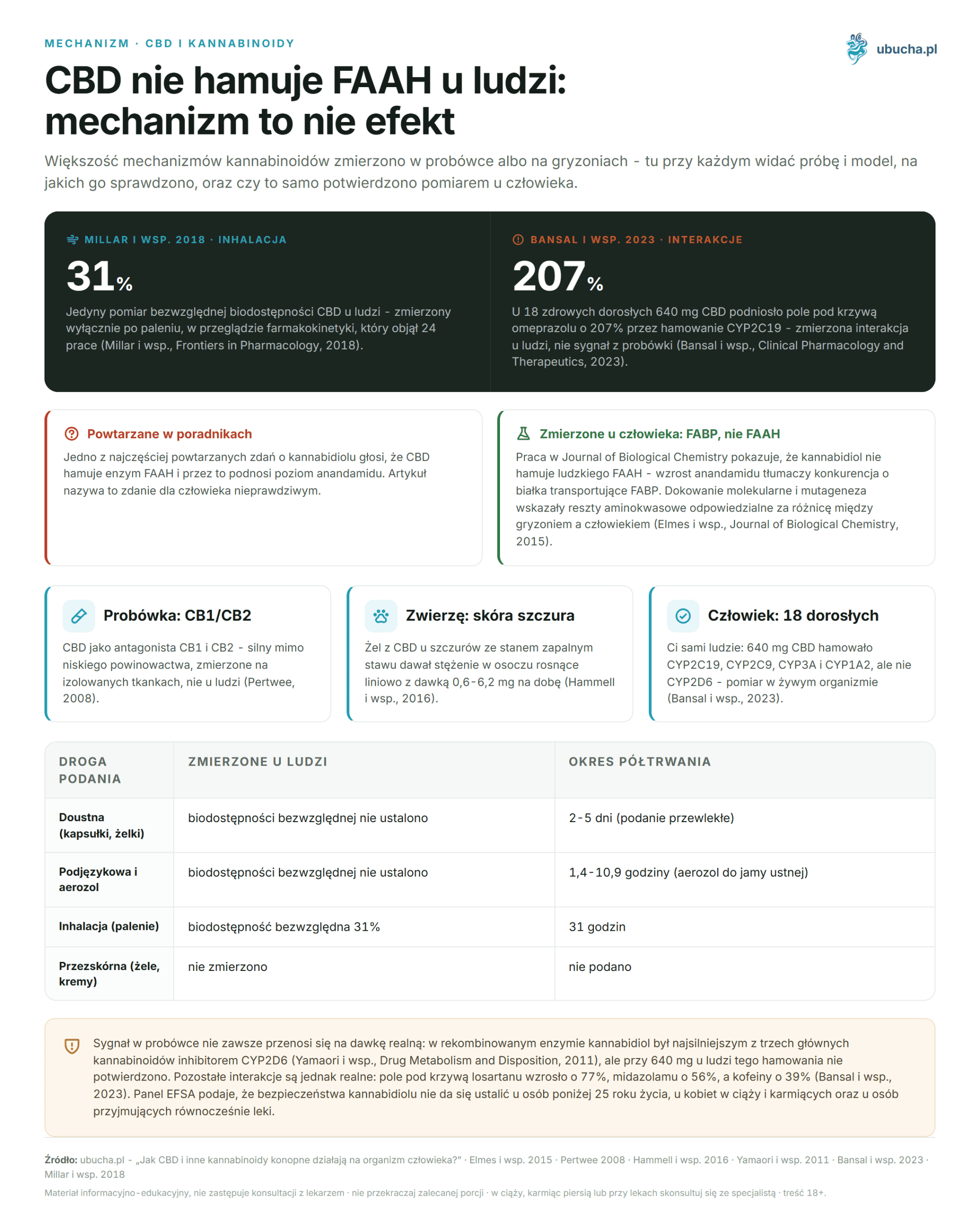
No. This is one of the most often repeated statements about cannabidiol and is false for humans. A study published in the Journal of Biological Chemistry (Elmes et al., 2015) states clearly that unlike the rodent enzyme, cannabidiol does not inhibit human FAAH activity, and FAAH inhibition cannot explain the observed increase in anandamide levels after CBD intake in humans.
The authors propose a different mechanism. Cannabidiol and THC bind intracellular fatty acid-binding proteins, FABP, which normally deliver anandamide to the degrading enzyme. By occupying these proteins, both cannabinoids inhibit anandamide uptake by the cell and its breakdown. Competition for the transporter, not enzyme blockade, explains the elevated endocannabinoid levels reported after plant cannabinoid intake.
The species difference is not a trivial editorial detail. The same study identified, by molecular docking and targeted mutagenesis, specific amino acid residues in the enzyme’s active site responsible for cannabidiol sensitivity in rodents and its absence in humans. Results obtained in rats or mice do not automatically translate to humans.
Checking this mechanism at the source showed how far a convenient sentence can travel. We analyze the same problem from another angle in the text on how CBD works, where the starting point is a list of described molecular targets of this molecule.
How does CBD act on receptors and what distinguishes it from THC?
Cannabidiol does not activate the CB1 receptor like THC does, and therefore does not cause psychoactive effects. A pharmacology review of three phytocannabinoids describes CBD as a compound with unexpectedly high potency as an antagonist of CB1 and CB2 receptors, despite relatively low binding affinity (Pertwee, British Journal of Pharmacology, 2008). These measurements concern isolated cells and tissues, not humans.
A second mechanism is described as negative allosteric modulation. In HEK 293A cells transfected with CB1 receptor and in a cell line modeling striatal neurons, cannabidiol reduced the efficacy and potency of 2-arachidonoylglycerol and THC and prevented receptor internalization (Laprairie et al., British Journal of Pharmacology, 2015). This is cell culture. This is the source of the popular belief that CBD dampens THC effects, but this study does not provide human comparative data.
The most cautious picture comes from a systematic review of cannabidiol’s molecular targets. The authors counted over 65 described targets in the literature and noted that some effects appear only at concentrations difficult to achieve in the body, and many associations were shown correlatively without causal proof. Their conclusion is stronger than usually cited: cannabidiol probably does not act in neurological diseases through modulation of the endocannabinoid system (Ibeas Bih et al., Neurotherapeutics, 2015).
How is CBD absorbed orally and sublingually?
It is unknown because no one has measured it in humans. A systematic review of cannabidiol pharmacokinetics in humans covered 24 studies and found that absolute bioavailability was determined only after smoking, where it was 31%. No other administration route has been studied this way, despite intravenous preparations being available (Millar et al., Frontiers in Pharmacology, 2018).
This matters for tables circulating online. Values around a few percent for capsules and around a dozen percent for sublingual drops do not come from human measurements. The introduction of the review itself cites a 13-19% range referencing a 2002 animal study. Absolute bioavailability requires comparison with intravenous administration of the same substance; without such a reference, only blood concentration after a given preparation can be reported.
Well documented is the role of fat in a meal. In eight adults with refractory epilepsy, the same 99% pure cannabidiol capsule taken after a high-fat meal gave a maximum concentration on average 14 times higher and an area under the curve 4 times greater than fasting (Birnbaum et al., Epilepsia, 2019). Eight people is a small sample, but this is a human measurement, not an estimate.
What happens to the swallowed dose on the way to circulation is described in the text about why the first-pass effect consumes most of the portion.
How does inhaled and topical CBD work?
Inhalation is the only administration route with directly measured absolute bioavailability in humans, at 31%. The same review gives a half-life of 31 hours and faster time to maximum concentration than oral routes (Millar et al., Frontiers in Pharmacology, 2018). The mechanism is simple: aerosol passes through lung alveoli directly into circulation, bypassing first-pass liver metabolism.
Topical administration is the opposite of the widespread claim of no absorption. In a rat model of knee joint inflammation, cannabidiol gel applied for four days produced plasma concentrations increasing linearly with dose in the range 0.6-6.2 mg per day, and the authors list stable plasma levels as an advantage of this route (Hammell et al., European Journal of Pain, 2016). This study concerns rats, so it does not answer the question about creams bought in drugstores, but it cannot be cited as proof that nothing passes through the skin.
A fair summary is: no measurement for cosmetics applied to human skin is provided by this study or the pharmacokinetic review covering 24 human studies, and the available linear relationship comes from animals and concerns a gel with a specific composition.
| Administration Route | What Was Measured in Humans | Half-Life | Measurement Source |
|---|---|---|---|
| Oral (capsules, gummies) | Absolute bioavailability not established | 2-5 days with chronic dosing | Review of 24 human studies (Millar 2018) |
| Sublingual and oral aerosol | Absolute bioavailability not established | 1.4-10.9 hours | Same review |
| Inhalation (smoking, vaporizing) | Bioavailability 31% | 31 hours | Only absolute measurement in humans |
| Transdermal (gels, creams) | Not measured | Not reported | Linear plasma increase in rats (Hammell 2016) |
How is CBD metabolized and which drugs interact with it?
Cannabidiol is metabolized in the liver by cytochrome P450 isoenzymes, and the extent of this in humans has been directly measured. Eighteen healthy adults received in a crossover design a cookie with extract containing 640 mg CBD and 20 mg THC, followed half an hour later by a probe drug cocktail. The extract inhibited CYP2C19 more strongly than CYP2C9, CYP3A, and CYP1A2, but did not inhibit CYP2D6 (Bansal et al., Clinical Pharmacology and Therapeutics, 2023).
This last information is important because CYP2D6 appears on risk lists in guides. The basis is a study where cannabidiol was the strongest of three main cannabinoids inhibiting this enzyme, with an inhibition constant of 1.16-2.69 micromolar (Yamaori et al., Drug Metabolism and Disposition, 2011). The catch is that recombinant enzyme and liver microsomes were used, i.e., in vitro. The in vitro signal did not translate to human measurement at 640 mg.
Measured interaction magnitudes from human studies are concrete: the area under the curve of omeprazole increased by 207%, losartan by 77%, midazolam by 56%, and caffeine by 39%. A review of adverse events and interactions adds that cannabidiol is both a substrate and inhibitor of these enzymes and P-glycoprotein, so it appears on both sides of interactions (Brown and Winterstein, Journal of Clinical Medicine, 2019).
The best documented clinical interaction concerns clobazam. In an open-label safety study of 39 adults and 42 children, increasing cannabidiol dose was associated with increased levels of the active metabolite N-desmethylclobazam and decreased clobazam levels, with drowsiness more frequent at higher metabolite concentrations (Gaston et al., Epilepsia, 2017). Abnormal liver test results were noted in people taking valproate simultaneously.
How long does CBD stay in the body and does it show on tests?
Half-life depends on administration route and whether the dose was single. The pharmacokinetic review gives 1.4-10.9 hours after oral aerosol, 2-5 days after chronic oral dosing, 24 hours after intravenous administration, and 31 hours after smoking (Millar et al., Frontiers in Pharmacology, 2018). The range is so wide that a single number without route means nothing.
This leads to a practical note on effect assessment. With half-life measured in days, concentration stabilizes at a steady level only after many days of regular intake, so assessment after one or two doses reflects the accumulation phase, not the target effect. The popular “7-10 days to steady state” figure is not given in the cited review, so it is better not to repeat it as established fact.
Drug tests detect THC-COOH, a THC metabolite, not cannabidiol. This was measured directly. Six healthy adults took 100 mg pure CBD orally and by inhalation in a crossover design, with urine collected for five days. After pure cannabidiol, one of 218 samples was positive in a screening test at the lowest threshold, but none exceeded the confirmation threshold (Spindle et al., Journal of Analytical Toxicology, 2020).
Plant material rich in CBD gave different results. After inhaling flower containing 100 mg CBD and 3.7 mg THC, positive results appeared in both studies: in a larger study of 18 people, six samples from three participants exceeded the confirmation threshold (Sholler et al., Journal of Analytical Toxicology, 2022). Pure cannabidiol does not affect tests; products with trace THC can.
Does CBD cross into the brain, placenta, and breast milk?
Cannabidiol is highly lipophilic, so it crosses biological barriers. An EFSA panel update on nutrition and novel foods states the substance crosses the placenta and accumulates systemically, with prenatal exposure linked to long-lasting and sex-dependent neurodevelopmental effects (EFSA Journal, 2026).
Breast milk was directly studied. Fifty breastfeeding women reporting cannabis use provided 54 milk samples, in which four cannabinoids were measured by liquid chromatography-mass spectrometry. THC was detected in 34 samples (63%), even about six days after last use, with a median of 9.47 ng/ml. Cannabidiol or the 11-hydroxy-THC metabolite was found in five samples, with cannabidiol concentrations ranging from 1.32 to 8.56 ng/ml (Bertrand et al., Pediatrics, 2018).
Two points must be honestly made about this study. First, it concerns women using cannabis, not people taking cannabidiol-only preparations, so it does not measure CBD transfer from oil. Second, detection in milk is not the same as assessing effects on the child, and no such assessment is in this study.
The conclusion for pregnant and breastfeeding people requires no further studies. The cited EFSA panel states clearly that CBD safety cannot be established in people under 25 years old, pregnant or breastfeeding women, and those taking medications. The inability to establish safety is a stronger reason than any number.
How do CBG, CBN, and CBC differ from CBD?
Each of these compounds has a different described molecular target, but they mainly differ in the material on which they were studied. For all three, the mechanism description comes from animal tissues or cell cultures. This difference weighs more than receptor names themselves because translating such results to humans is the step that most often fails in cannabinoid texts.
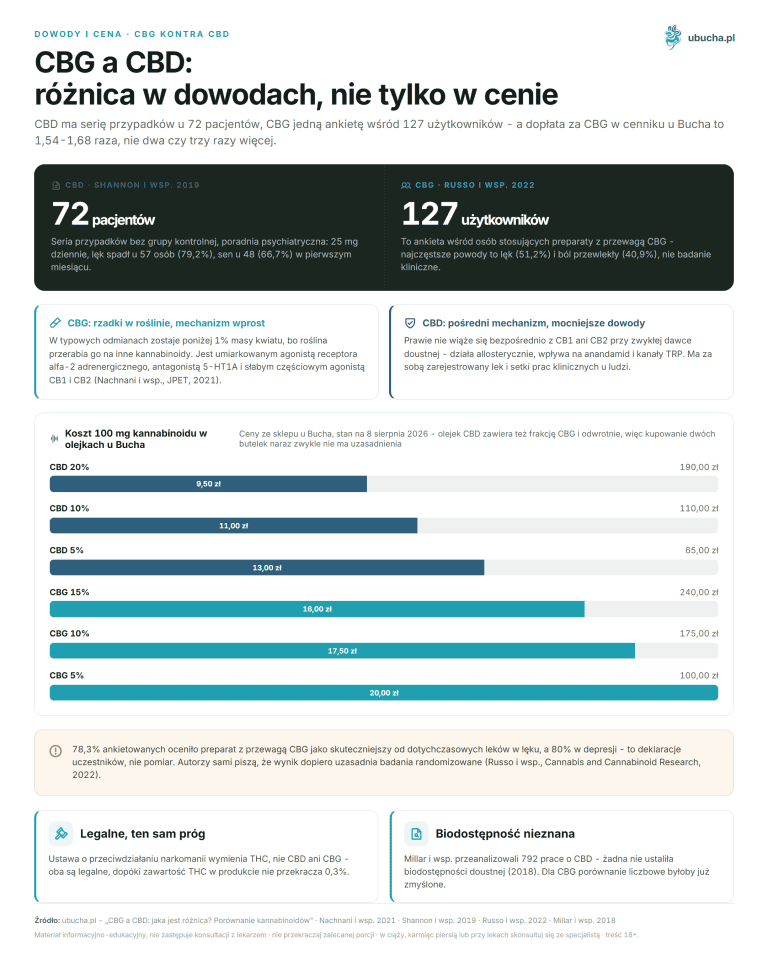
Cannabigerol was studied on mouse brain membranes and isolated mouse vas deferens. It was a strong agonist of alpha-2 adrenergic receptors, a moderate antagonist of 5-HT1A receptor, and behaved as a competitive antagonist at CB1 at 10 micromolar concentration (Cascio et al., British Journal of Pharmacology, 2010). Describing CBG as a partial CB1 agonist reverses the direction given by this study.
The reputation of cannabinol as a sleep aid lacks support. A narrative review searched literature and found no clinical study assessing CBN effects on sleep by polysomnography or validated questionnaires; available studies are mainly from the 1970s and 1980s, have small samples, and the author ends with a recommendation of skepticism toward manufacturer claims (Corroon, Cannabis and Cannabinoid Research, 2021).
Cannabichromene was studied in mouse neural stem cell cultures, where it increased survival and inhibited differentiation into astroglia (Shinjyo and Di Marzo, Neurochemistry International, 2013). This is cell culture, not neurogenesis measurement in a living animal hippocampus.
What was shown for THCV in people with diabetes?
Tetrahydrocannabivarin has the strongest evidence among the lesser-known cannabinoids here, because of a randomized, blinded, placebo-controlled trial. A 2008 pharmacology review described it as a strong partial CB2 agonist in vitro, and as a CB1 antagonist in tissues, behaving as a CB1 antagonist at low doses and agonist at higher doses in animals (Pertwee, British Journal of Pharmacology, 2008).
Human measurement comes from a pilot study. Sixty-two patients with type 2 diabetes not treated with insulin were randomized into five arms for 13 weeks, double-blind and placebo-controlled. THCV at 5 mg twice daily lowered fasting glucose by 1.2 mmol/l versus placebo and improved beta-cell function index, while the primary endpoint, HDL cholesterol concentration, did not change (Jadoon et al., Diabetes Care, 2016).
This distinction determines the result’s weight. The effect concerns a secondary endpoint in a study described by the authors as pilot, and combined cannabidiol and THCV preparations showed no significant effect on any assessed endpoint in this trial.
| Cannabinoid | Described Molecular Target | What Was Measured On | Implications for Humans |
|---|---|---|---|
| CBD | Over 65 targets described in literature | Cell lines and isolated tissues | Some effects only at concentrations hard to achieve |
| CBG | Alpha-2 agonist, 5-HT1A and CB1 antagonist | Mouse brain membranes, mouse vas deferens | Animal tissue result, no clinical translation |
| CBN | Weak CB1 binding | Review of eight human studies | Review found no evidence for sleep effect |
| CBC | Neural stem cell survival | Mouse cell culture | Cell culture result, not organism |
| THCV | CB1 antagonist in tissues, agonist at higher doses | Tissues and animals, plus RCT in 62 patients | Fasting glucose reduction in pilot study |
What is the entourage effect and how do terpenes work?
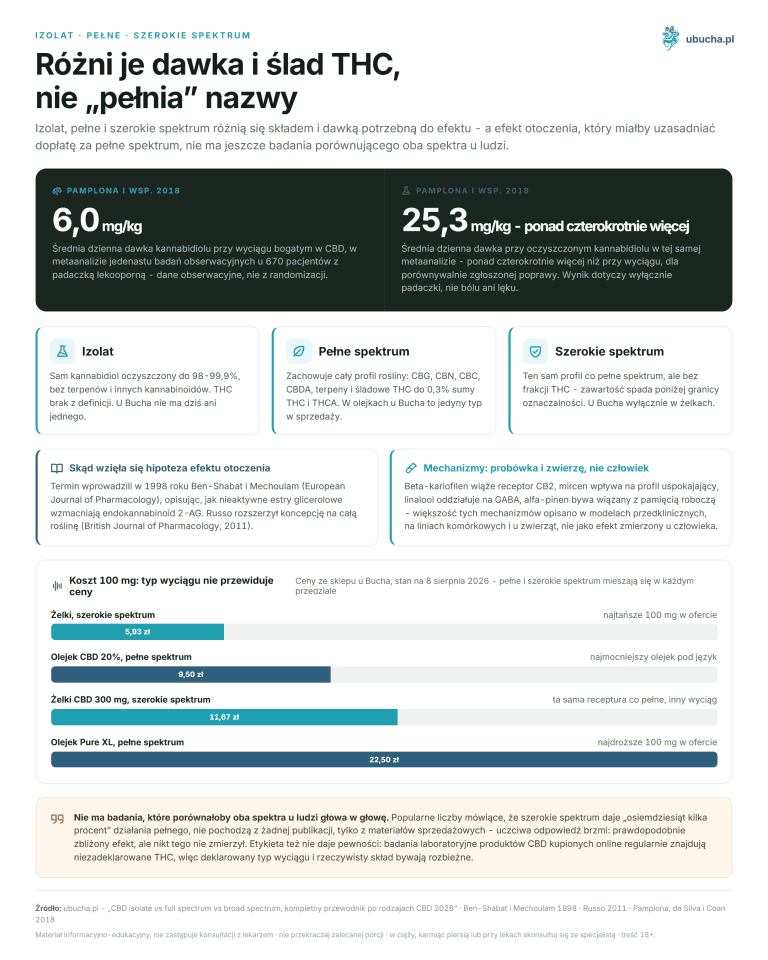
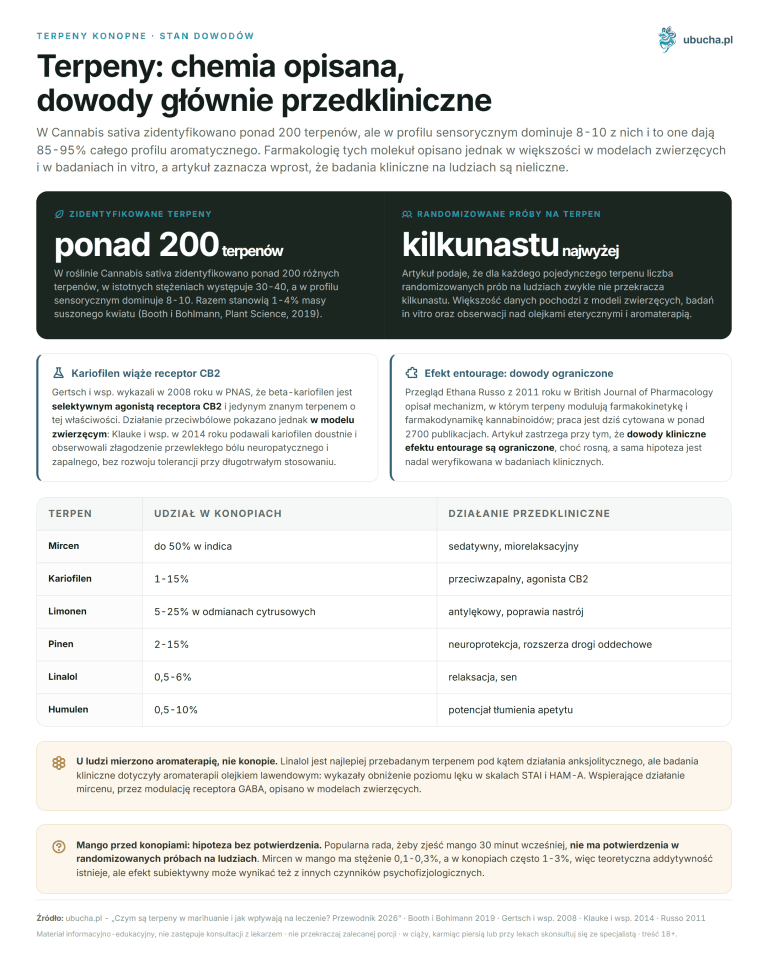
The entourage effect is a hypothesis name, not a measured quantity. The most cited paper on this topic formulates it conditionally: it states that the argument for synergy in cannabis is currently strong enough to suggest that a single molecule is unlikely to match the whole plant’s potential (Russo, Frontiers in Plant Science, 2018). This is a research direction proposal, not a product comparison result.
One component has a solid measurement. Beta-caryophyllene selectively binds CB2 receptor with a 155 nanomolar affinity and acts as its functional agonist, shown in binding studies, human monocytes, and a mouse inflammation model where the effect disappeared in CB2 knockout animals (Gertsch et al., PNAS, 2008).
Terpenes have a problem unmentioned in guides. Analysis of composition changes during production stages shows losses start at drying, increase during decarboxylation, and monoterpenes evaporate first, making finished medical preparations terpene-poor compared to the source plant. The authors call terms like “whole plant” and “full spectrum” misleading, and common patient materials’ terpene boiling point tables are incorrect data (Eyal et al., Cannabis and Cannabinoid Research, 2023).
It is worth knowing the most often cited experimental evidence for extract superiority over isolate. It is a 2015 study titled about overcoming cannabidiol’s bell-shaped dose-response curve by using enriched extract (Gallily et al., Pharmacology & Pharmacy, 2015). The identifier resolves correctly, but the study is not indexed in Europe PMC, and the DOI registry lacks its abstract, so its methods and results remain unchecked. As a basis for product choice, such evidence weighs little.
What is known about CBD safety and side effects?
The most commonly reported adverse effects of cannabidiol are fatigue, diarrhea, and changes in appetite and weight, and its safety profile compares favorably to drugs used for the same indications (Iffland and Grotenhermen, Cannabis and Cannabinoid Research, 2017). The same review notes that effects on hormonal balance have not been studied.
A review of registration documentation for cannabidiol products reports adverse effects in nearly half of users, dose-dependent; listed are increased aminotransferase activity, sedation, sleep disturbances, and anemia (Brown and Winterstein, Journal of Clinical Medicine, 2019). The liver is the most sensitive point, especially with concurrent medications.
EFSA set a safety threshold by benchmark dose method with an uncertainty factor of 400. The provisional safe dose is 0.0275 mg per kilogram body weight per day, about 2 mg daily for a 70 kg person, and applies only to supplements with at least 98% cannabidiol purity, without nanoparticles. Safety cannot be established in people under 25, pregnant or breastfeeding women, and those taking medications. This is a ceiling not to exceed, not a recommendation.
Addiction potential was studied separately in humans. In a randomized double-blind study, 43 polysubstance users received single doses of cannabidiol at three levels, with alprazolam and dronabinol as comparators. At 750 mg, the “drug liking” rating did not differ from placebo. At higher doses, the difference was statistically significant but did not reach 10 points on the scale, while both comparators exceeded 18 points (Schoedel et al., Epilepsy & Behavior, 2018).
What did the CBD registration study in epilepsy show?
The cannabidiol product centrally authorized in the EU is Epidyolex, approved on September 19, 2019, as adjunctive therapy for seizures in Dravet and Lennox-Gastaut syndromes, combined with clobazam, in patients from two years old, and also for tuberous sclerosis complex epilepsy (European Medicines Agency registry).
The study underlying this registration in Dravet syndrome is worth reading carefully. It included 120 children and young adults randomized to cannabidiol at 20 mg/kg/day or placebo for 14 weeks alongside existing treatment. Median monthly convulsive seizure frequency dropped from 12.4 to 5.9 in the cannabidiol group and from 14.9 to 14.1 in placebo, with an adjusted difference of -22.8 percentage points (95% CI -41.1 to -5.4; p = 0.01).
The most often repeated figure from this study is the one that did not reach statistical significance. A reduction of seizures by at least half was achieved by 43% of cannabidiol patients versus 27% on placebo, but the odds ratio was 2.00 with a confidence interval from 0.93 to 4.30 and p = 0.08 (Devinsky et al., New England Journal of Medicine, 2017). The study was funded by GW Pharmaceuticals, the product’s manufacturer, as stated in the abstract.
The second cannabinoid drug available in Poland, Sativex, is sometimes described as EMA-approved, which is false. In the public medicinal product registry, it is listed under permit number 20802 issued via mutual recognition procedure, not central procedure.
What is known about CBD in anxiety, pain, and insomnia?
Evidence here is much weaker than in epilepsy and varies by indication. A systematic review of cannabidiol use in anxiety disorders covered eight articles: six small randomized studies, one case series, and one case report, with fixed doses from 6 to 400 mg per dose. The authors conclude that studies with standardized dosing approaches are needed (Skelley et al., Journal of the American Pharmacists Association, 2020).
In chronic pain, the picture is even more cautious. A systematic review of randomized studies included 36 papers and 7,217 participants, rated evidence quality as low or very low, and stated that available data neither confirm nor refute claims of cannabinoid efficacy and safety in pain. Benefit was shown only for two subgroups, and 81% of subgroup analyses were negative (Fisher et al., Pain, 2021).
The most cited study on sleep and anxiety is retrospective. A psychiatric clinic record review included 103 adults, with 72 analyzed: anxiety severity decreased in the first month in 57 (79.2%), and sleep quality improved in 48 (66.7%), though sleep results fluctuated over time (Shannon et al., The Permanente Journal, 2019). There was no randomization or placebo group, and the authors note controlled studies are needed.
What is the legal status of CBD in Poland and the European Union?
Cannabidiol is not listed in Polish controlled substance schedules, and the raw material’s legality threshold is defined by industrial hemp. According to Article 4 point 5 of the Act of July 29, 2005 on Counteracting Drug Addiction (consolidated text Dz.U. 2023 item 1939), as amended by the March 24, 2022 act (Dz.U. 2022 item 763), the sum of delta-9-THC and tetrahydrocannabinolic acid must not exceed 0.3% dry weight.
Three details of this definition are often overlooked. The threshold counts the sum of delta-9-THC and THCA, not delta-9-THC alone, which changes lab test results. It applies to flower or fruiting tops from which resin has not been removed. The sum is rounded to one decimal place. The 0.3% value has applied since May 7, 2022; previously it was 0.20%.
The EU threshold has the same value but a different source. It comes from Article 4 paragraph 4 of Regulation (EU) 2021/2115, effective January 1, 2023, concerning varieties eligible for agricultural support. The Polish threshold matches the EU one but does not derive from it. Hexahydrocannabinol remains a controlled substance.
Food is a separate matter. Cannabidiol is not approved as novel food in the EU: the European Commission publishes decisions terminating procedures on its market introduction without listing it in the EU register, with nine such decisions in the first half of 2026 alone (European Commission decision list).
How to choose a CBD product in Polish conditions?
The deciding factor is a certificate of analysis from a laboratory independent of the producer, covering cannabinoid profile and testing for pesticides and heavy metals. Grounds for distrust are measured: in an analysis of 80 unregulated hemp products, delta-9-THC was detected above the limit of quantification in 52, and among 21 labeled THC-free, five had detectable levels (Johnson et al., Drug and Alcohol Dependence, 2022).
This study also explains why a “THC-free” label is not a guarantee of a negative drug test. Consumers buying products without lab testing do not know how much THC they ingest, which affects matters beyond health, from workplace tests to traffic control.
Besides the certificate, consider extract type, carrier, and production date. Full-spectrum contains the full profile with trace THC, broad-spectrum lacks THC, and isolate is pure cannabidiol. Remember the caveat from the terpene evaporation study: “full spectrum” does not mean composition identical to the plant.
Observations from the store show a recurring pattern of questions. First-time buyers ask about concentration; returning customers ask about certificates and terpene content. We collected hemp oils, including variants with cannabigerol, in the oil category.
Summary: what is worth remembering about cannabinoids?
Cannabinoids act on the human body via the endocannabinoid system, but most guides overstate the description compared to measurements. Cannabidiol does not inhibit human FAAH; the increase in anandamide after intake is explained by competition for transport proteins. Absolute bioavailability was measured in humans only after smoking and is 31%; for oral and sublingual routes, no such measurement exists.
Drug interactions are real and measured in humans but do not include all isoforms listed in guide tables: at 640 mg cannabidiol did not inhibit CYP2D6, though it strongly inhibits it in vitro. The entourage effect remains a hypothesis, not a quantified value. For cannabigerol, cannabinol, and cannabichromene, data come from animal tissues or cell cultures.
When choosing a product, the certificate of analysis, extract type, and freshness matter. If you take medications regularly, are pregnant, or breastfeeding, consulting a doctor is more important than any number in this article, as safety cannot be established for these groups today.
Frequently Asked Questions
Can CBD interact with my medications?
Yes. In 18 healthy adults, an extract with 640 mg cannabidiol inhibited CYP2C19, CYP2C9, CYP3A, and CYP1A2, increasing the area under the curve of omeprazole by 207% and midazolam by 56% (Bansal et al., 2023). For ongoing treatment, consult your doctor, especially if you take a drug with a narrow therapeutic index.
Does CBD really inhibit the FAAH enzyme?
Not in humans. A study in the Journal of Biological Chemistry states that unlike the rodent enzyme, cannabidiol does not inhibit human FAAH, and the increase in anandamide after its intake is explained by competition for intracellular fatty acid-binding proteins FABP (Elmes et al., 2015). The rodent enzyme is sensitive to cannabidiol, the human one is not.
How much CBD is absorbed after swallowing oil?
This has not been measured in humans. A review of 24 studies established absolute bioavailability only after smoking, where it was 31%, and no study has done this for oral or sublingual routes (Millar et al., 2018). Values circulating online of a few percent have no human measurement backing them.
Is CBD addictive?
In a double-blind study of 43 polysubstance users, the ‘drug liking’ rating at 750 mg cannabidiol did not differ from placebo, and at higher doses did not reach 10 points on the scale compared to over 18 points for alprazolam and dronabinol (Schoedel et al., 2018).
Does CBD show up on a drug test?
Tests detect THC metabolites, not cannabidiol. After pure cannabidiol, none of 218 urine samples from six people exceeded the confirmation threshold (Spindle et al., 2020). After inhaling flower with trace THC, positive results occurred in three of 18 participants (Sholler et al., 2022).
Is CBD legal in Poland?
Cannabidiol is not listed in controlled substances, and the raw material must comply with the threshold in Article 4 point 5 of the Act on Counteracting Drug Addiction: the sum of delta-9-THC and THCA up to 0.3% dry weight. In the European Union, CBD is not approved as novel food.
This article is for informational and educational purposes and does not constitute medical advice. Before starting cannabis or CBD for therapeutic purposes, consult a doctor, especially if you take other medications, are pregnant, or breastfeeding.
Author: Michał Waluk · Published: 2026-05-04 · Updated: 2026-08-16