
What to Replace Tobacco with in a Joint? Herbs for the Mixture
Mullein and raspberry leaves as a base for a mixture instead of tobacco. How to choose the composition of the mixture, which herbs not to put in rolling paper, and what vaporization offers.
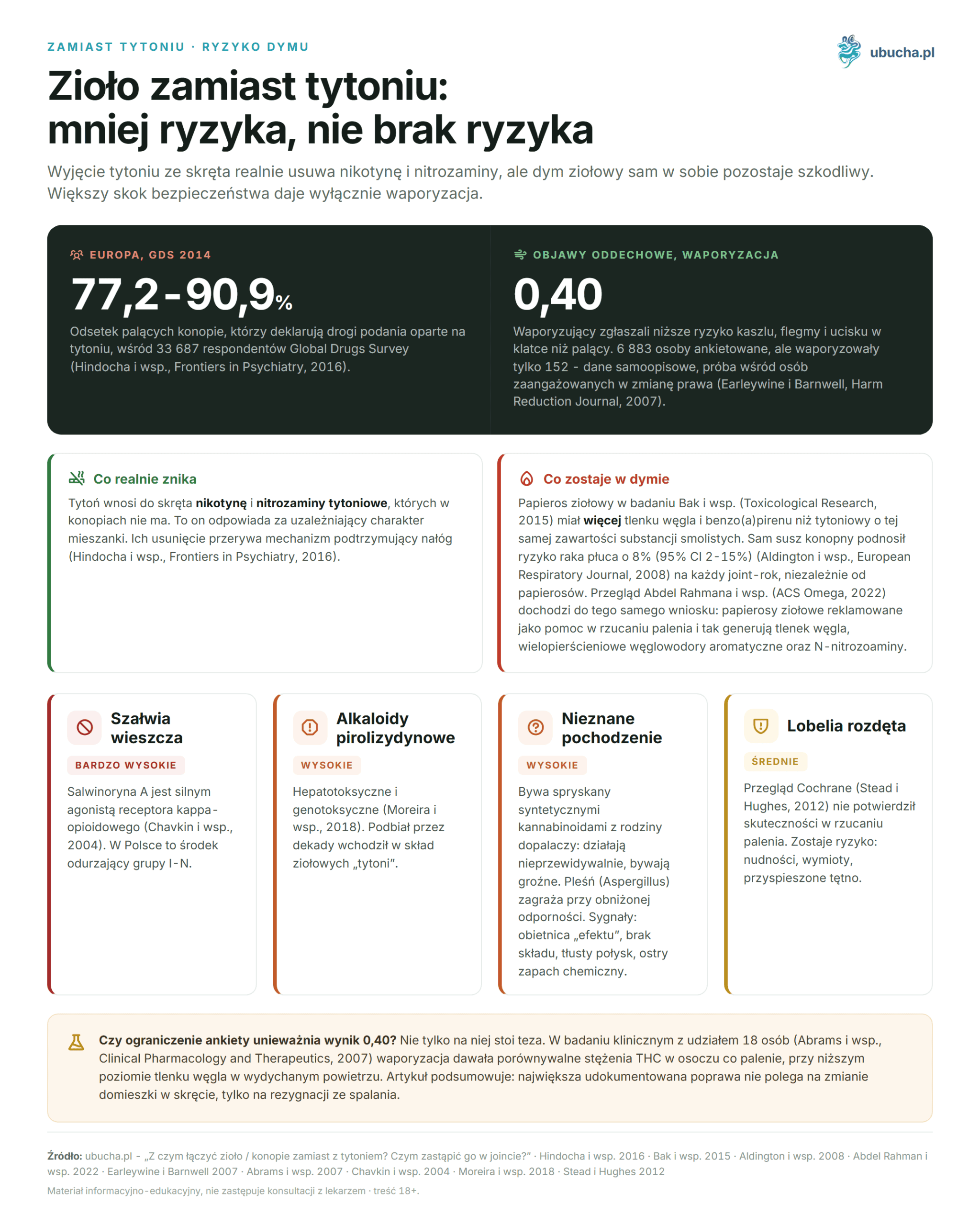
The best bases for a mixture instead of tobacco are mullein and raspberry leaves. This text concerns a mixture with cannabis flower, not a cigarette substitute, which is addressed in a separate comparison. The classic European spliff, which is cannabis flower mixed with tobacco, has been the default way of smoking in this part of the world for decades. In the 2014 Global Drugs Survey, which included 33,687 cannabis smokers, tobacco-based methods were reported by 77.2 to 90.9% of respondents in Europe, while in both Americas, it was from 4.4 to 16.0%. Tobacco adds nicotine and nitrosamines to the joint, which are absent in cannabis. Removing it from the mixture makes sense, but it does not turn smoking into something healthy: burning any plant material produces carbon monoxide, tar substances, and polycyclic aromatic hydrocarbons. From this text, you will learn which herbs are suitable for mixing, which ones are better not to put in rolling paper, and why vaporization is better than any change in the composition of the joint.
KEY INFORMATION
• Tobacco-based methods of consuming cannabis are reported by 77.2-90.9% of smokers in Europe (Hindocha et al., 2016).
• The smoke from herbal cigarettes can be more mutagenic than that from tobacco (Bak et al., 2015).
• Cannabis flower itself also increases the risk of lung cancer (Aldington et al., 2008).
• Vaporization reduces the odds ratio for respiratory symptoms to 0.40 (Earleywine and Barnwell, 2007).
Why is it worth removing tobacco from the joint?
Tobacco adds nicotine and tobacco-specific nitrosamines to the joint, which are absent in cannabis. It is responsible for the addictive nature of the mixture, not the flower. Removing tobacco eliminates this entire layer of risk, although it does not remove the risk associated with the smoke itself.
The scale of the phenomenon is European. In the work of Hindocha et al. (Frontiers in Psychiatry, 2016), based on the 2014 Global Drugs Survey among 33,687 individuals, 65.6% of all respondents reported using tobacco-based methods. In Europe, the percentage ranged from 77.2 to 90.9%, while in both Americas, it dropped to 4.4-16.0%. Poland fits into the European pattern.
This same work shows something more interesting than just the percentage. Individuals using tobacco-free methods had an 80.6% higher odds of reporting that they wanted help in reducing tobacco smoking (OR 1.806), and a 103.9% higher odds of planning such help (OR 2.039). Thus, adding tobacco to the joint cements the nicotine addiction and reduces the willingness to quit.
Tobacco smoke contains over 7,000 chemical compounds, about 70 of which are considered carcinogenic (CDC). Tobacco nitrosamines are formed already during the drying of the leaf, so they cannot be avoided by choosing rolling paper or filters.
There is also a purely practical reason. Every joint with tobacco delivers another dose of nicotine, and from there, it is a short step to a cigarette between sessions. Replacing tobacco with herbs breaks this cycle, and Hindocha’s data show that it leads to a real change in attitude towards quitting. More about the combination of both substances is in the text on why combining cannabis and tobacco is a bad idea.
The first days after this change can be unpleasant, and there is nothing strange about that. If you smoked spliffs daily, your body received regular doses of nicotine and will react to its absence: irritability, difficulty concentrating, and sometimes headaches. Symptoms usually diminish after a few days. This is a good time to consider pharmacological support for quitting nicotine, rather than looking for an herb that will “replace” it in the joint. No herb does this, and none should.
Is the herbal mixture safe?
No. The herbal mixture is less harmful than a tobacco one, but it is not harmless. The ember at the tip of the joint reaches several hundred degrees Celsius and breaks down the plant material into carbon monoxide, tar substances, and polycyclic aromatic hydrocarbons. Herbs do not get any leniency here.
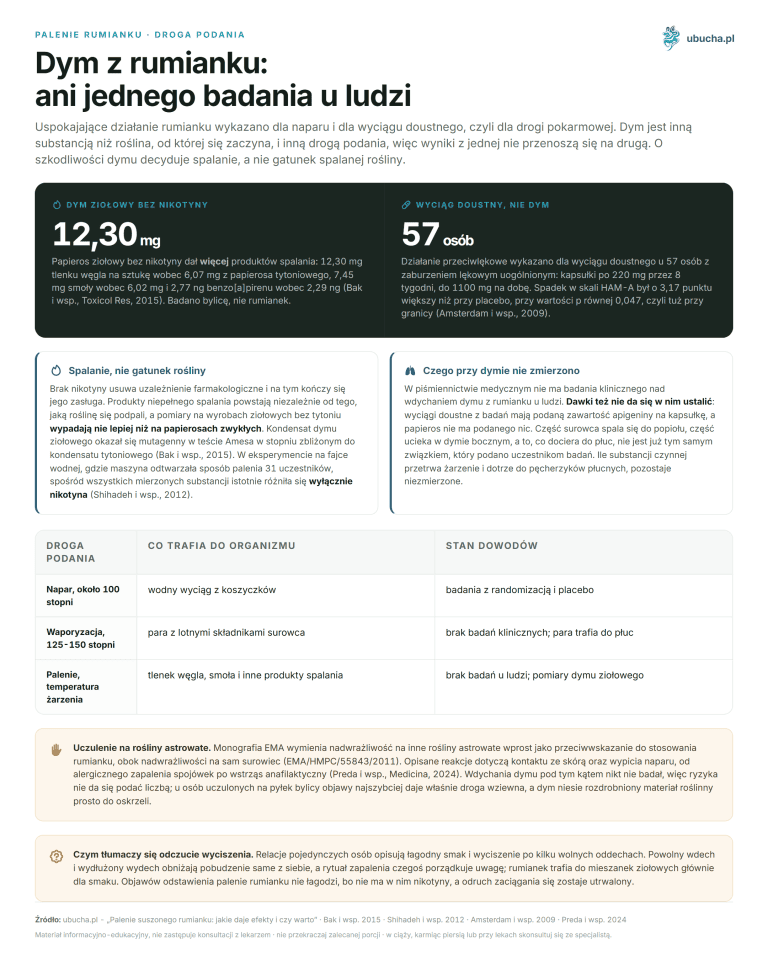
The most uncomfortable data comes from the work of Bak et al. (Toxicological Research, 2015). The team compared the smoke from herbal cigarettes with that from tobacco cigarettes with the same tar content. The herbal cigarette indeed did not contain detectable nicotine or tobacco nitrosamines. However, it contained more carbon monoxide and more benzo(a)pyrene than the tobacco cigarette, more hydroquinone, resorcinol, and catechol, and the condensate of its smoke turned out to be more mutagenic at the same concentration.
The review by Abdel Rahman et al. (ACS Omega, 2022) comes to the same conclusion more broadly. Herbal cigarettes are sold as aids for quitting smoking, and burning plant material still generates carbon monoxide, polycyclic aromatic hydrocarbons, and N-nitrosamines.
Additionally, there is the flower itself. In the study by Aldington et al. (European Respiratory Journal, 2008), which included 79 cases of lung cancer and 324 control individuals in New Zealand, the risk increased by 8% for each joint-year of cannabis smoking (95% CI 2-15) after adjusting for cigarette smoking. In the highest exposure tercile, the relative risk was 5.7, but the confidence interval ranged from 1.5 to 21.6, so the point value itself says little. Cannabis without tobacco also burdens the lungs, and this is a finding that contradicts the popular thesis that all harm from a joint comes from the additive.
The mechanics are explained by the work of Wu, Tashkin et al. (New England Journal of Medicine, 1988). Fifteen men who had been smoking both cannabis and tobacco for years were tested with comparable masses of material. They inhaled about three times more tar substances and had nearly five times greater increases in carboxyhemoglobin than with a cigarette, as they took larger puffs and held their breath four times longer.
How to choose a good composition for a herbal smoking mixture?
A good composition consists of one neutral base that provides volume and does not impose flavor, and at most two additives chosen according to the time of day. The base is usually mullein or raspberry leaves. The more ingredients, the harder it is to say what is responsible for the effect and what causes allergies, and not the better.
Three things disqualify a mixture regardless of proportions. The first is a composition described as a natural mixture of herbs without a percentage share, as such a product cannot be compared to any other. The second is the presence of a plant with systemic action as a base, rather than an additive. The third is an herb from the list of those that should not be put in rolling paper, described below in this text.
Set proportions from the side of the flower, not the herbs. The starting point is half flower and half base, and only then do you shift them towards a larger amount of herbs for savings, or a smaller amount if the mixture starts to go out in the rolling paper. We have gathered ready-made proportion sets, tailored to the time of day, in a table at the end of this text.
Which herbs are suitable for mixing with the flower?
For the base of the mixture, materials with neutral smoke and slow burning are suitable, namely mullein and raspberry leaves. For the aromatic accent, small amounts of chamomile, lavender, lemon balm, or mint are used. However, each of these herbs has a caveat that stores do not mention.
The table includes the ten most frequently mentioned materials. The column on the right is more important than the middle one.
| Herb | Aroma Profile | What to Watch Out For | Vaporization |
|---|---|---|---|
| Mullein (Verbascum thapsus) | Almost tasteless, soft smoke, burns slowly | Hairs from the leaf irritate the throat, sift the material through a sieve | no proven range |
| Raspberry Leaves (Rubus idaeus) | Herbal, slightly astringent, neutral | Cheapest base, but easy to find a moldy batch | no proven range |
| Chamomile (Matricaria chamomilla) | Sweet, floral, delicate | Cross-reactivity in people allergic to asteraceae | 125-150 degrees |
| Lavender (Lavandula angustifolia) | Perfumed, resinous, dominant | Data on anxiolytic action refer to oral capsules, not smoke | 130-150 degrees |
| Lemon Balm (Melissa officinalis) | Lemon, green, mild | May enhance drowsiness after sedative medications | 140-160 degrees |
| Peppermint (Mentha piperita) | Cooling menthol | In larger amounts, it overpowers the terpenes of the flower and irritates the bronchi | 150-170 degrees |
| Hops (Humulus lupulus) | Bitter, resinous, beer-like | Has a sedative effect, do not mix with alcohol or sleeping medications | no proven range |
| Hibiscus and Wild Rose | Sour, fruity | Only as an additive 5-10%, burns unevenly on its own | no proven range |
| Damiana (Turnera diffusa) | Sweet-spicy, pronounced | Inhibits MAO-B in vitro, the genus Turnera contains cyanogenic glycosides | no proven range |
| Wild Lettuce (Lactuca virosa) | Bitter, herbal, heavy | Calming effect shown in mice, not after burning the material | no proven range |
Two items require separate commentary. Damiana is sometimes described as a mild euphoric, but the genus Turnera contains cyanogenic glycosides (Szeweczyk and Zidorn, Journal of Ethnopharmacology, 2014), and the flavonoid isolated from it inhibits monoamine oxidase B in the lab, with an IC50 of 198 nM (Chaurasiya et al., Molecules, 2019). This is not a neutral additive when it comes to antidepressant medications.
Wild lettuce has a reputation as a sedative, but the evidence comes from studies on mice. Lactucarium and lactucopicrin showed analgesic effects at doses of 15 and 30 mg/kg, and in the test of motor activity, they exhibited a calming effect (Wesołowska et al., Journal of Ethnopharmacology, 2006). They were administered directly to animals, not in smoke, and no one has checked how many lactones survive burning. Materials for vaporization and infusions can be found in the herbs category.
The ranges in the last column come from our guide to herb vaporization. A lack of a proven range does not mean that the herbs cannot be vaporized, only that we do not have measurements for them and do not guess.
Which herbs should not be put in rolling paper?
Two groups of plants are excluded: those with strong effects on receptors and those containing pyrrolizidine alkaloids. A third category to avoid is material of unknown origin. Popularity in stores selling smoking herbs is no recommendation, as some are sold precisely for their psychoactive effect.
Wormwood (Salvia divinorum) is the sharpest example. Its salvinorin A is a strong and highly effective kappa-opioid receptor agonist (Chavkin et al., Journal of Pharmacology and Experimental Therapeutics, 2004), which in practice means short, intense dissociative states. In Poland, Salvia divinorum is listed under item 174 of the list of group I-N narcotics, both as a living plant and as dried material or extract; salvinorin A itself is listed under item 35 of the list of group II-P psychotropic substances (regulation of the Minister of Health, consolidated text Dz.U. 2024 poz. 1139). This is not a legal additive.
Inflated lobelia (Lobelia inflata) is included in anti-nicotine mixtures because lobeline acts on nicotinic receptors. The Cochrane review by Stead and Hughes (2012) found no long-term studies confirming the efficacy of lobeline in quitting smoking, and short-term data showed no benefits. Thus, only the risk remains: nausea, vomiting, and accelerated heart rate after exceeding the dose.
A separate trap is pyrrolizidine alkaloids, present in coltsfoot, comfrey, and butterbur. They are hepatotoxic and genotoxic (Moreira et al., International Journal of Molecular Sciences, 2018), and the CONTAM panel of the European Food Safety Authority has determined that their presence in food may pose a health risk, especially for those who frequently drink herbal teas and infusions (EFSA Journal, 2017). Coltsfoot has been part of herbal “tobaccos” for decades, and this is precisely the material you do not want in rolling paper.
Also avoid herbs with dense essential oils, such as thyme or nutmeg. They produce irritating smoke, and nutmeg contains myristicin, which has psychoactive and toxic effects. Do not collect material from roadside areas, as plants accumulate heavy metals from the soil and exhaust fumes.
How to adjust the proportions of herb and cannabis flower?
Start with half and half and adjust the flower content after a few sessions. Proportions change the taste, burning rate, and strength of the effect, but do not change the toxicity of the smoke. Less flower in the joint does not mean less smoke in the lungs if you smoke the same number of joints.
The base consists of an herb with neutral smoke, usually mullein or raspberry leaves, in an amount of 40-60% of the herbal part. The aromatic accent is 10-25%, with the recommendation not to mix more than two accents at a time, as the aroma profile becomes perfumed. The rest of the volume is the flower.
The moisture of the mixture is more important than the composition itself. At around 10-12% moisture, the material burns evenly. Too dry, it spills in the rolling paper and burns violently; too moist, it goes out halfway. Store herbs and flower separately in airtight containers, as they equalize moisture between themselves and lose aroma. You can find accessories for this in the storage category.
From conversations with customers in the store, one question is most frequently repeated: what to add in the evening so that tobacco is not felt. The four combinations below are the answer to this type of request, not a recipe with proven effects.
| Working Name | Composition of the Herbal Part and Flower | When |
|---|---|---|
| Evening Base | 50% flower, 30% chamomile, 20% mullein | Evening |
| Lemon | 50% flower, 30% lemon balm, 20% raspberry leaves | After work |
| Economical | 30% flower, 60% mullein, 10% mint | Day |
| Bitter for Night | 40% flower, 40% hops, 20% lavender | Night |
We have also noticed that people transitioning from tobacco spliffs complain in the first week about faster burning of the joint. This is normal. Tobacco is cut more finely and packed more tightly than most herbs, so the herbal mixture requires tighter rolling and a thicker filter.
Is vaporization better than a herbal spliff?
Yes, and this is a change of a completely different scale than just substituting the mixture. A vaporizer heats the material below the combustion threshold, thus releasing terpenes without producing smoke. Replacing tobacco with herbs removes one component, while vaporization removes the entire process that produces pyrolysis products.
The data comes from two independent sources. In an online survey involving 6,883 people (Earleywine and Barnwell, Harm Reduction Journal, 2007), vaporizer users had an odds ratio of reporting respiratory symptoms equal to 0.40 compared to smokers, after adjusting for age, gender, number of cigarettes, and amount of cannabis. This refers to cough, phlegm production, and chest tightness.
This work has limitations that are worth knowing before treating the number as a certainty. Only 152 of the 6,883 people vaporized, the data is self-reported, and the sample was collected among people engaged in changing drug laws, so they may have underreported symptoms. Therefore, the second source makes a difference: in a clinical study involving 18 people (Abrams et al., Clinical Pharmacology and Therapeutics, 2007), vaporization provided comparable THC concentrations in plasma as smoking, with a reduced level of carbon monoxide in exhaled air.
Herbs can also be vaporized, but at lower temperatures than cannabis flower. For flower, the typical range is 180-210 degrees Celsius, while for lavender or lemon balm, it is rather 130-180. A vaporizer with temperature control allows you to conduct a session on one material and add another later, without rolling anything. We have outlined which material at what temperature in the text about herb vaporization.
However, do not be misled into thinking that vaporization is neutral. It is still inhalation of hot aerosol into the lungs, and there is little research on its long-term safety. It clearly performs better than smoke, but it does not equate to not smoking. At too high a temperature, the device simply starts to burn the material, which is evident from the dark, ashy color of the used material and from throat irritation. If this happens, lower the temperature by 10 degrees.
How to choose a ready-made herbal mixture?
A ready-made mixture saves time and provides a repeatable composition, but it is usually sold as an aromatherapy product, not for smoking, so no one studies its smoke. Before buying it, check the origin of the material and the full list of ingredients in descending order.
There are many brands of tobacco-free mixtures on the European market, most often based on raspberry leaves or mullein, sometimes with damiana. However, the composition is often given in a vague manner, and flavoring with synthetic oils changes what is produced during burning. The declaration of “100% natural” says nothing about pyrolysis products. We have gathered a comparison of herbal cigarettes and ready-made mixtures separately in the text about what to smoke instead of tobacco.
What to look for when choosing:
- Full percentage composition, not just a list of plant names.
- Organic certification as a safeguard against pesticide residues, as the breakdown products after burning are different from those after consumption.
- No synthetic flavors and no propylene glycol.
- Moisture indicated on the packaging, preferably around 10-12%.
- Expiration date, as dried herbs lose terpenes over time.
There is also a risk that is rarely mentioned regarding “herbal” mixtures. Some products sold in this category, especially from unreliable online sources, may be sprayed with synthetic cannabinoids from the family of designer drugs. They look like ordinary dried herbs but act unpredictably and can be dangerous. Warning signs include promises of “effects” on the packaging, lack of composition, a greasy sheen of the material, and an unnaturally intense chemical smell.
Also, check the smell of the material immediately after opening. A musty, cellar note indicates mold, and such material should not be smoked or vaporized, as fungi from the genus Aspergillus can be dangerous for immunocompromised individuals. If you want to avoid the topic of smoking altogether, in the teas category, there are herbal mixtures and hemp teas for brewing.
Who should avoid smoking herbal mixtures?
People with asthma and pollen allergies, as well as pregnant and breastfeeding women, should avoid smoking herbal mixtures. Caution also applies to individuals with liver disease and those taking psychotropic medications, as herbal smoke may either exacerbate symptoms or interact in ways not studied under combustion conditions.
Cross-allergies are the most common practical problem. Chamomile belongs to the aster family, the same family as mugwort and ragweed, so a person with hay fever may react with throat itching and bronchospasm. Lavender, lemon balm, and mint are in the mint family, with a separate allergy profile. Catnip, contrary to what is sometimes read, is also in the mint family.
Drug interactions primarily concern sedative herbs. Lemon balm and hops may enhance the effects of sleeping and anxiolytic medications. Damiana deserves separate caution due to the MAO-B inhibition described earlier. If you are taking anything regularly, ask your pharmacist about a specific plant, not just about “herbs” in general.
Immunocompromised individuals should avoid microbiologically untested material. Mold spores inhaled with smoke go directly to the lung alveoli, and in patients after transplants or undergoing chemotherapy, this can lead to pulmonary aspergillosis. This particular risk cannot be reduced by adjusting proportions or the quality of the rolling paper.
A separate note concerns expectations. Lavender has a reputation as a herbal calming agent, but data on its anxiolytic effects come from oral preparations of oil given in capsules, not from inhaling smoke. The same goes for chamomile and lemon balm: just because an infusion is soothing does not automatically transfer to the burned leaf. If you are looking for a pharmacological effect, an infusion or vaporization will provide it in a repeatable manner, while a joint likely will not.
What does Polish law say about flower, cannabis, and smoking herbs?
Herb of cannabis other than fiber, meaning material in which the sum of delta-9-THC and tetrahydrocannabinolic acid exceeds 0.3% dry weight, is a controlled substance in Poland. Dried fiber cannabis below this threshold and herbs available for free sale remain legal. This text does not concern illegal material.
The basis is Article 4 point 5 and point 37 of the Act on Counteracting Drug Addiction (consolidated text Dz.U. 2023 poz. 1939), as amended by the Act of March 24, 2022, Dz.U. 2022 poz. 763, effective from May 7, 2022. Two things are easy to overlook here: the threshold concerns the plant, not the finished product, and it counts as the sum of delta-9-THC and THCA, rounded to one decimal place. A laboratory reporting only delta-9-THC answers a different question than the law.
Possession, cultivation, and trade in herb above the threshold are prohibited, except for cannabis dispensed in pharmacies on prescription. This path was opened by the Act of July 7, 2017 (Dz.U. 2017 poz. 1458), effective from November 1, 2017. Dried material outside this channel remains illegal regardless of what it is mixed with.
Dried fiber cannabis is usually sold for aromatherapy or as a collector’s item. Herbal mixtures are legal as long as they do not contain substances from the list. Hence the earlier note about wormwood, which violates this condition.
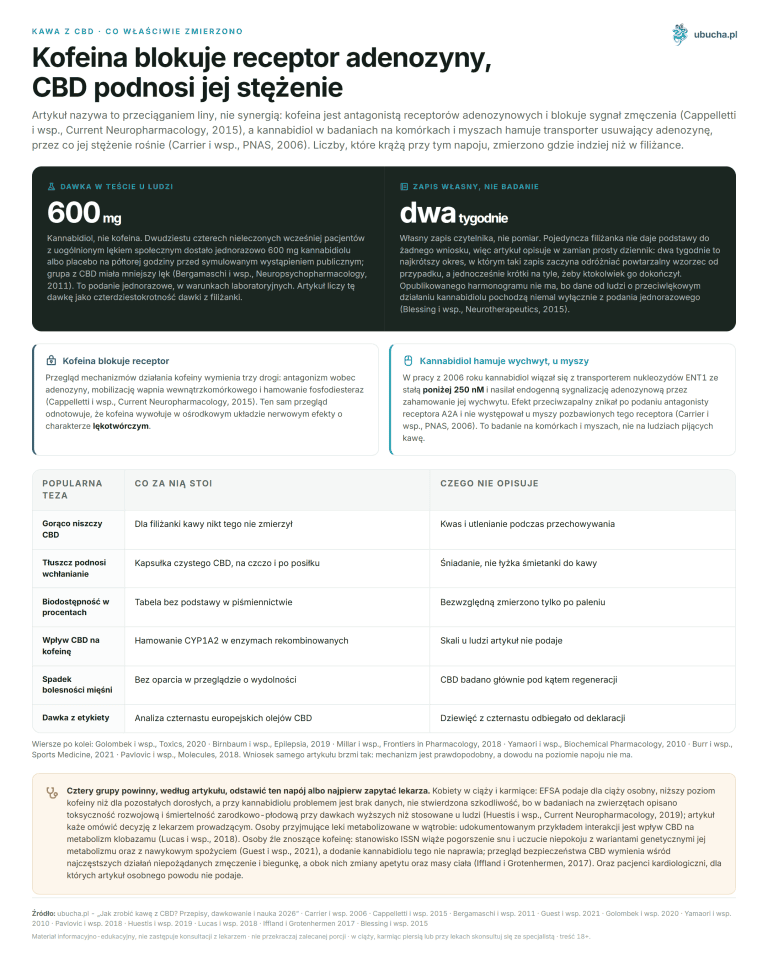
It is worth separating the legal issue from the health issue, as they are two different axes. Allowing a material to be traded is not an assessment of safety, and certainly not an assessment of inhalation safety. Even where such an assessment exists, it concerns a completely different route of administration: the position of the European Food Safety Authority from 2026 sets a temporary safe dose of CBD at 0.0275 mg per kilogram of body weight per day, or about 2 mg for a person weighing 70 kg, and stipulates that safety cannot be established for individuals under 25 years of age, pregnant and breastfeeding women, and those taking medications (EFSA, 2026). These are numbers for a swallowed supplement, not for smoke.
Descriptions on packaging may therefore be formulated according to legal requirements, not for real application. A product described as an aromatherapy product and a herbal mixture described as a product for a fragrance burner go into the same rolling paper, and the manufacturer is not obliged to test what is produced during their burning.
What does this mean in practice?
Removing tobacco from the joint is a real harm reduction. Nicotine and tobacco nitrosamines disappear, along with the mechanism sustaining the addiction. However, herbal smoke itself is not a consolation prize for the lungs and does not deserve the label “healthy”.
Three things are worth remembering. The herbal cigarette in the study by Bak et al. had more carbon monoxide and benzo(a)pyrene than the tobacco one with the same tar content, and the condensate of its smoke was more mutagenic. The cannabis flower itself in the study by Aldington et al. increased the risk of lung cancer by 8% per joint-year regardless of cigarettes. The most documented improvement does not come from changing the additive, but from quitting combustion altogether.
If you stick with a joint, choose mullein or raspberry leaves as a base, add the aromatic accent sparingly, and avoid pharmacologically active materials. If you can take a step further, buy a vaporizer with temperature control and treat the herbal spliff as a transitional stage. You can find flower for vaporization in the cannabis flower category.
It is also worth honestly naming the thing that this type of guide usually remains silent about. The most effective change remains reducing the number of sessions, not optimizing their composition. A joint of mullein smoked five times a day burdens the lungs more than a vaporized session once every few days. Replacing tobacco with herbs is a good first step, as long as it does not become an excuse for smoking more often.
Frequently Asked Questions
Is smoking herbs instead of tobacco healthier?
Only partially. Nicotine and tobacco-specific nitrosamines are eliminated, so the addiction mechanism disappears. Smoke remains. In the study by Bak et al. (Toxicological Research, 2015), the herbal cigarette contained more carbon monoxide and benzo(a)pyrene than the tobacco one with the same tar content, and the condensate of its smoke was more mutagenic.
Which herb works best as a base instead of tobacco?
Mullein and raspberry leaves. Both materials have almost neutral smoke, burn slowly, and do not overpower the terpenes of the cannabis flower. Mullein should be sifted, as the hairs from the leaf can irritate the throat. Raspberry leaves are cheaper, but it’s easier to get a moldy batch, so check the smell upon opening.
Is herbal smoke safe for the lungs?
No. Burning any plant material produces carbon monoxide, tar substances, and polycyclic aromatic hydrocarbons. The review by Abdel Rahman et al. (ACS Omega, 2022) directly indicates that herbal cigarettes sold as aids for quitting smoking still generate the same pyrolysis products as tobacco.
Which herbs should not be put in rolling paper?
Wormwood, which in Poland is a group I-N narcotic, inflated lobelia without proven efficacy, and plants with pyrrolizidine alkaloids: coltsfoot, comfrey, butterbur. Also excluded are materials with dense essential oils, such as thyme or nutmeg, and anything from an unknown source.
Is a vaporizer better than a herbal spliff?
Yes, and by an order of magnitude more than just substituting the mixture. In the survey by Earleywine and Barnwell (Harm Reduction Journal, 2007), vaporizer users had an odds ratio for respiratory symptoms of 0.40. In the study by Abrams et al. (2007), vaporization provided comparable THC concentrations at a lower level of carbon monoxide.
Can I be allergic to herbs in the mixture?
Yes, especially if you have pollen allergies. Chamomile belongs to the aster family, the same family as mugwort and ragweed, so cross-reactivity is common. Lavender, lemon balm, and mint are in the mint family. Initial symptoms include throat itching, tearing, and coughing, sometimes bronchospasm.
What proportions of herb and flower should I choose at the beginning?
Start with half and half and adjust after a few sessions. Dose the neutral base at 40-60% of the herbal part, and the aromatic accent at 10-25%. Remember that proportions change the taste and burning rate, but do not change the toxicity of the smoke itself.
Can I add hemp oil to the herbal mixture?
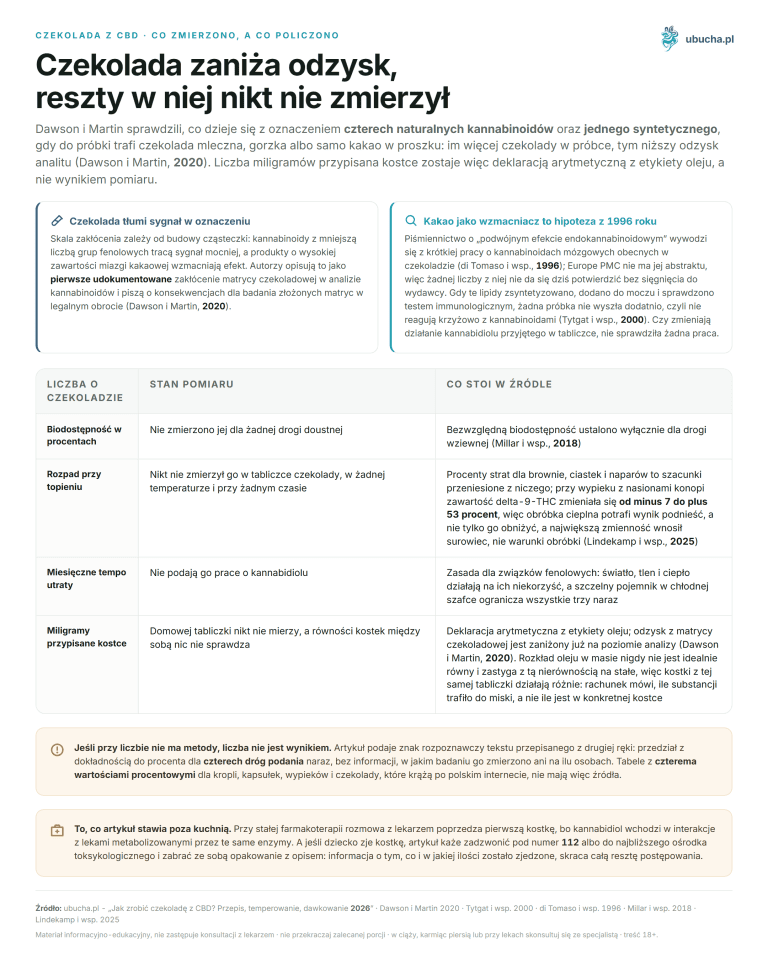
It’s not worth it. The oil contains fats and emulsifiers that break down into irritating aldehydes when heated to ember temperatures. Oil preparations work sublingually. If you want a stronger effect in the joint, increase the flower content, and take the oil separately.
If you are looking for material for vaporization or infusion instead of rolling paper, check the herbs category, where you can find ready-made herbal mixtures for vaporization, hop cone flower, and mullein extract.
This article is for informational and educational purposes and does not constitute medical advice. Before starting to use cannabis or CBD for therapeutic purposes, consult a doctor, especially if you are taking other medications, are pregnant, or breastfeeding.
Author: Michał Waluk · Published: 2026-05-11 · Updated: 2026-08-24