
Raspberry Leaves for Smoking: What Has Not Been Studied and What to Watch Out For
Raspberry leaves for smoking: we found no studies on their smoke. We describe what is known about smoke from herbs, what changes with vaporization, and who the EMA does not recommend this leaf for.
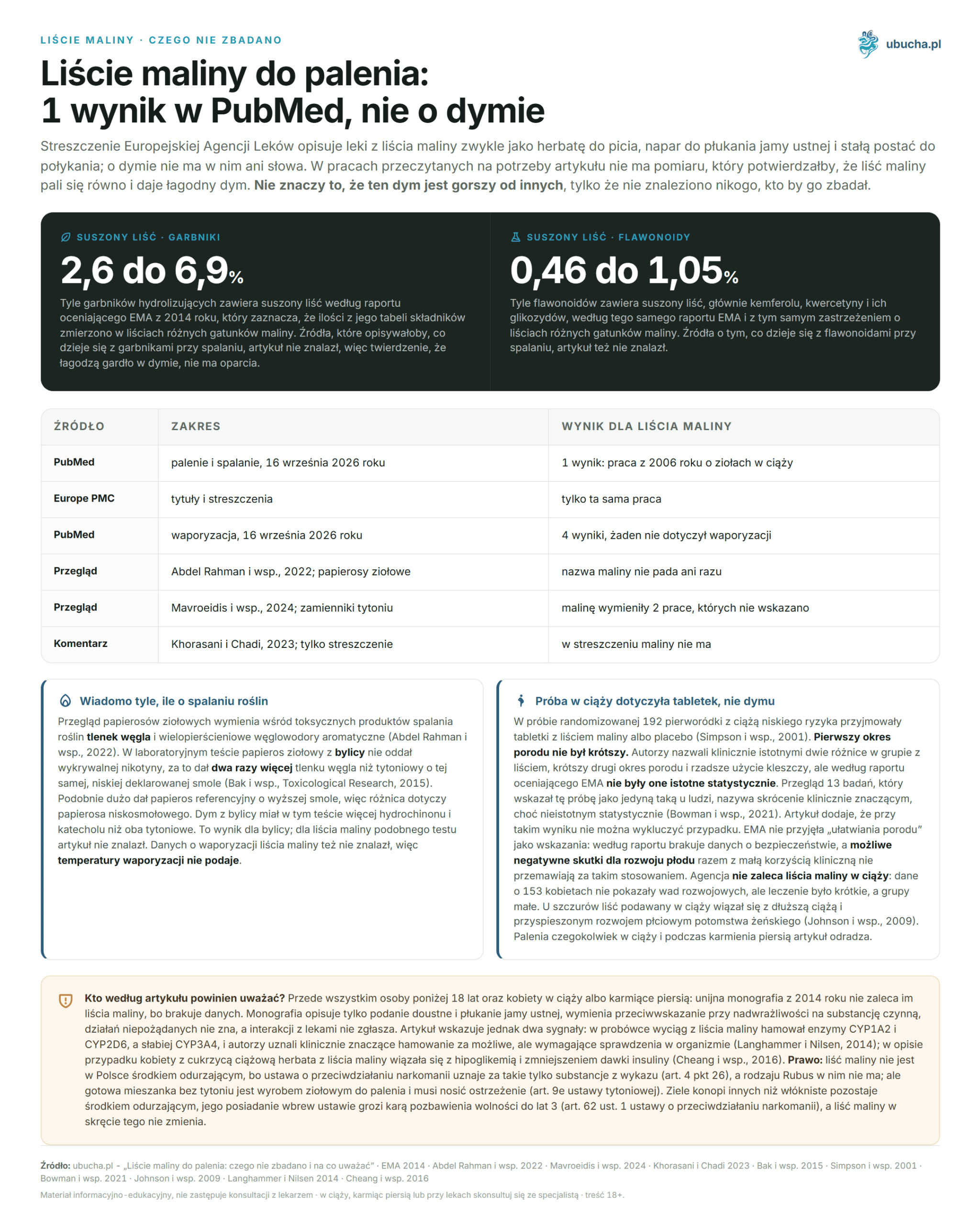
Can raspberry leaves be smoked? It is unknown, as we have not found any studies on their smoke. The European Medicines Agency states that raspberry leaf medicines are usually tea for drinking, an infusion for mouth rinsing, and a solid form for swallowing. Their traditional use has been recognized based on at least 30 years of safe use, in the absence of clinical studies (EMA, summary for raspberry leaf). There is not a word about smoke there. We further describe what is known about smoke from plants and what the only randomized trial with pregnant women showed. We also write about who should be cautious and what the law says. We provide sources for every number.
KEY INFORMATION
• We found no study on raspberry leaf smoke: a query in PubMed yielded 1 result, not about smoke.
• A mugwort cigarette produced twice as much carbon monoxide as a tobacco one with the same low declared tar (Bak et al., 2015).
• The EMA does not recommend raspberry leaf during pregnancy.
• We do not provide vaporization temperatures.
Can raspberry leaves be smoked?
This cannot be assessed, as we have not found measurements of this smoke. A query in PubMed about raspberry leaf with smoking and burning terms yielded one result on September 16, 2026. This is an Australian study from 2006 on herbs in pregnancy.
A search in Europe PMC, in titles and abstracts, also returned only this study. The name raspberry does not appear even once in the review of herbal cigarettes, which discusses their composition and toxic combustion products of plants (Abdel Rahman et al., ACS Omega, 2022).
A review of plants that could replace tobacco in European smoking products states that raspberry was mentioned in 2 studies, but does not specify which. It was not present in the reviewed products (Mavroeidis et al., Plants, 2024). Another query in Europe PMC found a comment on herbal smoking products (Khorasani and Chadi, 2023), but we only read its abstract, and raspberry is not mentioned in it.
The compilation of searches and two reviews leads to one conclusion: in the studies we read, there is no measurement confirming that raspberry leaf burns evenly and produces mild smoke. This does not mean that this smoke is worse than others, only that we have not found anyone who has studied it.
What does raspberry leaf contain and what goes into the smoke?
Among polyphenolic compounds, mainly tannins, but what happens to them in smoke is unknown. Dried leaf contains 2.6 to 6.9% hydrolyzable tannins and 0.46 to 1.05% flavonoids, mainly kaempferol, quercetin, and their glycosides (EMA assessment report, 2014). It also contains small amounts of volatile compounds.
The report notes that the amounts in its ingredient table were measured in leaves of different raspberry species. The European Pharmacopoeia monograph from 2020 requires at least 3% tannins in raspberry leaf calculated as pyrogallol (EMA addendum, 2023).
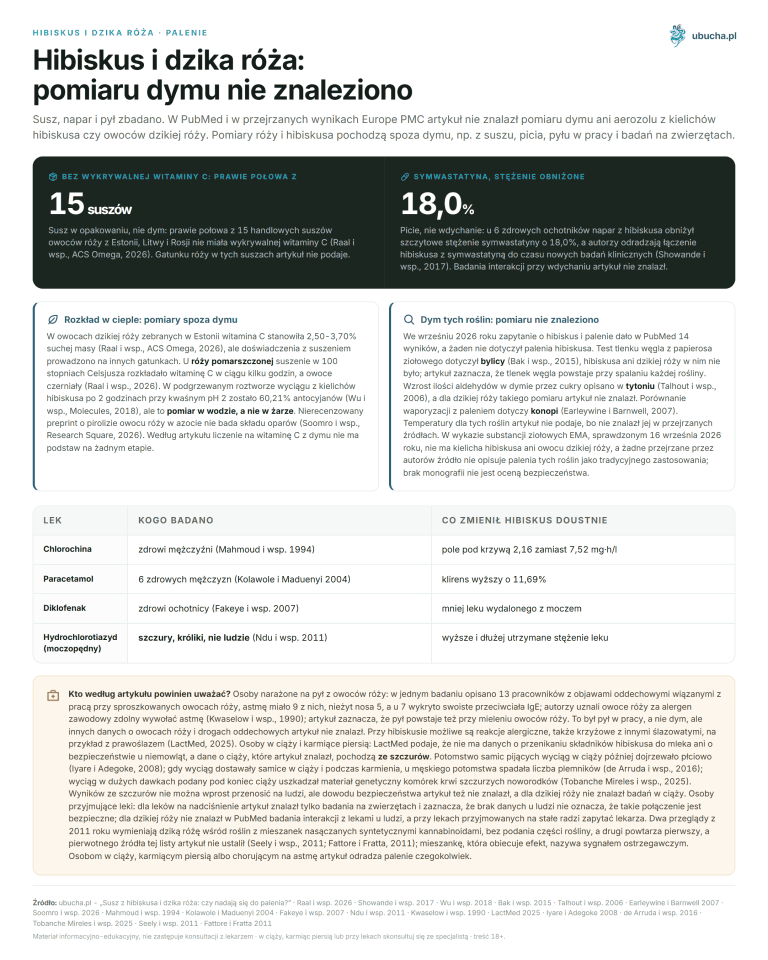
Do tannins from the leaf soothe the throat in smoke? We found no source describing what happens to tannins and flavonoids during combustion, so this claim has no basis. What is known pertains to the combustion of plants in general. The review of herbal cigarettes lists carbon monoxide and polycyclic aromatic hydrocarbons among the toxic combustion products of plants (Abdel Rahman et al., 2022). We write more broadly about smoke from herbs in the text about whether herbal cigarettes are safe.
Do raspberry leaves reduce harm instead of tobacco in a joint?
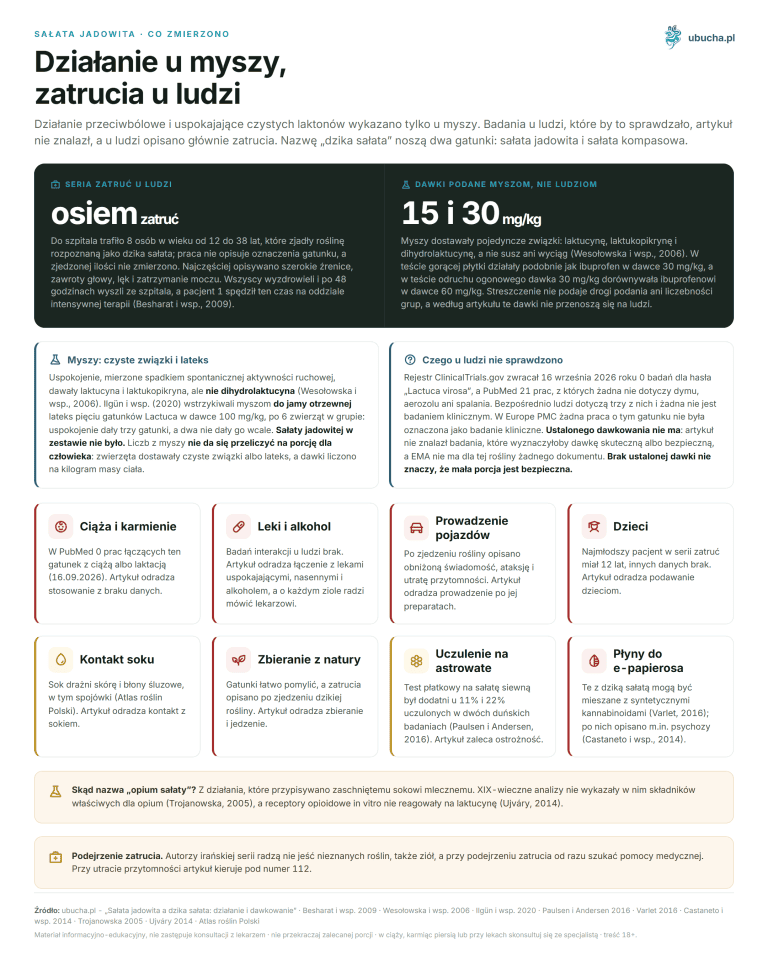
Only partially. In a laboratory test, a herbal cigarette made from mugwort did not yield detectable nicotine, but produced 12.3 mg of carbon monoxide per piece compared to 6.1 mg in a tobacco one with the same declared tar (Bak et al., Toxicological Research, 2015). Similarly, a reference cigarette with higher tar produced 12.5 mg, so the difference pertains to low-tar cigarettes. The smoke from mugwort had more hydroquinone and catechol than both tobacco ones.
This result is for mugwort, and we found no similar test for raspberry leaf. Replacing tobacco with raspberry leaf in a joint with cannabis removes nicotine, but not smoke, and no safer proportions have been established. We write more in the text about what to smoke instead of tobacco.
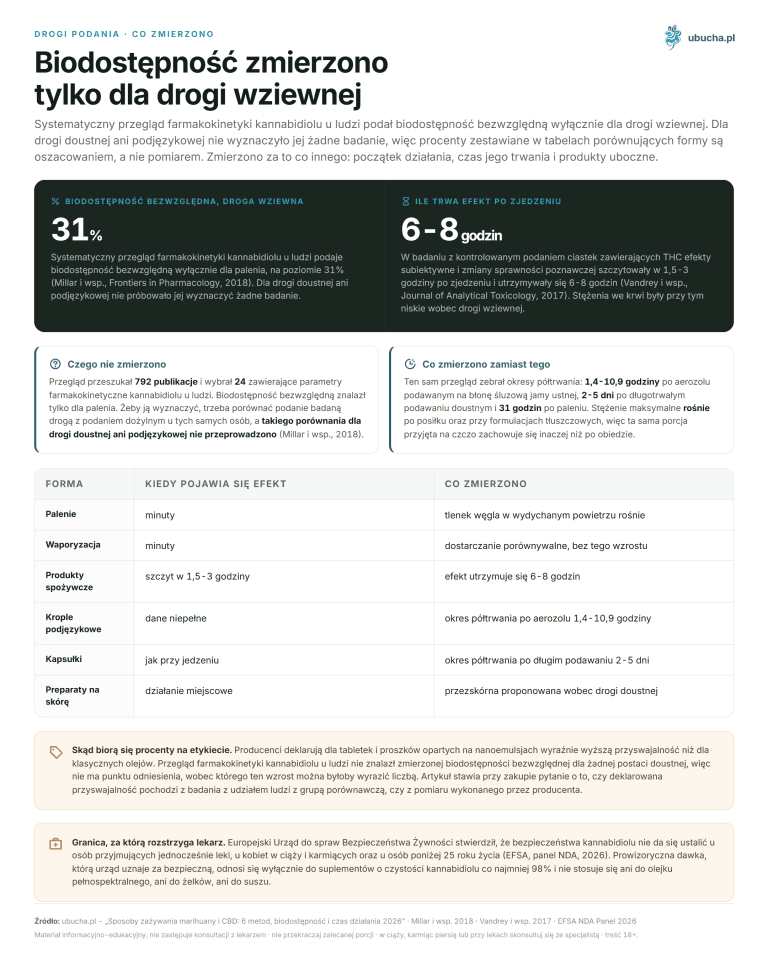
And vaporization? It performs better, although the data pertains to cannabis. In a survey of 6,883 people, mainly vaporizers had a respiratory symptom odds ratio of 0.40 compared to smokers, but there were only 152 of them (Earleywine and Barnwell, 2007). In a study on 18 volunteers, the level of carbon monoxide in exhaled air was lower after vaporization than after smoking (Abrams et al., 2007).
We do not provide vaporization temperatures for raspberry leaf. A query in PubMed about raspberry leaf and vaporization yielded four results on September 16, 2026, about food packaging and leaf physiology. We have gathered ranges for several other herbs in the herb vaporization guide; these are values from device instructions, not measurements. Devices with temperature control are in the vaporizers category, and accessories for grinding herbs in the grinders category.
What is known about raspberry leaf during pregnancy and childbirth?
Not much, and studies during pregnancy concern tablets and infusions, not smoke. In the only randomized trial in humans, 192 primiparas with low-risk pregnancies took raspberry leaf tablets or placebo from the 32nd week. The first stage of labor was not shorter (Simpson et al., 2001). Reported adverse effects in the trial, such as nausea or vomiting, the EMA likely associates with common pregnancy ailments.
In the summary, the authors called two differences in the raspberry leaf group clinically significant: a second stage of labor that was on average 9.59 minutes shorter and less frequent use of forceps, 19.3% versus 30.4%. According to the EMA assessment report from 2014, the differences in the duration of the three stages of labor and in operative deliveries were not statistically significant. A review of 13 studies, which identified this trial as the only one of its kind in humans, calls the shortening of the second stage clinically significant, although not statistically significant (Bowman et al., 2021).
These three sources describe the same trial but emphasize different aspects. Simplifying to ‘raspberry leaf shortens labor by 10 minutes’ loses the lack of statistical significance, and with such a result, one cannot rule out chance.
The EMA did not accept ‘facilitating labor’ as an indication. There is a lack of safety data, and possible negative effects on fetal development along with a small clinical benefit do not support such use according to the report. Data on 153 pregnant women did not show developmental defects, but the treatment was short, and the groups were small, so the Agency does not recommend raspberry leaf during pregnancy. In rats, the leaf administered during pregnancy was associated with longer pregnancies and accelerated female offspring sexual development (Johnson et al., 2009).
We advise against smoking anything during pregnancy and breastfeeding.
Who should be cautious with raspberry leaf?
Primarily individuals under 18 years old and women who are pregnant or breastfeeding. The EU monograph from 2014 does not recommend raspberry leaf for them due to a lack of data. It only describes oral administration and mouth rinsing, and does not mention smoke.
| EMA Monograph (2014) | Establishment |
|---|---|
| Indication: minor menstrual cramps | Dry extract for swallowing |
| Indication: mild inflammation of the oral cavity or throat | Infusion for rinsing |
| Indication: mild diarrhea | Infusion for drinking |
| Contraindication | Hypersensitivity to the active substance |
| Individuals under 18 years | Not recommended, lack of appropriate data |
| Pregnancy and breastfeeding | Not recommended, safety not established |
| Adverse effects | Not known |
| Drug interactions | No reports |
However, caution is justified by two signals. In vitro, raspberry leaf extract inhibited the enzymes CYP1A2 and CYP2D6 at IC50 44 and 47 µg/ml, and CYP3A4 at 81 µg/ml. The authors concluded that clinically significant inhibition is possible at recommended doses, but requires verification in the body (Langhammer and Nilsen, 2014).
The second signal is a case report of a 38-year-old woman with gestational diabetes. After raspberry leaf tea at the 32nd week of pregnancy, she experienced hypoglycemia, and her insulin dosage had to be reduced. The relationship was confirmed by the cessation and reintroduction of the herb (Cheang et al., 2016).
Herbs that are not worth combining with medications are described in the text about which herbs should not be combined.
What does the law say about raspberry leaves for smoking?
Raspberry leaf is not a narcotic in Poland. The law on counteracting drug addiction recognizes only substances from the list (art. 4 point 26), and the genus Rubus or the word ‘raspberry’ is not included (regulation of the Minister of Health, t.j. Dz.U. 2024 poz. 1139 with changes). In the tobacco law, a ready mixture without tobacco is considered a herbal smoking product. Its packaging must carry the warning ‘Smoking this product is harmful to your health’ on 30% of the surface (art. 2 point 50 and art. 9e, t.j. Dz.U. 2024 poz. 1162 with changes).
It is different with cannabis. Cannabis other than fiber, meaning with a sum of delta-9-THC and THCA above 0.3%, is a narcotic. Possession of it contrary to the law carries a penalty of imprisonment of up to 3 years (art. 4 point 37 and art. 62 paragraph 1, t.j. Dz.U. 2023 poz. 1939 with changes). Raspberry leaf in a joint does not change this.
The same law prohibits advertising and promoting narcotics, and violation of the prohibition carries a penalty of up to one year of imprisonment (art. 20 paragraph 1 and art. 68). Therefore, this text describes the risks and evidence, not how to enhance the effect of a joint or where to obtain the herb.
Frequently Asked Questions
Can raspberry leaves be smoked?
It is unknown if it is safe, as we have not found any studies on their smoke. A query in PubMed about raspberry leaf and smoking yielded one result on September 16, 2026, a study on herbs in pregnancy. Burning plants produces carbon monoxide: a mugwort cigarette produced 12.3 mg per piece (Bak et al., 2015).
What is the vaporization temperature of raspberry leaves?
We do not provide it, as we have not found any data. A query in PubMed about raspberry leaf and vaporization yielded four results on September 16, 2026, none of which pertained to vaporization. Data on vaporization pertains to cannabis: in a survey of 6,883 people, vaporizers had a respiratory symptom odds ratio of 0.40 compared to smokers, but there were only 152 of them (Earleywine and Barnwell, 2007).
Are raspberry leaves legal in Poland?
Raspberry leaf is not a narcotic, as Polish law on counteracting drug addiction recognizes only substances from the list (art. 4 point 26), and the genus Rubus is not included. However, a ready-to-smoke mixture without tobacco is considered a herbal smoking product and must carry the warning ‘Smoking this product is harmful to your health’ (art. 9e of the tobacco law).
Are raspberry leaves safe during pregnancy?
This has not been established, and the EMA does not recommend them during pregnancy or breastfeeding. Data on 153 pregnant women did not show developmental defects, but the treatment was short, and the groups were small. In rats, the leaf was associated with longer pregnancies (Johnson et al., 2009). We found no data on smoke, and we advise against smoking anything during pregnancy.
Does raspberry leaf interact with medications?
The EU monograph from 2014 does not report interactions. However, in vitro, raspberry leaf extract inhibited the enzymes CYP1A2 and CYP2D6, and to a lesser extent CYP3A4 (Langhammer and Nilsen, 2014). In a case report of a woman with gestational diabetes, raspberry leaf tea was associated with hypoglycemia and a reduction in insulin dosage (Cheang et al., 2016).
This article is for informational and educational purposes and does not replace consultation with a doctor. If you are pregnant, breastfeeding, taking medications, or have chronic conditions, consult the use of supplements or herbs with a specialist.
Author: Michał Waluk · Published: 2026-09-17 · Updated: 2026-09-17