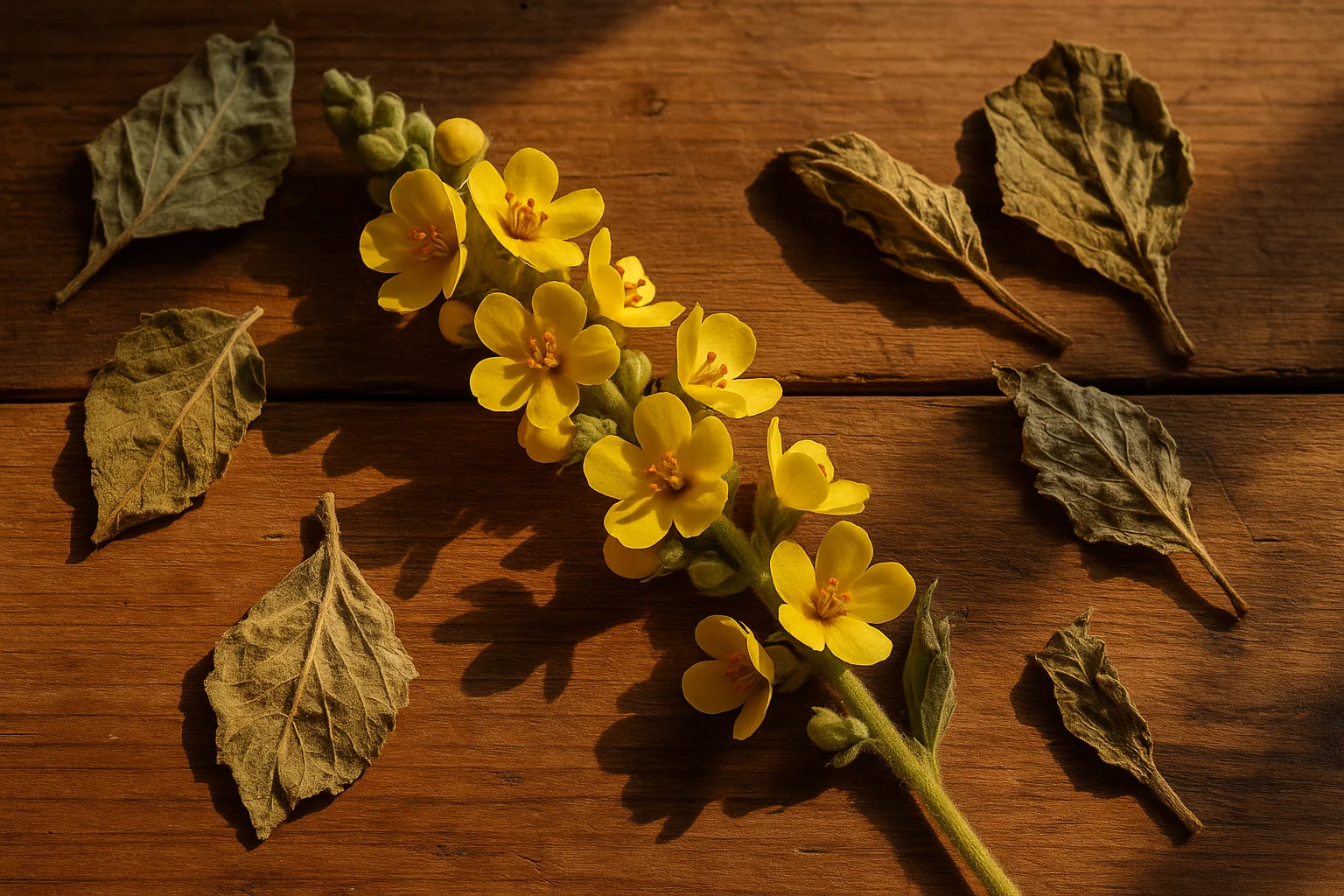

Mullein: for cough and respiratory tract (FAQ)
The EMA monograph covers the flower of mullein and only from the age of 12. We check what studies have shown and how the flower differs from the leaf and the infusion from the extract.
Mullein is one of the most recognizable plants of Polish wastelands, known for its tall flower spikes growing on field margins and along roads, and one of the few of our native herbs that has its own herbal monograph from the European Medicines Agency. The monograph is narrower than most descriptions suggest: it covers only the flower, one indication, and only for individuals over twelve years of age. It has a traditional status, meaning it was granted in the absence of sufficient clinical evidence, not because studies confirmed anything. This article answers the most common questions about mullein and clarifies four things that are incorrectly repeated in the Polish network: the age limit, permissible duration of use, the chemical affiliation of verbascoside, and the actual confirmed range of antiviral action.
KEY INFORMATION
• The EMA/HMPC/611537/2016 monograph covers the FLOWER of mullein, has a traditional use status, and pertains to adolescents, adults, and the elderly.
• Use below 12 years of age has not been established due to lack of data; the frequent information about a four-year limit does not come from this document.
• The indication is: alleviation of sore throat symptoms with dry cough during a cold. There is no expectorant action mentioned.
• Symptoms persisting longer than a week are an indication to visit a doctor; the monograph does not allow for indefinite use.
• Verbascoside is a phenylethanoid glycoside, not a triterpene saponin.
What does the EMA monograph say about mullein?
The EU herbal monograph for the flower of mullein was accepted in the category of traditional use, and the column for established use remained empty. The indication is: a traditional herbal medicinal product used to alleviate sore throat symptoms associated with dry cough and colds.
The only form provided is herbal tea from the crushed raw material. The monograph does not cover tinctures, syrups, or concentrated extracts, so none of these forms can transfer the records from there. The age range is one for the entire document: adolescents, adults, and the elderly, with the use below twelve years of age not established due to lack of sufficient data.
The duration of use is limited. If symptoms persist longer than a week, the monograph advises consulting a doctor, and in cases of shortness of breath, fever, or purulent sputum, do not wait even that long. The statement about traditional use “without time limits,” found in Polish descriptions of mullein, is the opposite of what the document states.
Two things that usually disappear in commercial descriptions are noted separately. In the section on pregnancy and breastfeeding, it states that safety has not been established, so use during this period is not recommended. In the section on drug interactions: none have been reported. The contraindication is hypersensitivity to the raw material.
Which species and which part of the plant is included in the monograph?
The monograph covers three species: common mullein (Verbascum thapsus L.), great mullein (V. densiflorum Bertol., previously V. thapsiforme Schrad.) and woolly mullein (V. phlomoides L.). The genus Verbascum includes hundreds of species, and the others did not enter the document, so the genus name on the packaging is not sufficient.
The part of the plant is defined even more narrowly. The pharmacopoeial definition of the raw material is dried flower limited to the corolla and stamens, thus without the calyx and without the stem. The pharmacopoeia checks the quality of such raw material using a swelling index, which is a physical test measuring how much space the raw material will occupy after swelling in water. This is an indirect way of assessing the mucilage content, not a determination of the percentage of polysaccharides.
The leaf of mullein did not enter the monograph. Recommendations to mix flowers with leaves, common in herbal studies, therefore concern raw material outside the scope of the document, and along with the leaf, the most irritating hairs, which need to be filtered out later, are added. This does not mean that the leaf is harmful, only that it does not have the same assessment behind it.
The same note applies to the form. A concentrated extract, for example in a 10 to 1 ratio, is something different from an infusion of crushed flower, as it changes the proportions between the mucilage fraction and the compounds soluble in the extraction solvent. The monograph describes an infusion and only an infusion.
What have studies on mullein really shown?
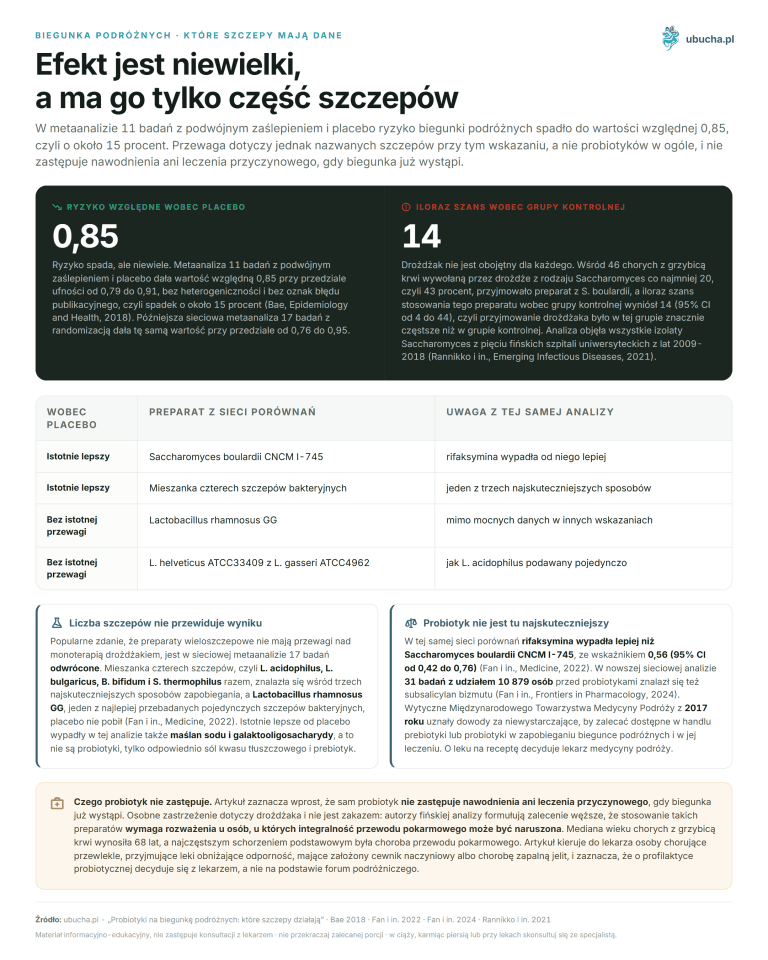
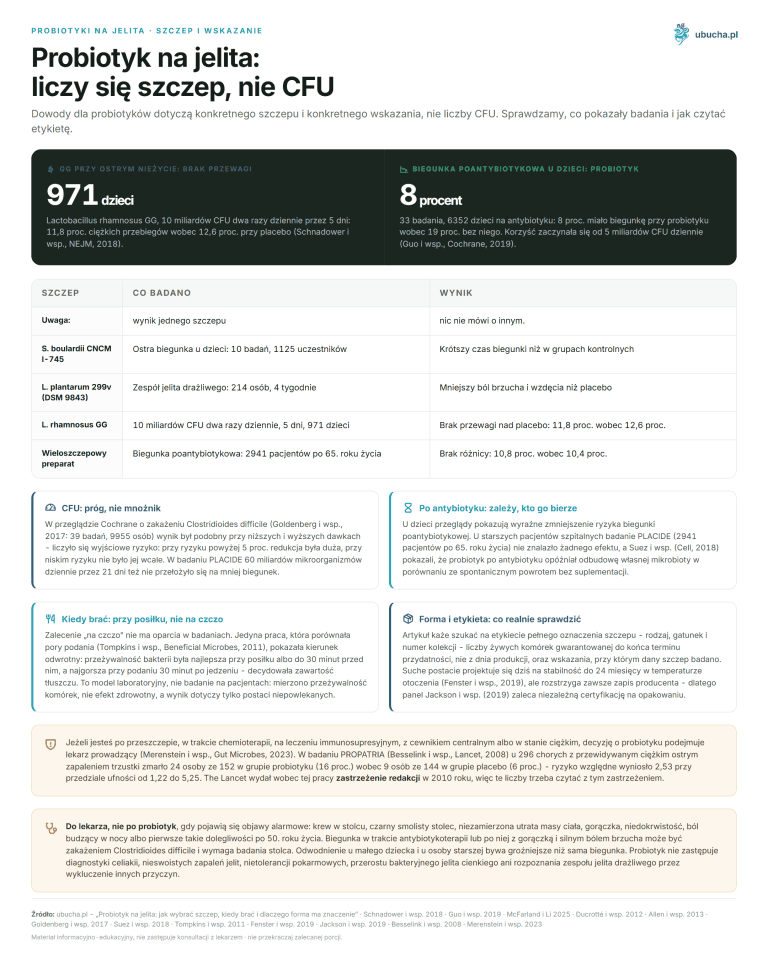
Laboratory works and reviews, without a single clinical trial in humans. The monograph exempts raw materials with traditional status from the obligation to present pharmacodynamic data, and in the case of mullein, there is nothing to present. The table below shows what the claims most often attributed to it stand on.
| Study | What was studied | Model | Result |
|---|---|---|---|
| Rajbhandari 2009, PMC2781767 | methanol extracts from 41 plant species, including Verbascum thapsus | cell cultures: influenza A virus on MDCK cells, HSV-1 on Vero cells | mullein mentioned among extracts with strong activity against influenza A virus; among extracts with strong activity against HSV-1, it is not listed |
| Gupta 2022, PMID 35088467 | literature review on Verbascum thapsus | compilation of experimental studies | composition: flavonoids, iridoids, phenylethanoid and phenylpropanoid glycosides, and saponins; described actions come from experimental studies, not clinical ones |
| Xiao 2022, PMC9212779 | review on acteoside, i.e. verbascoside | pharmacokinetic and pharmacological study | acteoside described as a phenylpropanoid glycoside with anti-inflammatory and antioxidant activity, but with poor bioavailability |
The first row indicates a correction to the statement that returns most often in descriptions of mullein. The study indeed lists it among extracts with strong activity against influenza A virus, but among extracts acting on the herpes virus, it lists other plants. The methanol extract was studied, not the water infusion, so even this result does not transfer to a cup of tea.
The second correction concerns chemistry. Verbascoside, also known as acteoside, is sometimes described as a triterpene saponin. It is not: it is a phenylethanoid glycoside, also described in literature as a phenylpropanoid glycoside, thus a compound from a completely different group than saponins. Mullein contains both, but they are not the same molecules and do not act the same way. Separately, it is worth remembering that acteoside has poor bioavailability after oral administration, which weakens the transfer of results from cell culture to humans.
Why should mullein infusion be strained?
Due to the hairs. The leaves and stems of mullein are covered with dense down, which is a layer of branched hairs that detach from the raw material in hot water and remain in the liquid. Swallowed, they mechanically irritate the throat and can provoke exactly the coughing reflex that the infusion was meant to alleviate.
This is not an allergic reaction, but a physical irritation, and the difference has practical significance. Allergies are avoided, while mechanical irritation is simply filtered out. It is enough to strain the infusion through several layers of gauze or through a very fine sieve; a regular tea strainer allows hairs to pass through without resistance.
The problem is smaller with the flower itself, as the pharmacopoeial raw material is the corolla and stamens, which are the parts with the least hair. It intensifies, however, when leaves are added to the infusion, which is another argument for sticking to the flower.
By the way, one note about cross-allergy. Mullein does not belong to the aster family, so it has no botanical relationship with the pollen of mugwort or chamomile. However, cross-reactivity cannot be excluded solely based on plant systematics, and the monograph lists hypersensitivity to the raw material as a contraindication. The absence of reports of allergy is not the same as proof of its impossibility.
Can mullein be given to children?
The monograph does not provide for this. The statement is clear: use below twelve years of age has not been established due to lack of sufficient data. This is not a statement about harm, but about a gap in knowledge, but for a parent, the consequence is the same.
The four-year limit, repeated in Polish descriptions of mullein, does not come from any regulatory document concerning this plant. It probably migrated from the monographs of other herbs for cough, where such a threshold does indeed occur for some forms. With mullein, there is simply no such threshold.
For children under twelve years of age, the decision is therefore made by the doctor, not by a table from the article. Cough in a small child can be a symptom of conditions requiring quick assessment, and herbal infusion does not distinguish between a common cold and bronchiolitis. Similar age limits are discussed for marshmallow, where the monograph allows younger children, but only for one indication.
The same applies to pregnancy and breastfeeding. Safety has not been established, studies on fertility have not been conducted, and reproductive toxicity tests have not been performed. The conclusion of the monograph is: it is not recommended.
Frequently Asked Questions
What type of cough is mullein for?
For dry cough, and only in conjunction with a sore throat during a cold. This is the indication from the monograph. Descriptions attributing expectorant properties to mullein go beyond the document, although the raw material does contain saponins, to which such action is attributed. This is the difference between the composition of the raw material and the confirmed indication.
Does mullein have antiviral properties?
In cell culture, the methanol extract of Verbascum thapsus showed strong activity against influenza A virus. The same study did not list it among extracts with strong activity against herpes virus. Results from a test tube, obtained from the methanol extract, cannot be translated to an infusion or the course of infection in humans.
Flower or leaf of mullein?
Flower, when it comes to the raw material covered by the monograph. The pharmacopoeial definition is dried flower limited to the corolla and stamens. The leaf is sometimes used in herbal tradition, but it does not have the same assessment, and it adds the most irritating hairs to the infusion, which then need to be filtered out.
How long can you drink mullein infusion?
The monograph sets a limit of one week: if symptoms persist longer, you need to see a doctor. Earlier, regardless of the day count, the appearance of shortness of breath, fever, or purulent sputum requires consultation. The information about using it without time limits is false.
Is verbascoside a saponin?
No. Verbascoside, also referred to in literature as acteoside, is a phenylethanoid glycoside, also described in literature as a phenylpropanoid. Saponins are a separate group of compounds, and mullein contains them concurrently. Confusing these two groups often occurs in descriptions and leads to attributing actions to verbascoside that have been described for saponins.
Can I buy mullein at the store ubucha.pl?
Yes, in the herbs category there is a concentrated extract of Verbascum thapsus in a 10 to 1 ratio, in several weights. However, this is not the raw material from the monograph, which is the crushed flower for brewing, so the dosage and duration of use from there cannot be transferred to this extract. Dried flowers need to be sought separately.
Herbs with similar applications are described in texts about thyme and plantain. In both cases, the evidence base looks similarly thin.
This article is for informational and educational purposes and does not constitute medical advice. Before starting supplementation, consult your doctor, especially if you are taking medications regularly, are pregnant or breastfeeding, or have a chronic illness.
Author: Michał Waluk · Published: 2026-08-09 · Updated: 2026-08-16