
Which herbs should not be combined with medications? A guide
St. John's Wort, ginkgo, licorice, and cannabidiol change the effects of medications. Check which combinations have been confirmed by research and which are unsupported myths.
This guide concerns the combination of herbs with prescription medications, not herbs with each other. If you are looking for the latter, it leads to a separate list of herb-herb interactions. Herbs are not divided into mild and strong, but into tested and untested. The same plant that looks innocuous in tea can accelerate the breakdown of an anticoagulant or slow the metabolism of an antidepressant, and the effect may only be visible as a result of a blood test. This guide collects what systematic reviews and clinical studies say about combining herbs with medications and separates documented risks from numbers repeated without support. You will find here a list of medications sensitive to St. John’s Wort, the current state of evidence regarding ginkgo and bleeding, the mechanism of licorice’s effect on blood pressure, and a description of how cannabidiol alters liver enzyme activity. Each claim is backed by a source, and where data is conflicting, it is stated directly.
KEY INFORMATION
• One in three people over 65 taking prescription medications also takes herbal preparations or supplements, and one third of this group faces a risk of interactions (Agbabiaka et al., 2018).
• St. John’s Wort lowers the concentration of warfarin, cyclosporine, digoxin, theophylline, and oral contraceptives by inducing CYP3A4, CYP2C9, CYP1A2, and P-glycoprotein (Henderson et al., 2002).
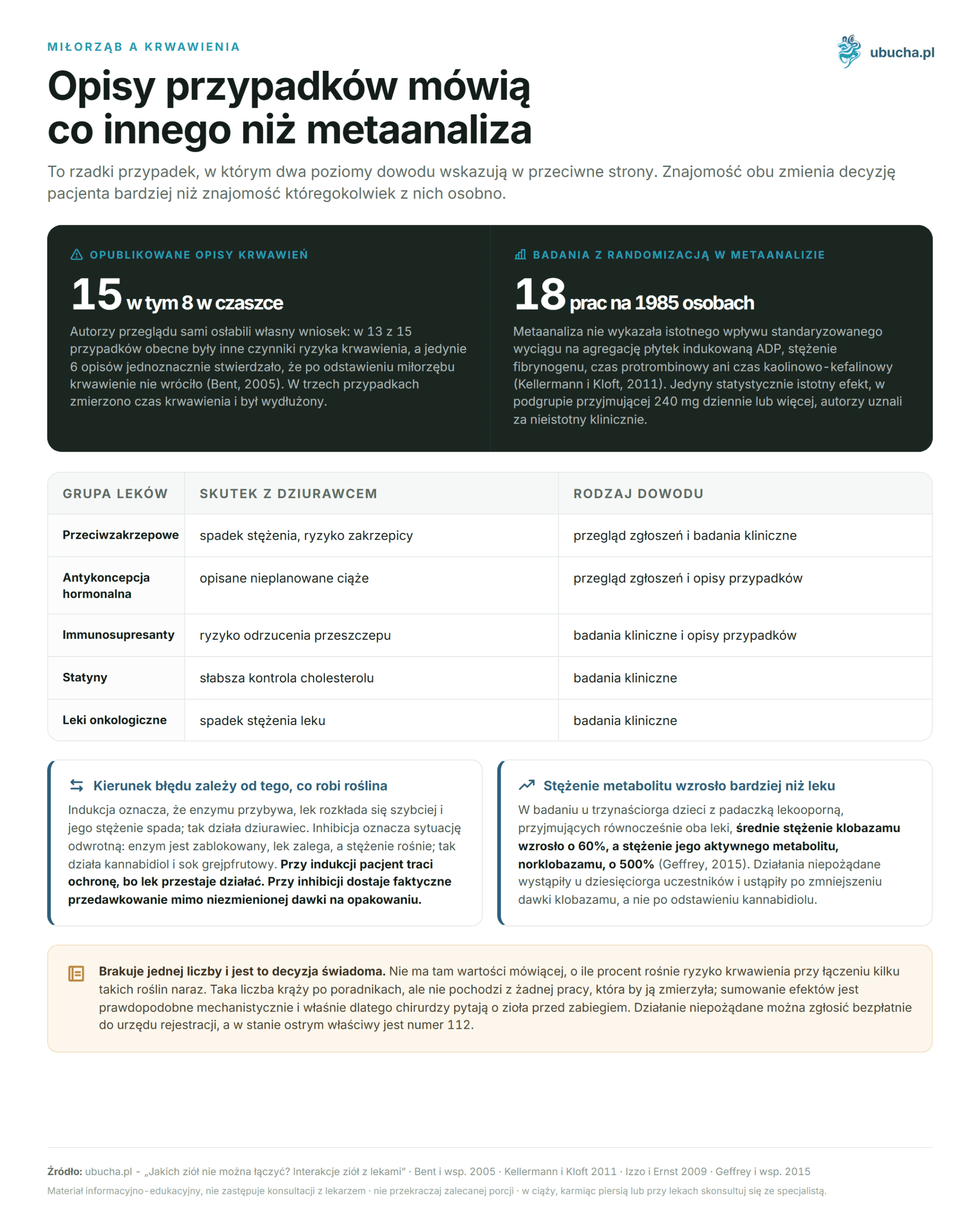
• Ginkgo has 15 published reports of bleeding, including 8 intracranial, but a meta-analysis of 18 studies involving 1985 people did not show an increased risk of bleeding.
• Cannabidiol inhibits CYP3A4 and CYP2C19; with clobazam, the concentration of the active metabolite increased by an average of 500%.
• Herbal preparations sold as dietary supplements do not need to have their interactions studied. Adverse effects can be reported free of charge to the URPL, and in an acute situation, call 112.
Separately, the question returns about herbs in a single mixture, for example in tea or smoking blend: the risk is usually lower than when combined with a medication, because the doses of individual plants are small, but it does not disappear, and the manufacturer of the mixture is not obliged to study interactions between its components. Which pairs of plants are really problematic in such a combination is detailed in the aforementioned herb-herb interaction list.
Why do herbs interact with medications?
Herbs interact because they contain pharmacologically active compounds that compete with medications for the same enzymes and receptors. There are two mechanisms. Pharmacokinetic changes the concentration of the drug in the blood. Pharmacodynamic sums effects without changing concentration. The first is visible in laboratory results, the second only in the patient’s condition.
Most pharmacokinetic interactions are due to the cytochrome P450 family. Zanger and Schwab (2013) state that out of 57 human isoforms of CYP, only about twelve, belonging to three families (CYP1, CYP2, CYP3), metabolize 70 to 80% of drugs used in clinical practice. The most abundant in the liver are CYP3A4 and CYP2C9, with smaller amounts of CYP2D6 and CYP2C19.
A plant can stimulate or block this system. Induction means that the enzyme increases, the drug breaks down faster, and its concentration decreases. This is how St. John’s Wort works. Inhibition means the opposite: the enzyme is blocked, the drug accumulates, and the concentration increases. This is how cannabidiol and grapefruit juice work. The direction of the error is therefore different, and its consequences vary. With induction, the patient loses protection because the drug stops working. With inhibition, they experience actual overdose despite unchanged dosing on the package.
It is worth distinguishing three levels of evidence, as they blend into one in popular texts. Theoretical interaction comes from cell studies and rarely translates to clinical practice. Interaction from case reports concerns specific patients who experienced complications. Interaction confirmed in clinical studies means a measured change in concentration or effect. The strongest evidence pertains to St. John’s Wort, and all regulatory recommendations in Europe concern it.
How often do patients combine herbs with prescription medications?
More often than the prescribing doctor assumes. In a cross-sectional British study among people over 65 taking at least one prescription medication, 33.6% of respondents reported simultaneous use of herbal preparations or supplements, and sixteen participants, or 32.6% of those combining, were at risk of potentially undesirable interactions.
The structure of this phenomenon is instructive. The vast majority of those combining, 78%, reached for dietary supplements rather than herbs in the strict sense: cod liver oil, glucosamine, multivitamin preparations, and vitamin D. Herbal preparations were used by 20% of this group, most often evening primrose oil and valerian, less frequently a ready-made mixture of hops with bitter herb and passionflower. Women combined significantly more often than men (43.4% vs. 22.5%). The number of preparations per person reached eight.
A second study conducted among people over 65 undergoing cancer treatment provided a narrower but sharper picture. Out of 202 patients, 12% used herbs, and a potentially significant interaction with cancer therapy was found in 4%, half of which two pharmacists independently deemed clinically significant (Brokaar et al., 2025). These were caused by red yeast rice, echinacea, turmeric, and cannabis. The scale is not massive, but it concerns patients for whom the margin of error is smallest.
Which medications does St. John’s Wort weaken?
St. John’s Wort (Hypericum perforatum) weakens medications whose concentration depends on CYP3A4, CYP2C9, CYP1A2, or P-glycoprotein. A systematic review of European reports showed clinically significant interactions with warfarin, fenprocoumon, cyclosporine, HIV protease inhibitors, theophylline, digoxin, and also with oral contraceptives, in each case leading to a decrease in the concentration or effect of the drug.
A broader review by Izzo and Ernst (2009) expanded this list with data from clinical studies. St. John’s Wort lowers plasma concentration or accelerates the elimination of alprazolam, amitriptyline, atorvastatin, cyclosporine, digoxin, erythromycin, fexofenadine, glimepiride, imatinib, indinavir, irinotecan, midazolam, nifedipine, omeprazole, simvastatin, tacrolimus, verapamil, voriconazole, and warfarin. Case reports add more psychotropic drugs: paroxetine, sertraline, venlafaxine, nefazodone, buspirone, bupropion.
| Drug Group | Effect of Combination with St. John’s Wort | Direction of Change | Type of Evidence |
|---|---|---|---|
| Anticoagulants (warfarin, fenprocoumon) | decreased concentration and weakened effect, risk of thrombosis | drug concentration down | report review and clinical studies |
| Hormonal contraception | decreased concentration, reported unplanned pregnancies | drug concentration down | report review and case reports |
| Immunosuppressants (cyclosporine, tacrolimus) | decreased concentration, risk of transplant rejection | drug concentration down | clinical studies and case reports |
| HIV medications (protease inhibitors) | decreased concentration of indinavir | drug concentration down | clinical studies |
| Statins (simvastatin, atorvastatin) | decreased concentration, weaker cholesterol control | drug concentration down | clinical studies |
| Oncology (imatinib, irinotecan) | decreased concentration of anticancer drug | drug concentration down | clinical studies |
| Antidepressants from the SSRI group | weakened action and serotoninergic symptoms | drug concentration down, serotoninergic effect up | case reports |
Two practical notes. The strength of induction is unpredictable because the content of active compounds varies between preparations, which the European review directly indicates as a reason why a safe dose cannot be provided. Additionally, St. John’s Wort also acts serotoninergically, so with antidepressants, the risk goes both ways: sometimes as a decrease in effectiveness, sometimes as an excess of serotonin.
Does ginkgo really increase the risk of bleeding?
The evidence is conflicting, and a fair answer is: probably for some people, yes, but not to the extent that could be detected in studies with a control group. This is a rare case where case reports and meta-analysis say different things, and knowledge of both sides changes the patient’s decision.
Warning side: a systematic review of the literature collected 15 published reports of bleeding temporally associated with ginkgo use, including 8 episodes of intracranial bleeding (Bent et al., 2005). The authors themselves weakened their own conclusion: in 13 out of 15 cases, other risk factors for bleeding were present, and only 6 reports unequivocally stated that after discontinuing ginkgo, bleeding did not return. In three cases, bleeding time was measured and was prolonged.
Soothing side: a meta-analysis of 18 randomized studies involving 1985 people did not show a significant effect of standardized ginkgo extract on ADP-induced platelet aggregation, fibrinogen concentration, prothrombin time, or kaolin-cephalin time (Kellermann and Kloft, 2011). The only statistically significant effect in the subgroup taking 240 mg daily or more was deemed clinically insignificant by the authors.
The practical conclusion is therefore conditional. Ginkgo alone in a healthy person does not appear to be a bleeding risk factor. The risk concerns those who already have it: those taking warfarin, aspirin, or non-steroidal anti-inflammatory drugs, post-procedure, and with coagulation disorders. Izzo and Ernst also note interactions of ginkgo with antiepileptic drugs, risperidone, and trazodone, as well as a decrease in the concentration of three other drugs: omeprazole, ritonavir, and tolbutamide.
Which kitchen herbs affect coagulation?
Garlic, ginseng, and ginger enter food in amounts that no one treats as a drug dose, yet they have documented interactions with medications affecting coagulation. A perioperative review lists garlic, ginkgo, and ginseng as three plants with a direct effect increasing the risk of bleeding during a procedure.
| Plant | Documented Interaction | Source |
|---|---|---|
| Garlic (Allium sativum) | warfarin, chlorpropamide, fluindione, ritonavir; decreased concentration of chlorzoxazone | Izzo and Ernst 2009 |
| Ginseng (Panax ginseng) | warfarin and phenelzine | Izzo and Ernst 2009 |
| Ginkgo (Ginkgo biloba) | warfarin, aspirin, ibuprofen, antiepileptic drugs | Izzo and Ernst 2009 |
| Garlic, ginkgo, ginseng | direct risk of perioperative bleeding | Ang-Lee et al. 2001 |
| Ginseng | hypoglycemia in treated diabetics | Ang-Lee et al. 2001 |
Note what is missing from this table. There is no number indicating how much the risk of bleeding increases when combining several such plants at once. Such a number circulates in guides but does not come from any study that measured it. Summing effects is likely mechanistically, and that is why surgeons ask about herbs before a procedure, but providing percentages here would be guesswork. If you want to check which plants should not meet in one mixture, we have prepared a separate list of herb-herb interactions.
Why do licorice and ephedrine burden the heart?
Both plants act on the circulatory system directly, not through drug metabolism, so they can harm even when you are not taking any prescription medications. However, the mechanisms are completely different, and the way they manifest in studies varies.
Licorice (Glycyrrhiza glabra) contains glycyrrhizic acid, whose metabolite blocks 11-beta-hydroxysteroid dehydrogenase type 2 and additionally binds directly to the mineralocorticoid receptor as an agonist (Sabbadin et al., 2019). The result is pseudoaldosteronism: hypertension, metabolic alkalosis, and hypokalemia. A case report from 2021 shows where this leads in extreme cases, where a patient experienced sinus pause and fainting after years of daily consumption of the root. The authors emphasize that chronic uncontrolled consumption can provoke ventricular arrhythmias, including ventricular tachycardia and torsades de pointes. For someone on diuretics or digoxin, potassium loss is the most dangerous element of the puzzle.
Ephedrine has a different story. An independent analysis of 140 reports submitted to the US FDA found that 31% of events were definitely or probably related to the use of supplements containing ephedrine alkaloids, and among the related events, 47% concerned the circulatory system (Haller and Benowitz, 2000). The most common symptoms were hypertension, palpitations, and tachycardia, strokes, and seizures. Ten events resulted in death, and thirteen resulted in permanent disability. More about licorice itself and its dosing can be found in our guide to the properties of licorice.
What happens when calming herbs meet benzodiazepines?
Sedation sums up, but does not change the concentration of the drug. This is a pharmacodynamic interaction: the patient takes the usual dose of benzodiazepine, a blood test would be normal, yet in the morning they cannot focus and fall on the stairs. For an eighty-year-old, this scenario ends in a fracture, not discomfort.
The perioperative review describes this mechanism directly: kava and valerian enhance the sedative effects of anesthetics, and this is one of the reasons why the anesthesiologist asks about herbal preparations before anesthesia. The same principle applies outside the hospital when an evening benzodiazepine is accompanied by valerian tea and a glass of wine. All three substances act on the same inhibitory system.
The practical problem is that sedative herbs rarely occur alone. In the aforementioned British study, one of the most frequently mentioned herbal preparations was indeed a mixture of hops, bitter herb, and passionflower, sold over the counter as a sleep aid. A person taking it alongside a prescription sleep medication usually does not report this to the doctor because they do not consider herbs as medication.
The safety principle is simple and does not require a table: if a preparation is meant to help you sleep, do not combine it with anything else that also helps you sleep, including alcohol. If you are looking for a gentler path, we have described the differences between popular evening herbs in a comparison of sleep teas.
How does cannabidiol change drug concentrations?
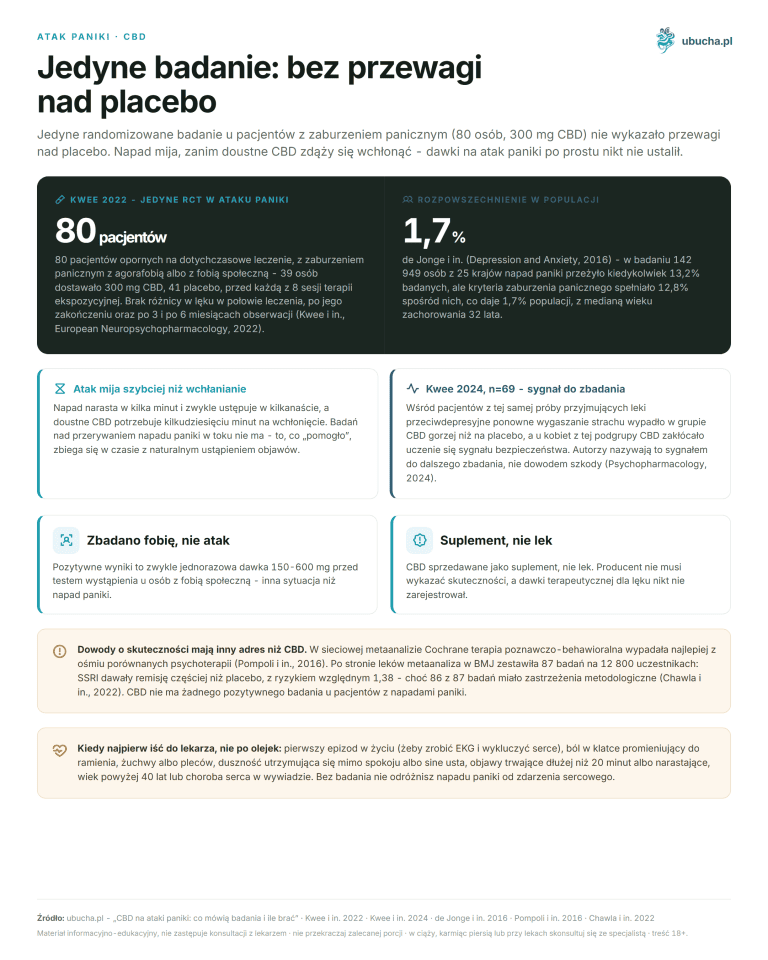
Cannabidiol inhibits drug-metabolizing enzymes, thus raising their concentrations instead of lowering them. A review of registration data (Brown and Winterstein, 2019) identifies CYP3A4 and CYP2C19 as primary targets and P-glycoprotein as a second mechanism, through its influence on excretion. The authors also note that adverse effects occurred in nearly half of the individuals using cannabidiol and were dose-dependent.
The best-measured interaction concerns clobazam. In a study involving thirteen children with drug-resistant epilepsy, taking both medications simultaneously, the average concentration of clobazam increased by 60%, and the concentration of its active metabolite, norclobazam, increased by 500% (Geffrey et al., 2015). Adverse effects occurred in ten participants and resolved after reducing the clobazam dose, not after discontinuing cannabidiol.
| Drug or Group | What is Known |
|---|---|
| Clobazam | increase in drug concentration by 60% and metabolite by 500%, monitoring necessary |
| Warfarin | described case of increased INR requiring dose adjustment |
| CYP3A4 and CYP2C19 substrates | risk of increased concentration, recommended dose reduction of substrate |
| Liver enzymes | increase in aminotransferase activity as a common adverse effect |
A separate matter is grapefruit. Grapefruit juice inhibits CYP3A4 in the intestinal wall, the same enzyme as cannabidiol, so both agents work in the same direction. A simple practical rule is: if the medication leaflet warns against grapefruit, the same caution applies to cannabidiol. A complete list of sensitive medications has been compiled in a separate text on cannabidiol interactions with medications.
Who is most at risk for herb-drug interactions?
The risk is not evenly distributed. It increases where three conditions converge: taking many medications at once, slower metabolism, and a narrow therapeutic window for at least one preparation. Three groups meet all three conditions simultaneously.
Seniors are in this group for arithmetic reasons. Polypharmacy increases the number of possible drug-herb pairs faster than linearly, and a British study showed that one in three people over 65 on prescriptions adds a self-purchased preparation to them. Additionally, there is slower liver and kidney function, which prolongs the time a drug stays in the body regardless of the number of preparations.
Cancer patients are at risk for a different reason. Anticancer drugs have a narrow margin between effective and toxic doses, so any change in concentration has consequences. A 2025 study found 4% of potentially significant herb-drug interactions in them, half of which were deemed clinically significant. A separate high-risk position is occupied by transplant recipients taking cyclosporine or tacrolimus, where a decrease in concentration caused by St. John’s Wort means a risk of organ rejection.
The third group is pregnant and breastfeeding women. Here, the problem is not a documented interaction but a lack of data: herbal preparations rarely make it into studies involving pregnant women, so safety remains unknown and unconfirmed. In this situation, the rule is one: no preparation without the consent of the doctor overseeing the pregnancy.
How to check for interactions and report adverse effects?
Checking takes a minute, and reporting takes fifteen and is free. Both actions are done in different places and for different purposes: the first before reaching for a preparation, the second after experiencing an unexpected symptom.
Before starting to use, list everything you take: prescription medications, over-the-counter preparations, vitamins, herbs, cannabis products. The list should go to the doctor and pharmacist in full, as neither will guess that you drink valerian tea in the evening. Professionals use databases like Lexicomp, UpToDate, and Micromedex, while patients can check a drug-herb pair in the free interaction module of Drugs.com. Entering the pair warfarin and ginkgo returns a warning along with a description of the mechanism.
The second habit is to introduce one herb at a time and maintain it for several weeks before adding another. With five preparations started on the same day, even a doctor cannot determine which is responsible for a rash or drowsiness. Symptoms that should prompt discontinuation and contact with a doctor include bleeding from the gums or nose, easy bruising, dizziness, excessive drowsiness, palpitations, and jaundice.
Adverse effects can be reported to the Office for Registration of Medicinal Products, Medical Devices and Biocidal Products. Anyone can report, including patients, free of charge, and certainty regarding the causal relationship is not required. In an acute situation, the emergency number is 112.
What does Polish law say about herbs, supplements, and cannabis products?
Most herbal preparations in Polish trade are introduced to the market as dietary supplements, i.e., food supervised by the Chief Sanitary Inspectorate, and not as medicinal products. The supplement manufacturer does not have to demonstrate clinical efficacy or conduct interaction studies, which directly translates to the risks described above.
The practical consequence concerns quality. The content of active substances in a herbal preparation can deviate from the declaration on the package, and with St. John’s Wort, the European review pointed out this variability directly as a reason for the unpredictability of enzyme induction strength. Therefore, choose manufacturers who provide standardization of extracts and make available results from independent laboratory analyses.
A separate regulation concerns cannabis. According to Article 4 point 5 of the Act of July 29, 2005 on Counteracting Drug Addiction (consolidated text: Journal of Laws 2023, item 1939), as amended by the Act of March 24, 2022 (Journal of Laws 2022, item 763), industrial hemp is defined as plants in which the sum of delta-9-THC and tetrahydrocannabinolic acid does not exceed 0.3% of dry mass, rounded to one decimal place. The threshold concerns the sum of both compounds, not just delta-9-THC, which changes the result of laboratory testing. Until May 6, 2022, this value was 0.20%.
The national threshold corresponds to the EU threshold, but it does not derive from it. The value of 0.3% for hemp varieties eligible for support under the Common Agricultural Policy was introduced by Regulation (EU) 2021/2115, effective from January 1, 2023; the previous Regulation 1307/2013 established 0.2% and was repealed. These are two separate regulations with the same number. Cannabidiol itself does not appear in any list of controlled substances, while HHC is a controlled substance in Poland.
Frequently Asked Questions
Does St. John’s Wort reduce the effectiveness of contraceptive pills?
Yes. A systematic review of European reports lists oral contraception among the medications whose concentration or effect decreases under the influence of St. John’s Wort, with the mechanism being the induction of CYP3A4 and P-glycoprotein. Women using hormonal contraception should avoid St. John’s Wort preparations or additionally secure themselves with a barrier method.
How long before surgery should herbs be discontinued?
There is no single timeframe for all plants, and recommendations depend on the preparation. More important than the date is providing the anesthesiologist with a complete list of medications being taken. The perioperative review lists garlic, ginkgo, and ginseng among plants that increase the risk of bleeding during the procedure, although for ginkgo itself, a meta-analysis of studies with a control group did not confirm this. Valerian enhances the effects of anesthetics, while St. John’s Wort accelerates the metabolism of perioperative medications.
Can cannabidiol be combined with antidepressants?
Yes, but only under a doctor’s supervision and with symptom monitoring. Cannabidiol inhibits CYP2C19, the enzyme responsible for the metabolism of some antidepressants, so their concentration may increase. Never discontinue a psychiatric medication on your own to make room for a supplement.
Can grapefruit juice and cannabidiol be consumed together?
Better not. Both inhibit CYP3A4, so their effects sum up, and the concentrations of medications metabolized this way may increase more than would be expected from each agent alone. Practical rule: if the medication leaflet mentions grapefruit, the same caution applies to cannabidiol.
Can herbs replace medications for hypertension or diabetes?
No. Discontinuing a chronic medication in favor of a herbal preparation is dangerous, and with hypertension, diabetes, epilepsy, and heart diseases, complications can arise within days. Herbs can play a complementary role, but any changes to the regimen are decided by the attending physician.
Does the manufacturer of herbal supplements have to study interactions?
No. Dietary supplements in Poland are subject to sanitary supervision as food and do not have to undergo interaction studies or prove efficacy. The responsibility for safe use therefore falls on the patient and the doctor, which is why it is worth choosing products with standardized extracts and available analysis results.
Where to report adverse effects from a herbal preparation?
Reports are accepted by the Office for Registration of Medicinal Products, Medical Devices and Biocidal Products. Anyone can do this, including patients without a doctor’s intermediary, free of charge and without certainty regarding the causal relationship. The data feeds into the European safety monitoring database. In an acute situation, call 112.
If you are looking for plant materials with known origins and described compositions, you will find them in our herbs category.
This article is for informational and educational purposes and does not replace consultation with a doctor. If you are pregnant, breastfeeding, taking medications, or have chronic conditions, consult the use of supplements or herbs with a specialist.
Author: Michał Waluk · Published: 2026-05-11 · Updated: 2026-08-24