
Selenium and Iodine for the Thyroid: Dosage and What to Remember (Table)
Selenium and iodine for the thyroid: EFSA reference values, upper limit of selenium, what studies have shown about Hashimoto's, and why excess iodine can be more dangerous than deficiency.
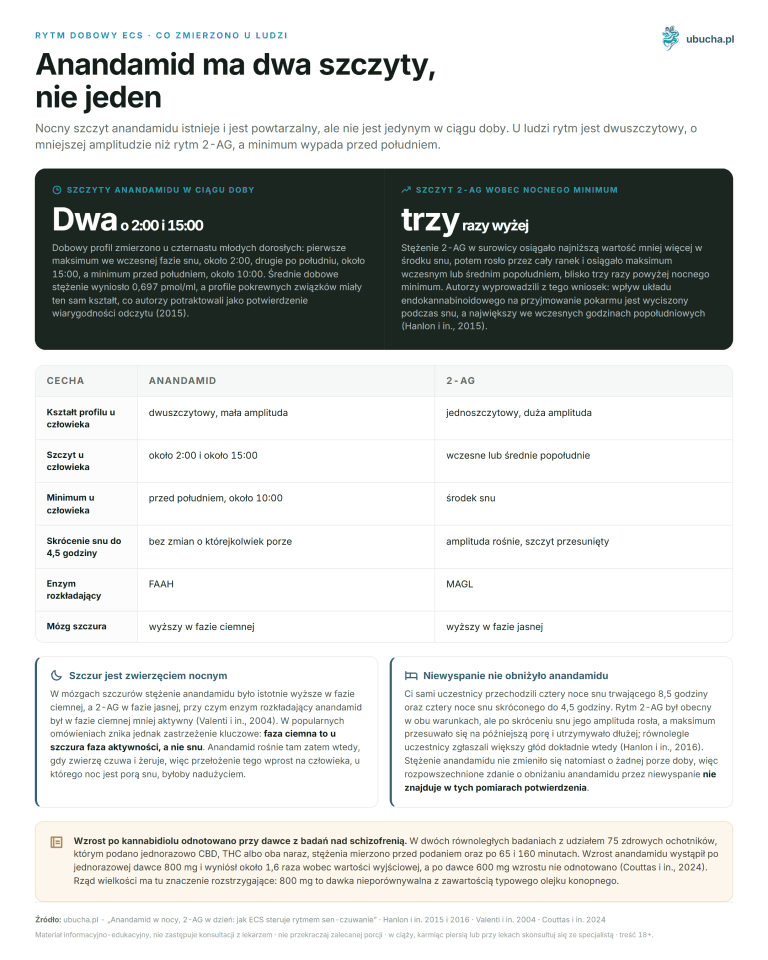
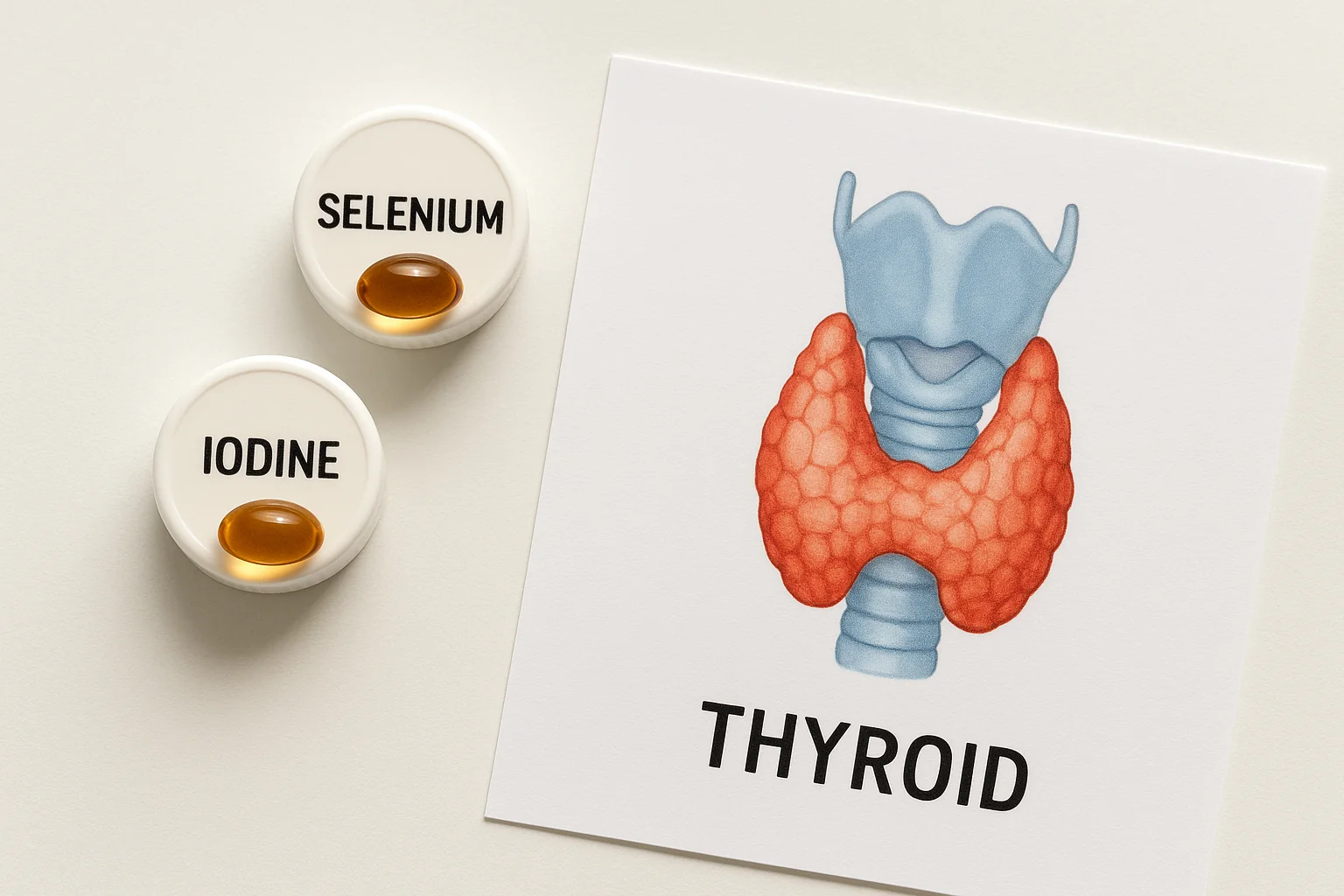
Selenium and iodine are two elements without which the thyroid does not function. Iodine is a building block of hormones, while selenium supports the enzymes that activate these hormones and protects the gland from its own oxidative stress. The title promises dosage, so a boundary must be set immediately: you will find reference values established by the regulator and a description of what clinical studies have shown, but not a supplementation scheme for a person with thyroid disease. In the case of Hashimoto’s thyroiditis, the decision about supplementation lies with the endocrinologist, as it depends on test results, not the article. Below you will also find two things that have been incorrectly stated in popular guides for years: the upper limit of safe selenium intake and the supposedly mandatory order of introducing selenium and iodine. We have verified both at the source, in the opinions of the regulator and in original publications.
KEY INFORMATION
• EFSA has established the adequate intake of selenium for adults at 70 micrograms per day, and the upper tolerable limit at 255 micrograms per day. The repeated value of 300 micrograms in guides does not come from this opinion.
• The adequate intake of iodine according to EFSA is 150 micrograms per day for adults and 200 micrograms during pregnancy and breastfeeding.
• Most known selenoproteins are expressed in the thyroid, but the gland itself is largely independent of dietary selenium intake.
• In a meta-analysis of studies on Hashimoto’s thyroiditis, three months of selenium supplementation reduced anti-TPO antibody levels, yet the authors did not recommend routine supplementation.
• Excess iodine is associated with a higher risk of hypothyroidism and autoimmune thyroiditis, as shown by a five-year observation of 3018 individuals.
What Does the Thyroid Need Selenium and Iodine For?
Iodine is the raw material, and selenium is the operation of the machine that processes this raw material. The thyroid takes up iodide through the sodium-iodide transporter, oxidizes it, and incorporates it into thyroglobulin with the help of thyroid peroxidase, which requires hydrogen peroxide to function. Selenoproteins protect the gland’s cells from the same hydrogen peroxide.
The same mechanism is described in a review dedicated to three elements essential for thyroid hormone synthesis (Köhrle, International Journal of Molecular Sciences, 2023). The author points out that hydrogen peroxide is produced right at the surface of the follicular cells, so the gland works in the vicinity of a substance that destroys it throughout its life. Selenoproteins are the body’s response to this problem, not a supportive addition.
The second function of selenium relates to hormone activation. Deiodinases, which cleave the iodine atom from thyroxine and convert it into triiodothyronine, are selenoproteins. Without selenium, this conversion is impaired. However, it is worth adding a caveat that rarely makes it into guides: the thyroid has priority access to selenium and maintains the expression of its selenoproteins even when other tissues no longer have it (Schomburg, Nature Reviews Endocrinology, 2011).
What Reference Values Have Been Established for Selenium and Iodine?
The European Food Safety Authority has established the adequate intake of selenium for adults at 70 micrograms per day, and the adequate intake of iodine at 150 micrograms per day. These are values for the healthy population, describing intake from the entire diet, not therapeutic recommendations for a person with thyroid disease.
The basis for selenium is biochemical: a point was adopted where the concentration of selenoprotein P in plasma stops increasing, as this indicates saturation of the active pool of selenium in the body (EFSA, 2014, selenium). For iodine, the reference point is a urinary iodine concentration above 100 micrograms per liter, at which the frequency of goiter is lowest; pregnancy and breastfeeding raise this value to 200 micrograms per day (EFSA, 2014, iodine).
| Element | EFSA Reference Value | Upper Limit | Based On |
|---|---|---|---|
| Selenium, adults | 70 micrograms per day | 255 micrograms per day | Saturation of selenoprotein P in plasma; upper limit from LOAEL 330 micrograms and uncertainty factor 1.3 |
| Iodine, adults | 150 micrograms per day | The opinion does not establish reference values | Urinary iodine concentration above 100 micrograms per liter, at which the frequency of goiter is lowest |
| Iodine, pregnancy and breastfeeding | 200 micrograms per day | As above | Increased production of maternal hormones and iodine uptake by the fetus and placenta |
| Selenium in studies on Hashimoto | Not a reference value | Outside the scope of the opinion | Three months of supplementation reduced anti-TPO levels in a meta-analysis; authors did not recommend routine use |
How to read this table? The first two columns describe the healthy population and the entire diet, not a pill. The last row is not a norm, but a summary of research results, and does not translate into individual recommendations. If you have a diagnosed thyroid disease, your test results are the starting point, not the table.
When Does Selenium Help and When Does It Harm?
It helps when there is too little of it, and it does not help when there is enough. This sounds trivial, but it reverses the logic of most supplement advertisements. In healthy individuals, selenium supplementation does not change thyroid hormone profiles, as noted directly in a review dedicated to the gland’s selenoproteins (Schomburg, Nature Reviews Endocrinology, 2011).
This same review indicates that low selenium status correlates with the risk of goiter and numerous nodules in European women, and patients with autoimmune thyroid disease and selenium deficiency have benefited from supplementation, although the data remains inconsistent. The author hypothesizes that the initial selenium status determines the outcome of supplementation, not the amount itself.
The upper limit has a specific justification. EFSA chose alopecia as the earliest well-documented symptom of excess selenium, identified the lowest level causing this effect at 330 micrograms per day in a large randomized SELECT study, and applied an uncertainty factor of 1.3 (EFSA, 2023). The agency also noted that the average consumer will not exceed this limit unless they regularly consume supplements with high selenium content or Brazil nuts.
Why Should Caution Be Exercised with Iodine in Hashimoto’s?
Because excess iodine increases the risk of hypothyroidism and autoimmune thyroiditis, not just deficiency. The strongest evidence comes from a five-year observation of three regions in China with differing iodine intake, involving 3018 individuals from an initial group of 3761.
In regions with more than adequate and excessive iodine intake, the frequency of subclinical hypothyroidism and autoimmune thyroiditis was clearly higher than in areas where iodine was moderately low (Teng et al., New England Journal of Medicine, 2006). A systematic review encompassing 50 studies confirmed the direction of this relationship: the odds ratio for overt hypothyroidism between populations with excessive and adequate intake was 2.78, and for subclinical hypothyroidism, it was 2.03 (Katagiri et al., PLoS One, 2017).
The direct mechanism is called the Wolff-Chaikoff effect: a sudden increase in iodine concentration temporarily inhibits hormone synthesis. A study on rats showed that recovery from this inhibition is associated with a decrease in the amount of sodium-iodide transporter (Eng et al., Endocrinology, 1999). This is animal model work and should be read as such. The practical conclusion for humans is cautious: with a diagnosed case of Hashimoto’s, iodine supplementation should not be introduced without consultation, and dietary iodine does not need to be avoided. Separately, it is worth looking at the text about iodine in the form of Lugol’s solution and its safety.
Should Selenium Be Introduced Before Iodine?
This popular advice is based on one animal experiment and should be treated as such. It was shown that in iodine-deficient rats, lack of selenium intensified the necrotic effect of a large dose of iodide, meaning that selenium served a protective function during a sudden increase in iodine intake.
The study concerns animals with dual deficiency and a large single dose of iodide (Contempré et al., Endocrinology, 1993). There is no human study that has checked the order of introducing both elements in supplementation. Recommendations like “first selenium for four to six weeks, then iodine” are therefore conclusions added to the experiment, not results from research.
What remains sensible? The direction of the relationship is well-founded biologically: the more iodine the gland processes, the more hydrogen peroxide is produced, and the more selenium protection is needed. However, this is an argument for not suddenly increasing iodine intake, not for creating a self-scheduled supplement regimen. The connections between the thyroid and other substances are discussed in texts about CBD with Hashimoto’s and about ashwagandha with subclinical hypothyroidism.
What Do These Studies Not Resolve?
They do not resolve the most important question for the reader, which is whether selenium supplementation will change the course of the disease. A meta-analysis of prospective placebo-controlled studies in patients with Hashimoto’s treated with levothyroxine showed that three months of selenium supplementation reduced anti-TPO antibody levels.
The weighted mean difference was minus 271.09 with a confidence interval from minus 421.98 to minus 120.19, and patients more frequently reported improvement in well-being (relative risk 2.79). However, the authors concluded that before routine supplementation can be recommended, improvement in gland function and morphology must be demonstrated, not just a reduction in antibody levels (Toulis et al., Thyroid, 2010). A decrease in antibodies is not the same as an improvement in health.
It is also unknown who will benefit from supplementation. If the initial selenium status determines the outcome, then a sensible order starts with testing, not purchasing. Comparisons of different forms of selenium among humans, schedules for combining it with iodine, and the effect of the timing of intake remain outside the scope of evidence. All these details circulate in guides as certainties, although they lack research in humans.
Frequently Asked Questions
What is the recommended selenium intake for adults?
EFSA has established the adequate intake of selenium at 70 micrograms per day for adults, and the upper tolerable limit at 255 micrograms per day. Both values apply to the healthy population and the entire diet. In the case of thyroid disease, supplementation is determined by a doctor based on test results, not population norms.
Where does the number 300 micrograms of selenium come from?
Not from the current EFSA opinion. The agency has set the upper tolerable limit at 255 micrograms per day, based on the lowest level causing alopecia, which is 330 micrograms in the SELECT study, and applying an uncertainty factor of 1.3. The value of 300 circulates in guides without support in this document.
Does selenium supplementation change hormone levels in healthy individuals?
No. The thyroid has priority access to selenium and maintains the expression of its selenoproteins even with low intake, so in healthy individuals, supplementation does not result in significant changes in thyroid hormone profiles. Benefits have been noted in patients with autoimmune thyroid disease and selenium deficiency.
Is iodine safe with Hashimoto’s?
Iodine from the diet usually is, but additional supplementation is another matter. Excessive iodine intake has been associated with a higher risk of hypothyroidism and autoimmune thyroiditis in a five-year observation of 3018 individuals and in a review of 50 studies. Iodine supplementation with Hashimoto’s requires an endocrinologist’s decision.
Should selenium be taken before iodine?
There is no human study that verifies this. The recommendation comes from an experiment on rats with dual deficiency, where lack of selenium intensified the necrotic effect of a large dose of iodide. A sensible conclusion is to avoid sudden increases in iodine intake, not a self-scheduled supplement regimen.
Preparations with selenium and iodine can be found in the supplements category.
This article is for informational and educational purposes only and does not constitute medical advice. Before starting supplementation, consult a doctor, especially if you are taking medications regularly, are pregnant or breastfeeding, or have a chronic illness.
Author: Michał Waluk · Published: 2026-08-09 · Updated: 2026-08-11