Vaporizer for CBD and THC marijuana flower, some tips for beginners
A beginner's guide: how a vaporizer for marijuana and CBD flower works, what temperatures to choose, how to care for the device, and avoid mistakes.
Why are more and more medical marijuana patients in Germany, the Netherlands, and Canada moving from joints to vaporizers? According to the report WHO Expert Committee on Drug Dependence (2018) and clinical studies on cannabis inhalation, vaporization eliminates most of the pyrolysis products that occur during the combustion of flower. A vaporizer heats the flower below the ignition point of the plant material, allowing cannabinoids and terpenes to transition to a gaseous phase without smoke, tar, and carbon monoxide. This guide is designed for those who are just starting their journey with vaporizing CBD, CBG, or medicinal THC flower. You will learn how convection and conduction systems work, what temperatures to choose, and how to maintain the device to last for years.
KEY INFORMATION
• Vaporization reduces respiratory risk: vapor users had a 60% lower chance of reporting cough and shortness of breath than smokers (Earleywine and Barnwell, 2007).
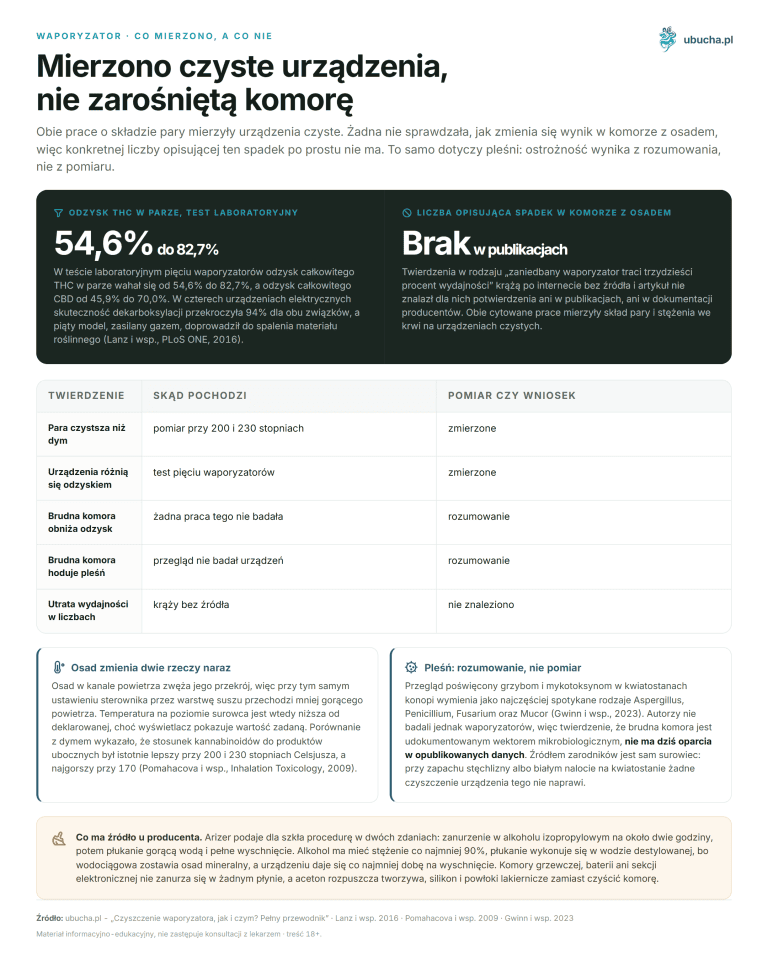
• Electric vaporizers at a constant temperature of 210°C release 51-83% of cannabinoids from the flower, depending on the model of the device (Lanz et al., PLOS ONE 2016).
• Starting point for beginners: 175-185°C, finely ground flower, inhalation lasting 3-5 seconds.
• The vaporizer itself is legal in Poland; THC and CBD flower are subject to separate regulations.
What is a marijuana vaporizer and how does it physically work?
A vaporizer is an electric device that heats cannabis flower or extract to a temperature of 160-220°C, which is below the ignition point of the plant material, approximately 230°C. According to a study by Lanz et al. (2016), at this range, cannabinoids and terpenes transition to a gaseous phase without combustion, which limits the emission of toxic pyrolysis products.
Unlike a joint or pipe, where the combustion temperature reaches 600-900°C, a vaporizer operates in a controlled vaporization mode. The flower comes into contact with hot air or a heated surface, never with an open flame, which prevents the formation of tar or carbon monoxide.
| System | How it works | Pros and cons |
|---|---|---|
| Convection | Air is heated at the heater and then flows through the flower, which never touches metal. | Even heating and clean taste, more expensive construction. |
| Conduction | The flower lies directly on a heated ceramic or metal plate. | Cheaper and simpler, risk of uneven heating and burning. |
Most reviews treat convection as unequivocally better, but for a beginner user, a hybrid convection-conduction model can be the best compromise: quick heating, good taste, and tolerance for minor grinding errors.
| Compound | Boiling temperature |
|---|---|
| THC | about 157°C |
| CBD | 160-180°C |
| CBN | about 185°C |
| beta-caryophyllene | about 119°C |
| myrcene | about 168°C |
| humulene | about 198°C |
Low temperature 170-180°C mainly extracts aromatic terpenes and a mild CBD effect. Medium 190-200°C extracts more THC and CBD simultaneously. High 210-220°C releases the most cannabinoids, at the cost of taste purity. Therefore, temperature selection is not only a matter of effect strength but also which terpenes and cannabinoids will enter the vapor first and which will remain unused in the chamber.
Citation capsule. The study by Lanz et al. (PLOS ONE, 2016) compared five commercial vaporizers at a constant temperature of 210°C: cannabinoid recovery in vapor ranged from 51.4% to 82.7% depending on the model of the device, from DaVinci to Arizer Solo. This shows that the design of the vaporizer matters more than the temperature setting itself.
What are the health benefits of vaporization compared to smoking?
The classic study by Earleywine and Barnwell (2007) included 6883 cannabis users and found that vapor users had a 60% lower chance of reporting respiratory symptoms, such as cough, wheezing, or morning phlegm, than smokers. The difference remained after adjusting for age, gender, and the amount of tobacco smoked.
| Aspect | Study result |
|---|---|
| Toxins and combustion products | According to Pomahacova et al. (2009), vapor obtained at 200-230°C has a significantly more favorable cannabinoid to byproduct ratio than smoke from a joint; the worst result was obtained at 170°C. |
| Pharmacokinetics of THC | A study by Abrams et al. (2007) on 18 individuals showed similar THC concentrations in the blood after vaporization and after smoking a joint, but significantly lower carbon monoxide levels with vaporization. |
| Limitations | The absence of smoke does not mean no impact on the respiratory tract. Individuals with chronic lung diseases, asthma, or COPD should consult a doctor before starting vaporization. |
In conversations with patients using medical marijuana in Poland, a similar theme recurs: after switching from smoking to vaporization, the therapeutic effect tends to be easier to control, and morning cough subsides within a few weeks. This is an observation, not clinical evidence, so it should be treated as a starting point for discussion with a doctor, not as a rule. Vaporization also works faster than oral forms of CBD or THC, which can be an advantage when a quicker relief of symptoms is needed, but for individuals sensitive to the psychoactive effects of THC, it means a shorter time to assess their own reaction before reaching for another dose.
Citation capsule. The study by Earleywine and Barnwell (2007), published in the Harm Reduction Journal, included 6883 cannabis users recruited online. The chance of reporting respiratory symptoms by vapor users was only 40% of the chance of non-vapor users, which means it was 60% lower. This is one of the largest observational studies on harm reduction in cannabis inhalation.
How to choose a vaporizer for a beginner user?
A beginner user should look for a device with temperature control in the range of 160-220°C, a ceramic or quartz chamber, and a reputable brand with good service reputation. Too cheap equipment often means plastic air paths that can release undesirable substances when heated. If you are just getting acquainted with the topic, start with our encyclopedic guide to vaporizers before choosing a specific model.
| Type | Features | Example models |
|---|---|---|
| Portable | Fits in your pocket, runs on battery, lower heating power and shorter operating time. | Mighty+, Pax 3, Crafty+, Fenix Mini, XMax V3 Pro |
| Stationary | Plugs into the socket, highest vapor quality and durability, no mobility. | Volcano Hybrid, Arizer Extreme Q |
In the vaporizer category in our store, prices currently range from 374-499 PLN (as of 10.08.2026), and available models have adjustable temperature and ceramic or quartz chambers.
| Material | Characteristics |
|---|---|
| Ceramic | Chemically neutral, retains temperature well, the most popular choice. |
| Quartz | Premium option, heats up quickly and does not affect the taste of terpenes. |
| Stainless steel | Durable, but may slightly alter the vapor’s aroma. |
Avoid chambers made of unprotected aluminum and those with plastic elements in the heating zone. The air path should only consist of borosilicate glass, ceramic, or quartz, which minimizes the risk of inhaling plasticizers released at high temperatures. Cheap devices usually offer 3-5 temperature presets, while more expensive models allow for adjustment every 1°C over a wide range. For beginners, presets are sufficient, but precise adjustment facilitates experimenting with terpene profiles as experience is gained. Before purchasing, it is also worth checking the availability of spare parts and the length of the warranty: a cheap model without service support becomes useless after the first damage to the heating element or battery.
How to properly vaporize flower step by step?
Proper vaporization consists of five stages: grinding the flower, loading the chamber, setting the temperature, inhalation session, and emptying the chamber. Skipping any of these stages worsens the taste of the vapor and reduces the amount of cannabinoids released.
| Stage | What you do |
|---|---|
| 1. Grinding the flower | Grind the flower medium-fine with a metal grinder. Too large pieces heat unevenly, and the finest powder can clog the screen. Optimal humidity is about 58-62%, which can be easily maintained with humidity packs. |
| 2. Loading the chamber | Fill the chamber evenly, without packing it too tightly. In convection, the flower should lie loosely, while in conduction, it can be gently pressed. Portable chambers hold 0.15-0.30 g, stationary up to 0.5 g. |
| 3. Starting temperature | Start at 175-185°C, where terpenes and CBD are released with a mild THC effect. After the first draws, raise to 195°C, and then to 205-210°C, applying what is called stepping. |
| 4. Inhalation session | Inhale slowly and evenly for 3-5 seconds. Between draws, take a 30-60 second break to allow the chamber to regain temperature. The entire session usually lasts 5-15 minutes. |
| 5. Emptying the chamber | When the flower, or ABV, darkens and loses flavor, remove it from the chamber. ABV still contains residual cannabinoids and can be used for baking or macerates. |
Citation capsule. According to the study by Abrams et al. (2007), vaporization with the Volcano device produced THC concentrations in the blood comparable to smoking a joint, with significantly lower carbon monoxide emissions. This confirms that a properly conducted session delivers THC as effectively as smoking, but with less burden on the respiratory tract.
How to maintain and clean the vaporizer?
Regular cleaning of the vaporizer extends its lifespan and maintains a cleaner taste of the vapor. Neglected equipment loses power and can release burnt residues harmful to the respiratory system. A full guide to equipment maintenance can be found in the article Cleaning the vaporizer, how and with what?
| Frequency | What you do |
|---|---|
| After each session | Empty the chamber, wipe it with a dry brush, and clean the mouthpiece with a stick dipped in 99% isopropyl alcohol. This takes about 30 seconds. |
| Every 10-20 sessions | Disassemble the screens and air paths, soak in isopropyl alcohol for 20-30 minutes, scrub with a soft brush, and dry. Just wipe the heating chamber, do not submerge the electronics. |
| Every 2-4 months | Replace screens and seals. Manufacturers like Storz and Bickel offer service kits with all spare parts. |
| Battery (portable models) | Lifespan of 300-500 charging cycles. After this time, capacity decreases and operating time on a single charge shortens. |
Manufacturers of professional medical vaporizers, such as Storz and Bickel, recommend periodic full servicing of the device and valve replacement. Following the cleaning schedule maintains extraction efficiency close to that described in laboratory studies, and a well-maintained device retains the performance declared by the manufacturer for years of regular use.
What are the most common mistakes of beginners?
Beginner vaporizer users often make the same mistakes in the first weeks: setting the temperature too high, grinding the flower poorly, and neglecting to clean the device. The consequence is often disappointment with the effect and abandonment of the equipment. More typical misunderstandings are discussed in the article 10 myths about vaporizing flower.
| Mistake | Consequence | How to avoid |
|---|---|---|
| Too high starting temperature | Burnt, bitter flower and loss of terpenes | Start at 175-185°C and gradually raise the temperature |
| Smoking instead of vaporizing | Quick, strong draws do not give the vapor time to build up | Inhale slowly for 3-5 seconds |
| Moist or unground flower | Uneven heating, watery vapor | Grind the flower finely and dry it well before the session |
| Expecting the effect to be identical to smoking | The impression that vaporization does not work | Wait 15-20 minutes after the session before assessing the effect |
| Not cleaning the device | Burnt taste and decrease in power | Clean the chamber and mouthpiece after each session |
The most common reason for abandoning a vaporizer is not the quality of the equipment, but a lack of patience to learn the technique. The first two weeks of regular use are usually enough to adjust the temperature, grinding, and inhalation technique to personal preferences. Keeping a simple session journal with notes on the set temperature and experiences can also help you find your optimal settings faster.
Citation capsule. According to studies by Lanz et al. (2016) and Pomahacova et al. (2009), vaporization at temperatures around 185-210°C releases a significant portion of the cannabinoids contained in the flower while providing a clearly more favorable ratio of active substances to byproducts than smoking a joint.
What is worth knowing about vaporizing CBD and CBG?
According to the report WHO Expert Committee on Drug Dependence (2018), CBD does not exhibit addictive potential or psychoactive effects at typical therapeutic doses. Vaporizing flower rich in CBD or CBG is an alternative to oral oils, offering faster action: the full effect usually appears in 5-10 minutes, rather than 30-60 minutes as with oil.
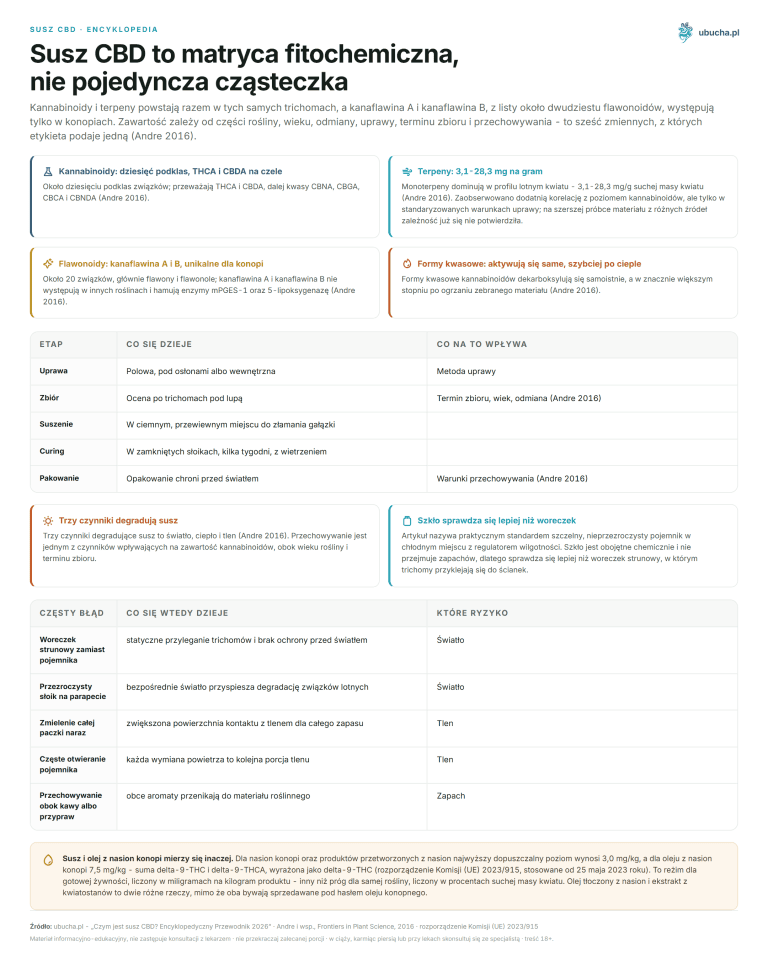
From the device’s perspective, there is no difference; the same vaporizer handles both types of flower. The difference lies in temperature: CBD is best vaporized at 175-200°C, where its full terpene profile is extracted, without the need to reach higher temperatures, as CBD does not have a psychoactive effect that scales with dosage like THC. High-CBD cannabis has appeared on the market relatively recently, and the boiling point guidelines for cannabinoids say nothing about the setup: a review of materials for patients calls them erroneous data and provides a working range for vaporizers of 160-220°C, over two hundred degrees below the boiling temperatures of THC and CBD (Cannabis and Cannabinoid Research, 2023). In stores, CBD flower is often offered in variants with different terpene contents, which primarily affects the taste and aroma of the vapor, less so the strength of the effect itself. You can read more about the raw material in the article CBD flower: what it is, how to use it, and how it differs from marijuana.
CBD flower intended for smoking or vaporization operates in a vague legal area. Cannabidiol itself does not appear on any list of controlled substances, but hemp, from which CBD flower comes, must have a total delta-9-THC and THCA content not exceeding 0.3% of dry mass, according to Article 4 point 5 of the Act of July 29, 2005 on Counteracting Drug Addiction (Journal of Laws 2023 item 1939, as amended by the Act of March 24, 2022, Journal of Laws 2022 item 763). The threshold is counted as the sum of both compounds, not just delta-9-THC, which is important when interpreting laboratory test results. In practice, shops sell CBD flower legally, most often as a collector’s item or for technical purposes, not for consumption.
Citation capsule. The WHO Expert Committee on Drug Dependence (2018) report states that CBD has no addictive potential or psychoactive effects at typical doses. This is one of the foundations on which many European countries base the exclusion of CBD from the list of controlled substances.
Summary
Vaporizing cannabis flower is a documented method that allows for therapeutic or recreational effects with less burden on the respiratory tract than traditional smoking. Studies by Lanz et al. (2016), Pomahacova et al. (2009), and Earleywine and Barnwell (2007) confirm high cannabinoid extraction and a more favorable toxicological profile of vapor compared to smoke. For new users, the safest way is to start at a low temperature and gradually increase it in subsequent sessions, rather than immediately seeking the strongest effect.
For beginners, three things matter: a good device with temperature control and a ceramic or quartz chamber, proper technique involving grinding, loading, and slow inhalation, and patience in the first weeks of learning. Before buying your first device, compare several models in terms of chamber material, temperature range, and availability of spare parts: a well-chosen device pays off in better taste, less flower consumption, and longer lifespan.
Also remember the legal aspects: the vaporizer itself is legal in Poland, but cannabis flower has its own regulations depending on THC content. For medical applications, consultation with a doctor is necessary, and medicinal marijuana remains available only by prescription.
Frequently asked questions
Is the vaporizer legal in Poland?
Yes, the device itself is fully legal and can be purchased without restrictions in cannabis shops and online. The legality of the flower you vaporize depends on the THC content: hemp flower with a total delta-9-THC and THCA of up to 0.3% is legal, while flower above this threshold remains regulated by the Act on Counteracting Drug Addiction.
What is the best vaporization temperature for beginners?
The safest starting range is 175-185°C: at this temperature, mainly terpenes and CBD are released, and the effect is mild and predictable. After a few sessions, it is worth experimenting with stepping, which is gradually increasing the temperature during one session from about 180 to 210°C.
How much flower is used in one vaporization session?
A typical portable vaporizer chamber holds 0.15-0.30 g of flower, while stationary models can hold up to 0.5 g. Vaporization utilizes significantly more cannabinoids contained in the flower than smoking, where a large portion of THC evaporates in side smoke without therapeutic effect.
Can vaporized flower, or ABV, be used for anything else?
Yes, ABV, which stands for already been vaporized, contains residual cannabinoids, including partially converted CBN. It can be added to baked goods, hemp butter, or fat-based macerates, although the taste is bitter and requires masking with other strongly flavored ingredients.
Is vaporization safer than smoking?
Yes, although it is not completely risk-free. According to a study by Earleywine and Barnwell (2007) on a sample of 6883 cannabis users, vapor users had a 60% lower chance of reporting respiratory symptoms than smokers. The absence of combustion eliminates many carcinogens, but inhaling vapor still burdens the respiratory tract.
How often should I clean the vaporizer?
Wipe the chamber and mouthpiece after each session with a dry brush and a stick with isopropyl alcohol. Perform a full cleaning of replaceable parts, such as screens and air paths, every 10-20 sessions, and replace seals and screens usually every 2-4 months with regular use.
Can I vaporize cannabis extracts, such as wax or budder?
Most flower vaporizers are not directly suitable for extracts. For concentrates, you need a special insert, known as a concentrate pad, or a hybrid device with a separate chamber for wax. Using an extract in an unsuitable chamber leads to flooding the heating element and damaging the equipment.
Does a vaporizer provide the same effect as a joint?
No, the effect is qualitatively different. Vapor from a vaporizer provides a cleaner, clearer effect with a distinct terpene profile, while smoke from a joint carries additional combustion products that can enhance drowsiness. Many users appreciate this greater control over the experience after switching to vaporization.
The current offer of vaporization devices, including models with ceramic chambers and temperature control, can be found in the vaporizers category in our store.
This article is for informational and educational purposes only and does not constitute medical advice. Before starting to use cannabis or CBD for therapeutic purposes, consult a doctor, especially if you are taking other medications, are pregnant, or breastfeeding.
Author: Michał Waluk · Published: 2026-05-06 · Updated: 2026-08-10