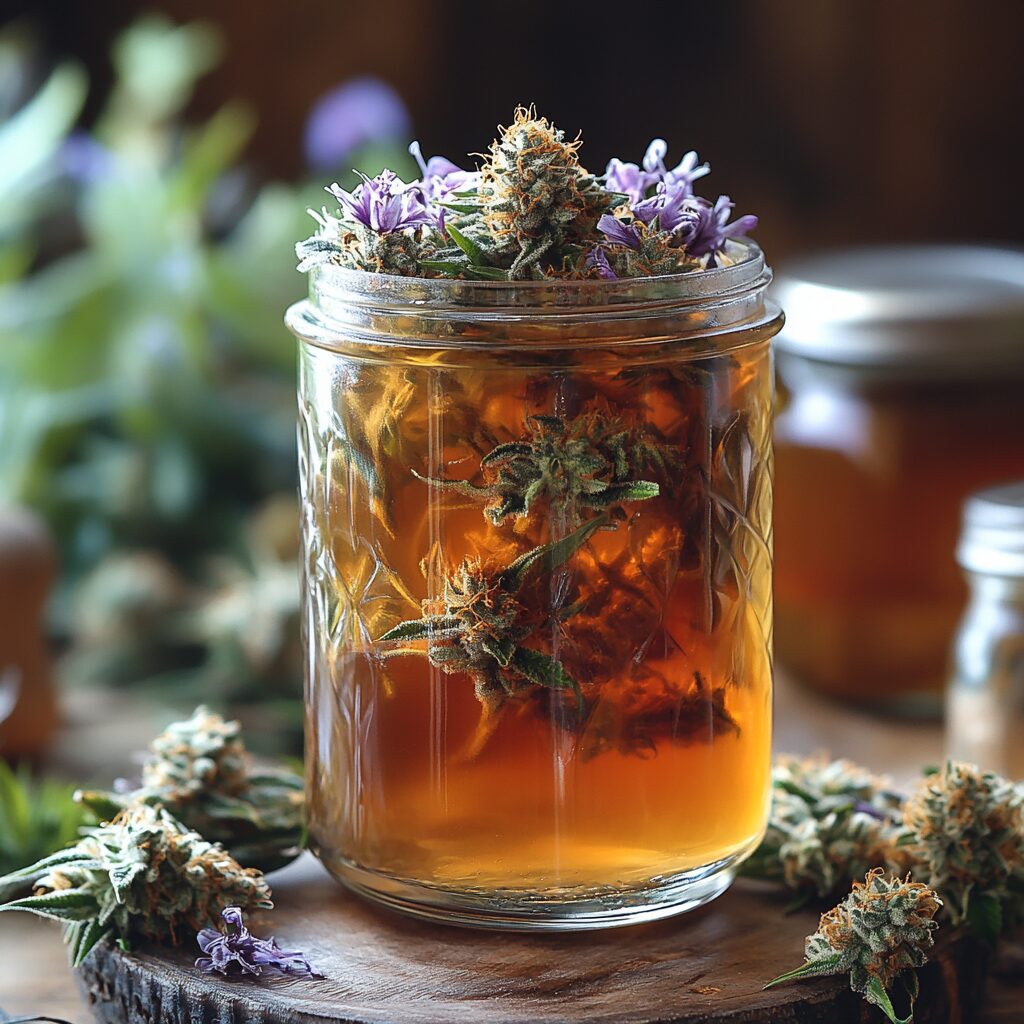

Hemp Tea: What It Helps With and Why You Should Drink It
Hemp tea: what research really showed about anxiety and sleep, how much CBD gets into the infusion, how to brew with fat, and when not to drink it. Status as of 2026.
Hemp tea is an infusion made from dried leaves, stems, and flower clusters of hemp fiber, consumed for cannabidiol (CBD), its acidic form CBDA, and terpenes. More marketing than data surrounds this drink, and most numbers circulating in Polish guides do not come from any scientific work. This text separates one from the other. It shows what research on cannabidiol in anxiety and sleep revealed, how many cannabinoids pass from herb to water, why fat in the cup changes the result, and what the European Food Safety Authority wrote in 2026 about a safe dose. You will also find the current legal status of hemp herb in Poland, as the THC content threshold is counted differently than most store descriptions state.
KEY INFORMATION
- What it is: infusion from hemp fiber herb, source of CBD, CBDA, and terpenes, without intoxicating effects.
- Evidence: studies concern pure cannabidiol in pharmaceutical doses, not the infusion; no clinical study has evaluated hemp tea.
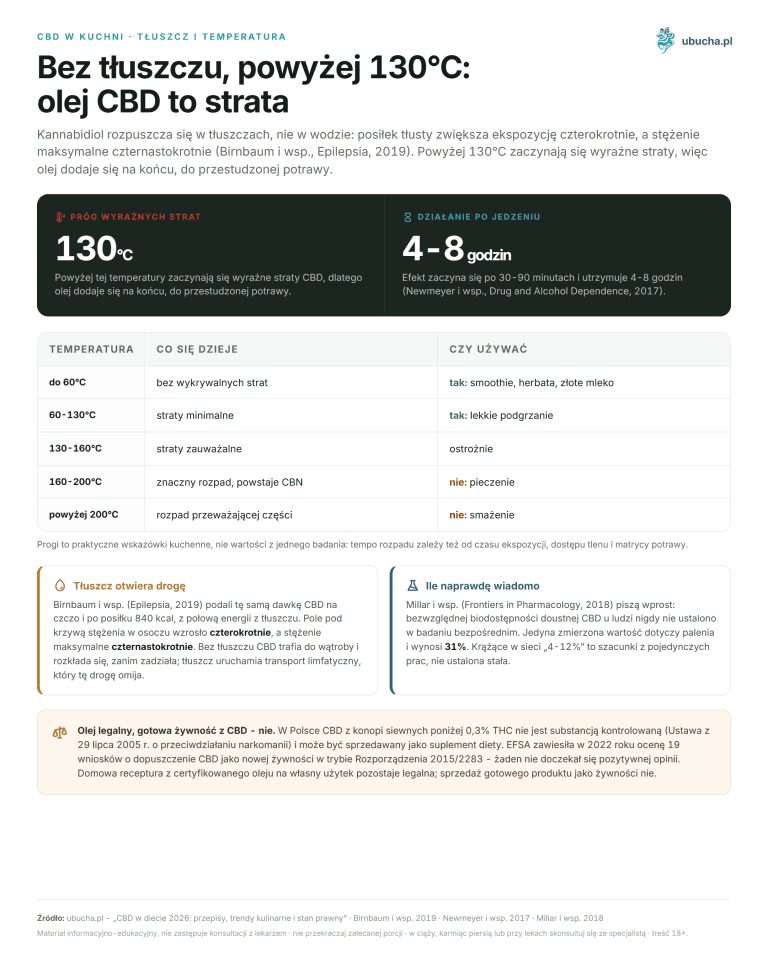
- Fat in the cup: a high-fat meal raised maximum CBD concentration 14 times and area under the curve 4 times (Birnbaum et al., Epilepsia, 2019).
- Safe dose: EFSA derived in 2026 a provisional level of 0.0275 mg per kilogram of body weight per day, about 2 mg for a 70 kg person.
- Who should avoid: people under 25 years old, pregnant and breastfeeding women, and those taking medications; safety cannot be established for them.
What exactly is hemp tea?
Hemp tea is an infusion from dried parts of industrial hemp (Cannabis sativa L.), usually leaves, small stems, and crushed flower clusters of fiber varieties. It shares only the preparation method with classic tea, i.e., Camellia sinensis. The active carriers are cannabidiol, its acidic form CBDA, and terpenes.
Under one name, two different things are sold in Poland. The first is herbal blends, where the flower content is often small, and the rest consists of leaves and stems, often supplemented with lemon balm, chamomile, or linden. The second is flower herb weighed by grams, with a multiple times higher cannabinoid content. The difference in infusion strength is then not a matter of a few percent but several times.
Herb allowed for sale in Poland does not exceed 0.3 percent of the sum of delta-9-THC and tetrahydrocannabinolic acid, so its infusion does not intoxicate. There is a second barrier. Cannabinoids are fat-soluble, and water dissolves them poorly, so even that trace THC content passes into the cup only partially.
Hemp infusion is neither a medicine nor a supplement with established dosing. No clinical study has evaluated hemp tea as such: all we know about cannabidiol comes from trials with pure substance administered in capsules, oral solutions, or sprays. This difference recurs in every section of this text and determines what to expect from a cup.
Where does the tradition of drinking hemp infusions come from?
Hemp is among the utility plants with the longest documented history in Asia, and infusions from its leaves are described in both Chinese sources and Indian Ayurvedic tradition. The best-known example is bhang, a milky drink from hemp leaves and flowers prepared in India for the Holi festival, where milk fat plays the same role as cream in the cup today.
It is worth being cautious about dates and quotes circulating online. Attributing a specific recipe to Emperor Shen Nung or giving the year 2700 BCE as the date of the first infusion is a literary tradition, not an archaeological finding. The texts cited were written much later than the numbers suggest.
It is certain, however, that hemp has functioned for centuries in European herbalism as a calming and pain-relieving plant, and infusion was one of the simplest forms of use. The modern return of hemp tea has a different cause than tradition: only breeding varieties with dominant cannabidiol and low THC content provided raw material that can be legally sold in an herbal shop.
History thus explains why the infusion arose at all but is not proof of effectiveness. That must be derived separately from research, and the rest of the article is devoted to this.
How does hemp fiber tea differ from premium CBD herb?
The difference boils down to raw material and how many cannabinoids are in the package. Herbal blends are based on leaves and small parts, premium herb on whole, selected flower clusters. Producers provide cannabinoid content in a certificate of analysis, COA for short, and that is the only document on which comparison can be based. A label declaration without such an attachment says nothing.
| Feature | Herbal Blend | Flower Herb |
|---|---|---|
| Raw material | leaves, stems, small flowers, often with herbs added | whole flower tops of one variety |
| Cannabinoid content | low, verifiable only in COA | several times higher, given in COA for specific batch |
| Infusion taste | herbal-meadow, mild | resinous, distinct, sometimes bitter |
| Typical use | everyday evening drink | stronger infusion, usually less often |
| Sales form | 20-50 g packages | 1-10 g packages |
Prices of both categories differ similarly. In the u Bucha store catalog, tea packages range from 19 to 49.90 PLN, and hemp herb from 25 to 140 PLN per package (catalog status as of August 10, 2026). The catalog changes faster than the article, so check the current category page before purchase, not this number.
The choice between one and the other is not a matter of quality but purpose. If you seek an evening ritual and mild taste, a blend suffices. If you want cannabinoid content comparable to research in a cup, you need flower herb with a certificate, and in any case, you will not approach doses used in clinical trials.
Which active compounds pass into the infusion?
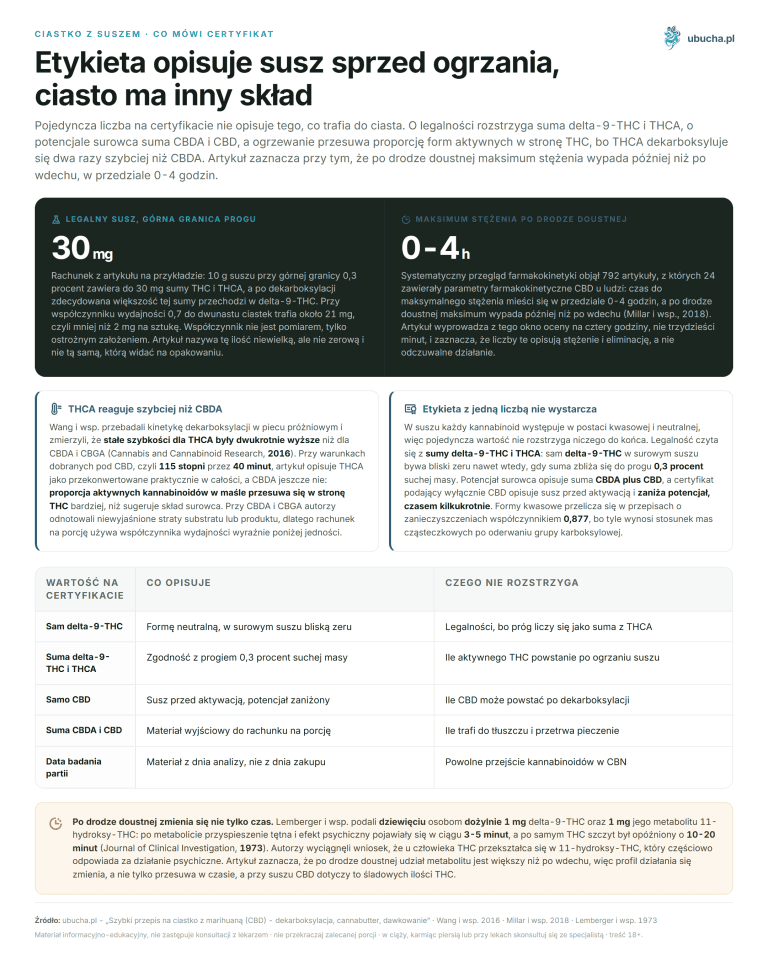
The infusion carries cannabinoids, alongside terpenes and flavonoids. Fresh herb is dominated by CBDA, the acidic form of cannabidiol; under heat, part of this pool converts to CBD by decarboxylation. Water temperature for brewing is too low for full conversion, so both forms usually coexist in the cup.
Cannabidiol does not bind strongly to CB1 or CB2 receptors. It acts indirectly: modulating serotonin receptor 5-HT1A and vanilloid receptors TRPV1, and raising anandamide concentration by competing for FABP transport proteins that deliver it to the degrading enzyme FAAH (Elmes, J Biol Chem, 2015). This indirect mechanism explains why cannabidiol effects are described as mild and slow to develop, not immediate.
Terpenes are responsible for the infusion’s aroma and taste, and some have their own pharmacological activity. Russo described them in detail in a review in British Journal of Pharmacology (2011), listing limonene, myrcene, alpha-pinene, linalool, and beta-caryophyllene. The same work formulates the entourage effect hypothesis, i.e., mutual enhancement of cannabinoids and terpenes, but conditionally: the author writes that synergy must be proven and proposes methods for its study. It is thus not an established fact but a research direction. The review also notes that terpenes share a precursor with cannabinoids and occur widely in the diet as flavor-aroma components recognized by the US FDA as safe, and inhaled from the environment affect behavior at single-digit serum concentrations.
| Terpene | Aroma | Also found in |
|---|---|---|
| myrcene | herbal, musky | hops, mango |
| limonene | citrus | lemon peel |
| alpha-pinene | pine | needles, rosemary |
| linalool | floral | lavender |
| beta-caryophyllene | peppery | black pepper, cloves |
Hemp flavonoids, including cannflavins, have so far been described almost exclusively in laboratory studies. Online comparisons of their strength to aspirin come from single cell culture studies and cannot be transferred to a cup of infusion. More about terpenes themselves can be found in a separate article on hemp terpenes.
Does hemp tea help with anxiety and stress?
Anxiolytic effects have been shown for pure cannabidiol in pharmaceutical doses, not for the infusion. The Bergamaschi et al. study in Neuropsychopharmacology (2011) involved 24 untreated patients with social phobia. Half received a single 600 mg cannabidiol dose, half placebo, then all underwent a simulated public speaking test. The cannabidiol group reported less anxiety, discomfort, and cognitive impairment, and negative self-assessment scale results nearly matched healthy volunteers. Visual mood scale, negative self-assessment scale, and physiological parameters were measured at six time points during the test. A separate reference group of 12 healthy volunteers underwent the same test without any preparation.
This study is often cited as evidence for hemp tea effectiveness, which is an abuse. Six hundred milligrams in one dose cannot be delivered by infusion in any scenario, and the scale of difference cannot be honestly expressed by a number because no one measured the cup’s content. The work thus concerns the substance, not the product in your kitchen.
The anxiolytic mechanism of cannabidiol mainly involves serotonin receptor 5-HT1A and raising anandamide concentration, which in humans comes from competition for FABP transport proteins, not FAAH enzyme inhibition (Elmes, J Biol Chem, 2015). The same receptor target is used by buspirone, a drug for generalized anxiety. The mechanism description should not be confused with proof of effectiveness at the dose you drink.
What remains after removing exaggeration? The infusion is warm, aromatic, and sipped slowly, and the ritual itself lowers arousal regardless of chemistry. If you seek support for persistent anxiety, tea can be an addition to therapy led by a specialist, but not its substitute, and no one can provide a dose that would act like a drug.
Does hemp tea improve sleep?
Data on cannabidiol’s effect on sleep are weaker than their popularity suggests. The most often cited work is the Shannon et al. case series from The Permanente Journal (2019). The authors reviewed psychiatric clinic records, ultimately analyzing 72 adults reporting anxiety or poor sleep quality. In the first month, anxiety scores improved in 57 people (79.2 percent), and sleep scores in 48 (66.7 percent). Of these 72 patients, 47 reported mainly anxiety, and 25 poor sleep; cannabidiol was well tolerated by all but three.
Two things must be added, as they disappear in citations. First, it was a retrospective chart review without a control group or randomization, and cannabidiol was added to existing treatment. Second, sleep improvement, unlike anxiety improvement, fluctuated over time and did not remain stable throughout observation.
The probable mechanism is indirect: if cannabidiol lowers tension, it is easier to fall asleep. Terpenes with calming effects may complement this, although no studies on their role in infusion exist. In practice, a warm drink taken an hour before sleep also signals the end of the day, which is a sleep hygiene element, not pharmacology.
If you seek a comparison of various evening herbs, we described them in the sleep teas comparison. For persistent insomnia, talking to a doctor is more important than choosing a blend, as chronic insomnia can be a symptom, not a disease itself.
Does hemp tea support digestion and immunity?
Here it must be said plainly: there are no studies confirming this. No clinical work has evaluated hemp infusion in digestive complaints or immunity, and transferring results from cell and animal models to a cup of tea is unjustified. Statements about CBDA as a cyclooxygenase inhibitor or cannabidiol’s effect on microbiota describe laboratory findings, not kitchen reality.
There is, however, a finding going the other way, from a regulatory document. The European Food Safety Authority panel in its 2026 update on cannabidiol as novel food noted that gastrointestinal effects appeared at higher doses. Cannabidiol is thus not neutral for intestines but not necessarily in the direction advertising promises.
The immunity issue looks similar. The EFSA panel wrote separately that no study addressed cannabidiol immunotoxicity, although the substance interacts with immune pathways. The statement about hemp tea as immunity support thus has no basis either for benefits or harms: no one has studied it.
The practical conclusion is simple. A warm infusion after a heavy meal can be pleasant and no one disputes that, but it is not a health argument. If you have recurring intestinal complaints, you need diagnostics, not another herbal drink.
Does hemp tea relieve menstrual and muscle pain?
Claims about the infusion’s analgesic effect are based on analogy, not study. The Iffland and Grotenhermen review in Cannabis and Cannabinoid Research (2017) collected clinical data on cannabidiol, mostly concerning epilepsy and psychotic disorders. The most frequently reported adverse effects were fatigue, diarrhea, and changes in appetite and body weight.
For menstrual pain, no cannabidiol study exists to cite, let alone with hemp infusion. The mechanism involving prostaglandins and cyclooxygenase, repeated in guides, describes nonsteroidal anti-inflammatory drugs, not cannabinoids from a cup. Claims of effectiveness comparable to ibuprofen cannot be defended by any citation.
For muscle pain, the situation is similar: warmth, slow drinking, and rest act by themselves, and no one measured cannabinoids’ contribution to this effect. Cannabidiol is studied in athletes but in other forms and doses, as we write in the article on CBD in post-workout recovery.
If pain is severe or recurring monthly, tea is not the answer. Painful menstruation can be a symptom of endometriosis and requires gynecological diagnostics, not experiments with stronger infusion.
How to properly brew hemp tea?
Brewing method changes the cup’s content more than variety choice. Cannabinoids are fat-soluble, so without a fat carrier, the infusion remains mainly aromatic. The following order results from this property and works for both herbal blends and flower herb.
- Crush the herb in a grinder or with fingers into pieces a few millimeters in size. Do not grind to powder, as it will pass through the strainer and cloud the infusion.
- Boil water and wait one minute. Boiling accelerates terpene evaporation, and too cold water extracts poorly.
- Pour fat into an empty cup: a tablespoon of whole milk, a tablespoon of cream, half a teaspoon of coconut oil, or a piece of clarified butter.
- Pour crushed herb into an infuser so it is fully submerged.
- Cover the cup with a saucer and brew for five to ten minutes. Shorter time yields milder infusion, longer stronger and more bitter.
- Remove the infuser, stir the infusion to distribute fat, and drink immediately while warm.
Adding fat is not a herbal superstition. In the Birnbaum et al. study in Epilepsia (2019), eight adults with drug-resistant epilepsy took a 99 percent pure cannabidiol capsule once fasting, once after a high-fat meal. After the meal, maximum concentration was on average 14 times higher, and area under the curve 4 times higher than fasting. Blood was drawn from zero to 72 hours after dose, and 90 percent confidence intervals for the ratio of fed to fasting state ranged from 7.47 to 31.86 for maximum concentration and 3.42 to 7.82 for area under the curve; no adverse effects were noted. The study examined capsules, not infusion, so numbers show the phenomenon’s direction, not the cup’s result.
A detailed brewing guide, divided by herb concentration, is in the article on CBD herb for tea.
How many cannabinoids really reach the blood from the herb?
The honest answer is: no one knows exactly, and numbers given in stores are made up. The composition of hemp infusion was studied by Hazekamp’s team in a paper published in Journal of Ethnopharmacology (2007). The authors prepared tea from pharmaceutical-grade raw material under standardized conditions, changing parameters that everyone changes at home: brewing time, storage method, handling of ready infusion. The paper describes composition qualitatively and quantitatively, with special attention to THC and its acidic form. One important caveat: pharmaceutical cannabis with high THC content was studied, not fiber herb from an herbal shop, so results describe brewing mechanics, not your cup’s content.
The second unknown is absorption. A systematic review of cannabidiol pharmacokinetics in humans (Millar et al., Frontiers in Pharmacology, 2018) reviewed 792 articles and found 24 with pharmacokinetic data. Absolute bioavailability was measured only for inhalation at 31 percent. No study did so for oral route, although intravenous preparations were available to allow such measurement. Half-life ranged from 1.4 to 10.9 hours after mucosal aerosol, two to five days after chronic oral administration, and 31 hours after smoking, with time to maximum concentration between zero and four hours.
The conclusion, which should be in every guide but is nowhere, is this: tables with oral cannabidiol bioavailability percentages are fiction, as no measurement supports them. It is only known that maximum concentration rises after a meal and with fat forms, and interindividual variability is large.
Practically, this means one thing. You cannot convert grams of herb to milligrams of cannabidiol in blood, and anyone giving such a number for tea does so without basis. If you want a repeatable dose, infusion is a bad administration route.
How much hemp tea can you drink daily?
There is no officially established daily portion of hemp infusion, but there is a current safety assessment of cannabidiol itself. The European Food Safety Authority panel in its update on cannabidiol as novel food (2026) derived by benchmark dose method a provisional safe dose of 0.0275 mg per kilogram of body weight per day, with an uncertainty factor of 400. For a 70 kg person, this is about 2 mg per day.
This level applies with reservations that must be read with the number. It concerns only supplements with cannabidiol purity of at least 98 percent, without nanoparticles, with a safe production process and excluded genotoxicity. It is thus not a norm for infusion from herb but a reference point showing how cautiously the regulator approaches this substance today.
The panel also indicated unknowns. Gaps identified in 2022 remain open, animal studies showed consistent liver toxicity, and humans showed hepatotoxic potential, especially with simultaneous drug intake. Cannabidiol crosses the placenta and prenatal exposure causes neurodevelopmental effects.
Hence the sentence that should accompany every dosing discussion: cannabidiol safety cannot be established for people under 25 years old, pregnant and breastfeeding women, and those taking medications simultaneously. If you belong to any of these groups, no dose can be recommended, and the decision belongs to a doctor.
What did EFSA establish about cannabidiol safety in 2026?
The panel’s update on nutrition, novel food, and food allergens is the freshest regulatory document on cannabidiol and reads like a list of unknowns. The panel reviewed literature from animal and human studies since the previous opinion until June 2024, then stated that gaps identified in 2022 remain open. New works were criticized for methodological limitations: nonstandardized protocols, short duration, simultaneous treatment with other substances.
The strongest signal concerns the liver. Animal studies showed consistent liver toxicity, with organ mass and histopathological changes as the most sensitive endpoints. Human trials noted hepatotoxic potential, especially when cannabidiol was taken with drugs. The reference point for the dose described above was derived from subchronic studies meeting good laboratory practice.
The rest of the list is equally cautious. Gastrointestinal effects appeared at higher doses, and neurological and psychiatric safety data were insufficient. Reproductive toxicity studies reinforced earlier concerns, and prenatal exposure showed long-term and sex-dependent neurodevelopmental effects. Hormonal disturbances, including altered thyroid hormone levels and adrenal histopathological changes, were noted. No reviewed study addressed immunotoxicity, although cannabidiol interacts with immune pathways.
For the hemp tea reader, the document has one practical implication. Cannabinoid amounts from infusion are incomparably smaller than those used in toxicology, but the caution direction is clear, and the strongest reservation concerns combining cannabidiol with drugs. The panel also noted that bioavailability is variable and depends on administration form and whether taken with food.
When not to drink hemp tea?
Hemp infusion is absolutely discouraged during pregnancy and breastfeeding. The basis is not editorial caution but the EFSA panel’s direct conclusion on inability to establish safety in this group and observations of cannabidiol crossing the placenta. The same applies to people under 25 years old.
The second group is people taking medications. The Iffland and Grotenhermen review (2017) notes that cannabidiol is often used as add-on therapy and more research is needed on its effect on liver enzymes, drug transporters, and interactions with other substances. The authors give clobazam as an example: further studies should determine whether such interaction leads mainly to beneficial effects, like reduced drug dose, or rather adverse ones.
In practice, this means: if you take any prescription drug, talk to your doctor or pharmacist before the first cup. This especially concerns antiepileptic, anticoagulant, and psychiatric drugs. Stopping medication on your own because of drinking tea is a risk disproportionate to any expected benefit.
Adverse effects reported with cannabidiol are mild and transient: fatigue, diarrhea, changes in appetite and body weight. With infusion, risk is correspondingly lower due to smaller dose but does not disappear. If you feel drowsy after tea, do not drive and move the infusion to the evening.
What does Polish law say about hemp herb?
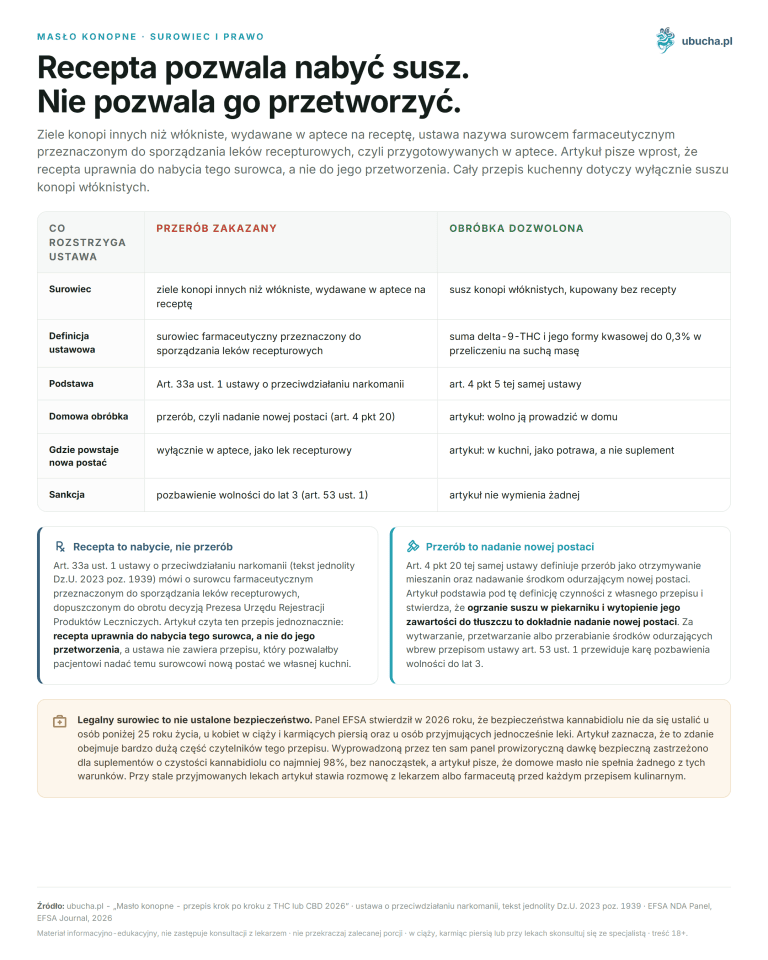
Hemp fiber herb is legal in Poland, and the limit is THC content. According to Article 4 point 5 of the Act of July 29, 2005 on Counteracting Drug Addiction (consolidated text Dz.U. 2023 item 1939), as amended by the Act of March 24, 2022 (Dz.U. 2022 item 763), industrial hemp are plants of the species Cannabis sativa L., in which the sum of delta-9-THC and tetrahydrocannabinolic acid in flower or fruiting tops, from which resin has not been removed, does not exceed 0.3 percent of dry mass.
Two details of this provision are lost in store descriptions but change laboratory test results. First, the threshold concerns the sum of delta-9-THC and THCA, not delta-9-THC alone. Second, the sum is rounded to one decimal place. Material exceeding this threshold is cannabis other than fiber, i.e., a controlled substance.
Separately stands EU law. Hemp varieties qualifying for support under the Common Agricultural Policy may contain up to 0.3 percent THC from January 1, 2023, based on Regulation (EU) 2021/2115; the previous 0.2 percent threshold came from repealed Regulation 1307/2013. The national threshold corresponds to the EU threshold but does not derive from it: these are two separate regulations with the same numeric value.
For the buyer, the practical consequence is one. The seller should provide a certificate of analysis for the specific herb batch, with cannabinoid content and contamination testing. The amendment of August 27, 2026, did not change either the THC threshold or retail sale rules, so the above description remains current.
Frequently Asked Questions
Is hemp tea legal in Poland?
Yes. Hemp fiber dried herb, in which the sum of delta-9-THC and THCA does not exceed 0.3 percent of dry mass, is legal under Article 4 point 5 of the Act on Counteracting Drug Addiction as amended in 2022. An infusion from such herb does not require a prescription, and a reliable seller provides a batch analysis certificate.
Does hemp tea have psychoactive effects?
No. Legal herb contains trace amounts of THC, and cannabinoids are fat-soluble while water dissolves them poorly, so only part of that amount passes into the infusion. The infusion does not cause intoxication, although for some people it can be sedative, especially with stronger brewing.
What does hemp tea help with according to research?
No clinical study has evaluated hemp tea. Data concern pure cannabidiol in pharmaceutical doses: 600 mg single dose in social anxiety in 24 people and a case series from a psychiatric clinic with 72 adults. The infusion cannot be compared to these doses.
How to brew hemp tea to extract something from it?
Crush the herb, pour water one minute after boiling, and brew covered for five to ten minutes. Pour fat into the cup beforehand: milk, cream, coconut oil, or clarified butter. Without a fat carrier, the infusion remains mainly aromatic.
How much hemp tea can you drink daily?
There is no established portion for the infusion. The EFSA panel derived in 2026 a provisional safe cannabidiol dose of 0.0275 mg per kilogram of body weight per day, about 2 mg for a 70 kg person, and specified that it applies only to supplements with at least 98 percent purity.
Who should not drink hemp tea?
Pregnant and breastfeeding women, people under 25 years old, and those taking medications. The EFSA panel stated in 2026 that safety of cannabidiol cannot be established in these groups. For liver diseases and prescription drugs, the attending physician decides.
Does hemp tea interact with medications?
Possible interactions result from cannabidiol’s effect on liver enzymes and drug transporters, and the 2017 review by Iffland and Grotenhermen indicates this area requires further research. Consult your doctor or pharmacist about the infusion if you take antiepileptic, anticoagulant, or psychiatric drugs.
How much CBD passes from the herb to the cup?
It cannot be given numerically. The 2018 human cannabidiol pharmacokinetics review found absolute bioavailability measured only for inhalation at 31 percent; no study established it for oral route. Percentages given for tea have no source.
The current assortment of infusions can be found in the hemp teas category, and stock levels change continuously.
This article is for informational and educational purposes and does not constitute medical advice. Before starting hemp or CBD for therapeutic purposes, consult a doctor, especially if you take other medications, are pregnant, or breastfeeding.
Author: Michał Waluk · Published: 2026-05-11 · Updated: 2026-08-17