
Easter Breakfast with Hemp Seeds - 7 Ideas
Seven ways to use hemp seeds, hemp protein, and oil in Easter breakfast: sour rye soup, egg spread, cottage cheese, salad, pâté, mazurek.
Easter breakfast is the only meal of the year where Polish tradition and proper nutritional balance sit at the same table: eggs, cottage cheese, salads, sour rye soup, and mazurek side by side. The only missing element is a complete plant protein that would fill the amino acid gaps of dairy dishes. Hulled hemp seeds do this discreetly: a spoon on cottage cheese, a spoon in sour rye soup, an addition to egg spread. They do not require changing the family recipe or separate work on the day of serving, as they come in at the very end, most often already on the plate. Below are seven specific ideas where hemp enhances traditional dishes instead of altering them, along with a short list of things to which it is better not to add them.
KEY INFORMATION
• Hemp seeds contain about 25.6 g of protein per 100 g of dry mass (Mattila et al., 2018), with a complete set of essential amino acids (Farinon et al., 2020).
• Three tablespoons of seeds, or 30 g, provide about 8 g of protein.
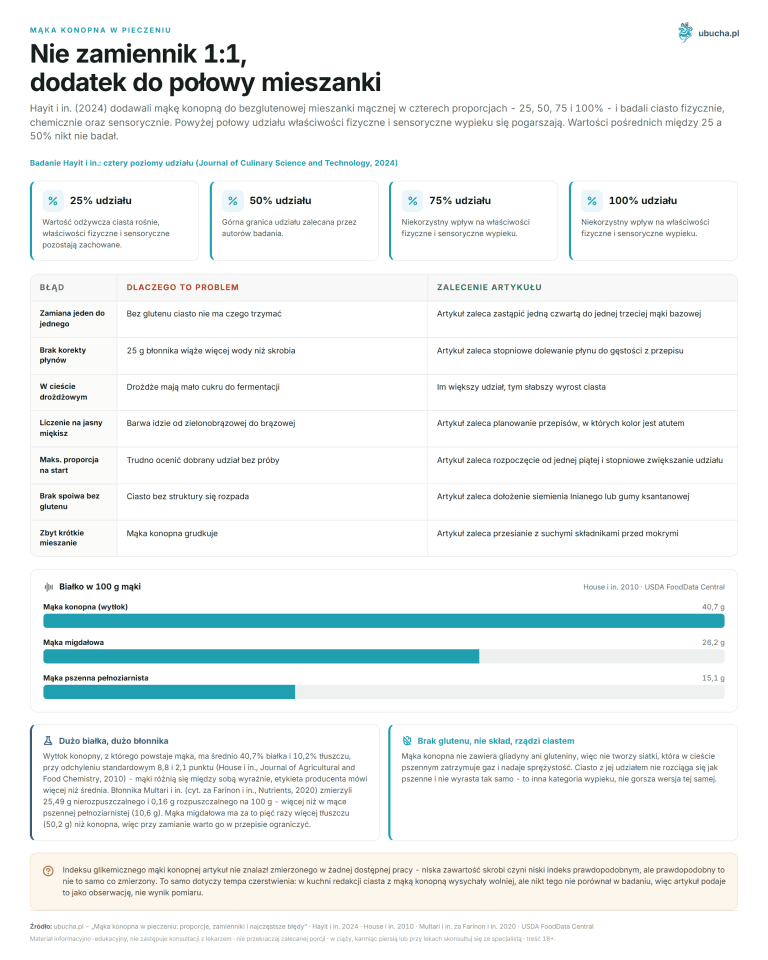
• Hemp protein combines well with eggs and cottage cheese, but if added without fat, it clumps together.
• Hemp oil smokes at about 165°C, so it is only suitable for cold dishes.
Why do hemp seeds fit the Easter table?
Because they exactly complement what this breakfast lacks. The Easter table after fasting is abundant but dominated by eggs and meat products, causing plant dishes to take a back seat. A tablespoon of seeds sprinkled on cottage cheese adds about 2.5 g of protein without changing anything in the recipe.
The nutritional sense here is specific, not general. The protein in hemp seeds contains all the essential amino acids that humans need (Farinon et al., Nutrients, 2020), and in dairy-based dishes, the weak links are often lysine and methionine. The seeds also bring magnesium, which ranges from 237 to 694 mg per 100 g depending on the variety. Additionally, there is an argument that weighs more at the holiday table than a nutritional value table: the nutty, slightly earthy flavor of hulled seeds pairs well with fresh cottage cheese, radishes, and the sour notes of sour rye soup.
Hemp oil in the dressing brings the same aromas as good olive oil, with a ratio of omega-6 to omega-3 fatty acids usually from 2:1 to 3:1 (Callaway, Euphytica, 2004). Simopoulos (Nutrients, 2016) estimates that the Western diet has shifted this ratio to around 20:1, so any place where you reach for fat is a good opportunity to balance it out a bit.
Seeds, hemp protein, or oil - what to choose for what?
These are three different products with three different tasks, and confusing them is the most common mistake. Seeds provide crunch and protein on top of the dish, hemp protein integrates into the mass and does not change the texture, while oil works solely on aroma and the profile of fatty acids. Which of the three you choose depends not only on taste but also on whether anyone at the table will notice the change.
When it comes to seeds, it is worth thinking in portions rather than sprinkling by eye. A tablespoon is about 10 g, which is roughly 2.5 g of protein; three tablespoons spread over the entire breakfast provide about 8 g, which, combined with eggs and cottage cheese, realistically closes the balance. Above this amount, mainly the caloric content increases, as the seeds are fatty.
Hemp protein is a defatted product, so in the same portion, it provides significantly more protein than the seeds themselves (Farinon et al., 2020), but it has one requirement that producers remain silent about: if added directly to a moist mass, it clumps together, which cannot be spread later. Always mix it first with fat or in a liquid part, then combine with the rest. More about its behavior in various dishes can be found in the article on hemp protein in the kitchen.
How to enrich sour rye soup, egg spread, and cottage cheese?
These three dishes accept hemp the easiest from the entire table, as each already has a place for an addition: a sprinkle, fat, or both at once. Below is a complete list of seven ideas so that everything is visible at once, and you can find the details under the table.
| Dish | What to add | When |
|---|---|---|
| 1. Sour rye soup with egg | a tablespoon of seeds, a tablespoon of oil | to the bowl, before serving |
| 2. Egg spread | 2 tablespoons of hemp protein | first mix with mayonnaise |
| 3. Cottage cheese with chives | 2-3 tablespoons of seeds, a teaspoon of oil | on top, before serving |
| 4. Spring salad | 3 tablespoons of oil in the dressing | drizzle just before serving |
| 5. Pâté | 2 tablespoons of hemp flour | to the mixture, before baking |
| 6. Mazurek | 4 tablespoons of seeds on the topping | before the topping sets |
| 7. Cheesecake | 2 tablespoons of protein instead of starch | to the cheese mixture |
Cook the sour rye soup traditionally, with rye sourdough, white sausage, and horseradish. A tablespoon of seeds sprinkled into the bowl sinks slowly and softens in the warm soup, creating a layer that ordinary sour rye soup lacks. If you are making a fasting version, a tablespoon of hemp oil instead of cream works better than it seems: the sourness of the sourdough needs fat, and the nutty note balances the spiciness of horseradish.
Egg spread is the place for hemp protein, not for seeds. Chop eight hard-boiled eggs with a knife, as a blender takes away all the texture. Mix two tablespoons of protein first with mayonnaise, add mustard, chives, and spices, and only then combine with the eggs. A ready version without eggs is described separately as sandwich spread with hemp seeds.
Cottage cheese is the simplest of the three. To 250 g of cheese, add 2 tablespoons of cream, a bunch of chives, salt, and pepper, and sprinkle the seeds on top just before serving. Mixed into the mass, they taste more uniform but lose their crunch, so the choice depends on what you prefer.
What about salad, pâté, and Easter pastries?
The salad is the safest place for hemp oil on the entire table, as it is cold by definition. Mix a dressing with 3 tablespoons of oil, a tablespoon of lemon juice, a teaspoon of honey, salt, pepper, and a pinch of granulated garlic in a jar and drizzle it over the salad just before serving. Two tablespoons of seeds on top complete the dish. You can find the ready composition with vegetables in the recipe for colorful salad with hemp dressing.
In pâté, hemp flour serves as a thickener. Two tablespoons together with one tablespoon of wheat flour thicken the mixture of liver and minced meat, adding protein and fiber (Mattila et al., Plant Foods for Human Nutrition, 2018). Bake the pâté as usual for 50 to 55 minutes at 170°C. Here, the temperature is not a problem, as the flour withstands it without damage, unlike the oil.
Mazurek accepts seeds only on the topping, and that is its advantage. Melt 150 g of dark chocolate with 2 tablespoons of butter, wait until the mixture cools below 40°C, and evenly sprinkle 4 tablespoons of seeds. They will embed in the chocolate and hold as an intended decoration after an hour in the fridge. The same principle applies to caramel, just with a shorter time window.
Cheesecake requires the most caution. Two tablespoons of hemp protein in place of two of the three tablespoons of starch work, but leave one tablespoon of starch, as without it the mass loses structure. Do not exceed 10% of the cake mass. The entire recipe based on this ingredient is protein cheesecake with hemp protein.
How to serve hemp so that the family accepts it?
Place a bowl of seeds in the center of the table and let everyone add their own. This solution is less impressive than altering recipes, but at a family table, it is incomparably more effective, as you do not change a dish that someone has known since childhood.
There is also another principle here that has little to do with nutrition. Hemp additions are best accepted where they look like an intentional decoration rather than a modification: seeds on the mazurek topping do not disturb anyone, as we read them as decoration. Entering through aesthetics works better than entering through health arguments, especially with dishes steeped in tradition.
Do some things a day in advance. Egg spread and salad dressing improve after a night in the fridge, pâté is easier to slice when cooled, and mazurek with topping holds its shape better. Prepare only the cottage cheese and the seed sprinkle fresh on the day of serving, as both lose quality with waiting.
There is also a short list of places where hemp has no business, and it is worth knowing it before you start experimenting. In white borscht, horseradish, and everything that is supposed to be smooth in texture, seeds introduce a foreign texture. They do not go into stuffed eggs, as the filling is too thin and the seeds fall out. Do not use hemp oil for anything fried, so white sausage and scrambled eggs are out by default, just like pancakes. There are still seven dishes left, which is more than enough for one breakfast.
Frequently Asked Questions
How many hemp seeds to add to the Easter breakfast?
Two to three tablespoons per person throughout the meal, which is 20-30 g. The easiest way is to place a bowl in the middle of the table and let everyone add their own. With several dishes sprinkled, it is easy to exceed a reasonable amount, and the seeds are caloric, as fat makes up more than one third of their dry mass (Mattila et al., 2018).
Do hemp seeds go well with Easter sour rye soup?
Yes, as a sprinkle added just before serving. A tablespoon adds crunch and about 2.5 g of plant protein with a complete set of essential amino acids (Farinon et al., 2020). The nutty flavor pairs well with the sourness of the sourdough and the spiciness of horseradish.
How to make egg spread with hemp protein?
Chop 8 hard-boiled eggs with a knife, do not blend them. Mix two tablespoons of hemp protein first with mayonnaise to absorb the fat and prevent clumping, then combine with the eggs, mustard, and chives. If added directly to the eggs, they would clump together.
Can hemp seeds be added to mazurek?
Yes. Sprinkle them on the chocolate or caramel topping before it sets, at a temperature below 40°C. The seeds embed in the topping and look like an intended decoration rather than a recipe change. Four tablespoons are enough for a standard baking tray.
How to add hemp protein to Easter cheesecake?
Replace 2 of the 3 tablespoons of potato starch with hemp protein, leaving one tablespoon of starch for structure. Do not exceed 10% of the cake mass, as above this threshold the cheesecake becomes dense and loses creaminess.
Does hemp oil go well with Easter salads?
Yes, and this is its best use on this table, as the salad is cold. The ratio of omega-6 to omega-3 fatty acids, usually from 2:1 to 3:1, distinguishes this oil among vegetable oils (Callaway, Euphytica, 2004). Do not use it for anything that goes on the frying pan.
The store at Bucha does not carry hemp seeds, hemp protein, or cold-pressed oil, so reach for ingredients at a health food store. In the hemp food category, there are hemp teas and herbal blends, as of August 16, 2026.
This article is for informational and educational purposes and does not replace consultation with a doctor. If you are pregnant, breastfeeding, taking medications, or have chronic conditions, consult the use of supplements or herbs with a specialist.
Author: Michał Waluk · Published: 2026-06-22 · Updated: 2026-08-10