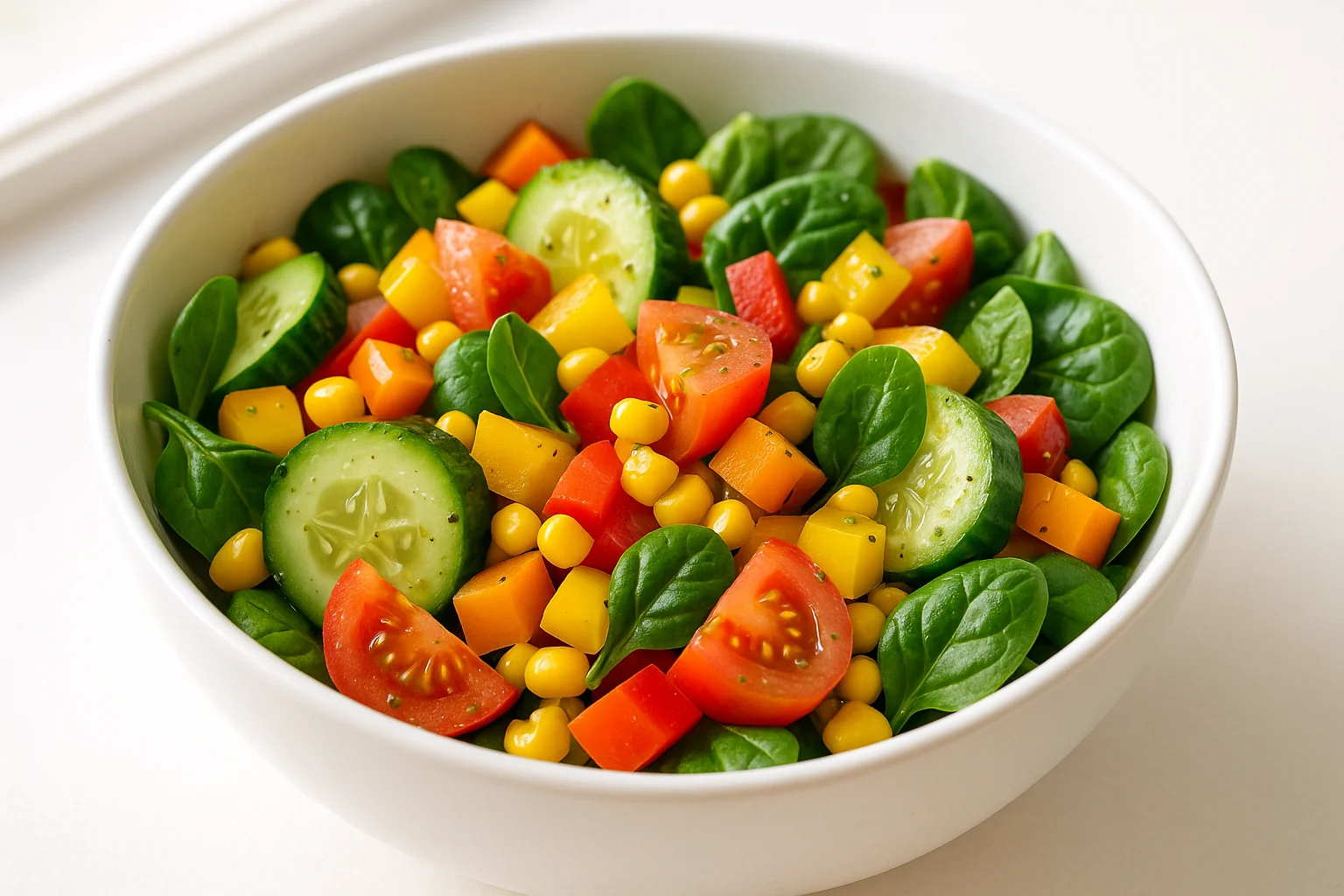

Colorful Vegetable Salad with Hemp Dressing
Colorful vegetable salad with dressing made from hemp oil: recipe for 15 minutes, comparison of three oils based on composition, and calculated nutritional value of a serving.
A colorful vegetable salad practically makes itself, as long as the dressing is good. This one made with cold-pressed hemp oil has a nutty, slightly earthy flavor and is thick enough to cling to the leaves instead of sinking to the bottom of the bowl. However, the stability of this emulsion is due not to the oil but to the mustard, and this has been measured. Hemp oil, on the other hand, provides a ratio of omega-6 to omega-3 fatty acids that is clearly more favorable than olive or sunflower oil. Below you will find a recipe for two servings, a comparison of three oils based on their composition, and the calculated nutritional value of a serving. We also clarify one number that has been circulating on this topic for years, which has no backing in any document.
KEY INFORMATION
• Hulled hemp seeds contain 27.4 g of linoleic acid and 8.7 g of alpha-linolenic acid per 100 g, which is about 3:1 (USDA FoodData Central).
• In olive oil, this ratio is about 14:1, and in sunflower oil, it exceeds 120:1.
• The mucilage from white mustard kept the emulsion stable without separation for 21 days (Wu, Food Hydrocolloids, 2015).
• A serving is about 350 kcal, 26 g of fat, and about 155 mg of vitamin C.
What distinguishes dressing made with hemp oil?
The ratio of fatty acids that cannot be achieved with olive or sunflower oil. Hemp oil is over 80% polyunsaturated, and the omega-6 to omega-3 ratio usually falls between 2:1 and 3:1 (Callaway, Euphytica, 2004). Other salad oils have this ratio an order of magnitude higher.
The scale of the difference is best seen in the raw data on composition. The table below compares the content of linoleic acid, which is omega-6, with the content of alpha-linolenic acid, which is omega-3, according to records from USDA FoodData Central. In the first row are hulled hemp seeds, as their record provides the breakdown of fatty acids, and the oil is pressed from them.
| Product, 100 g | Linoleic acid (omega-6) | Alpha-linolenic acid (omega-3) | Ratio |
|---|---|---|---|
| hulled hemp seeds | 27.4 g | 8.7 g | about 3:1 |
| olive oil | 8.8 g | 0.6 g | about 14:1 |
| sunflower oil | 20.6 g | 0.2 g | over 120:1 |
At this occasion, it is necessary to clarify a number that has been repeated in texts about dressings for years: the supposedly recommended 4:1 ratio by WHO. We have not found any document in which this organization provided such a value, so we do not repeat it here. Simopoulos (Nutrients, 2016), the author of the most frequently cited review on this topic, writes about the increase in the ratio in the Western diet from 1:1 to 20:1 or higher and associates the high ratio with the risk of obesity, but he does not indicate a single target number. Callaway describes the range of 2:1 to 3:1 as optimal for humans, and this is also the author’s assessment, not a recommendation from an institution.
Why does mustard keep this dressing together?
Because it contains mucilage from mustard seeds, which is an effective emulsifier. Oil and vinegar separate within minutes after shaking. A teaspoon of whole mustard keeps the oil droplets dispersed much longer, so the dressing coats the leaves with an even layer instead of pooling in greasy spots.
Wu et al. (Food Hydrocolloids, 2015) compared the water-soluble mucilage from white mustard with two commercial emulsifiers, gum arabic and citrus pectin. Emulsions with one percent and two percent mucilage did not separate for 21 days of storage at 25 degrees. The surface activity of a one percent mucilage solution was comparable to a fifteen percent solution of gum arabic, and the emulsion best withstood heating and freezing cycles.
In culinary recipes, this mechanism is sometimes attributed to lecithin from mustard, and this is a mistake that we have previously repeated. The emulsification is due to the polysaccharide mucilage from the seed coat, not a phospholipid. The practical difference is real: the mucilage is released into the aqueous phase, so it is best to first mix the mustard in the vinegar, and then add the oil in a thin stream while continuously mixing.
How much does one serving of this salad provide?
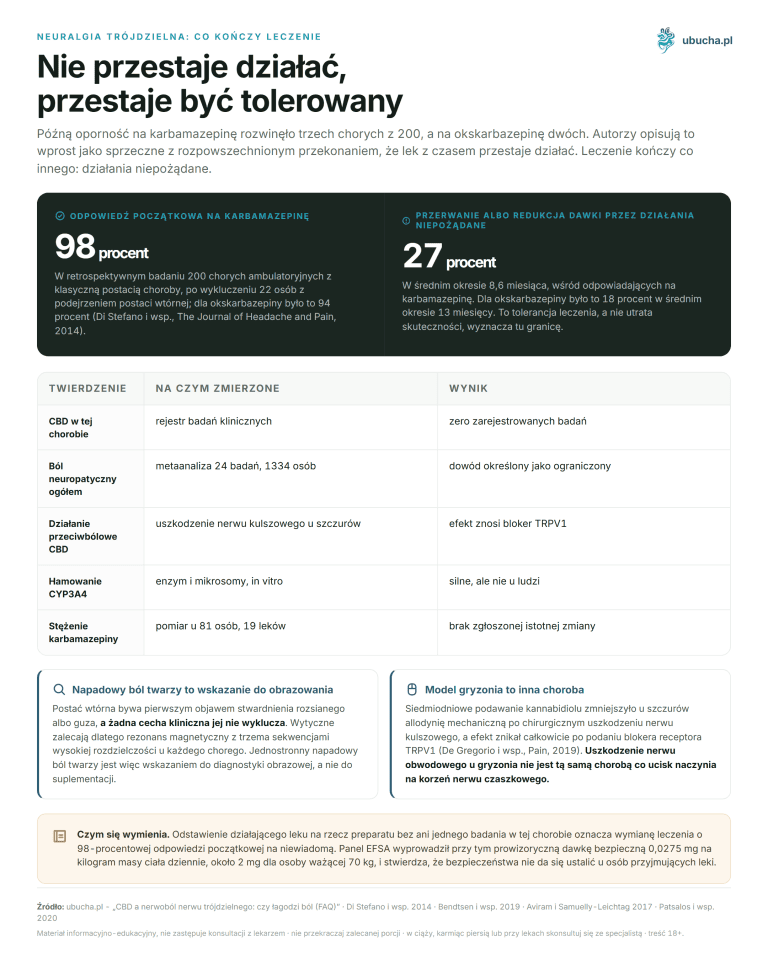
About 350 kcal, 7 g of protein, 26 g of fat, and 24 g of carbohydrates, of which 4.5 g is fiber. There is about 155 mg of vitamin C, mainly from the yellow bell pepper, and about 830 mg of potassium. This is a filling meal, not just an appetizer, and the dressing is what makes it so.
We calculated the numbers from the ingredients based on the composition provided by USDA FoodData Central. It is worth seeing how this balance breaks down: one and a half tablespoons of oil per serving is about 190 kcal, which is more than all the vegetables combined, which provide about 94 kcal. A tablespoon of hulled hemp seeds adds 55 kcal and 3.2 g of protein.
If you want a lighter serving, reduce the oil, not the vegetables. Two tablespoons of dressing instead of three for two people lowers the calorie count by about 60 kcal per serving and does not change the content of vitamin C or fiber. Yellow bell pepper contributes 184 mg of vitamin C per 100 g, so it accounts for almost the entire result, and its share remains the same regardless of the amount of dressing.
What do you need for a colorful salad?
Five vegetables in different colors and five ingredients for the dressing. Color is not just decoration, as the color of bell peppers and tomatoes is due to carotenoids, which are better absorbed in the presence of fat. The proportions are given for two servings.
- 2 handfuls of salad mix or baby spinach, about 80 g
- 1 cucumber, about 200 g
- 200 g cherry tomatoes
- 1 yellow or orange bell pepper, about 150 g
- 100 g canned corn, drained
- 3 tablespoons of cold-pressed hemp oil
- 1 tablespoon of apple cider vinegar or lemon juice
- 1 teaspoon of whole mustard
- 1 teaspoon of honey or maple syrup
- 2 tablespoons of hulled hemp seeds for sprinkling
- salt and pepper to taste
- optional: half an avocado or a handful of olives
Buy cold-pressed hemp oil in a dark bottle and keep it in the refrigerator. With such a high content of polyunsaturated fatty acids, it oxidizes faster than olive oil, and you can recognize rancid oil by its sharp, biting aftertaste. Whole mustard works better than smooth mustard because crushed seeds release mucilage gradually.
How to prepare a colorful salad step by step?
Five tasks in fifteen minutes, without cooking or baking. It all comes down to chopping, shaking the dressing, and assembling the bowl. The only thing that really ruins the effect is wet vegetables: water dilutes the dressing and prevents it from sticking to the leaves.
- Slice the cucumber into pieces about 5 mm thick, cut the cherry tomatoes in half, and slice the bell pepper into thin strips 4-5 cm long. Drain the corn from the brine and dry it on a towel.
- Rinse the salad mix under cold water and dry it in a salad spinner or on a paper towel. Wet lettuce becomes watery within minutes after being dressed.
- In a small jar, mix the mustard with apple cider vinegar, add honey, salt, and pepper, and finally pour in the hemp oil. Seal tightly and shake for 20-30 seconds.
- In a large bowl, spread a layer of lettuce, and on top, arrange the vegetables by color: green cucumber, yellow bell pepper, red tomatoes, golden corn.
- Just before serving, drizzle the salad with the dressing, sprinkle with hulled hemp seeds, and serve immediately. You can also place the dressing separately in a bowl for everyone to serve themselves.
What seasonal variations work best?
Three: summer with fruits, winter with preserved vegetables, and hearty with added protein. The base of the dressing remains the same in each, only the vegetables and additions change. Below is what you can swap and why.
| Variant | What to swap | Why |
|---|---|---|
| Summer | part of the vegetables for pieces of watermelon or peach, lettuce for arugula | the sweetness of the fruit balances the nutty, slightly bitter tone of the oil |
| Autumn-Winter | cucumber and tomatoes for roasted bell pepper from a jar, olives, and sun-dried tomatoes | preserved ingredients are more intense, so they carry the dressing in winter |
| Hearty | add 100 g of cooked chickpeas or two hard-boiled eggs | the protein portion at least doubles compared to the original 7 g |
Each of these swaps leaves one and a half tablespoons of oil per serving, so the calorie count changes through the additions, not the dressing itself. The method of combining the ingredients also remains unchanged.
The same dressing in a version for a warm grain bowl is described in the recipe for buddha bowl with hemp dressing. The sweet-salty direction can be found in salad with beetroot and feta, and hemp oil as a marinade for grilled vegetables is described in the text about hemp grilling.
Frequently Asked Questions
Why should you use hemp oil in dressings?
Due to the ratio of fatty acids. Hemp oil is over 80% polyunsaturated, and the omega-6 to omega-3 ratio is usually between 2:1 and 3:1 (Callaway, Euphytica, 2004). In olive oil, this ratio is about 14:1, and in sunflower oil, it exceeds 120:1.
How many calories are in a serving of this salad?
Approx. 350 kcal, of which about 190 kcal comes from one and a half tablespoons of oil, and about 55 kcal from a tablespoon of hulled hemp seeds. All the vegetables together provide about 94 kcal. A serving also contains about 7 g of protein and 4.5 g of fiber, according to the composition from USDA FoodData Central.
Can the dressing made with hemp oil be heated?
It’s not worth it. Hemp oil consists of over 80% polyunsaturated fatty acids (Callaway, Euphytica, 2004), and these oxidize the fastest under heat, light, and oxygen. Use it cold: for salads, to drizzle over a finished dish, or as a dip.
How to store hemp dressing?
In a tightly sealed jar in the refrigerator for a few days. Cold and lack of light slow down oxidation, to which polyunsaturated fatty acids are particularly susceptible. Shake the jar before each use, as the emulsion partially separates after cooling, and the oil thickens.
Why is mustard used in the dressing?
It keeps the emulsion stable. The mucilage from white mustard seeds acts as an emulsifier more effective than gum arabic: a one percent solution has a surface activity comparable to a fifteen percent solution of gum, and emulsions do not separate for 21 days (Wu et al., Food Hydrocolloids, 2015).
Hemp teas from our offer are collected in the food category. The store at Bucha does not carry hemp oil or hulled seeds, so for the ingredients for the dressing, reach out to the grocery store.
This article is for informational and educational purposes and does not replace consultation with a doctor. If you are pregnant, breastfeeding, taking medications, or have chronic conditions, consult the use of supplements or herbs with a specialist.
Author: Michał Waluk · Published: 2026-06-22 · Updated: 2026-08-16