
Paranoia and anxiety after THC - where do they come from and how to prevent them (FAQ)
Paranoia and anxiety after THC: answers to the most common questions and what studies say. u Bucha.
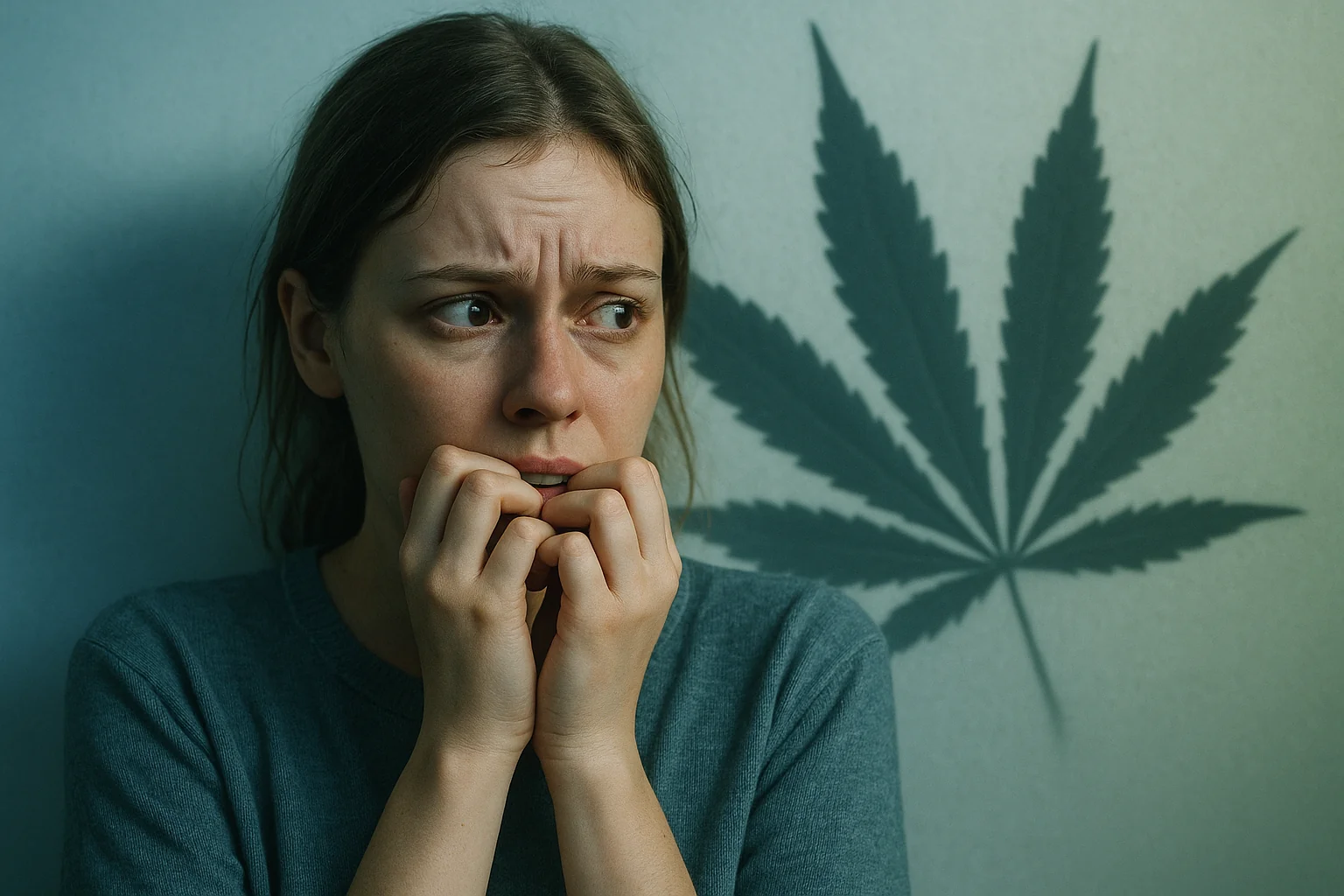
Anyone who has used marijuana or heard about its effects knows that THC can induce unpleasant feelings of anxiety and sometimes paranoia. This can happen even to experienced users - especially at higher doses or in new circumstances. This phenomenon is neither a myth nor an excuse: it has solid neurobiological foundations and has been well documented in the scientific literature. This article explains the mechanism, risk factors, and effective ways to minimize unpleasant effects.
KEY INFORMATION
• THC activates CB1 receptors in the amygdala, inducing paranoia in 30-50% of users at high doses (Freeman et al., Psychological Medicine, 2021).
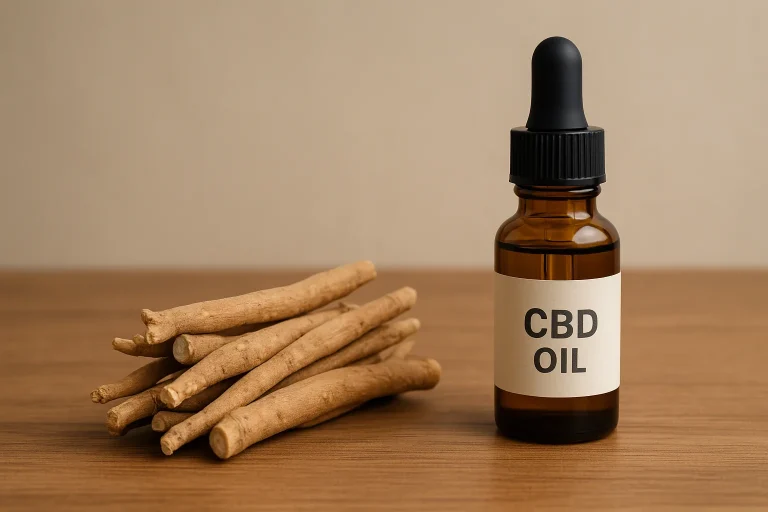
• CBD acts as a partial antagonist of CB1 and can alleviate anxiety induced by THC - flower or oil with high CBD is a proven buffer.
• Effects after inhaling THC subside in 1-3 hours, after edibles - up to 8 hours.
• Risk factors: young age, history of anxiety, high doses of THC, lack of CBD in the product.
Why does THC cause paranoia and anxiety?
THC (delta-9-tetrahydrocannabinol) binds strongly to CB1 receptors in the endocannabinoid system. The problem arises in the densely innervated amygdala - a limbic structure responsible for processing fear and threat. When THC activates CB1 receptors in the amygdala above a certain threshold, it can disrupt normal emotional processing and trigger an exaggerated anxiety response (Freeman et al., Psychological Medicine, 2021). In a large randomized study involving 121 participants, the administration of THC induced paranoia in 30% of the participants - significantly more than the placebo.
Additionally, there is an effect on the prefrontal cortex, which normally suppresses excessive anxiety responses from the amygdala. THC reduces the activity of the prefrontal cortex, making the "brake" weaker. The result is a spiraling anxiety: an interesting stimulus from the environment is interpreted as a threat, the brain escalates the response, and paranoid thinking arises ("everyone is watching me", "something bad is going to happen").
Who is more susceptible to paranoia after marijuana?
Not everyone reacts to THC in the same way. Researchers have identified several factors that increase the risk of a paranoid reaction. Age plays a significant role: the brain develops until about the age of 25, and CB1 receptors are more reactive to THC during this time. Teenagers and individuals under 21 are particularly vulnerable, as confirmed by meta-analyses published by EMCDDA (European Monitoring Centre for Drugs and Drug Addiction).
Freeman and his team (2021) demonstrated that individuals with initially higher levels of anxiety and a tendency toward paranoid thinking react much more strongly to THC than those without these predispositions. The genetics of the endocannabinoid system (variants of the CNR1 gene coding for the CB1 receptor) may influence individual sensitivity - although research on this topic is still ongoing.
| Risk factor | Impact on paranoia risk | What can be done |
|---|---|---|
| Age under 25 | Significantly higher | Use minimal doses or wait |
| History of anxiety disorders | High | Consult a doctor before use |
| High dose of THC | High (dose-dependent) | Start with small portions |
| Lack of CBD in the product | Moderate | Choose a product with higher CBD |
| Stressful environment | Moderate | Use only in a safe place |
| Use with alcohol | Higher (synergism) | Do not combine substances |
How does CBD protect against THC-induced paranoia?
CBD (cannabidiol) acts on CB1 receptors differently than THC. Instead of strong activation, CBD acts as a negative allosteric modulator - changing the shape of the CB1 receptor in such a way that THC binds to it less effectively and produces a milder effect (Bhattacharyya et al., Journal of Psychopharmacology, 2020). This is a biological mechanism explaining the observation that cannabis strains with high CBD/THC produce less paranoia.
In a practical study by Morgan and Curran from 2008 (Psychological Medicine) individuals using marijuana rich in CBD exhibited significantly fewer psychotic symptoms and had more difficulty recognizing faces expressing fear - a marker of reduced reactivity of the amygdala. In other words, CBD literally "calms" the brain's overreactivity induced by THC.
Observations from users of CBD flower from our store indicate that some people reach for CBD flower precisely as an "antidote" after too intense contact with THC. This phenomenon is colloquially known as "CBD rescue" and is well-known in cannabis wellness circles. Although there are no dedicated clinical studies on this, the biochemical mechanism of CBD's allosteric antagonism justifies it well.
What to do during a paranoia episode after THC?
First principle: paranoia from THC is unpleasant but transient and does not pose a threat to physical health. Keeping this in mind, a few simple strategies can shorten and alleviate the episode. Changing the environment is one of the most effective interventions - going outside, moving to a quieter room, or simply changing the visual perspective interrupts the spiraling anxiety. The brain under the influence of THC is very sensitive to signals from the environment.
Controlled breathing (4-4-4 technique: inhale for 4 seconds, hold for 4 seconds, exhale for 4 seconds) activates the parasympathetic system and reduces the "fight or flight" response. Hydration with water or orange juice (vitamin C) may accelerate THC metabolism. If you have access to CBD oil or CBD flower - its use may shorten the episode through the allosteric antagonism mechanism described above.
The most important advice: do not try to "fight" the feeling or suppress it. Research on anxiety therapy shows that acceptance of the experience ("this is the effect of THC, it will pass") reduces intensity more than attempts to control it. This is the foundation of the mindfulness approach to unpleasant emotional states.
How to prevent paranoia before a session - practical rules for safe use
The best strategy is prevention, not just reaction. A few simple rules significantly reduce the likelihood of an unpleasant anxiety episode. Start with the dose: the "start low, go slow" principle (start with a small dose, increase slowly) is standard harm reduction advice for psychoactive substances. When vaporizing, this means one inhale, waiting 10-15 minutes before assessing the effect - and only then possibly repeating. With edibles, the effect appears after 45-120 minutes, so patience is particularly important here. Unpleasant episodes after THC edibles often result from re-dosing because the user did not feel the effect and thinking that "it didn't work," consumes another portion.
The environment is as important as the dose. "Set and setting" - mindset and environment - is a term introduced by psychedelic researchers in the 1960s, which perfectly describes the variables influencing the quality of the experience with THC. A safe environment (a familiar place, trusted companions), a positive baseline mood, and the absence of urgent commitments are conditions that minimize the risk of anxiety. Avoid using THC in stressful situations, at parties with strangers, or when you have unresolved emotional conflicts - the brain under THC processes emotions more intensely than usual, and a negative mindset can escalate rather than dissolve.
Hydration and a light meal before the session can mitigate the absorption rate of THC and stabilize blood sugar levels - hypoglycemia intensifies anxiety states and is one of the less obvious risk factors during a session. Avoid alcohol in combination with THC: alcohol increases the peak concentration of THC in the blood and intensifies psychoactive effects in a way that is difficult to control. This combination is known as "crossfading" - popular recreationally, but statistically associated with a higher rate of unpleasant experiences.
Frequently Asked Questions
Why does THC cause paranoia?
THC activates CB1 receptors in the amygdala of the brain - structures responsible for processing fear. A study Freeman and team (Psychological Medicine, 2021) showed that THC directly induces paranoid thinking in 30-50% of users at high doses. The effect is dose-dependent and varies by individual sensitivity.
How quickly does paranoia from THC pass?
Paranoia and anxiety after inhaling THC (smoking, vaporization) usually subside within 1-3 hours - as THC levels in the blood decrease. After consuming edibles with THC, effects can last from 4 to 8 hours due to slower hepatic metabolism and conversion of THC to 11-OH-THC.
Does CBD help with paranoia after THC?
Yes - CBD acts as a negative allosteric modulator of CB1 receptors and can alleviate the psychoactive effects of THC. A study by Bhattacharyya et al. (Journal of Psychopharmacology, 2020) confirmed that CBD reduces anxiety induced by THC. CBD oil or CBD-rich flower may shorten and weaken a paranoia episode.
What to do when experiencing paranoia after THC?
Change your environment - go outside or move to a quieter place. Control your breathing (inhale for 4 seconds, hold for 4 seconds, exhale for 4 seconds). Hydrate with water or juice. Focus on something specific and remind yourself that the effect will pass. Paranoia after THC, although unpleasant, is not dangerous to physical health.
Who is more susceptible to paranoia after marijuana?
Younger individuals (brain developing until around age 25), those with a history of anxiety disorders or such cases in the family, using high doses of THC, consuming marijuana without CBD, and being in a stressful or unfamiliar environment are at greater risk of paranoia. Freeman et al. (2021) confirmed that individuals with baseline anxiety levels react more strongly.
Does smoking low-THC marijuana reduce the risk?
Yes. Products with low THC and higher CBD statistically have a lower risk of inducing paranoia. A study by Morgana and Curran (Psychological Medicine, 2008) showed that users of CBD-rich marijuana exhibited significantly fewer psychotic symptoms than those using THC-rich strains without CBD.
This article is informational and educational in nature. It contains internal links to products available in the u Bucha store. Prices and specifications may change - please check the current data on the product page before purchasing.
Author: Michał Waluk · Published: 2026-05-04 · Updated: 2026-05-04