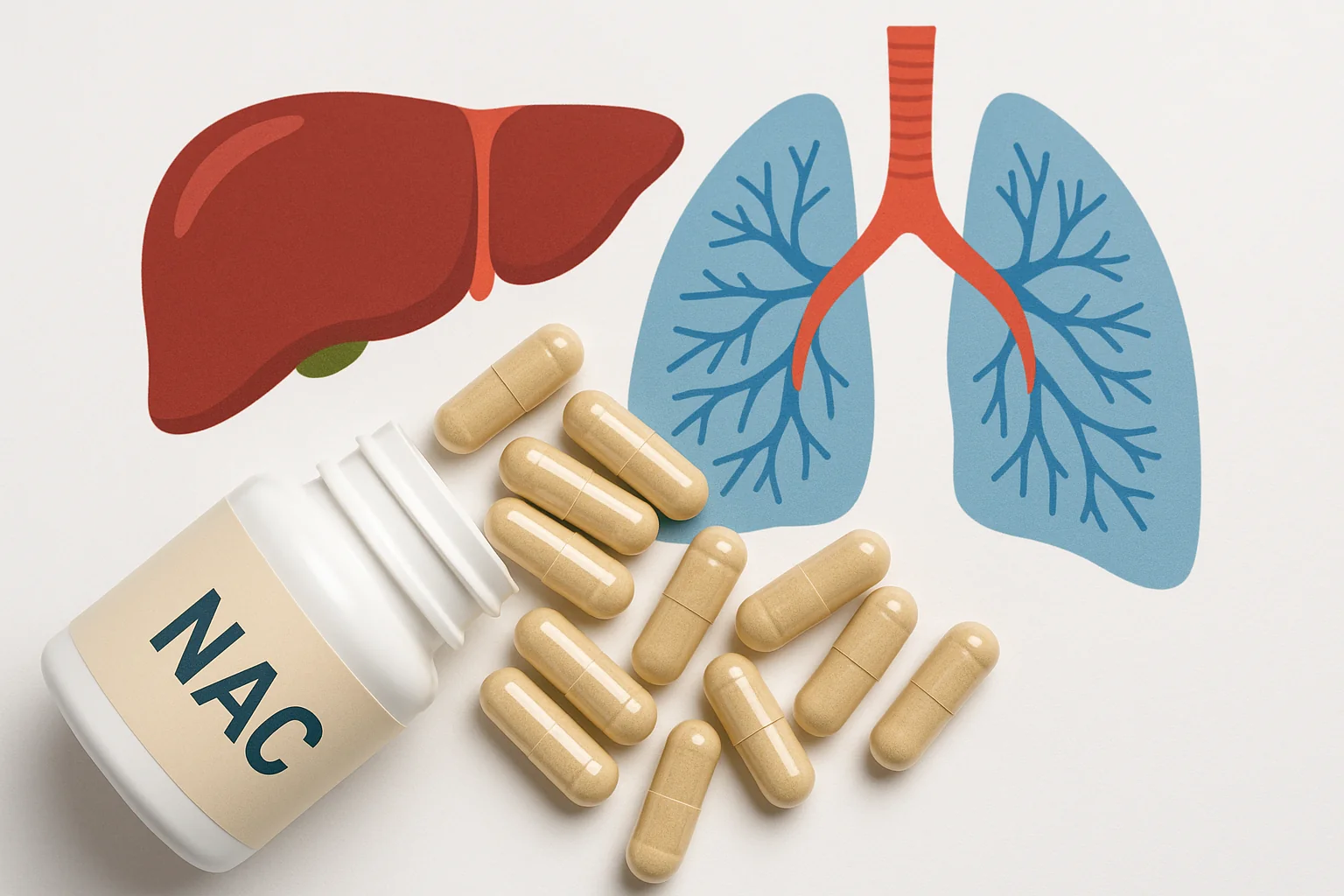

NAC (N-acetylcysteine): what it is, when to take it, and what not to combine it with
NAC (N-acetylcysteine) – what it is, how it works, dosage. Glutathione, liver, lungs, psychiatry. What to avoid combining with NAC and when it is beneficial to take.
N-acetylcysteine (NAC) is one of the oldest and best-documented substances in the arsenal of both conventional medicine and supplementation. Used in hospitals since 1967 as an antidote for acetaminophen poisoning - one of the most dramatic clinical effects of any supplement. In supplementation, it is popular as liver support, a mucolytic, and an antioxidant. Newer studies are investigating it in psychiatry. This article precisely discusses the mechanism, documented uses, dosing, and important warnings regarding drug interactions.
KEY INFORMATION
• NAC is a precursor to glutathione - the main cellular antioxidant and a key factor in liver detoxification. Low glutathione levels correlate with many chronic diseases (Mokhtari et al., 2017).
• In hospital protocols: intravenous NAC is the first line of treatment for acetaminophen poisoning - if administered within 8-10 hours of poisoning, it almost completely prevents liver damage.
• As a mucolytic: NAC breaks disulfide bonds in mucus glycoproteins, thinning it - used in COPD and cystic fibrosis.
• Dawkowanie suplementacyjne: 600-1200 mg/d; w badaniach psychiatrycznych (OCD): 2400-3000 mg/d przez 12-16 tygodni (Mokhtari et al., 2017).
What is NAC and how does it work in the body?
N-acetylcysteine is an N-acetylated derivative of L-cysteine - a sulfur-containing amino acid. In the body, NAC primarily serves as a precursor and "cysteine buffer" for glutathione (GSH) synthesis. Glutathione - a tripeptide composed of glutamate, cysteine, and glycine - is the most important cellular antioxidant and a key detoxification tool in the liver. It limits the availability of cysteine, not glutamate or glycine - therefore, the supply of NAC directly increases glutathione synthesis.
Why do we supplement NAC instead of glutathione? Glutathione taken orally is degraded in the gastrointestinal tract before absorption - glutathionease and other enzymes break it down into amino acids. NAC is significantly better bioavailable orally and, after absorption, converts to L-cysteine, then to glutathione. This intermediate replenishment of the GSH pool is effective and clinically documented.
Our observations: NAC is one of the most studied supplements with dual life - a hospital drug (toxicology protocols) and a consumer supplement. This duality is rare in the supplement world and means we have data from real clinical studies on thousands of patients, not just small RCTs. On one hand, it gives us a solid foundation; on the other, it reminds us that NAC requires medical supervision for certain applications.
NAC and the liver - glutathione and detoxification
The liver contains the highest concentration of glutathione among all body tissues. Glutathione is crucial for the second phase of detoxification - conjugating reactive metabolites (quinones, epoxides, aldehydes) to polar forms excreted by bile or kidneys. Under liver burden (alcohol, medications, environmental toxins), glutathione stores become depleted, exposing hepatocytes to oxidative stress and damage.
Review by Mokhtari et al. (European Journal of Pharmacology, 2017) summarized the mechanisms and uses of NAC, confirming its role as a central modulator of glutathione in liver detoxification. NAC as preventive supplementation (600 mg/day) is used by individuals taking hepatotoxic medications, regularly consuming alcohol, or exposed to environmental toxins, although clinical RCTs in these scenarios are less numerous than for acetaminophen poisoning.
Acetaminophen poisoning - mechanism and role of NAC: acetaminophen is metabolized in the liver to the toxic metabolite NAPQI (N-acetyl-p-benzoquinone imine). Under normal conditions, NAPQI is quickly neutralized by glutathione. In acetaminophen overdose, glutathione stores become depleted, NAPQI accumulates, and destroys hepatocytes - hepatotoxicity can lead to acute liver failure. Intravenous NAC replenishes cysteine (the substrate for glutathione), restoring the ability to neutralize NAPQI. If administered within 8-10 hours of poisoning, it is nearly 100% effective in preventing liver damage.
NAC as a mucolytic - lungs and respiratory tract
In the respiratory tract, NAC acts as a mucolytic - it breaks disulfide bonds between mucus glycoprotein chains, reducing its viscosity and facilitating expectoration. This is a direct mechanism, independent of glutathione. NAC is used as a registered drug in Poland (Fluimucil, ACC) for indications such as chronic bronchitis, COPD, and cystic fibrosis.
Studies have shown that regular NAC supplementation (600 mg/day) in patients with COPD reduces the number of disease exacerbations and improves quality of life - a meta-analysis by Stey et al. (European Respiratory Journal, 2000) with 9 RCTs confirmed a significant reduction in exacerbations with oral NAC. NAC in nebulization is used in cystic fibrosis, although it may cause bronchospasm in asthmatics - caution in this group.
NAC in psychiatry - OCD, depression, and addictions
The most interesting and least recognized area of NAC research is psychiatry. Mechanism: NAC regulates the cystine-glutamate transporter (Xc-), which exchanges cystine (a substrate for glutathione synthesis) for glutamate in the nervous system. Glutamatergic overactivity is involved in OCD, BPD, and addictions. By regulating this transporter, NAC reduces excessive glutamate release in the nucleus accumbens and prefrontal cortex.
Mokhtari et al. (2017) They reviewed 16 clinical studies of NAC in psychiatric disorders. Pilot studies with OCD: doses of 2400-3000 mg/day for 12-16 weeks yielded promising results as adjunct therapy in insufficient response to SSRIs. Studies with BPD (bipolar disorder) and depression: smaller but suggestive effects on depressive symptoms. Studies with addictions (cocaine, alcohol, gambling): NAC reduced craving in several studies. Important caveat: these are pilot and exploratory data, not clinical recommendations. Do not use NAC instead of standard psychiatric treatment.
What not to combine with NAC - important interactions
Organic nitrates (nitroglycerin, isosorbide dinitrate, isosorbide mononitrate) - used in coronary artery disease. NAC enhances their vasodilatory effect, causing severe headaches and significant drops in blood pressure. This interaction is well documented - in cardiology patients treated with nitrates, intravenous NAC requires caution, and oral supplementation should be discussed with a cardiologist.
Metal chelating agents - NAC may chelate zinc, copper, iron and reduce their bioavailability. If you are supplementing minerals or taking medications containing metals, maintain a 2-3 hour gap. With long-term use of NAC (beyond 6 months), consider supplementing zinc 15-25 mg/day, as NAC may deplete its stores.
High doses of vitamin C (above 1000 mg/day) - with long-term combination with NAC, a pro-oxidative interaction may occur through the formation of reactive nitrogen species. Short-term safe; with long-term use, consider separating doses throughout the day. ACE inhibitors (ramipril, enalapril, lisinopril) - NAC may enhance the hypotensive effect; caution in those prone to hypotension.
Dosage of NAC and how to take it
For liver support and antioxidant prophylaxis: 600 mg/day (1 capsule of the standard preparation) with a meal. For respiratory issues (chronic cough, COPD): 600-1200 mg/day in 1-2 doses. In psychiatric studies (OCD, depression): 2400-3000 mg/day in 2-3 doses for a minimum of 12 weeks - only under psychiatric supervision.
NAC is best taken with a meal to reduce nausea (the most common side effect). Drink plenty of water - NAC increases the excretion of cysteine and its metabolites through the kidneys, which can crystallize with water deficiency. Do not take on an empty stomach at doses above 600 mg. Supplement breaks (e.g., 2 weeks off after 2-3 months) are reasonable at doses above 1200 mg/day.
It's also worth getting to know alpha-lipoic acid - another strong mitochondrial antioxidant that is often used alongside NAC, as it works synergistically through complementary mechanisms. You can read about it in the article alpha-lipoic acid ALA - a strong antioxidant for nerves, sugar, and skin.
NAC in COVID-19 and viral infections
The COVID-19 pandemic has renewed interest in NAC as a potential adjunct in the treatment of viral infections. The mechanisms justifying this interest: NAC replenishes glutathione, which is depleted in severe COVID-19 (especially in older adults, the obese, and those with diabetes), reduces pro-inflammatory cytokines (inhibits NFkB), breaks down mucus in the respiratory tract (especially important in pneumonia), and decreases platelet aggregation. Pilot studies have shown potential benefits of NAC in mild and moderate COVID-19, but replication in large RCTs is required.
In other viral infections - flu, RSV - NAC has documented mucolytic effects that accelerate the resolution of respiratory symptoms. A study by De Flora et al. (European Respiratory Journal, 1997) showed that NAC 600 mg/day for 6 months significantly reduced the frequency and severity of flu-like symptoms in older patients, even though the flu vaccine was ineffective in this group.
NAC and PCOS, fertility, and hormones
PCOS (polycystic ovary syndrome) is associated with insulin resistance and oxidative stress. NAC, by reducing oxidative stress and improving insulin sensitivity (similar to berberine, but through a different mechanism), may improve hormonal and metabolic parameters in women with PCOS. Several clinical studies have shown that NAC 1200-1800 mg/day for 3-6 months in women with PCOS improved cycle regularity, lowered androgens, and improved metabolic profile - to a similar extent as metformin.
Fertility and egg quality: oxidative stress is an important factor reducing oocyte quality. NAC, by reducing oxidative stress, may improve egg quality, especially in women with PCOS or endometriosis. The data is preliminary, but the biological mechanism is justified. In men: oxidative stress damages the DNA of spermatocytes. NAC 600-1200 mg/day in pilot studies improved semen quality (motility, morphology) in men with oxidative infertility.
Frequently Asked Questions
What is NAC (N-acetylcysteine)?
NAC is an N-acetylated derivative of L-cysteine - a sulfur-containing amino acid and a precursor of glutathione. It has been used in medicine since 1967 as an antidote for acetaminophen poisoning. In supplementation: liver support, mucolytic, antioxidant, and potentially glutamatergic modulation in psychiatry. Supplementation dosage: 600-1200 mg/day.
How to dose NAC?
Liver support and antioxidant: 600 mg/day with a meal. Mucolytic (COPD, cough): 600-1200 mg/day in 1-2 doses. Psychiatry (OCD, depression - only as an adjunct under medical supervision): 2400-3000 mg/day for 12-16 weeks. Start with 600 mg/day and gradually increase.
Does NAC protect the liver?
Yes - by replenishing the glutathione pool (cysteine is the limiting substrate). In hospitals, the protocol for acetaminophen poisoning is based on IV NAC - if administered within 8-10 hours of poisoning, it almost completely prevents liver damage. In supplementation: it supports the liver burdened by alcohol, hepatotoxic drugs, or toxins.
Does NAC work on the respiratory tract?
Yes - as a mucolytic, breaking disulfide bonds in mucus. Used in COPD and cystic fibrosis. A meta-analysis by Stey et al. (2000) showed a significant reduction in COPD exacerbations at 600 mg/day. Effective both orally and in nebulization (caution in asthmatics).
What should not be combined with NAC?
Nitrates (intensifying hypotensive effect, headache), metal chelating agents (maintain a 2-3 hour gap), high doses of vitamin C with prolonged use (pro-oxidative interaction), and ACE inhibitors (enhancing hypotensive effect). Caution in asthma and nebulization.
Does NAC help with OCD or depression?
Pilot data (Mokhtari et al., 2017) suggest potential in OCD (2400-3000 mg/day as an adjunct) and depression through glutamatergic modulation. The results are promising, but the studies are small and exploratory. Do not use NAC as a substitute for standard psychiatric treatment - only as a supplement under psychiatric supervision.
Is NAC safe?
Generally safe at 600-1200 mg/day. Side effects: nausea, vomiting, diarrhea (especially at higher doses or on an empty stomach). Rarely: allergic reactions. Caution in asthma with nebulization. Pregnant and breastfeeding women - consult a doctor. Long-term data beyond one year is limited.
This article is for informational and educational purposes and does not constitute medical advice. Before starting to use cannabis or CBD for therapeutic purposes, consult a doctor, especially if you are taking other medications, are pregnant, or breastfeeding.
Author: Michał Waluk · Published: 2026-05-04 · Updated: 2026-05-04