
Tofu in Hemp Sauce: Vegan Main Dish
Crispy tofu and hemp oil sauce added cold. Step-by-step recipe, calculated protein from the USDA base, and the reason why we do not heat the oil.
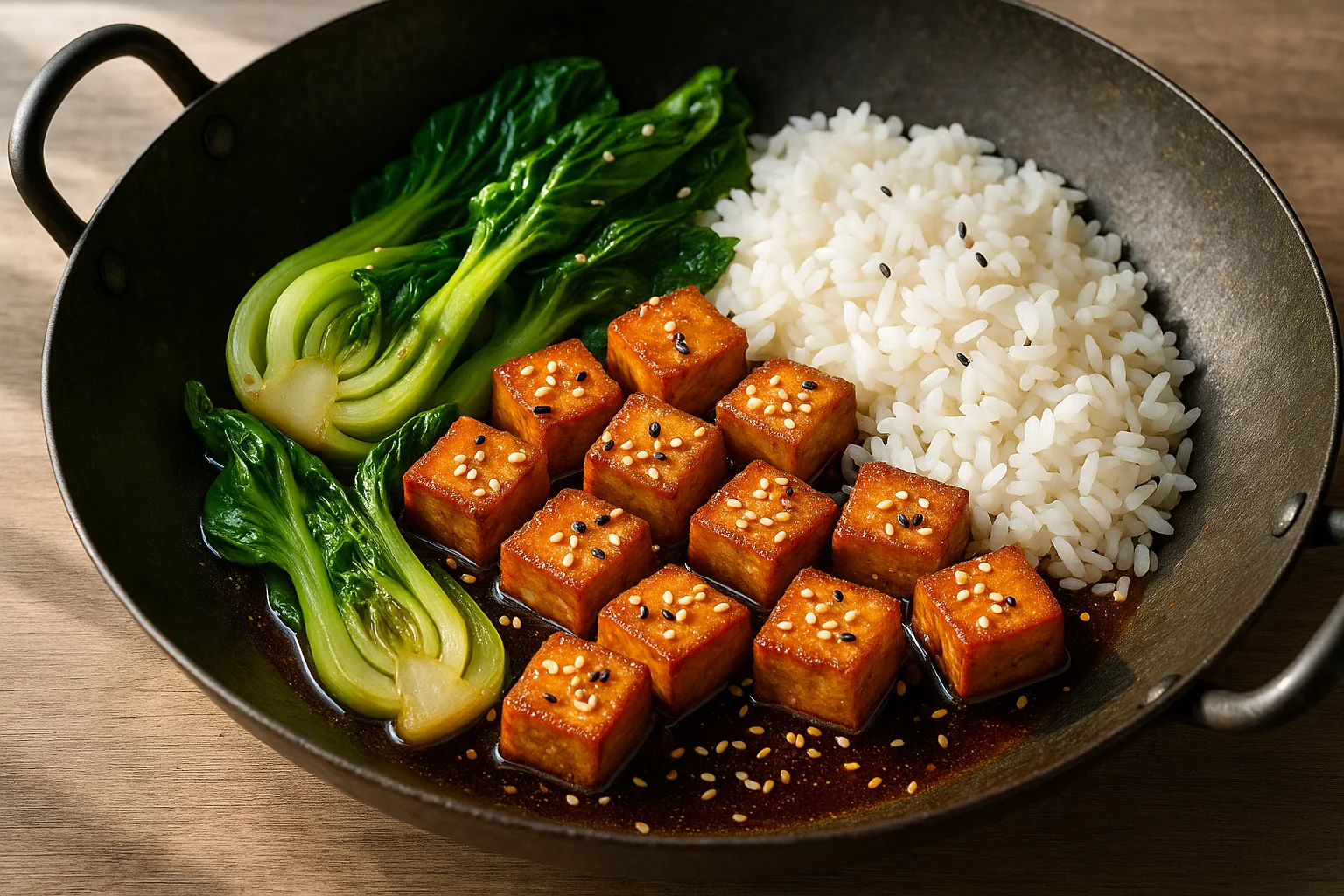
Crispy tofu in a thick, salty-nutty sauce convinces even those who dislike tofu. The result depends on two things: how thoroughly you press the water out before frying, and ensuring that hemp oil is not poured onto a hot pan. The sauce is made separately, cold, and is added to the hot tofu only after removing it from the heat. This way, the fatty acids from the oil do not go through the hottest stage of cooking. The entire dish takes thirty minutes, of which twenty is hands-off pressing the tofu. You do not need a wok or any equipment other than a pan and a bowl. Below is the step-by-step recipe, calculated nutritional values per serving, and an explanation of where the principle of the cold sauce comes from.
KEY INFORMATION
• Hemp oil is mostly polyunsaturated fatty acids: about 52% linoleic and 17% alpha-linolenic (Siol et al., Foods, 2024).
• During the thermal breakdown of fats, polyunsaturated fatty acids oxidize first, which is why you make the sauce cold.
• Extra firm tofu has 9.98 g of protein per 100 g, so a 150 g serving provides about 15 g (USDA, record 174290).
• The calcium content in tofu depends on the coagulant and varies between records by more than double.
Why is hemp oil added to the sauce and not to the pan?
Because it mainly consists of those fatty acids that break down the fastest. Siol et al. (Foods, 2024) measured about 52% linoleic acid and 17% alpha-linolenic acid in hemp oil and remind us that during the thermal breakdown of fats, polyunsaturated acids oxidize first, and oil with lower content of these acids may break down more slowly.
This same work provides a second reason, which is less often discussed. Hemp oil carries chlorophyll pigments, about 9 mg per 100 g, which give it its green color. Chlorophyll acts pro-oxidatively and accelerates rancidity, which is why producers recommend storing this oil in the refrigerator and away from light; in Siol’s study, a temperature of 4 degrees was tested as compliant with the manufacturer’s recommendation. Oil kept in warmth and light thus loses quality even before cooking.
It is also worth sorting out the omega ratios. Simopoulos (Nutrients, 2016) describes that in Western diets, the ratio of omega-6 to omega-3 has increased from 1:1 over the course of evolution to 20:1 or more, and links this increase to the risk of obesity and systemic inflammation. He writes that a balanced ratio is important for health, but does not provide a single recommended value. Statements like “WHO recommends below 4:1” circulate in recipes without backing in the documents of that organization, so you will not find them here.
How much protein is in a serving of tofu in hemp sauce?
About 15 g from the tofu alone. The record for extra firm tofu coagulated with nigari states 9.98 g of protein per 100 g, so a 150 g serving provides just under 15 g (USDA FoodData Central, record 174290). Rice and tahini add a few more grams, but the main source of protein here is tofu.
Calcium deserves a separate mention, as the difference between types of tofu is significant. Extra firm tofu with nigari has 282 mg of calcium per 100 g, while firm tofu coagulated with calcium sulfate has as much as 683 mg (record 172475). So just a different coagulant can make the same serving provide twice as much calcium. The iron record 174290 states 2.04 mg per 100 g. The sauce adds fat: three tablespoons of hemp oil is about 41 g for two servings, which is roughly 3.5 g of alpha-linolenic acid per person.
This is where the difference between this sauce and classic sesame sauce comes from. Sesame oil has similarly high omega-6, but practically no omega-3, so the ratio of both families is about 138 to 1, compared to about 3 to 1 in hemp oil.
What do you need for tofu in hemp sauce?
Two sets of ingredients and one pan. You fry the tofu in a neutral-flavored oil, and mix the sauce separately in a bowl, without heating. The proportions below are enough for two servings, and the time is twenty minutes of pressing the tofu and ten minutes at the pan.
- 300 g extra firm tofu
- 2 tablespoons cornstarch or potato starch
- 2 tablespoons coconut oil or frying oil
- 3 tablespoons cold-pressed hemp oil
- 2 tablespoons soy sauce or tamari
- 1 tablespoon tahini
- 1 teaspoon grated ginger
- 1 clove garlic
- 1 teaspoon honey or maple syrup
- 1 teaspoon lime juice and 2 tablespoons water
- 150 g jasmine rice or soba noodles
- 1 tablespoon sesame, chives, optionally pak choi
Pay attention to tamari if you are on a gluten-free diet: classic soy sauce is usually brewed with wheat, while tamari is usually without it, but the specific bottle label decides. Tahini is not just a decoration here, but a thickener, so omitting it changes the sauce into a thin dressing. Buy cold-pressed hemp oil and keep it in the fridge, as it loses quality faster than olive oil in warmth.
How to prepare tofu in hemp sauce step by step?
In five moves, the first of which decides everything. Pressing the water out takes twenty minutes and cannot be shortened: wet tofu steams in the pan instead of frying, resulting in a rubbery texture instead of crispy.
Safety: do not pour hemp oil onto a hot pan. Fry the tofu in coconut oil or olive oil, and add the hemp oil only to the cold sauce.
- Press the tofu. Dry the block with a paper towel, wrap it in four or five layers of towel, place it on a board, and press down with a heavy pot. Set aside for twenty minutes.
- Coat in starch. Cut the tofu into two-centimeter cubes, transfer to a bowl, sprinkle with starch, and gently mix. A thin layer on each piece is enough.
- Fry the tofu. Heat coconut oil over high heat, arrange the cubes in a single layer, and do not move them for three to four minutes. The ready tofu will release itself from the pan. Flip and fry for another two to three minutes.
- Mix the sauce. In a small bowl, combine hemp oil, soy sauce, tahini, ginger, garlic, honey, lime juice, and water. Mix with a fork until smooth. It should be intensely salty, slightly sweet, and sour.
- Combine and serve. Remove the pan from the heat, transfer the tofu to a bowl, drizzle with the sauce, and mix. Serve over rice, sprinkled with sesame and chives.
We noticed in our kitchen that tahini sauce coats hot tofu more evenly than just hemp oil with soy sauce, which tends to sink to the bottom of the bowl. Sesame paste contains both fat and protein, so it behaves like an emulsifier, but we did not find a measurement comparing the stickiness of both sauces, so treat this as a kitchen tip rather than a research result.
What variations of this dish work best?
Three, each changing something different: the main ingredient, spiciness, or depth of flavor. The hemp sauce remains unchanged in them, as it serves as a base regardless of what lies beneath it.
Instead of tofu, you can fry 300 g of oyster mushrooms for five to six minutes in the same oil. Oyster mushrooms do not require pressing and have their own meaty texture, so the starch step is also skipped. For a spicy version, add a teaspoon of chili paste or sriracha to the sauce; the spiciness balances the nuttiness of the oil and the sweetness of the honey, while cucumber slices on the side cool the dish.
The third version is marinating. Leave the pressed tofu for half an hour in half of the sauce, keeping the rest for serving. The flavor then penetrates into the cubes, not just on the surface. The same sauce also works well in a buddha bowl with hemp dressing. If you are looking for other vegan dishes with hemp, check out the recipe for chickpea and hemp seed patties or vegan Caesar salad with hemp protein.
Frequently Asked Questions
Why is hemp oil not used for frying?
Because it consists of more than two-thirds polyunsaturated fatty acids, which oxidize first during the thermal breakdown of fats (Siol et al., Foods, 2024). For frying, use coconut oil or olive oil, and add hemp oil to the cold sauce just before serving.
How to make tofu crispy?
Three conditions: twenty minutes of pressing under weight, a thin layer of starch on each cube, and frying over high heat in a single layer without stirring for the first three minutes. The ready tofu will release itself from the pan, so do not force it off.
How much protein is in a serving of tofu in hemp sauce?
About 15 g from the tofu alone. The USDA record for extra firm tofu coagulated with nigari states 9.98 g of protein per 100 g, and a serving of this recipe is 150 g. Rice and tahini add a few more grams, but the main source of protein remains the tofu.
Is nigari tofu different from calcium sulfate tofu?
In terms of calcium, very much so. The record for extra firm tofu with nigari states 282 mg of calcium per 100 g, while firm tofu coagulated with calcium sulfate has 683 mg. If you eat tofu as a source of calcium in a plant-based diet, check the coagulant on the label, as the difference can be more than double.
Does hemp sauce go well with other dishes?
Yes, anywhere it does not get heated. It works well as a salad dressing, marinade for oyster mushrooms or tempeh, and dip for raw vegetables. The only limitation is the same as in this recipe: you add the sauce at the end, to the dish already removed from the heat.
The food store at Bucha does not carry food-grade hemp oil or tofu. The hemp food section today consists of hemp teas and herbal blends, as of August 16, 2026.
This article is for informational and educational purposes and does not replace consultation with a doctor. If you are pregnant, breastfeeding, taking medications, or have chronic conditions, consult the use of supplements or herbs with a specialist.
Author: Michał Waluk · Published: 2026-06-22 · Updated: 2026-08-16