
Microdosing and Placebo: What Controlled Studies Really Say
Does microdosing psilocybin and LSD work beyond the placebo effect? A review of controlled studies, the blinding problem, and the legal status in Poland.
Microdosing psychedelics has gained popularity in technology and wellness circles in recent years. Regular intake of fractional doses of psilocybin or LSD reportedly improves concentration, mood, and creativity according to the participants themselves. The reports sound convincing, but they come from individuals who have chosen this practice themselves and have strong expectations about it. Science has approached the matter differently: it has built studies in which some participants take a neutral substance without knowing it. The results have proven to be less clear-cut than suggested by forums and press reports. This article shows what the largest placebo-controlled study found, why blinding is so difficult to maintain in this field, and what this means for the question of real effectiveness.
KEY INFORMATION
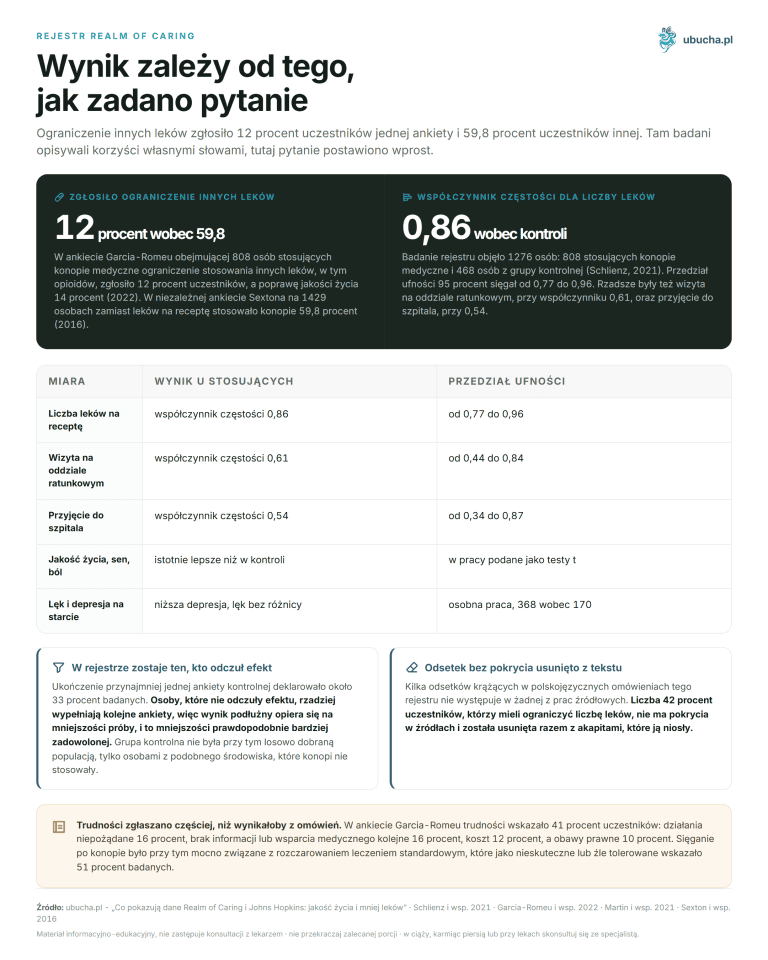
• In the largest placebo-controlled study (191 participants), improvement occurred in both groups, and the differences between them were not statistically significant (Szigeti et al., eLife, 2021).
• A reanalysis of this data indicated that poor blinding can produce false positive results, and microdosing can be described as an active placebo (Szigeti et al., Scientific Reports, 2023).
• An observational study on 98 individuals noted a decrease in reported depression and stress, but at the same time an increase in neuroticism (Polito and Stevenson, PLOS ONE, 2019).
• A review of 19 placebo-controlled studies concludes that it is currently impossible to determine whether microdosing is placebo (Polito and Liknaitzky, Journal of Psychopharmacology, 2024).
What is microdosing and where did its popularity come from?
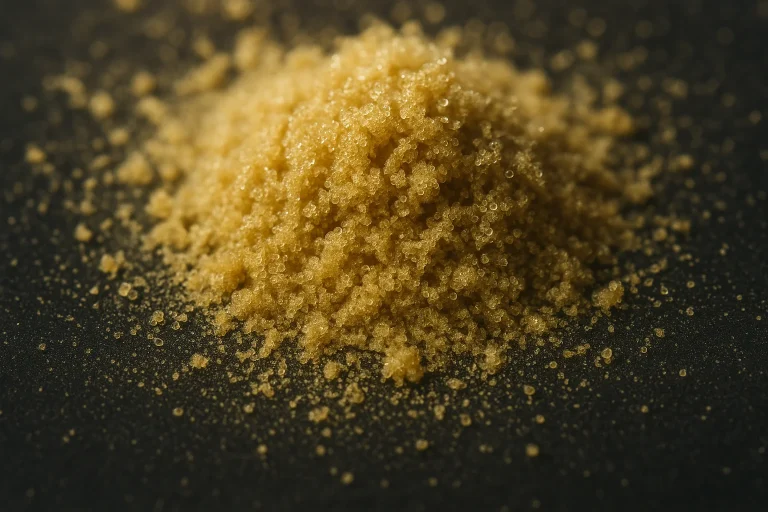
Microdosing is the regular intake of very small amounts of a psychedelic substance, most often psilocybin or LSD, in quantities that do not induce a full psychedelic experience. Practitioners report improvements in well-being and cognitive performance, and the message about these benefits has spread faster than any data. The very name suggests greater precision than the practice actually has: there is no one agreed-upon size of a dose or one protocol.
The phenomenon’s popularity has outpaced research by years. When the first systematic observational study was published in 2019, its authors noted that no empirical work on microdosing had been published to date, and the direct study of effects was hindered by the legal and bureaucratic climate at the time. Knowledge was therefore based on reports collected online.
This distinction has practical significance. A forum report tells what someone felt. A controlled study tells how much more they felt than a person who took a neutral substance believing they received an active one. Only the latter number answers the question of whether the substance itself works. If you are starting from scratch, it is worth first checking what microdosing is in practice and which substances it concerns.
What did the largest placebo-controlled study find?
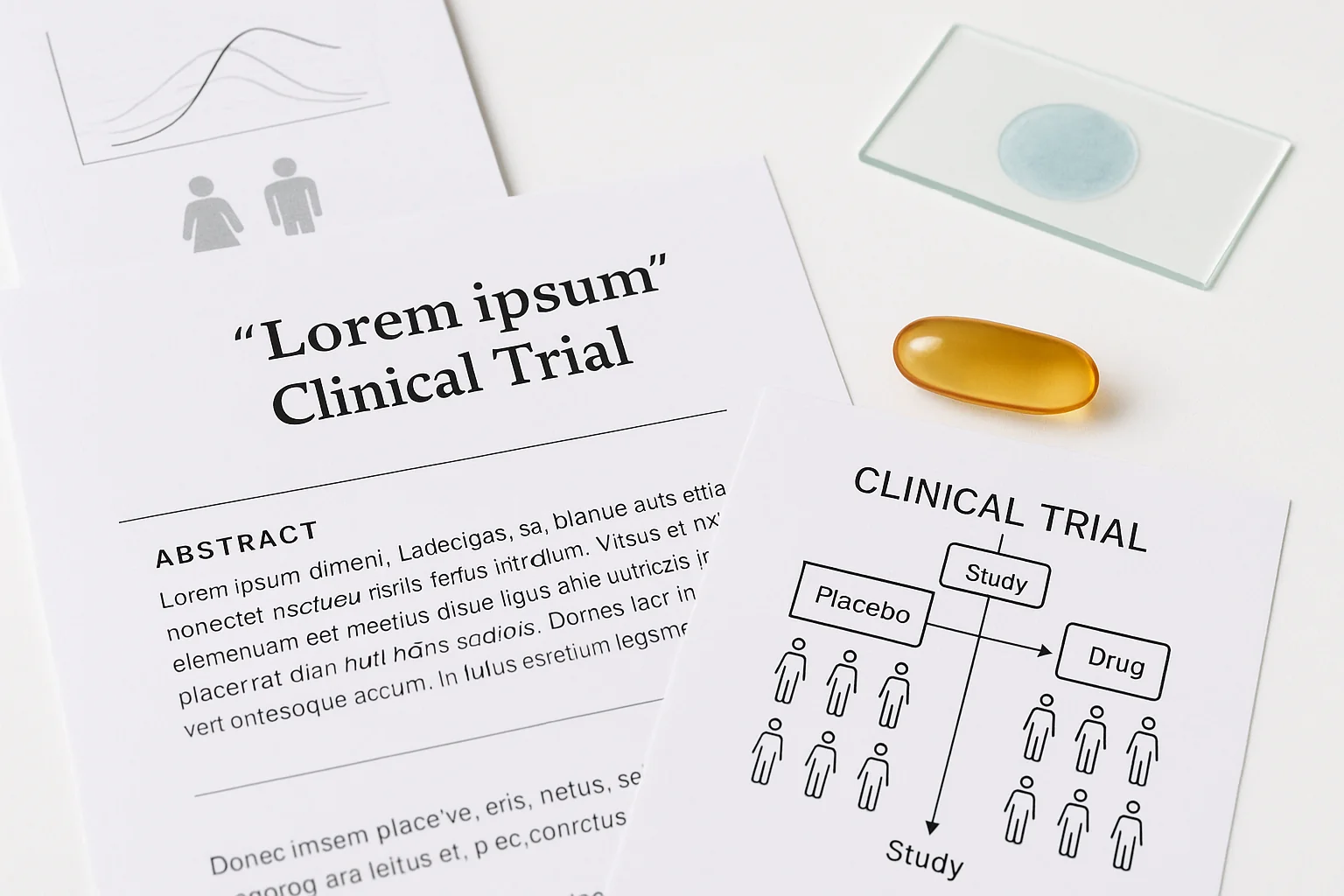
The largest work in this field remains the study by Szigeti and colleagues published in eLife, completed by 191 participants and described by the authors as the largest placebo-controlled psychedelic study to date. All measured psychological indicators improved in the microdosing group, but the placebo group also improved, and no statistically significant differences between the groups were observed.
The authors employed a self-blinding procedure. Participants prepared capsules themselves according to instructions provided online and introduced placebo control into their routine without clinical supervision. Acute scales, covering emotional state, mood, energy, and creativity, as well as an anxiety scale measured after the dosing period, showed small but significant differences between microdosing and placebo. The authors themselves acknowledged that even these differences could be explained by the unblinding by participants. The conclusion of the study is straightforward: the reported benefits of microdosing can be explained by the placebo effect.
| Study | Method | Main Result |
|---|---|---|
| Szigeti et al., eLife 2021 | Self-blinding, 191 participants | Improvement in both groups, no significant differences between them |
| Szigeti et al., Scientific Reports 2023 | Reanalysis of the same dataset | Placebo differences against microdosing threatened by false positive results |
| Polito and Stevenson, PLOS ONE 2019 | Observational, 98 individuals, six weeks | Less reported depression and stress, more neuroticism |
| Anderson et al., Psychopharmacology 2019 | Observational, survey among forum users | Lower negative emotionality and higher creativity compared to the reference group |
| Polito and Liknaitzky, J. Psychopharmacol. 2024 | Review of 19 placebo-controlled studies | Resolving the placebo dispute is premature today |
Why is blinding so difficult to maintain in microdosing studies?
Blinding is supposed to equalize expectations between groups: no one knows what they are taking, so the hope for improvement is evenly distributed. In practice, blinding often fails, and then something worse than ordinary noise happens. Expectations cease to be evenly distributed and begin to fuel the group that accurately guessed their assignment.
Szigeti and colleagues called this mechanism expectation bias and showed with a computational model that with poor blinding and a positive attitude towards treatment, it can inflate effect estimates and even produce false positive results. They also proposed a statistical tool that estimates how a poorly blinded study would have performed if it had been properly blinded (Szigeti et al., Scientific Reports, 2023).
When this tool was applied to the dataset from the 2021 study, the differences between microdosing and placebo proved susceptible to this bias and threatened the status of a false positive result. Hence the formulation that has taken hold in the discussion: microdosing can be understood as an active placebo. The authors derived from this a broader distinction, extending beyond psychedelics, between a study that has a placebo group on paper and a study in which participants truly remain blinded.
Does this mean that microdosing is purely placebo?
Not in the form in which this statement circulates in the media. A 2024 review gathered 19 studies with a controlled dose and a placebo comparator, assessed the risk of systematic error, and reached a conclusion opposite to the popular simplification: the thesis that microdosing is predominantly placebo is today premature and may prove inaccurate.
The authors listed eight reasons. There are few controlled studies, they have small samples, and they covered only a narrow range of dose sizes, with the doses studied possibly being too small. They only involved individuals without psychiatric diagnoses, were susceptible to volunteer selection, and the measured impact of expectations proved to be small. The authors also pointed to evidence suggesting a dose-dependent effect. Additionally, the reviewed works noted changes in neurobiology, physiology, subjective experiences, affect, and cognitive performance in relation to placebo. The conclusion is cautious in both directions: today it is impossible to state whether microdosing is placebo.
It is also worth remembering that observational studies can be confused with controlled ones. The work by Anderson and colleagues collected surveys from individuals recruited on internet forums and compared them with non-microdosing individuals (Anderson et al., Psychopharmacology, 2019). Microdosers performed better in terms of negative emotionality and creativity, but this is a comparison of two self-formed groups, not a causality test. The authors themselves concluded the work with a call for controlled studies. A similar distinction is useful when evaluating reports on microdosing CBD and THC.
What are the legal and practical consequences of microdosing in Poland?
Psilocybin and psilocin are listed in the register of psychotropic substances in group I-P, under positions 86 and 76. LSD is also a controlled substance. Possession of these substances, even in quantities defined as microdoses, remains illegal in Poland, and there is no exception for trials undertaken on one’s own.
In addition to legal risks, there is a second, practical one. Substances from illegal circulation do not have confirmed identity or active ingredient content, so a person trying to replicate a protocol from a publication does not know what and in what quantity they are taking. Clinical studies work with material of controlled purity, and this difference cannot be mitigated by any home protocol. A separate issue is that in the described works, doses were selected for research purposes, not as guidance for the reader.
Polish law also does not recognize a compounding pathway for these substances, which exists for cannabis. Those seeking a reliable comparison can juxtapose the above with the description of cannabis microdosing and its protocols, where the legal framework looks completely different. However, the mere naming analogy does not transfer any rights from one substance to another.
Frequently Asked Questions
What is microdosing psychedelics?
Microdosing is the regular intake of very small amounts of a psychedelic substance, most often psilocybin or LSD, in quantities that do not induce a full psychedelic experience. Practitioners report improvements in mood, concentration, and creativity. Controlled studies have not yet unequivocally confirmed these benefits, and the largest of them attributed them to participants’ expectations.
What did the largest placebo-controlled study find?
A study completed by 191 participants noted improvements in all measured psychological indicators in the microdosing group, but the placebo group improved similarly, and the differences between the groups were not statistically significant. The authors concluded that the reported benefits of microdosing can be explained by the placebo effect and indicated the unblinding as a source of the remaining differences.
Why is blinding a problem in these studies?
Blinding is supposed to equalize expectations between groups, but in practice, it often fails. When a participant accurately guesses their assignment, expectations cease to be evenly distributed and fuel one group. A reanalysis of data from 2021 showed that such a mechanism can inflate effect estimates and even produce false positive results.
Is microdosing therefore purely placebo?
This cannot be determined today. A review of 19 placebo-controlled studies deemed the hypothesis of pure placebo premature and pointed out eight reasons, including the small number and size of trials and the study of only individuals without psychiatric diagnoses. The same works noted physiological, affective, and cognitive changes in relation to placebo.
Does microdosing have documented adverse effects?
A six-week observational study on 98 individuals noted alongside a decrease in reported depression and stress also an increase in neuroticism and greater attention absorption. This result comes from a study without a control group, so it does not prove causality, but indicates that the effects do not solely go in the expected direction. There is a lack of data on long-term safety.
What is the legal status of microdosing in Poland?
Psilocybin and psilocin are listed in the register of psychotropic substances in group I-P, under positions 86 and 76, and LSD is also a controlled substance. Possession of these substances remains illegal regardless of quantity and declared purpose. There is no exception for self-conducted trials or for protocols reproduced from scientific publications.
If you are looking for legally available preparations that support daily stress resistance, browse the adaptogens category. They are not equivalents of the substances described above nor their substitutes, and the effects attributed to them have a completely different basis.
This article is for informational and educational purposes. It describes clinical studies in which the substance is administered under medical supervision after qualifying the participant; using these conditions on one’s own does not replicate them. These substances are controlled in Poland under the Act on Counteracting Drug Addiction. If you have suicidal thoughts, call the free, 24-hour numbers 116 123 or 800 70 2222. In case of life-threatening situations: 112.
Author: Michał Waluk · Published: 2026-08-09 · Updated: 2026-08-11