
Kief - what is it and how to use it (definition)
Kief — what it is, how it works, and its uses. Guide from u Bucha.
The bottom of the grinder is covered with a golden, powdery layer after a week of grinding dry herb. This is not dirt or residue - it is kief, one of the most concentrated natural cannabis products that most users scrape off and discard, unaware of what they are losing. Kief contains 40-60% cannabinoids, while average dry herb offers 10-25%. This article explains exactly what kief is, how to collect it, how to use it, and how to store it to waste as little of this natural concentrate as possible.
KEY INFORMATION
• Kief is powdered cannabis trichomes - microglands containing concentrated cannabinoids and terpenes; cannabinoid concentration 40-60% vs. 10-25% in dry herb (UNODC Cannabis Monograph, 2022).
• You collect it automatically in a three-chamber grinder with a screen of 75-150 microns, known as a "kief catcher."
• The word "kief" comes from the Arabic "kayf" - meaning pleasure or good mood.
• Kief differs from hash in that it is raw and unprocessed - hash is kief compressed under pressure.
What is kief? Definition and botanical source
Kief (also spelled keef or kif) is the colloquial term for powdered cannabis trichomes - microscopic secretory glands that cover the surface of the plant's flowers and leaves. Trichomes look like crystals or hairs visible to the naked eye on densely matured dry herb. Under a microscope, they resemble small mushrooms with a round "head" on a thin stem.
It is in these "heads" (glandular trichomes) that cannabinoids - CBD, THC, CBG, CBN - and terpenes responsible for the aroma and flavor of the dry herb are synthesized. Studies confirm that trichomes contain the vast majority of the plant's active compounds: a dense layer of trichomes on the flowers serves as a biological defense mechanism for cannabis, likely evolved to deter insects and protect against UV radiation (UNODC Cannabis Monograph, 2022).
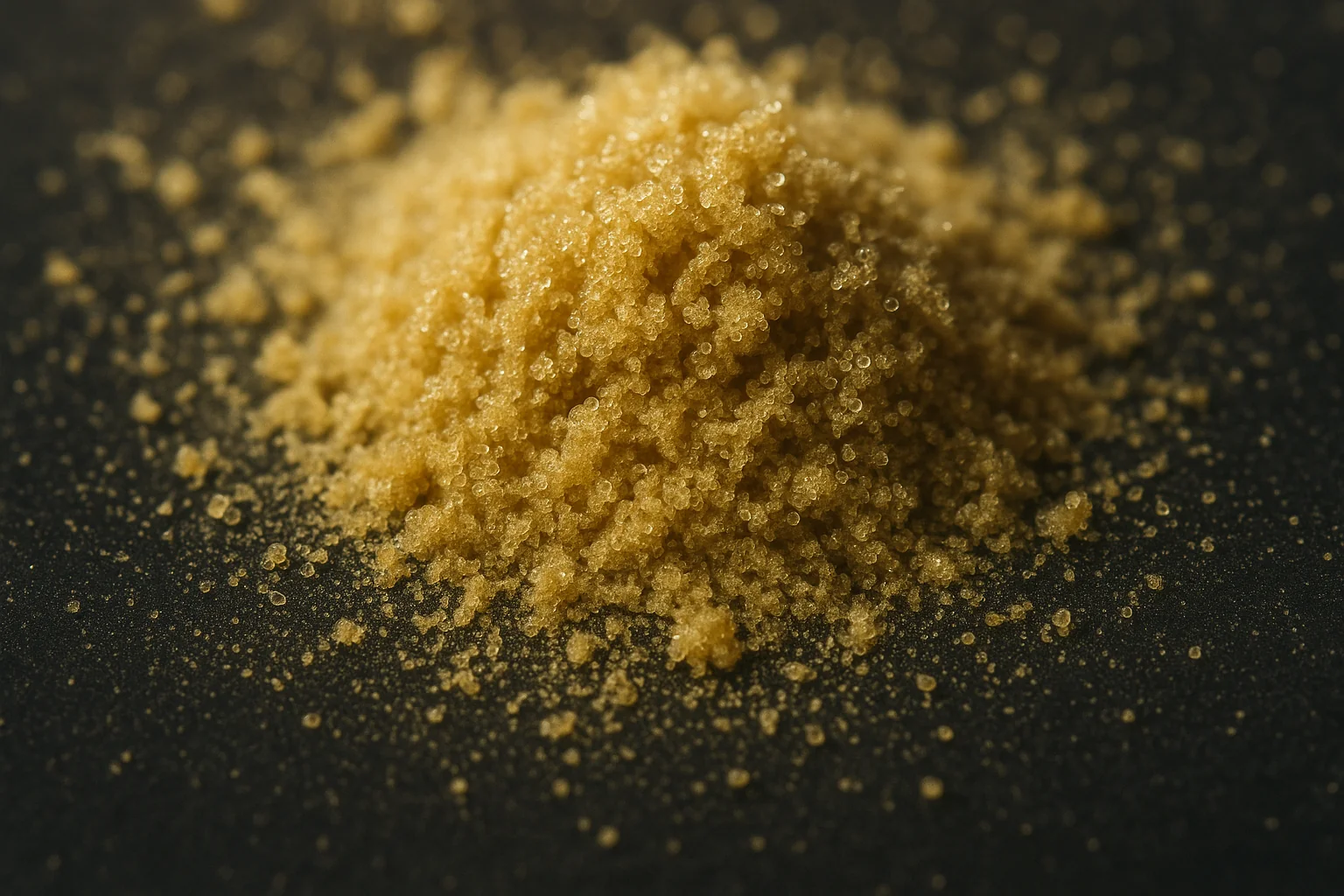
When you grind the dry herb in a grinder, some trichomes fall off the plant mass and sift through the screen to the bottom of the device. This is kief - a raw, unprocessed powder ranging in color from pale yellow to golden brown, depending on the strain and maturity of the plant. The lighter the color, the purer and better the kief.
Kief, hash, concentrate - comparison table of cannabis forms
Kief is the simplest form of cannabis concentrate, but it is important to distinguish it from other products with which it is often confused. The table below organizes the key differences between kief, hashish, and other concentrates.
| Feature | Kief | Hashish | Oil/extract |
|---|---|---|---|
| Form | Loose powder | Hard/soft mass | Liquid or waxy |
| Degree of processing | Minimal (sifting only) | Medium (pressing/heating) | High (solvent extraction) |
| Cannabinoid content | 40-60% | 40-60% | 60-90%+ |
| Terpene behavior | Very good | Good (depends on the method) | Varied |
| How to collect | Grinder with a screen | From kief through pressing | Specialized equipment |
| Shelf life | 6-12 months (cool, dark) | Up to several years | 1-2 lata |
Key takeaway from the table: kief is the least processed product among those listed - it is an almost unaltered "set of trichomes." It retains the full spectrum of terpenes and cannabinoids almost identically to raw dry herb, but at a significantly higher concentration. This is why many enthusiasts prefer it for its authentic strain flavor and aroma.
How to collect kief - step-by-step methods
Collecting kief does not require specialized equipment or knowledge. All you need is the right grinder and patience. Below are three effective methods from the simplest to the more advanced.
Method 1: Grinder with a kief catcher (basic) A three-chamber grinder (3-piece or 4-piece grinder) has a screen with a mesh size of 75-150 microns. During grinding, trichomes sift through the screen and accumulate in a separate lower chamber. The only task on your part is to regularly collect the gathered kief with a small scoop or clean brush. One gram of good quality dry herb typically yields 0.05-0.1 g of kief.
Method 2: Cold grinding technique Trichomes detach better from frozen dry herb - the cold makes them more brittle and easier to separate from the plant mass. Before grinding, place the airtight grinder in the freezer for 30 minutes. After removing it, quickly grind the contents. The result: noticeably more kief than when grinding at room temperature.
Method 3: Dry sifting (silk screens) A professional method used by hash producers involves mechanically sifting dry herb through screens made of silk or stainless steel with different mesh sizes (75, 120, 150 microns). Each screen filters particles of different sizes - finer kief (from the 75-micron screen) is cleaner and lighter. This method yields larger quantities of kief but requires more dry herb and time.
A simple trick known to experienced users is to place a small coin (e.g., a penny) in the chamber with dry herb in a three-chamber grinder. The coin acts as a mini-piston during grinding, knocking out additional trichomes from the dry herb. The result: 20-30% more kief from the same amount of dry herb. The coin must be clean - thoroughly scrubbed with alcohol before use.
How to use kief? Five proven applications
Kief is versatile - it can be used in many ways, depending on preferences and available equipment. Each method provides a slightly different flavor experience and intensity of effect.
1. Sprinkling flower (crowning a bowl) The simplest method: a pinch of kief sprinkled on top of dry herb in a pipe or vaporizer chamber. Kief provides a more intense effect with the same amount of base material. Ratio: a pinch (about 0.05-0.1 g) per standard serving of dry herb.
2. Vaporizing kief Kief vaporizes at a temperature of 160-185°C - similar to dry herb, but it is recommended to start at a lower temperature (165°C) because trichomes without plant mass heat up faster. It is advisable to mix kief with a bit of dry herb to ensure better heat distribution in the chamber. Pure vaporizing of kief alone risks clogging the chamber.
3. Rolling with kief (also known as twaxing) When rolling a joint, you can sprinkle a layer of dry herb with kief or coat the outer part of an already rolled joint with it - after lightly moistening the surface. The result: a stronger, slower-burning joint with a more complex flavor profile. This technique is popular in cannabis culture and is known as "twaxing."
4. Pressing into hash Kief can be pressed by hand or with a small hash press, creating your own "finger hash" or "hand pressed hash." The heat from your hands or the dedicated press binds the trichomes into a solid mass. The higher the pressure and temperature, the darker and harder the hash. Homemade hash from kief is the simplest way to process your stash.
5. Kief in food (edibles) Kief is suitable for making cannabis butter or baking oil - it already contains concentrated cannabinoids, so less is needed than raw dry herb. Remember that CBD kief requires decarboxylation (heating at 110°C for 30 minutes) before use in butters to activate the free cannabinoid acids.
How to store kief - practical rules
Kief is more prone to degradation than dry herb because trichomes lacking the protective plant mass react more quickly with oxygen, light, and heat. THC oxidizes to CBN (cannabinol - a compound with a sedative effect, without psychoactive effects) under the influence of oxygen and UV. Terpenes, responsible for flavor and aroma, evaporate even at room temperature with poor storage.
Optimal conditions are: an airtight glass jar (not plastic - static electricity attracts kief to the walls), opaque or kept in a drawer, temperature 15-20°C, no direct light. The refrigerator works well, but kief taken out of the cold condenses moisture - before use, leave the jar closed at room temperature for 15 minutes. Avoid freezers - thawing cycles destroy the structure of trichomes.
Properly stored kief retains its full flavor and potency for 6-12 months. After this time, it is still usable but loses intensity of aroma. A simple indicator of quality is color: fresh kief is golden or creamy, while degraded kief turns brown and darkens.
Frequently Asked Questions
What is kief and where does it come from?
Kief (Arabic: kayf - pleasure) is powdered trichomes separated from cannabis flower. Trichomes are microscopic glandular structures covering the leaves and flowers of cannabis, containing concentrated cannabinoids and terpenes. In kief, the concentration of cannabinoids is several times higher than in raw flower - typically 40-60% vs. 10-25% in average flower (UNODC Cannabis Monograph, 2022).
How to collect kief at home?
The simplest method is a grinder with a kief chamber (also known as a kief catcher) - a three-chamber grinder with a screen of 75-150 microns. During grinding, trichomes sift through the screen and accumulate in the bottom chamber. An additional method: keeping the grinder in the freezer for 30 minutes before grinding - the cold makes trichomes more pliable and easier to detach.
What is the difference between kief and hash?
Kief is raw, unprocessed trichomes - the powdered form directly after sifting from the flower. Hashish is made from kief by compressing and heating it (or treating it with solvents), creating a dense, hard mass. Hashish is therefore a processed product made from kief. Both have similar cannabinoid content, but hashish is easier to store and transport.
At what temperature should kief be vaporized?
Kief vaporizes at a temperature of 160-185°C - slightly lower than regular dry herb, as the trichomes lack the surrounding plant mass that absorbs heat. A higher temperature (above 200°C) risks overheating and combustion instead of vaporization, which destroys terpenes and produces harmful combustion products. Best practice: start at 165°C and gradually increase.
How to store kief so it doesn't lose potency?
Kief should be stored in an airtight, opaque container in a cool, dark place. UV light and heat degrade cannabinoids - THC oxidizes to CBN under the influence of oxygen and UV. A glass jar with a lid in a drawer or refrigerator (not the freezer) provides optimal conditions. Properly stored kief retains potency for 6-12 months.
This article is for informational and educational purposes and does not replace consultation with a doctor. If you are pregnant, breastfeeding, taking medications, or have chronic conditions, consult the use of supplements or herbs with a specialist.
Author: Michał Waluk · Published: 2026-05-04 · Updated: 2026-05-04