
Melatonin for Sleep: Dosage, When to Take It, and Is It Safe (2026)
Melatonin for sleep without a dosage scheme: what meta-analyses have shown, how much hormone is really in a tablet, and with which drug is the interaction documented.
Melatonin is available over the counter in Poland and is sold like a regular sleep supplement. The title of this article promises dosage, so it must be stated upfront: you will not find a scheme to copy for your own shelf here. The reason is not precautionary. The meta-analysis cited by most guides states something contrary to the popular thesis that less means better. Independent laboratory analysis of products shows that the hormone content in a tablet can deviate from the label by several hundred percent. Instead of a number to copy, you get a description of what has really been measured: how significant the effect is, in whom the evidence is strongest, what evening light does to melatonin, and which drug interaction has been documented by measurement.
KEY INFORMATION
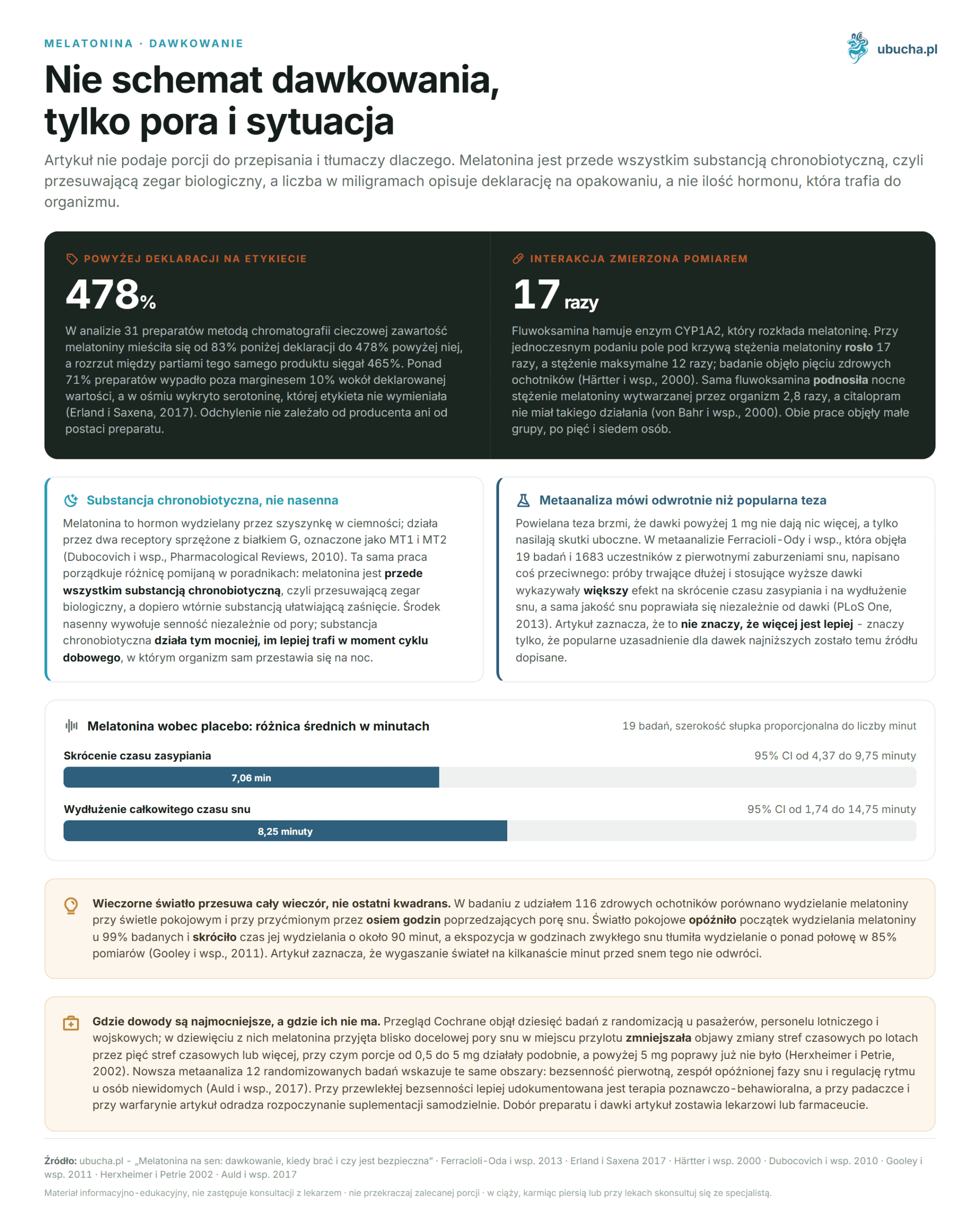
• A meta-analysis of 19 studies involving 1683 people showed a reduction in sleep onset time by an average of 7.06 minutes and an increase in sleep duration by 8.25 minutes (Ferracioli-Oda, PLoS One, 2013).
• In the same study, longer duration studies and those using higher doses showed a greater effect, not less. The popular thesis about the superiority of the lowest doses does not come from this meta-analysis.
• In an analysis of 31 products, the melatonin content ranged from 83% below to 478% above the label declaration (Erland and Saxena, J Clin Sleep Med, 2017).
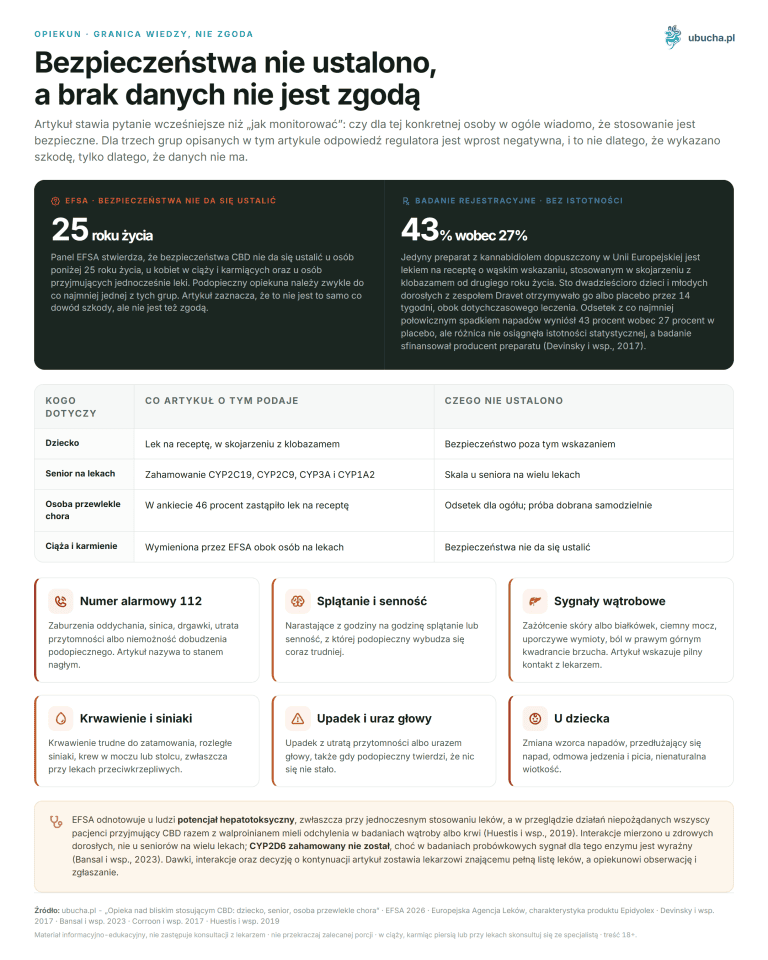
• The documented interaction concerns fluvoxamine: when taken together, the area under the curve for melatonin concentration was 17 times higher (Härtter, Clin Pharmacol Ther, 2000).
• The choice of product and dosage is up to the doctor or pharmacist, not the article.
What is melatonin and what does it do in the body?
Melatonin is a hormone secreted by the pineal gland in darkness. Its role is not to force sleep but to convey information to the body about the time of day. High levels at night trigger processes that prepare the body for sleep and regeneration, while light inhibits this production.
Melatonin acts through two G-protein coupled receptors, designated as MT1 and MT2. Both have been described and classified in the official pharmacological nomenclature (Dubocovich et al., Pharmacological Reviews, 2010). This same work clarifies a difference that is usually overlooked in guides: melatonin is primarily a chronobiotic substance, meaning it shifts the biological clock, and only secondarily a substance that facilitates falling asleep.
The difference has practical consequences. A sleeping pill induces drowsiness regardless of the time. A chronobiotic substance works more effectively the better it aligns with the moment in the circadian cycle when the body itself begins to shift to night. Hence, the rest of this article: with melatonin, sensible questions concern the timing of intake and the situation in which the circadian rhythm is indeed disrupted, not just the size of the dose.
Why does this article not provide a dosage scheme?
Because it cannot be honestly derived from the available studies. Meta-analyses show that melatonin works and show how significant this effect is, but do not establish a single dose that is good for everyone. The relationship between dose size and outcome in the literature is the opposite of what guides repeat.
The most commonly repeated thesis is that doses above 1 mg do not provide anything more and only increase side effects. In the meta-analysis by Ferracioli-Oda and colleagues, something contrary is stated: longer trials using higher doses showed a greater effect on reducing sleep onset time and increasing sleep duration (Ferracioli-Oda et al., PLoS One, 2013). The quality of sleep itself improved regardless of the dose. This does not mean that more is better. It means that the popular justification for the lowest doses has been added to this source.
Additionally, there is a purely practical problem. Since the declaration on the package can be detached from the content, the scheme given in milligrams describes the number on the label, not the amount of substance that enters the body. Therefore, the reasonable order is the opposite of usual: first determine whether melatonin fits your sleep problem at all, then discuss the product with your doctor or pharmacist. A comparison of the forms of the product is described in a separate text about extended-release melatonin and regular.
What did the meta-analysis of melatonin really show?
The effect is real, repeatable, and small. The meta-analysis included 19 randomized placebo-controlled studies, totaling 1683 participants with primary sleep disorders. Melatonin reduced the time to fall asleep by an average of 7.06 minutes and increased total sleep time by 8.25 minutes.
The authors also provided confidence intervals, which are worth seeing alongside the averages: for sleep onset time from 4.37 to 9.75 minutes, for sleep duration from 1.74 to 14.75 minutes. Overall sleep quality improved by a standardized mean difference of 0.22. The authors conclude that the effect of melatonin is moderate and less than that of other drugs used in insomnia, but does not diminish over time.
A newer meta-analysis involving 12 randomized controlled trials reached a similar conclusion and specified where the evidence is strongest: reduction in sleep onset time in primary insomnia, delayed sleep phase syndrome, and regulation of sleep-wake rhythm in blind individuals (Auld et al., Sleep Medicine Reviews, 2017). The authors of this work conclude with a direct call for large randomized studies, as the existing ones are too small to speak of a therapeutic scheme.
How much melatonin is really in a tablet?
Significantly less or significantly more than the label declares. A research team analyzed 31 commercially available products using high-performance liquid chromatography. The melatonin content ranged from 83% below to 478% above the declaration, and the variation between batches of the same product reached 465%.
Over 71% of products did not fall within the 10% margin around the declared value. In eight of the tested products, serotonin was additionally detected, which was not mentioned on the label (Erland and Saxena, Journal of Clinical Sleep Medicine, 2017). The authors found no relationship between the size of the deviation and the manufacturer or form of the product, so it is not possible to indicate a safe category of products.
This finding changes the meaning of the entire discussion about dosing. If the content can be several times higher and several times lower than declared, then the dispute about whether a smaller or larger dose is better concerns the writing on the box, not the amount of hormone in the blood. The same problem applies to the forms that are most commonly purchased, described in the text about melatonin gummies. The practical conclusion is simple: choose a product whose manufacturer publishes test results of content, and treat the writing on the package as a declaration, not as a measurement.
Who benefits most from melatonin?
People whose problem is a shifted or disrupted circadian rhythm, not just difficulty falling asleep. This is the common denominator of situations where the evidence is strongest: jet lag, delayed sleep phase syndrome, and sleep rhythm disorders in blind individuals.
The Cochrane review included ten randomized studies involving passengers, flight crews, and military personnel. In nine of them, melatonin taken close to the target sleep time at the destination reduced jet lag symptoms after flights across five or more time zones, and the authors described it as clearly effective in preventing and alleviating this condition (Herxheimer and Petrie, Cochrane Database of Systematic Reviews, 2002). This same review noted that doses from 0.5 to 5 mg worked similarly, with the caveat that at the higher dose, participants fell asleep faster and slept better, and above 5 mg there was no further improvement. The European Food Safety Authority issued two separate opinions regarding melatonin: one on alleviating subjective symptoms of time zone changes (EFSA, 2010), and another on shortening the time needed to fall asleep (EFSA, 2011). Both concern claims made on food packaging and are not therapeutic recommendations.
On the other hand, there are situations where melatonin is purchased without basis. Chronic primary insomnia has a better-documented first-line method in the form of cognitive-behavioral therapy. Insomnia associated with pain, chronic illness, anxiety, or depression requires treatment of the underlying cause, and melatonin can at best be an adjunct agreed upon with a doctor.
Does evening light ruin the effect of melatonin?
Yes, and to a scale that is not visible to the naked eye. In a study involving 116 healthy volunteers, melatonin secretion was compared in individuals exposed to room light and dim light for eight hours before bedtime.
Room light delayed the onset of melatonin secretion in 99% of participants and shortened the duration of its secretion by about 90 minutes. Exposure to light during normal sleeping hours suppressed secretion by more than half in 85% of measurements (Gooley et al., Journal of Clinical Endocrinology and Metabolism, 2011). It is worth noting the condition of the experiment, as it is often shortened in guides to one hour before sleep: it was about eight hours in the evening, not just the last quarter hour before lying down.
The practical conclusion is uncomfortable but specific. Dimming the lights for a few minutes before sleep will not reverse the effect of a brightly lit evening. If you want supplementation to make any sense, dimming the apartment must start early, not at the moment you swallow the tablet.
With which medications does melatonin interact?
The best-documented interaction concerns fluvoxamine, an antidepressant from the SSRI group, which strongly inhibits the CYP1A2 enzyme responsible for breaking down melatonin. The effect was measured directly and is significant.
In a study involving five healthy volunteers, simultaneous administration of fluvoxamine increased the area under the curve for melatonin concentration 17 times, and the maximum concentration 12 times (Härtter et al., Clinical Pharmacology and Therapeutics, 2000). A second study, this time without administering melatonin externally, showed that fluvoxamine itself raises the nighttime concentration of melatonin produced by the body 2.8 times, while citalopram does not have this effect (von Bahr et al., European Journal of Clinical Pharmacology, 2000). Both studies involved small groups, five and seven people.
The second signal comes from case reports collected during the Cochrane review. The authors noted reports suggesting that individuals with epilepsy and patients taking warfarin may suffer harm from melatonin, and both threads were indicated as requiring investigation. This is not evidence from a randomized study, but a sufficient reason not to start supplementation independently in both of these situations.
Beyond these points, the evidence situation is much weaker than suggested by warning lists circulating on the internet. Melatonin is often mentioned alongside blood pressure-lowering and immunosuppressive drugs, but the scale of these interactions has not been measured as it has been with fluvoxamine. If you are taking medications regularly, make the decision to supplement with your doctor or pharmacist who knows your list of medications.
Can melatonin replace sleep hygiene?
No, it cannot, because it acts on a different element of the puzzle. Melatonin shifts the biological clock, while irregular waking hours, evening light, and stimulation before sleep disrupt this clock faster than the supplement can improve it.
Consistent sleep and waking hours are the foundation upon which everything else is built. Without them, the rhythm of melatonin secretion has nothing to attach to, and supplementation becomes a patch for lifestyle. Methods that can be implemented without reaching for a tablet are described in more detail in the text about insomnia in adults and ways to sleep without sleeping pills.
It is also worth knowing that melatonin is not the only studied pathway. In a randomized study involving 46 older adults with primary insomnia, magnesium supplementation for eight weeks improved insomnia severity scores, sleep efficiency, and sleep onset time, while total sleep time did not differ significantly between groups (Abbasi et al., Journal of Research in Medical Sciences, 2012). Differences between forms of this element are discussed in a separate article about magnesium for stress and sleep.
Frequently Asked Questions
How much melatonin should I take for sleep?
This article does not resolve this and should not. Meta-analyses confirm a moderate effect of melatonin, but do not establish a single dose that is good for everyone, and studies with higher doses showed a greater effect, not less. Discuss the choice of the product with your doctor or pharmacist.
How significant is the effect of melatonin on sleep?
In a meta-analysis of 19 studies involving 1683 people, melatonin reduced the time to fall asleep by an average of 7.06 minutes and increased sleep duration by 8.25 minutes compared to placebo. The authors described this effect as moderate and less than that of sleeping pills, but not diminishing over time.
Does the melatonin content in the supplement match the label?
Often not. In an analysis of 31 products, the content ranged from 83% below to 478% above the declaration, and over 71% of products fell outside the 10% margin. Eight contained serotonin, which was not mentioned on the label. The variation did not depend on the manufacturer or form.
When does melatonin have the strongest evidence?
In cases of circadian rhythm disorders. In a Cochrane review, nine out of ten studies showed a reduction in jet lag symptoms after flights across five or more time zones, and a newer meta-analysis indicates a reduction in sleep onset time in primary insomnia, delayed sleep phase syndrome, and regulation of rhythm in blind individuals.
Does melatonin interact with medications?
The best-documented interaction concerns fluvoxamine, which inhibits the CYP1A2 enzyme. When taken together, the area under the curve for melatonin concentration was 17 times higher, and the maximum concentration was 12 times higher. If you are taking medications regularly, discuss supplementation with your doctor or pharmacist.
Does evening light weaken the effect of melatonin?
Yes. Eight hours in room light before sleep delayed the onset of melatonin secretion in 99% of participants and shortened the duration of its secretion by about 90 minutes. Light during normal sleeping hours suppressed secretion by more than half in 85% of measurements.
Sleep and recovery supporting products can be found in the supplements category.
This article is for informational and educational purposes and does not constitute medical advice. Before starting supplementation, consult your doctor, especially if you are taking medications regularly, are pregnant or breastfeeding, or have a chronic illness.
Author: Michał Waluk · Published: 2026-06-22 · Updated: 2026-08-11