
How to choose a grinder: 2- vs 4-chamber, material, kif-catcher
2- or 4-chamber grinder, metal or plastic, and what is a kif-catcher. A guide to choosing a grinder plus prices of three models available at the Bucha store.
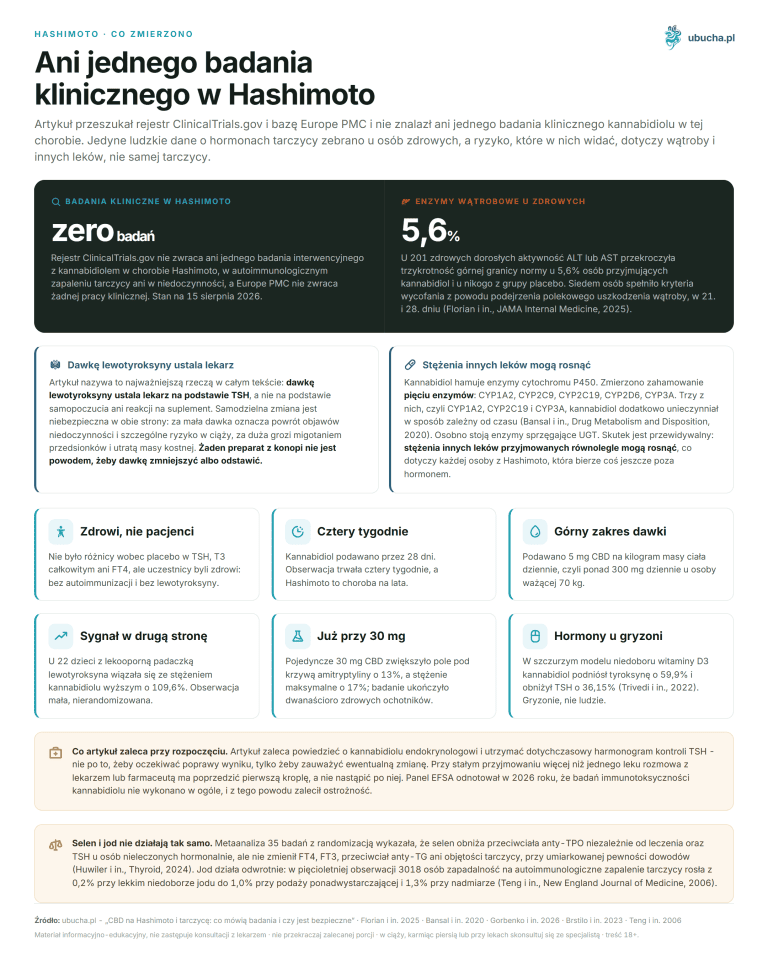
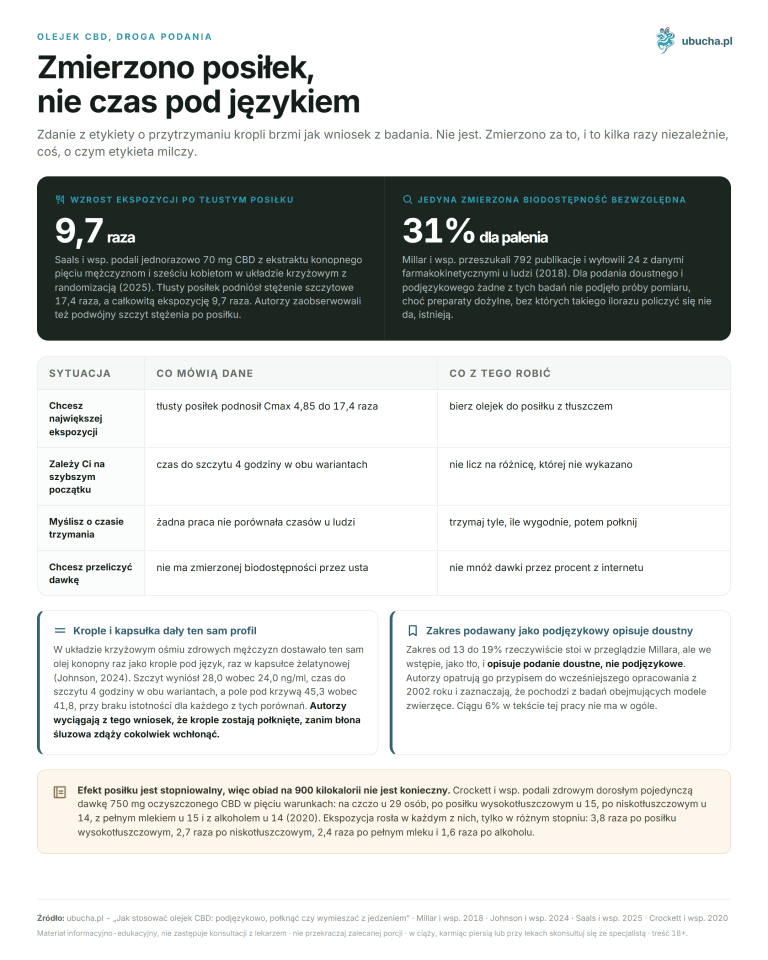
A herb grinder is bought once every few years and used daily, so the difference between a thoughtful and a random choice is noticeable after just a week. Sellers describe it by the number of chambers, diameter, and material, but these parameters mean little on their own until you translate them into how you use the equipment: whether you carry it in your pocket, keep it at home, whether you collect kief, or just want to quickly grind the herb. This text breaks down the choice into four decisions: number of chambers, material, diameter, and whether a kif-catcher is useful for you at all. At the end, you will find the prices of three grinders that are actually on the shelf at Bucha, calculated to the cost of one month of use.
KEY INFORMATION
• A 2-piece grinder is sufficient for daily grinding: fewer parts, faster cleaning, lower price.
• A screen and kief chamber only make sense with regular use over several weeks, as a single session yields trace amounts.
• The material determines the durability of the teeth: metal retains sharpness the longest, plastics are lighter and cheaper.
• A diameter of 50 to 59 mm is the range in which most models for home use fit.
• u Bucha, there are three grinders, all 2-piece, priced from 16.99 PLN to 22.00 PLN (as of August 8, 2026).
How many chambers does your grinder need?
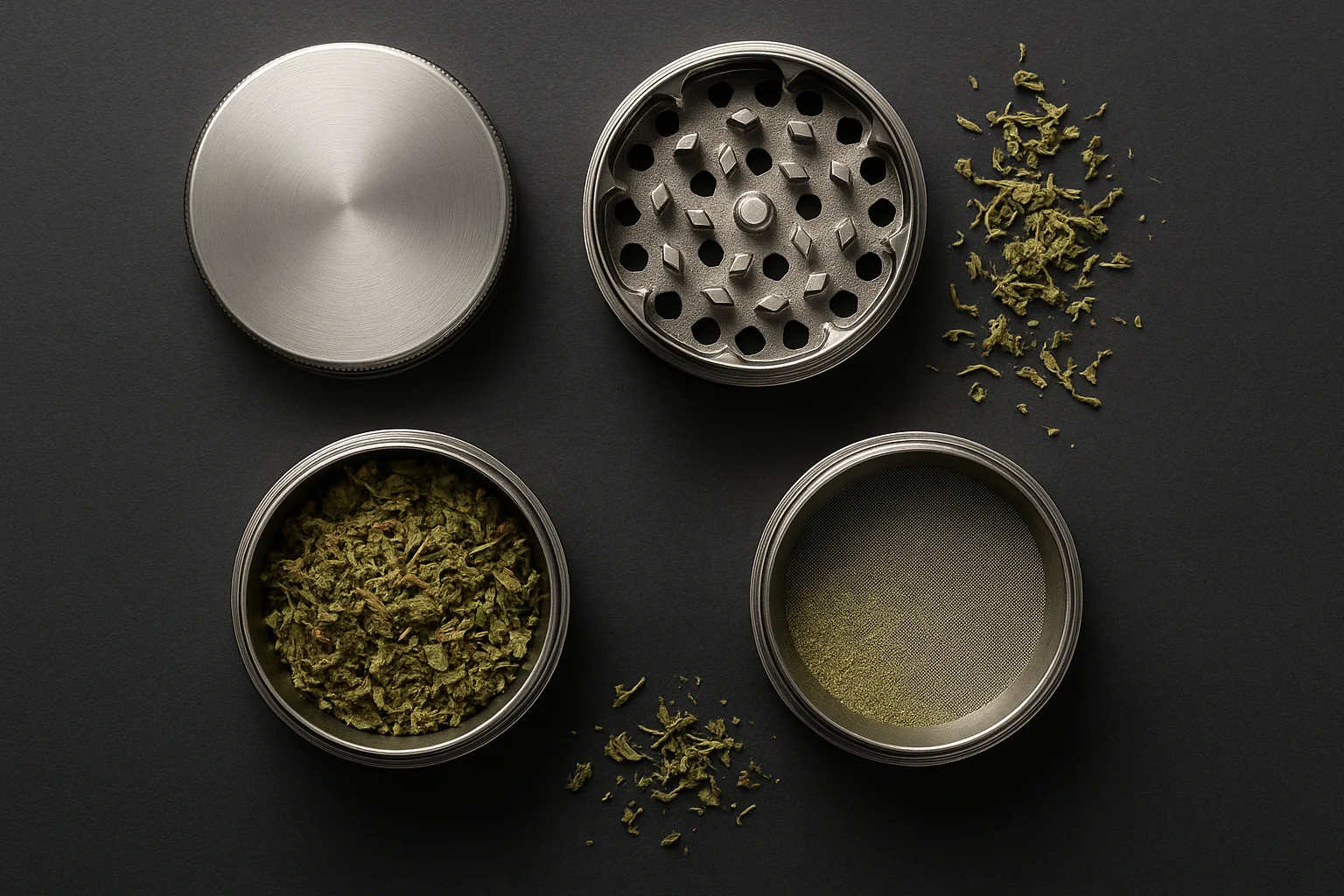
The number of chambers describes how many levels the grinder has and what happens to the ground material after passing through the teeth. A 2-piece construction has one space: you grind, open, and pour out. The 4-piece version adds a screen and a separate kief chamber, which means the same raw material is divided into two products, and the grinder itself becomes taller and heavier.
The practical difference boils down to one question: do you want to collect kief? If you are grinding herb for a vaporizer or for rolling and consume everything immediately, the extra levels only prolong cleaning. If you want to collect a bit of fine powder from resin glands over several weeks, the screen is the only way to separate it from the rest.
The 3-piece version combines a screen with the absence of a separate kief chamber and rarely wins any comparison: it takes almost as long to clean as the 4-piece model, and it collects noticeably less because the kief mixes with the ground material. If you are hesitating between three and four chambers, choose one of the extremes instead of a middle solution.
What is the difference between a 2-chamber and a 4-chamber grinder?
The following comparison organizes the features that are visible in daily use. Neither of these constructions is objectively better: they differ in the number of actions needed to achieve the same effect and what remains after grinding.
| Feature | 2-chamber grinder | 4-chamber grinder |
|---|---|---|
| Construction | Cover with teeth and collection chamber | Cover, grinding chamber, screen, kief chamber |
| Kief separation | None | Yes, through a screen with holes usually 100 to 150 microns |
| Cleaning | Two parts, a few minutes | Four parts and a screen, noticeably longer |
| Height and weight | Low, flat profile | Higher by two levels, heavier at the same diameter |
| Typical use | Daily grinding, travel, backpack | Collecting kief over weeks, home use |
| What breaks first | Teeth clogged with resin, resistance on the thread | The same plus clogged screen |
| For whom | For most users and for the first purchase | For those who actually use kief |
The choice between them is essentially a question of patience when cleaning, not the quality of grinding. The teeth in both constructions work identically, so the ground material looks the same. What differs is what you have after opening.
What grinders are on the shelf at Bucha and how much do they cost?
The grinder category currently counts three items, and all have a 2-piece construction. There is no model with a screen and kief chamber in this assortment, so if you are specifically looking for a kif-catcher, this shelf will not provide it. Prices are based on store data checked on August 8, 2026.
| Model | What distinguishes it | Price | Cost per month (36 months) |
|---|---|---|---|
| Volcano grinder for herbs and spices Storz Bickel 2 pcs. | Acrylic, diameter 59 mm, sharp teeth, original from a German manufacturer | 16.99 PLN | 0.47 PLN |
| Swiss Grinder Fresh - Grinder made of hemp plastic | Hemp bioplastic, cutting teeth instead of crushing, fine fraction | 19.99 PLN | 0.56 PLN |
| Purize hemp grinder 2 pieces diameter 55 mm | Biodegradable hemp fibers, diameter 55 mm, patented teeth | 22.00 PLN | 0.61 PLN |
All three fit into the same price range and differ mainly in material and diameter, not in functionality. You can find a full, up-to-date list in the grinders category, and a wider selection of grinding and packing equipment in the accessories category.
What is the monthly cost of a grinder?
You buy the equipment once, so the catalog price says little about how much it really costs. A clearer measure is the cost of one month of ownership: the price divided by three years of use. Three years is an arbitrary comparative period adopted here for all models, not a declaration of the lifespan of a specific item.
The range between the cheapest and the most expensive model here is fourteen groszy per month, which is about five zlotys over three years. At such a scale, price ceases to be an argument, and convenience decides: diameter, material, and how the grinder feels in hand.
The same calculation is worth doing for more expensive metal equipment, as there the differences become noticeable. A model for one hundred zlotys costs less than three zlotys per month, but only if it actually lasts three years. With plastics, a more cautious assumption shortens that period, so the real monthly cost increases proportionally.
Which material to choose: metal or plastic?
Metal, meaning anodized aluminum or stainless steel, retains the sharpness of the teeth the longest and does not deform under pressure, so after years it still grinds the same as at the beginning. You pay for this with weight and price. Steel is the heaviest and most durable, aluminum is a reasonable compromise, and the quality of anodizing determines whether the surface will dull after a year or after several years.
Plastics are divided into two groups with different reputations. Acrylic is a hard, rigid material used in some grinders from reputable vaporizer equipment manufacturers, and with well-cast teeth, it handles dry material without issue. Hemp bioplastic is a newer direction: it is made from plant fibers, is biodegradable, and is noticeably lighter than metal.
The limitation of plastics is common to both groups and concerns the durability of the edges. Teeth round off faster than metal ones, especially with hard, over-dried material, and a heavily clogged plastic grinder cannot be scrubbed as carelessly. In return, you get equipment that does not cool your hands in winter, does not rattle in your pocket, and costs noticeably less.
What diameter grinder makes sense for everyday use?
The diameter is measured at the outer edge of the lid and determines both the capacity of the chamber and how many turns are needed for a portion. The larger the diameter, the longer the path of the teeth with one turn, so the material grinds faster and more evenly, but the grinder is harder to hide.
Models with a diameter of 40 to 50 mm fit in pants pockets and do not stand out through the material, making them suitable for travel. The range of 50 to 59 mm is where most grinders sold for home use fit, including all three available at Bucha. Above 60 mm, the comfort of grinding larger portions increases, but the grinder becomes more portable in a backpack than on your person.
A good rule of thumb is to match the diameter to a single portion, not to a supply. A chamber filled to the brim blocks the teeth and requires wrestling with the lid, while a chamber filled about halfway turns easily and provides a more even fraction. If you regularly grind larger amounts, a larger grinder will be more convenient than several transfers in a smaller one.
What is a kif-catcher and who needs it?
A kif-catcher is the lowest chamber of a 4-piece grinder, separated from the grinding chamber by a screen with holes ranging from 100 to 150 microns. During grinding, fine particles of resin glands fall off the ground material, pass through the holes, and settle at the bottom. This powder, called kief, has a different consistency and smell than ground herb.
The scale of the phenomenon is often misunderstood, as store descriptions suggest a quick effect. Single grinding leaves a trace at the bottom that is almost invisible. A visible layer appears only after several weeks of daily use, and that is the proper horizon in which to assess whether the screen is worth it for you.
If you still want to collect kief, be prepared for maintenance. The screen requires separate cleaning because resin clogs the holes, and over time, sifting weakens, and a rinsed screen should not be scrubbed dry to avoid stretching the weave. A flat scoop, usually included with the grinder, is used to collect the kief. For storing the collected powder, a sealed container from the storage category is useful.
How to clean a grinder to last for years?
A sign that it is time to clean is resistance on the thread and the feeling that the material is rotating with the lid instead of being ground. This is caused by resin that clogs the bases of the teeth and penetrates the thread. With daily use, this should be done approximately every two to four weeks, and much less frequently with occasional use.
The procedure itself is short. Disassemble the grinder into parts and put it in the freezer for half an hour, as frozen resin becomes brittle and comes off in flakes. Tap each element over a piece of paper to recover what has fallen off. Remove the remaining residue with an old toothbrush soaked in isopropyl alcohol, and finally wipe everything dry and wait a few minutes for the alcohol to evaporate.
Two caveats concern the material. Plastic grinders should not be soaked in alcohol for long, as the solvent can dull the surface, so it is better to wipe them several times than to leave them in a bath. Never force the thread if it resists: cooling and a few drops of alcohol at the joint between the lid and the body work better than torque.
How to recognize a well-made grinder?
The first test is done without any material inside. A well-made grinder turns smoothly and with a noticeable, even resistance, without grinding noises and without lateral play. If the lid tilts when turning or the thread goes easily at times and jams at others, it is a sign that the chambers have not been matched, and over time it will only get worse.
The second signal is the teeth themselves. They should be of uniform height, clearly defined edges, and evenly spaced around the entire circumference. Rounded tips and visible marks from the mold indicate that the element was roughly cast, and such a grinder is more likely to tear the material than cut it, resulting in an uneven fraction with excess powder.
The third thing is the magnet in the lid, if the design provides for it. It should hold tightly enough to allow you to turn the closed grinder upside down and shake it without fear of the lid coming off. It is also worth checking whether the manufacturer provides the diameter and material: the absence of this information in the description usually goes hand in hand with a lack of quality control.
Frequently asked questions
Is a 2-chamber grinder enough for a start?
Yes. The 2-piece model grinds just as well as higher constructions because it works with the same teeth. You only give up the screen and kief chamber, and in return, you get shorter cleaning, a lower height, and a lower price. You can always return to the screen later.
What is the difference between a plastic grinder and a metal one?
Metal retains the sharpness of the teeth the longest and does not deform under pressure, so after years it still grinds the same. Plastics, including acrylic and hemp bioplastic, are lighter and cheaper, but their teeth round off faster, especially with dry, hard material.
What is kief and how much can you realistically collect?
Kief is a fine powder from resin glands that falls off during grinding and passes through a screen with holes ranging from 100 to 150 microns. One session yields almost nothing. A visible layer at the bottom of the chamber appears only after several weeks of regular use.
What diameter grinder should I choose for pocket use?
For carrying with you, the most comfortable diameters are 40 to 50 mm, as such a grinder fits in your pants pocket and does not stand out through the material. Above 55 mm, the convenience of grinding increases, but the grinder becomes more portable in a backpack than in a pocket.
How often should I clean my grinder?
Approximately every two to four weeks with daily use, and sooner if the thread starts to resist. Put the grinder in the freezer for half an hour, tap each part, and remove the remaining residue with a brush soaked in isopropyl alcohol and wipe dry.
Is it worth paying extra for a 4-chamber grinder?
It’s only worth it if you really plan to collect kief for several weeks. If you consume all the ground material immediately, you are paying for two extra levels that need to be cleaned and for a screen that clogs with resin over time. They do not add anything to the grinding itself.
You can check the current offer of grinders in the grinders category, and rolling papers, filters, and storage containers can be found in the accessories category.
This article is for informational and educational purposes. It contains internal links to product categories available in the Bucha store. Prices and specifications may change: check the current data on the product page before purchasing.
Author: Michał Waluk · Published: 2026-06-27 · Updated: 2026-08-08