
30 cannabis recipes for the whole week: breakfasts, lunches, desserts
Seeds, oil, flour, and hemp protein in 30 recipes for 7 days. Nutritional values from the USDA database, THC limits in food, and what is known about CBD in the kitchen.
Four products made from ground and pressed hemp seeds plus CBD oil are enough to not repeat a single dish for a week. Hulled seeds, cold-pressed oil, flour, and hemp protein behave very differently in the kitchen: some can withstand the oven, while others spoil from heat. Below you have 30 recipe skeletons in five groups, a weekly plan, and three things worth knowing before you start: how much protein hulled seeds really have, what THC content limits apply to hemp food, and what studies have shown about CBD absorption from meals. The recipes are intentionally short so that they can be memorized and modified without measuring everything to the gram. None of them require equipment other than a pot, pan, and blender.
KEY INFORMATION
• Hulled hemp seeds have 31.56 g of protein and 48.75 g of fat per 100 g (USDA FoodData Central, item Seeds, hemp seed, hulled).
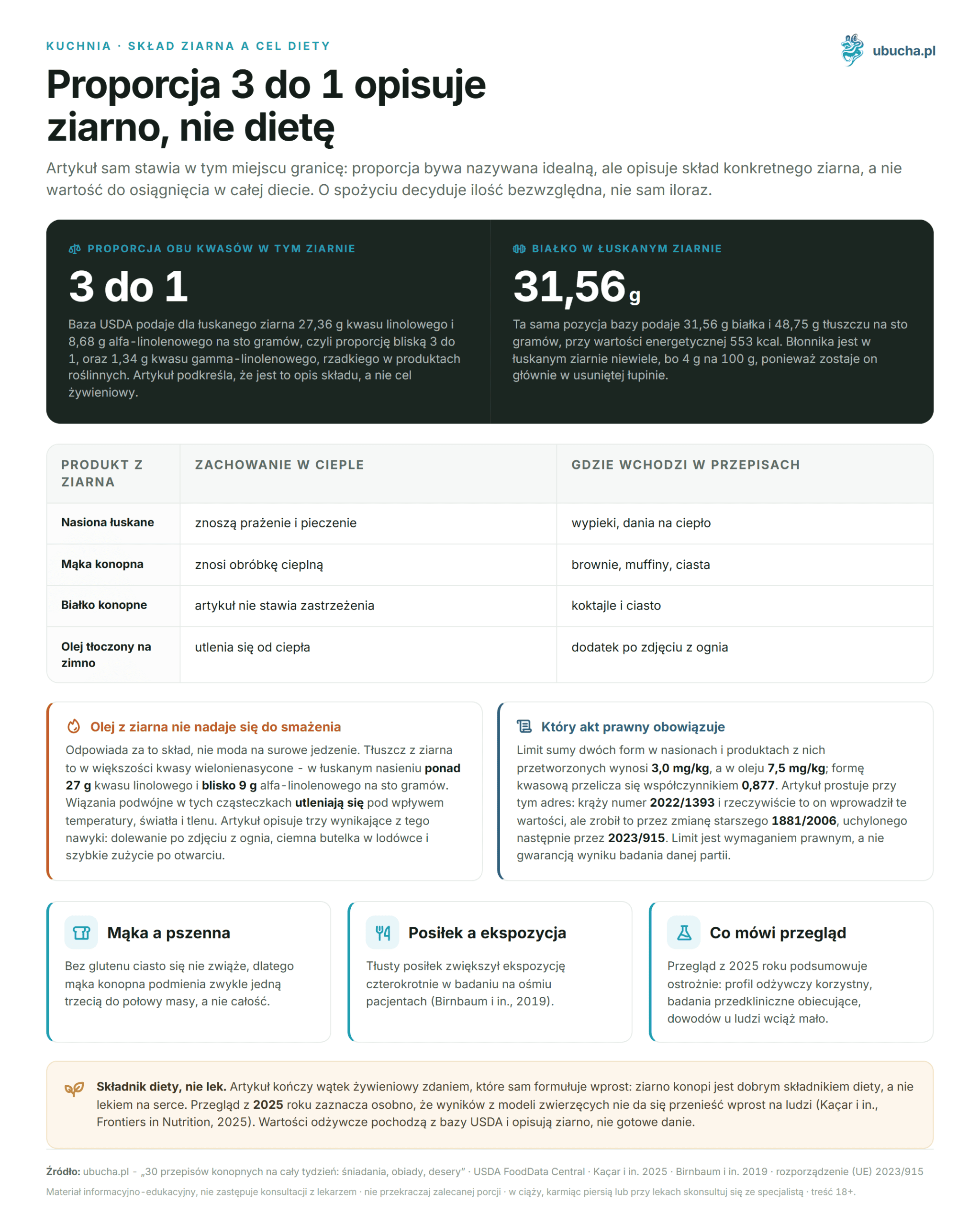
• The ratio of linoleic to alpha-linolenic acid is about 3 to 1, but this describes the composition of the seed, not a nutritional goal to achieve.
• The THC and THCA limit in seeds and processed products is 3.0 mg/kg, and in oil, it is 7.5 mg/kg.
• A fatty meal increased CBD exposure fourfold in a study of eight patients (Birnbaum et al., Epilepsia, 2019).
Which cannabis products are worth having in the kitchen?
Four items from the seed are enough, plus optionally CBD oil. Hulled seeds and hemp flour can withstand heat treatment and are suitable for baking. Cold-pressed oil and CBD oil are only for cold or lukewarm dishes. Hemp protein works well in smoothies and in dough.
The shopping list for a week for one or two people looks like this:
- Hulled hemp seeds: 200-250 g, as they are included in the largest number of recipes
- Cold-pressed hemp oil: one bottle, preferably dark
- Hemp flour: 300-400 g, mainly for baking
- Hemp protein: 200 g, for smoothies and oatmeal
- CBD oil: optionally, with the reservations described later in the text
Hemp flour is the ground residue after oil extraction, so it has less fat and more protein and fiber than whole seeds. The content of both varies between producers, as it depends on the degree of defatting, so it should be read from the specific package. In baking, hemp flour does not completely replace wheat flour: without gluten, the dough will not bind, so usually, one-third to half of the mass is substituted.
A full discussion of each ingredient, along with how to combine them, is described in the complete guide to cannabis in the kitchen.
How much protein and fats do hemp seeds provide?
A lot of both. The USDA FoodData Central database lists hulled hemp seeds as having 31.56 g of protein and 48.75 g of fat per 100 g, with an energy value of 553 kcal. There is little fiber in hulled seeds, only 4 g per 100 g, as it mainly remains in the removed hull.
In the fat, polyunsaturated fatty acids prevail. The same database entry lists 27.36 g of linoleic acid and 8.68 g of alpha-linolenic acid per 100 g, which is a ratio close to 3 to 1, and 1.34 g of gamma-linolenic acid, which is rare in plant products.
This ratio is sometimes called ideal, and here a boundary must be set. Three to one describes the composition of a specific seed, not a nutritional goal that should be achieved in the entire diet. The absolute amount you consume of alpha-linolenic acid determines how much you actually eat, not just the ratio. The fact remains: hemp seeds are a source of both families of acids at once, which is rare in the kitchen.
A review from 2025 dedicated to hemp seeds and the circulatory system summarizes this cautiously: the nutritional profile is beneficial, preclinical studies are promising, but there is still little clinical evidence in humans, and results from animal models cannot be directly transferred (Kaçar et al., Frontiers in Nutrition, 2025). Hemp seeds are a good dietary component, not a heart medication.
Is hemp oil suitable for frying?
No. The composition is responsible for this, not a trend for raw eating. The fat from hemp seeds is mostly polyunsaturated fatty acids, with over 27 g of linoleic acid and nearly 9 g of alpha-linolenic acid per 100 g of hulled seeds. The double bonds in these molecules oxidize under the influence of heat, light, and oxygen.
Practically, this means three habits. You add hemp oil to a finished dish after removing it from the heat, keep it in the fridge in a dark bottle, and use it quickly after opening, instead of keeping it open for half a year. If the oil starts to smell like oil paint or old nuts, it is already rancid and there is no point in trying to save it.
For frying, fats with a predominance of monounsaturated and saturated acids remain, such as olive oil, refined rapeseed oil, or clarified butter. In the recipes below, hemp oil appears only as a finishing touch: for dressing, in a bowl of soup, or in risotto instead of butter at the last stage.
Seeds and flour behave oppositely. Seeds can be roasted and baked because the fat is locked in the structure of the seed, and hemp flour can be added to brownies and muffins without any reservations. More ideas for the seeds themselves are collected in the text about hulled hemp seeds in the kitchen.
What THC limits apply to hemp food?
Three milligrams per kilogram for seeds and processed products, and 7.5 mg/kg for hemp seed oil. The limits are expressed in milligrams per kilogram, not in percentages, and apply to the sum of delta-9-THC and THCA converted to delta-9-THC with a coefficient of 0.877 for the latter.
The basis is the Commission Regulation (EU) 2023/915 of April 25, 2023, regarding the maximum allowable levels of certain contaminants in food, effective from May 25, 2023. In this context, the number 2022/1393 also circulates, and indeed it introduced these values, but it did so by amending the older regulation 1881/2006. The act from 2006 was subsequently repealed by 2023/915, so today the applicable address is this newer one.
What does this translate to in the kitchen? When you buy seeds, flour, protein, or oil from hemp seeds in normal food circulation, you are buying a product subject to this limit. However, this does not mean that every batch complies, as the limit is a legal requirement, not a guarantee of test results. If you want certainty, ask the seller for the test result of the specific batch.
A separate matter is CBD oil, which is not a product of seeds and is not subject to the same limits. Its status in food is described in the next section, as it is related to more than just THC content.
How much CBD is absorbed from a fatty meal?
Several times more than on an empty stomach. Birnbaum and colleagues administered a single dose of a capsule with 99% CBD to eight adult patients with drug-resistant epilepsy once on an empty stomach and once after a high-fat meal of 840 to 860 kcal. The maximum concentration was on average fourteen times higher after the meal, and the area under the curve, which measures total exposure, was four times higher.
This study involved eight people with one specific form of the preparation, so the numbers should not be treated as a conversion factor for any CBD oil (Birnbaum et al., Epilepsia, 2019). The direction is, however, repeatable: fat in a meal increases the amount of CBD that enters the bloodstream.
This is why adding drops of oil to dishes requires caution, not encouragement. The panel of the European Food Safety Authority established a provisional safe dose of CBD in 2026 at 0.0275 mg per kilogram of body weight per day, or about 2 mg daily for a person weighing 70 kg, with an uncertainty factor of 400. This value applies only to preparations with a purity of at least 98% CBD, without nanoparticles (EFSA, EFSA Journal, 2026).
The same document states that the safety of CBD cannot be established in individuals under 25 years of age, in pregnant and breastfeeding women, and in individuals taking medications. Two milligrams per day is less than what a few drops of typical oil provide, so CBD is not an everyday ingredient in these recipes, but rather an occasional and conscious addition. We have expanded on the timing of intake in the text about whether to take CBD oil before or after eating.
What to eat for breakfast with cannabis products?
Breakfasts are the easiest category, as oatmeal and yogurt accept additions without changing the character of the dish. Each of the six recipes below takes no more than ten minutes.
- Oatmeal with berries. 50 g of oats, 200 ml of oat milk, 2 tablespoons of hemp seeds, a handful of berries, a teaspoon of honey. Cook the oats for 3 minutes, add the seeds after removing from heat.
- Greek yogurt with hemp oil. 200 g of yogurt, 2 tablespoons of hemp seeds, a teaspoon of hemp oil, granola, seasonal fruits. Mix in the oil just before serving.
- Overnight oatmeal with hemp protein. 50 g of oats, 2 tablespoons of hemp protein, 200 ml of hemp milk, a tablespoon of chia seeds. Mix in the evening, eat in the morning.
- Smoothie bowl. Blend a banana, a handful of spinach, 2 tablespoons of hemp seeds, and 150 ml of plant milk. Decorate with hemp seeds and banana slices.
- Hemp pancakes. 80 g of wheat flour, 40 g of hemp flour, 2 eggs, 250 ml of milk, a tablespoon of rapeseed oil. Fry in clarified butter.
- Toast with hemp paste. 2 slices of whole grain bread, half an avocado, 2 tablespoons of hemp seed paste blended with olive oil, garlic, and lemon juice.
What to prepare for lunch with hemp oil and seeds?
Lunch is primarily salads with hemp oil dressing, creamy soups topped with seeds, and warm dishes where the oil is added only on the plate. Six variations below.
- Arugula and parmesan salad. Arugula, cherry tomatoes, parmesan, 2 tablespoons of hemp seeds. Dressing: 2 tablespoons of hemp oil, lemon juice, mustard, honey.
- Pumpkin cream with topping. Pumpkin cream soup, a tablespoon of hemp oil mixed in after removing from heat, hemp seeds, and pumpkin seeds on top.
- Rice bowl. 150 g of jasmine rice, baked salmon or tofu, cucumber, avocado, 2 tablespoons of hemp seeds. Sauce: hemp oil, soy sauce, grated ginger, a clove of garlic.
- Wrap with hummus. Tortilla, hummus blended with hemp oil, arugula, baked eggplant, hemp seeds on top. No cooking required.
- Red lentil soup. Lentils, carrots, cumin, garlic. Before serving, add a tablespoon of hemp oil to each bowl.
- Pasta with hemp pesto. 150 g of whole grain pasta and pesto blended with basil, hemp seeds, parmesan, garlic, and olive oil.
What does a light cannabis dinner look like?
In the evening, dishes with hemp protein or seeds work well, complemented by oil added on the plate. Below are six proposals, none of which require longer cooking than twenty minutes.
- Beet salad. Roasted beets, arugula, walnuts, cottage cheese, dressing of hemp oil, balsamic vinegar, and honey.
- Lentil patties. 200 g of cooked lentils, 50 g of hemp seeds, an egg, 2 tablespoons of hemp flour, cumin, garlic. Fry in rapeseed oil.
- Salmon with hemp topping. Fillet, 2 tablespoons of hemp seeds mixed with breadcrumbs, lemon zest. Bake for 18 minutes at 180 degrees.
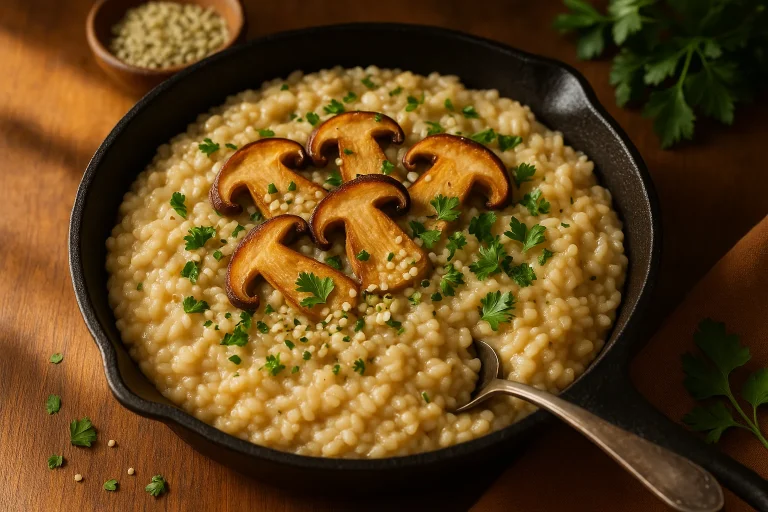
- Hemp risotto. Classic risotto with peas, finished with a tablespoon of hemp oil and a tablespoon of seeds after removing from heat, instead of butter.
- Spinach omelet. 3 eggs, a handful of spinach, 2 tablespoons of hemp seeds. Fry in butter and fold in half.
- Buckwheat with mushrooms. 150 g of buckwheat, mushrooms sautéed with garlic and thyme, a tablespoon of hemp oil, and seeds as a topping.
The common rule for these six dishes: hemp oil goes on the plate, not into the pot. In a hot dish, it will lose some of its benefits and will also become bitter. However, you can toast the seeds in a dry pan, as this brings out their nutty aroma.
What cannabis snacks and desserts can you prepare the fastest?
Snacks are made without an oven, and desserts mainly use hemp flour, whose dark color and nutty flavor become an advantage in chocolate baked goods.
- Energy balls. 150 g of dates, 50 g of hemp seeds, 2 tablespoons of cocoa, 50 g of cashews. Blend, form, chill for half an hour.
- Cannabis hummus. A can of chickpeas, 3 tablespoons of tahini, 2 tablespoons of hemp oil, lemon juice, garlic. Blend and sprinkle with seeds.
- Apple with hemp paste. Apple quarters and hemp seed paste blended with peanut butter, honey, and cinnamon.
- Oat bars. 150 g of oats, 3 tablespoons of hemp seeds, 50 g of raisins, 60 g of honey, 2 tablespoons of peanut butter. Press and chill for two hours.
- Yogurt with seeds and honey. 200 g of natural yogurt, 2 tablespoons of hemp seeds, a tablespoon of honey, a pinch of cinnamon. Two minutes of work.
- Cannabis brownie. 150 g of dark chocolate, 120 g of butter, 2 eggs, 150 g of brown sugar, 80 g of hemp flour, 30 g of cocoa. Bake for 22 minutes at 175 degrees.
- Chocolate muffins. 150 g of wheat flour, 80 g of hemp flour, 50 g of cocoa, 150 g of sugar, 2 eggs, 180 ml of milk, 80 ml of oil, 2 teaspoons of baking powder.
- Seed bar. 200 g of dark chocolate melted in a water bath, 3 tablespoons of hemp seeds, a pinch of sea salt. Pour, sprinkle, chill.
- Chia pudding with hemp milk. 40 g of chia seeds, 300 ml of hemp milk, a tablespoon of honey, vanilla. Chill overnight, in the morning sprinkle with seeds.
What cannabis drinks are suitable for different times of the day?
Three recipes for three different times of the day, all complete without cannabinoids. However, if you decide to add a drop of CBD oil to any of them, the fat from plant milk will increase its absorption, as mentioned above along with the reservations.
- Morning protein smoothie. Banana, 2 tablespoons of hemp protein, a handful of spinach, 200 ml of hemp milk, a tablespoon of peanut butter. Blend for a minute.
- Cannabis golden milk. 200 ml of hemp or coconut milk, half a teaspoon of turmeric, a pinch of black pepper, half a teaspoon of cinnamon, a teaspoon of honey. Heat, do not boil.
- Cold brew with hemp oil. 400 ml of cold coffee, a teaspoon of hemp oil, 2 tablespoons of coconut milk, a teaspoon of date syrup. Blend for ten seconds.
Only the smoothie requires a blender; golden milk and cold brew just need to be stirred or shaken in a jar. Hemp milk can be bought ready-made or made yourself from seeds and water; we described this in the recipe for homemade hemp milk.
How to plan a week of cannabis meals?
You do not have to reach for all five groups every day. A realistic plan is one or two cannabis recipes daily, rotating the products: seeds in the morning, oil at noon, protein in the afternoon. Rotation also allows you to test each ingredient separately before you start combining them.
| Day | First cannabis meal | Second cannabis meal |
|---|---|---|
| Monday | Oatmeal with seeds | Salad with oil dressing |
| Tuesday | Overnight oatmeal with protein | Pumpkin cream with topping |
| Wednesday | Pasta with hemp pesto | Energy balls |
| Thursday | Hemp pancakes | Lentil patties |
| Friday | Protein smoothie | Cannabis brownie |
| Saturday | Smoothie bowl | Hemp risotto |
| Sunday | Cannabis golden milk | Yogurt with seeds and honey |
Sunday is suitable for preparing bases: seed paste, hemp pesto, one baked good, and a bottle of hemp milk. Four bases take less than an hour and cover half the week. The rest is just adding and pouring into dishes you would make anyway. And if the week falls apart, return to the simplest item on the list: yogurt with seeds and honey takes two minutes and requires nothing but a spoon.
Frequently asked questions
Where to start cooking with cannabis?
Start with hulled seeds added to oatmeal or yogurt. They require no preparation, have a mild, nutty flavor, and are included in the largest number of recipes on this list. Once the habit is established, the next step is hemp oil as a dressing, followed by hemp protein for smoothies.
How much protein do hulled hemp seeds have?
The USDA FoodData Central database lists hulled hemp seeds as having 31.56 g of protein per 100 g, with 48.75 g of fat and 553 kcal. There is only 4 g of fiber in hulled seeds per 100 g, as most of it remains in the removed hull.
Is hemp oil suitable for frying?
No. It is dominated by polyunsaturated fatty acids, with over 27 g of linoleic and nearly 9 g of alpha-linolenic acid per 100 g of seed, and their double bonds oxidize from heat and light. Add it to finished dishes, keep it in the fridge in a dark bottle, and use it quickly after opening.
What are the THC limits for hemp food?
Three milligrams per kilogram for hemp seeds and processed products, and 7.5 mg/kg for seed oil. The limit applies to the sum of delta-9-THC and THCA converted to delta-9-THC. The basis is the Commission Regulation (EU) 2023/915, effective from May 25, 2023.
Does CBD absorb better with a fatty meal?
Yes, although the data comes from a small study. In eight patients, a high-fat meal raised the maximum CBD concentration fourteenfold and the total exposure fourfold. The European Food Safety Authority simultaneously established a provisional safe dose of about 2 mg per day for a person weighing 70 kg.
How to store cannabis products in the kitchen?
Seeds and flour in an airtight container, in a cool and dark place. Hemp oil in the fridge, in a dark bottle, and used quickly after opening, as polyunsaturated fats can go rancid. Hemp protein in an airtight package, in a dry place. Always read the expiration date from the specific package.
This article is for informational and educational purposes and does not replace consultation with a doctor. If you are pregnant, breastfeeding, taking medications, or have chronic conditions, consult the use of supplements or herbs with a specialist.
Author: Michał Waluk · Published: 2026-05-07 · Updated: 2026-08-16