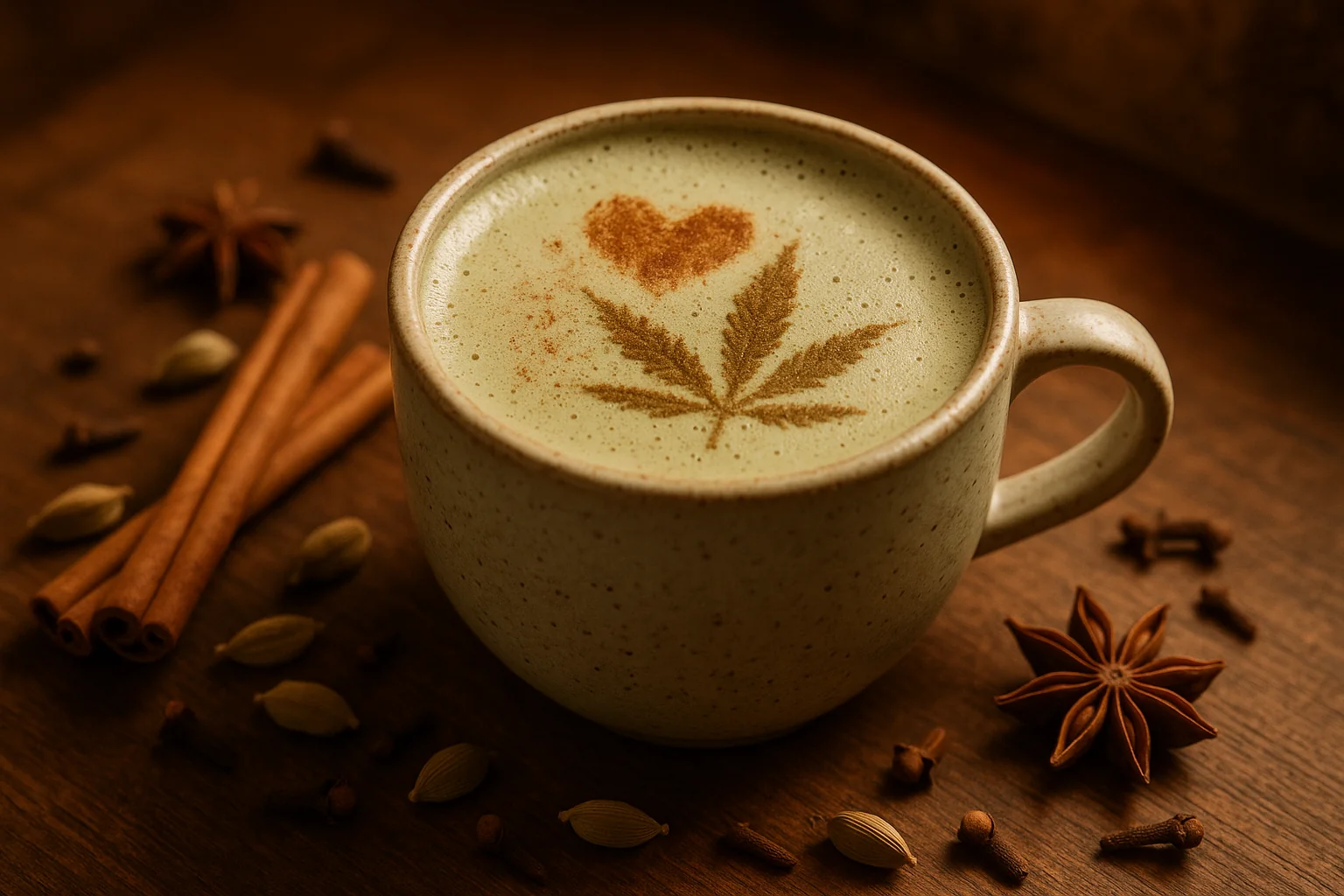

Hemp Latte with Cinnamon and Cardamom: Autumn Drink
Hemp latte step by step: milk from hulled hemp seeds blended with cinnamon and cardamom, espresso, and what really remains in the glass.
Hemp latte is coffee for those who want something thicker than oat drink and lactose-free. Milk from hulled hemp seeds has a distinctly nutty flavor, and when blended with cinnamon and cardamom, it gives a profile closer to Middle Eastern cardamom coffee than a regular cafe latte. The whole process involves three steps: blend the seeds with water and spices, strain, and combine with espresso. You do not need a portafilter espresso machine or a barista frother, just a blender and a regular immersion frother. The key trick of the recipe is that the spices go into the blender with the seeds, not on the finished foam. Below you will find a recipe for one large glass, the fat content of the seeds measured in studies, and an honest answer to the question of how much of that composition actually makes it into the cup after straining.
KEY INFORMATION
• Hemp seeds contain about 24.8% protein and 24.5% fat (Siano et al., Molecules 2018); Callaway reports a similar order of magnitude, about 25% protein.
• The fat in the seeds is over 75% polyunsaturated fatty acids, with linoleic acid at 56.1% and alpha-linolenic acid at 14.9% leading the way (Siano et al., 2018).
• The ratio of omega-6 to omega-3 fatty acids in hemp oil is typically described by Callaway as 2:1 to 3:1; in the Fedora variety, it was closer to 3.8:1.
• Straining retains a significant portion of protein and minerals in the cheesecloth, so a glass of latte does not carry the composition of whole seeds.
Why does hemp milk work in lattes?
Not because it froths better, as it actually loses to oat and cow’s milk in this regard. Cow’s milk owes its stable foam to caseins, oat milk to starch; hemp milk has neither, so the foam is light and falls after a minute or two. This is not enough for latte art with precise patterns. For coffee consumed at home, it is more than sufficient.
Its advantage is the fat and what it does with the spices. Hemp seeds contain 24.5% fat according to measurements by Siano et al. (Molecules, 2018), and the aromatic substances of cinnamon and cardamom dissolve in fat. If you throw the spices into the blender with the seeds, they will permeate the entire mass of milk. If you sprinkle them on the finished drink, they will remain on the surface. The difference in intensity is noticeable from the first sip, and this is the real reason why this recipe instructs to blend the spices rather than add them at the end. The same mechanism is used in matcha latte with hemp milk, where the powdered tea also goes into the jug before straining.
What do hemp seeds provide in this drink?
Hemp seeds are about one quarter protein and one quarter fat. Siano and colleagues measured 24.8% protein and 24.5% lipids in them, and Callaway (Euphytica, 2004) reports a similar value in his review, around 25% protein, mentioning edestin and albumin as the two main storage proteins of the seed. The fat profile looks like this:
| Fatty acid in hemp oil | Share (%) |
|---|---|
| Linoleic (omega-6) | 56.1 |
| Alpha-linolenic (omega-3) | 14.9 |
| Oleic (omega-9) | 12.8 |
| Gamma-linolenic (GLA) | 3.0 |
| Total polyunsaturated | 75.0 |
The values come from cold-pressed oil from the Fedora variety (Siano et al., Molecules 2018). It is worth noting two things. First, gamma-linolenic acid constitutes 3% of the fatty acids, which is a rare component in the daily diet. Second, the ratio of linoleic to alpha-linolenic acid here is about 3.8:1, while Callaway reports a typical range for hemp seed oil from 2:1 to 3:1, and considers this range beneficial for human health. Thus, the variety and growing conditions noticeably shift the ratio, and there is no single number for all hemp.
However, there is a caveat that recipes for plant milks usually remain silent about. Blending and straining is not the same as eating the seeds. A significant portion of protein and minerals remains in what you strain, and primarily an emulsion of fat along with some soluble components passes into the glass. If you care about the full composition of the seeds, do not throw away the pulp.
What do you need for one glass?
Proportions for one large glass or mug, about 300 ml of finished drink. Cardamom in seeds gives a more intense aroma than ground, but requires crushing in a mortar just before use.
- 4 tablespoons hulled hemp seeds, about 60 g
- 300 ml cold filtered water
- half a teaspoon ground cinnamon
- pinch of ground cardamom or 2 to 3 seeds crushed in a mortar
- pinch of sea salt
- 30 to 40 ml espresso or 60 ml strong brewed coffee
- optional: teaspoon of honey or maple syrup
- optional: pinch of ground ginger or vanilla
Use hulled seeds, not whole ones. The hull is bitter and gives cloudy milk, and in itself contributes little: Mattila et al. (Plant Foods for Human Nutrition, 2018) measured 14.2% protein in the hemp hull compared to 25.6% in the whole seed on a dry weight basis, and the content of the main mineral components was lower by 30 to 65%. Hulled seeds blend into a creamy emulsion in 60 to 90 seconds.
A pinch of salt is not just a decoration: without it, hemp milk tastes flat, as salt brings out the nutty note of the seeds and balances the bitterness of the espresso. Use cold water, as the blender at high speed heats it up significantly, and warm emulsion separates even before straining.
How to make hemp latte step by step?
The whole process takes about ten minutes. Brew the espresso simultaneously with heating the milk so that both ingredients meet hot.
- Add hemp seeds to the blender, pour in 300 ml of cold water, add cinnamon, cardamom, and a pinch of salt. Blend on high speed for 90 seconds until the liquid becomes creamy and starts to smell of spices.
- Line a sieve with cheesecloth or use a nut milk bag and pour the mixture into a saucepan. Squeeze the cheesecloth tightly, until the last drop. Set aside the cinnamon pulp, it will be useful for oatmeal or baking.
- Heat the strained milk over medium heat to about 65 to 70 degrees, or until it starts to steam. Do not bring to a boil, as the emulsion will separate.
- Immerse an electric frother and froth for 25 to 30 seconds. Alternatively, you can pour the hot milk into a blender jug and blend for 10 seconds, which gives more foam.
- Brew espresso and pour it into a tall glass. Slowly pour the hot milk over it, holding a spoon at the edge to layer it. Sprinkle the top with a pinch of cinnamon.
How to modify this recipe to your liking?
The base of seeds and water allows for many modifications, as the spices go into the blender, not into the finished drink. You can make a masala version by adding a pinch of ginger, a pinch of black pepper, and two cloves alongside the cinnamon and cardamom. It results in milk with a masala chai profile, which pairs well with strong espresso.
A caffeine-free version for the evening simply involves omitting the coffee: heat the spiced milk to 70 degrees, froth, and sweeten with a teaspoon of honey. If you are looking for a ready recipe in this spirit, check out golden milk for the evening. For an iced version, prepare in advance: chill the spiced milk in the fridge, pour it into a glass with ice, and then add double espresso, stirring vigorously.
If you want to have hemp milk on hand, make a larger batch without spices and season each glass separately. The technique is the same, just the scale is different, and I have outlined it in the text about homemade hemp milk step by step. Without preservatives, such a base lasts in the fridge for three days and separates between uses, so just shake it before pouring.
Frequently Asked Questions
Can hemp milk be frothed for latte?
Yes, but the foam is light and unstable. Hemp milk lacks casein, which stabilizes foam in cow’s milk, and starch, which does this in oat milk. An electric frother in hot milk gives foam that lasts a minute or two. This is enough for homemade latte, but not for latte art.
What hemp seeds to choose for latte?
Only hulled seeds. Whole seeds with hulls produce bitter and cloudy milk, and the hull itself is poorer: Mattila et al. (2018) measured 14.2% protein in it compared to 25.6% in the whole seed and 30 to 65% less of the main mineral components. Hulled seeds blend smoothly in 60 to 90 seconds.
What to do with the pulp left after straining?
Do not throw it away, as it contains a significant portion of the protein and mineral content of the seeds. The pulp seasoned with cinnamon is great for oatmeal, yogurt, and for muffin or pancake batter. It lasts two days in the fridge, a month in the freezer.
Does cardamom go well with hemp milk coffee?
Cardamom is a classic addition to coffee in Middle Eastern and Scandinavian cuisine, so the combination is not an experiment. With nutty hemp milk, it gives a warm aroma with citrus notes. Two crushed seeds in a mortar are enough for one glass; ground cardamom is more convenient but loses its aroma faster.
How long does homemade hemp milk last?
Without preservatives, three days in the fridge, in a tightly sealed bottle. Separation is normal and does not indicate spoilage, just shake before pouring. Spoilage is indicated by a sour smell or bitter taste. Spiced milk spoils at the same rate as plain.
This article is for informational and educational purposes and does not replace consultation with a doctor. If you are pregnant, breastfeeding, taking medications, or have chronic conditions, consult a specialist before using supplements or herbs.
Author: Michał Waluk · Published: 2026-06-08 · Updated: 2026-08-15