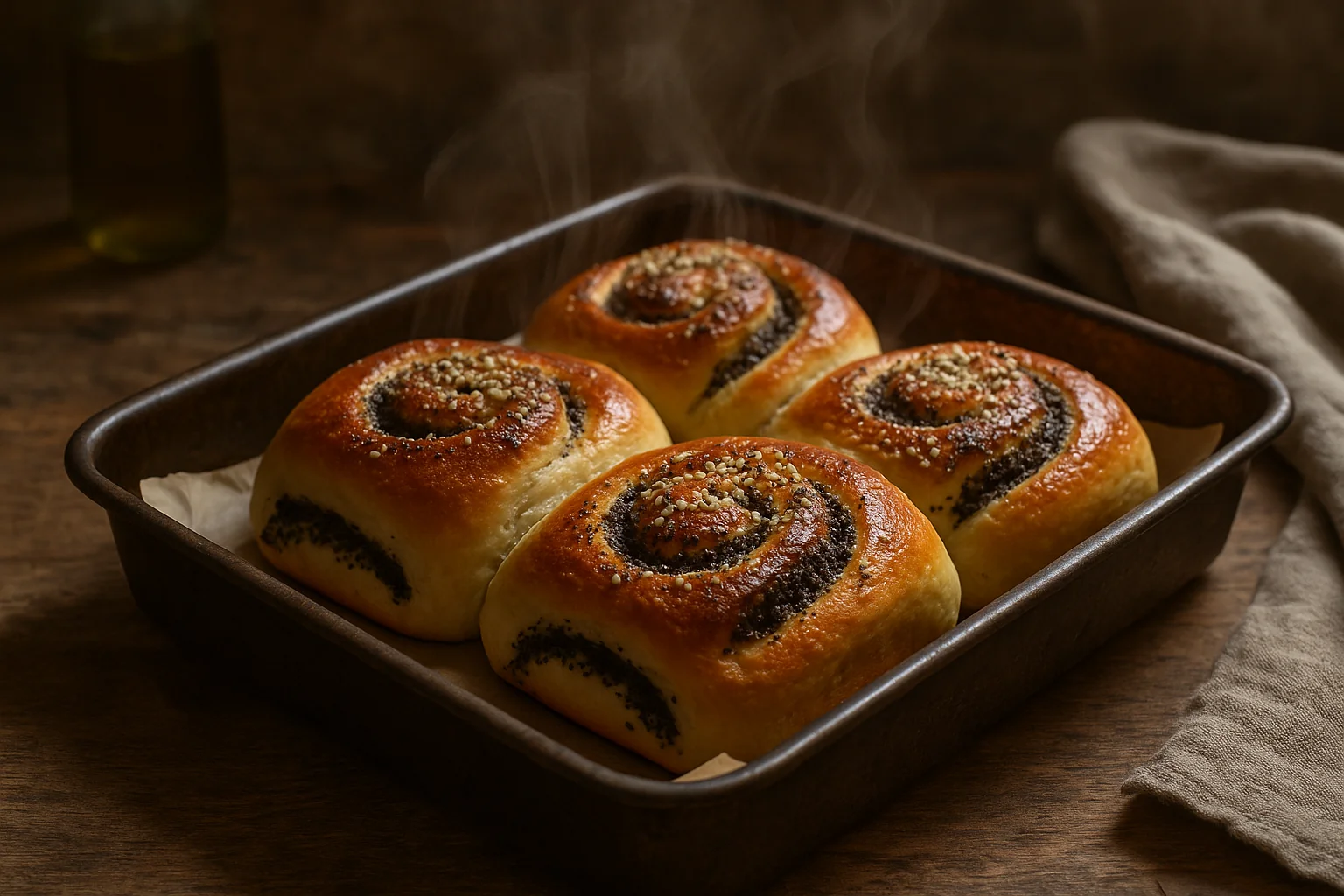

Poppy Seed Buns with Hemp Seeds
Poppy seed buns with hemp seed filling: step-by-step recipe, composition of poppy and hemp seeds according to USDA, and THC limits in food made from hemp seeds.
Poppy seed buns are a classic of Polish bakeries, and hulled hemp seeds are an addition that does not spoil them. The nutty flavor of the seeds complements the bitter aroma of the poppy and gives the filling a more distinct texture, as whole seeds do not dissolve in the mass like ground poppy seeds but remain detectable. They also change the composition of the filling, although not where it is usually discussed. Poppy and hemp have different mineral profiles and extremely different levels of alpha-linolenic acid, and this is where they complement each other. Below you will find a step-by-step recipe, a comparison of the composition of both seeds, and what the law says about the permissible THC content in food made from hemp seeds.
KEY INFORMATION
• Hulled hemp seeds contain 31.6 g of protein, 48.8 g of fat, and 700 mg of magnesium per 100 g (USDA FoodData Central, record 170148).
• Poppy seeds provide calcium, which is almost absent in hemp: 1440 mg per 100 g compared to 70 mg (USDA, record 171330).
• Alpha-linolenic acid: 8.68 g per 100 g in hemp and 0.27 g in poppy, a difference of over thirty times.
• Lysine is the first limiting amino acid in all tested hemp products (House et al., Journal of Agricultural and Food Chemistry, 2010).
Why do poppy seeds and hemp seeds work well together?
Because they complement each other where each is poor, not where it is usually discussed. Poppy brings calcium and fiber, while hemp provides magnesium and omega-3 fatty acids. The flavor profile is equally complementary, as the finely grained, bitter poppy receives a soft, nutty counterbalance from the hemp seeds.
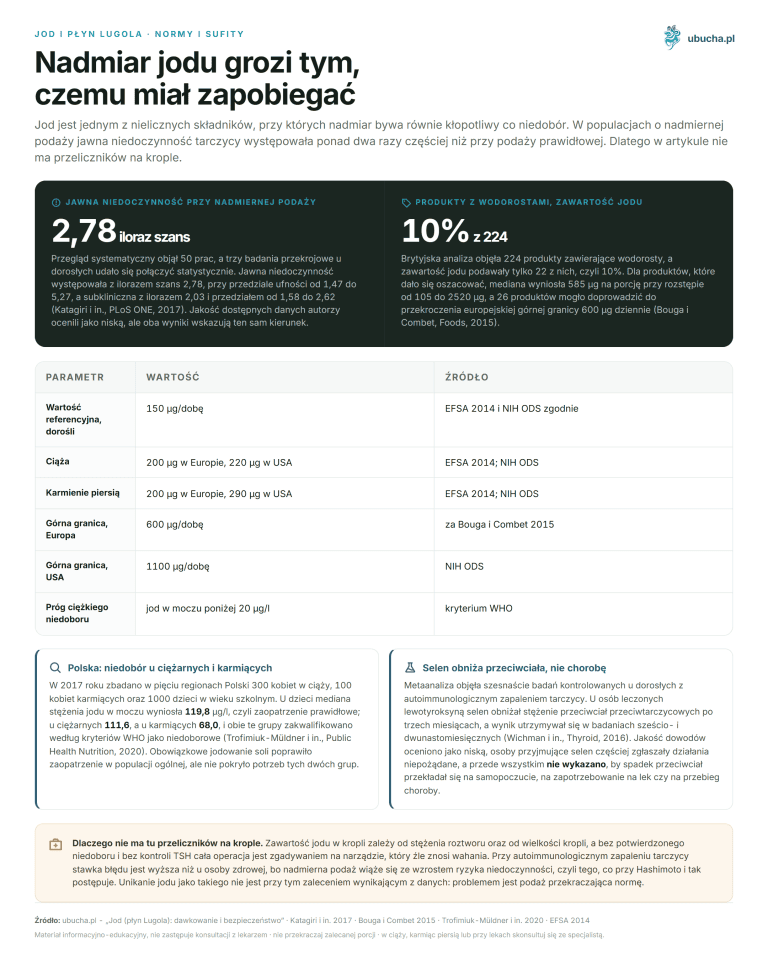
The popular notion that hemp complements the lysine missing in poppy is reversed. House examined thirty commercial samples of hemp products and found that lysine is the first limiting amino acid in all tested materials without exception (House et al., Journal of Agricultural and Food Chemistry, 2010). Hemp has a complete profile of essential amino acids, but it does not have an excess of lysine, so it is not an ingredient that fills its deficiency in another raw material. What they really bring to the filling lies in minerals and fats.
Fifty grams of hulled seeds for twelve pieces gives about 16 g of protein for the entire batch, which is less than 1.5 g per bun. This is a flavor and mineral addition, not a way to make a high-protein bake. You will find the same ingredient in oatmeal cookies with hemp seeds.
How do the compositions of poppy seeds and hemp seeds differ?
Most notably in calcium and alpha-linolenic acid, and in opposite directions. Poppy has twenty times more calcium, while hemp has over thirty times more ALA. Below is a full comparison per 100 g of raw material, with links to USDA database records above.
| Per 100 g | Poppy (171330) | Hulled Hemp Seeds (170148) |
|---|---|---|
| Protein | 18.0 g | 31.6 g |
| Fat | 41.6 g | 48.8 g |
| Fiber | 19.5 g | 4.0 g |
| Calcium | 1440 mg | 70 mg |
| Magnesium | 347 mg | 700 mg |
| Linoleic Acid (omega-6) | 28.3 g | 27.4 g |
| Alpha-Linolenic Acid (omega-3) | 0.27 g | 8.68 g |
The last two rows explain why to add hemp to the poppy mass at all. Poppy provides almost exclusively omega-6, so it has a ratio of both acids of about one hundred to one. Hemp seeds have a ratio of about three to one, and Callaway describes this range in hemp oil as considered beneficial for human health (Callaway, Euphytica, 2004). This is his assessment, not a recommendation from any institution, so treat it as a description of the raw material, not a dietary norm.
In practice, this translates modestly: fifty grams of seeds for twelve pieces gives just under 30 mg of magnesium and about 0.36 g of ALA per bun. You will use the same ingredient in homemade granola with hemp seeds.
Are hemp seeds in baked goods safe for children?
Yes, as long as they are seeds sold as food, because these are subject to separate contamination limits. EU law sets them in milligrams per kilogram of product, not in percentages. The 0.3% threshold that circulates in culinary regulations applies to the cultivation of hemp, not what is in the bag of seeds.
The highest permissible levels for food made from hemp seeds are 3.0 mg/kg for seeds and for ground seeds and other processed products, and 7.5 mg/kg for hemp seed oil. The level refers to the sum of delta-9-THC and delta-9-THCA expressed as delta-9-THC. The basis is Annex I section 2.6 of Commission Regulation (EU) 2023/915 of April 25, 2023, applicable from May 25, 2023, which replaced Regulation 1881/2006. Previously, it was introduced there by Regulation (EU) 2022/1393, so citing this older act today is outdated.
What this means for baking: buy seeds from the food shelf and do not replace them with seed or feed material. The seed itself does not produce THC, as the resin settles on the tops of the plant and reaches the seeds as surface contamination. Therefore, the limit concerns contamination, not the composition of the seed.
What do you need for poppy seed buns with hemp seeds?
The recipe yields twelve pieces and takes about ninety minutes, of which an hour is rising. The milk and butter should be at room temperature, and the yeast should be fresh or from a recently opened packet, as they determine the success of the dough.
Poppy seeds can be bought ground or as a ready-made poppy seed mass. The ready mass can be heavily sweetened, so reduce the honey to one tablespoon and taste the filling before spreading. Keep hulled hemp seeds in the fridge in an airtight jar, as with almost half fat in the composition, they quickly take on the taste of rancid oil in warmth.
- For the dough: 400 g of wheat or spelt flour, 7 g of dried yeast or 25 g of fresh, 110 ml of warm milk, 1 egg, 50 g of butter at room temperature, 3 tablespoons of sugar, a pinch of salt
- For the filling: 200 g of ground poppy seeds or ready-made poppy seed mass, 50 g of hulled hemp seeds, 3 tablespoons of honey or maple syrup, 1 tablespoon of butter, optionally 1 teaspoon of vanilla extract
- For brushing: 1 egg beaten with 1 tablespoon of milk
- For sprinkling: 1 tablespoon of hulled hemp seeds
How to bake poppy seed buns with hemp filling?
Six steps, two of which are waiting. Preheat the oven only at the end, as the dough needs a warm place first. Mix the hemp seeds into the filling at the end and whole, so they remain detectable under the teeth.
- Mix the yeast with a teaspoon of sugar and 50 ml of warm milk at about 37 degrees Celsius. Wait ten minutes. The mixture should foam and rise significantly. Lack of foam indicates inactive yeast that needs to be replaced.
- Combine flour, the rest of the sugar, egg, remaining milk, yeast, and salt in a bowl. Knead for 8-10 minutes by hand or 6 minutes with a mixer hook, then add butter piece by piece and knead for another five minutes until the dough starts to pull away from the sides.
- Form a ball, cover with a cloth, and leave in a warm place for 45-60 minutes to double in size. In a cool apartment, an off oven with the light on helps.
- Mix ground poppy seeds with honey and butter, season with vanilla, and finally add the hemp seeds. The mixture should be thick enough to spread and not spill over the dough.
- Deflate the dough, roll it out into a rectangle about 40 by 30 cm, spread the filling with a 2 cm margin, and roll tightly along the longer side. Cut with a sharp knife into twelve pieces.
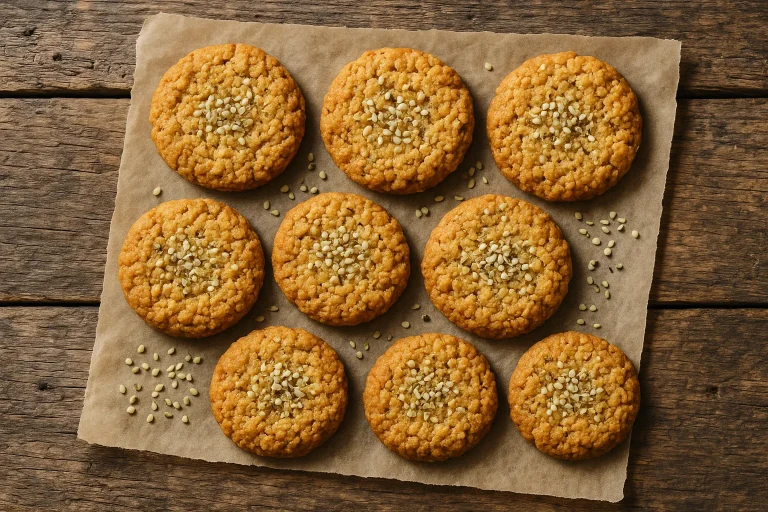
- Place the pieces loosely on a baking sheet lined with paper. Cover with a cloth for twenty minutes, and preheat the oven to 185 degrees. Brush the buns with egg mixed with milk, sprinkle with hemp seeds, and bake for 18-22 minutes until golden. Cool on a rack.
What to do to prevent the filling from falling out when cutting?
Roll tighter and press the filling into the dough before rolling. We noticed in tests that hemp seeds behave differently than raisins, as they do not stick to the poppy mass and simply fall out when cut with a loose roll. A light press with the hand after spreading the filling completely solves this problem.
An sharp knife and a sawing motion instead of pressing down, which flattens the roll and pushes the filling to the sides, also helps. Some bakers cut the roll with dental floss inserted underneath and tightened at the top, which results in a cleaner cut than with a knife for soft yeast dough. Similarly, chilling the rolled-up dough in the fridge for fifteen minutes works.
A nut variant includes 30 g of chopped walnuts or almonds in the filling and an extra tablespoon of honey, as nuts absorb moisture from the mass. An orange variant requires zest from one fruit and breaks the bitterness of the poppy. A gluten-free variant is based on 250 g of rice flour with 100 g of potato starch and a tablespoon of psyllium husks, with shorter kneading and longer rising, even up to seventy-five minutes.
Frequently Asked Questions
Why are my buns dense and heavy?
Most often due to inactive yeast or too short kneading. Always check the yeast for ten minutes in warm milk with sugar before adding to the flour. The dough needs at least ten minutes of kneading for the gluten to build structure. Hemp seeds do not disrupt this as they are only in the filling.
Can hemp seeds be added to the dough itself?
Yes, but cautiously and in small amounts. Hulled seeds contain 48.8 g of fat per 100 g (USDA, record 170148), and fat weakens the gluten network. It is safer to keep them in the filling and topping, where they do not interfere with kneading.
How much magnesium and calcium is in one bun?
With 50 g of hemp seeds and 200 g of poppy seeds for twelve pieces, there is just under 30 mg of magnesium and over 200 mg of calcium per bun. Magnesium mainly comes from hemp (700 mg per 100 g), while calcium almost entirely from poppy seeds (1440 mg per 100 g).
How to store buns with hemp seeds?
In an airtight container for up to two days at room temperature, up to five days in the fridge, and in the freezer for up to two months. Reheat in the oven at 150 degrees for five minutes. Hemp seeds are fatty, so they quickly take on the taste of rancid oil in warmth.
What are the THC limits for hemp seeds in food?
3.0 mg/kg for seeds and processed products from them, and 7.5 mg/kg for hemp seed oil, calculated as the sum of delta-9-THC and delta-9-THCA. The basis is Annex I section 2.6 of Regulation (EU) 2023/915, applicable from May 25, 2023. The 0.3% threshold applies to cultivation, not food.
This article is for informational and educational purposes and does not replace consultation with a doctor. If you are pregnant, breastfeeding, taking medications, or have chronic conditions, consult the use of supplements or herbs with a specialist.
Author: Michał Waluk · Published: 2026-06-22 · Updated: 2026-08-16