
Gut-brain axis: how microbiota affects stress, sleep, and mood
How gut microbiota affects stress, sleep, and mood. Gut serotonin, SCFAs, the vagus nerve, and psychobiotics: what studies show and what do not.
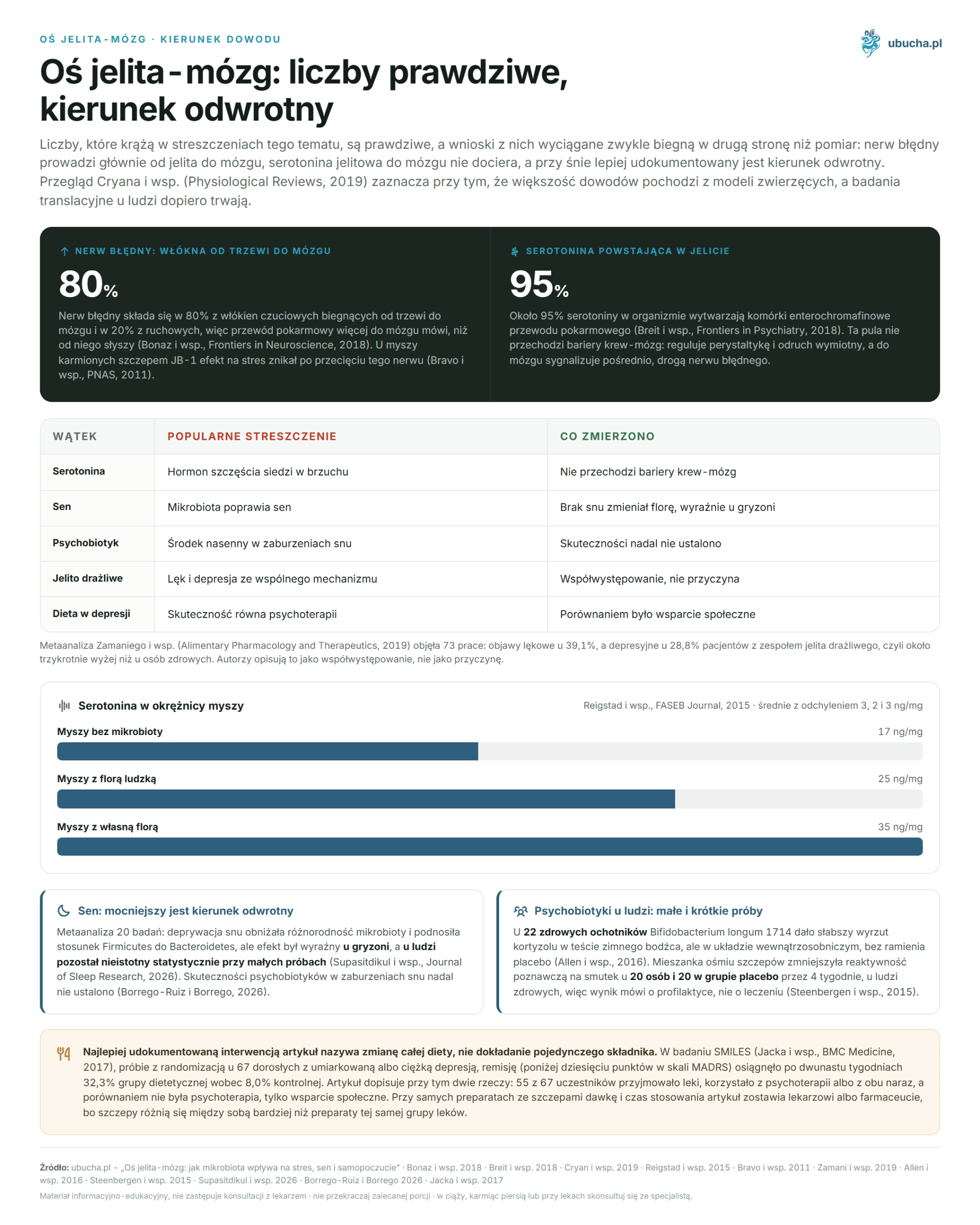
For decades, the brain was considered the sole command center, and the gut merely a digestive tube. Today, we know this is an oversimplification. The gut has its own nervous system and constantly reports upwards the composition of microbiota, bacterial metabolites, and inflammation levels. The vagus nerve, the main pathway of this conversation, consists of 80% sensory fibers running from the viscera to the brain (Bonaz et al., Frontiers in Neuroscience, 2018). Gut bacteria influence serotonin production in the gut wall. They also produce short-chain fatty acids that cross the blood-brain barrier. This text shows what has been measured, what remains a hypothesis, and which popular figures lack support in the studies to which they are attributed.
KEY INFORMATION
• The vagus nerve consists of 80% sensory fibers running from the viscera to the brain (Bonaz et al., Frontiers in Neuroscience, 2018).
• Enterochromaffin cells in the gut produce about 95% of serotonin in the body (Breit et al., Frontiers in Psychiatry, 2018).
• Mice without microbiota had 17 ng/mg of serotonin in the colon compared to 35 ng/mg in mice with normal flora (Reigstad et al., FASEB Journal, 2015).
• In the SMILES study, 32.3% of the dietary group achieved depression remission compared to 8.0% of the control group (Jacka et al., BMC Medicine, 2017).
What is the gut-brain axis and how does it work?
The gut-brain axis is a bidirectional communication between the gastrointestinal tract and the central nervous system, conducted through several parallel pathways simultaneously. A review by Cryan et al. (Physiological Reviews, 2019) lists four: the immune system, tryptophan metabolism, the vagus nerve, and the enteric nervous system. Bacterial metabolites mediate these pathways.
The authors of this review discuss a separate microbiota-gut-brain axis, rather than simply a gut-brain axis. The difference is not cosmetic: bacteria are not passengers in this system but one of its transmitters. Among the metabolites that carry the signal, they mention short-chain fatty acids, branched-chain amino acids, and peptidoglycans.
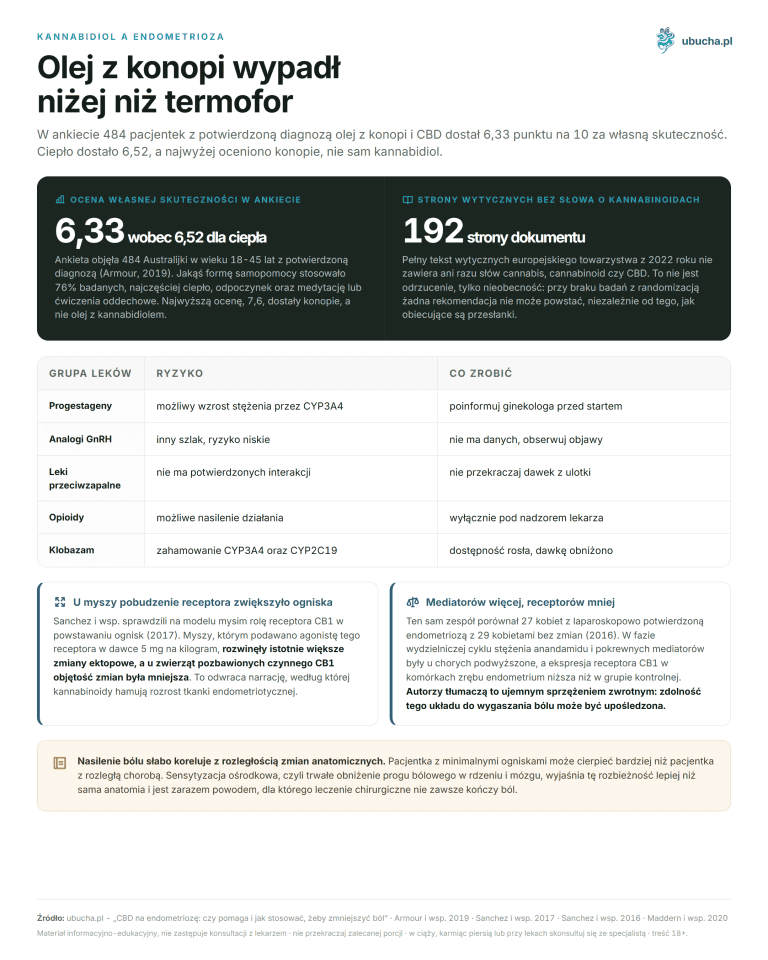
The movement is not symmetrical. The vagus nerve consists of 80% sensory fibers and 20% motor fibers, as described by Bonaz et al. (Frontiers in Neuroscience, 2018). This means that the gastrointestinal tract communicates more to the brain than it hears from it. Cryan’s review links microbiota composition to autism, anxiety, obesity, schizophrenia, and Parkinson’s and Alzheimer’s diseases, but the authors themselves note that most evidence comes from animal models, and translational studies in humans are still ongoing. This caveat is worth keeping in mind with each subsequent section.
Why is almost all serotonin produced in the gut?
Because it is produced by enterochromaffin cells lining the gastrointestinal tract, not by brain neurons. Breit et al. (Frontiers in Psychiatry, 2018) state that they account for about 95% of serotonin in the body. This pool regulates peristalsis and the vomiting reflex, and signals to the brain indirectly via the vagus nerve.
Gut-derived serotonin does not cross the blood-brain barrier, so it does not directly contribute to the brain pool. The popular statement that ninety-some percent of the happiness hormone resides in the belly is therefore true in terms of numbers but misleading in terms of conclusion.
The role of bacteria was demonstrated in a study by Yano et al. (Cell, 2015): spore-forming bacteria from the microbiota of mice and humans stimulate serotonin synthesis in enterochromaffin cells of the colon, and administering selected bacterial metabolites increases its concentration in germ-free mice. A solid number was added that same year. Reigstad et al. (FASEB Journal, 2015) measured serotonin levels in the colon of three groups of mice and observed a clear gradient, and in cultures of human enterochromaffin cells, short-chain fatty acids stimulated the transcription of the TPH1 gene, which is essential for serotonin synthesis in the mucosa.
What are SCFAs and how do they reach the brain?
SCFAs are short-chain fatty acids: acetate, propionate, and butyrate. They are produced in the large intestine from the fermentation of fiber and resistant starch by bacteria. A review by Dalile et al. (Nature Reviews Gastroenterology and Hepatology, 2019) treats them as the main candidate for a mediator between microbiota and mood.
The pathway to the brain is described specifically. Silva et al. (Frontiers in Endocrinology, 2020) state that SCFAs cross the blood-brain barrier through monocarboxylate transporters in endothelial cells, and they themselves affect its permeability by increasing the expression of tight junction proteins. Peripherally, they modulate inflammation by differentiating regulatory lymphocytes, and in the central nervous system, they affect neuroinflammation.
Important caveat: the authors of both reviews discuss mechanisms, not clinical outcomes. Dalile et al. state directly that there are few studies examining SCFAs as mediators of the effects of microbiota interventions on mood, especially in humans. In other words, the pathway is charted, and movement on it is just being measured. Increasing SCFA production can be achieved with fermentable fiber: inulin from garlic and onions, pectins from apples, beta-glucan from oats, and resistant starch from cooled potatoes. If butyrate itself interests you as a supplement, we describe it separately in the entry about sodium butyrate for the gut.
How do stress and microbiota mutually reinforce each other?
The relationship runs both ways, and this is its most challenging part. Stress stimulates the hypothalamic-pituitary-adrenal axis, and Cryan et al.’s review indicates that stress affects the microbiota-gut-brain axis at every stage of life. Conversely, altered microbiota composition modifies the response to stress, which has been shown mainly in animals.
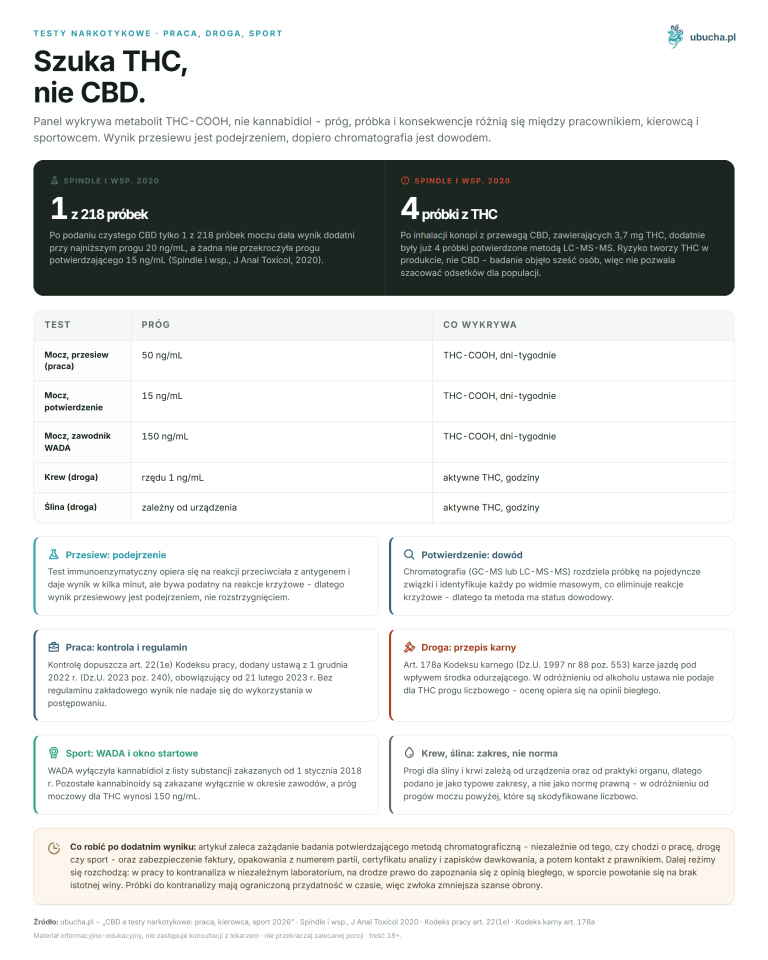
The clearest evidence of the mechanism came from a study by Bravo et al. (PNAS, 2011). Mice fed the Lactobacillus rhamnosus JB-1 strain had lower corticosterone levels after stress and fewer anxiety behaviors, and GABA receptor expression changed in specific areas of the brain. The effect disappeared in mice after cutting the vagus nerve. This study was conducted on rodents, not humans, and should be read as such.
We have noticed that the most commonly misrepresented element of this puzzle is irritable bowel syndrome. A meta-analysis by Zamanian et al. (Alimentary Pharmacology and Therapeutics, 2019), which included 73 studies, reports the prevalence of anxiety symptoms in patients with this syndrome at 39.1%, and depressive symptoms at 28.8%, which is about three times higher than in healthy individuals. The authors describe this as comorbidity, not as causation. The statement about a common mechanism is a hypothesis and should not be presented as a finding.
Which probiotics have been studied for stress and mood?
The term psychobiotic refers to bacteria with potential effects on mental health. There are few human trials, they are small and short, and their results are described by the authors more cautiously than supplement labels. The table below compares three of the most frequently cited studies along with their actual size and design.
| Strain | Study | Who and how many | Result |
|---|---|---|---|
| Lactobacillus rhamnosus JB-1 | Bravo 2011, PNAS | mice, animal model | lower corticosterone after stress, effect dependent on the vagus nerve |
| Bifidobacterium longum 1714 | Allen 2016, Translational Psychiatry | 22 healthy volunteers, within-subject design | weaker cortisol and anxiety response in cold stimulus test, lower daily stress |
| Mix of eight strains | Steenbergen 2015, Brain Behavior and Immunity | 20 individuals and 20 in placebo group, 4 weeks | lower cognitive reactivity to sadness, mainly due to rumination and aggressive thoughts |
Two notes regarding this table. Allen’s study was not a parallel placebo test but a design in which the same volunteers underwent both a placebo phase and a probiotic phase, and cortisol was measured in response to induced stress, not in the morning fasting. Participants in Steenbergen’s study were healthy and without a diagnosed mood disorder, so the result speaks to prevention, not treatment. More about the concept itself can be found in the entry about what a psychobiotic is. Doses and duration of use are determined by a doctor or pharmacist, as strains differ among themselves more than products of the same drug group.
Does microbiota really affect sleep?
Evidence here tends to go more confidently in the opposite direction than popular narratives suggest. It is better documented that lack of sleep changes microbiota than that microbiota improves sleep. This distinction matters because it determines whether a probiotic is a sleeping aid or not at all.
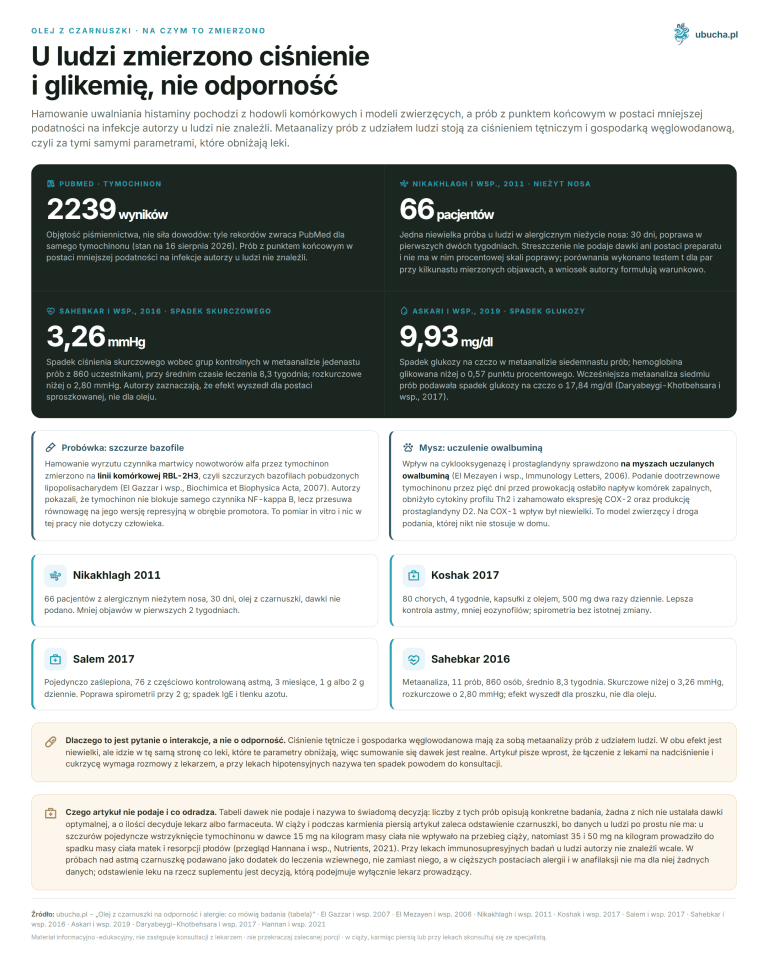
A meta-analysis by Supasitdikul et al. (Journal of Sleep Research, 2026) gathered 20 studies, of which four were conducted exclusively in humans, and three in both humans and rodents simultaneously. Sleep deprivation reduced microbiota diversity and increased the Firmicutes to Bacteroidetes ratio, but the effect was clear in rodents, while in humans it remained statistically insignificant in small samples. The authors conclude that standardized studies in humans are needed.
A separate pathway leads through the circadian rhythm. Thaiss et al. (Cell, 2014) showed that microbiota composition oscillates throughout the day in both mice and humans, and the induced jet lag syndrome disrupts these oscillations. However, the measured outcome was glucose intolerance and obesity, not sleep architecture. A narrative review by Borrego-Ruiza and Borrego (Actas Espanolas de Psiquiatria, 2026) summarizes this area as promising and still unresolved: the relationship is bidirectional, and the effectiveness of psychobiotics in sleep disorders has not yet been established.
What to eat to support the gut-brain axis?
The best-documented intervention is changing the entire diet, not just adding a single component. This was shown in the SMILES study described by Jacka et al. (BMC Medicine, 2017): a twelve-week, single-blind randomized trial involving 67 adults with moderate to severe depression.
The dietary group received seven consultations with a clinical dietitian, while the control group had equally frequent social support meetings. After twelve weeks, remission, defined as a score below ten points on the MADRS scale, was achieved by 32.3% of the dietary group compared to 8.0% of the control group. It should be noted that two things often omitted in summaries. The intervention was an adjunct to treatment, not a replacement: 55 out of 67 participants were taking medication, undergoing psychotherapy, or both simultaneously. The comparison was not psychotherapy but social support, so the statement about effectiveness equal to psychotherapy has no basis in this work.
The composition of the diet changes microbiota quickly. David et al. (Nature, 2014) demonstrated that a short-term switch to an exclusively animal or exclusively plant diet restructures the bacterial community more strongly than individuals differ from each other. The practical list is short: vegetables and fruits for fermentable fiber, fermented foods and kefir for live cultures, whole grain products for resistant starch. The difference between prebiotics and probiotics is broken down in detail in the entry about prebiotics vs probiotics.
Frequently asked questions
What is the gut-brain axis?
It is a bidirectional communication between the gastrointestinal tract and the brain, conducted through several pathways simultaneously. Cryan et al. (Physiological Reviews, 2019) mention the immune system, tryptophan metabolism, the vagus nerve, and the enteric nervous system, with bacterial metabolites, including short-chain fatty acids, serving as signal carriers.
How much serotonin is produced in the gut?
About 95% of serotonin in the body is produced by enterochromaffin cells of the gastrointestinal tract, according to Breit et al. (Frontiers in Psychiatry, 2018). This pool does not cross the blood-brain barrier, so it mainly regulates peristalsis and signals to the brain indirectly via the vagus nerve.
Do probiotics improve mood?
Human studies are small and short. Allen et al. (Translational Psychiatry, 2016) observed weaker cortisol release after induced stress in 22 healthy volunteers, while Steenbergen et al. (Brain Behavior and Immunity, 2015) noted lower cognitive reactivity to sadness in 40 individuals without mood disorders. These are not studies on depression treatment.
Does microbiota affect sleep?
The reverse direction is more documented. A meta-analysis by Supasitdikula et al. (Journal of Sleep Research, 2026) of 20 studies showed that sleep deprivation reduces microbiota diversity, with a clear effect observed in rodents, while results in humans remained statistically insignificant in small samples.
What are SCFAs?
Acetate, propionate, and butyrate, produced from fiber fermentation by bacteria in the large intestine. Silva et al. (Frontiers in Endocrinology, 2020) describe that they cross the blood-brain barrier through monocarboxylate transporters and increase the expression of tight junction proteins, thus affecting its permeability.
Does changing diet improve mood?
In the SMILES study (Jacka et al., BMC Medicine, 2017), 32.3% of the dietary group achieved remission after twelve weeks compared to 8.0% of the control group among 67 adults with depression. The diet was an adjunct to treatment: 55 out of 67 participants were taking medication, undergoing psychotherapy, or both simultaneously.
Products with live bacterial cultures described in the cited studies can be found in the probiotics category in the u Bucha store.
This article is for informational and educational purposes and does not replace consultation with a doctor. If you are pregnant, breastfeeding, taking medications, or have chronic conditions, consult the use of supplements or herbs with a specialist.
Author: Michał Waluk · Published: 2026-06-22 · Updated: 2026-08-16