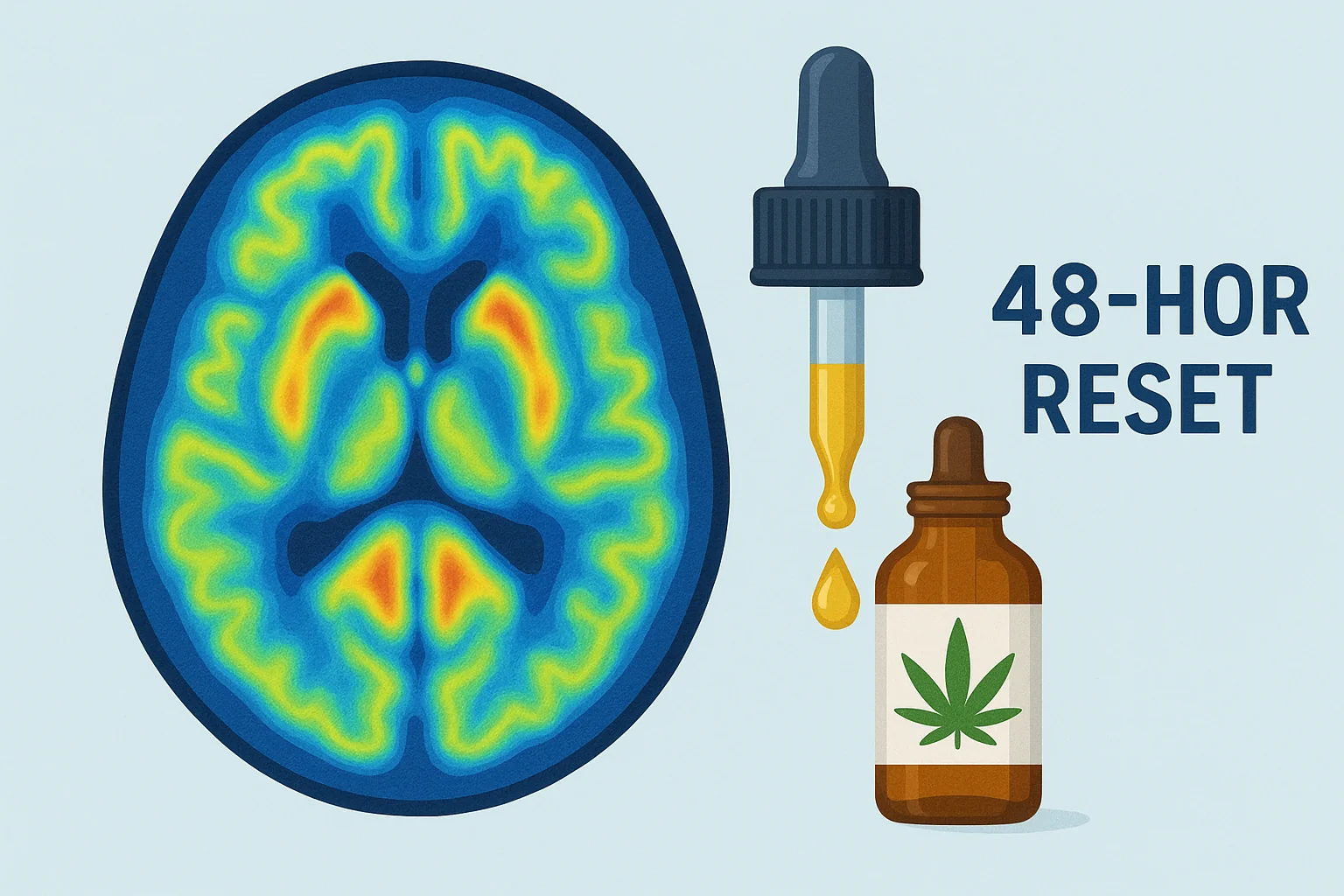

Does 48 hours reset sensitivity? What brain imaging really showed
PET imaging measured the return of CB1 receptors after 26 days of abstinence from cannabis. It says nothing about two days and nothing about cannabidiol.
A two-day break from cannabidiol circulates on the internet as a tool with a scientific pedigree, and one brain imaging study from 2012 is usually cited as evidence. We read this work at the source and found that it discusses something else. It pertains to individuals who smoke cannabis daily, meaning THC, and the only measurement after the break was conducted after nearly a month of abstinence. There is no point after two days in this study at all, so nothing can be inferred from it. Below you will find what exactly was measured, in how many people, with what tracer, at what intervals the measurement was repeated, and what this means for someone who uses only cannabidiol and does not smoke cannabis. We also point out which details of this work circulate on the internet in a distorted form.
KEY INFORMATION
• PET imaging included 30 men who smoked cannabis daily and 28 people from the control group (Hirvonen et al., Molecular Psychiatry, 2012).
• CB1 receptor availability was about 20% lower in the new and limbic cortex among smokers, with no difference in other brain areas.
• The measurement after the break was repeated in 14 individuals after 26 plus minus 5 days of monitored abstinence. There is no earlier measurement point in the study.
• The tracer used was [18F]FMPEP-d2, not the [11C]MePPEP mentioned in guides.
• The critical review by the World Health Organization from 2018 states that in humans, cannabidiol does not exhibit characteristics of abuse potential or dependence.
What exactly did the brain PET imaging show?
It showed that in individuals who smoke cannabis daily, CB1 receptor availability is reduced and that this change reverses after abstinence. The study included 30 men who smoked daily and 28 people from the control group and used the tracer [18F]FMPEP-d2, which binds to the CB1 receptor.
The difference was about 20% and was selective: it pertained to the new cortex and limbic cortex, with no evidence of it in other brain areas. The severity of the change correlated with the number of years of smoking. Reversibility was checked in a subgroup of 14 smokers, in whom the measurement was repeated after 26 plus minus 5 days of monitored abstinence in a closed research ward; receptor availability increased precisely in those areas where it had previously been reduced (Hirvonen et al., Molecular Psychiatry, 2012).
This work circulates in guides with three distortions. It mentions a different tracer, equal group sizes, and a return of receptor density measured in the entire study group. The authors indeed write in the abstract about approximately four weeks, but the measurement was repeated in fourteen individuals after 26 plus minus 5 days, and the entire sample consisted solely of men.
Does forty-eight hours reset anything?
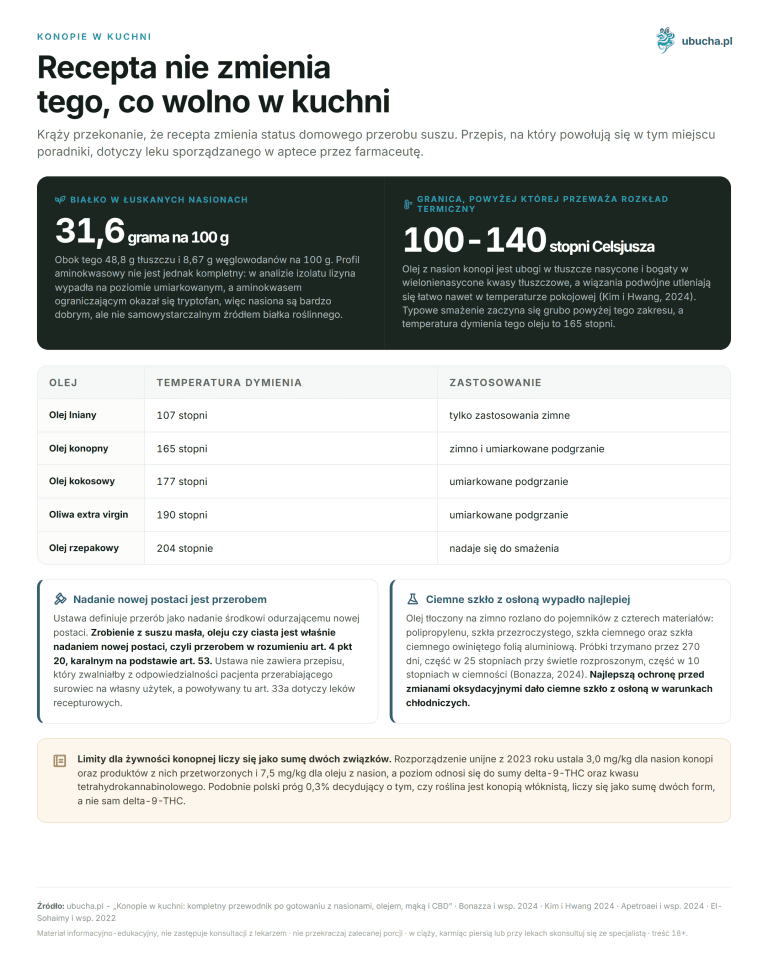
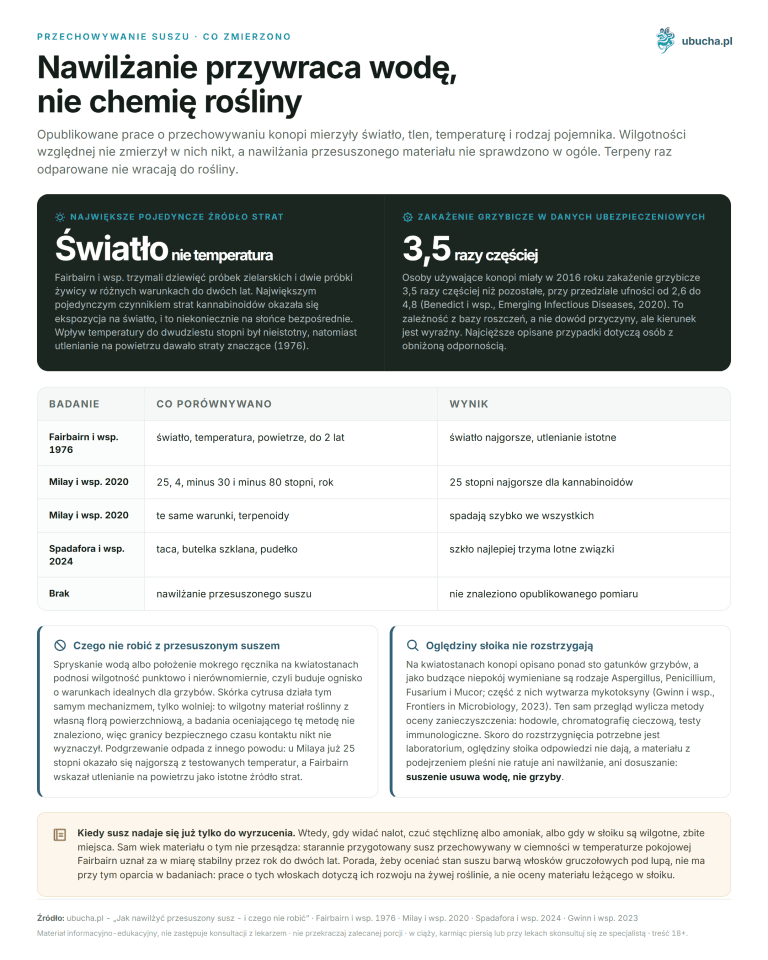
It is unknown, as no one has measured this. In the imaging study, there are only two measurement points: before the break and after 26 plus minus 5 days. There is no measurement after one day, two days, or a week, so nothing can be inferred from this work about how much sensitivity returns in the first forty-eight hours.
For cannabidiol itself, the situation is even simpler: there is no equivalent study at all. There is no imaging measurement that would check what happens to receptors after discontinuing cannabidiol, neither after two days nor after a month. Therefore, any break schedule given with precision to hours is based on transferring results from another substance and shortening it by an order of magnitude.
| Question | What the measurement pertains to | State of knowledge |
|---|---|---|
| Decrease in CB1 availability | daily cannabis smoking, 30 men | measured, about 20% in the new and limbic cortex |
| Return after abstinence | 14 individuals, 26 plus minus 5 days | measured |
| State after 48 hours | no measurement point | not measured |
| Receptors after discontinuing CBD | no imaging study | not measured |
Does cannabidiol cause tolerance like THC?
There is no measurement to resolve this. A systematic review of evidence on the development of tolerance in humans compares studies in which cannabinoids were administered either once or multiple times and compares results based on participants’ previous exposure to cannabis.
The authors’ conclusion pertains to cannabis: acute effects are weaker in regular users, the most complete tolerance is seen in cognitive functions, and partial tolerance in intoxicating and cardiac effects (Colizzi and Bhattacharyya, Neuroscience and Biobehavioral Reviews, 2018). Cannabidiol administered separately is not covered by this material.
Pharmacology explains why transferring this conclusion is risky. THC stimulates the CB1 receptor directly and strongly, which triggers its desensitization and internalization. Cannabidiol has low affinity for this receptor and acts on the endocannabinoid system through indirect pathways. The fact that one substance induces receptor tolerance says nothing about the other until someone measures it.
Weaker effects after several weeks are, of course, reported by individuals using only cannabidiol, and there is no reason to doubt these reports. However, there are several explanations, and receptor desensitization is just one of them and the least documented. It can also be explained by a change in the reference point, the fading of expectations, or a different content of the substance in a new batch of the product.
Is a break in taking cannabidiol safe?
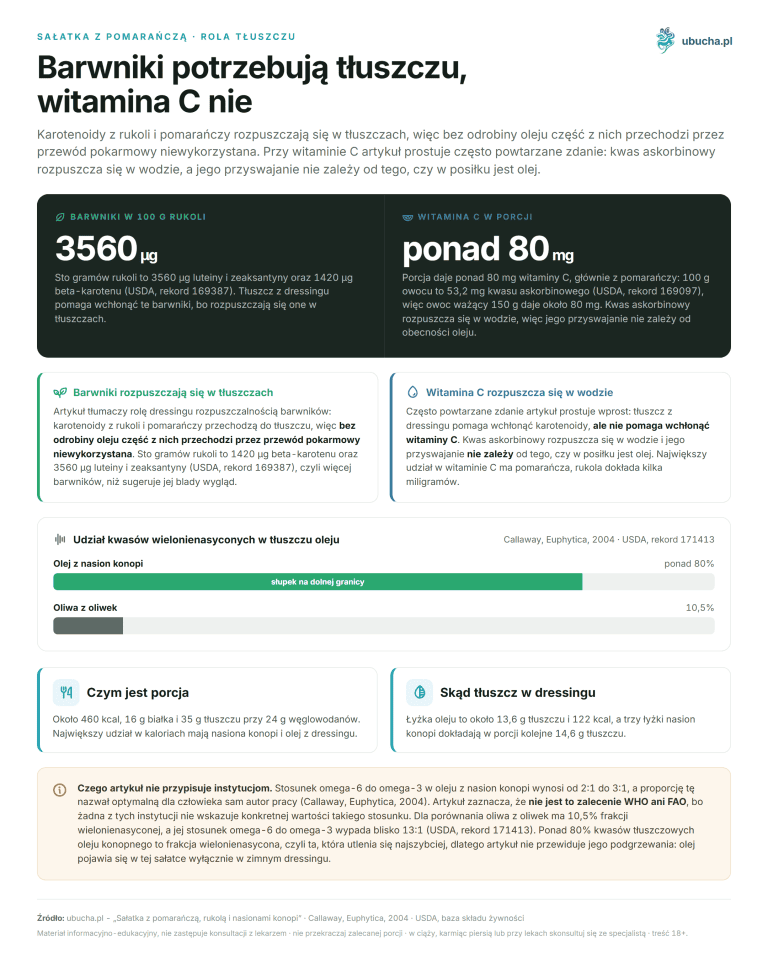
For a healthy adult, a short break poses no known withdrawal risk. The critical review by the World Health Organization states directly that in humans, cannabidiol does not exhibit any characteristics indicating abuse potential or dependence, and in the chapter on non-medical use, it adds that there are no case reports of abuse or dependence on pure cannabidiol (WHO, Cannabidiol Critical Review Report, 2018).
It is worth remembering what this document states and what it does not. It assesses abuse and dependence potential, not the effectiveness of breaks or the safety of long-term use, and it comes from 2018, so newer safety assessments should be read separately.
The situation is different with a medical indication. A person using cannabidiol for treatment-resistant epilepsy or as part of a physician-led treatment should not discontinue it on their own, and the decision to change should be made by the attending physician. Separately, there is a safety threshold: a provisional dose of 0.0275 mg per kilogram of body weight per day, which is about 2 mg for a person weighing 70 kg, and the safety of cannabidiol cannot be established today for individuals under 25 years of age, pregnant and breastfeeding women, and those taking medications (EFSA, 2026).
What to check instead of counting hours of break?
Things simpler and better documented than tolerance. The first is the content of the substance in a specific batch of the product, as labels can be misleading. In an analysis of 84 products purchased online from 31 companies, only 26 were accurately labeled, which is 31%, and THC was detected in 21.4% of samples (Bonn-Miller et al., JAMA, 2017).
The second is a new medication. Cannabidiol is metabolized by cytochrome P450 enzymes and itself affects their activity, so a medication introduced in the meantime may change its metabolism. The third is the reference point against which you assess the difference: if sleep has improved or a period of intense stress has passed, the same change will be less noticeable. Each of these three things can be checked without interrupting intake, and the first two have answers in documents you already have: in the certificate of analysis and on your own medication list. A more complete list of explanations has been gathered in the text about why CBD oil stopped working, and the very idea of a tolerance break is broken down in our material about tolerance break with THC and CBD.
Frequently Asked Questions
Do two days of break restore receptor sensitivity?
There is no measurement to verify this. The brain imaging study cited for this claim has only two measurement points: before the break and after 26 plus minus 5 days of abstinence (Hirvonen et al., 2012). No earlier measurement was made, so nothing is known about the state after forty-eight hours.
How many people were involved in the PET study and what was the tracer used?
It included 30 men who smoked cannabis daily and 28 people from the control group, with the tracer being [18F]FMPEP-d2. The tracer mentioned in guides, [11C]MePPEP, is a different compound that was not used in this study. The measurement after abstinence was repeated in fourteen subjects.
Do the results of this study pertain to cannabidiol?
No. The participants smoked cannabis, meaning they consumed THC, a strong agonist of the CB1 receptor. Cannabidiol has low affinity for this receptor and acts through indirect pathways, and no imaging studies assessing its impact on CB1 receptor availability in humans have been conducted.
Does discontinuing cannabidiol cause symptoms?
The critical review by the World Health Organization from 2018 states that in humans, cannabidiol does not exhibit characteristics of abuse potential or dependence and that there are no case reports of dependence on pure cannabidiol. This does not apply to individuals using it as part of a physician-led treatment, who should not discontinue therapy on their own.
Where did the number 48 hours come from?
From the description of a break protocol circulating on the internet, not from a scientific publication. There is no work behind it that provides the number of participants, the measurement method, or the control group. The only measurement of the reversibility of receptor changes in humans pertains to cannabis and was conducted after nearly a month of abstinence.
Oils available in our store have been gathered in the oils category.
This article is for informational and educational purposes and does not constitute medical advice. Before starting to use cannabis or CBD for therapeutic purposes, consult your doctor, especially if you are taking other medications, are pregnant, or breastfeeding.
Author: Michał Waluk · Published: 2026-08-09 · Updated: 2026-08-16