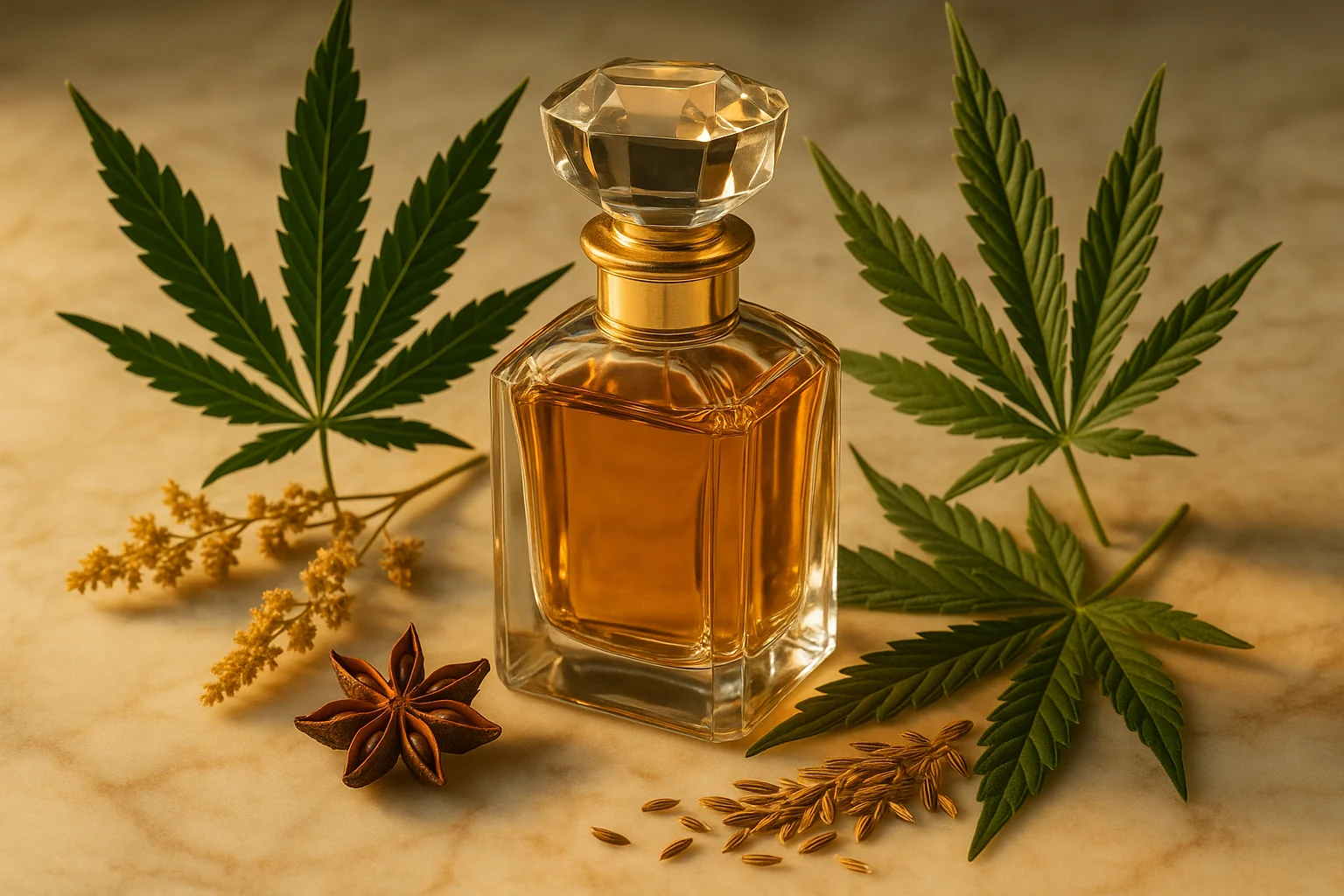

Cannabis in Perfumery: Cannabis Terpenes as Fragrance Notes
Where does the smell of cannabis come from, which terpenes matter in perfumery, which perfumes have a documented cannabis accord, and what does EU cosmetic law say about it.
The smell of cannabis, resinous and earthy, with a noticeable note of root and forest after rain, has its own well-documented history in perfumery. It is not about cannabidiol or THC, but about terpenes: volatile compounds that the plant produces in the same glands as cannabinoids, and which behave in a bottle like any other fragrance material. This article shows where this aroma comes from and which terpenes are significant in perfumery. You will also find a list of compositions where the cannabis accord is documented, a simple way to train your own nose, and a description of the boundary that EU cosmetic law places between the allowed raw material from seeds and the prohibited extract from flowers.
KEY INFORMATION
• The aroma is due to terpenes, not cannabinoids; cannabis resin contains hundreds of terpenoid and cannabinoid metabolites, many of which have not been clearly identified (Booth and Bohlmann, 2019).
• The oldest documented trace of cannabis smoking as incense comes from an altar in Arad, dating back to the 8th century BC (Arie et al., 2020).
• In cosmetics, it is permissible to use raw materials from cannabis seeds; extracts from flowers and leaves are prohibited under item 306 of Annex II of Regulation 1223/2009.
• The cannabis accord in perfumery is usually a recreated blend, not an extract of the plant.
Where does the smell of cannabis come from?
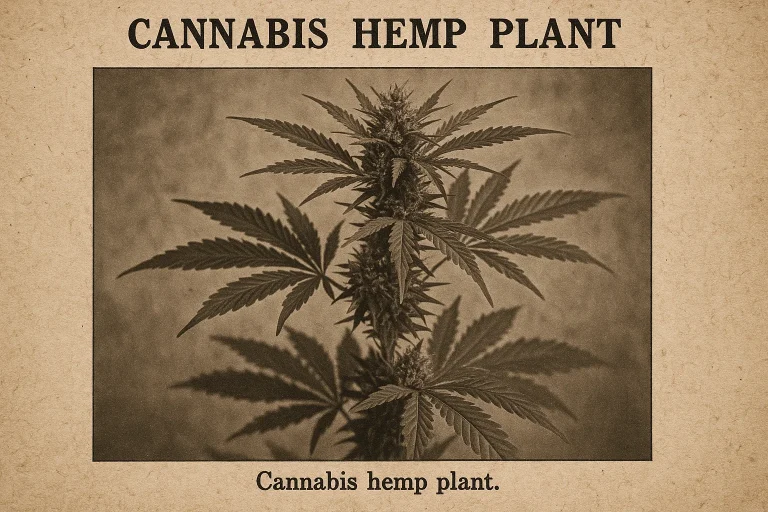
From terpenes produced in trichomes, which are microscopic resin glands covering the flowers and leaves. These same structures produce cannabinoids, but they are two distinct classes of compounds. Terpenes are volatile and have a scent. Cannabinoids are heavier, practically odorless, and it is they, not the scent, that are responsible for the pharmacological effects of the plant.
The exact number of terpenes in cannabis is unknown. A review of the genomics and biochemistry of this plant cautiously mentions hundreds of terpenoid and cannabinoid metabolites, noting that many of them have not been clearly identified, and knowledge about the variability of composition is scant (Booth and Bohlmann, Plant Science, 2019). The numbers given in commercial descriptions, usually rounded, have no basis in this literature.
For the nose, what matters is something else: the proportions. Each strain has a different share of individual compounds, which is why one smells citrusy, another like crushed needles, and a third like damp earth. In nature, these substances repel pests and attract insects. For the perfumer, they are materials with two advantages at once: a recognizable character and chemistry well-known from other spice plants. How the same composition reads on a product label is described in a separate text about the cannabis strain profile.
Which cannabis terpenes matter in perfumery?
Six compounds are enough to describe most cannabis accords. Their place in the composition is not a matter of agreement, but of molecular weight: lighter monoterpenes evaporate quickly and work at the top of the pyramid, while heavier sesquiterpenes remain on the skin the longest and form the base.
| Terpene | Aroma | Place in Pyramid | Also Known From |
|---|---|---|---|
| Myrcene | Earthy, balsamic, slightly fruity | Heart | Hops, mango, thyme |
| Linalool | Floral, lavender, slightly woody | Heart | Lavender, coriander |
| Limonene | Citrusy, fresh, slightly sweet | Head | Citrus peels |
| Alpha-pinene | Resinous, piney, cool | Head | Pine, rosemary, sage |
| Beta-caryophyllene | Peppery, woody, slightly spicy | Base | Black pepper, cloves |
| Humulene | Hoppy, woody, bitter | Base | Hops, sage |
The practical consequence of this division is that the cannabis accord is rarely the first impression after spraying. The citrus and pine top dissipates within minutes, and what remains on the skin after an hour is a peppery-hoppy base. Those who evaluate such a scent on a blotter for three seconds are assessing a completely different material than what they will feel in the evening. A sequentially outlined set of eight cannabis terpenes with their profiles helps in calibration.
Which perfumes really have a cannabis note?
The best-documented are two American brands, and their fragrances were created before the trend for cannabis in cosmetics. The Fresh brand released a pair of fragrances built directly around this material in 2006: Cannabis Santal and Cannabis Rose. In the first, composed by Caroline Sabas, the cannabis accord is at the heart alongside patchouli and rose. The base consists of bitter chocolate, vetiver, vanilla, and musk, with a fruity-citrus opening: plum with bergamot.
The second point of reference is Cannabis Eau de Parfum by MALIN+GOETZ, a woody-spicy composition with a cannabis accord at the heart, alongside lily of the valley and magnolia, with cedar and patchouli in the base and bergamot, black pepper, and orange at the top. The producer explicitly states that the product does not contain THC, which clearly shows what this material is in perfumery: it replicates the scent, not the active substance.
The rest of the market is much less clear. Names like “hemp accord” appear today on balms, shower gels, and hair cosmetics, but the commercial description rarely states whether it refers to a recreated fragrance blend, oil from seeds, or just a graphic association on the packaging. It is worth making this distinction yourself, as it affects both the composition and the price.
Are cannabis perfumes legal in Poland?
Yes, but the boundary lies with the raw material, not the name on the label. Perfumes and cosmetics are subject to Regulation (EC) No 1223/2009 throughout the EU. Item 306 of its Annex II prohibits substances from the lists of the I and II Single Convention on Narcotic Drugs of 1961 in cosmetics, and the convention includes flowering and fruiting tops of cannabis along with resin and their extracts and tinctures.
Seeds fall outside this prohibition, as their definition does not include them unless accompanied by tops. Therefore, oil and extract from cannabis seeds are allowed in cosmetics, while extracts from flowers or leaves and stems are not. The terpene itself is yet another category: limonene or linalool are ordinary fragrance substances found in dozens of plants, and nothing connects them to narcotic law.
There is, however, an obligation that few remember, which is visible on many bottles. Limonene has been included in the list of fragrance substances requiring separate mention in the composition when their concentration exceeds 0.001% in leave-on products and 0.01% in rinse-off products; this requirement was introduced by Regulation (EU) 2023/1545. So if you see limonene or linalool on the ingredient list, you are looking at fragrance allergens, not a declaration of cannabis content.
How to learn to recognize the cannabis accord?
By comparing it with materials you have in your kitchen. Each of the six terpenes in the table has a cheaper and easily accessible aromatic counterpart, and the nose learns faster through contrast than through description. Smell in sequence: a hop cone or mango peel for myrcene, lavender for linalool, lime peel for limonene, a fresh pine twig for alpha-pinene, black pepper straight from the grinder for beta-caryophyllene.
The second exercise requires the raw material itself. Buy a small amount of hemp flower and smell it at different times of the day, recording associations in one word: forest, hay, earth, root, citrus. After a week, you will have your own dictionary that can describe a specific perfume composition instead of repeating the producer’s description. Such a list of associations is also organized by the new cannabis aroma dictionary.
We have noticed one thing that is not visible in descriptions: the same flower smells different immediately after opening the jar and after two minutes of airing. The first impression carries the monoterpenes, which evaporate the fastest, so those who only smell once are assessing only the top of the pyramid. This is exactly the same mechanism that makes cannabis accord perfumes need to be evaluated after an hour.
Since when have cannabis been a fragrance material?
The oldest certain trace is about 2700 years old and comes from a sanctuary in Tel Arad in Judea. Remains of cannabinoids and terpenes were found on the smaller of the two stone altars, indicating that cannabis flowers were burned on it mixed with dung, allowing for gentle heating; the larger altar detected incense. The sanctuary operated briefly, roughly from 760 to 715 BC (Arie, Rosen, and Namdar, Tel Aviv, 2020).
The plant itself is, of course, much older in cultivation. An analysis of 110 genomes from around the world places its domestication in the early Neolithic in East Asia and shows that all today’s fiber and intoxicating strains derive from one gene pool (Ren et al., Science Advances, 2021). For most of this time, however, fiber and seeds mattered, not scent.
In commercial perfumery, cannabis is therefore a fresh phenomenon. The reference point remains the year 2006 and the pair of fragrances from Fresh, and the later popularity of cannabis cosmetics mainly added a marketing layer to this. We have not found sales data that would allow us to say how large this segment is today, so the circulating claims about its dynamic growth remain unconfirmed.
Frequently Asked Questions
What are cannabis terpenes and where does the smell of cannabis come from?
Terpenes are volatile aromatic compounds produced in trichomes, which are the resin glands of cannabis. The plant’s aroma is a mixture of these: myrcene, linalool, limonene, beta-caryophyllene, alpha-pinene, and humulene. Cannabinoids are produced in the same glands, but are practically odorless and do not contribute to the aroma.
What do cannabis perfumes smell like?
Earthy and resinous, with a peppery or hoppy finish, sometimes with a citrus or floral opening. Light monoterpenes evaporate within minutes, while a heavy base of beta-caryophyllene and humulene remains on the skin. Therefore, the cannabis accord is evaluated after an hour, not immediately.
Which perfumes have a documented cannabis note?
A pair of fragrances from the Fresh brand from 2006, Cannabis Santal and Cannabis Rose, as well as Cannabis Eau de Parfum by MALIN+GOETZ. In both cases, the cannabis accord is at the heart of the composition, alongside patchouli and rose or lily of the valley and magnolia, and the producer of the latter notes that the product does not contain THC.
Are cannabis perfumes legal in Poland?
Yes, if the raw material comes from seeds. Item 306 of Annex II of Regulation (EC) No 1223/2009 prohibits substances from the lists of the 1961 convention in cosmetics, which include cannabis tops with resin and their extracts. Oil and extract from seeds are not covered by this, nor are terpenes.
Are cannabis terpenes in perfumes natural or synthetic?
Most often synthetic or semi-synthetic, as batch consistency is a requirement in perfumery. The term ‘hemp accord’ usually refers to a blend that replicates the plant’s scent profile, not its extract. Natural extracts from flowers are additionally restricted by regulations in cosmetics.
What notes do cannabis terpenes combine with?
With sandalwood and cedar, which deepen the earthy warmth, with musk, with vetiver and patchouli, and on the bright side with lavender and bergamot. Combinations with very sweet vanilla and fruity notes are more challenging, as sugary sweetness clashes with the bitter finish of humulene.
Hemp flower for the scent exercises described above can be found in the hemp flower category.
This article is for informational and educational purposes. It contains internal links to product categories available in the u Bucha store. Prices and specifications may change: check the current data on the product page before purchasing.
Author: Michał Waluk · Published: 2026-08-09 · Updated: 2026-08-15