


CBD for Sleep: Oil or Melatonin Gummies - Which is Better for Adults
No study has compared CBD oil with melatonin gummies for insomnia. We check what has really been measured and how to choose the form for yourself.
Half of adult Poles report sleep problems. In a representative NATPOL study of 2,413 individuals, 50.5% of respondents reported sleep complaints, with the most common being difficulty falling asleep (Nowicki et al., Psychiatria Polska, 2016). Hence the popularity of two shelves in the same store: hemp oils and melatonin gummies. The question in the title seems simple, but the answer does not come from any experiment. No one has randomly assigned two groups of people with insomnia to oil and gummies, and then measured their sleep. Below we show what has really been measured in studies on CBD and melatonin, where the numbers on the labels diverge from the data, and how to choose the form for yourself based on this.
KEY INFORMATION
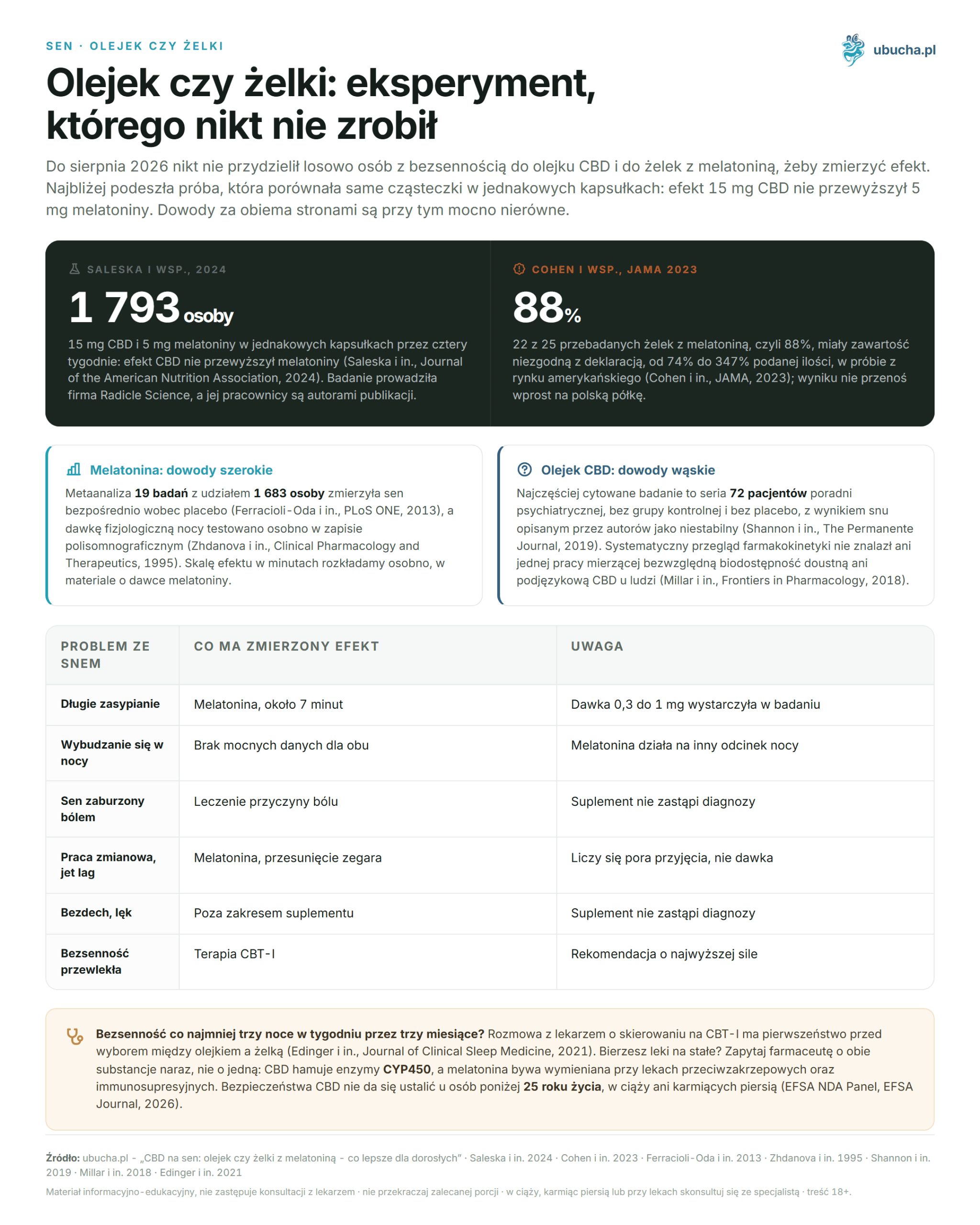
• Melatonin shortens the time to fall asleep by an average of 7.1 minutes (Ferracioli-Oda et al., PLoS ONE, 2013).
• In 25 tested gummies, the melatonin content ranged from 74% to 347% of the declared amount (Cohen et al., JAMA, 2023).
• No one has measured the absolute oral or sublingual bioavailability of CBD in humans (Millar et al., 2018).
• For chronic insomnia, the first-line treatment is CBT-I therapy (AASM, 2021).
Has anyone compared CBD oil with melatonin gummies in a study?
No. As of August 2026, there has been no trial in which individuals with sleep disorders were randomly assigned to either CBD oil or CBD gummies with melatonin and the effect was measured. The question in the title does not have an experimental resolution, and one can compare ingredients, not forms of the preparation.
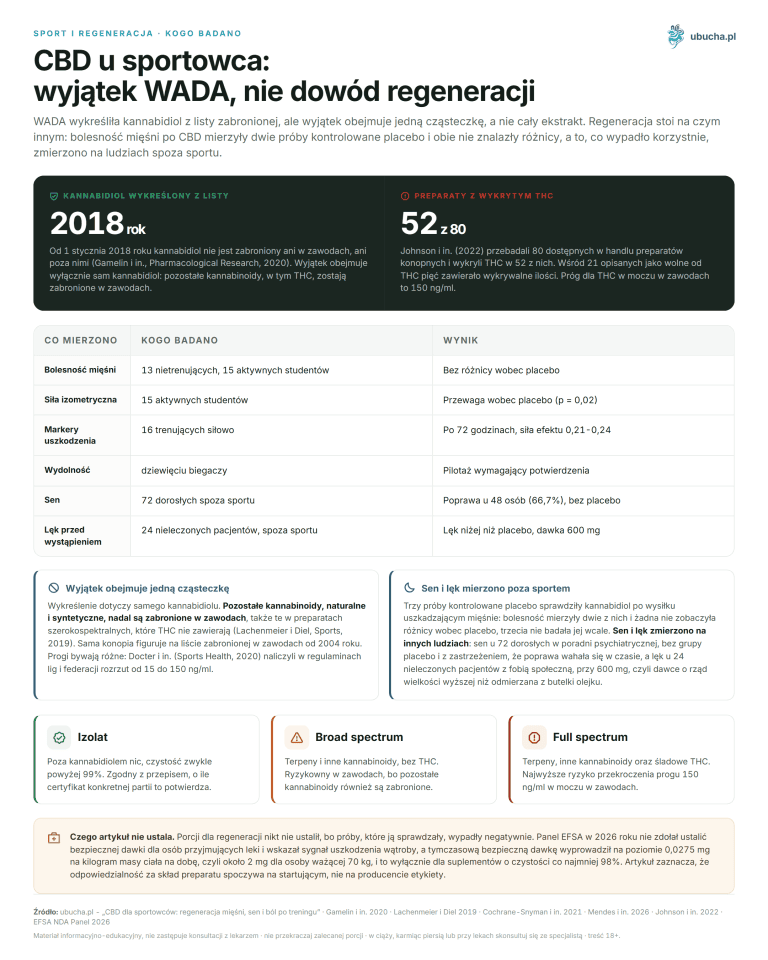
The closest approach was a trial by Radicle Science. Participants, 1,793 individuals with sleep complaints, were assigned for four weeks to one of six preparations: 15 mg of CBD alone or with the addition of minor cannabinoids or 5 mg of melatonin. All forms were capsules, so the method of administration did not differentiate the groups. Sleep was measured using the PROMIS Sleep Disturbance questionnaire. Improvement occurred in all arms, and a clinically significant change in sleep quality was reported by 56% to 75% of individuals depending on the preparation. However, the effect of CBD did not exceed that of 5 mg of melatonin, and the addition of CBN and CBC did not add anything. A side effect was reported by 12% of participants, none of which were severe (Saleska et al., Journal of the American Nutrition Association, 2024).
Similarly, a second large trial with a melatonin arm showed that 1,020 individuals took 25, 50, or 100 mg of CBN, 4 mg of melatonin, or a placebo for four weeks. Each active arm beat the placebo, but none beat melatonin (Kolobaric et al., Pharmaceuticals, 2024). We analyze this data more broadly in the text CBN for Sleep.
Both trials should be read with one caveat, which they do not hide. They were conducted by the same research company, Radicle Science, and its employees are authors of both publications. In the case of the CBN study, the data collection was funded by the manufacturer of the tested preparation, Floraworks. The authors declare that the sponsor did not decide on the study design or analysis, and the result is inconvenient for the client, as none of its products surpassed regular melatonin. This does not invalidate either work, but it should be read with this information in mind.
The conclusion is inconvenient for both shelves: studies compare molecules in the same form. The choice between oil and gummy remains a practical decision, not a clinical one.
What exactly did the most cited study on CBD and sleep show?
A review of documentation from 72 psychiatric clinic patients, without a control group and without a placebo. In the first month, sleep results improved in 66.7% of individuals, and anxiety in 79.2% (Shannon et al., The Permanente Journal, 2019). The difference lies in the durability of both results.
The improvement in anxiety scale was maintained throughout the three-month observation period. Sleep results behaved differently: they fluctuated in subsequent months, and the authors described them as unstable. The number 66.7% circulates on the internet detached from both these caveats, namely that it pertains to the first month, and that there was nothing to compare it to.
This is not a criticism of the authors. They themselves called their work a case series and warned against interpreting it as a randomized study. Patients mainly took about 25 mg of CBD per day in capsules, and sleep was assessed using a questionnaire filled out in the office. In sleep studies, the placebo response can be high, so without a control arm, it is impossible to separate the effect of the preparation from the mere fact that someone addressed the patient’s problem.
The practical consequence for the reader is that expectations should be set low. Case series generate hypotheses. They do not measure effect size and do not provide a basis for the promise that two-thirds of individuals will feel improvement.
How much melatonin is needed to fall asleep faster?
Less than what a typical gummy contains. Doses of 0.3 mg and 1 mg given in the evening shortened the time to fall asleep in polysomnographic recordings, without next morning effects (Zhdanova et al., Clinical Pharmacology and Therapeutics, 1995). Commercial preparations usually declare 5 or 10 mg, which is five to thirty times more.
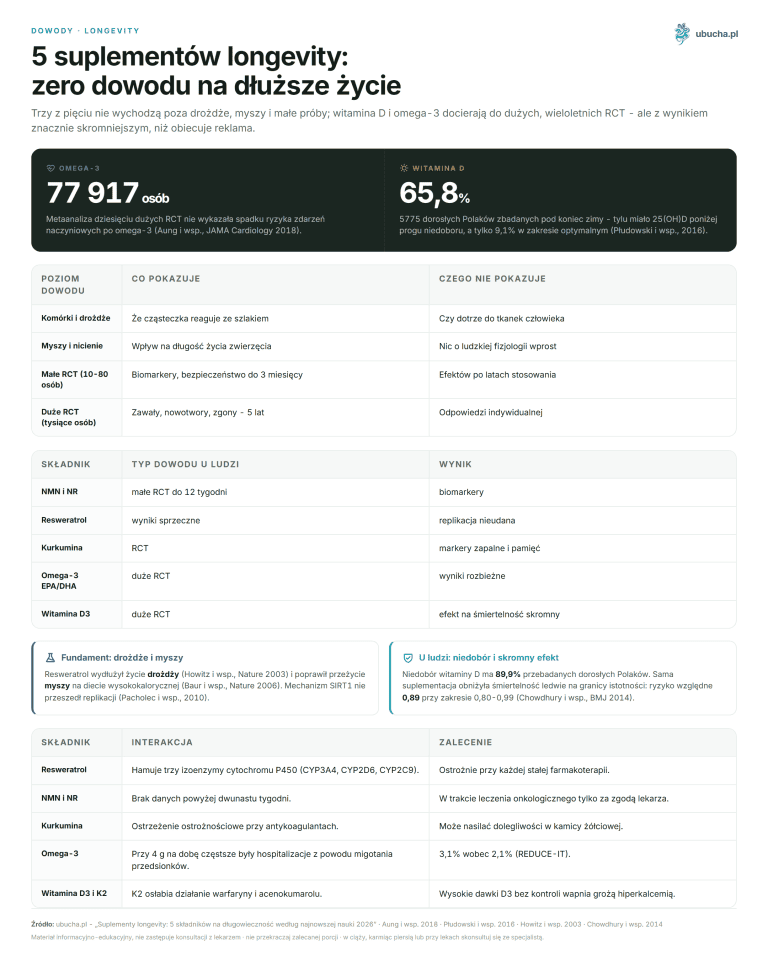
The scale of the effect itself is shown by a meta-analysis of 19 studies involving 1,683 individuals, both adults and children with primary sleep disorders. Melatonin shortened the time to fall asleep by 7.06 minutes (95% confidence interval from 4.37 to 9.75), extended sleep by 8.25 minutes (from 1.74 to 14.75), and improved subjective sleep quality by 0.22 standard deviations (from 0.12 to 0.32), always compared to placebo (Ferracioli-Oda et al., PLoS ONE, 2013). The effect is real and repeatable, just small. The lower bounds of the intervals show how small: with total sleep time, the gain could be less than two minutes.
This is where guides diverge from the data. They repeat that higher doses of melatonin do not work better, and sometimes work worse. Regression analysis in the same meta-analysis indicated the opposite: trials with higher doses and longer duration had a greater impact on falling asleep and total sleep time. For sleep quality, there was no dose dependency.
A fair conclusion thus sounds different than what both extremes claim. A physiological dose, around one milligram, is already sufficient to shorten the time to fall asleep, so there is no reason to start with ten. However, this does not mean that a higher dose harms sleep. It only means that none of them will turn melatonin into a sleeping aid, as its total measured effect is a quarter of an hour divided into two halves. We have gathered more numbers in the post melatonin for sleep.
Is there as much melatonin in a gummy as the label declares?
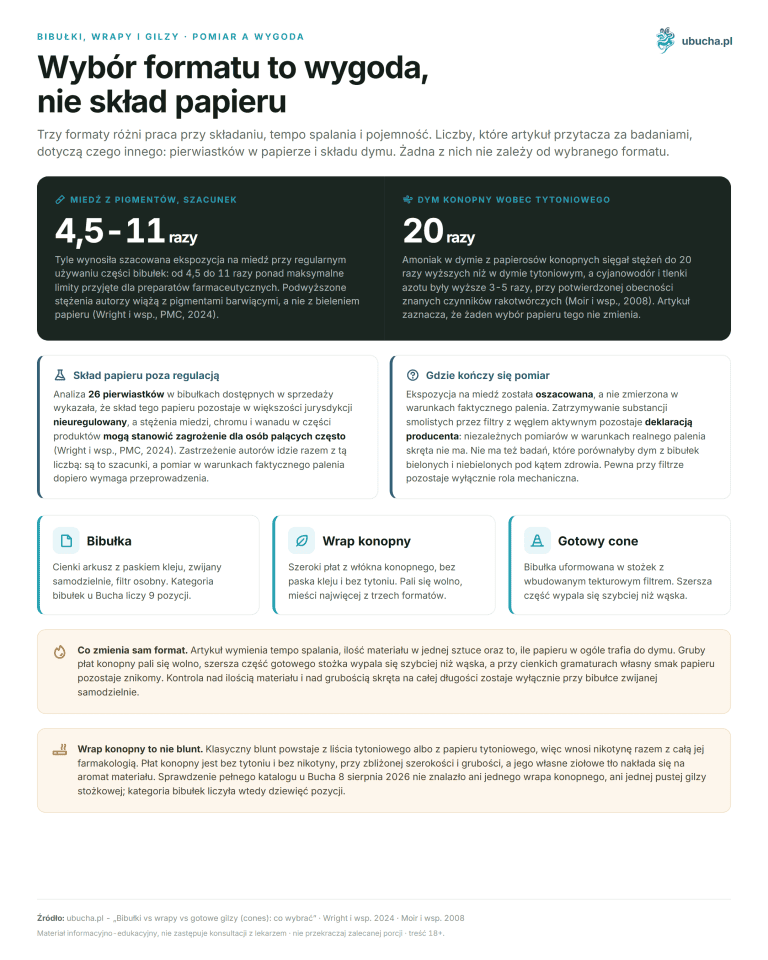
Often not. In an analysis of 25 melatonin gummies sold in the United States, 22 products, or 88%, had a content inconsistent with the declaration. Compliance was considered to be hitting within a 10% range around the label, and only three products met this. The variation ranged from 74% to 347% of the amount stated on the package (Cohen et al., JAMA, 2023).
One product contained no detectable melatonin at all, but had 31.3 mg of CBD. An interesting fact from the same study is that the CBD content was within the range of 104% to 118% of the declaration, so melatonin turned out to be the unpredictable ingredient. When buying a gummy, you are paying for two doses, but only one is reliable.
The market was studied in the United States, so do not transfer the numbers to the Polish shelf one to one. The oversight mechanism is similar: a dietary supplement is registered, not registered as a drug, and batch compliance with the label is checked by the manufacturer itself. Therefore, when buying gummies, ask for the test result of a specific batch, not for a raw material certificate. With oil, this problem concerns the CBD content, which is easier to verify in publicly available analyses.
Which format absorbs faster, oil or gummy?
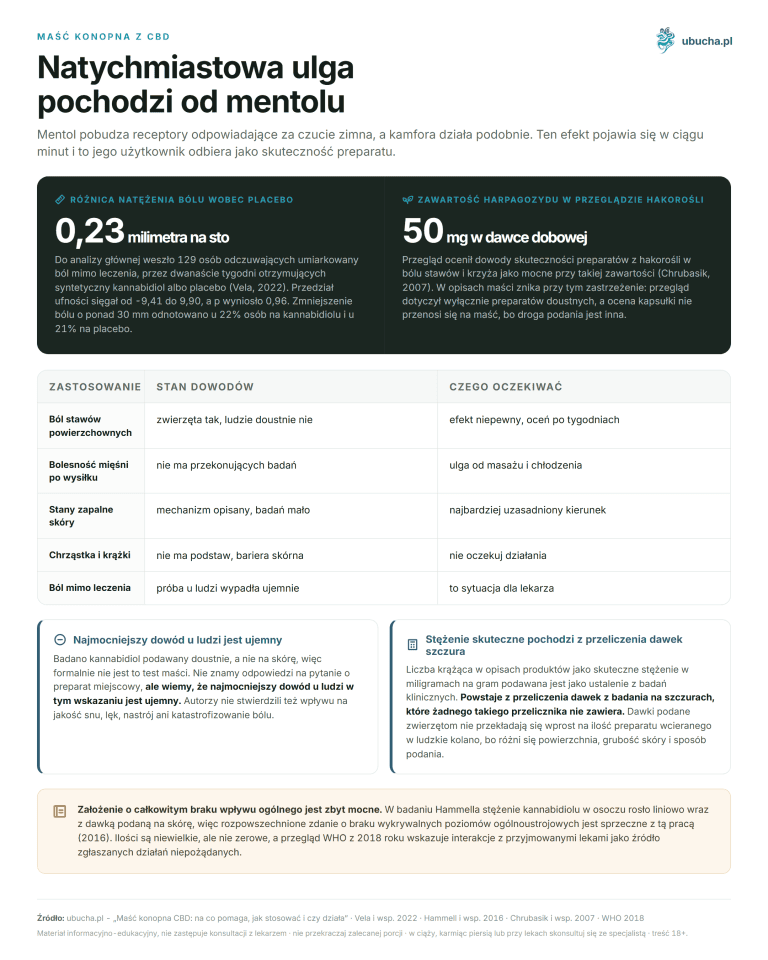
It is unknown, and this is not an excuse. A systematic review of CBD pharmacokinetics in humans found one estimate of bioavailability, 31% after smoking. No study has measured the absolute oral or sublingual bioavailability, and peak concentration appeared between zero and four hours after administration (Millar et al., Frontiers in Pharmacology, 2018).
This is important because tables with minutes circulate in stores as fact. A record like “oil 15 to 30 minutes, gummy 30 to 90 minutes” looks like pharmacokinetic data, but is copied from description to description without a source. We noticed this also in an earlier version of this post, where the entire choice between forms was based on such a table. We removed it because there is no measurement behind it in humans.
However, the review by Millar does yield something practical. Peak concentration increases after a meal and with fatty formulations, so the same dose taken on an empty stomach and after dinner will not behave the same. Variability between individuals was high, and the number of studies was small.
The practical conclusion: stop fine-tuning the timing to the minute. Take the preparation at a consistent time, 60 to 90 minutes before bedtime, and assess the effect after two weeks of the same schedule. A consistent time gives more than the choice between drops and gummies.
When does oil without melatonin make more sense?
When the problem is not falling asleep itself. Melatonin has a measured effect on the time needed to fall asleep, so when waking up at three in the morning, it does not address that part of the night. Oil without melatonin is also more sensible when sleep is disrupted by pain or tension.
The second reason is methodological. A gummy with melatonin changes two things at once, so after a month you do not know which ingredient worked or if any worked at all. Oil allows you to control one variable, and melatonin can be added separately, only if the oil alone is not enough.
The third concerns interactions. Melatonin is a hormone and is sometimes mentioned in warnings with anticoagulant and immunosuppressive drugs, while CBD inhibits CYP450 enzymes, which alters the concentrations of some medications. The EFSA panel in its 2026 position update states directly that the safety of cannabidiol cannot be established in individuals under 25 years of age, in pregnant and breastfeeding women, and in those taking medications simultaneously (EFSA NDA Panel, EFSA Journal, 2026). If you are taking anything regularly, ask your pharmacist about both substances, not just one.
The situation is reversed in the case of shift work and crossing time zones. There, melatonin has a mechanism that CBD does not: it shifts the phase of the biological clock, not just calms. The timing of administration relative to the target sleep time matters, not the number of milligrams on the package.
| Sleep Problem | What has a measured effect | Note |
|---|---|---|
| Long time to fall asleep | Melatonin, about 7 minutes | A dose of 0.3 to 1 mg was sufficient in the study |
| Waking up at night | No strong data for either | Melatonin acts on a different part of the night |
| Sleep disturbed by pain | Treating the cause of pain | Supplement does not replace diagnosis |
| Shift work, jet lag | Melatonin, clock shifting | Timing of administration matters, not dose |
| Chronic insomnia | CBT-I therapy | Recommendation of the highest strength |
What takes precedence over any sleep supplement?
Cognitive-behavioral therapy for insomnia, abbreviated CBT-I. The guidelines from the American Academy of Sleep Medicine from 2021 give multi-component CBT-I the highest strength recommendation and indicate it as the treatment for chronic insomnia in adults (Edinger et al., Journal of Clinical Sleep Medicine, 2021).
Chronic insomnia is said to occur when sleep difficulties happen at least three nights a week for at least three months and affect daytime functioning. Therapy usually lasts from four to eight sessions and includes stimulus control and sleep time restriction. The effect persists after its completion, unlike a preparation taken every evening.
This same document contains a surprise for guides. Sleep hygiene as the only intervention is advised against, as it has proven ineffective as a standalone therapy and delays the adoption of methods that work. This recommendation has conditional strength, weaker than the strong recommendation for full CBT-I, so read it as “do not stop at this,” rather than as a prohibition. As an element of multi-component therapy, sleep hygiene remains in place.
The recommendation does not exist in a vacuum. It was based on a separate systematic review with a meta-analysis and quality assessment of evidence in the GRADE system, published by the same team in the same issue of the journal. Availability of therapy can be a problem in Poland, but some programs are conducted remotely, which shortens the queue.
The popular order of “first sleep hygiene, then supplement, therapy last” is thus reversed according to the guidelines. If your insomnia meets the criteria of three nights for three months, talking to a doctor about a referral for CBT-I takes precedence over choosing between oil and gummies. A supplement remains an addition for short-term sleep problems.
How to check for yourself if a given form helps?
Change one thing at a time and measure for two weeks. Without a sleep diary, you will not distinguish the effect of the preparation from the fact that it just happened to be a calmer week at work. Note the time of administration, dose, bedtime, estimated time to fall asleep, and number of awakenings.
Start with two weeks without any preparation to have a reference point. Then introduce one product at a fixed dose and at a fixed time for the next two weeks. Compare the medians from both periods, not single nights, because the variability from night to night is greater than the effect you are looking for.
If after four weeks nothing has changed, changing the flavor or brand will not fix it. There is a lack of mechanism, not a product variant. Then return to the question of the cause: apnea, pain, shift work, anxiety, or medications taken in the evening create a picture of insomnia that a supplement will not address.
For assessment, a simple scale is sufficient. In the morning, write down your rest score from zero to ten and the estimated time to fall asleep in minutes. Such subjective measures were also used in the trials cited above, so it is not a worse measurement than in studies, just performed on one person.
Two safety notes at the end of this trial. Do not drive after the first doses, as both substances have a calming effect, and you do not yet know your own reaction. Also, check that you are not summing melatonin from two sources when you add a tablet to the gummy.
Frequently Asked Questions
Do melatonin gummies work better for sleep than CBD oil?
There is no study that has verified this. The closest trial compared 15 mg of CBD with 5 mg of melatonin in 1,793 individuals, in identical capsules, and found no advantage of CBD over melatonin (Saleska et al., 2024). No one has compared the forms of the preparation yet.
How much melatonin should I choose in gummies for sleep?
Doses of 0.3 mg and 1 mg shortened the time to fall asleep in polysomnographic recordings (Zhdanova et al., 1995). A typical gummy declares 5 or 10 mg. Start with the lowest available dose, as the total measured effect of melatonin is about seven minutes faster falling asleep.
How much CBD should I take in the evening for sleep?
There is no established dose, and do not treat this article as a measure. In sleep studies, 15 mg was used for four weeks in 1,793 individuals and about 25 mg per day in a series of 72 cases. EFSA states a temporary safe dose of 0.0275 mg per kilogram of body weight, which is about 2 mg for a person weighing 70 kg.
When should I take oil and when a gummy before sleep?
Tables with minutes to onset of action have no basis in human data: peak CBD concentration appeared between zero and four hours after administration (Millar et al., 2018). Take the preparation at a consistent time, 60 to 90 minutes before bedtime, and assess after two weeks.
Are CBD or melatonin addictive?
The WHO report from 2018 states that in humans, CBD does not exhibit characteristics indicating potential for abuse or addiction. However, the same document notes that controlled studies on physical dependence, i.e., tolerance and withdrawal symptoms, had not been published at that time. Melatonin is a hormone, not an addictive substance.
Can I combine CBD oil with melatonin gummies?
Yes, but then you are changing two things at once and after two weeks you won’t know which helped. Both preparations have a calming effect, so do not drive after the first doses. If you are taking medications regularly, consult such a combination with a doctor or pharmacist. We discuss this more in the text whether CBD helps with sleep.
Both forms can be found in the store at Bucha: hemp oils and gummies, including variants with melatonin. Before purchasing, check the label for the declared melatonin content, as that number determines the timing of administration.
This article is for informational and educational purposes only and does not constitute medical advice. Before starting to use cannabis or CBD for therapeutic purposes, consult a doctor, especially if you are taking other medications, are pregnant, or breastfeeding.
Author: Michał Waluk · Published: 2026-05-29 · Updated: 2026-08-15