
Lion’s Mane (soplówka jeżowata, Hericium erinaceus): neurotrophic mushroom for MCI, depression, and the brain
Lion's mane (soplówka jeżowata): what human studies really showed, why hericenones failed the NGF test, and how to read a supplement label.
Lion’s mane entered Polish supplement stores as a “memory mushroom,” with sales based on the promise of neuron regeneration. We checked what the studies cited for this promise really say. The result is less spectacular and much more interesting: laboratory studies indeed show the effect of extracts from this species on nerve growth factor synthesis, but the compounds indicated in advertisements are not responsible for the improvement, and there are only a few small human studies. This text separates what was measured in humans from what was measured in mice and cell cultures and shows which popular figures have no basis in any study.
KEY INFORMATION
• In Poland, lion’s mane is under strict protection, item 49 in Annex 1 to the Regulation of the Minister of the Environment (Journal of Laws 2014 item 1408); harvesting from natural sites is prohibited.
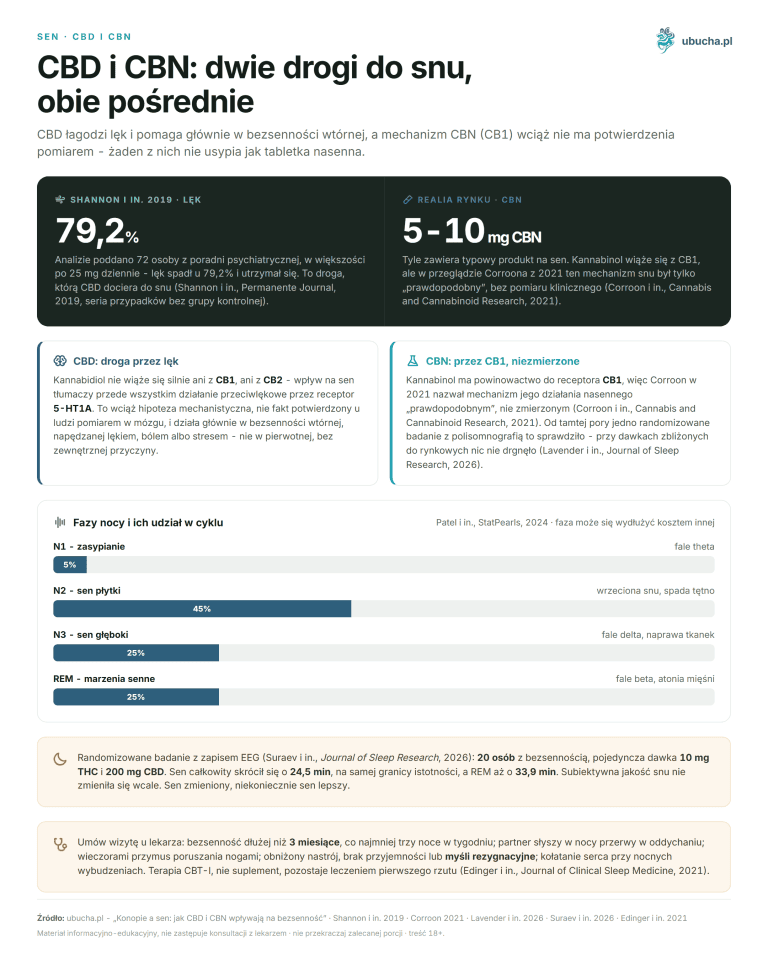
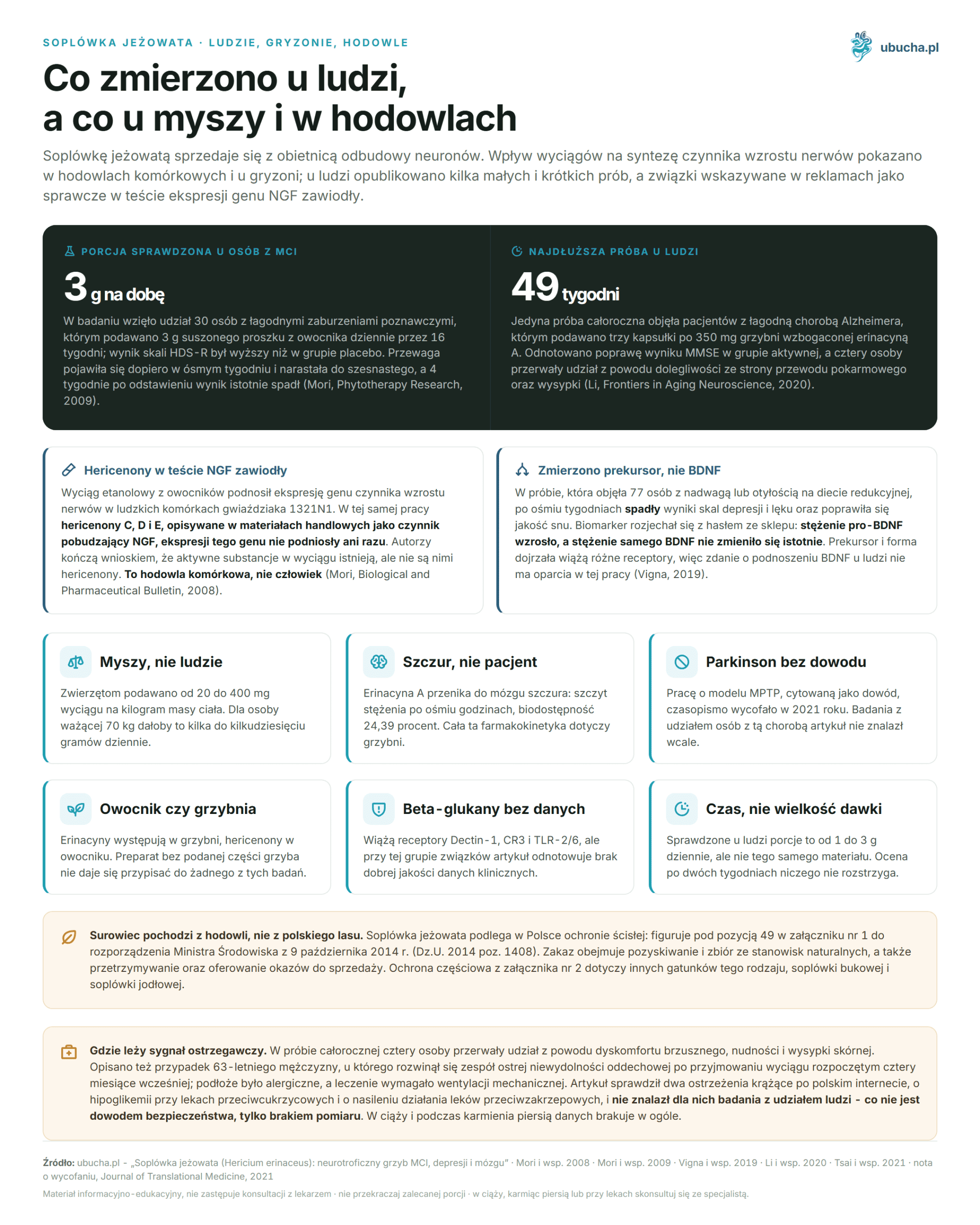
• In the Mori 2009 study on 30 people with mild cognitive impairment, 3 g of dried powder daily improved HDS-R scale scores, but the advantage disappeared 4 weeks after discontinuation.
• Hericenones C, D, and E, advertised as NGF stimulators, did not increase NGF gene expression in the Mori 2008 study.
• The study on dopaminergic neuron protection in the MPTP model, cited for Parkinson’s disease, was retracted by the journal in 2021.
What is lion’s mane and why is it hard to find in Polish forests?
It is a saprotrophic basidiomycete mushroom from the Hericiaceae family, growing on dead and weakened hardwood. In Poland, it is strictly protected: listed as item 49 in Annex 1 to the Regulation of the Minister of the Environment of October 9, 2014, on species protection of fungi, which means harvesting and collecting specimens from natural sites is prohibited.
The regulation distinguishes two levels. Strict protection from Annex 1 covers lion’s mane and prohibits harvesting, holding, and offering specimens for sale. Partial protection from Annex 2 covers other species of the same genus, such as beech and fir lion’s mane. This difference is practical: raw material for supplements comes exclusively from cultivation, never from Polish forests, and offers of “wild fruiting bodies” collected domestically would be illegal.
The fruiting body is white, hanging, composed of dense spines, and indeed resembles a mane. Hence the common names: English lion’s mane, Japanese yamabushitake, Chinese hóu tóu gū. Three raw material forms appear in trade, which are not chemically interchangeable: cultivated fruiting body, mycelium grown on grain substrate, and extract from one or both materials. More about the species and its identification is collected in the post about lion’s mane and its recognition.
Which compounds are responsible for lion’s mane’s effects?
Pharmacological activity is attributed to three groups of compounds: hericenones from the fruiting body, erinacines from the mycelium, and beta-glucans building the cell wall. A 2015 review by Friedman lists about seventy characterized secondary metabolites for this species, including erinacines, hericerins, hericenones, resorcinols, and sterols (Friedman, Journal of Agricultural and Food Chemistry, 2015).
| Compound group | Source | What is known |
|---|---|---|
| Hericenones | fruiting body | in Mori 2008 study, hericenones C, D, and E did not increase NGF gene expression in 1321N1 cells |
| Erinacines | mycelium | cyathane-type diterpenoids; erinacine A is a component of the preparation used in the only one-year clinical study |
| Beta-glucans | cell wall | bind Dectin-1, CR3, and TLR-2/6 receptors, but no good quality clinical data |
A separate curiosity concerns erinacine E, sometimes described as a pain-relieving component of lion’s mane. The compound indeed acts as a kappa-opioid receptor agonist, but it was isolated from the related species Hericium ramosum, not Hericium erinaceus (Saito et al., The Journal of Antibiotics, 1998). This detail matters when purchasing: the declaration “contains erinacines” requires raw material from mycelium, not just the fruiting body.
What did studies really show about lion’s mane’s effect on NGF?
They showed that ethanol extract from fruiting bodies stimulates NGF gene expression in human glioblastoma 1321N1 cells via the JNK kinase pathway, and the medium from these cells elongates neurites in PC12 cells. However, the same study states something marketing does not repeat (Mori et al., Biological and Pharmaceutical Bulletin, 2008).
Hericenones C, D, and E, compounds indicated in product descriptions as responsible for NGF stimulation, did not increase NGF gene expression in this study. The authors conclude that active substances exist in the extract but are not hericenones. In the same study, ddY mice fed for 7 days with 5% dried lion’s mane showed increased NGF mRNA expression in the hippocampus.
Another often cited study concerns a water extract and NG108-15 cell line. Combining 10 ng/ml exogenous NGF with 1 µg/ml extract gave the highest neurite growth increase, 60.6%; the extract alone induced NGF secretion by cells. The same study reports a negative result: the extract did not protect cells from oxidative stress either in pre-treatment or co-treatment (Lai et al., International Journal of Medicinal Mushrooms, 2013).
At the animal level, the closest to neurogenesis is a study on C57BL/6 mice given orally 20 or 60 mg/kg extract for four weeks. At the higher dose, the number of PCNA-positive and Ki67-positive cells in the hippocampal subgranular zone and BrdU/NeuN-positive cells in the dentate gyrus increased, markers of proliferation and survival of new neurons (Ryu et al., Journal of Medicinal Food, 2018). A broader context of CNS protection mechanisms is described in the post about adaptogens and the stress axis.
Does erinacine A reach the brain?
In rats, it does, and this was measured directly. After oral administration of mycelium extract, erinacine A was detected in the brain after one hour, peaking at eight hours. Absolute bioavailability was estimated at 24.39%, and the ratio of unbound fraction in brain to blood was about one (Tsai et al., Molecules, 2021).
The last figure is most interesting. A ratio close to one means the compound crosses the blood-brain barrier passively by diffusion, without active transporter involvement. This distinguishes it from nerve growth factor itself, which is a protein and practically does not enter the brain when administered externally. This is the basis for seeking small molecules that stimulate endogenous NGF synthesis instead of direct administration.
The authors note this was the first study showing erinacine A crossing the blood-brain barrier in rats, with feces as the main excretion route. A review by the same group formulates the limitation even more cautiously: among all lion’s mane compounds, only erinacine A has confirmed pharmacological activity in the rat CNS, and translating animal studies to clinical situations remains difficult (Li et al., Behavioural Neurology, 2018).
For a reader facing the shelf, the practical takeaway is this: all pharmacokinetics measured concern erinacine A from mycelium. Preparations from fruiting body alone do not contain this compound in significant amounts, so the argument about brain penetration does not apply to them, even if cited by the manufacturer.
What did human studies show?
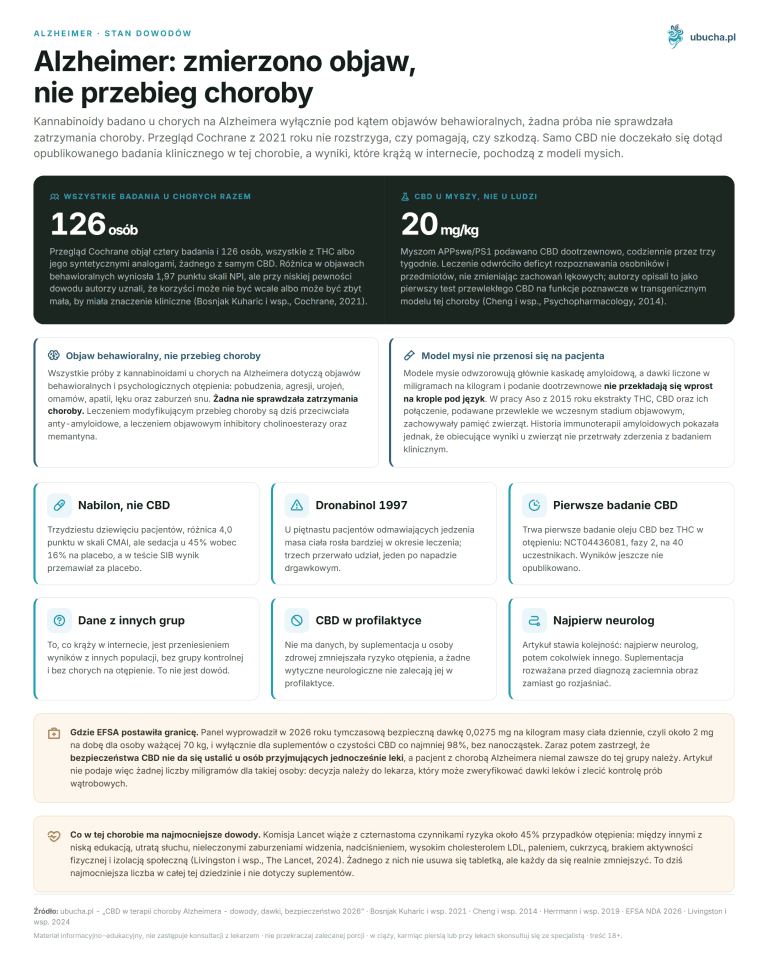
They showed moderate improvement in narrowly selected groups and short observation times. Several randomized trials have been published, all on several dozen people, mostly Japanese. The longest lasted 49 weeks. None compared lion’s mane with a reference drug, so we speak of a signal, not established efficacy.
| Study | Who and duration | Findings |
|---|---|---|
| Mori 2009 | 30 people aged 50-80 with MCI, 16 weeks | higher HDS-R scores at weeks 8, 12, and 16; decline 4 weeks after discontinuation |
| Saitsu 2019 | adults, fruiting body, 12 weeks | improvement only in MMSE; Benton test and paired associate test showed no difference |
| Li 2020 | mild Alzheimer’s disease, 49 weeks | MMSE improvement in active group, CASI decline in placebo, better contrast sensitivity |
| Nagano 2010 | 30 women, cookies with extract, 4 weeks | lower CES-D depression scale and nonspecific symptom index |
| Vigna 2019 | 77 overweight or obese people, 8 weeks | less depression, anxiety, and sleep disorder symptoms; pro-BDNF increased, BDNF unchanged |
| Docherty 2023 | 41 healthy people aged 18-45, 28 days | faster Stroop test 60 minutes after dose; zero results also present |
The Mori et al. study remains a reference point. Participants took four tablets of 250 mg dried fruiting body powder three times daily, i.e., 3 g per day for 16 weeks. The advantage over placebo on the Hasegawa dementia scale increased over time, and after stopping, the result significantly dropped. Laboratory studies showed no adverse effects (Mori et al., Phytotherapy Research, 2009).
The only year-long trial involved patients with mild Alzheimer’s disease who took three capsules of erinacine A-enriched mycelium 350 mg each for 49 weeks. Imaging was done by diffusion tensor method, not positron emission tomography. Four people discontinued due to gastrointestinal complaints and rash (Li et al., Frontiers in Aging Neuroscience, 2020).
Does lion’s mane improve mood and sleep?
Three independent human trials noted improvement in mood scales, but none compared lion’s mane with an antidepressant and none lasted longer than eight weeks. A review by Chong’s team states plainly: the antidepressant effect of this species has not been validated or compared with conventional therapy (Chong et al., International Journal of Molecular Sciences, 2019).
The earliest trial involved 30 women who ate cookies with extract or control cookies for four weeks. After intervention, CES-D depression scale and nonspecific symptom index scores were lower than before and lower than in the control group in two subscales. The authors note the mechanism seems different from NGF synthesis stimulation (Nagano et al., Biomedical Research, 2010).
The largest trial involved 77 overweight or obese people on a weight-loss diet. After eight weeks, depression and anxiety scale scores decreased and sleep quality improved. The authors sought a biomarker and found a notable discrepancy: pro-BDNF increased, but mature BDNF did not change significantly (Vigna et al., Evidence-Based Complementary and Alternative Medicine, 2019). The popular statement “lion’s mane increases BDNF in humans” is therefore unsupported by this work.
Distinguishing pro-BDNF from BDNF is not a laboratory detail. The precursor and mature form bind different receptors and are attributed opposite effects on neuron survival in literature. An increase in the precursor with unchanged mature form concentration is not a “BDNF increase” in the sense used in advertising. The study authors described this discrepancy as a result, not confirmation of the neurotrophic hypothesis.
The newest trial involved healthy people aged 18-45 who took 1.8 g of preparation for 28 days. One hour after a single dose, participants performed the Stroop test faster, and after a month, a trend toward lower subjective stress was noted, borderline significant. The authors also report zero results and advise caution with such a small trial (Docherty et al., Nutrients, 2023).
What do animal studies not yet tell us about humans?
Preclinical material is much richer than clinical and drives marketing promises. Four areas have solid animal studies: stress-induced depression, brain ischemia, Alzheimer’s disease model, and stomach ulcer. None has confirmation in human studies.
In a repeated restraint model, mice received erinacine A-enriched mycelium extract at 100, 200, and 400 mg/kg for four weeks. The extract reversed immobility time prolongation, restored noradrenaline, dopamine, and serotonin levels, and reduced interleukin 6 and tumor necrosis factor alpha, stimulating the BDNF/TrkB pathway (Chiu et al., International Journal of Molecular Sciences, 2018).
In a global brain ischemia model in rats induced by bilateral common carotid artery occlusion, mycelium reduced infarct volume by 22% at 50 mg/kg and 44% at 300 mg/kg. Erinacine A alone lowered interleukin 1 beta, interleukin 6, and tumor necrosis factor alpha (Lee et al., International Journal of Molecular Sciences, 2014). The mouse dementia model was induced by aluminum chloride with D-galactose, not a transgenic mutation; the extract improved rotarod and water maze test results and increased acetylcholine concentration (Zhang et al., International Journal of Molecular Sciences, 2016). The water extract also protected rat gastric mucosa from ethanol damage by limiting antioxidant enzyme loss (Wong et al., Evidence-Based Complementary and Alternative Medicine, 2013).
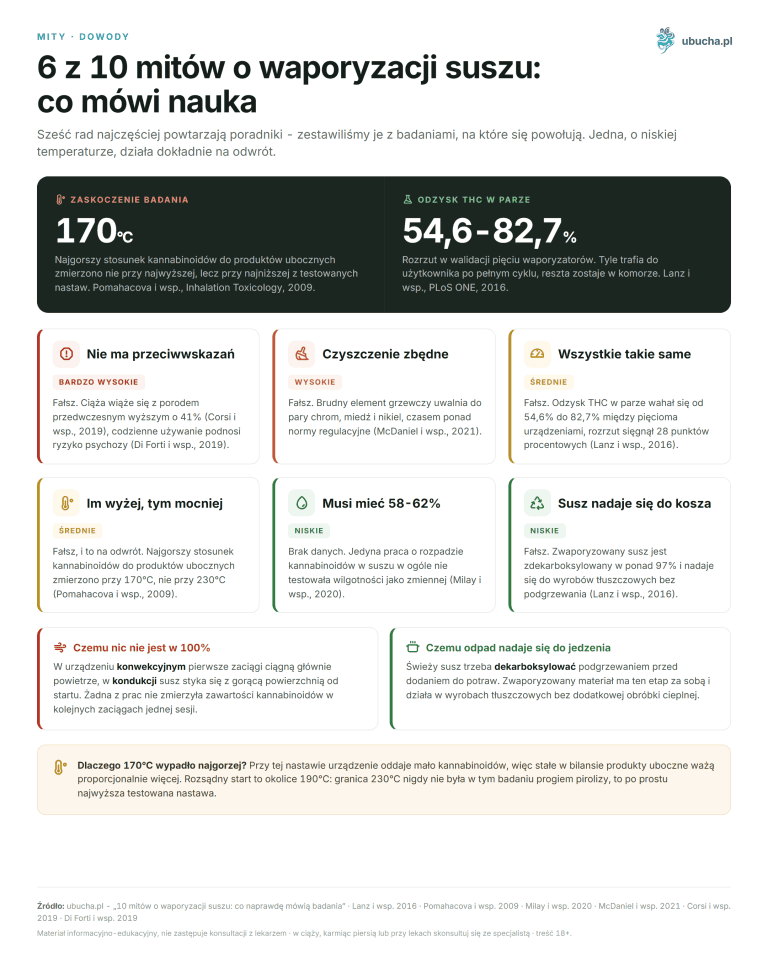
We also noticed something missing in any Polish product description. The study on dopaminergic neuron protection in the MPTP model, cited everywhere as evidence for Parkinson’s disease action, was retracted by the journal in 2021. The retraction note is publicly available (retraction note, Journal of Translational Medicine, 2021). Claims based on this study should no longer be repeated; what remains is described in the next section.
It is also worth seeing how these doses translate. Mice received 20 to 400 mg extract per kg body weight, rats up to 300 mg/kg. Translated directly to a 70 kg person, this would be several to tens of grams daily, multiple times the doses given to humans. Inter-species scaling is not proportional, but the scale alone shows why rodent results do not predict human outcomes.
What remains of Parkinson’s disease claims after the MPTP study retraction?
One preclinical study remains, not involving humans or the MPTP model. Lee’s team in 2022 tested erinacine A and erinacine A-enriched mycelium in an inflammatory model: male Sprague-Dawley rats received unilateral lipopolysaccharide injection into the substantia nigra (Lee et al., International Journal of Molecular Sciences, 2022).
The experiment involved four groups of six animals, gavage feeding once daily for five weeks, erinacine A at 5 mg/kg or mycelium at 1 g/kg body weight, with lipopolysaccharide injection after the first week. Endpoints were two motor tests, rotarod and amphetamine-induced rotations, plus expression of tumor necrosis factor alpha, interleukin 1 beta, and inducible nitric oxide synthase in the midbrain. In both tests, extract-fed animals performed better than the lipopolysaccharide-only group, and expression of all three inflammatory markers was lower.
Cellular parts of the same study show the proposed mechanism. Erinacine A inhibited inducible nitric oxide synthase expression and nitric oxide production in BV-2 microglia and tumor necrosis factor alpha expression in CTX TNA2 astrocytes. In differentiated N2a cells cultured with medium from stimulated microglia, erinacine A and mycelium increased survival and tyrosine hydroxylase amount, a dopamine pathway enzyme, and reduced JNK and NF-kappa B phosphorylation.
What cannot be inferred is clear from the methods: this is a rat, not a patient; damage induced by inflammation, not Parkinson’s disease; and six animals per group, not a cohort. We found no studies involving Parkinson’s patients. The Parkinson’s section returns to the text only to the extent supported by the non-retracted rodent and cell culture study.
What do lion’s mane beta-glucans do to immunity?
Beta-glucans are polysaccharides building fungal and bacterial cell walls, recognized by the immune system as microbial presence signals. They bind Dectin-1 receptor, complement receptor CR3, and TLR-2 and TLR-6 receptors, stimulating macrophages, neutrophils, monocytes, NK cells, and dendritic cells. This mechanism is described in a review dedicated to this compound group.
The same review explains why oral administration is not straightforward. The linear beta-glucan backbone with 1,3 bonds is not digested. Molecules reach the proximal small intestine, some are taken up by macrophages that internalize and fragment them, then transport to bone marrow and reticuloendothelial system; only released fragments reach other immune cells. Particle size and branching pattern change the effect strength so that two products labeled “beta-glucan” may not act similarly.
However, the authors conclude with a sentence never appearing in product descriptions: good quality clinical data assessing purified beta-glucan efficacy in oncology patients are lacking, and future studies should verify actual clinical effectiveness (Chan et al., Journal of Hematology and Oncology, 2009).
The practical takeaway for lion’s mane is twofold. Declared beta-glucan content remains the best available measure of how much real mushroom is in a capsule, as grain substrate does not raise this indicator. At the same time, this number says nothing about the reader’s immunity, as no proof at this level has been collected.
How to dose lion’s mane and which form to choose?
Doses actually tested in humans range from 1 to 3 g daily, but these are not doses of the same material. Mori 2009 used 3 g dried fruiting body powder, Li 2020 gave 1.05 g erinacine A-enriched mycelium, and Docherty 2023 used 1.8 g fruiting body preparation. Converting one number to another makes no chemical sense.
The extraction method determines what ends up in the capsule. Water extract yields beta-glucans and other water-soluble polysaccharides. Alcohol extract yields lipophilic compounds, i.e., hericenones from fruiting body and erinacines from mycelium. Two-phase extraction combines both steps and is described as most complete, though no human study directly compared it with single-phase extraction.
Time matters more than dose size. In Mori’s study, superiority over placebo appeared only in the eighth week and increased until the sixteenth, with results dropping within four weeks after stopping. The practical conclusion is that assessment after two weeks resolves nothing, and the effect, if any, does not persist after stopping. Short “trial” cycles are thus the least sensible way to use this raw material.
Regarding form, clinical studies used powder tablets, mycelium capsules, and baked goods with extract, so form itself does not seem decisive. What matters is how much declared raw material the daily portion actually contains.
Who should not use lion’s mane?
Primarily people allergic to mushrooms. Literature describes a case of a 63-year-old man who developed acute respiratory distress syndrome after taking Hericium erinaceus extract started four months earlier. Lymphocyte stimulation test showed a strong reaction to the preparation, and the patient was treated with steroid pulses and mechanical ventilation (Nakatsugawa et al., Internal Medicine, 2003).
Milder symptoms also appear in clinical studies. In a one-year trial in patients with mild Alzheimer’s disease, four people discontinued due to abdominal discomfort, nausea, and skin rash. These are the only adverse effects reported in that study, showing typical problems: gastrointestinal and skin.
In autoimmune diseases, the situation is inconvenient: the immune-stimulating mechanism of beta-glucans is well described, but no effect has been measured in humans with lupus or psoriasis. The decision must be based on the attending physician’s assessment, not on the manufacturer’s declaration of “immune modulation,” which does not specify effect direction.
Toxicological data look reassuring. In a thirteen-week subchronic study, Sprague-Dawley rats of both sexes were fed erinacine A-enriched mycelium at 875, 1750, and 2625 mg/kg body weight. No deaths or toxicity signs were noted, and hematological, biochemical, and histopathological parameters did not differ from controls (Lee et al., International Journal of Medicinal Mushrooms, 2019). This is an animal study, not human, but shows that warning signals for this raw material come from allergic reactions, not organ toxicity.
We also checked two warnings circulating in Polish internet: hypoglycemia in people taking antidiabetic drugs and increased effect of anticoagulants. We found no human study confirming either. This does not mean no interaction exists, only that none has been measured. Data in pregnancy and breastfeeding are completely lacking, which alone is a contraindication.
How does lion’s mane differ from reishi, cordyceps, and chaga?
It differs in research focus, not strength of effect. Lion’s mane is the only popular “adaptogenic mushroom” with randomized trials on cognitive functions. Other species were mainly studied in oncology, immunology, and physical performance, with results sometimes weaker than labels suggest.
| Species | Main research focus | Evidence status in humans |
|---|---|---|
| Lion’s mane | cognitive functions, mood | several small randomized trials, no meta-analysis |
| Reishi | cancer treatment support | Cochrane review of 5 trials: no basis for first-line use |
| Cordyceps | exercise performance | VO2max improvement only after 3 weeks and in 10 people |
| Turkey Tail | adjuvant immunochemotherapy | Japanese studies post-gastric cancer resection since the 1990s |
| Chaga | antioxidant activity | no clinical trials comparable to above |
The Cochrane review covering five randomized trials states that reishi given alongside chemotherapy or radiotherapy was associated with more frequent tumor response, but the result was not statistically significant, and authors found no basis for first-line use (Jin et al., Cochrane Database of Systematic Reviews, 2016). More about reishi is in the post about Ganoderma lucidum.
For cordyceps, the popular figure “VO2max increase by a few percent after pure cordyceps” does not match measured data. In a study with 28 people, 4 g daily of a mushroom blend containing Cordyceps militaris was given; after one week, no significant difference was found, and after three weeks, VO2max increased by 4.8 ml/kg/min, with only ten people completing this phase (Hirsch et al., Journal of Dietary Supplements, 2017). Turkey Tail has the longest clinical research history among the table mushrooms: its polysaccharide was evaluated in Japan as part of adjuvant immunochemotherapy after radical gastric cancer resection (Nakazato et al., Lancet, 1994). For chaga, we could not assign the popular ORAC indicator to any study suitable for readers, so it is not given here. A compilation of bioactive compounds in medicinal mushrooms is in a separate guide to medicinal mushrooms.
How to read a lion’s mane supplement label?
The label should answer four questions: which species, which mushroom part, how it was extracted, and how much active material per daily portion. Missing any of these means the product cannot be compared with doses used in any study, so it cannot be assessed whether the portion can do anything.
The botanical name Hericium erinaceus should appear on the package alongside the trade name. The mushroom part is decisive because erinacines occur in mycelium and hericenones in fruiting body; “Lion’s Mane mushroom” without part indication says nothing. The declaration “polysaccharides” is not the same as “beta-glucans”: starch from grain substrate is also a polysaccharide and raises this result without pharmacological contribution.
Polish researchers reviewing neuroprotection literature for this species conclude with a note on lack of standardization of lion’s mane supplements and the need for better isolation methods and analytical standards (Szućko-Kociuba et al., International Journal of Molecular Sciences, 2023). Until then, a manufacturer’s certificate of analysis remains the only document verifying anything, and its absence is information itself.
Also convert the daily portion to grams before comparing with studies. A capsule labeled “500 mg 8:1 extract” does not correspond to 500 mg raw material used in clinical trials but to an equivalent of 4 grams starting material, and manufacturers rarely disclose how this ratio was established. If the label does not state the weight of two capsules together and how much is mushroom versus filler, comparison with 3 g from Mori or 1.05 g from Li is impossible. This is usually the fastest way to reject a product without reading the rest of the packaging.
How to distinguish store claims from study results?
The simplest test is to ask for each number who it was measured in and whether the cited study says the same. While writing this text, we checked every citation encountered for this species and found four discrepancies invisible from author and year alone.
First: hericenones. Product descriptions attribute NGF stimulation to them, but the study testing this states clearly that hericenones C, D, and E did not increase NGF gene expression. Second: BDNF. The phrase “increases BDNF” is repeated everywhere, but the human study found increased pro-BDNF precursor with unchanged mature BDNF.
Third: Parkinson’s disease. The dopaminergic neuron protection study in the MPTP model is still cited, though the journal retracted it in 2021. The retraction note is publicly available but often ignored because the identifier looks correct. Fourth: cordyceps. The popular “VO2max increase by a few percent after cordyceps” comes from a mushroom blend study where no difference was found after one week, and the three-week result was based on ten people.
The common feature of these four cases is that each passes a superficial check. Author matches, year matches, journal exists, link works. The discrepancy appears only after opening the abstract and comparing it with the supporting statement. For supplements described as neurotrophic, this one step changes the picture more than any brand ranking.
Summary: what do we know and what do we not yet know?
We know that lion’s mane extracts stimulate NGF gene expression in cell cultures and increase new cell numbers in the dentate gyrus in mice. We also know that in humans with mild cognitive impairment, 3 g dried powder daily for 16 weeks improved dementia scale scores, with the advantage disappearing after stopping.
We do not know which compounds are responsible: hericenones, to which the effect is attributed, failed in the NGF gene expression study. We do not know if scale improvements translate to daily functioning, as the longest trial lasted 49 weeks and involved several dozen people. We lack meta-analyses, comparisons with drugs, and product standardization allowing shelf product comparisons.
For a healthy person wanting to try, a reasonable conclusion is: choose a preparation specifying mushroom part and beta-glucan content, expect at least eight weeks of use, and do not expect effects to persist after stopping. For someone diagnosed with dementia, Alzheimer’s, or depression, the conclusion is different: this is not treatment and does not replace therapy supervised by a doctor.
Sources
Below are the studies supporting claims in this text. Each was individually checked in Europe PMC: abstracts were opened and compared with the supporting statement. Links lead to records, not publisher pages, so they can be opened without subscription.
- Friedman M., Journal of Agricultural and Food Chemistry, 2015 - review of chemistry and properties of Hericium erinaceus.
- Mori K. et al., Biological and Pharmaceutical Bulletin, 2008 - NGF induction in 1321N1 cells; hericenones ineffective.
- Lai P.L. et al., International Journal of Medicinal Mushrooms, 2013 - neurite growth in NG108-15 line.
- Ryu S. et al., Journal of Medicinal Food, 2018 - hippocampal neurogenesis in mice.
- Tsai P.C. et al., Molecules, 2021 - bioavailability and brain penetration of erinacine A in rats.
- Li I.C. et al., Behavioural Neurology, 2018 - review of erinacine-enriched mycelium properties.
- Mori K. et al., Phytotherapy Research, 2009 - randomized study in MCI patients.
- Saitsu Y. et al., Biomedical Research, 2019 - improvement only in MMSE scale.
- Li I.C. et al., Frontiers in Aging Neuroscience, 2020 - 49 weeks in mild Alzheimer’s disease.
- Nagano M. et al., Biomedical Research, 2010 - mood in menopausal women.
- Vigna L. et al., Evidence-Based Complementary and Alternative Medicine, 2019 - mood, sleep, and pro-BDNF.
- Docherty S. et al., Nutrients, 2023 - pilot study in healthy people.
- Lee K.F. et al., International Journal of Molecular Sciences, 2014 - brain ischemia in rats.
- Retraction note on MPTP model study, Journal of Translational Medicine, 2021 - basis for Parkinson’s claims retraction.
- Lee S.L. et al., International Journal of Molecular Sciences, 2022 - erinacine A in inflammatory substantia nigra damage model in rats.
- Lee L.Y. et al., International Journal of Medicinal Mushrooms, 2019 - thirteen-week toxicity assessment.
- Szućko-Kociuba I. et al., International Journal of Molecular Sciences, 2023 - neuroprotection review and standardization gaps.
Frequently Asked Questions
Does lion’s mane cure Alzheimer’s disease?
No. The only one-year study in patients with mild Alzheimer’s disease noted an improvement in MMSE scores in the group taking erinacine A-enriched mycelium and a decrease in CASI scores in the placebo group. This is a signal from a single pilot trial, not proof of efficacy. No dementia treatment standard lists this raw material.
How soon can the effect of supplementation be seen?
In the Mori 2009 study, superiority over placebo appeared only in the eighth week of taking 3 g of powder daily and increased until the sixteenth week. Four weeks after discontinuation, the result significantly dropped. Assessment after two weeks does not resolve anything, and the effect does not persist after stopping.
Do hericenones really stimulate nerve growth factor?
In the Mori 2008 study, hericenones C, D, and E did not increase NGF gene expression in human glioblastoma cells, although the entire ethanol extract did. The authors conclude that active compounds exist in the extract but are not hericenones. Product descriptions repeat the opposite claim.
Fruiting body or mycelium: which to choose?
It depends on which compound is meant. Erinacines occur in the mycelium, and the erinacine A-enriched mycelium was used in the only one-year study. Hericenones come from the fruiting body, and Japanese trials used this material. A preparation that does not specify the mushroom part cannot be assigned to any of these studies.
Does lion’s mane interact with medications?
We found no human study confirming repeated warnings about hypoglycemia with antidiabetic drugs or increased effect of anticoagulants. Lack of measurement is not proof of safety, so with ongoing pharmacotherapy, decide on supplementation with your doctor.
What adverse effects have been reported?
In a one-year study in patients with mild Alzheimer’s disease, four people discontinued due to abdominal discomfort, nausea, and rash. A single case of acute respiratory distress syndrome in a 63-year-old man taking the extract, allergic in nature and requiring hospitalization, was also described.
Can I pick lion’s mane in Polish forests?
No. Lion’s mane is listed as item 49 in Annex 1 to the Regulation of the Minister of the Environment of October 9, 2014, thus under strict protection. The ban covers harvesting, collecting, holding, and offering specimens for sale. Raw material for supplements comes from cultivation.
Does lion’s mane increase BDNF in humans?
A study on 77 overweight or obese individuals measured this directly and the result was split: after eight weeks, pro-BDNF precursor concentration increased, but mature BDNF concentration did not change significantly. The statement about increasing BDNF in humans is therefore unsupported by this work.
Dried fruiting bodies, extracts, and complex preparations with lion’s mane are collected in the adaptogens category.
This article is for informational and educational purposes and does not replace consultation with a doctor. If you are pregnant, breastfeeding, taking medications, or have chronic conditions, consult a specialist before using supplements or herbs.
Author: Michał Waluk · Published: 2026-05-06 · Updated: 2026-08-10