
Cannabis and Sleep: How CBD and CBN Affect Insomnia
CBD, CBN, and sleep without marketing: what polysomnography showed, why the sleep CBN myth lacks data support, how to choose a product, and when to see a doctor.
Half of adult Poles report sleep problems, with the rate reaching 58.9% among women (Nowicki et al., Psychiatria Polska, 2016). The natural solutions market has grown faster than the evidence base for years, and the loudest slogan of the last decade is: CBN is the sleep cannabinoid. It sells well. The problem is that the first polysomnography study testing this slogan was published only in 2026, and its primary endpoint was a tie with placebo. CBD has better scientific reputation, just not the kind suggested by product descriptions. Below you will find what can be defended by data: night architecture, the role of the endocannabinoid system, study numbers, how to choose a product, and the moment when oil stops being the answer.
KEY INFORMATION
• In the first CBN polysomnography study, neither 30 mg nor 300 mg shortened nighttime wakefulness (Lavender et al., Journal of Sleep Research, 2026).
• A typical sleep product contains 5-10 mg CBN, a fraction of the dose at which anything moved.
• Shannon et al. (2019) is a case series without a control group, and sleep improvement fluctuated over time.
• First-line treatment for chronic insomnia remains cognitive-behavioral therapy CBT-I.
Do cannabis products really help you fall asleep?
They help some people and rather indirectly than directly. Cannabidiol reduces tension and anxiety that keep a person alert, so falling asleep becomes easier. It does not act like a sleeping pill, does not turn off consciousness, and there is no evidence it restores normal night architecture.
Separating these two things changes expectations. A sleeping pill forces sleep. Cannabis at best removes the obstacle between you and sleep, so if your insomnia is not caused by anxiety, racing thoughts, or pain, you probably won’t feel anything. This also explains the range of opinions: two people take the same oil and one talks about a breakthrough, the other about wasted money.
The division into primary and secondary insomnia is useful here. Primary has no external cause and sustains itself, driven by fear of another sleepless night. Secondary accompanies something else: chronic pain, anxiety disorders, post-traumatic stress. Cannabidiol has a chance to work mainly in the latter situation, because there is something to calm down.
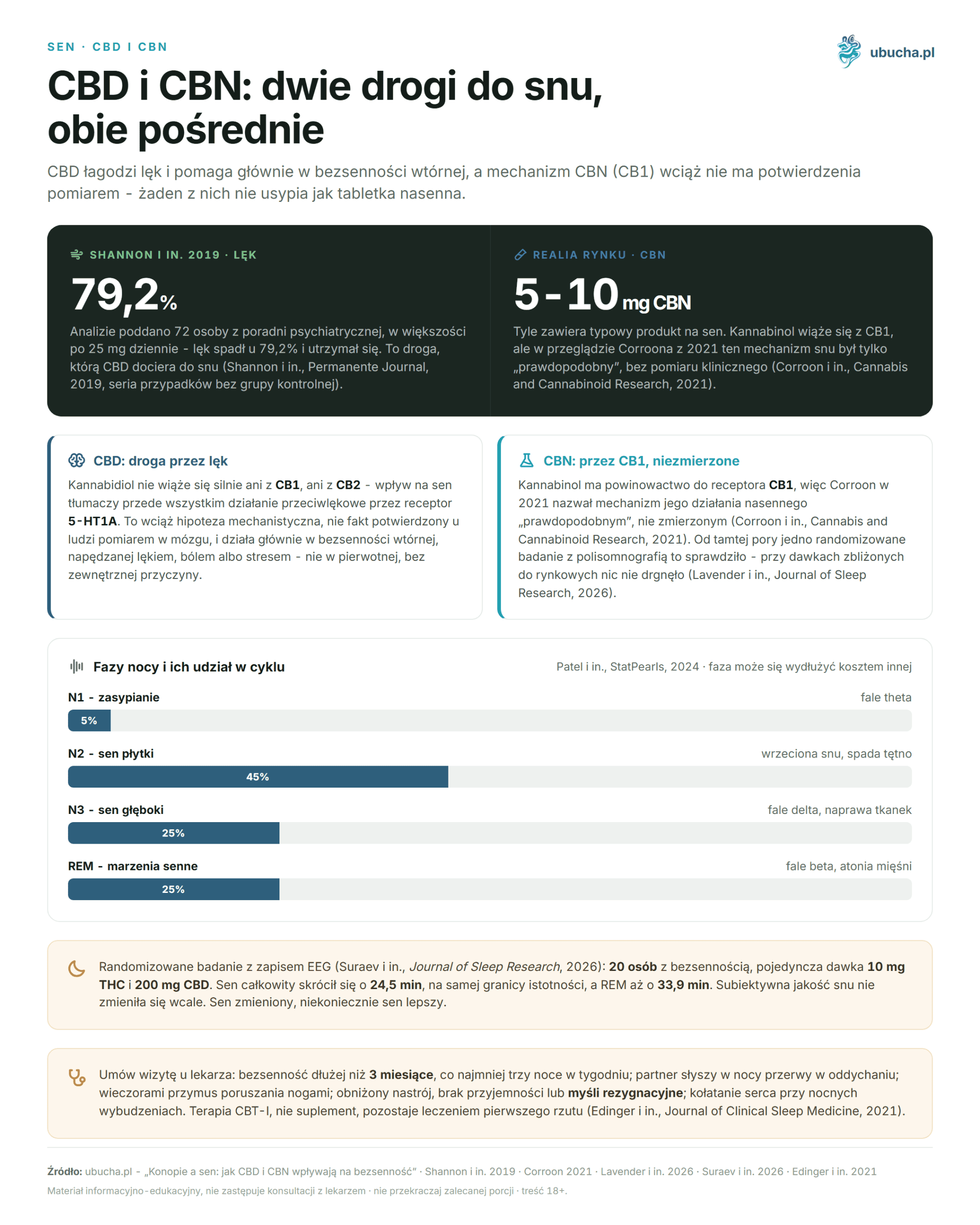
CBN is different because there is nothing to defend. Corroon’s review (Cannabis and Cannabinoid Research, 2021) searched literature for clinical studies linking cannabinol to sleep based on polysomnography or validated questionnaires. He reviewed 99 abstracts and found none. He noted that sleep products usually contain 5 mg CBN or less, and available human studies date from the 1970s and 1980s.
Our store observation: questions about CBN usually arise after exposure to advertising, not after reading studies. The opposite is true for CBD, where people come with a specific problem, most often evening tension. It’s a good test of intent: if a product sells you a molecule instead of a solution, ask what the promise is based on.
What makes up the night and why does sleep architecture matter?
An adult’s night consists of 4 to 5 cycles of about 90 to 110 minutes each, with phases N1, N2, N3, and REM recurring. About 75% of sleep is NREM phases (Patel et al., StatPearls, 2024). Feeling rested depends on their proportion, not just hours slept.
That’s why the question “how long did I sleep” can be misleading. You can lie in bed for eight hours and wake exhausted if sleep was fragmented by awakenings or lacked deep sleep. Conversely, six hours with preserved structure regenerates better than eight hours of shallow sleep interrupted every few minutes.
Phases are not evenly distributed through the night. Deep sleep dominates the first two cycles, and REM takes more space toward morning. Going to bed at 3 a.m. and waking at 7 a.m. loses not a quarter of sleep but almost the entire dream phase. The same applies to a morning alarm shifted two hours earlier.
| Phase | Night share | EEG pattern | What happens |
|---|---|---|---|
| N1 | about 5% | theta waves | transition from wakefulness, lasts 1-5 minutes |
| N2 | about 45% | sleep spindles, K-complexes | heart rate and body temperature drop, memory consolidates |
| N3 | about 25% | delta waves | tissue repair, muscle and bone rebuilding, immune function |
| REM | about 25% | beta waves | dreaming, muscle atonia, emotion processing |
This table will be useful shortly when reviewing cannabinoid studies. A substance may lengthen one phase at the expense of another and not improve the night, though statistics show a “sleep change.” The American Academy of Sleep Medicine with Sleep Research Society recommends adults get at least 7 hours of sleep per night (Watson et al., Sleep, 2015), but this number only makes sense together with the proportions in the table.
How does the endocannabinoid system regulate sleep and wakefulness?
It regulates it indirectly and less strongly than product descriptions suggest. Babson et al.’s review (Current Psychiatry Reports, 2017) cautiously summarizes cannabis and sleep studies: cannabidiol has preliminary potential in insomnia, THC shortens sleep onset, but long-term use can worsen sleep quality, and overall results are inconsistent.
The system itself has a circadian rhythm, but it runs opposite to what most guides repeat. The popular version says anandamide rises in the evening and induces sleep. Measurements show the opposite. Vaughn et al. (British Journal of Pharmacology, 2010) measured anandamide plasma levels in healthy volunteers and found it three times higher upon waking than just before sleep. Sleep deprivation disrupts this rhythm. Anandamide thus looks more like a morning molecule than an evening one.
This does not mean the endocannabinoid system has nothing to do with sleep. It means its relationship with circadian rhythm is bidirectional and poorly studied in humans, and simple stories about a natural sleep hormone oversimplify it to the point of falsehood.
Cannabidiol behaves differently in this system. It does not bind strongly to CB1 or CB2, and its sleep effect is mainly explained by anxiolytic action via the serotonin 5-HT1A receptor. This remains a mechanistic hypothesis, not a fact confirmed by brain measurement in humans.
Cannabinol behaves differently: it has affinity for the CB1 receptor, so Corroon calls its sleep mechanism probable. Probable is not the same as measured, and Corroon himself recommends future studies use doses much higher than those in sleep products. If you want to follow the whole system mechanism, we described it separately in the introduction to the endocannabinoid system.
What do studies really show about CBD and sleep?
They show a signal, but weaker and less certain than advertising suggests. The most cited work by Shannon et al. (Permanente Journal, 2019) is a retrospective case series from a psychiatric clinic, without randomization or control group. The authors themselves write that sleep improvement fluctuated over time.
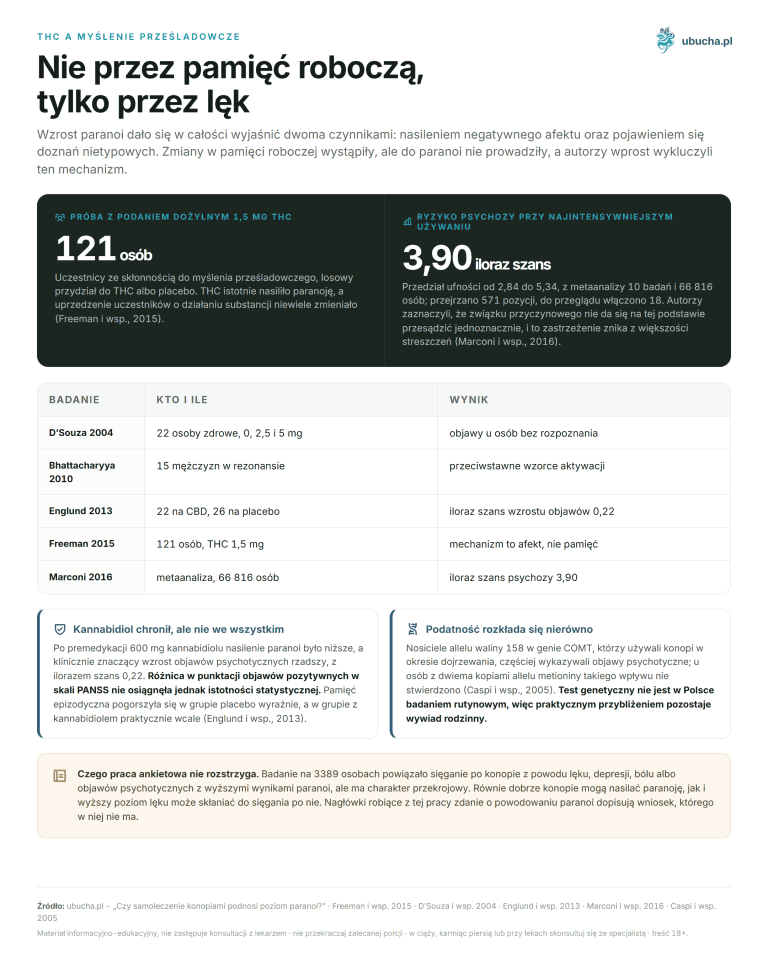
It’s worth understanding what this means in practice. A doctor reviewed records of 103 patients; 72 who received cannabidiol alongside existing treatment, mostly 25 mg daily, were analyzed. Anxiety scores dropped in 79.2% and stayed that way; sleep improved in 66.7% in the first month but then fluctuated. No comparison with placebo group, no blinding, and a patient seeking help who receives it usually feels better the next month regardless of the substance. This setup does not distinguish substance effect from natural problem course.
| Study | Who and how much | Method | Result |
|---|---|---|---|
| Carlini and Cunha, 1981 | 15 insomnia patients, 40, 80, and 160 mg | comparison with placebo and 5 mg nitrazepam | longer sleep only at 160 mg, fewer dream recalls at all doses |
| Shannon et al., 2019 | 72 clinic patients, mostly 25 mg daily | case series, no control group | improvement in 66.7% first month, then fluctuated |
| Babson et al., 2017 | literature review | narrative synthesis | preliminary signal for CBD, overall inconsistent results |
| Suraev et al., 2026 | 20 insomnia patients, 10 mg THC and 200 mg CBD | randomized, polysomnography with EEG | sleep shorter by 24.5 min, REM shorter by 33.9 min |
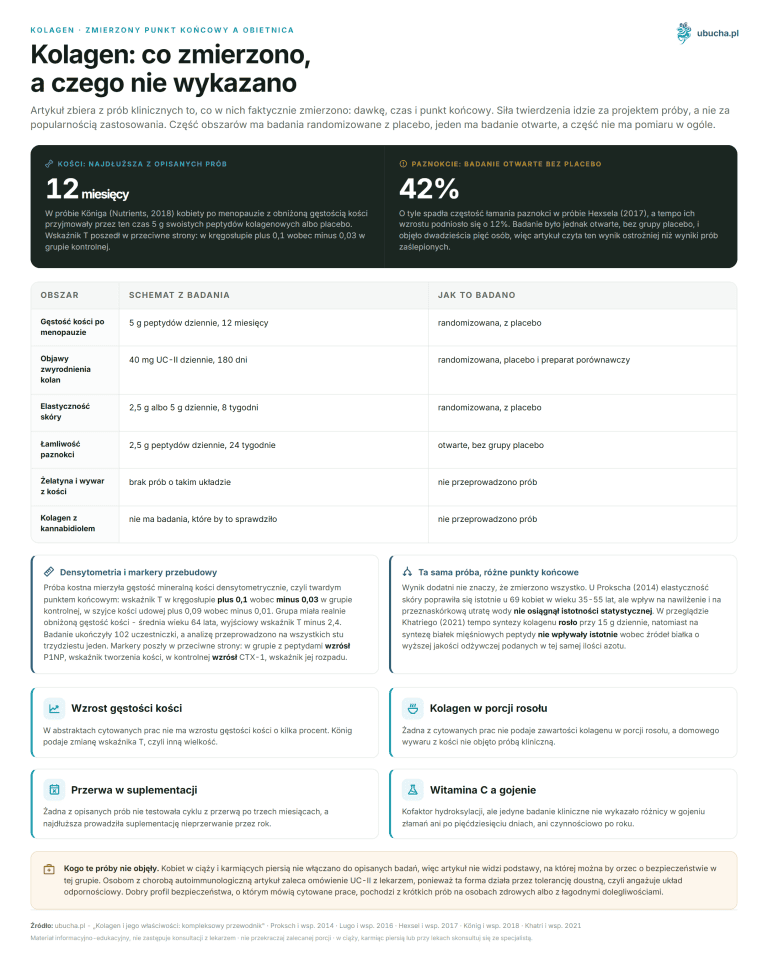
Carlini and Cunha (Journal of Clinical Pharmacology, 1981) compared three cannabidiol doses with placebo and nitrazepam in 15 insomnia patients. Only 160 mg prolonged sleep. The last row is the most interesting and least comfortable. In a pilot randomized study (Suraev et al., Journal of Sleep Research, 2026), a single dose of THC with cannabidiol shortened total sleep by 24.5 minutes, borderline significant, clearly suppressed REM phase, and delayed its onset by over an hour. Subjective sleep quality did not change. It’s altered sleep, not necessarily better sleep.
Where did the myth of CBN as a sleep cannabinoid come from?
From one old study misread and an anecdote about old cannabis flower. Cannabinol forms when THC oxidizes under light, heat, and oxygen, so aging buds have more of it. Smokers said such material puts you to sleep and attributed it to the new molecule.
The study serving as evidence for half a century says the opposite. Karniol et al. (Pharmacology, 1975) gave five volunteers placebo, 50 mg CBN, 25 mg THC, and mixtures. After THC alone, subjects felt dizzy and sleepy. After cannabinol alone, at ten times the dose in today’s gummies, they reported no such effect. Sleepiness increased only combined with THC, i.e., when there was something to enhance.
Marketing took the phrase about enhancement, cut the condition, and made cannabinol a sleeping agent. Corroon describes this mechanism directly and advises consumers to be skeptical of manufacturer claims.
There was also a chemical misunderstanding. Aging flower does not change only into cannabinol. It loses volatile terpenes and converts some acidic cannabinoid forms, so its effect profile differs from fresh material on several levels. Attributing the entire difference to one measurable molecule was a convenient shortcut, not an experimental conclusion.
A more reasonable candidate for sleepiness from old flower are terpenes. Russo (British Journal of Pharmacology, 2011) described the entourage effect, where terpene profile modifies cannabinoid action, and myrcene and linalool have long been considered calming components. Evidence remains preclinical: Chen et al. (Pharmaceuticals, 2024) showed beta-myrcene sleep effect from lavender oil in mice, not humans. We detailed this chemistry in the article about what cannabis terpenes are.
Did CBN outperform placebo in the polysomnography study?
Not on the main endpoint. The CUPID study (Lavender et al., Journal of Sleep Research, 2026) included 20 adults diagnosed with insomnia and compared crossover doses of 30 mg CBN, 300 mg CBN, and placebo with full polysomnographic recording.
The primary endpoint was wakefulness after sleep onset, i.e., total minutes awake during the night. Cannabinol did not change it. Several secondary indicators shifted at the highest dose, and this is the fragment producers now start citing out of context.
| Endpoint | Result vs placebo |
|---|---|
| Wakefulness after sleep onset (primary) | no difference: 300 mg minus 6.3 min (p = 0.29), 30 mg minus 4.0 min (p = 0.50) |
| Sleep onset latency | shorter, but only at 300 mg (p = 0.004) |
| N2 phase | longer, only at 300 mg (p = 0.03) |
| Subjective sleep quality | better, only at 300 mg (p = 0.005) |
| EEG awakening index | lower, only at 300 mg (p = 0.02) |
| Adverse events | 247 mild and moderate across all arms |
Compare these numbers to any sleep gummy label. The dose at which anything moved is 300 mg. Products declare 5 or 10 mg, 30 to 60 times less, and 30 mg, closest to market reality, moved nothing. Also, it was one night, 20 people, and the authors themselves call for larger and longer trials.
The honest conclusion is ambiguous and should remain so. Cannabinol is not inert, because at doses tens of times higher than market something happened in EEG. It is not a sleeping agent in the sense labels sell it, because the main measurement was zero, and at real doses nothing. Until multiweek studies appear, that’s all that can be said.
In what form and when to take CBD for sleep?
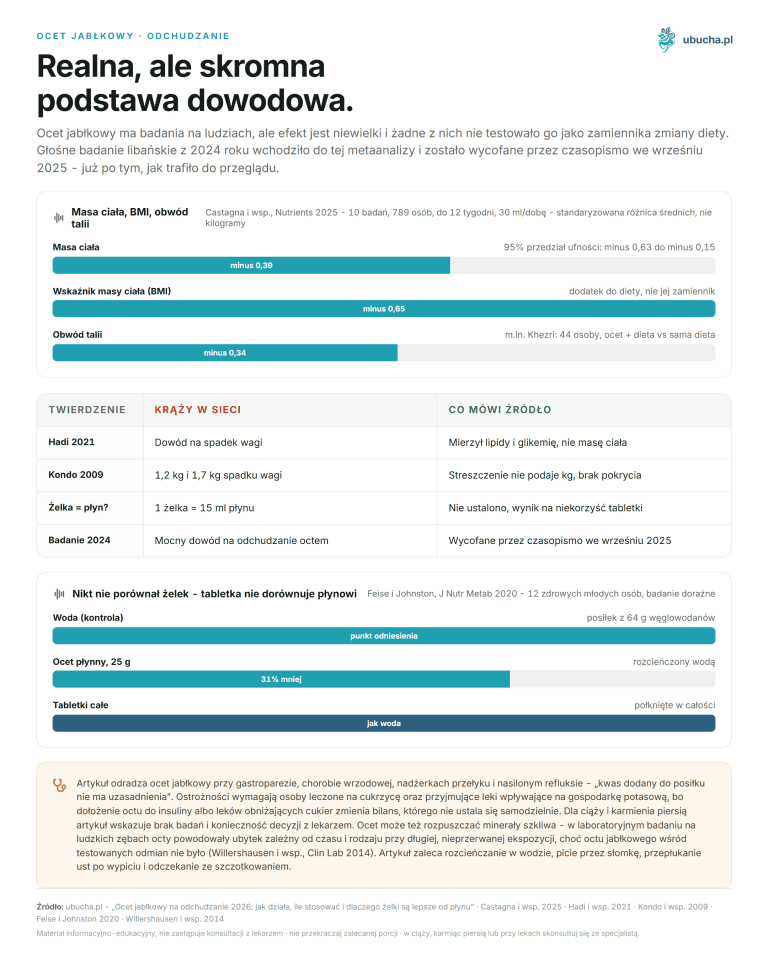
Form and timing can be described by data, amount cannot. No dose confirmed by insomnia studies exists, and Larsen and Shahinas’ review (Journal of Clinical Medicine Research, 2020) collected 25 studies with 927 adults and found forms, doses, and regimens varied too much to form a single efficacy threshold. Ask your doctor how much to take, not an article.
There is an upper limit worth knowing. EFSA panel calculated a provisional safe cannabidiol dose in 2026 at 0.0275 mg per kg body weight daily, about 2 mg daily for a 70 kg person (EFSA, 2026). Derived by benchmark dose method with uncertainty factor 400, it applies only to supplements with at least 98% pure cannabidiol, no nanoparticles. The same document states CBD safety cannot be established under age 25, in pregnant or breastfeeding women, or people taking medications.
The biggest mistake in product assessment is one-time testing. Those who take oil only after a bad night assess it at the worst moment and usually find it ineffective. A fixed time and full two to three weeks of observation give the product a chance a single dose never will. Form determines when the substance starts working and how long it stays in the body.
| Form | Onset | When to take |
|---|---|---|
| Sublingual oil | 15 to 45 minutes | 30 to 60 minutes before sleep |
| Capsules and gummies | 60 to 120 minutes | 1.5 to 2 hours before sleep |
| Vaporization | 5 to 10 minutes | short acting, rarely effective in the evening |
Millar et al.’s systematic pharmacokinetic review (Frontiers in Pharmacology, 2018) reports time to peak concentration from 0 to 4 hours and notes that food and fat carrier increase the peak. Absolute oral bioavailability in humans has never been directly measured. Practical takeaway: take the product with fat and always at the same time.
What else helps you fall asleep: melatonin, magnesium, or l-theanine?
Each has evidence, but more modest than packaging suggests. Melatonin shortens sleep onset by 7 minutes and lengthens sleep by 8 minutes in a meta-analysis of 19 studies with 1683 people (Ferracioli-Oda et al., PLOS ONE, 2013). It is a chronobiological tool, not a sleeping agent.
The effect scale can be surprising. Seven minutes faster sleep onset is a real statistical change and something most people won’t notice. Melatonin works best where the problem is a shifted clock, e.g., jet lag and shift work, not classic insomnia.
| Agent | What data showed | Evidence quality |
|---|---|---|
| Melatonin | sleep onset shorter by 7 min, sleep longer by 8 min | meta-analysis of 19 randomized studies |
| Oral magnesium | sleep onset shorter by 17.4 min in seniors | 3 small studies, GRADE low and very low |
| L-theanine 200 mg | better PSQI scores for sleep onset and disturbances after 4 weeks | one crossover study, 30 people |
| Lavender terpenes | shortened sleep latency in insomnia model | animal studies only |
Two things from this table are worth remembering. First, magnesium’s result appears stronger than melatonin’s but is based on three small trials with moderate to high risk of bias, so the review authors (Mah and Pitre, BMC Complementary Medicine and Therapies, 2021) call the literature quality insufficient. Second, l-theanine improved sleep only after four weeks of daily use (Hidese et al., Nutrients, 2019), not after the first capsule. Evening herbs like lemon balm and hops work on a similar repeated ritual logic. You’ll find them in the teas and infusions category.
Why does CBT-I outperform supplements and when to see a doctor?
Because it treats the cause, not the symptom, and is the only method with first-line treatment status. The American Academy of Sleep Medicine guidelines (Edinger et al., Journal of Clinical Sleep Medicine, 2021) recommend multicomponent cognitive-behavioral therapy for adult insomnia with strong recommendation strength.
CBT-I usually involves 5 to 8 sessions teaching stimulus control, time-in-bed restriction, relaxation techniques, and sleep belief verification. It sounds less attractive than an oil drop and requires several unpleasant weeks, but it is the only intervention with lasting effect after treatment ends. Supplements work only as long as taken.
Sleep hygiene is a prerequisite, not therapy itself, and the same guidelines discourage using it as the sole treatment component. Keep a fixed wake time even on weekends, darken the bedroom completely, lower temperature to about 18°C, avoid caffeine after afternoon, and reserve bed for sleep and sex only. Alcohol is the biggest cheat: it speeds sleep onset but disrupts the second half of the night.
However, there are situations where further supplement experimentation delays diagnosis. Schedule a visit if any of the following occur:
- insomnia lasts longer than 3 months and occurs at least three nights a week;
- partner hears breathing pauses at night, and you wake with headache and daytime sleepiness;
- you feel an urge to move legs in the evening that only stops after getting up;
- insomnia is accompanied by low mood, anhedonia, or suicidal thoughts;
- night awakenings come with heart palpitations and weight loss.
Insomnia prevalence in adults is 10 to 16% (Spiegelhalder et al., Nature Reviews Disease Primers, 2026), so it’s not rare or shameful to see a doctor. More over-the-counter methods are described in the article on natural ways to sleep without sleeping pills.
Are CBD and CBN legal in Poland?
Hemp is legal, with the limit set by THC content in the plant. The law defines it as Cannabis sativa L. where the sum of delta-9-THC and tetrahydrocannabinolic acid in flower or fruiting tops, from which resin has not been removed, does not exceed 0.3% dry weight, rounded to one decimal place.
This distinction matters practically because labs measure the sum of two compounds, not just delta-9-THC, and the test result depends on this. The basis is Article 4 point 5 of the Act of July 29, 2005 on counteracting drug addiction (consolidated text Journal of Laws 2023 item 1939), as amended by the Act of March 24, 2022 (Journal of Laws 2022 item 763), effective May 7, 2022. Previously, the national threshold was 0.2%. It matches the EU threshold but is a separate regulation with the same numeric value.
Cannabinol is not named in the Ministry of Health’s controlled substances lists (consolidated text Journal of Laws 2024 item 1139); cannabidiol is also absent. Product legality depends on THC content in the raw material used, not the cannabinoid name on the label. THC itself remains prescription-only as a pharmaceutical raw material; this was enabled by the July 7, 2017 amendment (Journal of Laws 2017 item 1458), effective November 1, 2017. Possession without prescription is punishable, which must be remembered when buying from foreign mail-order stores. We expanded on this in the article about medical marijuana and insomnia.
How to check what’s really in the bottle?
Legality says nothing about content. In an analysis of 84 extracts bought online, only 30.95% had labels matching actual cannabidiol content, 42.85% contained more than declared, and THC was detected in 21.4% of samples (Bonn-Miller et al., JAMA, 2017). Therefore, before buying, check four things: current lab report with cannabinoid profile and heavy metals and pesticide tests, declared THC content below threshold, extraction method with CO2 or ethanol, and dark glass with clear expiration date.
A certificate alone guarantees nothing if you don’t read it. Check the date, as reports from two years ago describe a different batch, and the lab name, as in-house testing has different weight than external analysis. Batch number on the report should match the number on the package you hold.
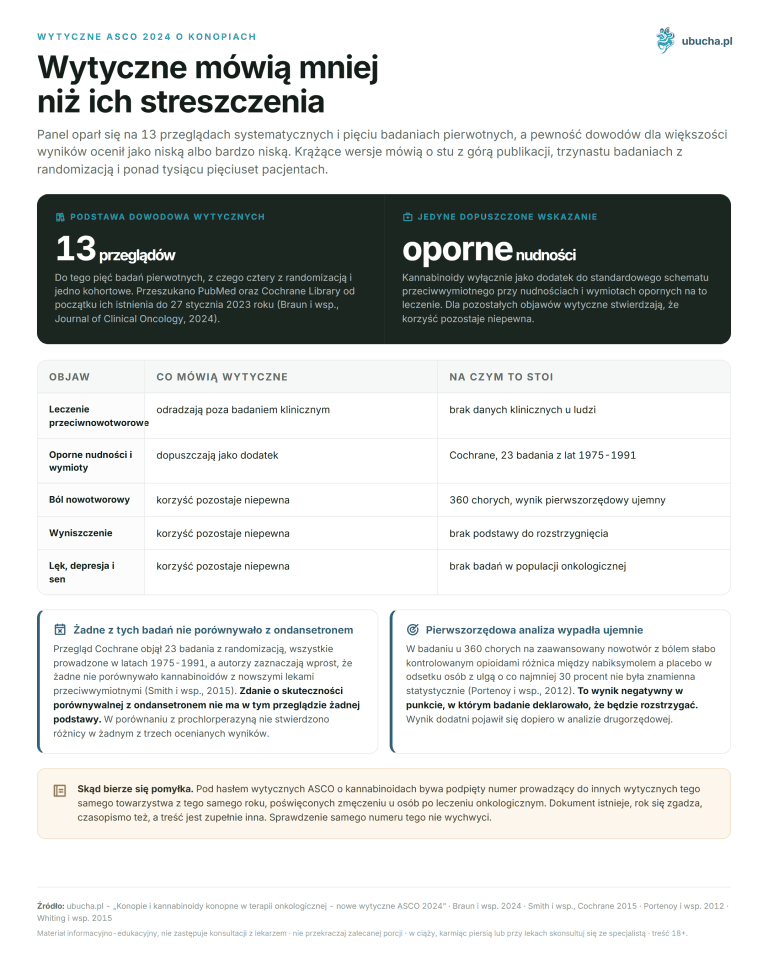
Another issue is medications. Cannabidiol inhibits CYP3A4, CYP2C9, and CYP2C19 enzymes metabolizing most prescription drugs, and Nachnani et al.’s systematic review (Frontiers in Pharmacology, 2024) collected 31 documented cases of altered pharmacokinetics. Exercise greatest caution with warfarin, clobazam, valproate, Z-group sleeping pills, and statins.
Frequently Asked Questions
Does CBD put you to sleep like a sleeping pill?
No. Cannabidiol does not turn off consciousness, only reduces tension and anxiety that make falling asleep difficult. In a case series by Shannon et al. (Permanente Journal, 2019), sleep results improved in 66.7% of patients in the first month, but fluctuated month to month, and the study had no control group.
Is CBN really a sleep cannabinoid?
Data do not support this. Corroon’s review (2021) found no clinical CBN study with polysomnography. The first such study, CUPID (Lavender et al., 2026), showed no reduction in nighttime wakefulness with either 30 mg or 300 mg CBN. The term comes from marketing, not research.
What CBD to CBN ratio makes sense for sleep?
No ratio has been confirmed by research. Market ratios like 3:1 or 1:1 are product decisions, not test results. The only CBN dose with a polysomnographic signal is 300 mg, 30 to 60 times more than in a typical gummy. Ratios currently lack data support.
How long before sleep should I take CBD?
Sublingual oil 30 to 60 minutes before sleep, capsules and gummies 1.5 to 2 hours earlier. Millar et al.’s pharmacokinetic review (Frontiers in Pharmacology, 2018) reports time to peak concentration from 0 to 4 hours, with fat in a meal increasing the peak. Assess effect after 2 to 3 weeks.
Can I combine CBD with melatonin and magnesium?
Decide on any such combination with your doctor if you take any prescription medication. Melatonin resets the biological clock, magnesium and l-theanine calm, cannabidiol reduces anxiety. Special caution applies with sleeping and anti-anxiety drugs because CBD inhibits CYP3A4, CYP2C9, and CYP2C19 enzymes (Nachnani et al., 2024).
Does CBD cause addiction?
The critical WHO ECDD review from 2018 found no psychoactive properties or abuse and dependence potential for cannabidiol, and recommended pure CBD not be internationally controlled. Dose matters though: EFSA in 2026 stated CBD safety cannot be established in people taking medications.
Can CBN cause a positive drug test?
Cannabinol itself usually does not, as screening tests detect THC metabolites. Risk comes from product background: JAMA analysis (Bonn-Miller et al., 2017) found THC in 21.4% of 84 tested extracts. Professional drivers should choose isolate or broad-spectrum with lab testing.
Can I give CBD to a child with insomnia?
Not without a doctor’s decision. In children, cannabidiol is used as a registered drug only for drug-resistant epilepsies like Dravet and Lennox-Gastaut syndromes. EFSA states CBD safety cannot be established under age 25, and childhood insomnia requires pediatric diagnosis.
If after reading you want to try an evening routine, discuss it with your doctor, then start with one product at a time and give it two weeks. In the store you’ll find hemp oils, gummies, and hemp flower for vaporization and infusions.
This article is informational and educational and does not constitute medical advice. Before starting cannabis or CBD for therapeutic purposes, consult a doctor, especially if you take other medications, are pregnant, or breastfeeding.
Author: Michał Waluk · Published: 2026-05-11 · Updated: 2026-08-11