
Adaptogens and the Nervous System: Molecular Protective Mechanisms and Practical Applications in Stress Management
Adaptogens and the nervous system: HPA axis, Hsp70, BDNF, and NGF. Separating human from preclinical studies, providing doses from trials and real interactions.
The term “adaptogen” has no legal status or single agreed pharmacological definition. The European Medicines Agency dedicated a separate document to it in 2008 and did not recognize it as an approved indication. Meanwhile, the literature is expanding: the term “adaptogen” and its derivatives now have over three thousand records in the Europe PMC database, and the global prevalence of anxiety and depressive disorders increased by 25% in the first year of the pandemic (WHO, 2022). The gap between the number of publications and conclusive findings is the rule, not the exception, in this field. This text reviews four most frequently described molecular mechanisms, showing where human measurements end and cell cultures and rodents begin, and compiles randomized trials that form the current knowledge base on adaptogens and the nervous system in one table.
KEY INFORMATION
• Ashwagandha lowered serum cortisol in a 60-day randomized trial on 64 subjects, p=0.0006 (Chandrasekhar et al., 2012).
• The four described pathways are the HPA axis, Hsp70 chaperone proteins, neurotrophins BDNF and NGF, and oxidative stress with NF-kB.
• Human data exist practically only for ashwagandha and rhodiola. The rest rely on cultures and animal models.
• A case series from India describes 23 individuals with liver damage after ashwagandha, including 3 deaths (Philips et al., 2023).
Is adaptogen a scientific or marketing term?
Neither purely one nor the other. It is a working pharmacological category without registration status. The European Medicines Agency in the Reflection paper on the adaptogenic concept from 2008 described the term as a concept requiring cautious treatment in medicinal product documentation.
The origin of the term is serious. Hans Selye described in 1936 in Nature the general adaptation syndrome, a stereotypical organism response to harmful stimuli regardless of type. From this, Nikolai Lazarev coined the word “adaptogen” in 1947, and Israel Brekhman added three conditions: non-toxicity, nonspecific action, and a normalizing effect, i.e., raising what is lowered and lowering what is elevated.
The problem is that the third condition is not easily measurable. Panossian in a review in Annals of the New York Academy of Sciences in 2017 argues directly that classical single-target pharmacology does not describe adaptogens and that network pharmacology is needed. This is an honest statement but also an admission that the mechanism is not closed.
The practical consequence is visible in registries. Rhodiola rosea has an EMA monograph as a traditional herbal medicinal product for transient stress symptoms. The basis for registration is a thirty-year tradition of use, not clinical trial efficacy evidence. These are two different things, often conflated in store descriptions.
On the food side, the situation is even more frozen. Health claim assessments for plants have been unresolved in the European Union since 2010, so no statement about ashwagandha’s or rhodiola’s effect on mood has approved status. Producers operate in a legal gray area, not in a field of confirmed claims.
Everything labeled “adaptogens” today includes Ayurvedic plants, Chinese medicinal mushrooms, Siberian roots, and increasingly cocoa or coffee mushrooms. They share a story about stress resilience, not common pharmacology. Therefore, the sensible question is not “do adaptogens work” but “what exactly was measured for this particular raw material.”
How does chronic stress damage the nervous system?
Through prolonged activation of the hypothalamic-pituitary-adrenal (HPA) axis. The hypothalamus releases corticoliberin, the pituitary responds with ACTH release, and the adrenal cortex produces cortisol. This mechanism saves lives in acute situations. The problem arises when the stimulus persists and the loop cannot switch off.
Bruce McEwen described this state in New England Journal of Medicine in 1998 as allostatic load. Stress mediators protect the body acutely but cause damage when chronically elevated. Glucocorticoid receptors in the hippocampus lose sensitivity, negative feedback weakens, and cortisol remains high despite no real threat.
Neurobiological consequences are mainly described in animal models: dendritic spine loss in the prefrontal cortex, impaired neurogenesis in the dentate gyrus, decreased neurotrophin expression. Human observations come from imaging studies and are correlational, so causality is unresolved.
Selye organized this phenomenon into three phases. The alarm phase lasts minutes to hours and mobilizes the organism. The resistance phase is prolonged readiness, energetically costly. The exhaustion phase appears when costs exceed regenerative capacity. Modern stress physiology uses more precise terms but this framework organizes symptom discussion better than the colloquial “burnout.”
Reported symptoms form a recognizable set: scattered attention, difficulty recalling words, shallow sleep, decreased tolerance to minor stimuli. Not every such picture results from cortisol, nor can every case be reversed by supplementation. That is why the following sections distinguish between human measurements and in vitro findings.
There is another measurement trap. Cortisol follows a strong circadian rhythm, peaking within the first hour after waking, so a single lab result says little without sampling time. The studies described measured either morning serum concentration or cortisol awakening response, two different parameters only comparable within their own category.
Do adaptogens lower cortisol in humans?
Ashwagandha does, in two randomized trials measuring serum concentration. For rhodiola, a different parameter was measured (see below), and for other raw materials, no human trial with cortisol measurement was found. Chandrasekhar et al. in Indian Journal of Psychological Medicine gave 64 people with chronic stress 300 mg root extract twice daily for 60 days and achieved serum cortisol reduction with p=0.0006.
The second trial by Lopresti et al., published in Medicine in 2019, involved 60 stressed adults receiving 240 mg standardized extract once daily for 60 days. Morning cortisol decreased significantly versus placebo (p<0.001), and anxiety scores on HAM-A decreased (p=0.040). DHEA-S also decreased, often omitted in commercial descriptions but a hormonal change in the same direction.
The proposed mechanism is modulation of glucocorticoid receptor sensitivity and restoration of effective negative feedback. This part of the description comes from animal and culture studies, not human measurements. Hormone concentration falls, but the pathway remains hypothetical.
We noticed product descriptions often repeat one figure: a 27.9% cortisol reduction. This is true and comes from the 2012 study results but circulates without the second half of the sentence. The placebo group in the same study had a 7.9% decrease. Thus, the difference between groups is smaller than the number alone suggests, and treating it as a biological constant is an abuse.
What did these two trials not check? They did not observe participants after supplementation ended nor compare ashwagandha with behavioral interventions like sleep hygiene. We know hormone levels drop over two months and little else.
For rhodiola, the picture is different, not just weaker. Olsson et al. gave 60 people with burnout 576 mg SHR-5 extract for 28 days and found a significant difference versus placebo in cortisol awakening response (Olsson et al., Planta Medica, 2009). This is a different parameter than morning concentration measured by Chandrasekhar or Lopresti: axis reactivity, not resting level. Transferring one result to the other is a shortcut not made by the publications themselves.
What are Hsp70 proteins and their relation to adaptogens?
Hsp70 are chaperone proteins that ensure proper folding of other proteins and block their aggregation under cellular stress. Panossian and Wikman proposed their induction as a common denominator of adaptogen action in a 2010 review published in Pharmaceuticals.
The review lists alongside Hsp70 also JNK1 kinase and the transcription factor DAF-16 from the FOXO family. Cortisol and nitric oxide are also mentioned. The authors state clearly the evidence source: increased serum Hsp72 after adaptogen administration was shown in animal studies, and translating this to stress tolerance is their working hypothesis. For human studies, the same review cites anti-fatigue effects measured by mental performance under load, not chaperone protein measurement.
It is worth understanding why this hypothesis is popular. Heat shock proteins are evolutionarily ancient, present from bacteria to mammals, so a mechanism based on them sounds universal. However, universality is ambiguous: the same protein is induced by ordinary fever and intense physical exercise.
The function of these proteins is well known. Hsp70 recognizes exposed hydrophobic fragments in misfolded polypeptide chains, holds them, and allows the protein a second chance to fold correctly. If repair fails, it directs the damaged protein to degradation. In neurons, which do not divide and must last decades, such a cleanup system is meaningful.
For the reader, this means a simple thing. The phrase “adaptogens induce Hsp70 and protect neurons” describes an observation from cell culture extrapolated to humans on credit. It is a hypothesis worth studying, not a confirmed clinical effect, and should be read as such on labels.
A separate difficulty concerns dosage. Concentrations at which chaperone induction was observed in culture are expressed in micromoles per liter of medium. Translating this to milligrams in a capsule would require data on absorption, first-pass metabolism, and blood-brain barrier penetration, which are simply unavailable for most of these compounds.
Do adaptogens support neuroplasticity via BDNF and NGF?
Data indicate effects on nerve growth factor NGF but only in cultures and rodents. For BDNF, the situation is weaker as no cited human trial measured this protein’s concentration. Popular claims about ashwagandha raising BDNF lack clinical research support.
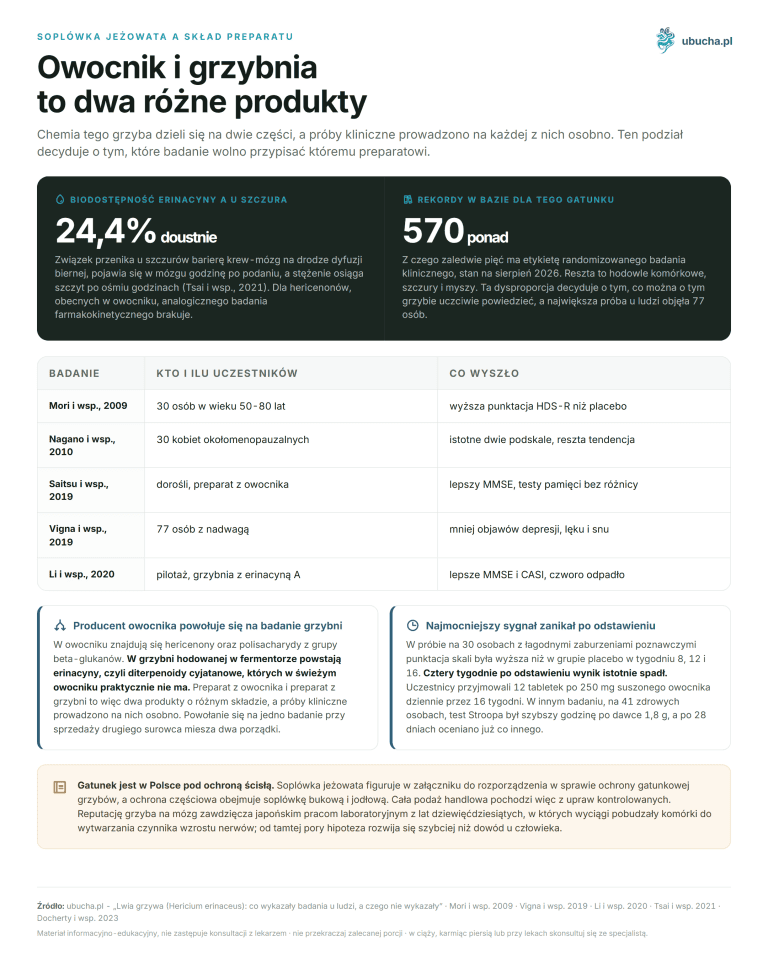
The study by Mori et al. in Biological and Pharmaceutical Bulletin in 2008 is instructive. Ethanol extract of Hericium erinaceus stimulated NGF gene expression in human astrocytoma 1321N1 cells via the JNK kinase pathway. Interestingly, isolated hericenones C, D, and E did not stimulate NGF expression at all.
We noticed Polish texts consistently attribute this effect to hericenones citing this study. The abstract says the opposite: the whole extract was active, and the indicated compounds failed. This illustrates how claims detach from sources and take on a life of their own.
For ashwagandha, the most cited study is Kuboyama’s from British Journal of Pharmacology in 2005. Withanolide A restored axons and dendrites in cultured rat cortical neurons damaged by beta-amyloid and reversed memory deficits in mice. The result concerns cells and rodents, not humans, and does not include BDNF measurement.
The fruiting body versus mycelium distinction has a chemical basis but is sometimes misused commercially. Hericenones are described in the fruiting body, erinacines in mycelium grown on substrate; the latter are smaller molecules favoring brain penetration. However, the 2008 study shows extract activity is not limited to either group.
The only human cognitive function trial has serious limitations: 30 subjects aged 50 to 80, assessed by HDS-R scale instead of standard neuropsychological tests, no biochemical measurements. The effect appeared and disappeared four weeks after discontinuation, suggesting symptomatic action rather than nerve connection rebuilding.
How do adaptogens affect oxidative stress and neuroinflammation?
This is mainly described in cell and animal models via the Nrf2 antioxidant pathway and NF-kB inflammatory pathway. The brain consumes about one-fifth of oxygen despite being 2% of body mass, so the hypothesis of its particular sensitivity to reactive oxygen species is physiologically plausible.
Cordycepin, i.e., 3-deoxyadenosine from Cordyceps mushrooms, was reviewed in 3 Biotech in 2014. Authors describe its anticancer, antioxidant, and anti-inflammatory effects, discussing immune, circulatory, liver, and kidney systems. We read the full text: it contains no neurological human studies, and superoxide dismutase appears as a fungal enzyme protecting spores from radiation, not as a parameter measured in humans taking the preparation. Percent increases of its activity cited in commercial descriptions have no source in this publication.
On the inflammatory side, the most widely described raw material is holy basil. Marc Cohen’s 2014 narrative review in Journal of Ayurveda and Integrative Medicine gathered evidence for its effects on four stress types: physical, chemical, metabolic, and psychological. The review is narrative, not systematic, and cited human studies involved small groups.
The mechanism can be summarized briefly. The transcription factor NF-kB waits in the cytoplasm bound to inhibitory protein IkB. An inflammatory stimulus activates a kinase that phosphorylates IkB, releasing NF-kB to enter the nucleus and activate cytokine genes: tumor necrosis factor alpha and interleukins 1 beta and 6. Elevated levels of these molecules accompany symptoms psychiatry describes as sickness behavior.
Opposing this is Nrf2, which activates antioxidant enzyme genes in response to oxidation. Many plants called adaptogens activate it in cultures, but so do broccoli sulforaphane and curcumin. Nrf2 activation is thus not a unique adaptogen feature but a common property of plant polyphenols and terpenes.
The practical conclusion is cautious. The NF-kB pathway indeed links chronic inflammation with depressive symptoms and is a reasonable research target. Moving from this biology to the statement “reishi reduces brain inflammation” requires data that simply do not exist.
What other molecular pathways have been described beyond these four?
At least three more, all preclinical. The best documented concerns GABA signaling. Mehta et al. showed in Indian Journal of Medical Research in 1991 that methanol extract of ashwagandha root acts GABA-mimetically on the GABA-A receptor complex.
A detail from this study is often distorted. The extract enhanced flunitrazepam binding, i.e., acted on the benzodiazepine site, not bypassing it. In chloride ion influx tests in spinal neurons, effects were blocked by bicuculline and picrotoxin, confirming GABA-A receptor involvement. All measurements were ex vivo.
The second pathway described is monoamine oxidase inhibition by rhodiola components, which would increase serotonin and noradrenaline availability in the synaptic cleft. Data come from enzymatic assays ex vivo but are strong: methanol extract inhibited MAO A by 92.5%, aqueous by 84.3% at 100 micrograms per milliliter (van Diermen et al., Journal of Ethnopharmacology, 2009). These are plate assay numbers, not human blood, but sufficient to seriously consider rhodiola-serotonergic drug interactions. The third pathway concerns mitochondrial biogenesis via PGC-1 alpha, based on cell and animal models.
There are also more speculative claims, e.g., ginseng’s effect on telomerase activity and cellular aging rate. Data come from lymphocyte cultures and lack human study counterparts. Similarly, modulation of the endocannabinoid system is attributed to some plant raw materials.
This pathway overview illustrates the field’s structure well. Many mechanisms are described, biologically plausible and mutually consistent. Almost none have been confirmed by measurements in humans taking the preparation, so descriptions suggesting certainty precede evidence.
There is a pattern easily overlooked. The more detailed the molecular mechanism in a product description, the further it usually is from human studies. Receptor and transcription factor names sound precise but come from experimental systems where the researcher sets compound concentration, not the digestive tract.
Which human studies actually exist?
Seven randomized trials form the real foundation of knowledge on adaptogens and the nervous system. All were small; the shortest lasted two weeks, the longest sixteen. The table below shows dose, duration, and results as reported by authors, without rounding favorably. Each study name links to its abstract.
| Study | Preparation and Dose | Duration and Number of Subjects | Result Reported by Authors |
|---|---|---|---|
| Chandrasekhar 2012 | ashwagandha root extract, 300 mg twice daily | 60 days, n=64 | serum cortisol decrease, p=0.0006; improvement in all stress scales |
| Lopresti 2019 | standardized ashwagandha extract, 240 mg once daily | 60 days, n=60 | morning cortisol decrease, p<0.001; lower HAM-A score, p=0.040 |
| Pingali 2014 | aqueous extract of ashwagandha root and leaves, 500 mg twice daily | 14 days, n=20, crossover design | shorter reaction times in five tests; no effect in finger tapping test |
| Darbinyan 2000 | SHR-5 rhodiola extract, one tablet daily | 2 weeks, n=56 doctors on night shifts | lower fatigue index in the first two-week period |
| Olsson 2009 | SHR-5 rhodiola extract, 576 mg daily | 28 days, n=60 with burnout syndrome | lower cortisol awakening response and burnout scores versus placebo |
| Mao 2015 | standardized rhodiola extract versus sertraline and placebo | 12 weeks, n=57 with mild to moderate depression | no significant difference between groups; adverse effects in 30.0% versus 63.2% on sertraline |
| Mori 2009 | Hericium erinaceus, 12 tablets of 250 mg daily | 16 weeks, n=30 with mild cognitive impairment | higher HDS-R scores at weeks 8, 12, and 16; decline 4 weeks after discontinuation |
Two things stand out when comparing these studies. The largest included 64 people, and the Mao 2015 result was negative for rhodiola versus placebo. The effect in Mori 2009 disappeared after stopping the preparation, suggesting symptomatic rather than structural change.
Which adaptogens have human data and which only preclinical?
The division is sharper than store descriptions suggest. Ashwagandha and rhodiola have randomized trials concerning the nervous system. Other raw materials rely on cell cultures, rodents, or human studies for entirely different indications, e.g., immunological.
| Plant or Mushroom | Active Compounds | Studied Effect on Nervous System | Evidence Quality |
|---|---|---|---|
| Ashwagandha (Withania somnifera) | withanolides, withaferin A | cortisol reduction, less anxiety, shorter reaction times | moderate: several small, short randomized trials |
| Rhodiola rosea | salidroside, rosavins | mental fatigue, depressive symptoms | low: trials with conflicting results, EMA monograph based on tradition |
| Hericium erinaceus | hericenones, erinacines, beta-glucans | NGF induction, mild cognitive impairment | low: one human trial on 30 subjects, rest cultures and rodents |
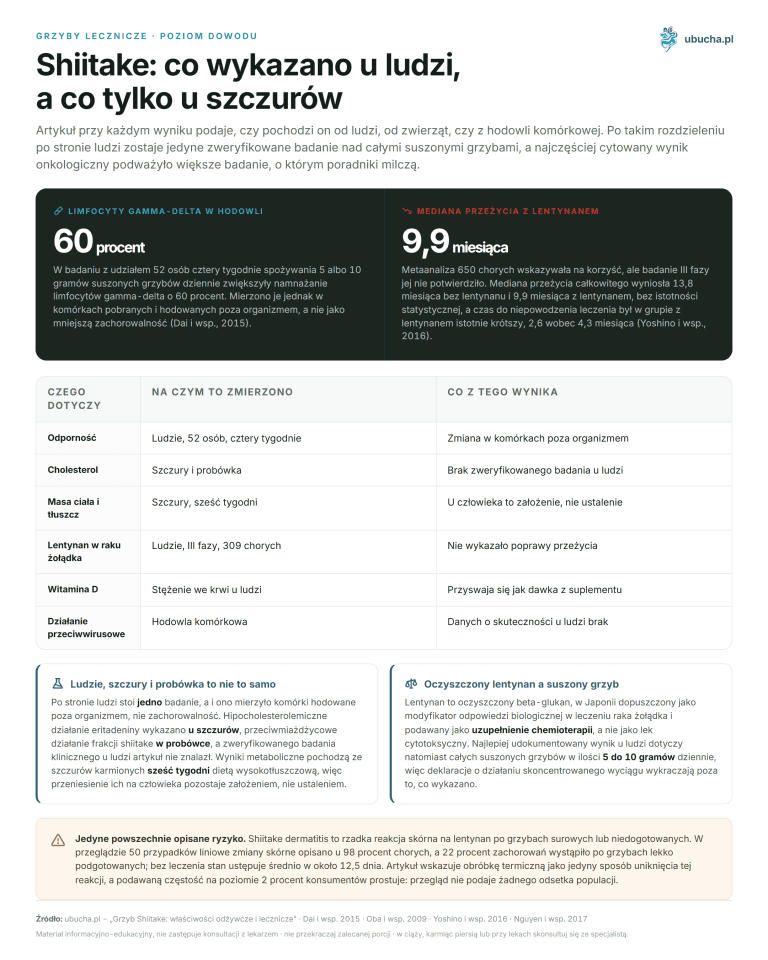
| Reishi (Ganoderma lucidum) | ganoderic triterpenoids, beta-glucans | NF-kB inhibition, fatigue | preclinical for neurology: human trials concern immunity and oncology |
| Cordyceps (C. militaris, C. sinensis) | cordycepin, polysaccharides | antioxidant action, endurance | preclinical: human data mainly on physical performance |
| Holy basil (Ocimum sanctum, tulsi) | rosmarinic acid, eugenol | anti-inflammatory, perceived stress | low: few small trials, narrative review |
| Schisandra chinensis | schizandrins | chaperone protein induction, liver protection | preclinical: no neurological human trials |
| Eleuthero (Eleutherococcus senticosus) | eleutherosides | fatigue resistance | preclinical: few and inconsistent human data |
The number of randomized trials indexed in Europe PMC orders these raw materials differently than store descriptions. As of August 14, 2026: Withania somnifera 76, Rhodiola rosea 65, Cordyceps 54, Eleutherococcus 44, Ganoderma lucidum 43, Schisandra 40, Ocimum sanctum 16, and Hericium erinaceus only 12. These numbers cover all indications, so the 40+ trials on reishi mostly concern oncology and immunology, not neurology.
This difference directly affects purchasing decisions. A mushroom with an impressive number of publications may have no study on memory or mood. If you seek an entry point, it is more sensible to start with a raw material marked moderate in the table. We expand the comparison of the three most popular options in the article which adaptogen to choose for stress.
How to use adaptogens and recognize a good extract?
By standardization, plant part used, and whether the manufacturer provides active substance content at all. The number of milligrams alone means nothing without knowing what it contains. Also know the time frames: none of the described trials exceeded sixteen weeks, and both measuring cortisol lasted sixty days.
Standardization guarantees marker content:
- ashwagandha: percentage of withanolides
- rhodiola: percentage of salidroside and rosavins
- mushrooms: percentage of beta-glucans
Without this number, two 500 mg capsules may differ in active substance content by an order of magnitude. A label without a marker describes powder mass, not preparation strength.
For mushrooms, solvent matters. Beta-glucans dissolve in water, triterpenoids and hericenones in alcohol, so double extraction yields a fuller profile than water alone. The raw material also matters: powder from unfermented mycelium substrate is not the same as fruiting body extract, though labels may look equally impressive.
A label tells you what you want to know if you know where to look. Check the Latin species name, plant part used, extract ratio marked as DER, and marker percentage. A serious manufacturer provides a batch analysis certificate with heavy metals and pesticide residue results. Missing any of these is a red flag.
Loading and rest phase cycles are phytotherapeutic practice, not study conclusions. None of the cited trials tested breaks or lasted longer than sixteen weeks. Caution beyond that window stems from lack of data, not proven receptor desensitization. More on forms and timing is in the ashwagandha dosing guide.
Finally, assess effect by recording two or three specific indicators before starting: number of night awakenings, tension rating on a 1-10 scale, time of afternoon energy drop. Without a baseline, after eight weeks you have only impression, and impressions after spending money tend to be kind to the product.
When do adaptogens harm and what interactions do they have?
More often than the term “natural” suggests. Philips et al. described in Hepatology Communications in 2023 twenty-three cases of liver damage after ashwagandha from 2019 to 2022. In eight patients, the preparation contained only this raw material; three with prior liver disease died.
The clinical picture was cholestatic, with bile stasis, and biopsy showed hepatocyte necrosis with inflammatory infiltrate. In patients without prior liver disease, damage resolved spontaneously but slowly. Risk is rare at the population level but real and clearly higher in those with preexisting liver burden.
Interaction risk mainly arises from effects on cytochrome P450 liver enzymes. Schizandrins from schisandra inhibit CYP3A4, potentially raising levels of drugs metabolized this way, including some statins and immunosuppressants. Reishi has antiplatelet effects, so combining it with anticoagulants requires doctor approval.
A separate warning group concerns metabolic and hormonal diseases. Cordyceps lowers blood glucose, which with antidiabetic drugs may cause excessive drops. Ashwagandha affects the thyroid axis and is described in the context of thyrotoxicosis, so it should not be used without TSH monitoring in hyperthyroidism.
Four situations require a simple no: pregnancy and breastfeeding, under 18 years old, active liver disease, and simultaneous psychiatric medication without doctor knowledge. None of these groups were included in cited studies, so no safety conclusions can be drawn.
A systemic problem looms. Dietary supplements do not undergo drug registration; quality responsibility lies with the manufacturer who registers the product in sanitary registers. Oversight is post-market, based on adverse event reports. For plant raw materials, this means batch variability the consumer cannot verify without an analysis certificate.
How to report a problem? Suspected adverse effects after supplements should be reported to a doctor or pharmacist; for serious symptoms, keep the package with batch number. Jaundice, dark urine, persistent nausea, or right upper quadrant pain after starting supplementation warrant stopping the product and urgent consultation, not waiting it out.
What do these studies mean for someone starting adaptogens?
Reasonable expectations are moderate. Ashwagandha has a reproducible effect on cortisol and perceived stress in trials lasting about two months. This is a real, though small, benefit in a healthy stressed person, not treatment for anxiety or depression.
Other label promises rely on cell biology. Hsp70 induction, NGF stimulation, NF-kB inhibition, and mitochondrial biogenesis are probable mechanisms not measured in humans after capsule intake. Treat them as research directions, not descriptions of what happens in your brain after a week of supplementation.
Practically, this means three decisions. Choose one raw material instead of a blend to know what works. Follow dose and duration from studies, not product descriptions. Stop the preparation if nothing changes after eight weeks instead of increasing dose by feel.
Warning signs in product descriptions are several and easy to spot. A blend of ten raw materials without ingredient doses. Citing molecular mechanisms instead of human results. Promising effects in days for a raw material whose trials lasted two months. Each signals marketing more than capsule content.
Finally, the least flashy but best proven: regular sleep, exercise, and social contact have stronger support in HPA axis research than any described raw material. Supplements add to this foundation but do not replace it.
Frequently Asked Questions
How does an adaptogen differ from a typical stimulant?
A stimulant like caffeine always increases arousal regardless of baseline state. An adaptogen, by Brekhman’s definition, normalizes the stress response. This is a functional, not regulatory definition: the European Medicines Agency treats it as a concept requiring caution, not as an approved indication.
How quickly do adaptogens act on the nervous system?
In human trials, measurement points occurred after 14 days (reaction times, Pingali 2014), after 60 days (cortisol, Chandrasekhar 2012 and Lopresti 2019), and after 8 to 16 weeks (HDS-R scale, Mori 2009). Nothing works within a few hours.
Can adaptogens be combined with antidepressant medications?
Only after consulting the attending physician. Rhodiola extracts strongly inhibit monoamine oxidase in laboratory conditions, which theoretically poses a risk with serotonergic drugs. In the Mao 2015 study, rhodiola performed worse than sertraline but caused significantly fewer side effects, so the authors see it as a standalone option, not an add-on to medication.
Which adaptogen has the most data on memory and concentration?
Ashwagandha, although the data concern reaction times, not memory. Pingali 2014 showed shortened reaction times in 20 healthy men after 14 days. Hericium erinaceus has one human study on mild cognitive impairment in 30 people, with effects fading after discontinuation.
Can adaptogens replace anxiety or depression medications?
No. In the only direct comparison with sertraline, rhodiola showed a smaller decrease in HAM-D scores than the drug and did not differ statistically from placebo (Mao et al., 2015). Discontinuing psychiatric medications without a doctor’s knowledge is dangerous.
Is it necessary to take breaks when using adaptogens?
There is no study resolving this. Cycles with rest phases are a phytotherapeutic practice, not a conclusion from clinical trials. The practical argument is different: trials lasted from 2 to 16 weeks, so beyond that window, safety and efficacy are unknown.
Are adaptogens safe during pregnancy?
There is no data to confirm this, so the answer is no. Pregnant and breastfeeding women were excluded from the cited trials. Additionally, cases of liver damage after ashwagandha in the general population were described in Hepatology Communications.
If you want to compare compositions and standardization of specific preparations, visit the supplements and adaptogens category in the u Bucha store.
This article is informational and educational and does not replace consultation with a physician. If you are pregnant, breastfeeding, taking medications, or have chronic conditions, consult a specialist before using supplements or herbs.
Author: Michał Waluk · Published: 2026-05-11 · Updated: 2026-08-14