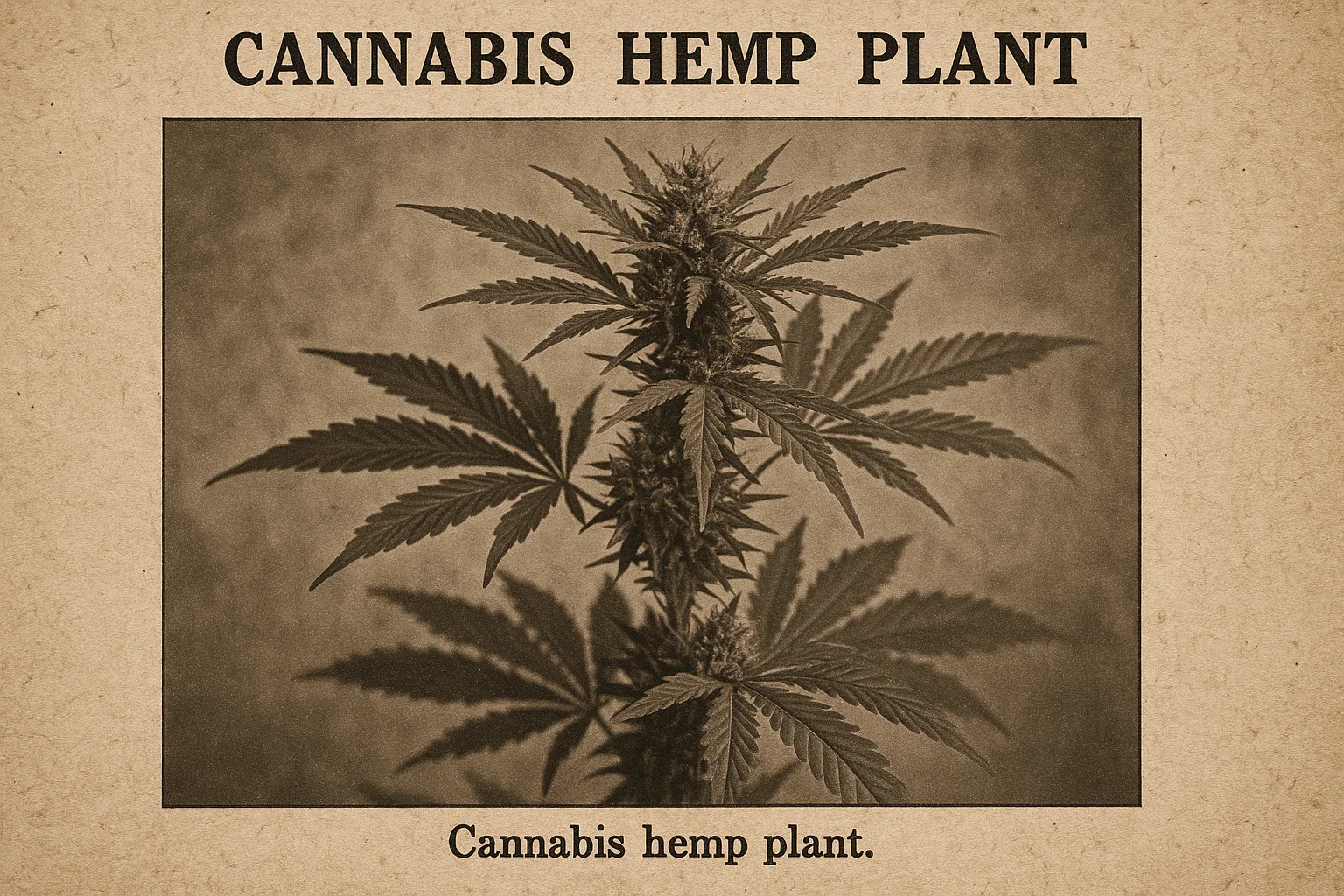

Where the word marijuana comes from: the history of the term (guide)
Where does the word marijuana come from, when it entered English, and why science is returning to the term cannabis. Etymology, testimonies from 1937, and foreign names.
The word “marijuana” has a surprisingly short history. The plant it describes was cultivated in East Asia as early as the Neolithic period, and the Greeks called it “kannabis” hundreds of years before our era. Meanwhile, the term “marijuana” appears in print in English only in 1894, in one American magazine, and no one can say for sure where it came from. It entered common use in the 1930s, not due to botanists, but the anti-drug office. This guide shows what names the plant was called earlier, what is really known about the origin of the word “marijuana”, who popularized it, and why science is returning to the term “cannabis” today.
KEY INFORMATION
• The oldest known record of a word similar to “marijuana” in English print dates back to 1894 (Piper, Sino-Platonic Papers 153, 2005).
• The popular explanation of “Maria and Juana” is probably a secondary sound match, not the source of the word.
• Cannabis sativa was domesticated in the early Neolithic in East Asia (Ren et al., Science Advances 2021).
• In 1937, a lawyer from the American Medical Association testified before Congress that he preferred the word “cannabis” because “marijuana” does not have an established meaning.
What were hemp called before the word marijuana appeared?
Every culture that encountered this plant gave it its own name, and none of them sounded like “marijuana”. An analysis of the genomes of 110 varieties from around the world indicates that Cannabis sativa was domesticated in the early Neolithic in East Asia, and all today’s fiber and intoxicating varieties derive from a common gene pool preserved in Chinese wild populations (Ren et al., Science Advances, 2021).
The Chinese recorded the plant with the characters 大麻 (dà má), literally meaning “great hemp”, emphasizing its fiber-producing role. It is sometimes mentioned among the medicines attributed to the legendary emperor Shennong, but caution is needed here: the herbalist bearing his name was compiled in the early centuries of our era, and authorship from five thousand years ago is a tradition, not a dating.
In ancient India, the plant had three names depending on the part and form: bhang for leaves and seeds, ganja for flowers, charas for hand-harvested resin. The first two have survived to this day. Ganja entered English slang and the Rastafarian culture dictionary, which we discuss in more detail in the post about hemp in religion; bhang is still prepared in India during the Holi festival.
The Greeks adopted the word kannabis (κάνναβις) from the steppe peoples, and from this form comes the Latin cannabis, which Carl Linnaeus described in Species Plantarum in 1753. Herodotus described in the 5th century BC Scythian tents filled with the smoke of burning hemp, and since 2019 this description has chemical confirmation: traces of burned hemp with a high content of psychoactive substances were found in wooden censers from the Jirzankal cemetery in eastern Pamir, dated to around 500 BC (Ren et al., Science Advances, 2019). A fuller overview of the ancient uses of the plant is collected in our post about the history of hemp from prehistory to legalization.
Where does the word marijuana really come from?
It is unknown, and this is not an evasion. The oldest confirmed record of a similar word in English print is “mariguan” in the report “The American Congo” by John G. Bourke, published in Scribner’s Magazine in 1894. Alan Piper’s monograph goes through several competing hypotheses and does not resolve any (Piper, Sino-Platonic Papers 153, 2005).
The most well-known explanation points to the combination of the names Maria and Juana, which in Polish are Maria and Joanna. Piper treats them differently than popular awareness does: in his opinion, “marijuana” is probably a distorted Spanish mejorana or mayorana, meaning marjoram, transformed to sound familiar. Linguists call this mechanism the adaptation of a foreign word to a native sound. Additionally, there is a folk tradition linking the power of herbs with the Virgin Mary, present in the Spanish-speaking culture of America: this is how the name ska Maria Pastora for sage was created.
The second hypothesis looks for roots in China. Piper compares the Chinese ma ren (hemp seeds) and ma hua (intoxicating flowers), from which ma ren hua could be formed. It is worth noting how the author himself formulates this: he writes that such a term, “if it existed”, would mean “flowers of hemp seeds”. He does not claim it is documented, only that it would be the closest phonetic candidate. A stronger premise for him is the Mexican slang oregano chino, meaning “Chinese oregano”, used for hemp and indicating the association of the plant with Chinese immigrants in Mexico at the end of the 19th century.
The last group of hypotheses leads to the Arabic heritage of Spain, and through it to Mexico. Three trails, none conclusive: the most commonly used word for one of the oldest cultivated plants in the world has uncertain etymology.
Who popularized the word marijuana in the United States?
The breakthrough occurred in the 1930s. Harry J. Anslinger, head of the newly established Federal Bureau of Narcotics since 1930, used the word “marijuana” in press releases and congressional testimonies instead of the words “hemp” and “cannabis” known to Americans at the time. Legislative work culminated in the passage of the Marijuana Tax Act in 1937; its history is described in a separate scientific work (Musto, Archives of General Psychiatry, 1972). The choice of the word was not neutral, as it linked the plant to the Mexican border.
That the name change was a tool, not a side effect, is evident in the record of the hearings themselves. William C. Woodward, a lawyer for the American Medical Association and the only witness testifying against the bill, stated outright that he uses the word “cannabis” because it correctly describes the plant, while “marijuana” is a word brought over from the Mexican border and lacks an established meaning (hearing record, 1937).
We have noticed that popular accounts usually end this story with Anslinger’s intent, and the most interesting part is what Woodward said right after. He pointed out that it was the use of the word “marijuana” instead of “cannabis” or “Indian hemp” that caused hemp seed dealers to connect the bill with their industry only at the end of the legislative process. The change in vocabulary not only frightened the public but also cut off from the debate those who could have spoken out substantively. This is the best-documented part of the whole story, as it comes from the protocol, not from later accounts.
Why is science returning to the word cannabis today?
Because it is a taxonomic name, the same since Linnaeus, and does not carry the baggage of the 1930s campaign. The objection to the word “marijuana” is not a contemporary idea: it was raised as early as 1937, in the assembly hall, and by the lawyer of the largest medical organization in the country. Today’s change is therefore a return to the term that the medical community considered appropriate before the law came into effect.
The change of name in scientific texts has a measurable cost: it breaks the continuity of measurements. This has been checked in surveys about substance use among American teenagers and young adults. The authors compared versions of the question with the word “marijuana” and with the word “cannabis” and found that the change affects the reliability of responses to a small extent, so studies can transition to the new vocabulary without breaking time series (Kreslake et al., Substance Use and Misuse, 2026).
In Polish, the situation is different because we have a native word. “Hemp” is older than the borrowed “marijuana” and it is the one that entered legal language. The Act on Counteracting Drug Addiction defines fiber hemp as plants of the species Cannabis sativa L., in which the sum of delta-9-THC and tetrahydrocannabinolic acid (THCA) in flowering or fruiting tops does not exceed 0.3% when calculated on dry mass, rounded to one decimal place. The basis is Article 4 point 5 of the Act of July 29, 2005 (Journal of Laws 2023 item 1939) as amended by the Act of March 24, 2022 (Journal of Laws 2022 item 763). Above this threshold, the same plant is referred to in the law as the herb of hemp other than fiber. In none of these regulations does the word “marijuana” appear: the law operates with two categories of the same plant, separated by the results of laboratory testing. The EU threshold for varieties eligible for support under the Common Agricultural Policy has the same value but is a separate regulation, not the basis for national legislation.
What do other languages call this plant?
Plant names travel with trade, and this one has traveled the world. In Arabic, hashish (حشيش) functions, a word that literally means “herb”; the Polish “hashish” and the German “Haschisch” are direct Arabic borrowings, older in Europe than “marijuana”. In Slavic languages, “hemp” dominates (Russian конопля, Czech konopí), a Proto-Slavic word related to the Greek kannabis. The common root suggests very early contact of Slavs with the plant, probably through steppe cultures.
The clearest trade trace is carried by Brazilian Portuguese. Piper states, citing earlier authors, that the local maconha comes from the Angolan ma’kaña, and Angola was the main source of slave labor for the Portuguese colony. The date is also interesting. In the same year 1894, when the word similar to “marijuana” first appeared in an American magazine, the Indian government completed the work of the Indian Hemp Drugs Commission: nine volumes and 3698 pages about the same plant, consistently called “hemp drugs”. The English-speaking official world did not know the word that would dominate the debate forty years later.
Contemporary slang adds its own layers to this list, often completely unrelated to botany. The most well-known example is described separately in our post about what 420 means and where this date came from.
| Name | Language or culture | Context |
|---|---|---|
| 大麻 (dà má) | Chinese | “great hemp”, fiber and medicinal name |
| bhang, ganja, charas | Sanskrit, Hindi | three names depending on the part of the plant and form |
| κάνναβις (kannabis) | Greek | source of the Latin cannabis and scientific names |
| Cannabis sativa | Latin, taxonomy | Linnaeus 1753, name still in use today |
| hashish | Arabic | literally “herb”; entered Europe before “marijuana” |
| maconha | Brazilian Portuguese | from Angolan ma’kaña, through colonial routes |
| mariguan, marijuana | Mexican Spanish, English | first print 1894; popularization in the 1930s |
Frequently Asked Questions
Where does the word marijuana come from?
It is not established. Alan Piper in his 2005 work presents several hypotheses: a distorted Spanish mejorana (marjoram), an association with the names Maria and Juana, a Chinese trail, and an Arabic one. The author does not resolve any and concludes the text with the statement that the topic requires further philological research.
When did the word marijuana appear in print in English?
The oldest confirmed record is the form “mariguan” in the report “The American Congo” by John G. Bourke in Scribner’s Magazine from 1894, describing plants from above the Rio Grande. The word entered common use only in the 1930s, along with the campaign preceding the Marijuana Tax Act of 1937.
Why do many institutions prefer the word cannabis?
Because it is the scientific name of the species, used since Linnaeus, and does not carry associations introduced by the 1930s campaign. The objection is not new: in 1937, a lawyer from the American Medical Association testified before Congress that he uses the word “cannabis” because “marijuana” does not have an established meaning.
Are hemp and marijuana the same?
Botanically yes, legally no. The Polish law divides the same species according to the results of testing: fiber hemp is defined as plants in which the sum of delta-9-THC and THCA in the tops does not exceed 0.3% of dry mass. Above this threshold, the law refers to the herb of hemp other than fiber. The word “marijuana” does not appear in the regulations.
What were hemp called in ancient times?
The Chinese recorded the plant as 大麻 (dà má), meaning “great hemp”. In India, there were three names depending on the part of the plant: bhang, ganja, and charas, depending on the part of the plant. The Greeks called it kannabis (κάνναβις) and from this form comes the Latin cannabis. All these names are thousands of years older than “marijuana”.
If after this reading you are interested in what is currently hidden in Poland under the name “hemp flower”, we have gathered the assortment in the flower category.
This article is for informational and educational purposes and does not constitute legal advice. The legal status described in the article is valid as of the date of publication: regulations regarding hemp may change. Before making a decision, consult a lawyer or current legal acts.
Author: Michał Waluk · Published: 2026-08-09 · Updated: 2026-08-16