
What are the consequences of possessing marijuana in Poland 2026 (FAQ)
Art. 62 of the Act on Counteracting Drug Addiction, dismissal under art. 62a, entry into the criminal record, and the limit of 0.3% THC. Legal status read at the source, August 2026.
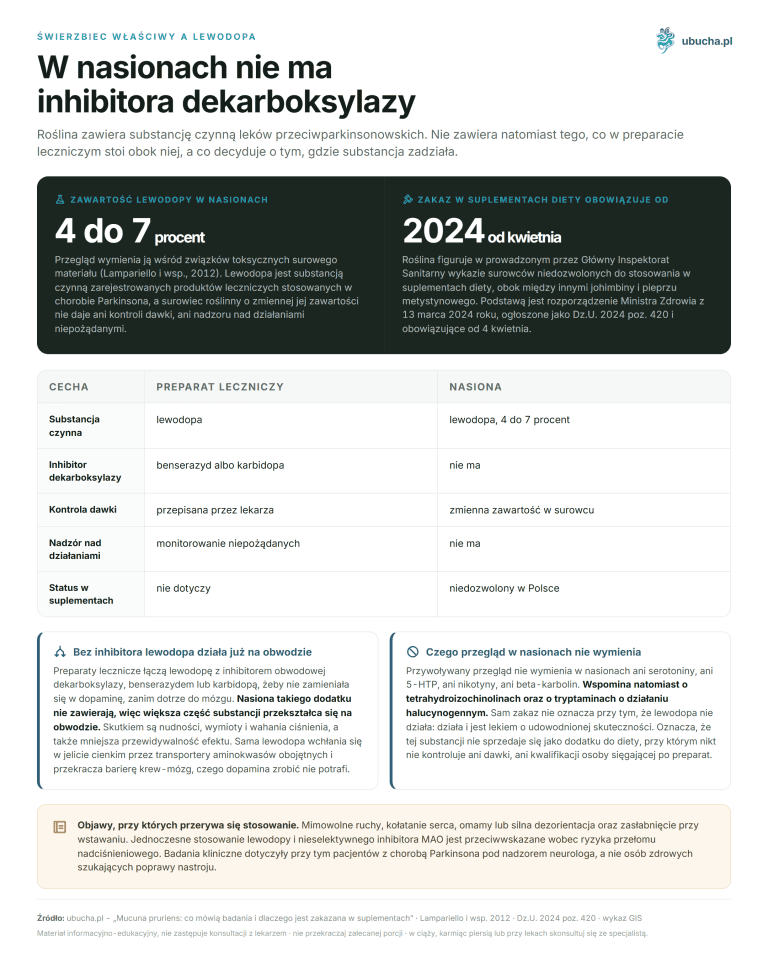
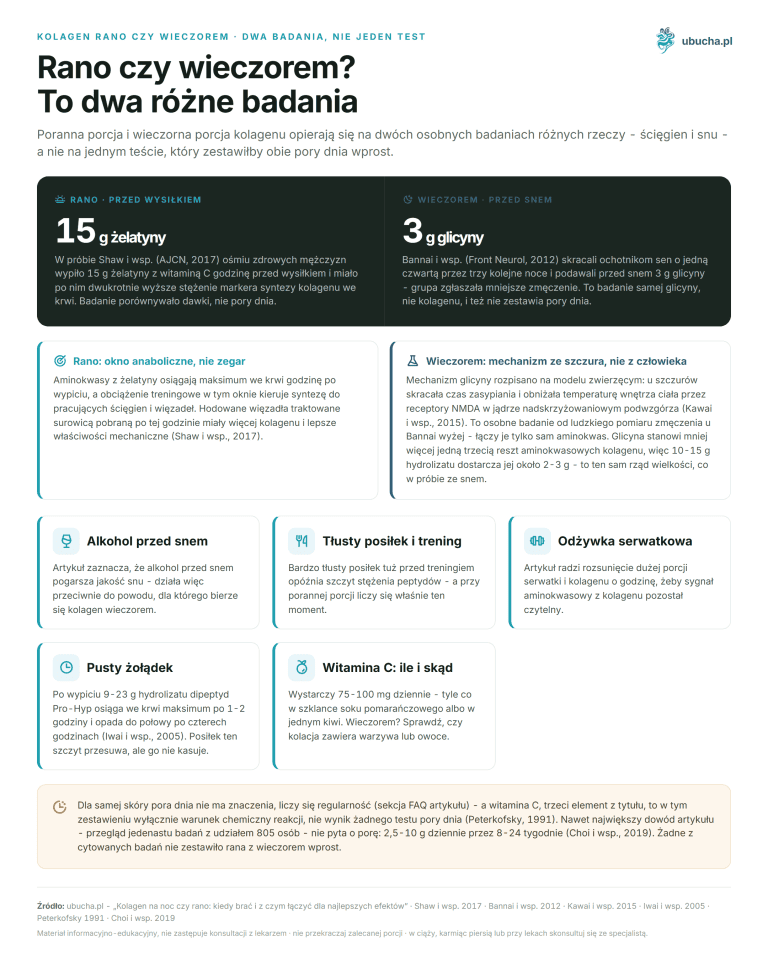
Possessing marijuana in Poland is a crime, not a misdemeanor. The basis is art. 62 of the Act of July 29, 2005 on Counteracting Drug Addiction, whose consolidated text was published as Dz.U. 2023 item 1939. However, the law provides authorities with several intermediate options: dismissal for a minor amount, a lesser offense, suspension of proceedings against an addicted person. Two people detained with a similar amount may therefore emerge from this matter completely differently, as each of these options depends on the authority’s discretion, not on the threshold set in the law. Below you will find the wording of the provisions read in the consolidated text, not summarized from a second hand, along with the signatures under which you can check them yourself. You will also find the answer to the question that is most often asked incorrectly in this topic: what really remains in the criminal record after dismissal.
KEY INFORMATION
• Art. 62 sec. 1 of the Act on Counteracting Drug Addiction provides for a penalty of imprisonment for up to 3 years (Dz.U. 2023 item 1939).
• In the case of a significant amount, the law states “from 1 to 10 years”, not “up to 10 years” - in this type of act, the court has neither a fine nor a restriction of freedom at its disposal.
• Dismissal under art. 62a is the prosecutor’s discretion, not the detained person’s subjective right.
• Conditional dismissal by the court goes into the National Criminal Register; dismissal under art. 62a does not go into it.
• The boundary between hemp flower and marijuana is determined by the sum of delta-9-THC and THCA at the level of 0.3% of dry mass.
What are the consequences of possessing marijuana in Poland in 2026?
Possession of narcotic substances contrary to the provisions of the law is punishable by imprisonment for up to 3 years (art. 62 sec. 1). If the object of the act is a significant amount, the law provides for a penalty of 1 to 10 years (sec. 2). In the case of lesser weight, the perpetrator is subject to a fine, restriction of freedom, or imprisonment for up to 1 year (sec. 3).
The difference between “up to 10 years” and “from 1 to 10 years” is not cosmetic. The lower limit means that in the case of a significant amount, the court has neither a fine nor a restriction of freedom at its disposal, unless it resorts to extraordinary mitigation of the penalty. This error regularly appears in texts about Polish drug law and always in the same direction: it underestimates the real threat.
Marijuana itself does not appear in the lists under that name. The herb of cannabis other than industrial hemp and extracts from such cannabis are listed under item 113 of the list of narcotic substances group I-N, and the resin of cannabis has its own position there. The basis is the regulation of the Minister of Health regarding the list of psychotropic substances, narcotic drugs, and new psychoactive substances, consolidated text Dz.U. 2024 item 1139. Delta-9-tetrahydrocannabinol itself is listed separately as a psychotropic substance.
| Provision | What it concerns | Threat of penalty |
|---|---|---|
| art. 62 sec. 1 | Possession of narcotic substances contrary to the provisions of the law | Imprisonment for up to 3 years |
| art. 62 sec. 2 | Possession of a significant amount | Imprisonment from 1 to 10 years |
| art. 62 sec. 3 | Lesser offense | Fine, restriction of freedom, or imprisonment for up to 1 year |
| art. 62a | Minor amount for personal use, act from sec. 1 or 3 | Proceedings can be dismissed |
| art. 63 sec. 1 | Cultivation of cannabis other than industrial hemp | Imprisonment for up to 3 years |
| art. 55 sec. 1 | Import, export, transport, acquisition, and intra-community delivery | Fine and imprisonment for up to 5 years |
When can the prosecutor dismiss the case based on art. 62a?
Art. 62a allows for the dismissal of proceedings when the object of the act under art. 62 sec. 1 or 3 is narcotic substances in a minor amount intended for the perpetrator’s personal use, and the imposition of a penalty would be ineffective due to the circumstances of the act and the degree of its social harmfulness. The provision states “can be dismissed”. This is the authority’s discretion, not a claim of the detained person.
Two details of this provision are often misrepresented. First, art. 62a does not refer to sec. 2, so in the case of a significant amount, this path does not exist at all. Second, the law states that dismissal can occur “also before the issuance of a decision to initiate an investigation or inquiry”, not “before the indictment is filed”. The word “also” indicates that this possibility does not end with the initiation of proceedings.
The law provides one more option, which is rarely mentioned in guides. Art. 72 sec. 1 allows the prosecutor to suspend proceedings against a person addicted to or harmfully using psychoactive substances, who has been charged with a crime related to the use of a narcotic substance and punishable by a penalty not exceeding 5 years, if they undergo treatment, rehabilitation, or an educational and preventive program. After completion, the prosecutor either continues the case or applies to the court for conditional dismissal. Art. 72 sec. 4 adds that the previous criminal record of the perpetrator does not prevent conditional dismissal. We have described this map of provisions more broadly in the post about what the regulations say about possessing marijuana in Poland.
What does minor and significant amount mean, since the law does not define them?
The law uses both terms and does not define either. In the consolidated text, there is no threshold in grams, nor is there one in the executive regulation. The assessment belongs to the prosecutor, and then to the court, and is made in a specific case based on its circumstances. The same mechanism applies to cultivation: art. 63 sec. 3 speaks of cultivation “that can provide a significant amount”, not the number of plants.
The practical conclusion is less convenient than the reader would like. Any number of grams circulating online as the boundary of a minor or significant amount is a generalization from judicial practice, not the content of a provision. Citing it to an officer or prosecutor does not help, as there is no standard to refer to.
The result is real unpredictability. The same amount can end in dismissal in one proceeding and an indictment in another, as both decisions fall within the authority’s discretion. For comparison, it is worth seeing how differently the legislator described legal cultivation of industrial hemp: there, thresholds and areas are directly stated in the law.
Do dismissal and conditional dismissal leave a mark in the criminal record?
These are two different institutions with two different registration effects. Dismissal of proceedings by the prosecutor based on art. 62a is not listed among the grounds for entry into the National Criminal Register. Conditional dismissal by the court is explicitly mentioned in art. 1 sec. 2 point 2 of the Act on the National Criminal Register, consolidated text Dz.U. 2024 item 276.
We have noticed that it is precisely this statement in marijuana guides that is most often stated incorrectly: it is repeated that conditional dismissal does not leave a mark in the register. It does. Data is removed only after the period specified in art. 68 § 4 of the Penal Code, which is 6 months from the end of the probation period, and the probation period lasts from 1 to 3 years (art. 67 § 1). During this time, a certificate of no criminal record will show the entry, which is significant for jobs requiring such a document.
It is also worth knowing the conditions from art. 66 § 1 of the Penal Code, as they are also often described inaccurately. The court may conditionally dismiss the proceedings if the guilt and social harmfulness of the act are not significant, the circumstances of its commission are not in doubt, and the attitude of the perpetrator not previously convicted of an intentional crime justifies the assumption that they will comply with the legal order. The provision does not require an admission of guilt. Art. 66 § 2, however, closes this path in the case of a crime punishable by a penalty exceeding 5 years, meaning that in the case of art. 62 sec. 2, conditional dismissal is excluded.
What is the difference between legal hemp flower and marijuana in the eyes of the law?
The boundary is determined by the definition in art. 4 point 5 of the Act on Counteracting Drug Addiction. Industrial hemp refers to plants of the species Cannabis sativa L., in which the sum of the content of delta-9-THC and tetrahydrocannabinolic acid in the flowering or fruiting tops, from which the resin has not been removed, does not exceed 0.3% when calculated on a dry mass basis. The sum is rounded to one decimal place.
Two elements of this definition determine the outcome of the laboratory test. The threshold concerns the sum of delta-9-THC and THCA, not just delta-9-THC itself, so a sample with a low content of the active form may still exceed the limit. It refers to the plant, more specifically to its tops, not to the finished product on the shelf. Above this value, we have cannabis other than industrial hemp in the sense of art. 4 point 37, meaning the subject of art. 62.
This definition was established by the Act of March 24, 2022, Dz.U. 2022 item 763, and has been in effect since May 7, 2022; previously, the threshold was 0.20%. EU law uses the same number for a different purpose: art. 4 sec. 4 of Regulation (EU) 2021/2115 recognizes areas of hemp cultivation as qualifying hectares only if the varieties contain a maximum of 0.3% tetrahydrocannabinol, and applies from January 1, 2023. The previous regulation 1307/2013 stated 0.2% and has been repealed. The national threshold therefore corresponds to the EU one, but does not derive from it. We have traced the history of this number separately in the post about where the 0.3% THC limit came from.
Frequently Asked Questions
What penalty is imposed for possessing marijuana in Poland?
Possession of narcotic substances contrary to the provisions of the law is punishable by imprisonment for up to 3 years (art. 62 sec. 1 of the Act on Counteracting Drug Addiction). In the case of a significant amount, the law provides for a penalty of 1 to 10 years, and in the case of lesser weight, a fine, restriction of freedom, or imprisonment for up to 1 year.
Does art. 62a guarantee the dismissal of the case for a small amount?
No. The provision states that the proceedings “can be dismissed”, so it is the authority’s discretion, not a claim of the detained person. It only applies to acts under art. 62 sec. 1 or 3, and the condition is a minor amount for personal use and the ineffectiveness of the penalty due to the circumstances of the act.
How many grams is considered a minor amount of marijuana?
The law does not specify any number, nor does the executive regulation. The assessment is made by the prosecutor, and then the court, in a specific case. Any threshold in grams found on the internet is a generalization from judicial practice and cannot be cited as a provision.
Does conditional dismissal of proceedings go into the criminal record?
Yes. Art. 1 sec. 2 point 2 of the Act on the National Criminal Register lists persons against whom the criminal proceedings have been conditionally dismissed. Data is removed after the period specified in art. 68 § 4 of the Penal Code, which is 6 months from the end of the probation period lasting from 1 to 3 years.
Is possessing legal hemp flower punishable in Poland?
No, if the material fits the definition of industrial hemp from art. 4 point 5 of the Act, meaning the sum of delta-9-THC and THCA in the tops does not exceed 0.3% of dry mass rounded to one decimal place. The result of the laboratory test for the product facilitates clarification during inspections.
What rights does a person detained by the police have?
The detained person must be immediately informed of the reasons for the detention and their rights, including the right to assistance from a lawyer or legal advisor, to make or refuse to make a statement, and to receive a copy of the protocol (art. 244 § 2 of the Code of Criminal Procedure). Contact with a lawyer is allowed upon request, without delay (art. 245 § 1).
Legal hemp flower with a laboratory test confirming content below the statutory threshold can be found in the hemp flower category.
This article is for informational and educational purposes and does not constitute legal advice. The legal status described in the article is valid as of the date of publication: regulations regarding cannabis may change. Before making a decision, consult a lawyer or current legal acts.
Author: Michał Waluk · Published: 2026-08-05 · Updated: 2026-08-11