
Salad with Pear, Blue Cheese and Hemp Oil
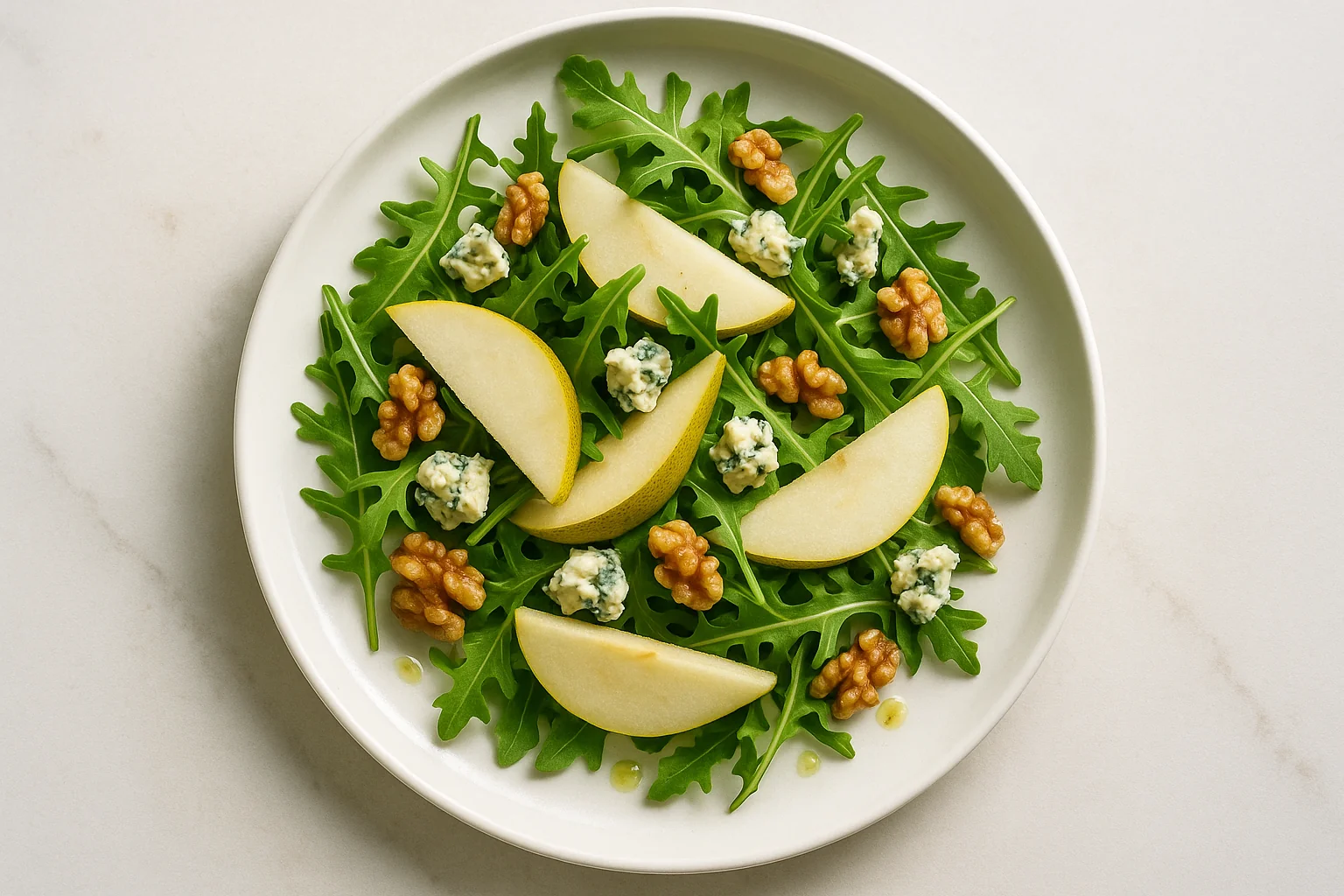
Salad with pear, blue cheese, and walnuts in a dressing made with hemp oil. Recipe for two servings in 10 minutes and the fat composition of this oil.
Pear and blue cheese stand on their own: the sweetness of the fruit tones down the sharpness of the gorgonzola, while toasted walnuts add crunch. The dressing made with cold-pressed hemp oil transforms this appetizer into a dish with character. The nutty note of the oil complements both the fruit and the cheese, and the oil itself has one of the most favorable fatty acid profiles among edible oils. The whole thing comes together in 10 minutes, without an oven and without special equipment. Below you will find proportions for two servings, the order of steps, and a thing that most recipes overlook: why this oil should not be heated and how its composition compares to olive or rapeseed oil. At the end, five questions that often arise with this combination.
KEY INFORMATION
• Hemp oil is over 80% polyunsaturated fatty acids, and its omega-6 to omega-3 ratio usually falls between 2:1 and 3:1 (Callaway, Euphytica, 2004).
• This same composition makes it prone to oxidation, so use it only cold.
• For comparison: olive oil has this ratio at about 13:1, and rapeseed oil at about 2:1 (USDA FoodData Central).
• The dressing will last in the fridge for up to 5 days, but dress the salad just before serving.
What does hemp oil bring to the dressing for pear and cheese?
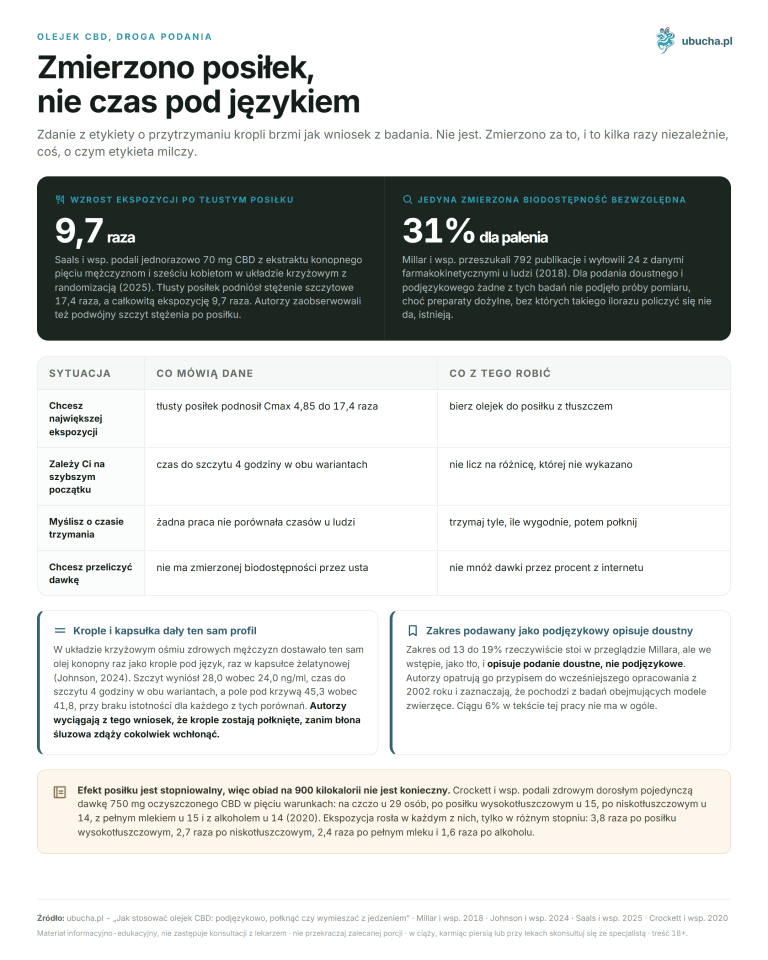
Three things at once: a nutty flavor that resonates with walnuts and breaks the sharpness of the cheese, a liquid consistency without the need for emulsifying, and a fat profile that olive oil cannot replicate. This last point is the only measurable aspect, and it is precisely on this that most common claims about this oil are based.
The measurement comes from a review by Callaway (Euphytica, 2004). Hemp seed oil contains over 80% polyunsaturated fatty acids, and its omega-6 to omega-3 ratio usually ranges from 2:1 to 3:1. The author calls this range optimal for humans, and this is his own assessment, formulated in this very work. It circulates online as an alleged limit of 4:1 established by WHO, while Callaway does not mention any institution or the value of 4:1 itself.
Separately, the question arises whether the ratio itself matters. Simopoulos (Nutrients, 2016) describes that in Western diets, it has shifted from about 1:1 over the course of evolution to 20:1 or higher, and he links this shift to an increased risk of obesity. The work is a review, not an experiment, so treat it as a description of a trend, not proof that one salad reverses anything.
How does hemp oil compare to olive and rapeseed oil?
In terms of the omega-6 to omega-3 ratio, hemp oil performs significantly better than olive oil, but comparably to rapeseed oil. This distinction is often lost in most recipes, and it is fair: rapeseed has this parameter at a similar level, and it costs significantly less.
| Fat | omega-6 (LA) | omega-3 (ALA) | ratio | source |
|---|---|---|---|---|
| hemp oil | - | - | 2:1 to 3:1 | Callaway 2004 |
| shelled hemp seeds | 27.4 g | 8.68 g | about 3:1 | USDA, record 170148 |
| olive oil | 9.76 g | 0.76 g | about 13:1 | USDA, record 171413 |
| rapeseed oil | 18.6 g | 9.14 g | about 2:1 | USDA, record 172336 |
The values given in grams refer to 100 g of the product and come from the USDA FoodData Central database, from records with the specified numbers (170148, 171413, 172336). For hemp oil itself, this database does not maintain a reference record, so we take its proportions from Callaway’s work, and the row with seeds stands as a direct measurement. The advantage of hemp oil over olive oil is real. The advantage over rapeseed comes down to flavor, not numbers.
A similar dressing also leads the flavor in colorful vegetable salad with hemp dressing, where instead of fruit, it is balanced by the acidity of raw vegetables.
What do you need for two servings?
Eight ingredients and a quarter of an hour. Everything except the hemp oil can be bought at a regular store, and the proportions below yield two full servings of the main salad or four appetizer servings.
- 2 ripe pears, about 300 g in total, conference or williams variety
- 60 g blue cheese: gorgonzola, roquefort or stilton
- 2 large handfuls of arugula or mixed greens, about 80 g
- a handful of walnuts, about 30 g
- 2 tablespoons of cold-pressed hemp oil
- 1 tablespoon of balsamic vinegar or lemon juice
- 1 teaspoon of honey
- salt, freshly ground pepper
- optionally 2 tablespoons of shelled hemp seeds for sprinkling
When it comes to the oil, one thing matters: it must be cold-pressed and unrefined, in a dark bottle, with a pressing date on the label. Refined oil loses its nutty flavor, which is exactly what we are adding it for. After opening, keep the bottle in the fridge and use it within a few weeks.
Choose pears that yield slightly under pressure near the stem. Hard ones will not release juice, while overripe ones will fall apart when sliced. Buy cheese in a block, not sliced: hand-crumbling gives irregular edges that hold the dressing better.
How to assemble this salad step by step?
Six steps, of which only one requires attention. Toasting the nuts takes less time than you think, and burnt nuts will spoil the entire portion, so keep an eye on the pan instead of wandering off to other ingredients.
- Pour 2 tablespoons of hemp oil into a jar. Add balsamic vinegar, honey, salt, and pepper. Screw on the lid and shake for 20 seconds. Taste: if the dressing is too sharp, add a bit more honey. You can prepare it up to 5 days in advance and keep it in the fridge.
- Place walnuts in a dry pan. Toast over medium heat for 3-4 minutes, stirring every half minute. Remove from heat when they start to turn golden and smell fragrant. They will continue to cook on the hot pan for a moment, so do not wait for a dark color.
- Wash the pear and slice it into pieces about 5 mm thick or into quarters. Do not peel the skin: for a ripe fruit, it is not tough, and it adds color and fiber. If the flesh browns quickly, drizzle it with lemon juice.
- Rinse the arugula and dry it thoroughly. Wet leaves dilute the dressing and slide off the fork. Crumble the blue cheese in your hands into irregular pieces, preferably larger than smaller.
- On two plates, lay out the arugula. Arrange the pear slices, pieces of cheese, and toasted nuts. Drizzle the dressing evenly just before serving.
- Optionally, sprinkle each serving with a tablespoon of shelled hemp seeds and serve immediately.
How many calories does this serving have and what does it provide?
One serving is approximately 400-430 kcal, most of which comes from three fatty ingredients: oil, cheese, and nuts. This is an estimate calculated from the ingredient list above, not a reading from any database, as the database does not know your pear or how generously you crumble the cheese.
The oil accounts for about one-third of this value. Plant fats have an energy density of nearly 9 kcal per gram and contain virtually nothing but fat, so one tablespoon of any oil is about 120 kcal and nearly 14 g of fat. The rest of the calories are distributed among the cheese, nuts, and sugars from the pear.
The salad is naturally gluten-free. Arugula provides vitamin K, cheese provides calcium and protein, and the pear with nuts provides fiber. If you add a tablespoon of shelled hemp seeds, you add a portion of magnesium: in record USDA 170148, the seeds have 700 mg per 100 g, which is about 70 mg per added tablespoon. The fat from the dressing helps absorb fat-soluble vitamins, which the body utilizes less in the salad without oil.
What can replace blue cheese or pear?
Almost every element of this salad has a reasonable substitute. The only constant is the dressing principle: oil cold, something acidic, something sweet. The rest depends on what you have and whom you are feeding.
- Camembert or brie instead of blue cheese gives a milder and creamier version for those who do not like the sharpness of gorgonzola.
- In a vegan version, replace the cheese with slices of avocado or cashews soaked for an hour in salted water, and honey with maple syrup.
- In fig season, add two fresh figs cut in half. Their graininess pairs well with pear.
- Instead of pear, orange segments work well, just like in salad with orange and hemp seeds. The acidity of the citrus then replaces part of the vinegar.
- The same dressing also works on roasted vegetables, for example in salad with beetroot and feta.
However, the most common mistake does not concern the ingredients, but the timing. Dressed in advance, arugula wilts in 20-30 minutes because the acid from the vinegar and the fat disrupt the leaf structure. Add the dressing directly before eating or serve it separately in a bowl and let everyone drizzle it themselves.
Frequently Asked Questions
Why does hemp oil pair well with pear and blue cheese?
Because its nutty, slightly grassy flavor sits perfectly between the sweetness of the fruit and the saltiness and sharpness of the cheese. Additionally, it contains over 80% polyunsaturated fatty acids with an omega-6 to omega-3 ratio of 2:1 to 3:1 (Callaway, Euphytica, 2004), which olive oil in this composition cannot replicate.
Can hemp oil be heated?
No. Over 80% of its fatty acids are polyunsaturated (Callaway, Euphytica, 2004), and these bonds oxidize the fastest under the influence of heat, light, and oxygen. Use it only cold: in dressings or drizzled over finished dishes. For frying, choose another fat.
Which blue cheese works best?
Gorgonzola dolce is the mildest and pairs well with sweet conference or williams pears. Roquefort and stilton have sharper flavors, so it’s better to combine them with firmer, less ripe fruit and a bit more honey in the dressing. Each of these cheeses brings calcium and protein.
How many calories are in one serving of this salad?
About 400-430 kcal based on the proportions from this recipe. This is an estimate calculated from the ingredient list, not a reading from a database. The largest contributions come from the oil, cheese, and walnuts. One tablespoon of oil is about 120 kcal, as plant fats provide nearly 9 kcal per gram.
How long can the dressing and cut ingredients be stored?
The dressing in a sealed jar will last in the fridge for up to 5 days; shake before use as it separates. Eat the cut pear the same day and keep it drizzled with lemon juice. Do not prepare the assembled salad in advance: dressed arugula wilts in 20-30 minutes.
This article is for informational and educational purposes and does not replace consultation with a doctor. If you are pregnant, breastfeeding, taking medications, or have chronic conditions, consult a specialist about the use of supplements or herbs.
Author: Michał Waluk · Published: 2026-06-22 · Updated: 2026-08-16