
CBD Drug Interactions - Complete Warning List 2026
CBD inhibits CYP2C19, CYP2C9, CYP3A, and CYP1A2 but not CYP2D6. Check which drugs this matters for and what to ask your doctor before combining.
Cannabidiol enters the cart as a supplement and the body as a substance altering the metabolism rate of other drugs. In a study involving eighteen healthy adults, a CBD-predominant extract increased exposure to omeprazole by 207% and to losartan by 77%. This is not a test-tube result or a hypothesis but a measurement in humans. This guide shows which liver isoenzymes cannabidiol actually inhibits, with which drugs this matters, and what is still unknown. You will also find a statement repeated by the European Food Safety Authority since 2026: cannabidiol safety cannot be established in people taking medications. It changes the starting point of the entire discussion about combining them.
KEY INFORMATION
• In eighteen healthy adults, a CBD-predominant extract most strongly inhibited CYP2C19, then CYP2C9, followed by CYP3A and CYP1A2 (Bansal et al., Clinical Pharmacology and Therapeutics, 2023).
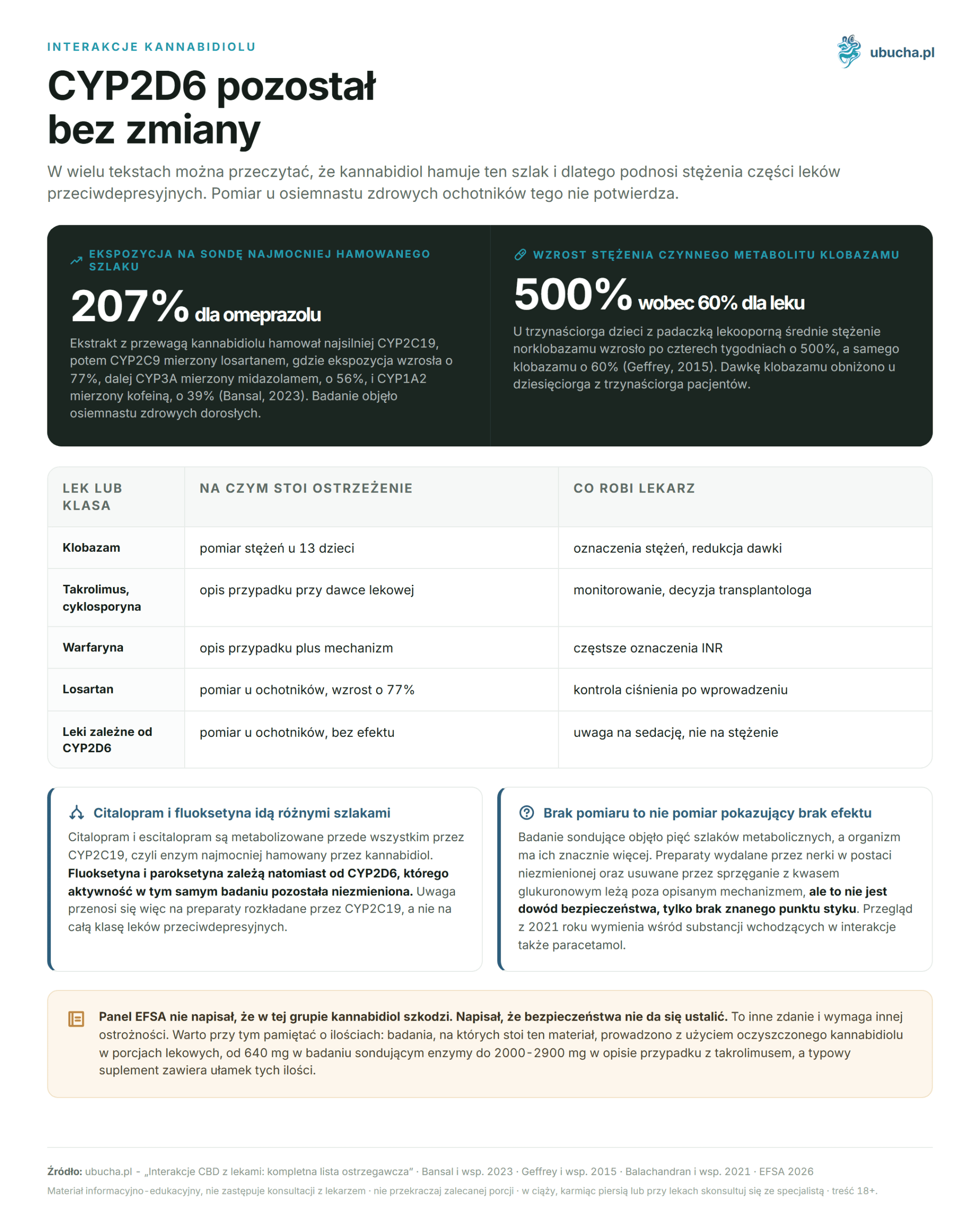
• The same extract did not change CYP2D6 activity at all, so the often-repeated warning about this pathway is not supported by measurement.
• Exposure to omeprazole increased by 207%, losartan by 77%, midazolam by 56%, caffeine by 39%.
• In children combining cannabidiol with clobazam, norclobazam concentration increased on average by 500% (Geffrey et al., Epilepsia, 2015).
• The EFSA panel states that cannabidiol safety cannot be established in people taking medications (EFSA Panel on Nutrition, 2026).
How does CBD affect cytochrome P450 activity?
Cannabidiol is both a substrate and an inhibitor of liver enzymes from the cytochrome P450 family. It is metabolized by CYP2C19 and CYP3A4, while simultaneously slowing the activity of several drug-metabolizing pathways (Stout and Cimino, Drug Metabolism Reviews, 2014). The effect is simple: the drug remains in the blood longer than its dosing predicts.
Cytochrome P450 is a family of enzymes responsible for biotransformation of foreign substances. Most oral drugs undergo first-pass metabolism, where these enzymes oxidize or demethylate the molecule preparing it for excretion via bile or urine. Blocking one of them does not change the number on the package but how much substance actually circulates in the body.
A regulatory data review describes cannabidiol as involved in interactions on both sides: once as the cause, once as the victim of another’s influence (Brown and Winterstein, Journal of Clinical Medicine, 2019). The same work points out that P-glycoprotein, a transport protein removing drugs from intestinal and kidney cells, also matters. Both mechanisms act simultaneously with tacrolimus.
The authors note that adverse effects occurred in nearly half of cannabidiol users, with a visible dose-dependence. The most common include increased aminotransferase activity, drowsiness, and sleep disturbances. These symptoms are easily attributed to the underlying disease or fatigue, not an over-the-counter product.
Which isoenzymes does CBD inhibit, and which does it not inhibit at all?
The answer was measured in humans, not derived from test tubes. Eighteen healthy adults received alternately a cookie with hemp extract and then a set of drugs probing five metabolic pathways (Bansal et al., Clinical Pharmacology and Therapeutics, 2023). The CBD-predominant extract inhibited four of them. The fifth, CYP2D6, was not inhibited at all.
The inhibition strength order was: strongest CYP2C19, then CYP2C9, then CYP3A, weakest CYP1A2. An extract containing only tetrahydrocannabinol, without cannabidiol, did not inhibit any of these pathways. This distinction is practically important because it shows that cannabidiol, not hemp extract per se, is responsible for the effect.
| Isoenzyme | Probe Drug | Exposure Increase | Examples of Drugs in This Pathway |
|---|---|---|---|
| CYP2C19 | omeprazole | 207% | clobazam, citalopram, escitalopram, clopidogrel |
| CYP2C9 | losartan | 77% | warfarin, phenytoin, ibuprofen |
| CYP3A | midazolam | 56% | tacrolimus, atorvastatin, amlodipine |
| CYP1A2 | caffeine | 39% | theophylline, olanzapine |
| CYP2D6 | dextromethorphan | no change | metoprolol, tramadol, fluoxetine |
The CYP2D6 result is worth remembering separately because texts about cannabidiol often claim the opposite. In this study, CYP2D6 activity remained unchanged, so drugs dependent solely on this pathway are not the main concern. This caveat applies only to pharmacokinetics, as overlapping central nervous system effects remain a separate issue.
Why is the 2014 risk assessment insufficient today?
A systematic review from 2014 summarized that cannabinoid enzyme inhibition and induction generally carry a low risk of clinically significant interactions but immediately noted a lack of human data (Stout and Cimino, Drug Metabolism Reviews, 2014). This statement still circulates as evidence of safety, though it contains its own limitation.
Over the next decade, the picture changed not due to new theories but new measurements. Registration studies of purified cannabidiol in children with drug-resistant epilepsy, case reports from transplantation, and a study probing five metabolic pathways in healthy volunteers appeared. Each measured something unavailable to the 2014 review.
Already in 2017, a cannabidiol safety review directly indicated the need for more studies on its effect on liver enzymes and drug transporters (Iffland and Grotenhermen, Cannabis and Cannabinoid Research, 2017). The authors noted that cannabidiol’s adverse effect profile compares favorably to drugs used for the same indications. The question of co-administration was left open.
A 2021 review gathered described interactions in one place, listing antiepileptics, antidepressants, opioid analgesics, and unexpected substances like paracetamol and alcohol (Balachandran et al., Journal of General Internal Medicine, 2021). The authors’ conclusion is cautious: the list must be known, and its clinical significance studied in controlled trials.
Do other drugs change cannabidiol’s action?
Yes, and this direction is often overlooked. Cannabidiol is involved in interactions not only as a cause but also as a target of other drugs (Brown and Winterstein, Journal of Clinical Medicine, 2019). Since it is metabolized by CYP3A4 and CYP2C19, anything altering these enzymes’ activity also changes its concentration.
A systematic review cites a pharmacokinetic study with ketoconazole, a strong CYP3A4 inhibitor, and a hemp extract used on the oral mucosa (Stout and Cimino, Drug Metabolism Reviews, 2014). The authors consider this study’s result confirmation that CYP3A4 is an important metabolic route for both tetrahydrocannabinol and cannabidiol.
The same review notes something opposite with omeprazole. The lack of interaction between cannabidiol extract and omeprazole is interpreted as a signal that CYP2C19’s role in cannabidiol metabolism is less significant. The enzyme most strongly inhibited by cannabidiol is not necessarily the one removing it.
Practically, this means two situations. A drug inhibiting CYP3A4 raises cannabidiol concentration, pushing it toward adverse effects despite unchanged product labeling. A drug inducing this enzyme, like some antiepileptics and antituberculars, lowers its concentration, so the supplement stops doing what it was bought for.
What is a narrow therapeutic window and why does it determine risk?
A narrow therapeutic window means the difference between effective and toxic concentration is small. For such drugs, even moderate exposure changes translate into symptoms, not just lab results. Thus, the same metabolic change may be insignificant for one drug and dangerous for another.
This group includes warfarin, tacrolimus, cyclosporine, clobazam, phenytoin, and lithium. Each has its own monitoring protocol: INR for warfarin, blood drug levels for tacrolimus and cyclosporine, serum levels for phenytoin, and lithium levels for lithium therapy. These protocols exist independently of cannabidiol and must be integrated with it.
For comparison, proton pump inhibitors have a wide safety margin, so the 207% exposure increase for omeprazole is large but rarely symptomatic (Bansal et al., Clinical Pharmacology and Therapeutics, 2023). The same mechanism applied to clobazam causes drowsiness and balance disorders due to a much narrower margin.
The practical consequence is one. The list of drugs warranting caution before adding cannabidiol depends not on drug popularity but on margin narrowness. Patients lack tools to assess this themselves, as it requires knowledge of the entire treatment scheme and current test results.
What is known about combining CBD with warfarin?
Only as much as a single case report and mechanism state. The authors present an interaction between warfarin and cannabidiol, discuss both substances’ metabolism, and conclude that INR monitoring is needed after adding cannabinoids (Grayson et al., Epilepsy and Behavior Case Reports, 2018). No controlled study has tested this combination.
The mechanism aligns with healthy volunteer measurements. The more potent warfarin enantiomer, S-warfarin, is metabolized by CYP2C9. This pathway showed a 77% increase in losartan exposure with cannabidiol in the probe study (Bansal et al., Clinical Pharmacology and Therapeutics, 2023). Slowed S-warfarin metabolism prolongs anticoagulant effect and raises INR.
Newer anticoagulants are not exempt. Rivaroxaban and apixaban are substrates of CYP3A4 and P-glycoprotein, both listed as cannabidiol targets (Brown and Winterstein, Journal of Clinical Medicine, 2019). The difference is that routine monitoring is not performed for these drugs, so symptom observation remains.
Low molecular weight heparins and fondaparinux are not metabolized by cytochrome P450, so pharmacokinetic interaction with cannabidiol is unlikely. This does not mean the topic disappears. Patients on any anticoagulant should inform their doctor about supplementation, as bleeding symptoms are always assessed in the treatment context.
How does CBD change clobazam concentration?
The best-documented cannabidiol interaction concerns clobazam. In thirteen children with drug-resistant epilepsy taking both drugs, average clobazam concentration increased by 60% after four weeks, and norclobazam, its active metabolite, by 500% (Geffrey et al., Epilepsia, 2015). Variability was large but the direction clear.
The mechanism explains this asymmetry. Clobazam is demethylated to norclobazam, which is further cleared by CYP2C19. Since cannabidiol most strongly inhibits this pathway, the metabolite accumulates faster than the parent drug. The clinical effect is drowsiness and impaired coordination, resembling benzodiazepine overdose.
The research team’s practice shows what was done. Clobazam dose was reduced in ten of thirteen patients, and adverse effects occurred in the same number, resolving after dose reduction. Simultaneously, nine participants had seizure frequency reduced by over half, so the authors do not discourage the combination but demand concentration monitoring.
The takeaway for over-the-counter readers differs from neurologists. Patients receiving purified cannabidiol as treatment have controlled concentrations and dose adjustment options. Those adding hemp oil to antiepileptic therapy on their own have neither. More on therapy is in the article about CBD in drug-resistant epilepsy.
Does CBD burden the liver with valproate?
The liver signal is real and visible in registration studies. In a Lennox-Gastaut syndrome trial with 225 participants aged 2 to 55, elevated aminotransferase activity occurred in 14 taking cannabidiol, i.e., 9% (Devinsky et al., New England Journal of Medicine, 2018). Adverse effects also included drowsiness and decreased appetite.
An earlier Dravet syndrome trial showed a similar picture. Abnormal liver tests were more frequent in the cannabidiol group than placebo (Devinsky et al., New England Journal of Medicine, 2017). Both used medicinal doses calculated per patient weight, not amounts found in supplements.
A regulatory data review places increased aminotransferase activity first among common cannabidiol adverse effects (Brown and Winterstein, Journal of Clinical Medicine, 2019). The EFSA panel goes further, stating animal studies show consistent liver toxicity, and in humans hepatotoxic potential appears especially with concomitant drugs (EFSA Panel on Nutrition, 2026).
Valproate itself burdens the liver, so combining both substances acts in the same direction. The frequency of liver tests is decided by the attending physician. Yellowing of whites, dark urine, or right upper quadrant pain warrant contact without waiting for scheduled check-ups.
What did the tacrolimus case in a transplant patient show?
It was the first documented clinically significant interaction case between purified cannabidiol and tacrolimus. A clinical trial participant with epilepsy taking tacrolimus had about a threefold increase in tacrolimus concentration normalized to dose when receiving 2000-2900 mg cannabidiol daily (Leino et al., American Journal of Transplantation, 2019).
This magnitude must be emphasized because it is easy to misapply. These are medicinal amounts, many times higher than cannabidiol content in typical supplements. The case proves the mechanism works and can be dangerous but does not say what happens at amounts found in over-the-counter products. That has not been studied.
The mechanism is dual. Tacrolimus is metabolized by CYP3A4 and transported by P-glycoprotein, both listed as cannabidiol targets (Brown and Winterstein, Journal of Clinical Medicine, 2019). Blocking one raises concentration; blocking both raises it faster than enzyme inhibition alone suggests.
High tacrolimus concentrations cause nephrotoxicity, tremors, headaches, and hypertension. Cyclosporine and sirolimus share similar pathways. Transplant patients take immunosuppressants lifelong, so any addition modulating CYP3A4 requires discussion with a transplant specialist, not forum opinions.
Does CBD affect statins and other cholesterol-lowering drugs?
Atorvastatin and simvastatin are mainly metabolized by CYP3A4, the pathway that increased midazolam exposure by 56% in the probe study (Bansal et al., Clinical Pharmacology and Therapeutics, 2023). No study directly measured statin concentration changes after adding cannabidiol. This is mechanistic inference, not measurement.
Why does it matter? Higher statin concentration raises myopathy risk, i.e., muscle pain and weakness, and in severe cases rhabdomyolysis with kidney damage. Symptoms are nonspecific and easily mistaken for fatigue or joint issues in older adults. This is why the topic recurs in discussions about CBD oil for seniors.
Not all statins behave the same. Pravastatin and rosuvastatin depend less on CYP3A4, so theoretically are less susceptible. Switching is a cardiology decision based on cardiovascular risk profile, not metabolism chemistry alone.
Other cholesterol-lowering drugs have various elimination routes. Ezetimibe undergoes mainly glucuronidation, not cytochrome P450. PCSK9 inhibitors are subcutaneous proteins and do not pass through this system. Data on fibrates are too sparse to conclude, so caution remains standard.
Does CBD enhance benzodiazepine and opioid effects?
Two independent mechanisms act here, easily confused. The first is pharmacokinetic: alprazolam, midazolam, and triazolam are CYP3A4 substrates, and diazepam also CYP2C19, the pathway most strongly inhibited by cannabidiol (Bansal et al., Clinical Pharmacology and Therapeutics, 2023). The second is pharmacodynamic, summing central nervous system depressant effects.
A regulatory data review lists drowsiness and sleep disturbances among the most common cannabidiol adverse effects (Brown and Winterstein, Journal of Clinical Medicine, 2019). Adding these to a sedative drug produces an effect invisible in lab results but real in driving ability and fall risk in the elderly.
Not all benzodiazepines behave the same. Lorazepam and oxazepam are eliminated by glucuronidation, not cytochrome P450, so pharmacokinetic pathways do not apply. Sedation risk remains due to additive effects, not metabolism changes.
For opioids, the picture is similar but less studied. A cannabidiol interaction review lists opioid analgesics among classes with described mutual influence (Balachandran et al., Journal of General Internal Medicine, 2021). Tramadol is a CYP2D6 substrate, and cannabidiol did not inhibit this pathway, so the main concern is overlapping sedation, not concentration changes.
What about antidepressants and the CYP2D6 claim?
Distinguishing pathways changes the whole assessment. Citalopram and escitalopram are mainly metabolized by CYP2C19, the enzyme most strongly inhibited by cannabidiol (Bansal et al., Clinical Pharmacology and Therapeutics, 2023). Fluoxetine and paroxetine depend on CYP2D6, whose activity remained unchanged in the same study.
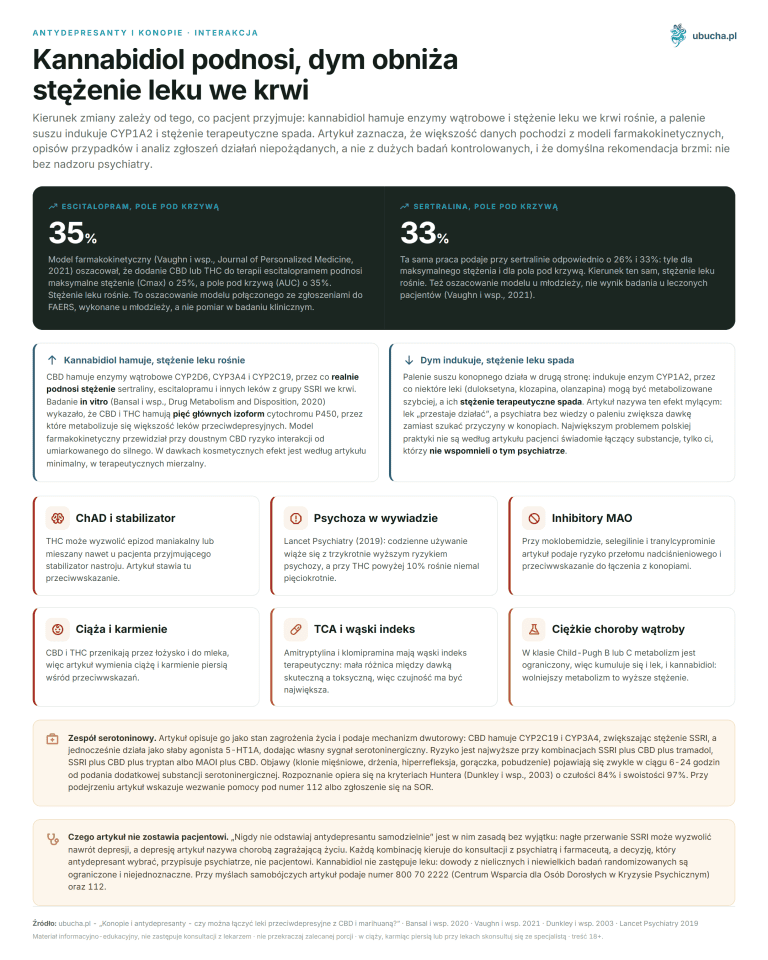
This reverses a popular simplification. Many cannabidiol texts claim it inhibits CYP2D6 and thus raises concentrations of antidepressants dependent on this pathway. Healthy volunteer measurements do not confirm this. Attention shifts to drugs metabolized by CYP2C19, not the entire class.
A 2021 interaction review lists antidepressants among classes with described cannabidiol mutual influence but notes most reports require confirmation in controlled studies (Balachandran et al., Journal of General Internal Medicine, 2021). The direction is known, scale unknown. The topic is expanded in the article about cannabis and antidepressants.
Tricyclic antidepressants, used more for neuropathic pain than depression today, stand apart. They have a narrow therapeutic window and QT interval prolongation risk, with metabolism shared among several pathways including CYP2C19. Assessment here belongs to the doctor, including ECG monitoring.
Can antihypertensives be combined with CBD?
One of these drugs was a probe in the study, so the answer is very specific. Losartan was used to measure CYP2C9 activity, and its exposure increased by 77% after a cannabidiol-predominant extract (Bansal et al., Clinical Pharmacology and Therapeutics, 2023). This drug is used chronically by millions, not an exotic hospital preparation.
Calcium channel blockers, i.e., amlodipine, diltiazem, and verapamil, are mainly metabolized by CYP3A4. This pathway responded with a 56% midazolam exposure increase in the same study. Elevated concentration may cause excessive blood pressure drop, ankle edema, or dizziness upon standing.
Beta-blockers behave variably, and here the CYP2D6 result helps. Metoprolol and carvedilol depend largely on this pathway, which cannabidiol did not inhibit, so pharmacokinetic risk is less than older reports suggest. Atenolol is almost entirely renally excreted, so outside this mechanism.
Another thread is cannabidiol’s direct effect on the cardiovascular system. The EFSA panel notes liver signals and hormonal changes but makes no blood pressure recommendations (EFSA Panel on Nutrition, 2026). Patients starting supplementation with treated hypertension should measure blood pressure regularly and show records to their doctor.
Which drugs are probably unaffected by cannabidiol?
The list is shorter than readers might wish and is based on drug elimination routes. Drugs excreted unchanged by kidneys and those eliminated by glucuronidation lie outside cannabidiol’s main described mechanism. This is not proof of safety but lack of known interaction points.
This group includes levetiracetam, largely renally excreted; lorazepam and oxazepam eliminated by glucuronidation; mycophenolate mofetil metabolized by glucuronyltransferases; and azathioprine dependent on entirely different enzymes. Low molecular weight heparins also do not pass through cytochrome P450.
This reasoning’s limitation is important. The probe study covered five metabolic pathways, but the body has many more (Bansal et al., Clinical Pharmacology and Therapeutics, 2023). Lack of measurement is not the same as measurement showing no effect, and the 2021 review lists paracetamol among interacting substances, which was unexpected (Balachandran et al., Journal of General Internal Medicine, 2021).
Variability among products adds to this. A cannabidiol pharmacology review notes that over-the-counter products often differ in composition and bioavailability is unknown (Britch et al., Psychopharmacology, 2021). Two bottles with the same label may behave differently, complicating extrapolation of study results to a specific shelf oil.
Does the product form change interaction risk?
It does, more than the label number suggests. A systematic human pharmacokinetic review shows that area under the curve and maximum concentration increase with dose but are reached much faster by inhalation than oral administration (Millar et al., Frontiers in Pharmacology, 2018). The concentration rise rate determines when enzyme inhibition peaks.
The same review notes something directly relevant to daily life. Maximum cannabidiol concentration is higher after a meal and with fat-based preparations. The same declared content taken fasting and after a fatty meal gives different exposure, though the reader records the same dose.
Half-life variability is equally large. After mucosal administration, it ranged from 1.4 to 10.9 hours; after chronic oral dosing, 2 to 5 days; and after smoking, about 31 hours. The authors emphasize absolute bioavailability was measured only for inhalation, at 31%.
No such measurement exists for other administration routes despite intravenous forms being available. The inconvenient but honest conclusion: oral product bioavailability percentages in descriptions do not come from human studies. Without knowing how much substance reaches blood, enzyme inhibition strength in a specific person cannot be predicted.
What does EFSA say about CBD safety in people taking medications?
The 2026 position is brief and firm. The EFSA panel states cannabidiol safety cannot be established in three groups: under 25 years old, pregnant and breastfeeding women, and people taking medications simultaneously (EFSA Panel on Nutrition, 2026). The last group is exactly the reader of this guide.
The panel gives a temporary safe dose of 0.0275 mg per kilogram body weight per day, about 2 mg for a 70 kg person. This value was derived by benchmark dose method with an uncertainty factor of 400. It is a safety ceiling estimated for the general population, not a dosing recommendation.
Reservations are as important as the number. The estimate applies only to supplements with at least 98% cannabidiol purity, no nanoparticles, safe production process, and excluded genotoxicity. The panel notes knowledge gaps from 2022 remain, and newer studies have methodological limitations.
It is worth separating this from legal status. Cannabidiol is not listed in Polish controlled substances, so its trade is not prohibited. A sanitary notification filed by the producer is not a novel food authorization and does not determine ingredient safety. Two things often conflated in advertising are distinct.
What else affects cytochrome P450 besides drugs?
Liver enzymes respond not only to drugs. Caffeine was a CYP1A2 activity measure in the probe study, and its exposure increased by 39% after a CBD-predominant extract (Bansal et al., Clinical Pharmacology and Therapeutics, 2023). This is the weakest of the four measured effects but shows that a common beverage is part of this system.
Grapefruit juice contains furanocoumarins inhibiting intestinal CYP3A4. Its effect aligns with cannabidiol, so both factors together may sum effects for drugs dependent on this pathway. No study measured this combination, so no specific multiplier is supported by data.
St. John’s wort acts oppositely by inducing CYP3A4. The net effect with simultaneous cannabidiol use is unpredictable and changes over time, as induction builds over days and inhibition appears faster. From a safety perspective, unpredictability is worse than a known direction of change.
Alcohol is listed among substances with described mutual influence with cannabidiol (Balachandran et al., Journal of General Internal Medicine, 2021). This adds to the summation of central nervous system depressant effects, the same mechanism as with benzodiazepines. An evening dose of oil chased with a glass of wine is a combination needing no enzyme to cause harm.
CBD drug interactions in one table
The table below organizes what was described above. The third column states the basis for each row: human measurement, case report, or mechanistic inference. This difference is more important here than the drug name, as it determines how strongly warnings can be formulated.
| Drug or Class | Mechanism | Basis for Warning | Doctor’s Action |
|---|---|---|---|
| Clobazam | CYP2C19 inhibition, norclobazam accumulation | concentration measurement in 13 children (Geffrey 2015) | concentration monitoring, clobazam dose reduction |
| Valproate | additive liver burden | registration study, 9% participants (Devinsky 2018) | liver tests per own schedule |
| Tacrolimus, cyclosporine | CYP3A4 and P-glycoprotein inhibition | case report at medicinal dose (Leino 2019) | concentration monitoring, transplant specialist decision |
| Warfarin | CYP2C9 inhibition (S-warfarin) | case report plus mechanism (Grayson 2018) | more frequent INR tests |
| Losartan | CYP2C9 inhibition | healthy volunteer measurement, 77% increase | blood pressure monitoring after supplement start |
| Omeprazole, esomeprazole | CYP2C19 inhibition | healthy volunteer measurement, 207% increase | usually no change, wide therapeutic window |
| CYP3A4-dependent statins | CYP3A4 inhibition | mechanistic inference, no study | muscle pain assessment, possible drug switch |
| Benzodiazepines | CYP3A4 inhibition and sedation summation | mechanism plus adverse effect profile | sedation assessment, sedative dose adjustment |
| CYP2D6-dependent drugs | no enzyme activity change | healthy volunteer measurement, no effect | watch for sedation, not concentration |
How to prepare for a conversation with a doctor or pharmacist?
Start with a list, as assessment is impossible without it. Write down every prescription drug, every over-the-counter product, every supplement, and every herb. For each, provide dose, time of intake, and start date. Occasional painkillers or antacid products also go on this list, as they use the same enzymes.
Ask specific questions instead of general ones. Asking if cannabidiol is safe has no good answer. Asking if adding cannabidiol changes anything with your drug set and recent test results has an answer and can be recorded. More tips are in the article on how to prepare for a doctor visit.
Bring current test results. For anticoagulant therapy, this is INR; for epilepsy, drug concentrations; for immunosuppression, tacrolimus or cyclosporine levels; plus liver tests and creatinine. Results older than six months have limited value, as the reference point for later comparisons is the state just before change.
Accept a negative answer if given. Some situations warrant a “do not combine” recommendation: transplant patients on tacrolimus, warfarin patients post-thrombosis, children on clobazam. The EFSA panel states more generally that cannabidiol safety cannot be established in people taking medications (EFSA Panel on Nutrition, 2026).
Which symptoms require immediate action?
Four symptom groups do not wait for scheduled visits. First are bleeding signs in anticoagulated patients: gum bleeding, blood in urine, black stools, bruises without injury. These require urgent INR testing and doctor evaluation, as intracranial bleeding is life-threatening.
Second are excessive sedation symptoms: drowsiness preventing normal function, slowed or slurred speech, balance disorders. With clobazam or benzodiazepine treatment, these may indicate increased drug concentration. In the clobazam combination study, adverse effects resolved after dose reduction (Geffrey et al., Epilepsia, 2015).
Third concerns muscles and liver. Muscle pain with dark urine in statin users requires creatine kinase testing. Jaundice or right upper quadrant pain indicate liver issues, which is closely monitored with cannabidiol (Brown and Winterstein, Journal of Clinical Medicine, 2019).
Fourth applies to transplant patients. Tremors, severe headache, or blood pressure spikes may indicate tacrolimus concentration increase and require urgent testing. None of these alone prove interaction but all require evaluation, not self-discontinuation of drugs.
What this guide does not resolve
The main limitation concerns quantity. The studies underlying this text used purified cannabidiol in medicinal doses: weight-based in epilepsy trials, 640 mg in enzyme probe study, 2000-2900 mg in tacrolimus case. Typical supplements contain a fraction of these amounts.
This leads to honest uncertainty both ways. It is not allowed to claim a few oil drops produce the same effects as a medicinal dose, as this was not measured. Nor is it allowed to claim that small amounts mean no interaction, as exposure also depends on product form, meal, and individual metabolism (Millar et al., Frontiers in Pharmacology, 2018).
The second limitation concerns products themselves. A cannabidiol pharmacology review notes over-the-counter products often have unknown composition and bioavailability, and even rigorous studies used various substance sources, complicating comparisons (Britch et al., Psychopharmacology, 2021). Labels do not replace laboratory analysis results.
The practical conclusion remains unchanged despite these gaps. If you take medications chronically, the decision to add cannabidiol belongs to a doctor or pharmacist, not product description. The EFSA panel did not say cannabidiol harms this group. It said safety cannot be established, which is a different statement requiring different caution.
Frequently Asked Questions
Does CBD interact with all medications?
No. In a study involving eighteen healthy adults, a CBD-predominant extract inhibited CYP2C19, CYP2C9, CYP3A, and CYP1A2, but did not change CYP2D6 activity at all (Bansal et al., Clinical Pharmacology and Therapeutics, 2023). The risk therefore concerns drugs metabolized by the first four pathways, not every prescription medication.
Which isoenzyme does CBD inhibit most strongly?
CYP2C19. After consuming a cookie with a CBD-predominant extract, exposure to omeprazole, which was the probe for this pathway, increased by 207% compared to placebo (Bansal et al., Clinical Pharmacology and Therapeutics, 2023). Next were CYP2C9 measured by losartan (77%), CYP3A measured by midazolam (56%), and CYP1A2 measured by caffeine (39%).
What happens to clobazam concentration after adding CBD?
It increases, especially on the active metabolite side. In thirteen children with drug-resistant epilepsy, the average concentration of norclobazam increased by 500% after four weeks, and clobazam itself by 60% (Geffrey et al., Epilepsia, 2015). The clobazam dose was reduced in ten out of thirteen patients.
Can CBD harm the liver when taken with valproate?
An increase in aminotransferase activity was observed in 14 out of 225 participants in a study on Lennox-Gastaut syndrome, i.e., 9% of those taking cannabidiol (Devinsky et al., New England Journal of Medicine, 2018). Liver tests with such a combination are ordered and interpreted by the attending physician, not the patient.
Can CBD be taken together with warfarin?
A case was described where the introduction of cannabidiol forced a change in warfarin management, and the authors conclude that INR should be monitored after adding cannabinoids (Grayson et al., Epilepsy and Behavior Case Reports, 2018). Warfarin is a substrate of CYP2C9, the pathway inhibited by CBD. The decision is made by the doctor.
Does CBD increase tacrolimus concentration?
In a described case of a clinical trial participant, tacrolimus concentration normalized to dose increased about threefold when taking 2000-2900 mg of cannabidiol daily (Leino et al., American Journal of Transplantation, 2019). This is a medicinal amount, many times higher than the content of a typical supplement.
How long after stopping CBD should one be cautious about interactions?
Unknown. A pharmacokinetic review in humans shows that cannabidiol half-life varied between administration routes from about 1.4 hours to several days after chronic oral administration (Millar et al., Frontiers in Pharmacology, 2018). The timing for returning to previous drug doses is determined by the doctor.
Is a CBD supplement safer than a cannabidiol drug?
Not in the sense the question implies. The EFSA panel states that cannabidiol safety cannot be established in people taking medications simultaneously (EFSA Panel on Nutrition, 2026). The composition and actual content of over-the-counter products are sometimes unknown (Britch et al., Psychopharmacology, 2021).
This article is for informational and educational purposes and does not constitute medical advice. Before starting cannabis or CBD for therapeutic purposes, consult a doctor, especially if you take other medications, are pregnant, or breastfeeding.
Author: Michał Waluk · Published: 2026-05-11 · Updated: 2026-08-10