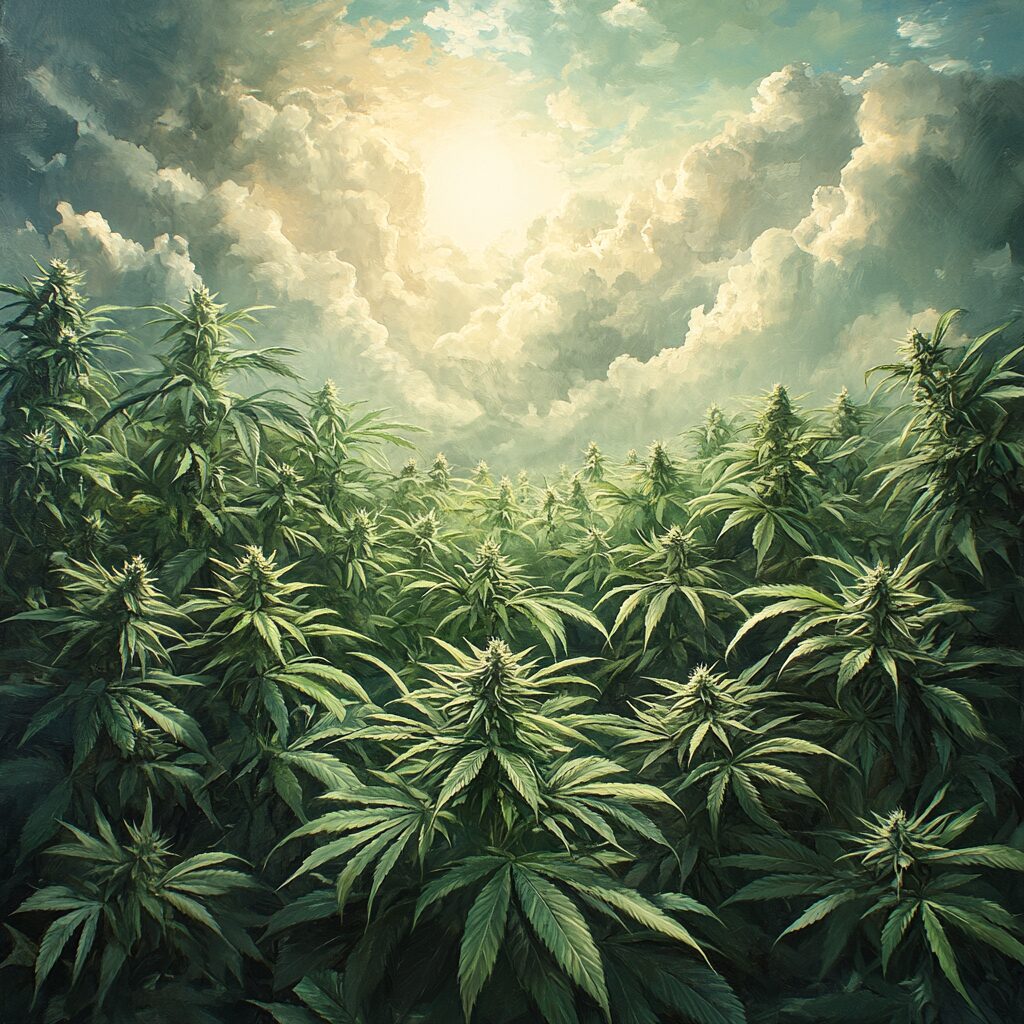

The Rise in Popularity of Medical Marijuana: Health Benefits and Changing Social Attitudes
Medical marijuana in Poland: legal since 2017, Rpw prescription, costs and clinical indications according to the NASEM report, and differences compared to store-bought CBD.
A decade ago, cannabis in the Polish public debate was associated solely with criminal penalties. Today, the same raw material, in the form of pharmaceutical dried flower or oil with standardized THC and CBD content, is available in pharmacies on an Rpw prescription. According to the National Academies of Sciences, Engineering, and Medicine report from 2017, there is conclusive or substantive evidence of cannabinoid efficacy for three clinical indications: chronic pain, chemotherapy-induced nausea, and spasticity in multiple sclerosis. This article explains why medical marijuana is gaining popularity, what the patient pathway looks like in Poland in 2026, and what contemporary science says about it. Along the way, we also highlight where the biggest simplifications appear in the corpus of cannabis-related information circulating online.
KEY INFORMATION
• Medical marijuana has been available in Poland on an Rpw prescription since November 1, 2017, following the amendment of the Act on Counteracting Drug Addiction (Journal of Laws 2017 item 1458).
• The strongest scientific evidence confirms efficacy in three indications: chronic pain, chemotherapy-induced nausea, and spasticity in MS (NASEM, 2017).
• The number of filled Rpw prescriptions increased from several hundred annually in 2019 to over 600,000 in 2023.
• The THC threshold for legal industrial hemp in Poland is 0.3% of the sum of delta-9-THC and THCA (Art. 4 point 5 of the Act on Counteracting Drug Addiction, Journal of Laws 2022 item 763).
• CBD is not a controlled substance and is available without a prescription as a dietary supplement or cosmetic.
What exactly is medical marijuana?
Medical marijuana is pharmaceutical dried flower or extract from Cannabis sativa L. with controlled THC and CBD content, dispensed exclusively on an Rpw prescription. The category includes over 100 cannabinoids and synthetic preparations (NASEM, 2017). The key difference from illicit cannabis is standardization, GMP control, and supervision by the treating physician.
Over 100 cannabinoids have been identified in the plant, but two are clinically most important. THC (delta-9-tetrahydrocannabinol) is responsible for psychoactive and analgesic effects. CBD (cannabidiol) does not cause intoxication but exhibits anticonvulsant, anxiolytic, and anti-inflammatory effects. Both molecules interact in the so-called entourage effect.
| Form | Onset Time | Examples / Feature |
|---|---|---|
| Dried flower for vaporization | 5-15 minutes | Aurora, Bedrocan, Tilray |
| Extract oil | 30-90 minutes, longer effect | standardized THC/CBD concentration |
| Registered ready-made drugs | depends on preparation | Sativex, Epidiolex |
Standardization of THC and CBD content is the foundation of medical marijuana pharmacy: each batch has laboratory-confirmed concentrations of both compounds, distinguishing it from material with unknown composition. Producers also provide a full profile of cannabinoids and terpenes on the packaging label, enabling the physician and pharmacist to select the preparation for a specific indication, not just by the general strain name.
What is the history of medical marijuana legalization?
The first breakthrough was California in 1996, when Proposition 215 referendum legalized cannabis for medical use. Other milestones include Germany in March 2017, Poland from November 1, 2017, and Canada, which additionally legalized recreational use in 2018. Over three decades, more than 50 jurisdictions worldwide have changed their laws.
| Year | Jurisdiction | Event |
|---|---|---|
| 1996 | California, USA | Proposition 215 referendum (55.6% votes in favor) legalizes medical cannabis for oncology and AIDS patients |
| 2017 (March) | Germany | “Cannabis als Medizin” law introduces reimbursement for selected indications |
| 2017 (November) | Poland | Amendment to the Act on Counteracting Drug Addiction comes into force (Journal of Laws 2017 item 1458); first Rpw prescription filled in January 2019 |
| 2018 (October) | Canada | Cannabis Act legalizes medical and recreational cannabis |
By 2024, medical cannabis was legal in 38 US states, although federal classification as Schedule I remains disputed. In Canada, the percentage of adults reporting cannabis use in the past year rose from about 14% in 2018 to over 25% in 2023, without the catastrophic health effects predicted before the reform.
How many patients in Poland use medical marijuana?
The Polish medical marijuana market is growing rapidly. The number of filled Rpw prescriptions for cannabis raw material increased from several hundred in 2019 to over 600,000 in 2023. According to industry data monitoring the P1 ZSMOPL system, over 8 tons of pharmaceutical dried flower arrived in Poland in 2024.
| Year | Filled Rpw Prescriptions |
|---|---|
| 2019 | several hundred (first full year of distribution) |
| 2020 | over 60,000 |
| 2022 | over 280,000 |
| 2023 | over 600,000 |
| 2024 | import of over 8 tons of pharmaceutical dried flower (P1 ZSMOPL system) |
Analysis of inquiries directed to pharmacies specialized in filling Rpw prescriptions shows two dominant patient groups: people aged 35-55 with chronic pain (sciatica, fibromyalgia, neuropathies) and oncology patients aged 60 and over. A third, smaller group consists of parents of children with drug-resistant epilepsy seeking adjunctive therapy. The increase in prescriptions is also driven by specialized pharmacies, which are growing in number in large cities year by year, and by the increasing number of doctors willing to assess clinical indications. Nevertheless, access outside a few large centers remains limited, and some patients travel dozens of kilometers to obtain a prescription and medication.
What are the main medical indications?
The strongest scientific evidence points to three therapeutic areas. According to the NASEM (2017) report, there is conclusive evidence for cannabinoid efficacy in treating chronic pain in adults, chemotherapy-induced nausea, and spasticity in multiple sclerosis. Other indications have weaker evidence bases, though clinical data are growing.
| Indication | Level of Evidence | Key Data |
|---|---|---|
| Chronic pain | high quality / moderate | pain reduction in 37% of patients vs. 31% in placebo group (Whiting et al., 8 studies) |
| Chemotherapy-induced nausea | conclusive (NASEM) | nabilone and dronabinol registered by FDA since 1985 |
| Spasticity in MS | conclusive (NASEM) | about 40% of patients achieve clinically significant spasticity reduction (Sativex) |
| Drug-resistant epilepsy (Dravet syndrome) | phase III trial | median seizures dropped from 12.4 to 5.9 per month, p=0.01 (Devinsky et al., NEJM 2017) |
| PTSD and anxiety | limited (NASEM) | growing number of clinical observations, no strong RCTs yet |
Kevin Hill in a review published in JAMA (Hill, 2015) assesses that cannabis use in neuropathic pain is supported by high-quality evidence: six studies involving 396 patients. The meta-analysis by Whiting et al. (2015) included 79 studies and 6462 patients across various indications; in eight pain studies, cannabinoids were associated with at least 30% pain intensity reduction in 37% of patients versus 31% in placebo. Low-quality evidence also suggests improvement in weight loss in HIV/AIDS patients.
What is the endocannabinoid system?
The endocannabinoid system (ECS) is an internal network of receptors and lipid mediators, discovered in the 1990s by Raphael Mechoulam’s team. It consists of CB1 and CB2 receptors, endogenous cannabinoids (anandamide, 2-AG), and enzymes. ECS regulates pain, sleep, appetite, mood, and immune response, explaining cannabis’s broad spectrum of effects.
| ECS Element | Role |
|---|---|
| CB1 Receptors | mainly in brain (cortex, hippocampus, cerebellum); responsible for THC psychoactivity, memory, and coordination |
| CB2 Receptors | mainly in immune cells (B lymphocytes, macrophages); mediate CBD’s anti-inflammatory effects |
| Anandamide | endogenous ECS ligand, produced in response to pain, stress, and physical exertion |
| 2-AG (2-arachidonoylglycerol) | second main endogenous cannabinoid, modulates pain signaling and mood |
Endocannabinoid deficiency syndrome (CECD) is a hypothesis explaining conditions such as fibromyalgia and migraine. The fact that this system was discovered while studying THC’s mechanism, not the other way around, illustrates the paradox of cannabis pharmacology: thousands of years of traditional use preceded scientific understanding, and the plant helped discover a fundamental mammalian regulatory system.
Which cannabis-based drugs are registered?
Four cannabinoid molecules have drug status registered by FDA, EMA, or national jurisdictions. Each underwent full registration with phase III clinical trials, not just observational studies.
| Drug | Substance | Registration | Indication |
|---|---|---|---|
| Cesamet | nabilone (synthetic THC analog) | 1985, FDA | chemotherapy-induced nausea resistant to standard antiemetics |
| Marinol | dronabinol (synthetic THC) | 1985, FDA | chemotherapy-induced nausea; anorexia in AIDS |
| Sativex | nabiximols (THC and CBD 1:1) | 2010, EU | spasticity in adult multiple sclerosis patients |
| Epidiolex / Epidyolex | pharmaceutical cannabidiol | 2018 FDA, 2019 EMA | epilepsy in Dravet and Lennox-Gastaut syndromes |
Sativex, a sublingual spray containing standardized cannabis extract, is indicated when other antispastic drugs fail. Epidiolex demonstrates how an isolated cannabinoid undergoes the same registration path as other modern therapies: phase III clinical trials, safety and efficacy assessment, then registration. This distinguishes these four drugs from pharmaceutical dried flower, which patients receive on an Rpw prescription without separate product registration as a drug, although it is subject to the same GMP requirements as pharmaceutical raw material.
What does the NASEM 2017 report say about health benefits?
The “The Health Effects of Cannabis and Cannabinoids” (NASEM, 2017) report is one of the most comprehensive reviews of scientific literature on cannabis, based on over 10,000 publications. The committee classified evidence into five categories, from conclusive to insufficient. Only three indications received the highest category.
| Evidence Category | Indications |
|---|---|
| Conclusive / Substantive | chronic pain in adults, chemotherapy-induced nausea, spasticity in MS |
| Moderate | sleep disorders with chronic pain, fibromyalgia, and MS; short-term improvement of MS symptoms |
| Limited / Insufficient | anxiety, PTSD, glaucoma, Tourette’s syndrome |
The report also highlights risks: increased risk of traffic accidents after THC use, risk of psychotic disorders in genetically predisposed individuals, and effects on fetal development. The committee found no conclusive evidence linking cannabis use to lung cancer despite long-standing concerns. Authors also emphasize that most analyzed studies covered short treatment periods, so long-term safety data remain incomplete. This is one reason the committee recommended further clinical research funding rather than basing regulatory decisions solely on historical observations.
How are social attitudes changing in Poland?
Polish society is increasingly favorable toward medical marijuana. Support for medical legalization has grown over the past decade, while recreational legalization remains controversial, though support is rising, especially among people under 40.
| Source | Result |
|---|---|
| CBOS Polls (2018-2023) | over 70% of Poles support legalization of cannabis for medical purposes |
| ESPAD (2019, youth 15-16 years) | about 21% of students have tried cannabis at least once |
| Eurobarometer (European Commission) | Polish opinion close to EU average in acceptance of medical cannabis, more conservative regarding recreational use |
The greatest increase in acceptance is among the 25-44 age group and residents of large cities. The percentage of students who have tried cannabis has remained stable for a decade despite regulatory changes regarding medical cannabis. Separating the debate on medical use from recreational use is, according to European Commission analyses, important for future regulatory reforms. A similar pattern is seen in other regional countries: acceptance grows faster for clinical indications than for decriminalization, suggesting the public treats these as separate issues rather than a single policy package.
What does the patient pathway look like in Poland?
To legally access medical marijuana in Poland, a patient goes through five steps: medical consultation, indication assessment, electronic issuance of an Rpw prescription in the P1 system, fulfillment at a specialized pharmacy, and treatment continuation with follow-up visits. The Rpw prescription is valid for 30 days from the date of issue.
| Step / Aspect | Information |
|---|---|
| Who issues the prescription | any licensed physician; in practice mainly anesthesiologists treating pain, neurologists, psychiatrists, and oncologists |
| Prescription validity | 30 days from issue date, electronically in the P1 system |
| Cost of dried flower | 50-90 PLN per gram; at 1 g daily dose, monthly therapy costs 1500-2700 PLN |
| NFZ reimbursement | limited, restricted to few cases |
| Raw material suppliers | Aurora, Tilray, Spectrum, Bedrocan, Cantourage, Cellen (after list expansion in 2023-2024) |
From our observation of the Polish cannabis market, the biggest barrier for patients is not price but supply unpredictability: a patient stably responding to a specific strain often must change the preparation after several months, requiring dose adjustment. We described this pathway step by step in the guide how to become a medical marijuana patient in Poland, and compiled the current list of available strains separately in the article on how to choose the right medical marijuana strain.
How does CBD available in stores differ from medical marijuana?
CBD from industrial hemp is legal in Poland for sale outside pharmacies if the raw material meets the 0.3% threshold of the sum of delta-9-THC and THCA per Art. 4 point 5 of the Act on Counteracting Drug Addiction (consolidated text Journal of Laws 2023 item 1939, as amended by the March 24, 2022 Act, Journal of Laws 2022 item 763). The national threshold corresponds to the EU threshold but is based on a separate legal basis. CBD does not require a prescription and is not medical marijuana.
| Feature | Store CBD | Medical Marijuana (prescription) |
|---|---|---|
| THC content | trace, below 0.3% sum of THC and THCA | controlled, standardized (e.g., 5-22%) |
| Legal status | dietary supplement or cosmetic | drug dispensed on Rpw prescription |
| Availability | stationary or online store, no prescription | pharmacy only, after medical consultation |
| Use | daily wellness support | treatment of specific clinical indications under physician supervision |
According to the critical review WHO ECDD (2018), CBD does not show addictive or harmful potential at typical doses and should not be internationally controlled. We discussed the conclusions of this report in detail in the article WHO 2018 report on CBD. In Poland, cannabidiol is not listed as a controlled substance (Regulation of the Minister of Health of August 17, 2018, consolidated text Journal of Laws 2024 item 1139).
What are myths and facts about medical marijuana?
Many misunderstandings surround medical marijuana. Below are five common myths and what science says about them. Some popular beliefs lack clinical data support, while other warnings are fully justified (NASEM, 2017).
| Myth | Fact |
|---|---|
| Medical marijuana is the same as illegal cannabis | it has standardized THC and CBD content, is produced according to GMP, and undergoes quality control, unlike illicit material |
| Cannabis causes lung cancer | NASEM (2017) found no conclusive evidence for this link; however, smoking dried flower harms the respiratory system, so vaporization is recommended |
| Anyone can get an Rpw prescription | a physician issues the prescription after clinical indication assessment, and access varies by region |
| CBD is pseudoscience | cannabidiol is the active substance in the registered drug Epidiolex; Devinsky et al. (NEJM, 2017) showed statistically significant seizure reduction in Dravet syndrome |
| THC always causes addiction | cannabis use disorder affects about 9% of regular recreational users (Anthony et al., 1994); risk is lower under physician-supervised therapy |
Paradoxically, one of the strongest arguments for wider medical marijuana use in pain treatment is its safety profile: cannabis has a much lower risk of fatal overdose than opioids. In US states that legalized medical cannabis, some observational studies noted a smaller increase in opioid deaths than in states without such regulation.
What is the future of medical marijuana in Poland?
Polish medical marijuana faces three main challenges for 2026-2030: supply stabilization, education of doctors and patients, and potential introduction of domestic cultivation. The regulator still does not allow cannabis cultivation for medical purposes despite pressure from patient organizations and the agricultural sector.
| Challenge | Current Status and Outlook |
|---|---|
| Domestic cultivation | GIF still does not permit cultivation for medical purposes; Germany and Czechia show controlled domestic cultivation is possible |
| NFZ reimbursement | currently only Sativex in selected MS centers and Epidiolex/Epidyolex in pediatric epilepsy; pharmaceutical dried flower remains fully paid |
| Physician education | no systematic teaching of cannabis pharmacology at universities; postgraduate courses emerging; estimated several thousand doctors actively issuing Rpw |
Arguments for domestic cultivation are economic (lower costs, greater supply stability) and strategic (independence from imports). Opponents point to quality control risks and possible diversion to illicit markets. Experiences from Germany and Czechia, which allowed controlled domestic cultivation under regulator supervision, show it can be done without losing supply chain control. We discuss these challenges in detail in the report development of the medical marijuana industry in Poland.
Summary
Medical marijuana has traveled in three decades from a banned substance to a pharmaceutical available in pharmacies in 38 US states, most EU countries, and over 50 jurisdictions worldwide. In Poland, it has been available on an Rpw prescription since November 2017, with patient numbers growing rapidly year by year. The strongest scientific evidence points to three indications: chronic pain, chemotherapy-induced nausea, and spasticity in MS, according to the NASEM (2017) report.
However, the Polish patient pathway requires patience: supply shortages, high costs, and limited reimbursement remain barriers for most patients. CBD from industrial hemp remains a legal, widely available alternative for those seeking cannabinoid support without a prescription, but as a supplement, not a drug substitute. If considering therapy, the first step should be consultation with a physician knowledgeable in cannabinoid pharmacology, not self-selecting strains or concentrations based on internet forums. The coming years will show whether domestic cultivation and broader reimbursement reduce today’s high entry barriers for new patients.
Frequently Asked Questions
Is medical marijuana legal in Poland in 2026?
Yes. Medical marijuana has been legal in Poland since November 1, 2017, following the amendment of the Act on Counteracting Drug Addiction (Journal of Laws 2017 item 1458). The raw material is dispensed by pharmacies on an Rpw prescription. The first prescriptions were filled in January 2019, and in 2023 the number of filled prescriptions exceeded 600,000 annually.
How to obtain an Rpw prescription for medical marijuana?
An Rpw prescription can be issued by any licensed physician if they assess the clinical indication as justified. In practice, anesthesiologists specializing in pain, neurologists, psychiatrists, and family doctors most often issue it. The prescription is electronic, valid for 30 days, and filled at a pharmacy with available raw material.
How much does monthly medical marijuana therapy cost?
The cost of dried flower in Polish pharmacies ranges from 50 to 90 PLN per gram. A patient with a typical dose of 1 g per day spends 1500-2700 PLN monthly. The National Health Fund (NFZ) reimburses selected preparations (Sativex, Epidiolex) for specific indications, but pharmaceutical dried flower remains fully paid.
What is the difference between CBD and medical marijuana?
CBD from hemp shops comes from industrial hemp where the sum of delta-9-THC and THCA does not exceed 0.3%, and does not require a prescription. Medical marijuana contains controlled, higher amounts of THC and CBD, is produced according to GMP, and is dispensed only on an Rpw prescription by a pharmacy.
Does medical marijuana cause addiction?
There is a risk of addiction, but it is lower than with opioids or benzodiazepines. Classic American studies (Anthony et al., 1994) estimate that about 9% of regular cannabis users develop cannabis use disorder (CUD). In medical therapy, controlled by dose and indication, the risk is lower than in recreational use.
Can I drive after using medical marijuana?
No. THC in the body is detected by drug tests and leads to loss of driving license and criminal liability, regardless of the Rpw prescription. Polish law does not provide a medical exception for THC. Patients treated with medical marijuana must refrain from driving or use THC-free preparations.
What are the side effects of medical marijuana?
The most common adverse effects are dizziness, dry mouth, drowsiness, concentration disorders, tachycardia, and appetite changes. At higher THC doses, anxiety states and paranoid thoughts are possible. Whiting et al. (2015) noted an increased risk of short-term adverse effects, including serious ones, although most are mild.
How does vaporization differ from smoking medical dried flower?
Vaporization heats the dried flower to 180-220 degrees Celsius, releasing cannabinoids without combustion. It produces vapor, not smoke, eliminating most harmful combustion products. Polish doctors recommend vaporization of medical dried flower exclusively. Medical vaporizers are certified as medical devices.
If you are interested in the legal CBD category for daily support without a prescription, check the hemp dried flower offer in the dried flower category at u Bucha store.
This article is for informational and educational purposes and does not constitute legal advice. The legal status described is valid as of the publication date: cannabis regulations may change. Consult a lawyer or current legal acts before making decisions.
Author: Michał Waluk · Published: 2026-05-10 · Updated: 2026-08-10