
What Are Terpenes in Marijuana and How Do They Affect Treatment? 2026 Guide
Terpenes in marijuana interact with THC and CBD in the entourage effect. Discover the actions of myrcene, caryophyllene, and limonene and learn how to read a COA terpene profile.
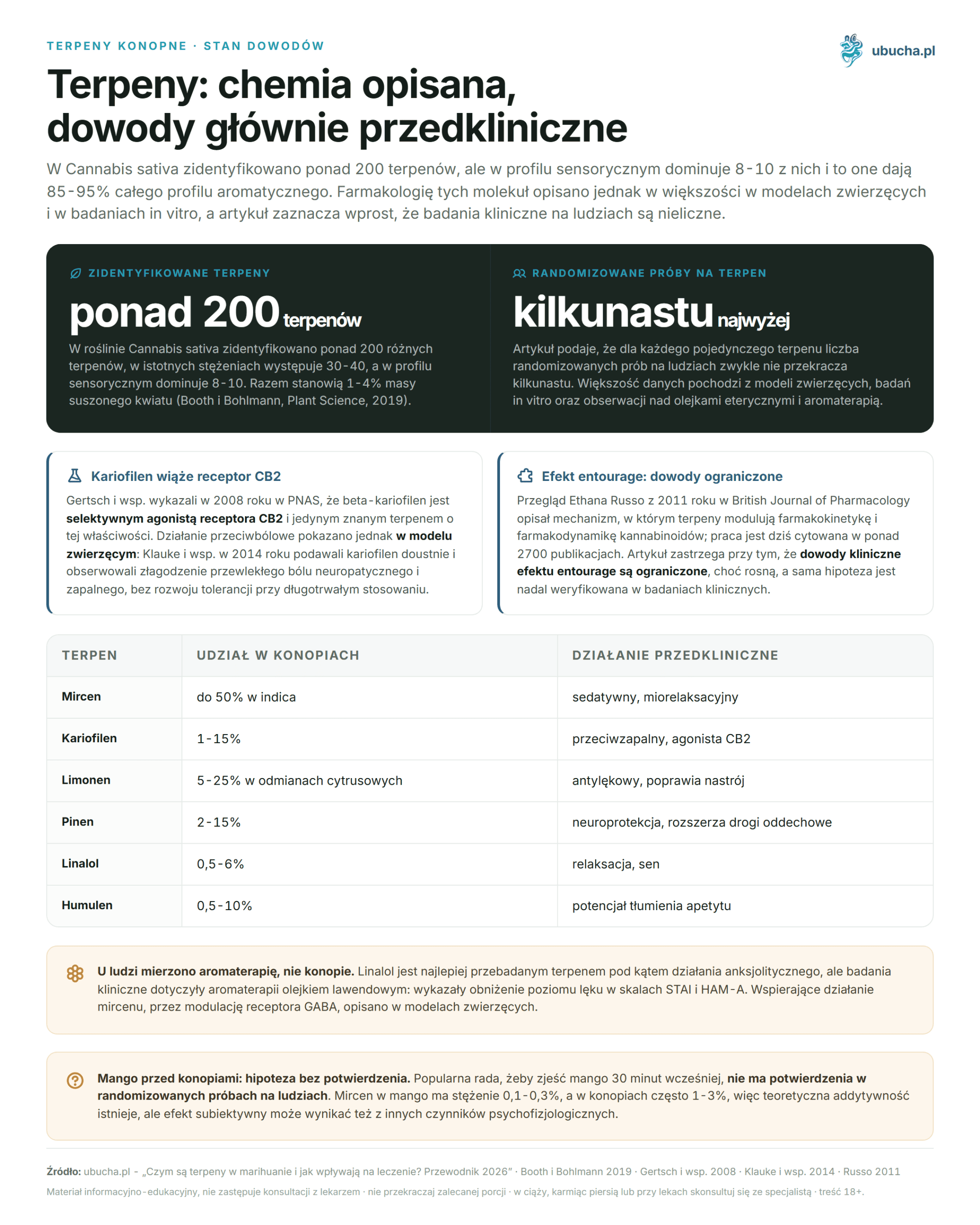
Terpenes in marijuana are responsible for its characteristic smell, taste, and a significant part of therapeutic effects not explained by THC and CBD alone. Over 200 different terpenes have been identified in Cannabis sativa, though only 8-10 dominate sensory profiles. Together they constitute 1-4% of the dried flower mass and are synthesized in glandular trichomes alongside cannabinoids (Booth and Bohlmann, Plant Science, 2019). In 2011, Dr. Ethan Russo published a review in the British Journal of Pharmacology that changed the way cannabis is understood by describing the entourage effect mechanism, where terpenes modulate the pharmacokinetics and pharmacodynamics of cannabinoids. Today, this article is cited in over 2700 scientific publications and forms the basis of modern cannabinoid science (Russo, 2011).
KEY INFORMATION
• Over 200 terpenes have been identified in cannabis, but only 8-10 dominate the sensory profile, together constituting 1-4% of the flower mass (Booth and Bohlmann, 2019).
• Main cannabis terpenes include myrcene (sedative), caryophyllene (anti-inflammatory, CB2 agonist), limonene (anti-anxiety), pinene (concentration), linalool (relaxation, sleep), and humulene (appetite suppressant).
• The entourage effect, described by Ethan Russo in 2011 in the British Journal of Pharmacology, is the synergy of terpenes and cannabinoids modulating THC and CBD effects (Russo, 2011).
• Beta-caryophyllene is the only known terpene activating the CB2 receptor, making it a dietary cannabinoid with anti-inflammatory action (Gertsch et al., PNAS, 2008).
• In Poland, CBD flowers and oils with a delta-9-THC and THCA sum not exceeding 0.3% are legal (Act of July 29, 2005, on counteracting drug addiction); WHO confirmed CBD safety in 2018 (WHO ECDD, 2018).
What are terpenes chemically?
Terpenes are organic chemical compounds from the isoprenoid class, built from isoprene units (C5H8) linked in chains or rings. They are the second most numerous class of secondary metabolites in the plant kingdom, with over 80,000 identified molecules. In Cannabis sativa, over 200 different terpenes have been identified, though 30-40 occur in significant concentrations (Sommano et al., Molecules, 2020).
Terpenes are classified by the number of isoprene units. Hemiterpenes (C5) have one unit. Monoterpenes (C10H16) have two. Sesquiterpenes (C15H24) have three. Diterpenes (C20) have four. Triterpenes (C30) have six. Cannabis is dominated by monoterpenes and sesquiterpenes, the most volatile classes responsible for the aroma of the flower.
Monoterpenes are light and evaporate at 155-185°C. They give fresh flower its intense scent, which fades after a few weeks of storage. Myrcene, limonene, pinene, linalool, and ocimene belong to monoterpenes. Sesquiterpenes like caryophyllene and humulene are heavier, more stable, and require 160-210°C to evaporate.
Glandular trichomes are microscopic chemical factories on the cannabis flower surface. They look like sticky crystals visible to the naked eye. Both cannabinoids and terpenes are biosynthesized there. Booth and Bohlmann in 2019 described the full terpene metabolic pathway in Cannabis, identifying key synthase enzymes (Booth and Bohlmann, Plant Science, 2019).
How does the cannabis plant produce terpenes?
For monoterpenes, the precursor is geranyl diphosphate (GPP), formed from two isopentenyl diphosphate (IPP) units. For sesquiterpenes, the precursor is farnesyl diphosphate (FPP), built from three IPP units. Specialized terpene synthases (TPS) cyclize these precursors, creating molecules like myrcene, limonene, and caryophyllene.
Over 30 genes encoding terpene synthases have been identified in the Cannabis genome. Each gene encodes an enzyme with specific product specificity, though many synthases produce mixtures of terpenes. Gene expression varies with plant development stage, light, and temperature conditions. This explains why the same genotype grown under different conditions yields different terpene profiles.
There are three types of glandular trichomes in Cannabis: bulbous (10-15 micrometers), capitate-sessile (20-30 micrometers), and capitate-stalked (50-100 micrometers). The last type, most visible to the naked eye, produces 80-90% of all plant terpenes and cannabinoids. Harvesting at full maturity of these trichomes yields the richest chemical profile.
Trichome maturity is assessed by color. Transparent trichomes indicate immaturity. Milky-white is the optimal harvest phase, with the highest content of monoterpenes and active cannabinoids. Amber trichomes indicate oxidative degradation, where some terpenes have oxidized to less active derivatives.
How do terpenes differ from terpenoids?
Terpenes and terpenoids are not synonyms, though often used interchangeably in popular literature. Terpenes are pure hydrocarbons made only of carbon and hydrogen. Terpenoids are their oxidized or chemically modified derivatives containing additional oxygen, nitrogen, or other functional groups. After decarboxylation and drying, some terpenes convert into terpenoids with slightly different pharmacological profiles (Sommano et al., Molecules, 2020).
A classic example is myrcene, which oxidizes to cis-myrcene-8-ol. Pinene oxidizes to verbenone. Limonene can oxidize to carvone, known for its mint aroma. These oxidized forms have different evaporation points, biological activity, and aroma. This explains why old flower smells different from fresh, even if total terpenoid content is similar.
For consumers and patients, the difference mainly matters regarding freshness and storage. Freshly harvested and properly packaged flower is dominated by terpenes in their primary form. Old or poorly stored material has more oxidized terpenoids, often with weaker or different pharmacological effects.
Lavender oil contains both linalool (terpene alcohol) and linalyl acetate (terpenoid ester). Both have anxiolytic effects, but linalyl acetate acts milder and longer. Cannabis mainly contains linalool in its primary form, giving faster but shorter calming effects compared to lavender aromatherapy.
This difference is important for those combining aromatherapy with CBD cannabis. Lavender oil in a diffuser and full-spectrum CBD oil may act synergistically, though via slightly different mechanisms. This is part of modern cannabis phytotherapy, which uses the entourage effect also at the interface with other medicinal plants.
What are the main terpenes in marijuana and their effects?
Cannabis is dominated by 8-10 main terpenes, which together make up 85-95% of the plant’s aromatic profile. Each has documented pharmacological properties. In indica strains, myrcene can constitute up to 50% of the terpene fraction, while in some sativa strains limonene and pinene dominate. The terpene profile determines the subjective effect of a strain more than the indica/sativa classification - differences in effects of both groups and hybrids are detailed in a separate comparison table of indica, sativa, and hybrids (Russo, Br J Pharmacol, 2011).
| Terpene | Aroma | Boiling Point | Content in Cannabis | Main Effect |
|---|---|---|---|---|
| Myrcene | earthy-musk, clove | 167°C | up to 50% in indica | sedative, muscle relaxant |
| Caryophyllene | spicy-peppery | 160°C | 1-15% | anti-inflammatory, CB2 agonist |
| Limonene | citrus | 176°C | 5-25% in citrus strains | anti-anxiety, mood enhancer |
| Pinene | pine | 156°C | 2-15% | concentration, neuroprotection |
| Linalool | floral | 198°C | 0.5-6% | relaxation, sleep |
| Humulene | woody-hop | 198°C | 0.5-10% | appetite suppressant |
| Terpinolene | fresh, woody | 186°C | 1-3% | antioxidant |
| Ocimene | sweet-herbal | 104°C | up to 8% in some strains | antiviral in vitro |
Terpene profiles of cannabis strains act like chemical fingerprints. Specialized labs analyze flower samples using gas chromatography-mass spectrometry (GC-MS) and generate percentage share charts. Such certificates are standard in medical marijuana production in Germany, Israel, and Canada. In Poland, more premium CBD producers are adopting this practice.
How do myrcene and caryophyllene work?
Myrcene (β-myrcene) is a monoterpene with an earthy-musk aroma with clove and mango notes. In many indica strains, it constitutes 20-50% of the terpene profile. Its boiling point is 167°C. It naturally occurs in hops (Humulus lupulus), mango, thyme, bay leaves, and lemongrass. It is the most sedating terpene in cannabis.
Animal studies show myrcene has sedative, muscle-relaxing, and analgesic effects. Russo 2011 describes myrcene as the main modulator of THC’s sedative effect, acting via the GABA receptor. Cannabis strains high in myrcene, like Mango Kush or Granddaddy Purple, are traditionally recommended for evening relaxation, sleep, and muscle tension.
The hypothesis that eating mango 30 minutes before cannabis enhances myrcene’s effect is popular but lacks confirmation in randomized human trials. Myrcene concentration in mango is 0.1-0.3%, while in cannabis it is often 1-3%. Theoretical additivity exists, but subjective effects may also result from other psychophysiological factors.
Beta-caryophyllene is a sesquiterpene with a spicy-peppery aroma. It occurs in black pepper, cloves, oregano, rosemary, and hops. Its boiling point is 160°C. In cannabis, it constitutes 1-15% of the terpene fraction. Its unique property changed the pharmacological view of terpenes (Gertsch et al., PNAS, 2008).
In 2008, Gertsch et al. published a breakthrough paper in PNAS showing beta-caryophyllene is a selective agonist of the CB2 receptor of the endocannabinoid system. CB2 is mainly on immune cells and regulates inflammation. Beta-caryophyllene is the only known terpene with this property, making it a dietary cannabinoid. The FDA classifies it as a safe food additive (GRAS).
Research on caryophyllene indicates strong anti-inflammatory, analgesic, and gastroprotective effects. Animal models showed improvement in intestinal inflammation and neuropathic pain. Cannabis strains rich in caryophyllene, like GSC or OG Kush, are often recommended for chronic pain and inflammation.
How do limonene and pinene work?
Limonene (D-limonene) is a monoterpene with a fresh citrus aroma. It occurs in citrus peels: orange, lemon, grapefruit, bergamot. Its boiling point is 176°C. In cannabis, it constitutes 5-25% of the terpene fraction in citrus strains like Super Lemon Haze or Lemon Skunk. Preclinical studies show anxiolytic and mood-enhancing effects.
Inhalation studies suggest limonene aromatherapy may reduce subjective stress levels. Russo 2011 lists limonene as a terpene supporting immunity and acting antidepressantly via serotonin and dopamine modulation. Limonene also promotes absorption of other molecules through cell membranes, potentially increasing bioavailability of co-occurring cannabinoids.
For regular CBD users, limonene-rich strains work well in the morning and daytime. They provide lighter, stimulating effects without the sedative effect characteristic of myrcene. This is one reason citrus CBD strains like Lemon Haze CBD or Orange Bud CBD are popular in Polish stores.
Pinene occurs in two isomers: α-pinene (pine aroma) and β-pinene (rosemary note). It is the most common terpene in nature. Found in pine, fir, juniper needles, rosemary, sage, and basil. α-pinene’s boiling point is 156°C. In cannabis, it constitutes 2-15% of the terpene fraction.
Pinene has documented bronchodilator (airway dilating) and neuroprotective effects. Russo 2011 noted pinene may counteract short-term memory impairment induced by THC. The mechanism involves blocking acetylcholinesterase enzyme, similar to some Alzheimer’s drugs. Pinene-rich strains like Jack Herer or Dutch Treat are described as clear and concentration-enhancing.
Practical observation: pinene from CBD cannabis and pinene from rosemary essential oil provide similar cognitive activity profiles. Combining aromatherapy with CBD may act synergistically in situations requiring focus, such as creative work, studying, or long reading.
How do linalool and humulene work?
Linalool is a monoterpene alcohol with a floral-sweet aroma characteristic of lavender. It also occurs in basil, lemon balm, coriander, and rosewood. Boiling point 198°C. In cannabis, it usually constitutes 0.5-6%, in lavender strains like Lavender Kush it can exceed 10%. It is the best-studied terpene for anxiolytic effects.
Aromatherapy with lavender oil, whose main component is linalool, reduces cortisol levels and improves subjective sleep quality in clinical studies. Russo 2011 identifies linalool as a main terpene in evening CBD formulations, acting via GABA and serotonin receptors. It is one of two main terpenes (alongside myrcene) in classic nighttime stacks.
Strains dominated by linalool are traditionally recommended for sleep disorders, generalized anxiety, and episodes of psychological tension. The combination of linalool with CBD and a small amount of CBN (a cannabinoid formed from THC degradation, with sedative effects) is present in many premium full-spectrum CBD oils available in Poland.
Humulene (α-humulene) is a sesquiterpene with a woody-hop aroma. It is the main terpene of hops (Humulus lupulus), a close relative of cannabis in the Cannabaceae family. It also occurs in sage, cloves, and ginseng. Boiling point 198°C. In cannabis, it constitutes 0.5-10% of the terpene fraction. Often found in combination with caryophyllene.
Humulene has documented anti-inflammatory and antibacterial effects in vitro. An interesting property is its appetite-suppressing potential, contrasting with the typical hunger effect induced by THC. Humulene-rich strains may be milder in this regard for those avoiding increased appetite after marijuana.
Hops in beer and cannabis are botanical siblings, visible in the humulene and caryophyllene profile. Drinking hopped beer exposes one to the same terpene molecules found in cannabis. This is another example of a botanical bridge between different medicinal plants.
What do terpenes present in smaller concentrations contribute?
Terpinolene is a monoterpene with a complex aroma: fresh, woody, citrusy, with floral notes. It occurs in tea tree, apples, dill, and lilac. Boiling point 186°C. In cannabis, it is less often dominant, usually 1-3%, but in strains like Jack Herer or Dutch Treat it can exceed 10%. It shows strong antioxidant activity.
In vitro studies describe terpinolene’s antioxidant and antibacterial activity. Subjectively, terpinolene-rich strains are described as stimulating and creative, promoting concentration.
Ocimene is a monoterpene with a sweet-herbal aroma with basil and mint notes. It occurs in mints, basil, parsley, mango, and orchid flowers. Boiling point 104°C. In cannabis, it is a less common terpene but in some strains like Strawberry Cough or Clementine it constitutes 3-8% of the terpene fraction. It shows antiviral activity in vitro.
Ocimene’s low boiling point (104°C) makes it the first terpene to evaporate from cannabis flower. Fresh flower has a distinct sweet-herbal profile that quickly loses intensity after a few weeks. Vacuum packaging and low storage temperatures preserve this profile component.
Besides the nine main terpenes, cannabis contains less known molecules like bisabolol, guaiol, eudesmol, fenchol, camphene, sabinene, and borneol. Each is present below 1% but adds unique elements to the sensory profile. They create subtle differences between closely related strains with similar dominant chemistry.
In clinical practice, these minor terpenes are rarely analyzed, though their role in the entourage effect may be important. Russo 2011 suggests even trace amounts of some terpenes can modulate cannabinoid pharmacokinetics. This research direction is still developing. Today, standard COAs report 8-15 most popular terpenes, omitting rarer molecules.
The 8 dominant cannabis terpenes (myrcene, limonene, pinene, linalool, caryophyllene, humulene, terpinolene, ocimene) form 85-95% of the plant’s aromatic profile. Each has documented pharmacological properties modulating THC and CBD effects via the entourage effect described by Russo in 2011 (Russo, 2011).
What is the entourage effect and why do terpenes play a role?
The entourage effect (phytocannabinoid synergy) is the cooperation phenomenon of cannabinoids and cannabis terpenes, described in Dr. Ethan Russo’s groundbreaking 2011 review. Russo compiled earlier studies and proposed a mechanism where terpenes modulate the pharmacokinetics and pharmacodynamics of THC and CBD. The work is cited in over 2700 scientific publications today (Russo, Br J Pharmacol, 2011).
The entourage effect concept explains why full-spectrum cannabis acts differently than pure cannabinoids. CBD isolate is a single molecule. Full-spectrum oil contains CBD, CBG, CBC, CBN, and a mixture of 20-40 terpenes in natural plant proportions. This pharmacological cocktail provides a richer therapeutic effect than any single component.
At the molecular level, terpenes modify blood-brain barrier permeability, affect liver cytochrome P450 metabolism, and bind to non-cannabinoid receptors (GABA, serotonin, opioid, TRP). Myrcene enhances THC’s sedative effect. Pinene may alleviate THC-induced short-term memory impairment. Limonene improves bioavailability of other terpenes.
Before 2011, cannabis research focused mainly on THC and CBD as isolated molecules. Russo published a review titled “Taming THC: potential cannabis synergy and phytocannabinoid-terpenoid entourage effects.” The text linked specific terpenes to therapeutic effects and proposed hypotheses for further clinical research.
Russo proposed that CBG, CBC, and CBN combined with myrcene, linalool, and pinene may be more effective than any of these components alone. The hypothesis is still being verified in clinical trials but changed the medical marijuana industry worldwide. Today, full-spectrum CBD producers explicitly reference the entourage effect in marketing and scientific materials.
Clinical evidence for the entourage effect is limited but growing. Lewis with Russo and Smith in 2018, in a chemovar classification paper, showed that a strain’s terpene profile better predicts subjective effect than the THC/CBD ratio alone (Lewis et al., Planta Medica, 2018).
A limitation is the difficulty of controlling variables. Natural plant extracts always have some batch-to-batch variability. Pharmacology prefers pure molecules with reproducible profiles. This methodological tension explains why conventional medicine remains cautious about full-spectrum formulas despite growing observational data.
What is a chemovar and how does it classify cannabis by terpenes?
A chemovar is a cannabis classification based on the plant’s chemical profile, not morphology or trade name. The system proposed by Lewis, Russo, and Smith in 2018 distinguishes three main types. Type I is THC-dominant (above 0.5%, CBD below 0.5%). Type II is balanced (similar THC and CBD). Type III is CBD-dominant (CBD above 0.5%, THC below 0.5%) (Lewis et al., Planta Medica, 2018).
The chemovar system better predicts subjective and therapeutic effects than the classic sativa/indica label. The terpene profile complements this classification. I-myrcene-dominant chemovars produce stronger sedative effects. I-limonene-dominant chemovars are more energizing. III-linalool-dominant chemovars are typical evening formulas for sleep and anxiety.
In the Polish consumer market, only Type III chemovars (CBD-dominant with THC below 0.3%) are legally available. Type I and II chemovars with higher THC are illegal under the July 29, 2005 Act on counteracting drug addiction. The exception is medical marijuana with high THC, available only by prescription (Rpw) from authorized doctors in pharmacies.
Within Type III, attention should be paid to the dominant terpene. CBD flowers and oils with high myrcene work well in the evening. Those with high limonene, like Lemon Haze CBD, act lighter and suit daytime use. Choosing a chemovar by terpene profile is a conscious purchase based on chemistry, not marketing.
Two different strains of the same Type III chemovar can produce vastly different sensations. A strain dominated by myrcene and linalool is sedative and recommended for sleep. A strain dominated by limonene and pinene is stimulating and promotes concentration. Both can have identical CBD content. Terpenes determine the character of the subjective experience - why chemovar, not indica/sativa label, better predicts real effect, explained in a separate guide on stimulating and calming strains.
Russo 2011 emphasizes that without terpene analysis, two CBD 10% labels may mean two very different products in terms of effect. A conscious CBD consumer in 2026 should therefore seek COAs with declared terpene profiles, not just CBD percentage. This is the basis of informed purchasing in the CBD wellness segment.
How do terpenes in aromatherapy differ from those in marijuana?
Terpenes in aromatherapy and marijuana are chemically identical molecules. Linalool from lavender and linalool from cannabis are the same C10H18O molecule. Myrcene from hops and myrcene from marijuana are the same C10H16. The difference lies in pharmacological context. In cannabis, terpenes co-occur with cannabinoids, generating the entourage effect. In aromatherapy, they act alone or in mixtures of plant essential oils (Sommano et al., Molecules, 2020).
In aromatherapy, terpenes are mainly delivered by inhalation (diffusers, burners, steam inhalation) and skin application (massages, baths). In cannabis, administration routes include inhalation (vaporization, smoking), oral (oils, capsules, edibles), or sublingual (full-spectrum CBD oils). Each route has different pharmacokinetics affecting onset and duration of effect.
Essential oils are 80-95% terpene mixtures, with the rest being other volatile compounds. Lavender oil contains 25-45% linalool and 25-45% linalyl acetate. Rosemary oil is mainly pinene (20-40%), camphor, and cineole. Black pepper oil contains caryophyllene (15-30%) and limonene. Mint oil contains menthol and menthone, but also ocimene.
For users seeking specific terpenes, essential oils are an inexpensive and easy source. Lavender oil in a diffuser provides linalool exposure comparable to a CBD strain rich in linalool. Eating black pepper provides a caryophyllene dose similar to OG Kush CBD.
Many patients combine aromatherapy with CBD oils. Lavender oil in a diffuser in the evening and full-spectrum CBD oil sublingually provide multiplied anxiolytic and sleep-supporting effects. This is part of modern cannabis phytotherapy, based on the observation that the entourage effect extends to the interface of different medicinal plants providing the same terpene molecules.
From a pharmacological perspective, this is anecdotal observation, not confirmed in randomized human trials. But for those seeking natural wellness support, the CBD and aromatherapy combination is a safe and economical solution.
At the u Bucha blog editorial office, we regularly compare effects of CBD oils from different Type III chemovars regarding terpene profiles. Those dominated by linalool indeed provide a clearer evening relaxation sensation than limonene-dominant versions with the same CBD content. This observation aligns with Russo 2011’s hypothesis on terpenes’ role in modulating cannabinoid effects.
How do terpenes support treatment of pain and anxiety?
Cannabis terpenes have documented therapeutic effects in four main areas: pain, anxiety, sleep, and inflammation. In animal models and in vitro studies, each main terpene has its own pharmacological activity profile. Russo 2011 compiled these data and indicated specific terpenes for clinical indications. WHO in 2018 confirmed CBD safety and preliminary evidence for cannabis terpenes (WHO ECDD, 2018).
However, clinical trials in humans are still limited. For each single terpene, the number of randomized human trials usually does not exceed a dozen. Most data come from animal models, in vitro studies, and observational research on essential oils and aromatherapy. This limitation must be kept in mind when interpreting individual observations.
Beta-caryophyllene has the strongest evidence for analgesic action among cannabis terpenes. It activates the CB2 receptor of the endocannabinoid system, similar to some synthetic CB2 agonists tested in clinical neuropathic pain trials. Klauke et al. in 2014 showed in an animal model that oral caryophyllene alleviates chronic neuropathic and inflammatory pain via CB2 receptor without tolerance development during long-term use (Klauke et al., 2014).
Myrcene, humulene, and limonene also show analgesic effects in vitro, though weaker than caryophyllene. Combining these terpenes with CBD, which has its own analgesic action, results in cumulative effects in experimental models. For chronic pain patients, full-spectrum CBD oils are often preferred over isolates precisely for the entourage effect.
Linalool is the best-studied terpene for anxiolysis. Clinical studies on lavender oil aromatherapy show reduced anxiety levels on STAI and HAM-A scales. Myrcene supports this effect by modulating the GABA receptor in animal models. Limonene acts antidepressively via serotonergic and dopaminergic systems.
A practical anti-anxiety formula combines full-spectrum CBD with linalool and myrcene dominance in the terpene profile. Always consult a doctor before starting CBD for anxiety, especially if taking antidepressants or anxiolytics.
How do terpenes affect sleep and inflammation?
Myrcene and linalool are the two most commonly recommended terpenes for sleep. Myrcene acts sedatively and as a muscle relaxant; linalool lowers cortisol levels and improves subjective sleep quality. Combining these terpenes with CBD and a small amount of CBN (a cannabinoid formed from THC degradation with sedative effects) creates a classic evening stack.
For severe sleep disorders, CBD does not replace psychiatric treatment but may be a doctor-recommended adjunct.
Beta-caryophyllene is the star of anti-inflammatory terpenes. Its selective CB2 receptor activation affects immune cells, reducing pro-inflammatory cytokine production. In models of intestinal and joint inflammation, caryophyllene shows effects comparable to some NSAIDs but without stomach or kidney side effects.
Humulene, alpha-pinene, and terpinolene also have documented anti-inflammatory effects, though weaker than caryophyllene. Combining CBD with a rich terpene profile provides multidirectional anti-inflammatory action, underpinning the popularity of full-spectrum oils in supporting inflammatory diseases like fibromyalgia, rheumatoid arthritis, or Crohn’s disease. This is support, not a replacement for conventional treatment.
Cannabis terpenes support treatment of pain (caryophyllene via CB2), anxiety (linalool via GABA), sleep (myrcene and linalool), and inflammation (caryophyllene, humulene, pinene). Effects have been confirmed in animal and in vitro models; clinical trials in humans are developing (Russo, 2011; Gertsch et al., 2008).
How is the Polish CBD market developing regarding terpene profiles?
The Polish CBD market is entering a maturation phase in 2025-2026 regarding analytical transparency. More premium producers publish full COAs with declared terpene profiles, not just CBD and THC content. This results from consumer education, competitive pressure, and adoption of standards from German and Israeli markets, where terpene analysis is a regulatory requirement for medical marijuana.
The scale of this trend is not measured by any independent market research. Consumers increasingly ask about terpene profiles in physical and online stores, creating pressure that changes the market. More about how terpene profiles affect oil effects is in a separate guide on terpenes in CBD.
Transparency of terpene profiles allows consumers to consciously choose products for specific purposes. CBD oil dominated by myrcene and linalool works well in the evening for sleep and anxiety. Oil dominated by limonene and pinene is better in the morning for focus. Oil with high caryophyllene is a choice for inflammatory pain. Without a terpene profile, choice is random.
For producers, terpene transparency is also a premium brand-building element. Two 10% CBD oil brands may have the same price but different terpene profiles. Consumers who learned to read COAs will choose the one with a richer and better-matched profile. This is the basis of competition in the maturing Polish CBD market.
Terpenes themselves are not subject to special legal regulations in Poland. The July 29, 2005 Act on counteracting drug addiction concerns THC and other psychoactive substances listed, not terpenes. Essential oils, plant extracts, and terpene concentrates are available retail without restrictions as cosmetic, food, or aromatherapy products.
Regarding CBD, the THC limit is 0.3%, calculated as the sum of delta-9-THC and THCA, rounded to one decimal place (art. 4 point 5 of the July 29, 2005 Act, as amended March 24, 2022, Journal of Laws 2022 item 763). The national threshold corresponds to the EU hemp threshold but results from a separate national regulation, not EU regulation. Terpene profiles have no regulatory limits but should be transparently declared by producers. Lack of such declaration is not a legal violation but signals low-quality consumer communication.
How to read a COA regarding terpene profile?
A Certificate of Analysis (COA) is a laboratory document that should accompany every CBD or cannabis product. For a conscious consumer, the most important COA sections are cannabinoid content (CBD, THC, CBG, CBN, CBC), terpene profile (8-15 main molecules), and tests for microbiology, heavy metals, residual solvents, and pesticides. Terpene profiles are sometimes omitted, though they determine the effect character (Sommano et al., Molecules, 2020).
Reputable labs use gas chromatography-mass spectrometry (GC-MS) for terpene profile analysis. Results show the percentage share of each molecule with 0.01% accuracy. The total terpenes in good cannabis flower range from 1-4% by weight.
First, check the analysis date. COAs older than 12 months have limited reliability for shelf products because terpenes degrade over time. Second, check the lab. Reputable labs are ISO 17025 accredited, e.g., Polish Hempoint, ALAB, or German cannabis-specialized labs. Third, check the analysis method. GC-MS for terpenes, HPLC for cannabinoids is standard.
Fourth, check the Terpene Profile section. It should list 8-15 named molecules with percentage values. Lack of this section in a full-spectrum COA signals the producer may lack reliable terpene analysis. Fifth, check contaminants. Pesticides, heavy metals, and residual solvents should be below regulatory limits. Step-by-step, how to read the full certificate including genetic profile, is shown in a separate cannabis strain profile guide.
The dominant terpene suggests the best time for use:
| Dominant terpene in COA | Best time to use |
|---|---|
| Myrcene (above 0.5%) | evening, sleep, muscle relaxation |
| Limonene (above 0.5%) | morning, mood, concentration |
| Linalool (above 0.3%) | anxiolytic effect |
| Caryophyllene (above 0.3%) | anti-inflammatory and analgesic effect |
The best oils contain measurable proportions of all 8 main molecules. A total terpene content above 0.5% in 10% CBD oil indicates good profile preservation during extraction. Oil with total terpene content below 0.1% is formally full-spectrum but practically closer to an isolate enriched with terpene traces.
A COA from a reputable CBD producer includes a terpene profile with percentage shares of 8-15 main molecules. Total terpenes in good flower are 1-4% by weight; in full-spectrum CBD oil above 0.5%. Lack of terpene declaration for full spectrum signals limited transparency (Sommano et al., 2020).
Frequently Asked Questions
What are terpenes in marijuana and how are they formed?
Terpenes in marijuana are volatile isoprenoids from the monoterpene (C10H16) and sesquiterpene (C15H24) groups. They are produced in glandular trichomes of the cannabis inflorescence from the precursors geranyl diphosphate (GPP) and farnesyl diphosphate (FPP). Cannabis sativa produces over 200 different terpenes, but 8-10 dominate the sensory and pharmacological profile (Booth and Bohlmann, Plant Science, 2019).
What is the entourage effect described by Russo in 2011?
The entourage effect is the synergy of cannabinoids (THC, CBD, CBG, CBC) and cannabis terpenes, described in Ethan Russo’s 2011 review in the British Journal of Pharmacology. Terpenes modulate the pharmacokinetics of THC and CBD, affect the blood-brain barrier, and bind to GABA, serotonin, and opioid receptors. Russo’s work is cited in over 2700 publications (Russo, Br J Pharmacol, 2011).
Which terpene in marijuana has anti-inflammatory effects?
Beta-caryophyllene has the strongest documented anti-inflammatory effect among cannabis terpenes. Gertsch et al. in 2008 showed in PNAS that it is a selective agonist of the CB2 receptor of the endocannabinoid system, making it a dietary cannabinoid. It occurs in black pepper and cloves. It constitutes 1-15% of the cannabis terpene fraction (Gertsch et al., PNAS, 2008).
How do terpenes affect the treatment of pain, anxiety, and sleep?
Caryophyllene supports analgesic effects via the CB2 receptor, and myrcene enhances THC’s sedative effect through the GABA mechanism. Linalool and limonene have documented anxiolytic effects in aromatherapy and animal models. Myrcene with linalool facilitates falling asleep. Most data come from animal models and in vitro studies; clinical trials in humans are limited (Russo, Br J Pharmacol, 2011).
What is a chemovar and how does it classify cannabis?
A chemovar is a cannabis classification based on chemical profile, not morphology. Lewis, Russo, and Smith in 2018 distinguished three main types: Type I dominated by THC, Type II balanced, Type III dominated by CBD. The terpene profile complements this classification (Lewis et al., Planta Medica, 2018).
How to read a COA regarding terpene profile?
A COA from a reputable producer includes a Terpene Profile section with the percentage share of 8-15 main terpenes (myrcene, limonene, pinene, linalool, caryophyllene, humulene, terpinolene, ocimene). The total terpenes in good flower range from 1-4% by weight. Lack of a terpene profile in a full-spectrum COA is a caution signal (Sommano et al., Molecules, 2020).
Are terpenes in Polish CBD legal?
Yes. Terpenes themselves are not regulated by the anti-narcotics law. In Poland, CBD flowers and oils are legal if the sum of delta-9-THC and THCA does not exceed 0.3% dry weight (art. 4 point 5 of the July 29, 2005 Act, Journal of Laws 2022 item 763), preserving the full terpene profile. WHO’s 2018 ECDD review confirmed CBD’s safety and low addiction potential (WHO ECDD, 2018).
Does myrcene from mango enhance the effect of cannabis terpenes?
The hypothesis that eating mango 30 minutes before cannabis enhances myrcene’s effect is popular but lacks confirmation in randomized human studies. Myrcene concentration in mango is 0.1-0.3%, while in cannabis it is often 1-3%. Theoretical additivity exists, but subjective effects may result from other psychophysiological factors (Sommano et al., Molecules, 2020).
Summary: terpenes are chemistry, not magic
Terpenes in marijuana are not just aromatic additives but active pharmacological components responsible for a significant part of cannabis’s therapeutic effects. Eight main molecules (myrcene, caryophyllene, limonene, pinene, linalool, humulene, terpinolene, ocimene) and lesser-known ones like bisabolol create a unique profile for each strain. Russo 2011 showed that without terpenes, the pharmacology of cannabis is incomplete.
For a conscious CBD consumer in 2026, this means choosing full or broad-spectrum products with declared terpene profiles. CBD isolates have their place but lose the entourage effect. The chemovar system (Lewis, Russo, and Smith, 2018) and GC-MS terpene profile analysis are the basis of informed purchasing based on chemistry, not marketing.
The Polish CBD market is maturing in analytical transparency. More producers publish full COAs with terpene profiles, but there is still room for improvement. Consumers asking about terpene profiles in stores are a force changing the market. This is worth knowing and asking about with every CBD product purchase.
Remember, terpenes in cannabis are the same chemistry as in lavender, hops, pepper, or lemon. Cannabis is not exotic but exceptional due to the co-occurrence of terpenes with cannabinoids. Combining aromatherapy, dietary terpene sources (pepper, mango, hops), and full-spectrum CBD is a philosophy of a broader entourage effect based on botanical-chemical coherence of medicinal plants.
Full COAs with declared terpene profiles are easiest to find among CBD oils available at u Bucha store.
This article is for informational and educational purposes and does not constitute medical advice. Consult a doctor before starting cannabis or CBD for therapeutic purposes, especially if taking other medications, pregnant, or breastfeeding.
Author: Michał Waluk · Published: 2026-05-10 · Updated: 2026-08-10