
Reishi (lingzhi): the mushroom of immortality for immunity and stress 2026
Reishi for immunity, stress, and sleep. What clinical studies have shown, where results were statistically insignificant, and with which medications the mushroom may interact.
Lingzhi, or “divine mushroom,” has been a symbol of longevity in China for two thousand years, and today Ganoderma lucidum is found in every supplement store and has hundreds of publications. However, the gap between tradition and evidence is greater here than with most plant raw materials: some frequently repeated numbers come from studies that say something different, and the two most cited studies in humans ended with statistically insignificant results. This text goes through what has actually been measured, in which populations, and with what effect. You will also find a separate section on medications for which reishi requires a conversation with a doctor, as well as an honest indication of places where there is simply no evidence.
KEY INFORMATION
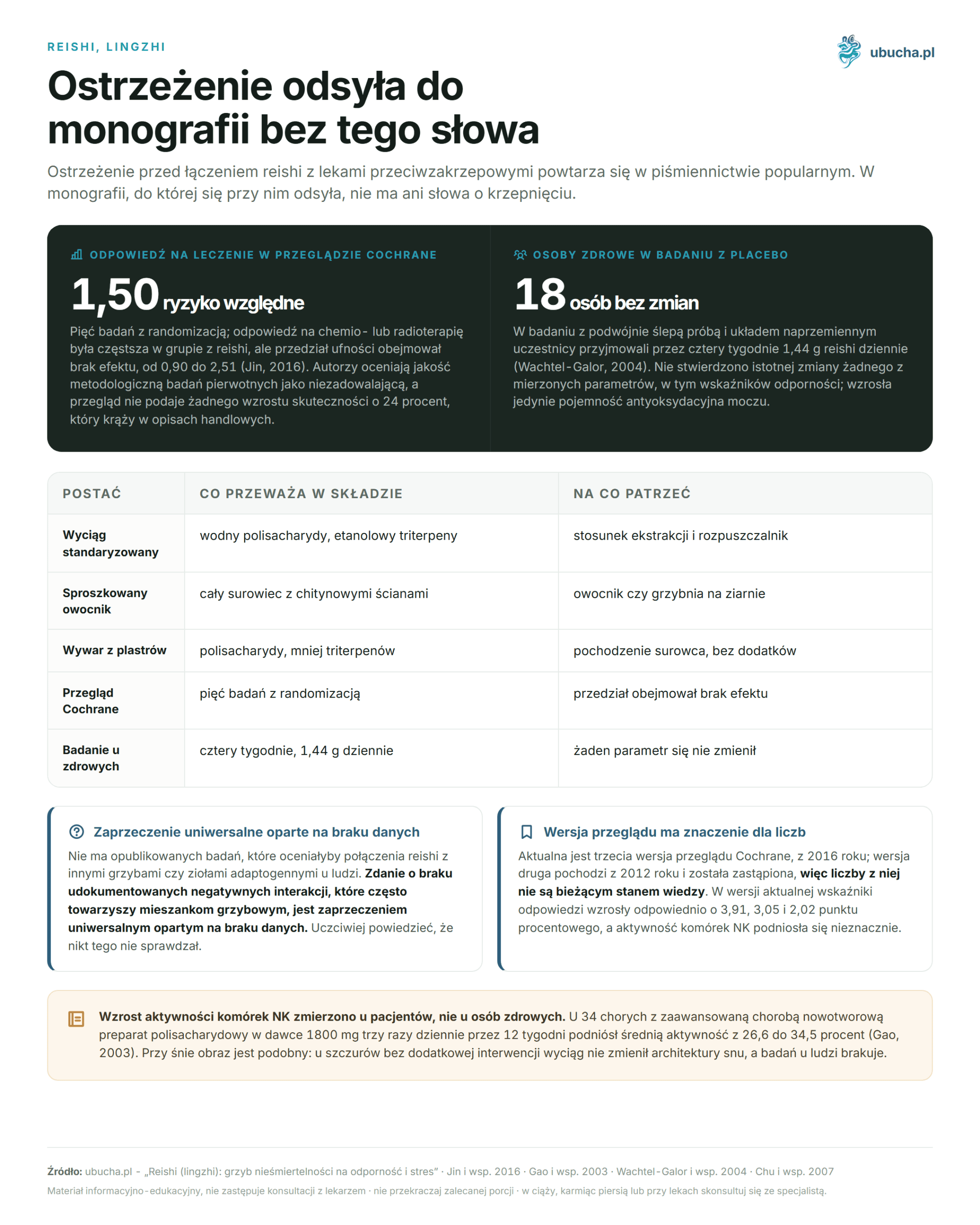
• A Cochrane review of five randomized studies found that the response to chemotherapy or radiotherapy was more frequent in the reishi group, but the confidence interval included no effect (RR 1.50; 95% CI 0.90-2.51; Jin et al., 2016).
• In 34 patients with advanced cancer, 12 weeks of polysaccharide preparation increased NK cell activity from 26.6 to 34.5 percent (Gao et al., 2003).
• In a double-blind study of 18 healthy individuals, four weeks of supplementation did not significantly change any of the measured parameters (Wachtel-Galor et al., 2004).
• The CRC Press monograph lists over 100 described triterpenes, of which over 50 occur exclusively in this species.
• With anticoagulant, immunosuppressive, and blood pressure-lowering medications, reishi requires medical consultation.
What is reishi and how does it differ from other medicinal mushrooms?
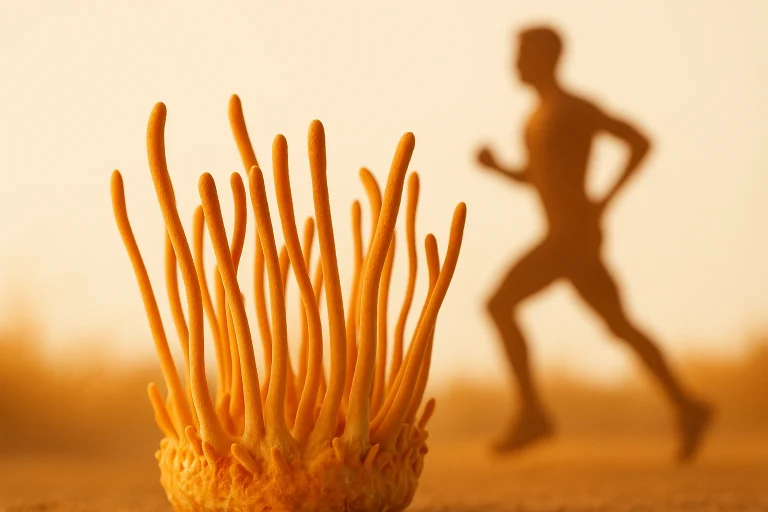
Reishi is the fruiting body of the Ganoderma lucidum mushroom, known in Chinese as lingzhi, growing on hardwood trees. It is rare in nature, so the raw material now comes almost exclusively from cultivation on wood substrates. It is distinguished from related species by its lacquered, reddish-brown cap surface.
Among mushrooms used as supplements, reishi occupies a unique place due to its composition. Lion’s mane is often described in terms of the nervous system, chaga in terms of antioxidant compounds, while reishi has the richest triterpene layer and the longest list of clinical trials, although these are small trials. It is worth noting right away what these trials do not resolve: none had a long observation period, and most were conducted on dozens of individuals.
Reishi has also been associated with the number “over 400 bioactive compounds,” repeated in commercial descriptions. The monograph usually referenced does not provide such a number; it mentions over 100 described triterpenes, of which over 50 do not occur outside this species (Wachtel-Galor et al., Herbal Medicine, CRC Press, 2011). How other species compare in this regard is discussed in a separate comparison of adaptogenic mushrooms.
What biologically active compounds does reishi contain?
Two groups: triterpenes and polysaccharides. The former are responsible for the bitter taste and are mainly studied in the context of the nervous system and liver, while the latter affect immune system cells. They are separated by solubility, which has a direct impact on the choice of preparation.
Triterpenes, known as ganoderic acids, dissolve in alcohol and are what transfer to the ethanol extract. Polysaccharides such as beta-glucans dissolve in water and end up in the water extract and decoction. Products described as dual-phase combine both extracts precisely to avoid losing one of the groups. This distinction is practical: tea made from fruiting body slices mainly provides polysaccharides, while tinctures mainly provide triterpenes.
Descriptions of preparations often mention individual fractions of polysaccharides and specific cell receptors attributed to immune response activation. The referenced CRC Press monograph does not contain either the names of these fractions or mentions of toll-like receptor family or Dectin-1, so these are not findings that can be cited from it. The immunological mechanisms of medicinal mushrooms are summarized in a review by Guggenheim and colleagues, which states that in vitro evidence is abundant, while studies in humans are still preliminary (Guggenheim et al., Integrative Medicine, 2014). More about how the beta-glucan fraction itself works can be found in the text about beta-glucans and immunity.
What do clinical studies say about reishi and immunity?
The results are ambiguous and depend on whom was studied. In cancer patients, changes in immunological parameters were noted, while no changes were observed in healthy individuals. This distinction is often lost in most commercial descriptions, yet it is the most important.
Gao and colleagues administered a polysaccharide preparation from reishi at a dose of 1800 mg three times a day for 12 weeks to 34 patients with advanced cancer; 30 individuals were qualified for immunological assessment. The average activity of NK cells increased from 26.6 to 34.5 percent, and the absolute number of CD56+ cells and concentrations of interleukin 2, interleukin 6, and interferon gamma also significantly increased. It is worth noting the direction of the remaining changes, as it is often reported the other way around: concentrations of interleukin 1 and tumor necrosis factor decreased, not increased. The numbers of CD3+, CD4+, and CD8+ increased only slightly (Gao et al., Immunological Investigations, 2003).
A study conducted on patients with advanced colorectal cancer performed worse. Chen and colleagues included 47 individuals taking 5.4 g of reishi daily for 12 weeks, with 41 evaluable. Immunological parameters showed a trend towards increase, but for none did the difference between baseline and the result after 12 weeks reach statistical significance (Chen et al., International Immunopharmacology, 2006). In healthy individuals, the picture is even clearer: in a double-blind, placebo-controlled study, 18 healthy adults took 1.44 g of reishi daily for four weeks, and no significant change in any of the measured parameters, including immunity indicators, was observed (Wachtel-Galor et al., British Journal of Nutrition, 2004).
Does reishi improve sleep and reduce stress?
The evidence comes from animal models and is surprisingly specific regarding the mechanism, but does not translate directly to humans. None of the studies described below included humans, and one of them contains a caveat that disappears in commercial descriptions.
Cui and colleagues recorded brain and muscle activity in freely moving rats that were given reishi extract for three days. A dose of 80 mg per kilogram significantly prolonged total sleep time and time spent in non-REM sleep, without changing either slow-wave sleep or REM phase. The mechanism turned out to be cytokine-based, not serotonin-based: the concentration of tumor necrosis factor increased in serum, hypothalamus, and dorsal raphe nucleus, and administration of an antibody against this cytokine abolished the sleep-inducing effect of the extract (Cui et al., Journal of Ethnopharmacology, 2012).
An earlier work by Chu and colleagues adds a caveat that is worth knowing before purchasing. In rats, without any intervention, reishi extract at doses of 80 and 120 mg per kilogram did not change sleep architecture at all. The effect appeared only in animals that were given pentobarbital: it shortened the time to fall asleep and prolonged sleep, and this effect was abolished by flumazenil, a benzodiazepine receptor antagonist. The authors summarize this as a partially benzodiazepine-like effect (Chu et al., Pharmacology Biochemistry and Behavior, 2007). In other words: reishi enhanced sleep induced by something else, but did not induce it itself.
How does reishi affect the liver and metabolism?
The best-documented lead does not lead directly to the liver, but to the intestine. Reishi extract changed the microbiota composition and intestinal barrier integrity in mice, which subsequently translated into inflammatory status.
Chang and colleagues fed mice a high-fat diet and administered a water extract of Ganoderma lucidum mycelium. The extract reduced body weight, inflammation severity, and insulin resistance, reversed the dietary-induced microbiota composition disorder, maintained intestinal barrier integrity, and reduced metabolic endotoxemia. The effect could be transferred to other mice via fecal microbiota transplantation, and was replicated by the polysaccharides of high molecular weight alone (Chang et al., Nature Communications, 2015).
Two things need to be stated directly. First, this is a mouse model and a model of obesity, not a study of liver disease in humans; the study does not report aminotransferase activity. Second, the popular claim about lowering ALT, AST, and liver triglycerides is sometimes supported by a study that pertains to a completely different field, so treat it as unresolved. The only solid data on liver safety in humans come from the aforementioned double-blind study, in which no signs of liver or kidney damage were found after four weeks. Support for the liver has, after all, better-studied tools, collected in the text about milk thistle, artichoke, and NAC.
Does reishi help with cancer?
Reishi is not an anticancer drug and does not treat cancer on its own. The question that has actually been studied is different: does it improve the response to chemotherapy or radiotherapy when added? The answer is “perhaps,” and the confidence interval includes no effect.
The Cochrane review included five randomized studies. The percentage of patients responding to chemotherapy or radiotherapy was higher in the group receiving additional reishi, but the relative risk was 1.50 with a 95 percent confidence interval from 0.90 to 2.51, thus encompassing unity. The percentages of CD3, CD4, and CD8 lymphocytes increased by 3.91, 3.05, and 2.02 percentage points, respectively, NK cell activity increased slightly, and four studies reported better quality of life. The authors rated the methodological quality of the primary studies as unsatisfactory and stated that the evidence does not justify the use of reishi as first-line treatment (Jin et al., Cochrane Database of Systematic Reviews, 2016).
Two organizational notes. The third version of this review, from 2016, is current; the second version is from 2012 and has been replaced, so the numbers from it are not the current state of knowledge. The review itself also does not mention any “24 percent increase in effectiveness,” which circulates in commercial descriptions. If you are undergoing cancer treatment, make any supplement decision with your oncologist, as it pertains to interactions with a specific treatment regimen.
How do extract, powder, and tea from reishi differ?
The three forms provide different proportions of the two groups of compounds and differ in raw material density. There is no universally better form among them; rather, the question is which group of compounds you are interested in.
| Form | What predominates in composition | What to look for on the label |
|---|---|---|
| Standardized extract | Depending on the solvent: water gives polysaccharides, ethanol gives triterpenes, dual-phase gives both groups | Extraction ratio, type of solvent, and declared percentage of beta-glucans |
| Powdered fruiting body | Whole raw material, including chitinous cell walls that hinder digestion | Whether it is from the fruiting body or mycelium grown on grain, and the proportion of the grain itself |
| Decoction from slices | Water-soluble polysaccharides, significantly fewer triterpenes | Source of raw material and absence of flavoring additives masking bitterness |
The traditional decoction is prepared by boiling dried slices of the fruiting body for several dozen minutes. The boiling temperature does not destroy beta-glucans, so it is a sensible method for extracting this group, although the bitterness can be a barrier for many; it can be alleviated with orange peel or cinnamon. Specific portions are not provided here intentionally, as very different preparations and doses were used in clinical studies, and conversion between them is not possible. Standardized extracts from reishi and other mushrooms are categorized under herbs, where we provide the extraction ratio and declared content of polysaccharides according to the manufacturer’s label.
What medications can reishi interact with?
Three groups require a conversation with a doctor before reaching for reishi: anticoagulant and antiplatelet medications, immunosuppressive medications, and blood pressure-lowering medications. The basis here is pharmacological caution, not a measured scale of the phenomenon, and it is worth knowing what this difference entails.
In the case of anticoagulant medications, the warning is repeated in popular literature, but in the CRC Press monograph, which is usually referenced, there is not a word about coagulation, platelets, warfarin, or any drug interaction. This does not mean that the risk does not exist; it means that it has not been quantitatively determined in a study that can be pointed to. In the Cochrane review, adverse effects were reported in only one of the five studies, which were nausea and insomnia, and no significant hematological or liver toxicity was reported. However, these studies were small and short, so the absence of a signal is not evidence of safety.
With immunosuppressive medications, for example after organ transplantation or in autoimmune diseases, the problem is the opposite and arises directly from the intended action of the mushroom: stimulating the immune response contradicts the goal of such therapy. With blood pressure-lowering medications, caution arises from the described action of triterpenes on vascular tension. In both situations, the decision lies with the attending physician, as it depends on the specific preparation and dosing regimen.
Can reishi be combined with other adaptogens?
There are no published studies evaluating combinations of reishi with other mushrooms or adaptogenic herbs in humans. This means exactly that no one has measured the effects of such combinations, not that they are safe or that they work additively.
The statement “no documented negative interactions,” which often accompanies mushroom blends, is a universal denial based on a lack of data. It is more honest to say that no one has checked this. In practice, this means two things. First, the more ingredients in a preparation, the harder it is to determine which is responsible for the perceived effect or for any adverse effect. Second, each additional ingredient is a separate list of potential drug interactions that must be reviewed anew.
If you still want to combine, a sensible principle is to introduce one ingredient at a time and wait a few weeks before adding another. Caution with anticoagulant medications remains unchanged with combinations containing reishi, regardless of how many other ingredients the blend contains. How chaga compares in this regard is described in a separate text about chaga.
Frequently Asked Questions
Does reishi strengthen immunity in healthy individuals?
This has not been demonstrated. In a double-blind, placebo-controlled study, 18 healthy adults took 1.44 g of reishi daily for four weeks. No significant change in any of the measured parameters, including immunity indicators, was observed; only the antioxidant capacity of urine increased (Wachtel-Galor et al., British Journal of Nutrition, 2004).
What exactly did the Gao study from 2003 show?
In 34 patients with advanced cancer, taking a polysaccharide preparation at a dose of 1800 mg three times a day for 12 weeks, the average activity of NK cells increased from 26.6 to 34.5 percent. Interleukin 2, interleukin 6, and interferon gamma also increased, while interleukin 1 and tumor necrosis factor significantly decreased.
Does reishi help with sleep?
In rats, without additional intervention, reishi extract did not change sleep architecture. However, it prolonged sleep induced by pentobarbital, and this effect was abolished by a benzodiazepine receptor antagonist (Chu et al., 2007). In another study on rats, the extract prolonged non-REM sleep through a cytokine mechanism (Cui et al., 2012). There is a lack of studies in humans.
Does reishi support cancer treatment?
A Cochrane review of five randomized studies showed a higher response rate to chemotherapy or radiotherapy with the addition of reishi, but the confidence interval included no effect (RR 1.50; 95% CI 0.90-2.51). The authors rated the quality of the primary studies as unsatisfactory and did not consider the evidence sufficient for first-line use.
Is reishi safe with anticoagulant medications?
This combination should not be used without medical consultation. The scale of potential interaction was not determined in any study that can be pointed to, and no significant hematological toxicity was reported in the Cochrane review. However, the studies were small and short, so the absence of a signal is not evidence of safety.
How does reishi extract differ from powdered fruiting body?
The extract concentrates a selected group of compounds depending on the solvent: water gives polysaccharides, ethanol gives triterpenes, and dual-phase extracts contain both groups. The powdered fruiting body contains the whole raw material along with chitinous cell walls that hinder digestion. It is worth checking on the label whether the powder comes from the fruiting body or from mycelium grown on grain.
This article is for informational and educational purposes only and does not constitute medical advice. Before starting supplementation, consult your doctor, especially if you are taking medications regularly, are pregnant or breastfeeding, or have a chronic illness.
Author: Michał Waluk · Published: 2026-06-22 · Updated: 2026-08-16